Want to win more jobs with less effort?
Grow your business and send quick quotes with our home service software.

Want to see your potential revenue?
See what businesses like yours earn with Housecall Pro in 1 - 2 minutes.

When you’re busy getting jobs done, marketing is easy to put off. But you still need new customers finding your business—and past customers calling you when they need help again. A home service business marketing plan gives you a way to keep both coming in.
This guide walks through practical ways to get found locally, earn reviews, and book more jobs. You’ll learn where to focus your marketing efforts, how to tell what’s working, and how to stay in touch with customers after the job’s done.
Quick answer: How do you market a home service business effectively?
Start with a clear website, a complete Google Business Profile, and a process for answering inquiries quickly. Use local search engine optimization (SEO), paid ads, and referrals to reach customers in your service area, then use review requests and follow-up messages to encourage repeat business. Track which sources bring in booked jobs so you can put your time and budget toward what works for your business.
Key takeaways
A few consistent marketing habits can help you reach more customers and book more jobs:
Prioritize local SEO: Help nearby customers find your services in search results.
Respond quickly: Make it easy for interested customers to get answers and book.
Ask for reviews: Customer feedback helps people feel more confident hiring you.
Track your leads: See which sources bring in booked jobs before increasing your spend.
Use automation tools: Keep up with review requests and customer follow-ups as your business grows.
Table of contents
- What does a home service business need before marketing?
- What marketing channels work best for home service businesses?
- How to build a strong home service brand
- How to create a website that helps customers book
- How to use local SEO to get more service leads
- How to run paid ads to bring in leads sooner
- How to get more jobs through referrals and reviews
- How to use social media for local marketing
- How to use offline marketing to get local customers
- How to build a simple marketing plan (step-by-step)
- How to turn leads into repeat customers
- How to manage marketing without doing everything manually
- Common home service marketing mistakes to avoid
What does a home service business need before marketing?
Before you spend money bringing in more leads, make sure you’re ready to handle them. Customers need a way to check out your business, get a response, and book. Setting up these basics first helps you get more value from your marketing budget.
A clear path from lead to booked job
Decide who will answer calls, texts, and website inquiries—and what happens when you’re busy on a job or the office is closed. Make sure whoever responds can explain your services, check availability, and schedule the next step.
Test the process yourself: Call your business number, submit your contact form, and try your booking page. Fix any gaps before paying to send more customers your way. Otherwise, you could spend money on leads you never get a chance to book.
Strong local presence (Google, reviews, visibility)
Check that your website and Google Business Profile show the right phone number, hours, services, and service area. Make it easy to see what you do and how to contact you, and start asking customers for reviews after completed jobs.
An ad or referral can introduce someone to your business, but they may look you up before calling. If they find unclear information or very few reviews, they may hesitate to book.
Consistent follow-up and customer tracking
Customers may request an estimate, get busy, or contact multiple companies at once. If you don’t follow up, those leads are lost.
Set up one place to record customer details, requested services, estimates, and the next follow-up date. Decide who will check open inquiries and follow up with customers who haven’t booked yet.
If tracking leads is taking up too much time or you’re juggling details across texts, emails, and notes, Housecall Pro helps you keep customer information, estimates, and communication in one place so you can see who needs a follow-up.
What marketing channels work best for home service businesses?
Some marketing channels work better than others. The right mix depends on your services, budget, and how soon you need more work. Paid ads can help you reach customers sooner, while SEO and organic social media take time to build.
Use this table as a starting point when deciding where to focus.
| Channel | Best for | Cost | Speed to leads | Difficulty |
| Google Local Service Ads (LSAs) | Local service inquiries | Pay per lead | Fast | Low |
| Google Ads (PPC) | Customers actively looking to hire | Pay per click | Fast | Medium |
| SEO | Long-term visibility | Time, website work, and possible outside help | Builds over time | Medium |
| Social media (organic) | Showing your work and building familiarity | Time; optional content costs | Builds over time | Low |
| Social media (paid) | Targeted local reach | Pay for clicks or impressions | Fast | Medium |
| Email/ SMS | Repeat customers | Software costs and time | Fast (for existing customers) | Low |
| Direct mail | Reaching specific neighborhoods | Printing and postage | Medium | Low |
How to build a strong home service brand
If you want your home service business to succeed, you need to stand out. A clear brand helps customers remember your business when they need to hire.
Here’s where to start.
- Business name and slogan: Choose a business name that’s easy to spell, easy to remember, and clearly connected to your services. Pair it with a short slogan that explains what you do or what customers can expect. Avoid long names or vague phrases that are difficult to remember.
- Logo and visual identity: Your logo should be eye-catching and easy to read on trucks, uniforms, yard signs, invoices, and social media profiles. Stick with two or three colors and one or two fonts.
- Consistency across trucks, uniforms, and online presence: Use the same logo, colors, phone number, and messaging across all channels to build familiarity and trust over time.
How to create a website that helps customers book
According to Housecall Pro’s 2025 Customer Service Report, 96% of homeowners say a professional, user-friendly website matters when hiring a pro. Your site should answer three questions quickly: What services do you offer? Where do you work? How can someone book? Make those answers easy to find, especially on a phone.
Start with these essentials:
- Must-have pages: Include pages for your services and service areas, along with clear contact information and customer reviews. Give visitors enough detail to decide whether you can help, then show them how to call or book.
- Mobile-friendly design: Check your website on a phone. Can you read the text, tap the phone number, and complete a booking form without zooming in? Use large buttons and keep forms short.
- Fast load speed and simple navigation: Keep menus clear and compress large images so visitors can get to the information they need quickly. Test your main pages regularly, including your contact and booking pages.
- Online booking: Give customers a clear way to take the next step. Housecall Pro’s Online Booking lets customers book through your website.
How to use local SEO to get more service leads
Local SEO helps your business appear when nearby customers search online for services you offer. Those searches might include “emergency plumber near me” or “AC repair in Dallas.” Improving your local visibility can help more customers find and contact you without having to pay for every click.
Optimize your Google Business Profile
Your Google Business Profile gives customers a quick way to check your services, hours, and contact details. Keep that information accurate, choose categories that match your work, and add clear service descriptions. Upload photos of completed jobs, vehicles, and team members regularly.
You should also post occasional business updates, such as seasonal services or changes to your hours. Active profiles tend to be more visible in local search results.
Target local keywords on your website
Local keywords help search engines connect your business with nearby customers. These are usually phrases like “water heater repair in Portland” or “house cleaning services in Madison.”
Include these phrases naturally throughout your website, especially on service pages, page titles, headers, and service area pages. If you create pages for different cities, give each one useful details about the services you offer there. Avoid repeating the same page with only the city name changed.
Build credibility with reviews and backlinks
Google says more reviews and positive ratings can help improve your local ranking. Ask customers for honest feedback after completed jobs and send a direct review link to make it easy.
Links from relevant local websites—called backlinks—can also help people discover your business. Look for opportunities through your chamber of commerce, community organizations, local partnerships, or news coverage. Focus on useful connections with organizations that serve your area.
How to run paid ads to bring in leads sooner
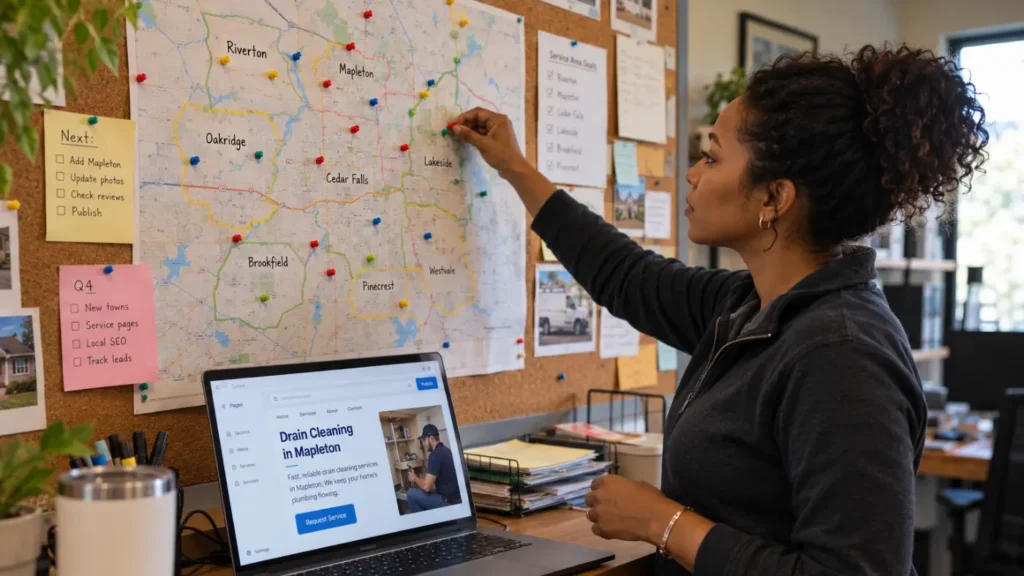
Building your brand is important, but it takes time. Paid ads can help you get leads faster when you’re filling schedule gaps, promoting a seasonal service, or expanding into a new area.
Lead costs vary by trade, location, competition, and campaign setup. Start with a budget you can manage, then track what you spend to book a job.
| Ad Type | Cost Model | Typical Lead Cost | Best Use Case | Time to Results |
| Google Ads (PPC) | Pay per click | $25–$200+ | Reaching customers searching for specific services | Fast |
| Local Service Ads (LSAs) | Pay per lead | $15–$80+ | Getting calls and messages directly from local customers | Fast (after verification) |
| Facebook Ads | Pay per click or impressions | $35–$60+ | Promoting seasonal offers and reaching past website visitors | Moderate |
Google Ads (PPC)
Google Ads can show your business to customers actively searching for services you offer. You pay per click, meaning that you pay when someone clicks your ad even if they don’t contact you or book. You choose the searches you want to show up for, write your ad, and send customers to a relevant page on your website.
These ads can help you bring in urgent repair calls or promote specific work, such as AC installations. You have control over the message and the page customers see, which gives you room to explain your services or offer. The trade-off is that you pay for every click, including visits that don’t turn into inquiries.
Make sure the page matches the ad, keeps your phone number easy to find, and gives customers a clear way to book.
Local Service Ads (LSAs)
Local Service Ads appear at the top of Google search results when someone searches for services. Unlike Google Ads, these use a pay-per-lead model, meaning you only pay when a customer calls or messages you through your listing.
LSAs can be helpful when you want more calls or messages about the services you already offer. You’re paying for someone to contact you, but that person may still be comparing companies or decide against booking. Availability also depends on your trade and location.
If your budget allows, you can test both Google Ads and LSAs. For example, use LSAs for HVAC repair inquiries and Google Ads to promote a system replacement offer. Track how much each costs to bring in a booked job and adjust from there.
Paid social ads
Paid ads on platforms like Facebook and Instagram put your business in front of people as they browse, including people in your service area. Depending on how you set up the ad, you pay for clicks or views.
They can be helpful for promoting seasonal maintenance, sharing before-and-after photos, or reminding past website visitors about your business. You can reach people before they start searching for a pro, but they may not need your services right away. Give them a clear reason to act, such as a timely service reminder or a relevant offer.
How to get more jobs through referrals and reviews
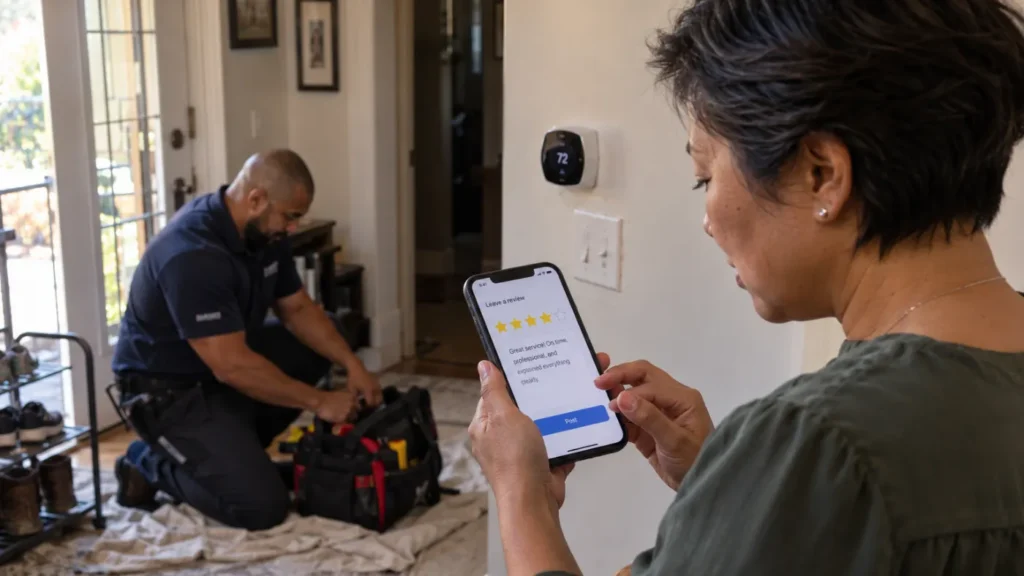
When someone needs a pro, hearing from a neighbor or reading a customer review can help them feel more confident about hiring you. Give customers an easy way to pass your name along and share their experience.
- Ask for reviews immediately after jobs: Ask customers to leave an honest review while the visit’s still fresh. Your technician can mention it before leaving, followed by a text or email with a direct link.
- Automate review requests: Manually asking every customer for reviews takes up valuable time, especially as your schedule gets busier. Tools like Housecall Pro can automate review requests after completed jobs so customers get reminders without extra work from your team.
- Create a referral program: Give past customers a reason to recommend your business to friends and family. Simple referral rewards, such as account credits, discounts, or gift cards, can encourage recommendations. Explain who qualifies, when the reward applies, and how customers can claim it.
Here’s a referral request you can adapt: “Thanks for choosing us. If a friend or neighbor needs [service], we’d appreciate you passing along our name. When someone you refer [qualifying action], you’ll receive [reward] as a thank-you.”
How to use social media for local marketing
Social media gives local customers a chance to see your work and get to know your team. Start with a platform you can keep up with, then share useful posts that show what you do and where you work.
Use these ideas to plan your content. Adjust the pace to fit your team’s time and the response you get.
| Platform | Content Ideas | Suggested Frequency |
| Job photos, reviews, special offers, and service reminders | 3–5 posts per week | |
| Project photos, short videos, and team introductions | 4–6 posts per week | |
| Nextdoor | Service updates, local offers, and helpful advice | 2–4 posts per week |
| TikTok | Maintenance tips, transformations, and jobsite videos | 3–7 posts per week |
How to use offline marketing to get local customers
Reaching people offline can still be valuable. Your truck, yard signs, and mailed flyers can help people nearby recognize your business.
Here are a few ideas:
- Direct mail: Send postcards or flyers to neighborhoods where you want to book more jobs. Include a relevant offer (a spring AC tune-up for an HVAC company, for example), your phone number, and a QR code linking to your website or booking page. Start with a small area and track responses before expanding.
- Yard signs: Ask customers if you can place a yard sign outside their home for a few days after completing a job. Keep the design simple and easy to read from the street, with your business name and phone number clearly visible.
- Vehicle wraps: Your truck can introduce your business while you’re driving between jobs or parked at a customer’s property. Include your logo, phone number, website, and primary services in large, readable text.
- Flyers: Distribute flyers locally or post them on community bulletin boards, in coffee shops, and at local businesses where permitted. Focus on one clear message instead of overcrowding the design with too much information.
Get In Touch: 858-842-5746
Let us earn your trust
On average, Pros increase monthly revenue generated through Housecall Pro by more than 35% after their first year.
See plan options and feature breakdown on our pricing page.
How to build a simple marketing plan (step-by-step)
A marketing plan helps you decide what to try, what to spend, and how you’ll measure results. Keep it simple enough to use while you’re managing the rest of your business.
Start with these five steps, then review your plan as you learn which efforts bring in work.
Step 1: Define your goals
Start by deciding what you want your marketing to accomplish. That could mean generating more calls, booking more recurring jobs, selling more maintenance plans, or expanding into a new service area. Make the goal specific—for example, booking 10 additional maintenance visits next month—so you can tell whether your efforts are paying off.
Step 2: Identify your target customers
Think about who needs the services you want to book more of. Consider factors like location, property type, and service needs. A company promoting routine maintenance may use a different message than one trying to book emergency repairs.
Step 3: Choose your marketing channels
Focus on a few marketing channels instead of trying everything at once. Local SEO, Google Ads, referrals, email marketing, and social media are common starting points for home service businesses. Choose the ones that fit your goal, budget, and available time.
Step 4: Set your budget
Decide how much your business can realistically spend on marketing each month. Include ad costs, website updates, printed materials, software, and any outside marketing help. Start with an amount you can afford to test, then adjust based on the jobs you book.
Step 5: Track results and improve
Pay attention to where your leads come from and which campaigns generate booked jobs. Track inquiries, booked jobs, and marketing spend by source. If an ad brings in plenty of calls but few jobs, check whether it’s reaching the right customers and whether your team can respond quickly.
How to turn leads into repeat customers
It’s easier (and cheaper) to bring past customers back than to find new ones, so give them a reason to call you for their next job.
- Follow-up systems: Stay in touch after completed jobs with thank-you messages, reminders, and seasonal service recommendations. Use the customer’s service history to make each message relevant.
- Maintenance plans: Offer recurring maintenance services that encourage repeat appointments throughout the year. These plans can also help create more predictable revenue.
- Consistent communication: Send helpful emails or texts when a service is due or there’s a seasonal need. Give customers a clear way to book the next visit.
- Automation and tracking: Tools like Housecall Pro help you keep customer history and communication organized, so your team can follow up with the details they need.
How to manage marketing without doing everything manually
Marketing is easier to keep up with when routine tasks don’t depend on someone remembering every step. If follow-ups and review requests slip when jobs pile up, Housecall Pro can organize customer details, send review requests, and give customers a way to book online while your team handles the work.
- Stay in touch with past customers: Use Housecall Pro’s email, text, and postcard campaigns to share seasonal offers and remind customers when it’s time to book again. Set up automated campaigns so you don’t have to send every message yourself.
- Keep review requests going: Set up automatic review requests so feedback becomes part of your everyday process, even on busy days.
- Keep customer details together: See customer records, leads, estimates, and jobs in Housecall Pro, so your team can check the details before following up.
- Make booking easier: Add Housecall Pro’s Online Booking to your website so customers can book jobs or estimates without waiting for someone to answer the phone.
Start a free trial to see how Housecall Pro can work for your business.
Read more: Best AI tools for home services
Common home service marketing mistakes to avoid
Before investing more money into marketing, check whether you’re getting the most from what’s already running. Look out for these common mistakes:
- No online presence: Many customers search online before hiring a home service company. Without a website, Google Business Profile, or reviews, your business may not even be part of the conversation when customers compare local providers.
- Slow response times: Leads can disappear quickly if calls, texts, or form submissions go unanswered for too long. Customers often contact multiple businesses at once and may book with the first company that responds.
- Ignoring reviews: Reviews influence both search rankings and customer trust. Ignoring negative reviews or failing to ask happy customers for feedback can hurt your reputation over time.
- Trying too many channels at once: Spreading your budget across too many marketing platforms can make it difficult to see what’s actually working. Focus on a few channels consistently before expanding.
Check out our industry-specific marketing guides for more information:
- How to market an HVAC business
- How to market an electrical business
- How to market a plumbing business
- How to market a handyman business
- How to market a cleaning business
- How to market a lawn care business
- How to market a pest control business
- How to market a roofing business
- How to market a locksmith business
- How to market a painting business
FAQs
What is the best marketing for home service businesses?
The best marketing for home service businesses usually combines local SEO, reviews, referrals, and paid ads. Local SEO helps customers find you in search results, while Google Ads and Local Service Ads can generate leads faster.
Many businesses also rely heavily on repeat customers and referrals. If you handle urgent repairs, like plumbing or HVAC, start with Local Service Ads and Google Ads. If you sell recurring work, like lawn care or cleaning, start with referrals, reviews, and follow-up. A balanced marketing strategy often performs better than relying on a single lead source.
How much should a home service business spend on marketing?
Many home service businesses spend between 5% and 15% or more of their annual revenue on marketing. How much you spend will depend on your growth plans and business goals. For example, established companies focused on maintenance growth often spend around 5%–7%. Businesses looking to expand may invest between 8% and 12%.
New startups sometimes spend 12%–15% or more, especially during launch phases when building visibility quickly matters most. In many cases, newer businesses work with fixed monthly marketing budgets rather than revenue percentages because revenue is still growing.
What’s the fastest way to get more service leads?
Paid advertising is often the fastest way to generate service leads. Google Ads and Local Service Ads can begin driving calls within days if campaigns are set up properly.
Fast response times also matter. Even strong advertising can fail if calls are missed or estimates take too long to send.
Is SEO or paid ads better for home services?
SEO and paid ads work best when used together. Paid ads can bring in leads quickly, while SEO helps build long-term visibility in local search results.
For example, PPC campaigns may generate leads this week, while SEO improvements may take several months to build momentum. Many successful home service businesses invest in both strategies.
Do home service businesses need a website?
Yes, home service businesses should have a website. Many customers search online before calling, and a website helps explain your services, service areas, reviews, and contact information. A one-page site is enough to start: list your services, service area, phone number, and reviews, and add a booking or contact form.
Even a simple website can help generate leads if it loads quickly, works well on mobile devices, and includes online booking or contact forms.
How do you track which marketing channels bring in booked jobs?
Record the lead source on every inquiry. Ask “How did you hear about us?” on calls and booking forms, and use a separate tracking phone number or tagged link for each ad or campaign. Then log inquiries, estimates sent, and booked jobs by source in one place, such as a spreadsheet or your field service software. Compare cost per booked job by channel each month, not just cost per lead, so a source that brings in cheap leads that never book doesn’t win your budget.
How can you market a home service business on a small budget?
Start with the free or low-cost basics: complete your Google Business Profile, ask every customer for a review after the job, and set up a simple referral reward. Add yard signs and a branded truck for local visibility. Then test paid ads with a small budget you can track to booked jobs before you spend more. Stick with one or two channels until you can see which one brings in work.