Want to win more jobs with less effort?
Grow your business and send quick quotes with our home service software.

Want to see your potential revenue?
See what businesses like yours earn with Housecall Pro in 1 - 2 minutes.
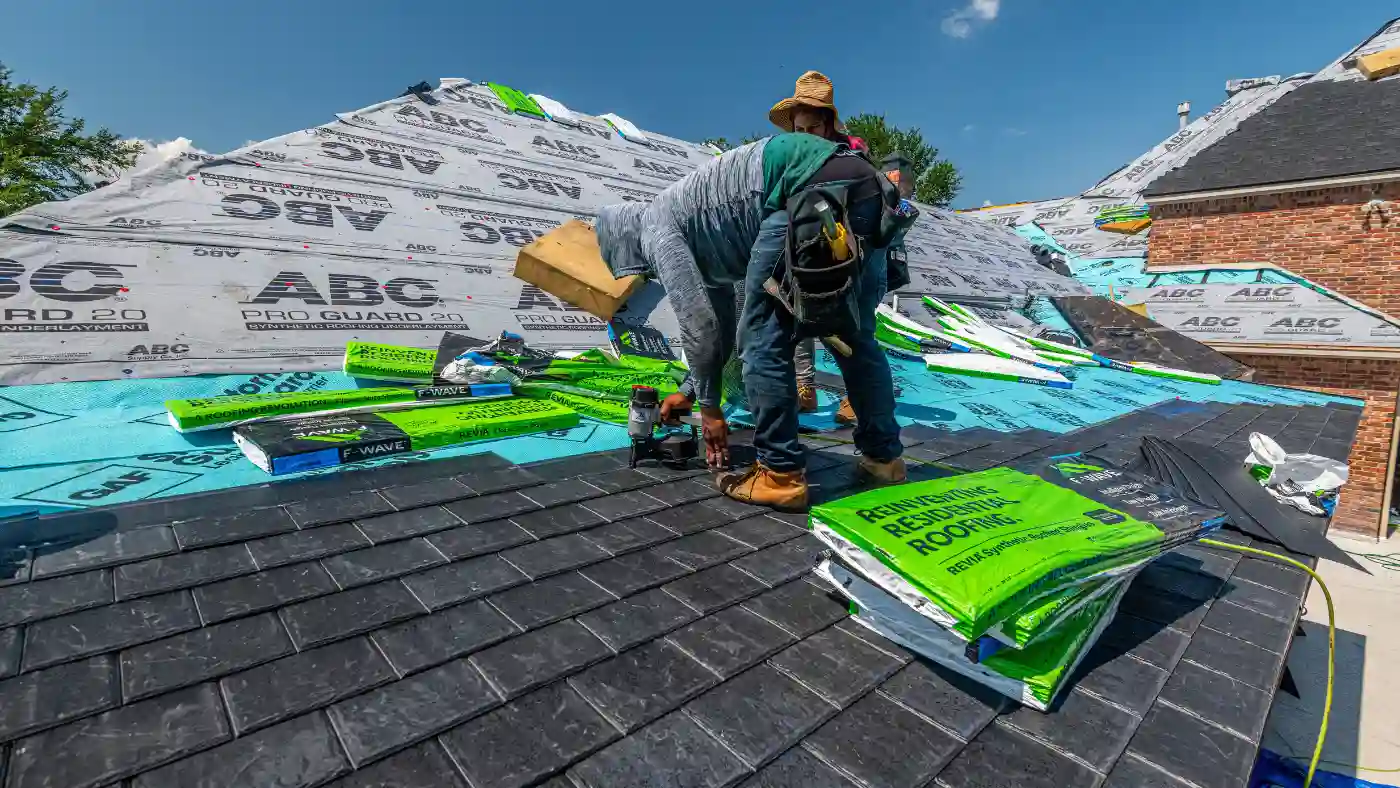
Roofing is a competitive business, and doing great work is only part of the equation. Homeowners have more ways than ever to find and compare roofing contractors. They search online, read reviews, and often contact several companies before making a decision. If your business isn’t easy to find or doesn’t make a strong first impression, you could be missing out on jobs.
The good news is you don’t need a huge marketing budget or a dedicated marketing team to grow. You just need the right strategy. By building a strong online presence, generating quality leads, and staying connected with past customers, you can create a steady pipeline of new business.
In this guide, you’ll learn 10 practical roofing marketing strategies, from strengthening your brand and website to improving your local visibility, running paid ads, earning more reviews, and turning one-time customers into repeat business.

Score your online presence
See how visible and trustworthy your business looks online.
Quick answer: How do you market and advertise a roofing business?
The most effective way to market a roofing business is to combine local SEO, Google Business Profile optimization, and review generation as your foundation, then layer in paid ads and social media once you have the basics running. Start by making sure homeowners in your area can find you online, trust what they see, and easily reach out. From there, consistent follow-up with past customers through email and SMS turns one-time jobs into repeat business and referrals.
Key takeaways
Roofing marketing works best when you build a strong foundation first, then layer in paid channels:
Start with your Google Business Profile and reviews: A complete Google Business Profile with recent reviews is what gets you found—and trusted—when homeowners search after a storm.
Don't skip a website: Even referral-driven businesses lose jobs to competitors when homeowners can’t find them online.
Match your channel to your goal: Use paid ads for speed, SEO for compounding long-term traffic, and email/SMS to bring back past customers.
Track every lead source: You can’t improve what you don’t measure—calls, booked jobs, and revenue by channel should be reviewed monthly.
Focus on consistency: One or two channels done well and consistently will outperform six channels done inconsistently.
Table of contents
- What does a roofing business need before running ads or marketing?
- Best marketing channels for roofing businesses
- How do roofing businesses get found for "near me" searches?
- How do reviews and referrals grow a roofing business?
- How much does roofing marketing cost?
- Roofing marketing strategies for every budget
- How to create a roofing marketing plan
- Common marketing mistakes to avoid
- How to turn more roofing leads into booked jobs
What does a roofing business need before running ads or marketing?
Before spending money on ads, make sure the basics are in place. Paid ads send traffic somewhere—if that somewhere isn’t credible, you’ll pay for clicks that never convert. Get your brand and website right first, and every marketing dollar you spend after will go further.
Branding that builds trust
Your brand is the combination of your name, logo, colors, and tone that homeowners recognize before you ever show up at their door. In roofing, trust starts before the first call—and a consistent, professional brand is what creates it. “Focus on the brand. That’s really going to be the differentiator—what people see on your truck driving down the road,” says Kimberly S., CEO of the New York-based HVAC company Shelter Air.
Here’s what you need:
- Business name: Keep it simple, easy to spell, and easy to say. “Summit Roofing” works. Long, complicated names don’t stick.
- Slogan: One clear sentence. “We fix leaks fast.” or “Roof repairs done right.” Specific beats clever.
- Logo: Hire a freelance designer. A few hundred dollars now pays off for years. Use it consistently on trucks, yard signs, uniforms, business cards, and your website.
- Colors and fonts: Pick them once and stick with them across every touchpoint: trucks, yard signs, uniforms, business cards, and your website and social media.
Pro tip: AI tools can help you brainstorm name or slogan ideas, but a real designer who understands your local market will produce better branding results.
A professional roofing website
Even if most of your jobs come from referrals, homeowners still expect to find you online—and if they can’t, they’ll call someone else. Your website should answer basic questions fast: What services do you offer? What areas do you serve? How can someone get a quote? Put that information front and center.
Essential pages to include:
- Homepage with a clear headline and call to action
- Services page listing what you do
- Service area page naming the cities and towns you cover
- About page with team photos and your story
- Contact/booking page with a simple form
Add real before-and-after photos and short customer testimonials. Keep your contact form simple: name, phone, email, and a short message field. Fewer fields = more submissions.
Pro tip: Every time a homeowner has to call to schedule an estimate—and you don’t pick up—there’s a good chance they’ll choose a competitor instead. Embedding Online Booking directly on your website removes that drop-off point. Tools like Housecall Pro’s Website Builder include booking built in. That convenience pays off: 41% of jobs booked through Housecall Pro come in after hours, when you’re not available to answer the phone.
Best marketing channels for roofing businesses
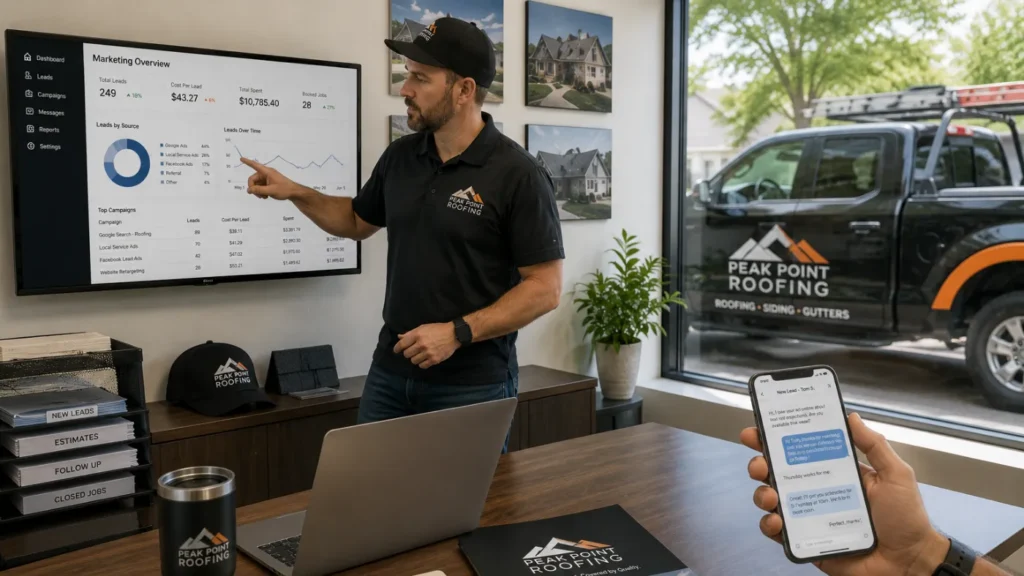
Different channels serve different goals. Some generate leads fast, others build visibility over time. The table below gives you a quick comparison before we break each one down.
| Channel | Best for | Cost | Speed to leads | Difficulty |
| Google LSA | Local pay-per-lead | Pay per lead | Fast | Low |
| Google Ads (PPC) | High-intent search traffic | Pay per click | Fast | Medium |
| SEO | Long-term visibility | Low/time | Slow | Medium |
| Social media (organic) | Brand awareness, trust | Free | Slow | Low |
| Social media (paid) | Targeted reach | Pay per click | Fast | Medium |
| Email/SMS | Repeat customers | Low | Fast | Low |
| Direct mail | Local targeting | Per piece | Medium | Low |
Read more: How to get more roofing leads
Google Ads and Local Services Ads
Google is where homeowners go the moment they need a roofer—so showing up at the top matters.
- Google Local Service Ads (LSAs) appear above regular ads and include a Google Guaranteed badge. You pay per lead, not per click. Complete your profile and pass Google’s verification process—once approved, your ad can appear in local results almost immediately.
- Pay-per-click ads (PPC) are the sponsored listings at the top of Google search results. You pay when someone clicks. Focus on high-intent local searches like “emergency roof repair near me” or “roof replacement in [city].” Set a daily budget, target your service area, and use call extensions so homeowners can reach you directly from the ad.
Beginner tips:
- Start with a small daily budget ($20–$50/day) before scaling
- Focus on one campaign and one location before expanding
- Track calls and form fills, not just clicks
Read more: How to build a roofing PPC campaign
Search engine optimization (SEO)
SEO is the long game—it takes longer to see results, but the traffic compounds over time without ongoing ad spend. A well-optimized site and Google Business Profile keep generating leads long after you stop paying.
The local SEO and on-page sections below cover the full breakdown. For now: prioritize your Google Business Profile, collect reviews consistently, and create service area pages for every city you work in.
Social media marketing (organic and paid)
Social media works best for building familiarity and trust—not as a primary lead channel.
For organic content, keep it simple:
- Before-and-after photos of recent jobs
- Short customer testimonials
- Quick maintenance tips (how to spot storm damage, when to schedule an inspection)
- Team photos and community involvement
For paid social (Facebook, Instagram), target by ZIP code, homeownership status, and age. Promote seasonal inspections or storm damage checks. Retarget people who visited your website but didn’t call.
| Platform | Best content type | Best audience | Posting frequency |
| Promotions, before/afters, community posts | Homeowners 35–65 | 3–5x/week | |
| Before/afters, short Reels | Homeowners interested in home improvement | 3–4x/week | |
| Nextdoor | Service announcements, neighbor recommendations | Neighborhood-level homeowners | 1–2x/week |
| TikTok | Short walkthroughs, educational clips | Younger homeowners | 2–3x/week |
One or two posts per week is enough to stay visible.
Direct mail and offline marketing
Direct mail still works, especially for reaching homeowners in specific neighborhoods after a storm. Postcards, flyers, and door hangers can introduce your business to a new area or re-engage past customers.
What works:
- Postcards with seasonal promotions (“Free Storm Damage Inspection”)
- Flyers announcing service in a new neighborhood
- Fridge magnets with your emergency repair number
Keep the design simple: one message, one call to action. “Call today for a free estimate” beats a cluttered list of services every time.
Use tracking phone numbers or unique coupon codes so you can measure response rates. Direct mail performs best as part of a broader plan—pair it with SEO and review generation, don’t rely on it alone.
Vehicle wraps and yard signs also drive calls. Every job site is an opportunity—place a branded yard sign in the yard (with the homeowner’s permission) and neighbors will notice. Make your truck logo large, include your phone number, and keep the design readable from a distance.
Read more: Proven direct mail marketing strategies
Email and SMS marketing
Past customers are your easiest next job—they already trust your work. Staying in touch keeps you top of mind when they need repairs or want to refer a friend.
Simple campaigns that work:
- Appointment reminders (reduce no-shows)
- Seasonal maintenance tips before storm season
- Limited-time inspection discounts
- Thank-you messages after completed jobs
The hardest part is staying consistent when you’re busy running jobs. Tools like Housecall Pro’s automated marketing campaigns let you set up email and SMS sequences once—seasonal reminders, follow-ups, inspection offers—so they go out on schedule without you having to remember. Start with one email per quarter if this feels overwhelming; consistency matters more than volume.
Get In Touch: 858-842-5746
Let us earn your trust
On average, Pros increase monthly revenue generated through Housecall Pro by more than 35% after their first year.
See plan options and feature breakdown on our pricing page.
How do roofing businesses get found for “near me” searches?
When a homeowner searches “roofer near me” after a storm, you want to be in the first three results they see. Local SEO is the channel that gets you there, and unlike ads, it keeps working even when you’re not spending.
Local SEO essentials
These are the foundational moves that determine whether you show up when a local homeowner searches for a roofer—and whether they trust what they see.
- Google Business Profile: Claim and fully complete your profile. Add recent job photos, list all your services, and keep your hours accurate. This is the single highest-impact thing you can do for local visibility.
- Reviews: Ask every happy customer for a review right after the job. Timing matters—when the job is fresh and the homeowner is satisfied, they’re far more likely to respond. More recent, positive reviews = higher local rankings.
- NAP consistency: Your name, address, and phone number need to be exactly the same across every online directory (Google, Yelp, Angi, BBB, etc.). Even small differences can hurt your visibility.
- Respond to all reviews: Thank people for positive reviews. For negative reviews, respond within 24 hours—acknowledge the issue, offer to resolve it, and move the conversation offline.
On-page SEO and content strategy
Once your Google Business Profile is dialed in, your website does the heavy lifting. Here’s how to make sure it’s actually pulling in search traffic.
- Service area pages: Create a separate page for each city or town you serve. “Roof Repair in Plano” and “Roof Replacement in Tampa” each target different local searches.
- FAQs: Add a FAQ section to your top service pages answering common homeowner questions (what causes roof leaks, how long does a replacement take, does insurance cover storm damage).
- Blog content: Write posts targeting specific questions like “What to do after hail damage” or “How to spot missing shingles.” These build authority over time.
- Backlinks: Get listed with your local chamber of commerce. Join home service directories. Partner with other contractors who can link to your site.
Quick SEO wins you can do this week:
- Add your primary service area to your homepage title tag
- Upload five new job photos to your Google Business Profile
- Add a short FAQ section to your top service page
How do reviews and referrals grow a roofing business?
According to a 2025 Housecall Pro survey, 93% of homeowners say online reviews influence their decision to hire a Pro. That makes review generation one of the highest-ROI marketing moves a roofer can make—and it costs almost nothing to do consistently.
Why reviews matter more than ever
Online reviews directly affect where you show up in local search results. More positive, recent reviews help you rank higher on Google and in the local 3-pack. They also convert more leads: homeowners who see a roofing company with 80+ reviews and a 4.8 rating are far more likely to call than one with 12 reviews and no responses to negative feedback.
Manually following up after every job is easy to skip when you’re busy. Tools like Housecall Pro’s Review Management software automate the request by text or email after every job, so the ask goes out consistently without adding to your workload.
Read more: How to ask for Google reviews
How to generate more referrals
Referrals are one of the easiest and most cost-effective ways to grow your roofing business. Happy customers are often willing to recommend you—you just have to make it easy for them.
Here’s how:
- Example incentive: $25 off their next service for every new customer they refer or free gutter cleaning with a successful referral
- When to ask: Right after job completion, when the customer is happiest
- How to promote: Mention it in person, include it in your follow-up text or email, and add it to your roofing invoices
Keep it simple and easy to share. The easier you make it, the more referrals you’ll get.
Read more: Customer referral program ideas
How to build local partnerships
Strategic partnerships create a steady stream of referrals year-round. Connect with:
- Real estate agents who need roof inspections before closing
- Insurance agents who handle storm damage claims
- General contractors and home remodelers
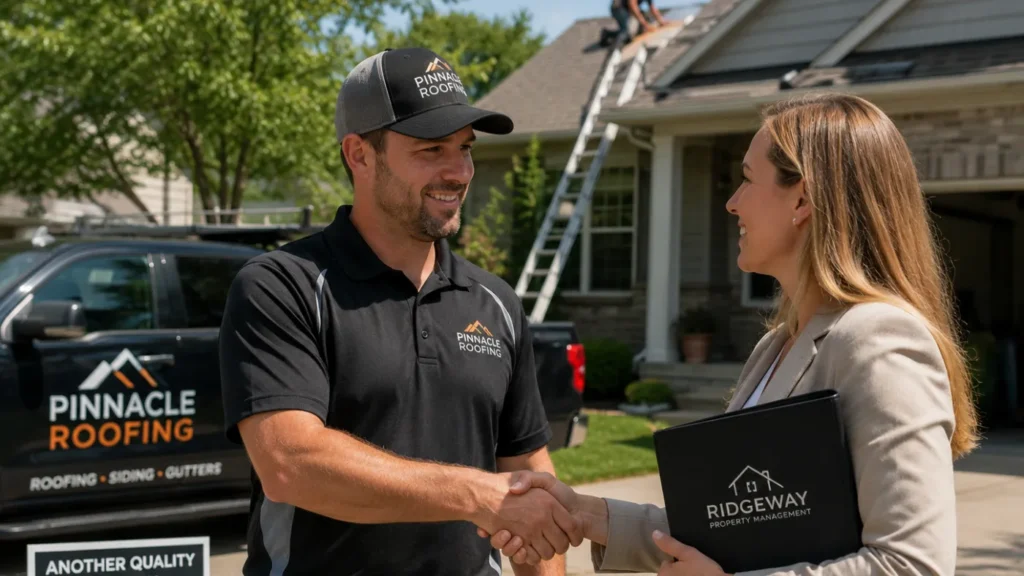
- Property managers overseeing multiple homes
Don’t just hand out business cards. Lead with a specific offer—for example, a free roof inspection for any property they manage. Follow up every few months to stay top of mind.
How much does roofing marketing cost?
Most roofing businesses spend 5%–10% of gross revenue on marketing. For a business doing $500,000 a year, that’s $25,000–$50,000. Newer businesses or those entering competitive markets often invest closer to 10%–12% to build momentum.
| Channel | Typical cost |
| Google LSA | $45–$162+ per lead |
| Google Ads (PPC) | $69–$256+ per lead |
| Social media ads | $40–$120+ per lead (est.) |
| SEO | Time + $0–$500/mo |
| Direct mail | Varies by volume and list |
| Email/SMS | Low ($30–$100/mo for software) |
Table: Typical roofing marketing costs in the U.S., 2025–2026. Ranges vary by market size, seasonality, and campaign optimization. LSA range based on The Media Captain’s dataset of 100+ clients and market-level variation. PPC range based on SearchLight Digital’s Q1 2026 benchmark of 15 roofing contractors. Social media ads is an estimated range.
To calculate ROI: Divide your monthly ad spend by the number of jobs booked from that channel. If you’re spending $1,000/month on LSAs and booking eight jobs, your cost per booked job is $125. Compare that to your average job revenue to see if the channel is profitable.
Smaller markets generally cost less per lead. Results vary based on seasonality, competition, and how optimized your profile and landing pages are.
Roofing marketing strategies for every budget
You don’t need a big budget to get started—you need consistency. Start with what’s free, prove what works, then invest more.
Budget-friendly ways to get started
These tactics cost little to nothing and build the foundation every paid channel depends on.
- Google Business Profile: Claim it, complete every field, add photos, and start requesting reviews. This is the highest-ROI thing a roofer can do for free.
- Organic social: Post before-and-after photos on Facebook and Nextdoor 1–2 times per week. It’s free and builds local familiarity over time.
- Reviews and referrals: Ask every satisfied customer for a review and introduce a simple referral incentive. These cost almost nothing and convert well.
- Yard signs: Place one after every job (with permission). Neighbors notice roof work—a sign with your name and number can lead to calls on the same street.
- Basic email/SMS: Send a follow-up text after every job. Thank them, ask for a review, and mention your referral program in one message.
Advanced strategies to scale your business
Once your foundation is in place, layer in higher-investment channels:
- Google LSA: Turn these on once you have a verified profile and at least 5–10 recent reviews. The badge matters more when your profile is complete.
- PPC: Start when you have a dedicated landing page (not just your homepage) and a budget to test for at least 90 days.
- Retargeting ads: Add these once you have consistent website traffic—typically 500+ monthly visitors. Retargeting brings back people who visited but didn’t call.
- Seasonal campaigns: Launch before your busy season, not during it. Email past customers about storm prep inspections 4–6 weeks before peak season hits.
How to create a roofing marketing plan
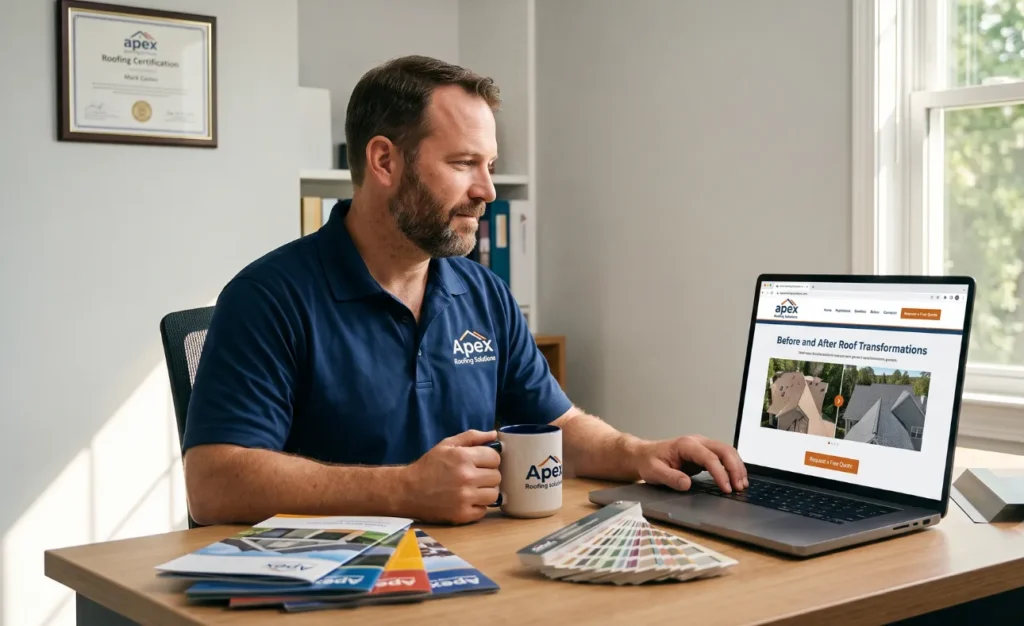
Here’s a simple framework you can use to start marketing your roofing business.
Step 1: Define your goals
Start with what you want. Be specific:
- Increase calls by 20% in six months
- Book 10 new roof replacements per month
- Generate five repeat jobs per quarter
Step 2: Identify your target customers
Who are you trying to reach?
- Homeowners in storm-prone neighborhoods
- Landlords with rental properties
- Property managers overseeing multiple buildings
Each group has different needs. Tailor your message to match. A homeowner after a storm needs speed and trust; a property manager needs reliability and volume pricing.
Step 3: Choose your channels
Don’t try everything at once. Start with 2–3 channels: Google Business Profile + review generation + Google LSA.
Once those are producing consistently, add PPC or social.
Step 4: Set your budget
Think about budget relative to job value. If your average roofing job is $4,000, spending $200–$300 to acquire a customer is a strong ROI. Even $500–$1,000/month can generate results if you use it on the right channels.
Commit to at least 90 days before judging performance.
Step 5: Track and improve
Review performance every month. Track:
- Total calls and missed calls
- Website form submissions
- Booked estimates and completed jobs
- Revenue by marketing source
- Cost per lead and cost per booked job
- Review volume and average rating
Pause what’s underperforming. Invest more in what consistently brings in profitable work.
Common marketing mistakes to avoid
Most roofing businesses don’t fail at marketing because they chose the wrong channel, they fail because of avoidable mistakes. Here’s what to watch out for:
- Skipping the foundation and going straight to ads. If your Google Business Profile is incomplete and you have fewer than five reviews, paid ads will underperform. Fix: Complete your GBP, get 10 reviews, then turn on LSAs.
- Not tracking where leads come from. If you don’t know which channel is generating calls and booked jobs, you can’t improve. Fix: Use tracking phone numbers and ask every new customer how they found you.
- Chasing every channel at once. Spreading your budget and attention across six platforms means doing all of them poorly. Fix: Start with two channels, do them consistently, then expand.
- Asking for reviews inconsistently. A burst of reviews followed by months of silence hurts your ranking and looks suspicious to homeowners. Fix: Automate review requests so every completed job triggers an ask.
- Going dark between jobs. Homeowners who haven’t heard from you in a year will hire someone else. Fix: Send a seasonal email or inspection reminder to past customers at least twice a year.
- Ignoring negative reviews. Future customers read how you respond to complaints as much as they read the complaints themselves. Fix: Respond within 24 hours, acknowledge the issue, and offer to resolve it offline.
How to turn more roofing leads into booked jobs
Most marketing tools help you get leads, but following up fast, staying organized, and converting those leads is where most roofing businesses lose money. You can run great ads and still lose jobs because a lead went unanswered for two hours.
Housecall Pro’s roofing software helps close that gap:
- Book more jobs around the clock: Online Booking lets homeowners schedule estimates directly from your website—even when you’re on a roof or off the clock.
- Build your reputation on autopilot: Automated review requests go out by text or email after every job, so your ratings stay fresh without any extra effort.
- Keep past customers coming back: Email and SMS campaigns send seasonal inspection reminders and promotions automatically, turning one-time jobs into repeat business.
- Win more estimates: Estimating software lets you send professional quotes from the field so you’re first to respond—and more likely to close.
- See exactly what’s driving revenue: Job tracking ties every lead to a source so you can double down on the channels that are actually paying off.
Try Housecall Pro free for 14 days.
Roofing marketing FAQ
What's the best way to get more roofing customers?
The fastest path to more roofing customers is turning on Google Local Service Ads and ramping up review requests at the same time. LSAs put you at the top of search results immediately, while reviews reinforce trust once homeowners click your profile. Pair that with a referral incentive for past customers and you cover both new and repeat business.
How much should a roofing business spend on marketing?
Most roofing businesses spend 5%–10% of gross revenue on marketing. For a business doing $500,000 a year, that’s $25,000–$50,000. Newer companies or those entering competitive markets often need to invest closer to 10%–12% to build traction. Start with a defined monthly budget—even $500–$1,000—and scale what’s working.
Do roofing businesses need a website to get customers?
Yes—even if most of your work comes from referrals, homeowners will look you up online before calling. A website gives you a place to show past work, collect reviews, and make it easy for people to contact you. Without one, you’re invisible to anyone who doesn’t already know you. A basic, mobile-friendly site with a contact form and service area information is enough to start.
How long does it take for roofing marketing to work?
Paid ads like Google LSAs can generate leads within days. SEO and review building typically take 3–6 months to show meaningful results—appearing in Google’s local 3-pack for target keywords and seeing a consistent increase in calls. Plan on at least 90 days before evaluating whether a channel is working, and measure against calls booked and jobs won, not just clicks.
What's the difference between Google Ads and Local Services Ads for roofing businesses?
Google Ads (PPC) are pay-per-click—you pay every time someone clicks your ad, whether or not they contact you. Local Services Ads (LSAs) are pay-per-lead—you only pay when someone calls or messages you through the ad. LSAs also include a Google Guaranteed badge, which builds trust faster. Most roofers should start with LSAs, then add PPC once they have budget to test landing pages and keywords.
How do I get more reviews for my roofing business?
Ask right after every completed job—that’s when homeowners are happiest and most likely to follow through. Use an automated tool to send a text or email with a direct link to your Google review page. Make it as easy as one tap. Respond to every review, positive and negative, to show future customers you’re engaged.
What's a good marketing strategy for a new roofing business
Start with what’s free: claim your Google Business Profile, ask every customer for a review, and post before-and-after photos on Facebook and Nextdoor. Add yard signs after every job. Once you have 10+ reviews and a complete profile, turn on Google Local Service Ads. That combination covers trust, visibility, and fast leads—without requiring a large upfront investment. For a full roadmap, see how to start a roofing company.