Want to win more jobs with less effort?
Grow your business and send quick quotes with our home service software.

Want to see your potential revenue?
See what businesses like yours earn with Housecall Pro in 1 - 2 minutes.

As a business owner, the last thing you want to do is spend time chasing down late payments. Having a clear, professional roofing invoice helps keep you and your customer on the same page so there are fewer questions and faster payments.
Knowing what to include on an invoice—and how to structure it—can be challenging, especially when different jobs, customers, and insurance claims require different billing details. In this guide, you’ll learn what information every roofing invoice should include, explore common invoice types, review a roofing invoice example, and get tips for creating a streamlined invoicing process.
You can also download our free invoice template to create professional invoices faster.
Quick answer: How do you write a roofing invoice?
Start with your company name, logo, and contact info at the top, then add the customer’s name, service address, and a unique invoice number with the date. List every service as its own line item—separate labor from materials—with a quantity, rate, and total for each. Add a subtotal, apply any applicable taxes, and display the final amount due prominently. Close with your payment terms (due date, accepted methods, late fees) and an optional note for warranties or review requests.
Key takeaways
Keep your roofing business running smoothly with these invoicing best practices:
Use the right invoice for the job: Roof replacements, repairs, insurance claims, and commercial projects all require different invoice details.
Break out labor and materials: Clear line items help speed up insurance approvals and reduce customer questions or disputes.
Include your license number: In states like California, Florida, and Arizona, it’s required by law and may help protect your lien rights.
Set payment expectations early: Include payment terms on every quote, contract, and invoice so customers know exactly when payment is due.
Invoice before you leave the job site: Sending invoices right away helps you get paid faster while the work is still top of mind.
Table of contents
Types of roofing invoices and when to use them
Roofing companies offer a wide range of services, from minor gutter fixes to complete tear-offs. Because the scope of these jobs varies so much, you’ll need different invoice formats to accurately reflect the work and meet the requirements of homeowners, corporations, or insurance adjusters.
Choose the invoice format that best fits your specific project. Here are common options:
- Roof replacement invoice: Use this for full removals and installations, reroofing, or layovers.
- Roof repair invoice: Best for smaller fixes and patches that don’t require a full replacement; these are frequently submitted for insurance claims.
- Emergency repair invoice: Specifically for urgent, unscheduled work that may carry higher pricing.
- Change order invoice: Use this format when the project scope changes mid-job to update costs and provide a clear record of the new agreement.
- Progress invoice: Ideal for large-scale projects where you bill the customer in stages as milestones are completed.
- Final invoice: The comprehensive bill that’s sent after the job is finished, which may show credits for partial payments made during the project.
- Commercial roofing invoice: Designed specifically for corporate, industrial, or multi-family building clients who often have different billing requirements.
- Insurance roofing invoice: Submitted directly to a customer’s insurer, containing all the specific details insurance companies need to process claims.
Pro tip: Swapping client details manually across job types wastes time and creates errors. Housecall Pro’s roofing invoice software lets you store multiple templates and pull the right one for each job type.
What should a roofing invoice include?
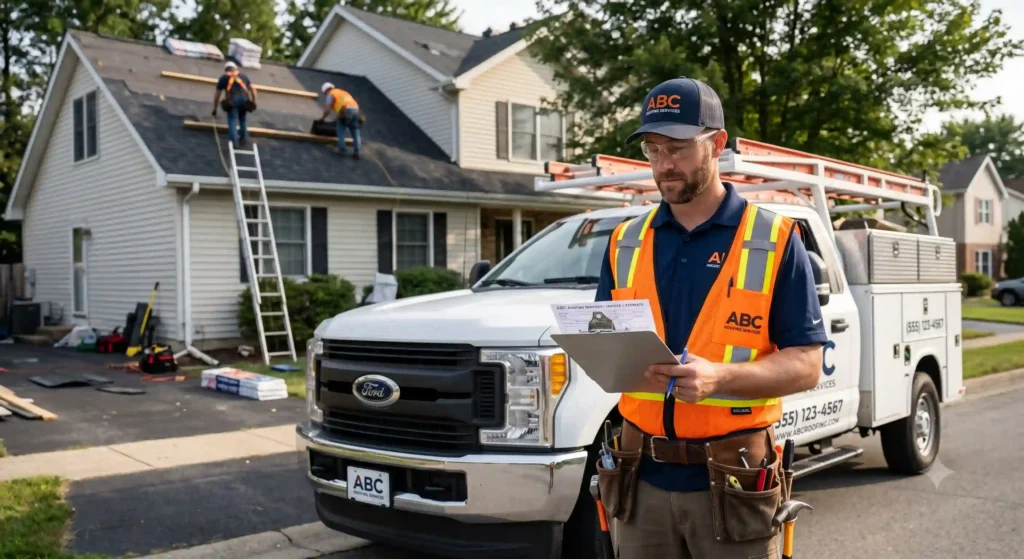
A professional roofing invoice should provide a clear, detailed record of the job scope, materials used, and the labor required to finish the work, with costs for each item broken out. Every invoice should clearly display the total amount due and the specific payment terms, such as “payable upon receipt” or “Net 30“.
Include these core elements to meet legal and insurance requirements and make it easy for your customers to understand what’s owed and your payment terms.
1. Heading and company information
This section identifies your roofing company and establishes the invoice as an official business document. It tells customers exactly who the invoice is coming from and how to contact you with questions.
Include these core details:
- Full company name
- Business address
- Phone number
- Email address
- Business logo and/or slogan
Don’t have a logo or slogan? Read our roofing company slogan guide for inspiration.
2. Customer and property details
Accurate customer information connects the invoice to the correct client and the specific property where the work was done. This is especially important for roofing work, as warranties and insurance claims are often tied to the service address.
Be sure to include the:
- Customer’s full name
- Service address (the property where the roof is located)
- Billing address (if it differs from the service address)
- Customer phone number or email
3. Unique invoice number and date
Every document needs a unique identifier to help you keep accurate accounting records and flag past-due accounts. A consistent invoice numbering system makes it much easier to find a specific invoice during tax season or when you’re resolving a billing question.
4. Itemized services and costs
This is the core of the invoice because it breaks down the work performed into clear line items. Transparency here reduces customer questions and helps insurance companies approve claims faster.
Break your costs down by:
- Service description(s)
- Quantity of hours worked
- Unit price
- Total price for each line item
For roofing projects, common items include shingle installation, flashing repair, decking replacement, and labor charges.
For insurance claims or high-ticket repairs, attach before-and-after photos to the invoice—adjusters move faster when they can see the damage and the completed work side by side.
Pro tip: Pricing inconsistencies across invoices erode customer trust and create billing disputes. HCP’s Price Book lets you lock in standard material and labor costs so every invoice prices consistently.
5. Subtotal, taxes, and total due
The subtotal shows the cost of your services before any taxes or additional fees are applied. Because tax requirements vary by state and county, research whether you need to charge sales tax, local construction tax, or material tax before you finalize your roofing invoice template.
In many states, a full roof replacement qualifies as a capital improvement and may be exempt from sales tax, while repair work is often taxable. Rules vary by state, so check with your state’s department of revenue or a tax professional to make sure you’re charging sales tax correctly.
Display the final total due from the customer clearly at the bottom of the page, including any remaining balance if they’ve already made a deposit.
6. Payment terms and notes
Clearly stating your payment terms helps you avoid late payments. This section should include the due date and your accepted payment methods, such as by credit card or through ACH. You can also use the optional notes section to add a thank-you message, warranty details, or a link for your customers to leave a review.
Roofing invoice example
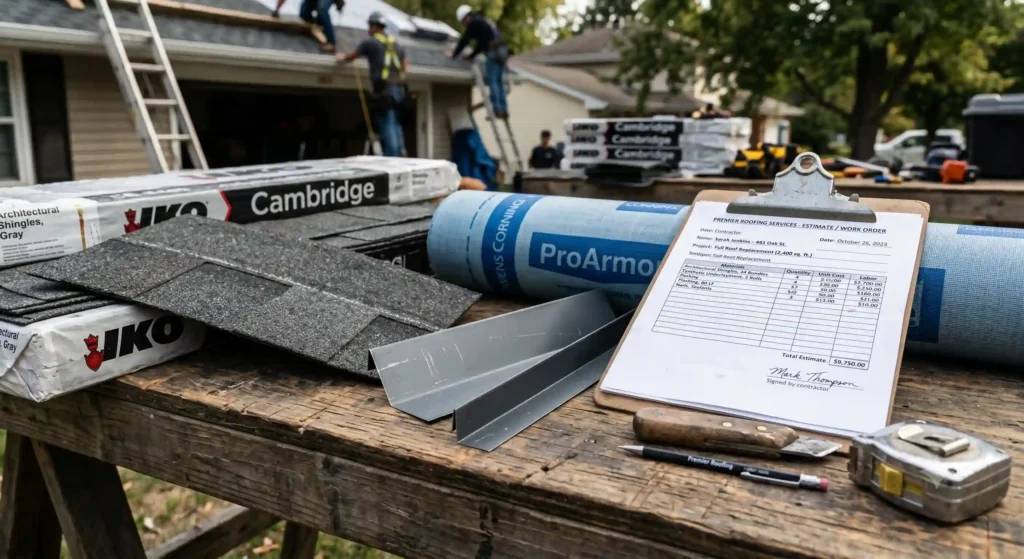
Seeing a real invoice can help you understand the layout, required fields, and how everything fits together. You can use the basic example below as a starting point and adjust the specific services and pricing to fit your business.
Each of these elements, including the placement of your slogan or logo at the top, is fully customizable in Housecall Pro.
| Dillon Peak Roofing, Denver, CO, 12345, Phone: (123) 456-7890 | Invoice No.: RES12212025, Date: 12/21/2025 |
| To: Cameron Hill 10151 Routt St. Westminster, CO 80030 | For: Residential roof replacement |
| DESCRIPTION – Labor | HOURS | RATE | AMOUNT |
|---|---|---|---|
| Remove old shingles and underlayment | 4.0 | 75.00 | 300.00 |
| Clean and prepare surface for roof installment | 1.5 | 75.00 | 112.50 |
| Install custom tile shingles | 6.5 | 85.00 | 552.50 |
| Apply shingle protectant | 1.5 | 85.00 | 112.50 |
| Clean-up | 1 | 75.00 | 75.00 |
| DESCRIPTION – Supplies | Amount | Cost per unit | Total |
| Underlayment | 1500 sq.ft. | 1.80 | 2700.00 |
| Shingle nails | 25# | 0.05 | 45.00 |
| Custom tiles | 1600 sq.ft. | 8.00 | 12,800.00 |
| Sub total | 16,697.50 | ||
| Colorado construction tax | 1.5% | 250.46 | |
| TOTAL | 16,947.96 |
Payment Terms: Make all checks payable to Dillon Roofing Contractors. Total due in 15 days. Overdue accounts are subject to a service charge of 1% per month.
Thank you for your business! We’d love to hear your feedback: [Leave a review here]
How to get roofing invoices paid faster
Follow these best practices to make it easier for customers to pay and reduce the time you spend on paperwork.
- Use a consistent invoice template: Standard templates ensure every invoice includes the same essential details and looks professional every time.
- Add your branding: Include your company logo and contact information to reinforce your brand and make your business look established.
- Include detailed service descriptions: Clearly describe repairs, materials, and labor so customers and insurers can quickly verify charges.
- Offer multiple payment options: Offer at least three payment methods: credit card, ACH, and check. According to a 2025 Housecall Pro survey, 62% of homeowners expect to pay digitally.
- Highlight due dates and totals: Clearly display the expected payment date and the final balance due to avoid any confusion.
- Track and follow up: Monitor outstanding invoices and send proactive reminders as soon as a payment becomes overdue.
How to create a roofing invoice process
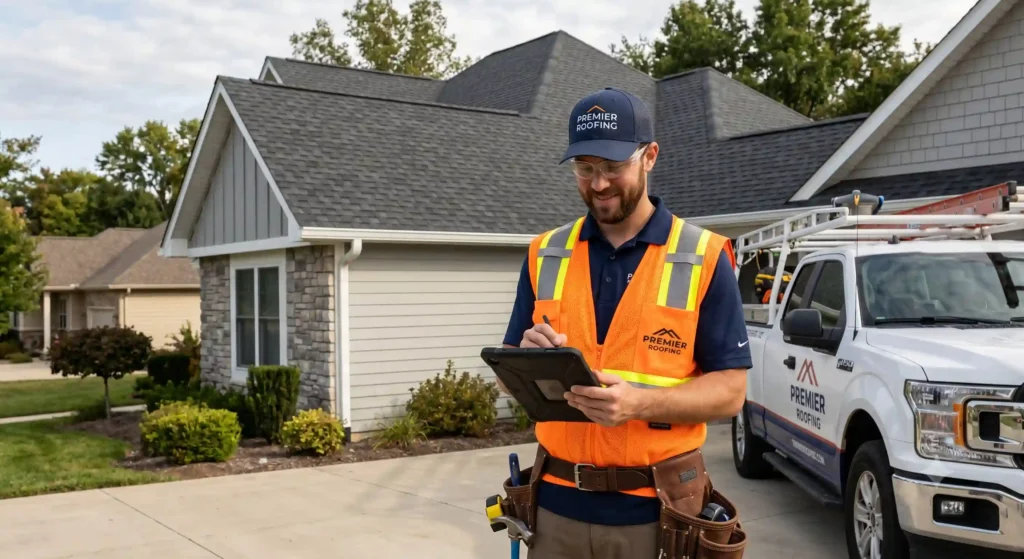
A simple, consistent invoicing routine helps keep cash coming in on time. By standardizing how you record work and follow up on bills, you can spend less time on manual paperwork and more time on the jobsite.
1. Build a standard invoice template
Create a template that includes all the essential fields, such as company information, customer details, invoice numbers, itemized services, taxes, and payment terms. Using a standardized template ensures every invoice looks professional and contains the information customers need to pay quickly.
2. Document labor, materials, and job details
Accurate invoicing starts with accurate recordkeeping. Make it a habit to document labor hours, materials used, change orders, and additional services throughout the project so nothing is missed when it’s time to bill the customer.
3. Send invoices as soon as work is completed
The sooner you send an invoice, the sooner you’re likely to get paid. For smaller jobs, send the invoice immediately after the work is finished. For larger roofing projects, consider using progress invoices tied to key project milestones.
4. Track payments and follow up on overdue invoices
Monitor outstanding invoices regularly and follow up promptly when payments are late. Sending reminder emails or text messages shortly after a due date can help reduce overdue balances and improve cash flow.
Read more: How to collect unpaid invoices
How roofing invoicing software saves time and reduces late payments
Once you’ve established a consistent invoicing process, roofing software can help automate many of the manual tasks involved in creating, sending, and tracking invoices. Housecall Pro’s roofing contractor software is built to streamline every step of the billing process:
- Price Book integration: Pull labor and material costs directly into invoices to reduce manual entry and keep pricing consistent.
- Mobile invoicing: Create and send invoices directly from your phone and collect payment before leaving the jobsite.
- Payment tools: Accept credit cards and ACH payments to make it easier for customers to pay in just a few clicks. On average, Pros who use Payments with Housecall Pro get paid 2X faster.*
- Automated reminders: Schedule automatic follow-up reminders for overdue invoices and reduce the time spent chasing payments.
- QuickBooks Integration: Sync invoice and payment data with your accounting software to reduce manual bookkeeping and keep records accurate.
Ready to see how easy your billing could be? Sign up for a free 14-day trial.
*Avg. experience of Pros processing at least half of their payments with Housecall Pro over the past year.
Get In Touch: 858-842-5746
Let us earn your trust
On average, Pros increase monthly revenue generated through Housecall Pro by more than 35% after their first year.
See plan options and feature breakdown on our pricing page.
Roofing invoice FAQ
When should a roofing contractor send an invoice?
For single-day or small repair jobs, send the invoice the same day work is completed—ideally before you leave the site. For multi-day or larger replacements, bill at defined milestones: typically after tear-off and after final installation. Same-day invoicing is the single strongest predictor of on-time payment for trade contractors. The longer you wait, the more the customer’s urgency fades.
Should roofing invoices include contractor license numbers?
Yes—and it’s not optional in most states. California (Bus. & Prof. § 7030.5), Florida (§ 489.119), and Arizona (A.R.S. § 32-1124) explicitly require contractors to display their license number on all invoices, contracts, and advertising. Failing to include it can result in fines, loss of lien rights, and difficulty collecting payment. Even in states without a formal mandate, including your license number increases trust and may be required by the customer’s insurer.
Do I need to include insurance information on the invoice?
Proof of insurance on the invoice itself is optional, but your COI (certificate of insurance) should always be available on request—some homeowners require it before they’ll authorize work. If you’re billing an insurer directly, call their claims department before you start the job and ask exactly what they need. Most require your license number, a detailed scope of work with line-item costs, material specifications (brand, grade, square footage), and a signed work-completion statement. Missing any of these can delay claim approval.
Should I list materials separately from labor?
Yes, separating these costs increases transparency and helps customers understand exactly where their money is going. Break out specific items like shingles, underlayment, flashing, nails, sealants, ventilation components, and disposal fees.
How should I list labor costs on a roofing invoice?
Labor can be listed as an hourly rate, a flat fee (like for cleanup), or by the square foot (for shingle installation).
What payment terms should I use on a roofing invoice?
“Net 15” or “Net 30” are standard for most residential jobs—meaning payment is due 15 or 30 days from the invoice date. For larger projects, a 10%–30% deposit upfront is standard for residential work, with higher deposits (up to 50%) common on commercial jobs. Note that some states cap upfront deposits—California limits them to $1,000 or 10% of the contract price, whichever is less
What's the difference between a roofing quote and an invoice?
A quote is sent before the job starts and outlines the estimated cost—it’s not a request for payment. An invoice is sent after the work is complete (or at a billing milestone) and is the official request for payment. Always make sure the final invoice reflects any changes from the original quote, and document those changes with a change order.
Can I use a roofing invoice to file a mechanic's lien?
Yes. If a customer doesn’t pay, a mechanic’s lien lets you place a legal claim against their property—but the lien is only as strong as your documentation. Your invoice needs to include your contractor license number, the property address, a detailed description of the work completed, the total amount owed, and the dates work was performed. Requirements and deadlines vary by state—most give you 30 to 120 days from project completion to file—so check your state’s lien law before you start a job, not after a payment dispute. Note that in states where an unlicensed contractor performed work, lien rights may be forfeited entirely.
What do I do if my final invoice is higher than the original estimate?
Never surprise a customer with a higher total at the end of a job. If the scope changed mid-project—hidden damage, additional materials, extra labor—document it with a written change order before doing the work and get the customer’s signature. Reference the change order number on the final invoice so there’s a clear paper trail connecting the original estimate to the updated total. If costs increased due to factors outside your control (material price spikes, code requirements uncovered during tear-off), walk the customer through the line items before you send the invoice. A customer who understands the increase before they see the bill is far less likely to dispute it.