Want to win more jobs with less effort?
Grow your business and send quick quotes with our home service software.

Want to see your potential revenue?
See what businesses like yours earn with Housecall Pro in 1 - 2 minutes.
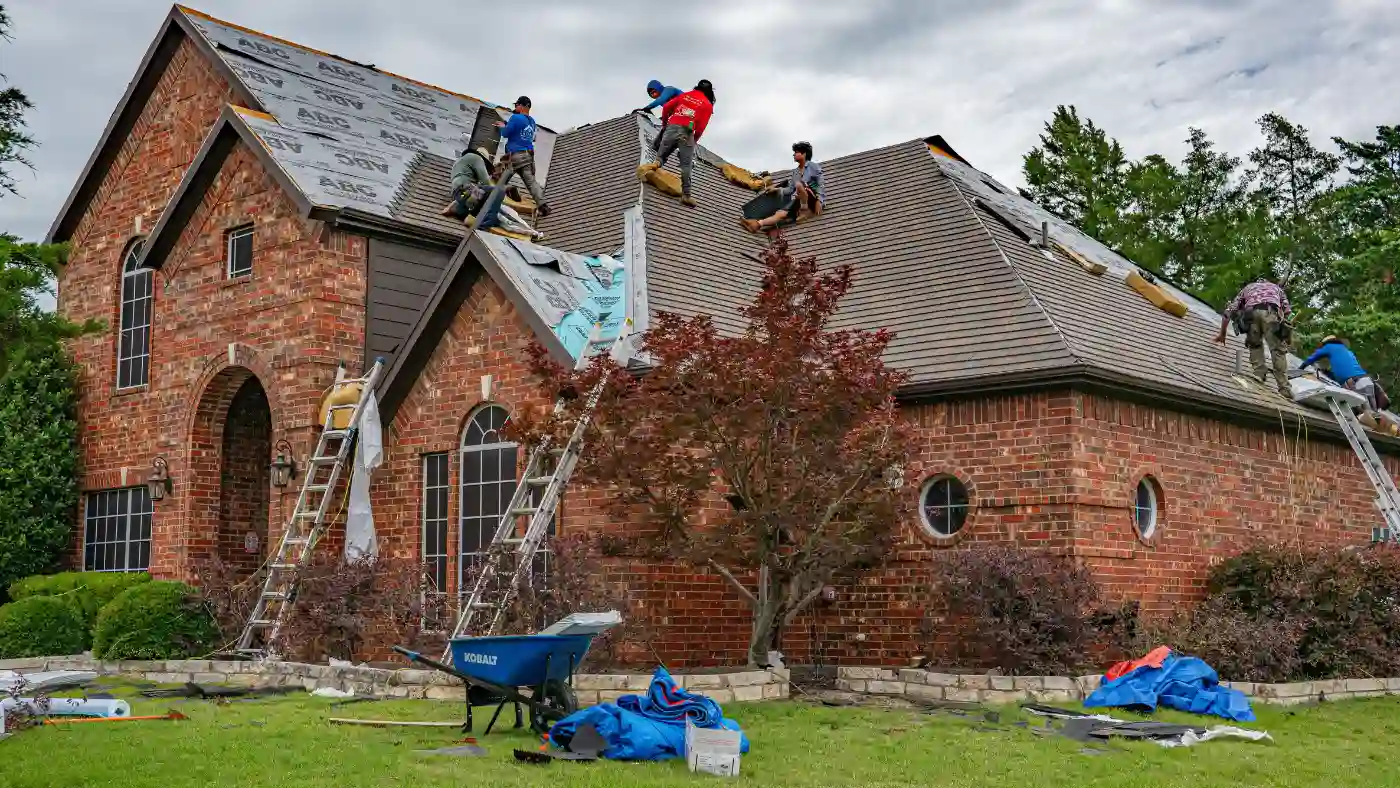
Running a roofing business means constantly balancing today’s jobs with finding the next ones to stay busy. With so many roofing companies competing for the same customers, you need a reliable way to keep new leads coming in.
Roofing lead generation is about getting in front of the right homeowners before they start calling around. This guide covers 14 strategies—free and paid—to attract more qualified leads, book more jobs, and build a steady stream of work year-round.
Also see: Roofing marketing strategies for a broader look at growing your roofing business.
Quick answer: What’s the best way to get more roofing leads?
The most effective roofing lead generation combines local SEO and Google Business Profile optimization for long-term visibility with Google Local Services Ads for faster, high-intent results. Referrals from past customers fill in the gaps at no cost. The fastest channel is paid ads; the most sustainable is organic search and referrals working together.
Key takeaways
Building a steady flow of roofing leads comes down to choosing the right mix of marketing strategies
Mix your lead sources: Referrals, search visibility, ads, and past-customer outreach together are more stable than any single source.
Respond fast: Quick replies to calls or form fills increase your chance of winning the job before someone else does.
Track what works: Measure which sources drive estimates and booked jobs—then put your budget where it performs.
Use customer reviews: Reviews and project photos shape homeowner decisions before you ever pick up the phone.
Follow up: Maintenance reminders and seasonal offers drive repeat work and new referrals without buying a single new lead.
Table of contents
- What are the best free ways to get roofing leads?
- What paid strategies work best for roofing lead generation?
- How much do roofing leads cost?
- How do established roofing businesses scale lead generation?
- How to get roofing leads after a storm
- How do you evaluate roofing lead generation companies?
- Building a roofing lead generation system
- What are common roofing lead generation mistakes?
- Turn more leads into booked jobs with roofing software
What are the best free ways to get roofing leads?
Free strategies take time and consistency, but they build a steady stream of leads you own—one that doesn’t disappear when you stop paying for ads.
Referrals and word of mouth
Ask most roofing contractors where their best jobs come from, and they’ll say referrals. A neighbor’s recommendation carries a level of trust no ad can buy.
After every completed job, ask for the referral directly. A simple script: “We really appreciate your business. If you know anyone who needs roof work, we’d love an introduction—we take great care of the people our customers send our way.”
A few ways to encourage referrals:
- Offer a small discount or gift card for every referral that books a job.
- Send a handwritten thank-you card after completing the job.
- Follow up a few weeks later to check in—happy customers are more likely to mention you when the conversation comes up.
Google Business Profile optimization
Your Google Business Profile (GBP) is often the first thing a homeowner sees when they search for a roofer nearby. If your profile is incomplete, you’re handing that opportunity to a competitor.
Keep it current with:
- High-quality before-and-after project photos
- A detailed list of your specific services (repairs, replacements, inspections, etc.)
- A steady flow of recent customer reviews
Pro tip: Also list your business on free platforms like Yelp, Angi, and Thumbtack to boost local visibility and help your business show up in more searches.
Local SEO for roofing
When someone searches “roof repair near me” or “roofing contractor in [city],” local SEO determines whether your business shows up. Most homeowners search close to home, so ranking in those results puts you in front of people already looking for help.
A few practical ways to strengthen your local SEO:
- Make sure your name, address, and phone number (NAP) are consistent across your website, Google, and any online directories.
- Ask every customer for a Google review—review volume and recency both affect local rankings.
- Add location pages to your website for each city or service area you cover.
Blog topic ideas that build local SEO for roofers:
- “Signs you need a roof replacement in [city]”
- “How to prepare your roof for [region]’s winter”
- “How much does roof repair cost in [city]?”
Local partnerships and community networking
Getting out into your community builds brand recognition that no ad can fully replicate. When people see your business consistently, you’re the first name they think of when something goes wrong with their roof.
Strong partnerships to pursue: realtors (they always need trusted contractors for pre-sale prep), property managers, home inspectors, and local energy efficiency programs.
Networking activities worth your time:
- Sponsor or participate in local home improvement shows and community events.
- Join your local Chamber of Commerce.
- Offer free post-storm inspections in affected neighborhoods—it’s genuinely helpful and keeps you visible.
Engaging in online in local homeowner communities
Don’t overlook digital community spaces. Local Facebook groups and neighborhood apps like Nextdoor are where homeowners actively ask for contractor recommendations. Join those groups, answer questions, and share helpful content without being salesy. Show up as a resource and you’ll get tagged when someone needs a roofer.
Reddit city-specific subreddits (like r/[yourcity]) and home improvement threads are also worth monitoring.
Lead magnets
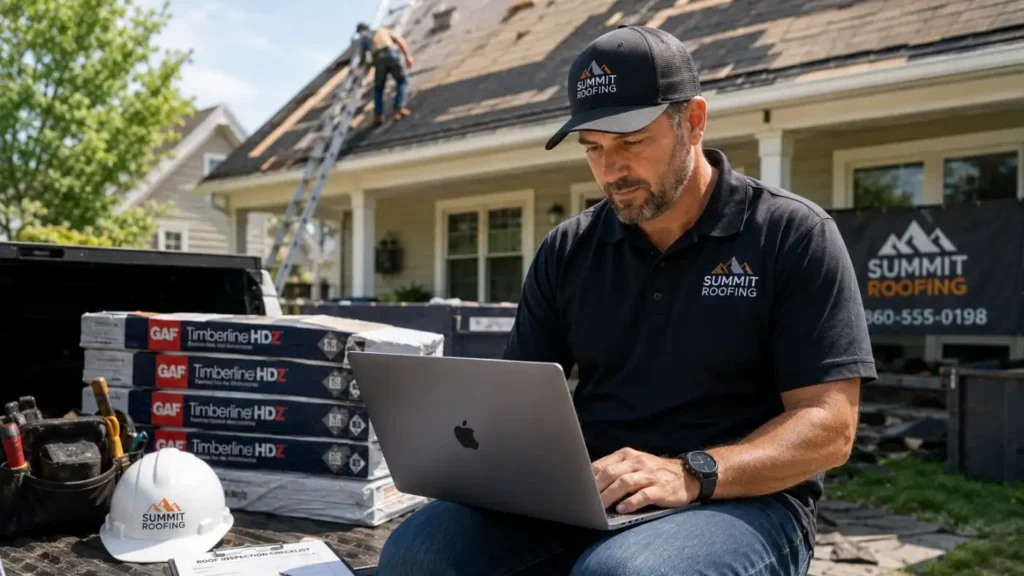
A free resource—like a downloadable checklist or guide—gives homeowners a reason to hand over their email address. You put it on your website, they fill out a short form to get it, and now you have a way to follow up with them directly. It’s a low-pressure way to stay in touch with people who aren’t ready to book yet but might be soon.
Here are some ideas:
- Roof maintenance checklist: Simple steps homeowners can follow to spot early signs of damage.
- Storm damage inspection guide: What to look for after heavy wind or hail.
- Roof replacement planning guide: A short overview of costs, timelines, and common materials.
What paid strategies work best for roofing lead generation?
Paid ads deliver faster results than free methods, but they require tracking your budget and monitoring whether the spending is actually paying off. When managed well, they’re a reliable source of leads from people who are ready to hire—especially while free sources are still building momentum.
Google Local Services Ads (LSAs)
Google Local Services Ads appear at the very top of search results when someone looks for roofing help nearby. Unlike traditional pay-per-click (PPC) ads, you only pay when a potential customer actually contacts you.
LSAs also show a green Google Guaranteed badge, which signals that your business has passed Google’s verification process. In a category where homeowners are making a significant investment, that badge matters.
To qualify, roofing contractors typically need:
- A verified business license
- Proof of insurance
- Customer reviews on Google
Note: LSAs are highly competitive in larger markets. Businesses with the strongest review profiles and completed verification tend to rank higher.
Google Ads (PPC)
Google Ads target homeowners based on search intent: your ad appears when someone types in phrases like “roof repair near me,” “emergency roof repair,” or “roof replacement cost.” These are searches where people are ready to hire, which means they’re often looking to move quickly.
PPC best practices for roofing:
- Use call-only ads so homeowners can reach you directly from search results.
- Create landing pages that match the specific service someone searched for (don’t send everyone to your homepage).
- Track calls and form submissions to see which ads are actually generating booked jobs.
Paid social media ads targeting your area
Facebook, Instagram, and Nextdoor let you reach homeowners directly in the neighborhoods you serve. Unlike search ads, social ads show up while people are scrolling—so the ad itself matters more.
Targeting options to use:
- Specific ZIP codes or service areas
- Homeowners rather than renters
- Age ranges that align with homeownership (typically 35–65)
Ad ideas that work for roofing:
- Before-and-after project photos
- Customer review quotes
- Photos of your branded truck on a job site (helps people recognize your company around town)
Lead marketplaces (Angi, HomeAdvisor, Thumbtack)
Platforms like Angi, HomeAdvisor, and Thumbtack connect homeowners with local contractors. Homeowners submit a service request and the platform shares it with nearby businesses—often multiple contractors at once.
- Pros: Quick access to homeowners actively looking for help; useful for newer businesses still building up their customer base.
- Cons: You often pay for the lead even if the homeowner hires someone else; shared leads mean more competition and price pressure.
Pro tip: Track your results closely on lead marketplaces. Use them as a short-term supplement while your referrals and free sources are still picking up.
Read more: Best lead generation websites for contractors
How much do roofing leads cost?
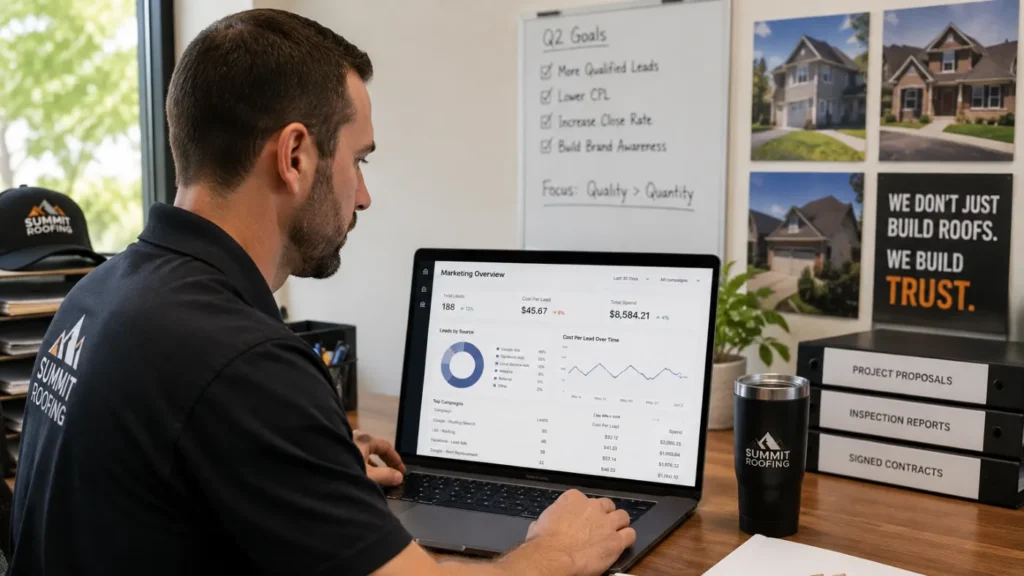
Roofing lead costs vary widely by channel and market. The ranges below reflect common industry benchmarks. Costs shift based on competition in your area, so verify current pricing directly with each platform.. Cost-per-lead only matters in context of what those leads are actually worth.
| Lead source | Typical cost per lead | Lead type | Notes |
| Google LSA | $30–$150 | Exclusive | You only pay when a customer contacts you |
| Google Ads (PPC) | $80–$300 | Exclusive | Higher costs in competitive metro markets |
| Lead marketplaces | $15–$85 | Shared | Lead may go to multiple contractors; fast follow-up is critical |
| Referrals | $0–small incentive | Exclusive | Often the easiest to close |
| SEO | Low (time cost) | Exclusive | Takes time to build but generates leads without ongoing ad spend |
Table: Cost ranges are estimates based on industry benchmarks as of 2025–2026 and vary by market and season. Sources: GhostRep (2026), Inquirly (2025).
A $50 lead that books a $3,000 roof repair is a better deal than a $15 shared lead that rarely converts. Always evaluate cost relative to your average job value and close rate—not just the price of the lead.
How do established roofing businesses scale lead generation?
These strategies work best once you have a steady customer base and consistent marketing budget. They’re designed to drive repeat business, extend your reach, and keep your name in front of homeowners between jobs.
Seasonal promotions
Roofing is seasonal—spring, summer, and fall are your busiest windows. Seasonal promotions take advantage of that natural demand surge and can push homeowners who are “thinking about it” to book now.
Create urgency with limited-time offers:
- Spring roof inspection specials before peak storm season
- Summer repair discounts for homeowners who book early
- Fall maintenance packages to prep homes before winter
Customer reviews in ads
Homeowners rely on others’ experiences when choosing a contractor—especially for a high-cost project like a roof replacement. Displaying reviews in your marketing materials gives homeowners a reason to call you over a competitor—especially when most roofing jobs cost thousands of dollars and homeowners are doing real vetting before they pick up the phone.
How to put customer reviews to work:
- Display Google reviews on your PPC landing pages so visitors see credibility before they call.
- Repurpose review snippets in ad copy, graphics, and email campaigns.
- Pair customer quotes with before-and-after project photos to show the result, not just the rating.
Direct mail and retargeting ads
Direct mail still works well for roofing—a postcard or door hanger stays visible in a way a digital ad can’t once someone scrolls past it. Pairing it with follow-up ads online extends that reach.
How to combine the two:
- Mail a free roof inspection coupon with a QR code → show ads to people who scan the code on Facebook or Google.
- Use unique phone numbers, landing pages, or promo codes to track which campaigns are driving calls.
- Add seasonal offers on top so homeowners remember you.
Read more: Proven direct mail marketing strategies to book more jobs
Text messages and follow-up ads
Text messaging is one of the most direct ways to follow up after an estimate, remind someone about a scheduled inspection, or share a limited-time promotion. Keep messages short and genuinely useful—not frequent.
Follow-up ads work the same way—they show up on websites and social media for people who visited your site but didn’t call. The goal is to stay visible without overwhelming them. Occasional reminders and service tips work better than aggressive sales messages.
Repeat roofing jobs and referrals from past customers
Staying connected with past customers costs far less than constantly buying new leads. Homeowners who already trust your work are your best source of repeat revenue and referrals.
Sample upsell line: “Since we’re already working on your roof, would you like us to do a full inspection and maintenance check? It’s a good way to catch anything before it becomes a bigger problem.”
Ideas for recurring services and packages:
- Maintenance memberships: Annual roof inspections and minor repairs at a set price.
- Seasonal service plans: Spring inspections, storm damage checks, and fall maintenance visits.
Pro tip: If staying on top of past-customer follow-ups is slipping, Housecall Pro’s automated marketing tools handle it for you by sending text or email reminders about maintenance visits and seasonal service plans automatically.
“Housecall Pro’s automated communication features have driven a marked improvement in customer satisfaction and repeat business, evidenced by the volume of positive reviews and feedback we receive about our service,” says Jordan Evangelista, owner of HQ Water Solutions.
Get In Touch: 858-842-5746
Let us earn your trust
On average, Pros increase monthly revenue generated through Housecall Pro by more than 35% after their first year.
See plan options and feature breakdown on our pricing page.
How to get roofing leads after a storm
Storm damage is one of the highest-value lead sources in roofing. Homeowners aren’t shopping around; they need help fast. But capturing these leads requires a different approach than standard marketing.
After a major hail or wind event in your service area:
- Move fast: Door-hanger campaigns or direct mail to affected ZIP codes within 48–72 hours put you in front of homeowners before they search online.
- Offer free storm inspections: A no-cost inspection removes the barrier to contact and gives you a chance to document damage the homeowner hasn’t noticed yet.
- Understand the insurance process: Most storm damage claims go through homeowners insurance. Being able to walk a customer through what to expect—how to file, what the adjuster looks for, what a supplement means—builds trust and reduces friction. Consider training your estimators on insurance claim workflows.
- Document everything on-site: High-quality photos of damage help support the homeowner’s claim and position you as the expert managing the process, not just a contractor submitting a bid.
Insurance-assisted jobs often pay more than out-of-pocket repairs, making this one of the most profitable lead sources when handled well.
How do you evaluate roofing lead generation companies?
Not every lead service delivers the same return. Some platforms send a lot of leads that rarely convert; others charge more but produce better-quality opportunities. Evaluate before you spend money on them.
Here’s a side-by-side comparison of the most common platforms:
| Platform | Cost model | Lead type | Best for | Watch out for |
| Google LSA | Pay per lead | Exclusive | High-intent, local searches | Requires verification; competitive in larger markets |
| Angi / HomeAdvisor | Pay per lead | Shared | Building lead volume fast | Low close rates; leads go to multiple contractors |
| Thumbtack | Pay per quote | Shared | Testing new service areas | Can get expensive quickly |
| Yelp | Subscription or PPC | Exclusive | Reputation-driven referrals | Higher cost in some markets |
Table: Platform comparison current as of 2025–2026. Verify pricing and availability directly with each provider.
What to check before committing to any lead provider:
- Cost per lead (CPL): What you pay each time a potential customer contacts you.
- Exclusivity vs. shared: Whether the lead goes only to you or to multiple contractors.
- Job value vs. lead cost: Whether the typical project value justifies the lead price.
- Average close rate: What percentage of leads actually turn into booked jobs.
- Customer service from the provider: How responsive and helpful the platform is when issues come up.
Building a roofing lead generation system
The most successful roofing businesses don’t rely on a single channel—they build a system that guides homeowners from first contact to repeat customer. This is your marketing funnel.
A typical roofing lead funnel:
- Awareness: A homeowner sees your Google ad or local listing.
- Conversion: They click, call your office, or book an estimate.
- Service: Your crew completes the job and leaves a great impression.
- Follow-up: An automated message asks the customer to leave a review.
- Retention: Email or text reminders introduce maintenance plans or future services.
What are common roofing lead generation mistakes?
Most mistakes come down to the same root cause: treating lead generation as a one-time spend instead of an ongoing system. Here’s what to watch for.
- Responding too slowly to calls or form fills: Homeowners typically contact multiple roofers before deciding. If you wait hours to reply, they’ve already moved on. Set up notifications or automated responses so no inquiry sits unanswered.
- Buying low-quality shared leads without vetting: Some lead providers send the same request to several contractors at once—and you pay whether you win the job or not. Review how any provider sources and qualifies leads before committing your budget.
- Failing to track results by source: If you don’t know which sources are producing booked jobs (not just inquiries), you can’t invest your budget wisely. Track estimates and revenue back to the lead source.
- Over-relying on one source of leads: Depending on a single platform is risky—if pricing changes or performance drops, your pipeline dries up. A mix of referrals, search, ads, and customer follow-ups is more stable.
- Ignoring past customers: Don’t spend all your budget chasing cold leads while neglecting the people who already trust your work. Past customers are often your easiest path to repeat revenue and referrals.
Turn more leads into booked jobs with roofing software
Most lead generation advice stops at getting the lead, but where roofing businesses often lose money is after it comes in.
Here’s where most businesses drop the ball, and how Housecall Pro’s roofing software helps:
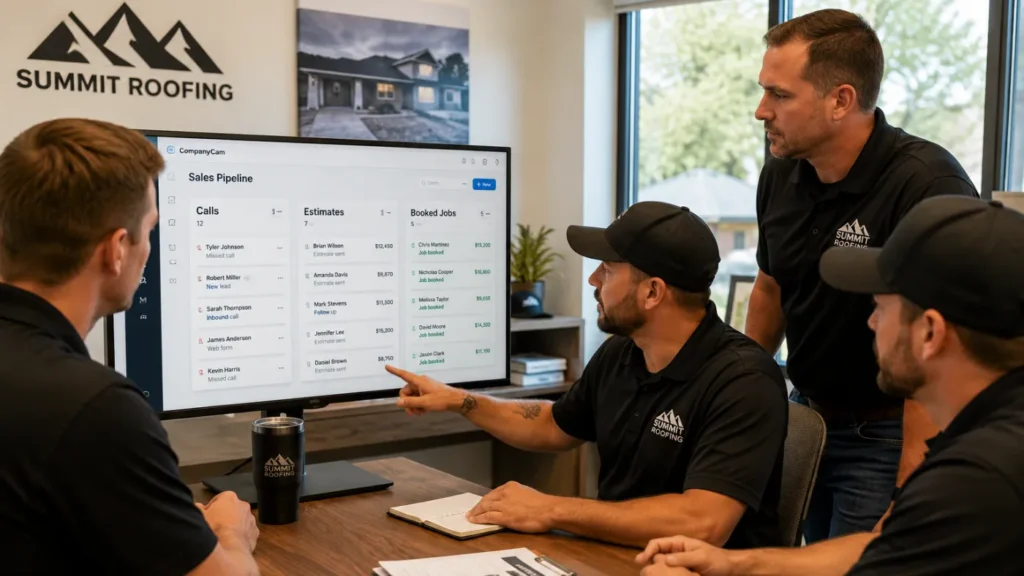
- Leads coming in from too many places to track. The Sales Pipeline pulls every lead—calls, texts, and online booking requests—into one place so nothing slips through while you’re on a job.
- Slow response hands the job to someone else. The Mobile App notifies you the moment a lead comes in, so you can send a professional estimate from your phone before the homeowner moves on.
- Past customers get ignored after the job’s done. Marketing Campaigns send automated follow-up texts, review requests, and seasonal maintenance reminders without you having to remember to do it.
- No way to know which marketing is actually paying off. Advanced Reporting shows which channels are driving booked jobs—not just inquiries—so you put your budget where it works.
Ready to see how the right tools help your roofing business grow? Try Housecall Pro free for 14 days.
Roofing lead generation FAQs
How much do roofing leads cost?
Roofing leads from marketplace platforms and Google LSAs typically cost between $15 and $150, depending on the source. Shared leads from Angi or HomeAdvisor are cheaper but go to multiple contractors. Exclusive leads from Google LSAs or your own marketing tend to cost more but book jobs at higher rates.
What's the best way to get roofing leads without paying for them?
The most effective free strategies are optimizing your Google Business Profile, building local SEO with location-specific pages, and asking every satisfied customer for a referral. These take more time to produce results than paid ads but generate leads you don’t have to keep paying for.
Are lead generation services worth it for roofing businesses?
Lead generation services can be worth it for roofing businesses if you win enough jobs and your average job is large enough. For example: if your average roofing job is $8,000 and you win 1 in 4 leads, you can spend up to $2,000 per booked job and still be profitable—which means a $100 lead cost is very manageable even at a 25% win rate. Where lead services stop making sense is when your win rate drops below what the platform’s cost per lead can support. Track how often you actually book a job from each platform, not just the number of leads, before deciding whether to keep paying for them or cut them.
How do I get more roofing leads fast?
The fastest path to more roofing leads is running Google Local Services Ads or PPC while also activating past customers with a quick promotion or seasonal offer. Paid channels produce results in days; organic channels take months.
What's the difference between shared and exclusive leads?
Shared leads are sent to multiple contractors at the same time—you’re competing from the moment you get the notification. Exclusive leads go only to you, which typically means a higher close rate even if the cost per lead is higher.
How long does it take for roofing lead generation to work?
Paid ads can start producing leads within days. Local SEO and Google Business Profile optimization typically take 3–6 months to show meaningful results, though this varies based on competition in your market and how consistently you build reviews and content. Referral networks build over time but compound—the more jobs you complete well, the more referrals you generate.
How do I know which lead source is actually worth the money?
Track every lead from source to closed job. Note where the lead came from, whether it turned into an estimate, and whether that estimate became booked revenue. Over time, you’ll see which channels produce the best leads at the lowest cost—and can shift your budget accordingly.