

UPDATED 2026 ELECTRICAL LICENSING GUIDE
West Virginia Electrician License Requirements: The Fire Marshal Licence, the New 2026 Exam Format & 80-Volt Rule (2026)
Table of Contents
Download the Checklist!
If you’re planning to do electrical work in West Virginia, two different agencies are involved and most guides only tell you about one. The Office of the State Fire Marshal licenses the individual electrician under W. Va. Code §29-3B, issuing Master, Journeyman, Temporary, and Specialty licenses. The West Virginia Contractor Licensing Board, inside the Division of Labor, licenses the business that contracts for the work once a project tops $2,500. You generally need both. Two things have changed recently and almost nothing published reflects them: the exam format changed on January 1, 2026, and apprentice or helper electricians have not required a license since June 16, 2021. This page covers the license classes, the new exam, the 80-volt low voltage rule, the unusually broad reciprocity, and the renewal trap.
Electrical work is one of the stronger trades in the national job market. Bureau of Labor Statistics figures put the national median wage for electricians at $63,190 a year, or about $30.38 an hour, as of May 2025, with the lowest 10% under $42,640 and the highest 10% above $108,510. The national mean sits higher than the median at $71,490, which tells you the distribution stretches upward on specialty and industrial work. Employment of electricians is projected to grow 9%, much faster than the average for all occupations, with roughly 72,700 openings a year over the decade.
West Virginia employs electricians at well above the national rate and pays them right around the national median, but with a noticeably lower ceiling. BLS state figures (West Virginia OEWS, May 2025) count 4,290 electricians at a mean of $32.61 an hour, or $67,840 a year, and a median of $31.16 an hour, or $64,810. That median sits slightly above the national figure. The location quotient of 1.25 puts electrician employment 25% above the national rate, which reflects the state’s industrial, utility, and energy work. The top end is where West Virginia diverges: the 90th percentile is $45.74 an hour, or $95,140, against roughly $52 an hour and $108,510 nationally.
Quick answer: do you need an electrical license in West Virginia?
Yes, and probably two credentials rather than one.
The individual license comes from the Office of the State Fire Marshal (SFMO) under W. Va. Code §29-3B and the administrative rules at CSR 87-4. The statute authorizes master electrician, journeyman electrician, and temporary electrician licenses, plus additional classes of specialty license.
The business license comes from the West Virginia Contractor Licensing Board under W. Va. Code §30-42. Electrical contracting requires the Board’s electrical specialty classification once total project cost of materials and labor reaches $2,500, and contractor exams run through Prov rather than through the Fire Marshal.
One thing you no longer need. As of June 16, 2021, apprentice and helper electricians do not require a license to perform helper-level electrical work, following legislative changes. They must still be supervised at all times by a licensed journeyman or master electrician. Several published guides still list Apprentice Electrician among the licenses SFMO issues.
One thing that just changed. Effective January 1, 2026, all West Virginia electrical examinations are based on the 2023 edition of NFPA 70, and the Master, Journeyman, and Single Family Dwelling exams now contain 50 multiple-choice questions worth two points each, with calculation questions folded into the multiple-choice format rather than scored separately.
Key takeaways
Everything you need to know about getting licensed for electrical work in West Virginia:
Two agencies, two credentials: The Fire Marshal licenses the individual electrician. The Contractor Licensing Board licenses the business once a project tops $2,500.
The exam format changed in January 2026: Master, Journeyman, and Single Family Dwelling exams are now 50 multiple-choice questions on the 2023 NEC, calculations included inline.
Apprentices need no license: Since June 16, 2021, helper-level work requires no licence, but apprentices must be supervised at all times by a journeyman or master.
Low voltage means 80 volts or less: The statute exempts low voltage work from full licensure, requiring only a specialty license, and defines low voltage as 80 volts or less.
Reciprocity is unusually broad: The statute directs the Fire Marshal to grant an equivalent license without written examination to qualified licensees from other jurisdictions.
Licences expire every June 30: All SFMO electrician licences run on one annual date rather than your anniversary, at a fee commonly cited at $50 per class.
Two agencies, and which one you need
The split confuses electricians moving in from Ohio, Pennsylvania, or Virginia, so it is worth laying out plainly.
| SFMO electrician license | WVCLB contractor license | |
| Issued by | Office of the State Fire Marshal | Contractor Licensing Board |
| Legal basis | W. Va. Code §29-3B, CSR 87-4 | W. Va. Code §30-42 |
| Held by | An individual person | The business entity |
| Authorizes | Performing electrical work | Contracting, bidding, pulling permits |
| Trigger | Performing licensed electrical work | Project cost of $2,500 or more |
| Exams | SFMO electrical examinations | Prov, business and trade |
| Expiration | June 30 annually | 12 months from issuance |
A working electrician employed by someone else needs only the SFMO license. A person who wants to contract directly with customers needs the SFMO license and a Contractor Licensing Board license carrying the electrical classification, plus everything that comes with it: the wage bond affidavit, the written contract rule above $10,000, and the $90 registration fee.
That $2,500 threshold is the same one that applies to general contracting in West Virginia, and it counts materials and labor together. For an electrician, a single service upgrade can clear it.
License classes under §29-3B
The statute names three classes plus specialties, and the definitions carry real weight because they set the standard for licensure.
Master electrician. The statute defines a master electrician as a person with at least two years of electrical work experience, including experience in all phases of electrical wiring and installation, who is competent to design electrical systems and to instruct and supervise the electrical work of journeyman electricians and other related workers.
Journeyman electrician. Qualified to perform electrical work under the general framework of the article.
Temporary electrician. SFMO offers temporary licensure at both the journeyman and master level for applicants who have completed either a US Department of Labor formal apprenticeship program or a West Virginia Department of Education approved 1,080-hour vocational program, evidenced by a certificate of completion, and who also meet the minimum West Virginia experience requirements.
Specialty electrician. Defined as a person qualified to perform electrical work in a limited or specialized area. Specialty classes in circulation include Electric Sign, HVAC, Low Voltage, Single Family Dwelling, and Elevator.
The experience requirement, and why published figures disagree
Sources differ here by whole years, so it is worth going to the statute, which settles more than you would expect.
W. Va. Code §29-3B-3 defines both classes by years of experience:
- “Journeyman electrician” means a person qualified by at least one year of electrical work experience to do any work installing wires, conduits, apparatus, equipment, fixtures, and other appliances
- “Master electrician” means a person with at least two years of electrical work experience, including experience in all phases of electrical wiring and installation, competent to design electrical systems and to instruct and supervise journeyman electricians
Those statutory floors line up exactly with SFMO licensure policy as circulated by West Virginia IBEW locals: one year or 2,000 hours for journeyman, two years or 4,000 hours for master, and two years or 4,000 hours in the specialty area for a specialty license. All qualifying work must consist of above-ground structural wiring in accordance with the NEC.
Where the bigger numbers come from. Several national guides state four years or 8,000 hours for journeyman and five years or 10,000 for master. Those do not match the statutory definitions, and one source attributes them to reciprocity rather than initial licensure. You will also see a theory that the higher figures are the base and the lower ones are reduced alternates for vocational graduates. Tidy, but the statute defines journeyman as one year and master as two outright, with no such tiering.
The practical position: the statutory floors are one year and two years. Whether CSR 87-4 layers anything on top is worth a direct question to SFMO at (304) 558-2191, since a rule can require more than the statute but not less than the definition it implements.
One nuance from SFMO materials: vocational training cannot count toward the required work experience, even though an approved 1,080-hour program is a route to temporary licensure. Two different uses of the same certificate.
The exams, and what changed on January 1, 2026
Every published guide I can find describes the old exam format. SFMO’s own Regulatory and Licensing Division page describes the new one.
As of January 1, 2026, all West Virginia electrical examinations are based on the 2023 edition of NFPA 70, the National Electrical Code. And the format changed: the Master, Journeyman, and Single Family Dwelling exams now contain 50 multiple-choice questions valued at two points each, with calculation-based questions incorporated directly into the multiple-choice format.
Under the old structure, the journeyman exam was 42 multiple-choice questions worth two points each plus four separately scored calculations worth four points each, and the master exam carried its own separate calculation block. If you are studying from a prep course, a blog post, or an exam guide that describes separate calculation sections, it predates the change.
| Exam detail | Current position |
| Code edition | 2023 NFPA 70, since January 1, 2026 |
| Master, Journeyman, Single Family Dwelling | 50 multiple choice, two points each |
| Calculations | Incorporated into the multiple-choice format |
| Passing score | Commonly cited at 80% |
| Exam fee | Commonly cited at $25, non-refundable |
| Seating | Limited per exam date and location |
| Administered by | Arranged through SFMO |
Two practical notes. Seating is limited for each exam date and location, so book early rather than assuming availability. And the exam fee is non-refundable, which makes turning up prepared a financial matter as well as a professional one.
Why the format change matters more than it looks
Folding calculations into the multiple-choice format is not cosmetic. Under the old structure calculations were a separate block worth four points each, so a candidate strong on code lookups could absorb weak calculation work, and the reverse.
Now every question is worth two points and they are mixed together. You cannot triage a calculation block at the end, and pacing across 50 questions differs from 42 plus four. Anyone retesting, or working from a prep course bought in the last few years, is preparing for a test that no longer exists in that shape.
The code change compounds it. Exams moved to the 2023 edition of NFPA 70, so tabs, article numbers, and table locations from an older code book will not match. Buy the current edition.
Confirm the current question counts, passing score, and fees with SFMO, because the office changed the format once already and specialty exam formats were described differently before the change.
The 80-volt rule for low voltage work
This is the detail most worth knowing if your work is data, communications, security, or controls, and it is commonly reported incorrectly.
The statute provides that any person who performs low voltage electrical work with only low voltage wiring is not required to hold an electrician’s license other than a specialty license. And it defines the threshold: low voltage electrical work is 80 volts or less, and directly related wiring.
You will see the threshold reported as 50 volts. The statutory number is 80 volts or less.
Two consequences follow.
A specialty license covers low voltage work, and nothing more. If your scope crosses into line-voltage premises wiring or tying into panels, a low voltage specialty license is not enough and you need journeyman or master licensure.
That boundary is easier to cross than it sounds. A cabling job needing a dedicated circuit for a rack, or a camera install needing a new receptacle, has moved past 80 volts. The usual arrangement is to subcontract that element or carry both credentials in the business.
The specialty exam is separate. Specialty examinations have historically carried different question counts than the journeyman and master exams, and the January 2026 format change named only Master, Journeyman, and Single Family Dwelling. Ask SFMO which format applies to your specialty before you study.
Anyone running a monitored alarm or central-station operation should also note that alarm monitoring carries separate registration requirements in West Virginia beyond any electrical license.
The application itself, and SFMO’s investigative power
Section 29-3B-5 gives the Fire Marshal broader latitude on applications than most licensing statutes.
The statute requires the application to be sufficiently detailed to enable the Fire Marshal to determine the presence or absence of an applicant’s qualifications for a license of a particular class.
Then it goes further. SFMO may require affidavits or other documents attesting to your qualifications from past employers, other electricians, engineers, and others with knowledge, and may make such other inquiries as it considers necessary. An applicant expressly consents to those inquiries by applying.
Three practical consequences.
Line up your references first. If SFMO asks for affidavits from past employers, you want those relationships warm. An electrician who left an employer badly may find that matters more here than in a state that counts hours on a form.
Document as you go. Payroll records, W-2s or 1099s, project lists, and supervisor names are what makes an experience claim verifiable.
Your consent is automatic. You cannot apply and then object to SFMO contacting a former employer. The statute builds that consent into the application.
Section 29-3B-7 covers denial, suspension, and revocation, and criminal history is disclosed on the application and reviewed individually rather than triggering automatic denial.
Reciprocity: unusually generous, and it is statutory
Most states make reciprocity discretionary. West Virginia makes it a directive.
Under §29-3B-4(d), to the extent that other jurisdictions license electricians, the State Fire Marshal shall grant the same or equivalent classification of license without written examination upon satisfactory proof that the applicant’s qualifications demonstrate they can perform work safely and competently, that they are in good standing in all jurisdictions where licensed, and upon payment of the required fee.
That is a mandate rather than a permission, which is why SFMO materials describe recognizing reciprocity with all 50 states, and with counties, cities, and townships within them. Applicants must be licensed by the state or jurisdiction they are applying from, and must still meet West Virginia’s minimum experience requirements regardless of what their home jurisdiction required.
There is a second, narrower provision worth knowing. Under §29-3B-4(b)(1), a journeyman or master license may be issued to a person who is a former West Virginia resident, who formerly held a West Virginia electrician’s license, who obtained an equivalent license from another state, and who returns to West Virginia as a permanent resident, without requiring the application or examination requirements the article would otherwise impose. That is a homecoming provision, and it is unusually forgiving.
The statute also contains a dedicated section, §29-3B-4a, on veteran qualification for examination as an electrician.
Reciprocity applications carry their own fee, commonly cited at $50. Confirm the current amount and the documentation SFMO wants before filing.
Worth using rather than testing. A licensed electrician from Ohio, Pennsylvania, Virginia, Maryland, or Kentucky who qualifies under §29-3B-4(d) skips the written examination entirely, which in 2026 also means skipping a new format and a new code edition. For border-county electricians that is the fastest way in, and it is a statutory right rather than a favour.
Renewal, and the five-year relicensing provision
All SFMO electrician licenses expire June 30 each year. That is a fixed annual date rather than an anniversary, so a license issued in May expires weeks later. Annual fees are commonly cited at $50 for master, journeyman, and each specialty class.
Applications and renewals go through the SFMO online license portal.
Here the sources diverge again, and the statute is the better guide. Under §29-3B-6, an electrician previously licensed by the State Fire Marshal who did not renew may renew without retesting within five years of the date of the last renewal, provided the license had not been revoked and the applicant pays double the current fee.
Some guides state that failure to renew within 12 months means you cannot renew and must retest. That does not match §29-3B-6, which sets a five-year window with a double fee. SFMO operational practice on late fees and retesting deadlines may add detail the statute does not, so confirm with the office, but do not assume you have lost the license after a year.
The practical advice either way: renew by June 30. Paying double under a statutory grace provision is a worse outcome than a calendar reminder.
What the license does and does not authorize
A distinction worth being precise about, because it determines whether you can take work in your own name.
Your SFMO license authorizes you to perform electrical work. It does not authorize a business to contract. Contracting in West Virginia requires a Contractor Licensing Board license once total project cost reaches $2,500, and electrical contracting requires the Board’s electrical specialty classification.
So the two common situations look like this:
- Employed electrician. SFMO journeyman or master license. Your employer holds the contractor license.
- Electrical contractor. SFMO license for yourself plus a WVCLB license for the business, with its own $90 fee, wage bond affidavit, and written contract obligations above $10,000.
Getting this wrong is not a technicality. An unlicensed contractor in West Virginia faces fines from $200 to $1,000 for a first offense, an administrative penalty of up to $200 per day on contracts of $25,000 or more, and the practical loss of the ability to enforce the contract.
Reading a licence lookup before you hire
West Virginia gives you two separate verifications, and an electrical job can need both.
The SFMO side confirms the individual’s licence, class, and currency. Because every licence expires June 30, a record checked in July shows a non-renewal that a May check would not.
The Contractor Licensing Board side confirms the business licence and its classification through the Board’s public database.
Four things to confirm before you hire an electrician or take one on as a sub:
- The individual’s SFMO licence class matches the work. A low voltage specialty licence does not cover panel work.
- The licence is current for this licence year. Ask when it was last renewed, not just whether it exists.
- The business holds a WVCLB licence with the electrical classification, if they are contracting rather than working for you.
- Workers’ compensation is in force, because West Virginia requires it for employers with no opt-out.
That first check matters more here than in states with one broad electrical licence. Because the specialty classes are genuinely limited and the low voltage exemption stops at 80 volts, a specialty-licensed electrician taking line-voltage work is outside their licence even while holding a valid one.
Beyond the electrician license
SFMO’s Regulatory and Licensing Division runs several programs, and an electrical business may touch more than one.
| Program | Administered by |
| Electricians | WV State Fire Marshal |
| Electrical Inspectors | WV State Fire Marshal |
| Building Code Enforcement | WV State Fire Marshal |
| Fire Protection Workers | WV State Fire Marshal |
| Home Inspectors | WV State Fire Marshal |
| Pyrotechnicians and fireworks | WV State Fire Marshal |
| Electrical contracting business | WV Contractor Licensing Board |
| Lead-safe renovation (RRP) | U.S. EPA firm certification |
Two notes for electrical contractors specifically. Fire Protection Workers is a separate SFMO program, so fire alarm and suppression work may carry credentials beyond an electrical specialty license. And West Virginia is a federal OSHA state, so job-site safety enforcement comes from federal OSHA rather than a state plan.
Setting up an electrical business in West Virginia
If you are contracting rather than working for someone else, the business side runs through the Contractor Licensing Board and the pieces around it.
The WVCLB licence. A contractor licence with the electrical classification, at $90 to apply and $90 a year to renew, valid 12 months from issuance. Email your scope to the Board first so it confirms your classification and required exams, because contractor exams run through Prov rather than through SFMO.
A master electrician usually has to back the business. Industry sources consistently state the electrical contractor licence must be qualified by a licensed master electrician, owner or full-time employee, and that a journeyman credential alone cannot qualify an entity. That matches the statutory role of a master as the person competent to design systems and supervise journeymen. Confirm with the Board before planning a business around a journeyman licence, because it decides whether you can contract at all.
On the threshold. The Contractor Licensing Board’s own guidance and the state business portal put the licensing trigger at $2,500 in total project cost of materials and labor. Some electrical guides state $1,000 instead. Use $2,500 unless the Board tells you otherwise, and note that either way a single service upgrade clears it.
The Wage Bond Status Affidavit. Every WVCLB applicant files it, including those who owe no bond. If you do owe one, it equals four weeks of gross payroll at full capacity plus 15% for benefits, with exemptions available on the affidavit for longevity, assets, or single-family-residential-only work.
The written contract rule. Any project with an aggregate value of $10,000 or more needs a written contract signed by both you and the owner, and the requirement extends to your agreements with any subcontractor you hire on that project.
Business Registration Tax Number. From the West Virginia State Tax Department, required on the WVCLB application, and the form collects unemployment compensation information even if you have no employees.
Workers’ compensation. All West Virginia employers with employees are statutorily required to carry it, with no opt-out, and proof goes in with the contractor licence application.
Put together, that is a second licensing track with its own fee, its own affidavit, its own exam provider, and its own renewal date. Plan for both from the start rather than discovering the contractor side after you already hold the SFMO licence.
How to get licensed, step by step
Step 1: Confirm which class you need
Journeyman for general electrical work, master if you will design systems and supervise journeymen, or a specialty class if your scope is limited to signs, HVAC, low voltage, single family dwellings, or elevators.
Step 2: Verify your experience against SFMO’s current standard
Given the conflict between the published figures, email or call SFMO with your actual hours and ask what they require for your class. Remember all qualifying work must be above-ground structural wiring per the NEC.
Step 3: Check whether reciprocity or the returning-resident rule applies
If you hold a license in another state in good standing, §29-3B-4(d) directs SFMO to grant an equivalent license without written examination. If you are a former West Virginian returning permanently, §29-3B-4(b)(1) may apply.
Step 4: Consider temporary licensure
If you have completed a US DOL apprenticeship or an approved 1,080-hour West Virginia vocational program, temporary journeyman or master licensure may be available while you complete the rest.
Step 5: Apply through the SFMO portal
Applications and renewals run through the online license portal. SFMO may require affidavits or documents from past employers, other electricians, or engineers attesting to your qualifications, and it may make further inquiries, which you consent to by applying.
Step 6: Book the exam early and study the 2023 NEC
Seating is limited per date and location, the fee is non-refundable, and exams have been based on the 2023 edition of NFPA 70 since January 1, 2026. Use current prep material, not a guide describing separate calculation sections.
Step 7: If you will contract, license the business too
A Contractor Licensing Board license with the electrical classification, the Wage Bond Status Affidavit that every WVCLB applicant files, and the $90 fee.
Step 8: Calendar June 30
Every SFMO electrician license expires on that date regardless of when it was issued. Put it in whatever calendar you actually check.
At a glance
| Requirement | Detail |
| Individual authority | WV Office of the State Fire Marshal |
| Legal basis | W. Va. Code §29-3B; CSR 87-4 |
| License classes | Master, Journeyman, Temporary, Specialty |
| Apprentice license | Not required since June 16, 2021 |
| Low voltage threshold | 80 volts or less |
| Exam code edition | 2023 NFPA 70, since January 1, 2026 |
| Exam format | 50 multiple choice, calculations inline |
| Passing score | Commonly cited at 80% |
| Exam fee | Commonly cited at $25, non-refundable |
| Annual licence fee | Commonly cited at $50 per class |
| Expiration | June 30, every year |
| Late renewal | Five years without retesting, double fee |
| Reciprocity | Statutory, all 50 states per SFMO materials |
| Business licence | WVCLB electrical classification at $2,500 |
| Office | 1207 Quarrier St., 2nd Floor, Charleston, WV |
| Phone | (304) 558-2191 |
What it costs
| Cost item | Typical amount |
| SFMO exam fee | Commonly cited at $25, non-refundable |
| SFMO annual licence fee | Commonly cited at $50 per class |
| Reciprocity application | Commonly cited at $50 |
| Late renewal under §29-3B-6 | Double the current fee |
| WVCLB contractor licence | $90 application, $90 annual renewal |
| WVCLB wage bond, if owed | Four weeks payroll plus 15% |
| General liability insurance | Varies by scope and payroll |
| Workers’ compensation | Required with employees |
| Prep materials, 2023 NEC | Varies by provider |
| EPA RRP firm certification | Around $300 for five years |
Confirm every figure with SFMO or the Contractor Licensing Board before budgeting. Several of these are commonly cited across industry sources rather than published on a current state fee page, and West Virginia has changed its exam rules recently.
Where West Virginia electricians get tripped up
Studying the old exam format. Since January 1, 2026 the Master, Journeyman, and Single Family Dwelling exams are 50 multiple-choice questions with calculations built in.
Studying an older code edition. Exams are based on the 2023 NFPA 70.
Thinking apprentices need a license. They have not since June 16, 2021, but they must be supervised at all times.
Using 50 volts as the low voltage line. The statute says 80 volts or less.
Trusting one set of experience figures. Published sources differ by years. Ask SFMO directly.
Counting vocational training as work experience. SFMO materials say it cannot be, though it can qualify you for temporary licensure.
Counting below-ground or non-structural work. Qualifying work must be above-ground structural wiring per the NEC.
Assuming a lapsed license is gone after a year. §29-3B-6 allows relicensing without retesting within five years at double the fee.
Thinking an SFMO license lets you contract. Contracting needs a WVCLB license once a project hits $2,500.
Missing June 30. Every license expires on that date, not on your anniversary.
Booking an exam when reciprocity would have covered you. Section 29-3B-4(d) directs SFMO to grant an equivalent licence without written examination. Ask before you pay.
What electricians earn in West Virginia
| West Virginia electricians, May 2025 | Hourly | Annual |
| Mean | $32.61 | $67,840 |
| Median | $31.16 | $64,810 |
| 10th percentile | $20.97 | $43,620 |
| 25th percentile | $23.37 | $48,610 |
| 75th percentile | $40.35 | $83,920 |
| 90th percentile | $45.74 | $95,140 |
Three patterns are worth reading together.
Demand is genuinely strong. A location quotient of 1.25 means West Virginia employs electricians 25% above the national rate. For a state with a small population, 4,290 electricians is a lot, and it reflects industrial, utility, and energy work rather than residential volume.
Median pay beats the national median, slightly. At $31.16 an hour, a West Virginia electrician sits just above the national $30.38. In a state with low living costs, that is a better real outcome than the raw number suggests.
The ceiling is compressed. The 90th percentile is $45.74 an hour, or $95,140, against roughly $52 and $108,510 nationally. The national mean also exceeds West Virginia’s by about $3,650. So the top decile here earns meaningfully less than the top decile nationally, which is what you would expect in a state without large high-wage metros bidding up specialty and controls work.
Read together: West Virginia is a good place to be a working journeyman and a harder place to reach the top of the trade. The structural route upward is the one this page describes, moving from journeyman to master and then licensing a business, because contracting income is not captured in wage data at all. For how electrical pay compares with other construction roles across states, see our contractor and construction manager salary breakdown.
One June 30 deadline, and everything else on top
West Virginia asks less of an electrician than most states: no continuing education on the state license, a modest fee, statutory reciprocity, and an exam you sit once. What it does ask is that you keep track of a fixed annual expiry, a second license if you contract, a wage bond affidavit on the contractor side, and a written contract on every job over $10,000. None of that is hard. All of it is easy to lose track of when you are the electrician, the estimator, and the office.
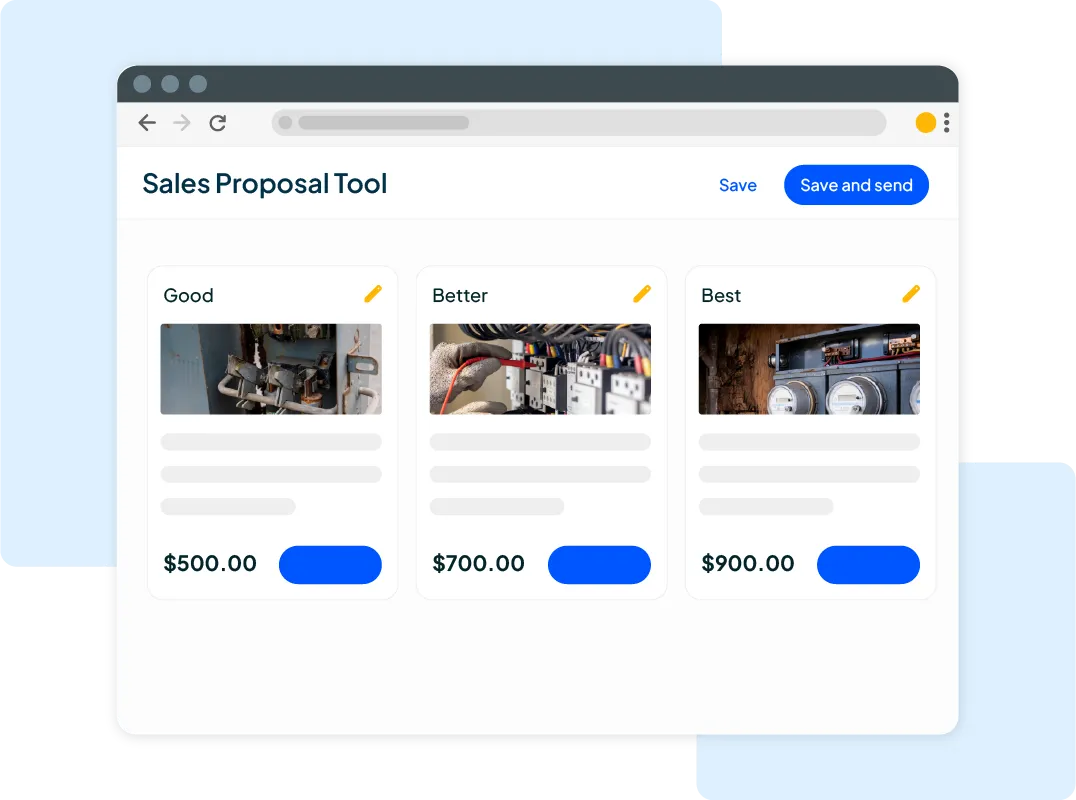
Housecall Pro’s electrical contractor software connects scheduling, dispatch, job management, and invoicing in one place, so your license details, pricing, and customer history follow the job instead of living in three systems. Build quotes fast with electrical estimating software, offer good, better, best options, and collect approval on the spot, then bill and chase payment with Invoicing while automated reminders handle the follow-up. Keep every lead, job, and conversation together in the electrician CRM, and sync the books through the QuickBooks integration so the records behind your contractor filings are ones you can actually produce. Want tools for the truck as well as the office? See our roundup of the best electrician apps. Try Housecall Pro free for 14 days.
General information, not legal advice. Fees, experience standards, exam formats, and code editions change, and West Virginia revised its exam format effective January 1, 2026. Verify with the WV Office of the State Fire Marshal and the WV Contractor Licensing Board before applying.
West Virginia electrician licensing FAQs
Who licenses electricians in West Virginia?
The Office of the State Fire Marshal, under W. Va. Code §29-3B and the rules at CSR 87-4. The Contractor Licensing Board separately licenses the business that contracts for electrical work.
Do apprentice electricians need a license?
No. Since June 16, 2021, helper-level electrical work requires no license, but apprentices must be supervised at all times by a licensed journeyman or master electrician. Guides listing an Apprentice Electrician license are out of date.
What changed about the exam in 2026?
As of January 1, 2026, all West Virginia electrical examinations are based on the 2023 edition of NFPA 70, and the Master, Journeyman, and Single Family Dwelling exams contain 50 multiple-choice questions worth two points each, with calculations incorporated into the multiple-choice format.
What counts as low voltage in West Virginia?
The statute defines low voltage electrical work as 80 volts or less and directly related wiring, and exempts it from full licensure in favor of a specialty license. The 50-volt figure that circulates is not the statutory number.
How much experience do I need?
Published figures conflict. SFMO materials circulated by West Virginia IBEW locals state one year or 2,000 hours for journeyman and two years or 4,000 hours for master, while national guides state four and five years. The statute defines a master as having at least two years. Confirm with SFMO.
Does vocational training count as experience?
SFMO materials say vocational training cannot be counted toward the required work experience, although completing an approved 1,080-hour program is a route to temporary licensure.
What is a temporary electrician license?
SFMO offers temporary journeyman and master licensure to applicants who completed a US Department of Labor apprenticeship or an approved West Virginia 1,080-hour vocational program and who meet the minimum state experience requirements.
Does West Virginia have electrician reciprocity?
Yes, and it is statutory. Under §29-3B-4(d) the Fire Marshal shall grant an equivalent license without written examination to applicants licensed elsewhere who demonstrate competence, are in good standing, and pay the fee. SFMO materials describe recognizing all 50 states.
I used to be licensed here and moved away. Is there a shortcut back?
Possibly. Under §29-3B-4(b)(1), a former resident who held a West Virginia license, obtained an equivalent license elsewhere, and returns as a permanent resident may be licensed without the usual application or examination requirements.
When do licenses expire?
Every SFMO electrician license expires June 30, regardless of when it was issued. Annual fees are commonly cited at $50 per class.
What if I miss the renewal?
Under §29-3B-6 you may renew without retesting within five years of your last renewal, provided the license was not revoked, by paying double the current fee. Some guides claim a 12-month cutoff, which does not match the statute.
Who administers the exam and what does it cost?
Exams are arranged through SFMO, with the fee commonly cited at $25 and non-refundable, and seating limited per date and location. Confirm the current figure with the office.
Do I need a contractor license too?
If you contract for the work rather than working for someone else, yes. The Contractor Licensing Board requires a license with the electrical classification once total project cost of materials and labor reaches $2,500.
How much do electricians earn in West Virginia?
The mean is $32.61 an hour or $67,840 a year, and the median is $31.16 or $64,810, per BLS data for May 2025. The bottom 10% earn $20.97 an hour and the top 10% earn $45.74, or $95,140 a year.
LEARN FROM THE PROS
Helpful content for the trades
Explore our collection of helpful articles written by top experts in their field to seasoned pros in the field. Strengthen your field service knowledge and stay current on the latest industry topics and trends.
How contractors track job status without calling every technician
How to market your home service business and keep customers coming back
How HVAC companies with 10+ technicians manage GPS tracking and dispatch
How to price and scale a recurring lawn care route
How to evaluate field service apps: 8 things to check before you choose
How to compare payment processing options for home service contractors
Thumbtack vs. Angi: Which is better for your business?
TradeWire #50: Home Depot’s tool sweater, Milwaukee’s $200M trades pledge, and Trades Thursday
General contractor pricing guide: How to price jobs in 2026
Housecall Pro’s inaugural Trades Thursday draws thousands of pros nationwide
How to choose the right HVAC scheduling app
How to get junk removal leads: 15 proven strategies
Get $50 gift card
Talk to an expert and see how Housecall Pro can fit your needs.
Prefer to explore on your own?


