Want to win more jobs with less effort?
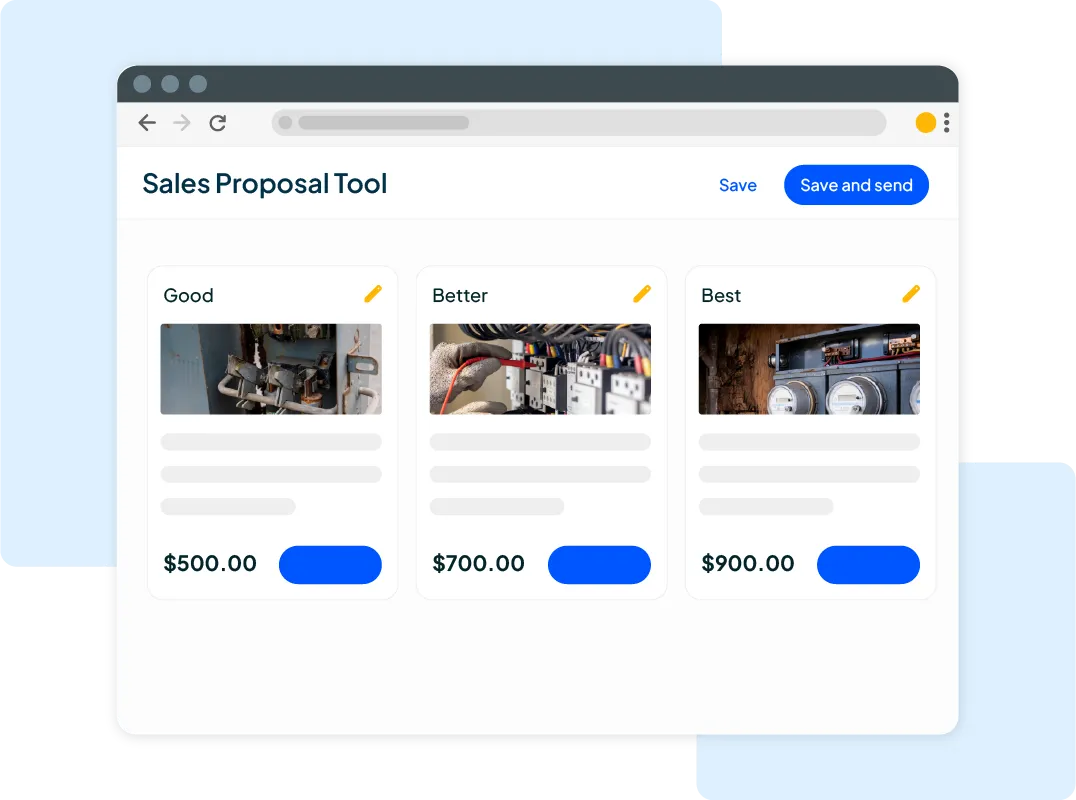
Grow your business and send quick quotes with our home service software.

Want to see your potential revenue?
See what businesses like yours earn with Housecall Pro in 1 - 2 minutes.

A business plan is the foundation that sets your business up for success. For small businesses in the pest control industry, the document helps you secure funding, map out your services, and set realistic revenue goals. Lenders and investors use it to see exactly how you’ll make money and manage costs, but you need this roadmap just as much to guide your daily decisions.
While writing a plan requires time, it pays off by providing a clear path for growth. This guide breaks down every essential section, provides practical examples, and includes a free pest control business plan template to help you start or scale your pest control company.
Quick answer: What should a pest control business plan include?
A pest control business plan should cover 12 core sections: a cover page, executive summary, business overview, management team, services list, operations plan, pricing strategy, industry analysis, marketing strategy, employee planning, financial plan, and appendix.
Key takeaways
Use these priorities to guide your plan as you write it:
Write the executive summary last: Once every other section is done, you can pull accurate details and write a sharper summary.
Base your services list on local demand: Research what customers in your area actually need before listing everything you could offer.
Anchor your financials to a break-even number: Calculate how many jobs per week it takes to cover costs—this number drives your pricing and revenue targets.
Research competitors before writing your industry analysis: Review their service areas, pricing, and online reviews to spot gaps your business can fill.
Confirm licensing requirements before finalizing your services section: State rules determine what you can legally offer—check this before listing your services.
Table of contents
Step 1: Cover page and table of contents
Your cover page is the first impression lenders and potential partners get of your brand. It should be clean and professional. Make sure to clearly display your business name, logo, and contact information (phone number, email, and website).
Step 2: Executive summary
Your executive summary gives readers a quick snapshot of your pest control business. It should briefly explain who you are, the market you serve, and the services you provide. Keep it clear and direct.
Include these key elements:
- Your mission and long-term vision
- Target market (residential, commercial, or both)
- Core services offered
- Revenue or growth goals
With over 33,000 pest control businesses in the U.S., competition is high. Use this section to highlight what sets you apart, whether it’s your eco-friendly treatments, fast response times, or recurring maintenance plans.
Example executive summary:
[Business name] is a licensed residential and commercial pest control company serving [city/county], [state]. We offer general pest control, rodent removal, and quarterly maintenance plans for homeowners and small landlords. Our goal is to reach $[X] in first-year revenue by servicing [X] recurring customers per month, with a focus on building contract-based income from the start. [Owner name] brings [X] years of field experience and holds a [state] commercial pesticide applicator license.
Pro tip: Write this section after you complete the rest of your business plan. That way, you can pull accurate details from each section and create a focused summary.
Step 3: Business overview
This section details how your company is legally structured and where you intend to operate. It proves to investors and partners that your business is a legitimate entity ready to work in your chosen service area.
Keep this section factual and include the following details:
- Business structure: Specify if you are an LLC, sole proprietorship, partnership, or corporation.
- Ownership: List the owners and their percentage of the business.
- Service area: Define the specific cities, counties, or regions you serve.
- Physical location: Describe your service base or office location.
You must also confirm your legal status by listing any licenses and insurance you’ve obtained, such as your state pest control operator license, local business registration, and insurance coverage details.
Step 4: Management team
This section introduces the leadership driving the business and highlights the expertise they bring to the trade. Even if you are starting as a solo owner-operator, listing your own background builds credibility with lenders.
For each owner or key team member, provide a short bio (around 100 words) covering their:
- Specific role in the company.
- Relevant pest control experience and training.
- Professional certifications or licenses.
- Business or management background.
Step 5: Pest control services list
Your services section documents what you offer and how it fits your local market. Keep the list focused on what customers in your area actually need—not every service you could eventually provide. Check Google Trends for seasonal pest searches in your ZIP code, or look at what services local competitors highlight most prominently on their websites.
List your services by category. Common options include:
- General pest control (ants, spiders, etc.)
- Rodent removal and prevention
- Termite inspections and specialized treatment
- Seasonal services like mosquito or tick control
- Wildlife exclusion
Note any specialty services that differentiate you from local competitors. Include any recurring quarterly or monthly packages you plan to offer—this shows lenders you’ve built a predictable revenue model, not just a one-time job business.
Step 6: Operations plan
Your operations plan explains how your pest control business runs day to day. This section should illustrate how you move from booking a job to completing the service and getting paid. Clear processes help you stay organized and maintain consistent quality.
Outline your typical workflow step-by-step, including:
- Inquiry: How do you handle customer inquiries and provide estimates?
- Scheduling: Your system for booking jobs and planning routes.
- Service: The process for on-site inspection and treatment.
- Payments: How you handle documentation, invoicing, and payment processing.
- Follow-up: How do you set up recurring services and maintain customer relationships?
Learn how Housecall Pro’s scheduling and dispatching tools can help you automate this workflow.
Get In Touch: 858-842-5746
Let us earn your trust
On average, Pros increase monthly revenue generated through Housecall Pro by more than 35% after their first year.
See plan options and feature breakdown on our pricing page.
Step 7: Pest control services pricing
Your pricing section should document your rates and show how they’re structured to cover costs and generate profit. Most pest control businesses use flat-rate or recurring pricing models—specify which you’ll use and why it fits your market.
For each service tier, document how you built the price:
- Scope: Note which services (rodents, termites, bed bugs) require more labor and follow-up—these should carry higher rates.
- Add-ons: List any separate charges for exclusion work or specialty repeat visits.
- Minimum charge: Document the base rate every job must meet to cover travel time, fuel, and setup costs.
- Margin calculation: Show your labor, materials, fuel, insurance, and overhead per job, plus your target profit percentage.
Check out our guide to pricing pest control jobs or use our free profit margin calculator to work through the numbers before finalizing your rates.
Step 8: Industry analysis
Use this section, also called a competitive analysis, to show that you understand the larger market and how your company fits within it. Research the following to position your business more effectively:
- Local competitors: Review their service areas, pricing, and online reputations.
- Target audience: Decide whether to focus on homeowners, property managers, restaurants, or a mix of all three.
- Market gaps: Look for services that competitors might be overlooking in your area.
The U.S. pest control market reached $29.2 billion in 2025. Demand continues to rise in 2026, driven by population growth, climate shifts, and year-round pest activity. This growth creates massive opportunities, but it also increases competition.
Step 9: Marketing strategy
Your marketing section documents how you plan to attract new customers and retain existing ones. You don’t need a large budget, but you do need a clear plan for each channel.
For attraction and visibility, document:
- Your pest control website and how customers can find and book you online
- How you’ll build and maintain your Google Business Profile and generate reviews
- Any local outreach tactics, such as door hangers in neighborhoods where you already have jobs
For retention and growth, document:
- The recurring service plans you plan to offer and how you’ll sell them
- Your follow-up process: post-service emails, automated reminders, and review requests
- Any referral incentive program for existing customers
Read more: Marketing strategies to grow your pest control business
Step 10: Employee planning
Outline who you need on your team now and who you will need as you grow. Many new owners start lean, handling sales, service, and scheduling themselves. As demand grows, you’ll need a plan to hire technicians or office support.
Describe these hiring triggers and processes in your business plan:
- Growth goals: What revenue or job volume milestones must you hit before hiring staff?
- Roles: Will you need field technicians, office support, or a dedicated salesperson first?
- Hiring standards: Describe how you’ll verify certifications, conduct background checks, and provide safety training.
Read more: Pest control salary guide

Step 11: Financial planning
Your financial plan pulls the entire document together. It shows how much you need to start, what it will cost to operate, and how you expect to earn revenue. Pest control startup costs typically range from $10,000–$20,000, though they can reach $50,000 depending on your location, equipment, and staffing plans.
Clear numbers build credibility with lenders and help you make smarter business decisions, so include these financial details and expense categories:
- Startup costs: One-time expenses like licenses, vehicles, and initial equipment.
- Operating expenses: Monthly costs for fuel, payroll, supplies, and marketing.
- Break-even analysis: The number of jobs you need each week to cover all costs.
- Projections: Cash flow and profit and loss (P&L) statements for the first year.
“Try to understand your finances as best as you can so you can make data decisions, not emotional decisions,” says Matthew H., CEO of JaxPowerPro.
If you’re seeking funding, the most common paths for new pest control owners are SBA 7(a) loans for general startup costs and equipment financing for vehicles and application gear. SBA lenders focus on your break-even analysis, first-year P&L, and whether your revenue projections are tied to realistic job volumes—not just round numbers. A specific, well-sourced financial plan is what moves a loan application forward.
Step 12: Appendix
The appendix is where you organize all supporting documents. It proves that you are prepared to operate professionally and legally.
Include copies of the following:
- Pest control operator licenses
- State and local business registrations
- Insurance certificates and bonding documentation
- Owner and key team member resumes
- Marketing materials, pricing sheets, and sample service agreements
Free download: Service agreement template
How Housecall Pro helps you grow your pest control business
A solid business plan maps out the path, but execution is where most new pest control businesses run into trouble—double-booked jobs, missing invoices, and admin backlog can quietly erode revenue before you hit your first-year targets. Housecall Pro helps you bridge that gap with tools built for the way pest control businesses actually operate.
With the right systems in place, you can focus on serving customers and building recurring revenue. Here’s how Housecall Pro’s pest control software supports growth:
- Scheduling and dispatching: Assign jobs, plan routes, and avoid double bookings.
- Estimating and invoicing: Create professional estimates and convert them into invoices in minutes.
- Job costing: Track labor, materials, and profitability by service type.
- Marketing automation: Send follow-ups, reminders, and review requests automatically.
- Reporting tools: Monitor revenue, recurring contracts, and technician performance.
Ready to simplify your operations? Start your free 14-day trial of Housecall Pro today.
Pest control business plan FAQ
What do I need to start a pest control business?
You need state licensing, insurance, equipment, a registered business entity, and a pricing plan. You’ll also need a work vehicle, approved pesticides, safety gear, and a basic marketing strategy to begin booking jobs.
How long should a pest control business plan be?
Most pest control business plans run 10–20 pages. Focus on depth over length—lenders care more about clear financials and a realistic market analysis than total page count. A concise, well-organized plan is more effective than a padded one.
What's the most important section of a pest control business plan?
The financial plan is the most critical section for most new owners. It forces you to calculate your break-even point, set realistic revenue targets, and confirm your pricing covers your costs. If you’re seeking a loan, lenders will go straight to this section first.
What is the success rate of a pest control business?
The pest control industry is stable by trade standards. The U.S. market has grown consistently, reaching $29.2 billion in 2025, driven by population growth, climate shifts, and year-round pest activity. Strong operators report customer retention rates between 70% and 90%, which means a well-run business can build compounding repeat revenue rather than having to constantly chase new leads.
Can I write a pest control business plan myself, or do I need help?
Yes—most pest control owners write their own plan using a template as a starting point. If your financials are complex or you’re seeking a large loan, a free advisor through your local Small Business Development Center (SBDC) can review your numbers at no cost.
How long does it take to write a pest control business plan?
Expect to spend one to three weeks writing a detailed business plan. Most of that time is spent researching your market, determining your pricing, and finalizing your financial projections.
Do I need experience before starting a pest control business?
Yes. This industry is highly regulated, and you’ll be required to pass exams and complete relevant training programs before you can apply pesticides legally. Be sure to check with your local government office for any unique requirements in your area.
What licenses do I need to start a pest control business?
Most states require two things: a commercial pesticide applicator license and a standard business license. The applicator license requires passing a state-administered exam covering pest identification, chemical handling, and application methods. Some states also require logged field hours under a licensed supervisor before you can sit for the exam. Depending on your state, you may also need a separate pest control business registration distinct from your applicator license. Check your state’s department of agriculture website for the specific requirements in your area—most publish the exam schedule, study materials, and fee structure online.