Want to win more jobs with less effort?
Grow your business and send quick quotes with our home service software.

Want to see your potential revenue?
See what businesses like yours earn with Housecall Pro in 1 - 2 minutes.
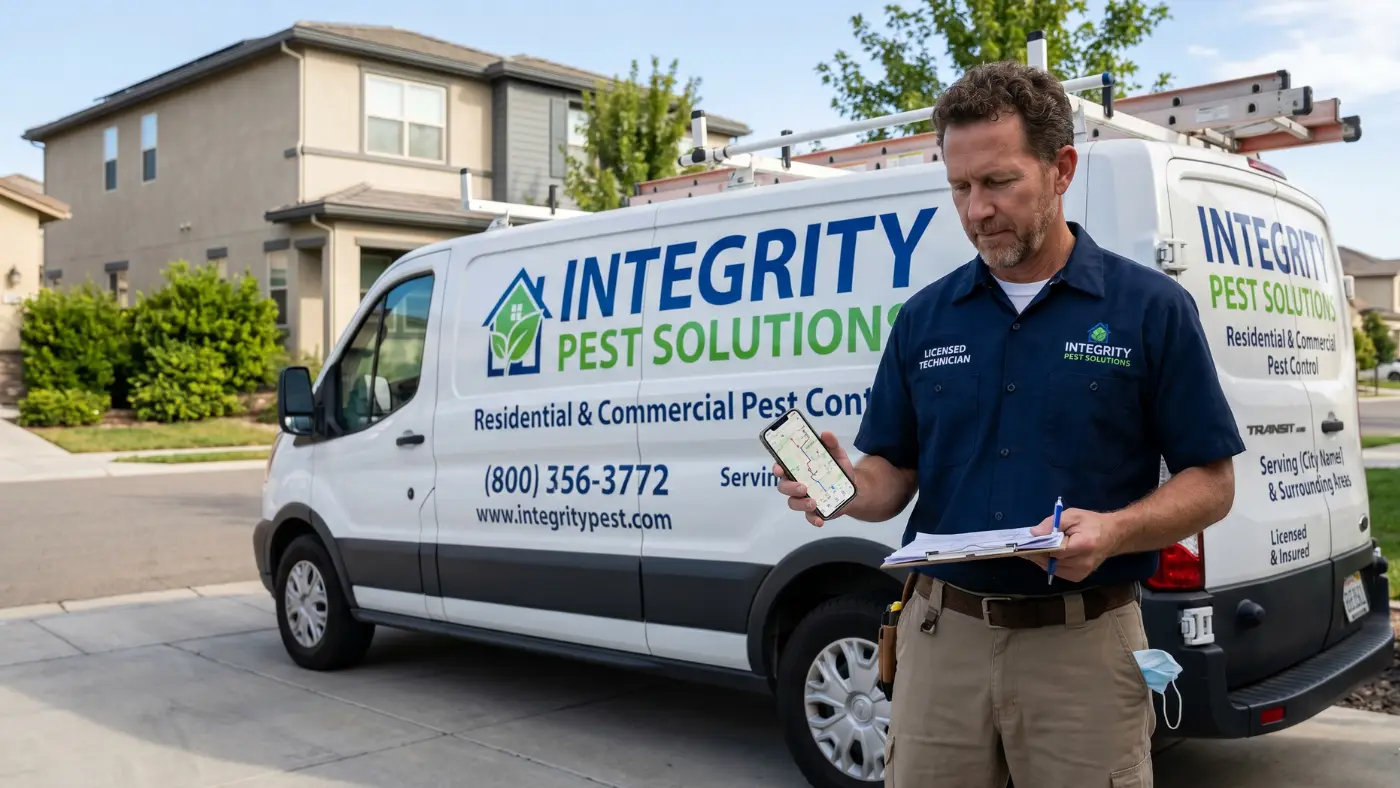
Starting a pest control business involves more than choosing services and finding customers. Before you can legally operate, you’ll need to meet state and local business requirements, which may include licenses, permits, registrations, insurance, and other approvals.
The process can vary depending on where you operate and whether you plan to offer residential or commercial services. This guide explains the most common pest control business licensing requirements, typical costs, and the steps to get your business set up correctly.
Quick answer: What licenses are needed to start a pest control business?
Most pest control businesses need more than one license or permit to operate legally. In addition to pest control certifications for handling chemicals, you’ll typically need business registration and local operating permits before you can start serving customers.
Most pest control companies need:
- General business license: Required by your city or county to legally operate a business.
- Pest control or applicator license: Required in most states to apply pesticides or handle regulated chemicals.
- Contractor or professional license: Some states require this for commercial jobs or larger projects.
- Business registration: Many owners register as an LLC or corporation for liability protection.
- Local permits: You may need home occupation permits, zoning approvals, or local tax certificates depending on where your business operates.
Some states also require pest control business owners to pass exams, show proof of experience, carry insurance, or maintain surety bonds before approval. Always check with your state pesticide regulatory agency and local business licensing office to confirm the exact requirements for your area.
Key takeaways
Understanding licensing requirements early can help you avoid delays, fines, and compliance issues.
Multiple licenses may apply: Most pest control businesses need business licenses, permits, and applicator certifications.
Requirements vary by location: State and local rules can differ widely depending on where you operate.
Renewals are ongoing: Many licenses and permits require annual fees and updated documentation.
Insurance may be required: Some states require liability insurance or surety bonds before approval.
Organization saves time: Software tools can help track permits, renewals, and compliance documents.
Table of contents
- Pest control license and permit requirements by location
- Other licenses and permits pest control businesses may need
- Residential vs. commercial pest control requirements
- What insurance and bonding does a pest control business need?
- How to get a pest control business license step by step
- How much does a pest control business license cost?
- How long does it take to get a pest control business license?
- Risks of operating without a license or permit
- How to manage scheduling, compliance, and billing as your pest control business grows
Pest control license and permit requirements by location
Business licensing is handled at both the state and local levels, so you may need approvals from multiple agencies before you can legally operate. While state boards usually manage technician or applicator licensing, your city or county oversees permits for operating a storefront or home office.
Pesticide applicator license requirements
If you’ve already worked as a licensed pest control technician, you probably already have this covered. Most states issue applicator licenses to individuals—not businesses—so your existing certification should transfer directly when you go out on your own.
If you still need one, here’s what to expect:
- Applicator licenses are typically issued by your state’s department of agriculture or environmental agency.
- Most states require you to pass one or more exams covering the pest categories you plan to work in. Common ones include general pest, termite and wood-destroying organisms, and fumigation.
- Some states also require documented experience hours working under a licensed applicator before you can sit for the exam.
If you plan to hire technicians rather than apply pesticides yourself, most states require you to have at least one licensed applicator on staff or listed as a qualifying party on your business license application.
Check your state’s pesticide regulatory agency for the specific categories, exam requirements, and experience minimums that apply to your services.
Read more: Pest control licensing requirements by state
State business requirements
Most states require pest control companies to register before offering services. Depending on your location, this may include a business license, contractor license, tax registration, or proof that your business employs properly licensed applicators.
Common state-level business requirements include:
- Registering your business entity with the state
- Applying for a contractor or pest control business license
- Providing proof of insurance or bonding
- Listing a licensed applicator or qualifying party on your application
- Meeting revenue or project-value thresholds for certain license types
City and county business permits
In addition to state requirements, local governments may require permits or registrations to legally operate within city or county limits. These rules often apply whether you run a storefront, office, or home-based business.
You may need:
- Local business licenses or tax certificates
- Home occupation permits for home-based businesses
- Zoning approvals for storing vehicles or equipment
- Service area permits required by specific municipalities
Contact your local business licensing office before launching. They can confirm which permits, registrations, and zoning approvals apply in your area.
Specific permits for home-based pest control businesses
Running your business from home can reduce upfront costs, but it may also trigger additional zoning and permitting requirements. Many cities require a home occupation permit to confirm your business activity complies with local residential rules.
Requirements may include:
- Vehicle storage rules: Limits on where and how many service trucks you can park on the street or in your driveway.
- HOA restrictions: Neighborhood or homeowners’ associations often have their own rules regarding home-based business activity.
- Chemical safety: Strict protocols for how and where pesticides are stored on a residential property.
Always check with your city zoning office and neighborhood association before launching a home-based business.
Other licenses and permits pest control businesses may need
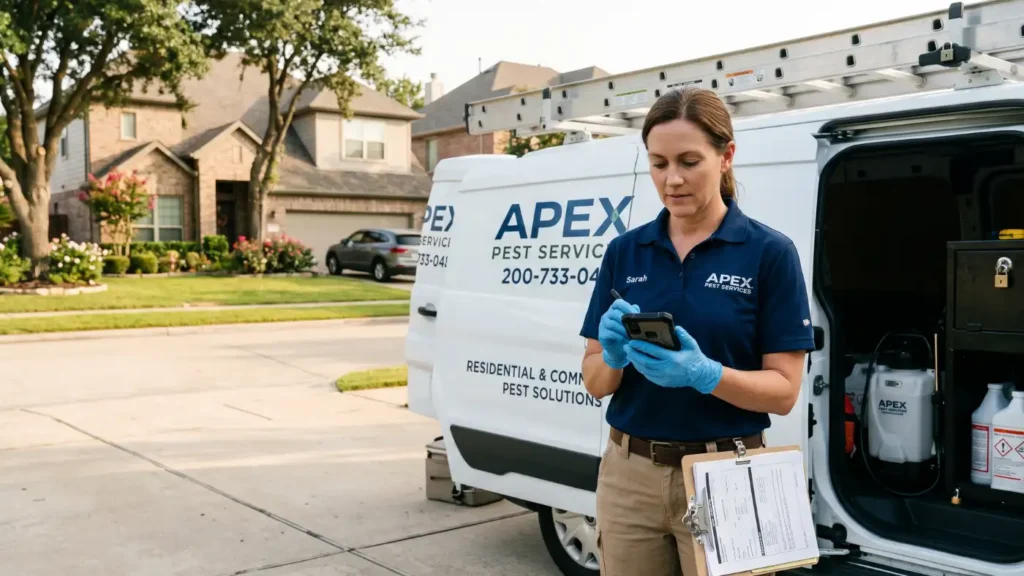
Even when a professional license isn’t required, most businesses still need legal registration. Below are the common categories you’ll encounter outside of the state business license and local permits we’ve covered.
DBA (Doing Business As)
If you want to operate under a business name like “Quick Kill Pest Experts” instead of your personal name or LLC name, you’ll need to file a DBA. This lets the public know who owns the business, but it doesn’t provide liability protection.
Read more: 250+ pest control company name ideas
Sales tax permits
Most states require a sales tax permit so you can collect and remit sales tax. Even if pest control services aren’t taxable in your state, you may still need to register to verify your tax status.
Employer registrations
Once you start hiring technicians, you’ll need additional federal and state registrations:
- Employer identification number (EIN): Issued by the Internal Revenue Service (IRS) to identify your business for tax purposes.
- State employer account: Used to track payroll withholding and unemployment insurance.
- Labor registrations: Required to protect employee rights and prevent benefits fraud.
Read more: How to do payroll yourself (step-by-step guide)
Residential vs. commercial pest control requirements
Licensing and permitting rules often change depending on your customer base. Both residential and commercial jobs require professional standards, but commercial work is usually more heavily regulated because of public health concerns.
Residential pest control
Residential work generally comes with fewer regulatory hurdles. In many states, a basic license or registration is enough, especially if you use lower-risk chemicals. These projects also tend to have simpler reporting and inspection requirements.
Commercial pest control
Servicing offices, restaurants, schools, or hospitals usually requires stricter compliance. You may need additional permits, higher insurance limits, and documented proof of specialized training.
If you plan to bid on commercial work, confirm these requirements early. Missing a permit or insurance requirement can quickly disqualify your proposal.
Read more: Pest control contract template
What insurance and bonding does a pest control business need?
Insurance, bonding, and certifications aren’t technically licenses, but you’ll still need them to legally operate your pest control business. Many commercial customers won’t consider your business without proof of coverage.
General liability insurance
This coverage protects your business from third-party claims involving property damage or accidents related to your work. For pest control companies, this may include chemical spills, accidental exposure, or property damage claims.
Insurance minimums vary significantly by state. Indiana sets the floor at $300,000 per occurrence, while Texas requires $500,000. Check your state’s pest control licensing board for the exact requirement in your area.
Read more: Business insurance: What it is, what it covers, and how much it costs
Workers’ compensation insurance
Workers’ comp is mandatory once you hire employees. It covers medical expenses and lost wages if a technician gets injured on the job. Sole proprietors may not need coverage, but growing teams usually do.
Bonding
A surety bond guarantees that your business will complete work as promised. Some cities require bonds before issuing permits, and many commercial customers require bonding to reduce contract risk.
Pest control bond amounts vary widely. Alabama requires as little as $2,500, while Arkansas requires up to $100,000 for businesses handling termite or structural damage services.
Optional certifications
Certifications from organizations like the Occupational Safety and Health Administration (OSHA) or the Environmental Protection Agency (EPA) aren’t always required, but they tell clients you follow industry best practices. This builds trust and helps you justify premium pricing.
How to get a pest control business license step by step
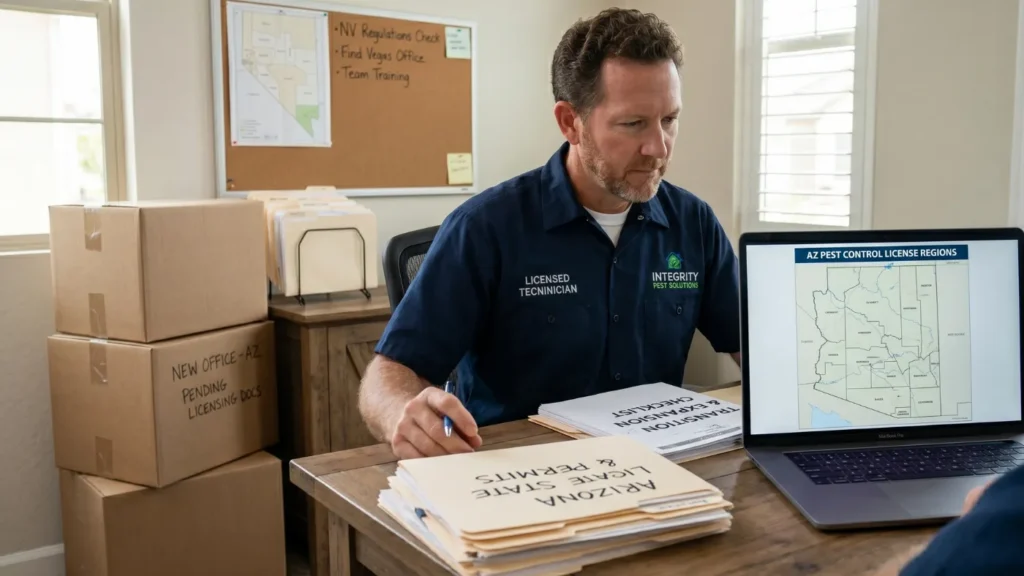
Getting licensed doesn’t have to feel overwhelming. By following these steps, you can avoid missing documents or incorrect filings.
Step 1: Choose your business structure
Most pest control businesses either operate as a sole proprietorship or an LLC:
- Sole proprietorship: Easier to set up, but leaves you personally liable for all business debts.
- LLC: Provides a shield for your personal assets, since the business is a separate legal entity. This business structure can also make licensing and commercial contracts easier to secure since it establishes credibility with vendors and clients.
Step 2: Register your business
Once you’ve chosen a structure, register your pest control company with your state. This allows you to apply for a tax ID and open a business bank account. You’ll usually need to provide your business name, address, and a description of your activities, along with a registration fee.
Step 3: Apply for licenses and permits
Next, apply for the licenses and permits required by your state and local agencies. State pest control boards typically oversee applicator licensing, while cities and counties issue general business licenses. If you use regulated chemicals, environmental or agriculture agencies may also need to approve your application.
Pro tip: Every office has different processing times. Applying early gives you extra flexibility and helps prevent last-minute delays.
Step 4: Secure insurance and bonding
Purchase the insurance coverage and bonds required by your state or future customers. Having these in place shows customers you run a professional operation and helps protect your business from unexpected risks.
How much does a pest control business license cost?
The cost of a pest control business license varies based on your location and the permits you need. Here are a few common expenses to plan for:
- Application fees: One-time fees for state licenses or local permits. Expect to budget at least $50 for initial applications.
- Annual renewals: Most licenses and permits require yearly renewals, which can range from $15 to several hundred dollars annually.
Visit your state’s licensing portal to confirm the exact costs and renewal requirements for your area.
How long does it take to get a pest control business license?
Approval timelines vary by agency, but here are some general estimates:
- Local licenses: Often approved same-day in smaller cities and counties. Larger metro areas like Los Angeles or Chicago can take 1–3 weeks.
- State pest control licenses: Usually take 2–6 weeks because they may require background checks and exams.
- Multiple permits: If you need city, county, and state approvals, the full process may take several weeks or months.
License and permit renewal requirements
Most pest control licenses and permits require annual renewal. Some state applicator certifications run on two- or three-year cycles, but local business licenses and permits typically renew every year.
Renewal usually involves paying a renewal fee, submitting updated insurance documentation, and completing a minimum number of continuing education units (CEUs), often between 4 and 15 hours per cycle depending on your state and license category. Some states require passing a re-examination if your license lapses beyond a certain period.
If you let a license expire, you may face late fees, a gap in your ability to legally operate, or—in some states—having to reapply from scratch. Set a calendar reminder at least 60 days before each renewal deadline.
Risks of operating without a license or permit
Working without a license can put your entire business at risk. Unlicensed operators may face serious legal and financial consequences, including personal liability for damages.
Common penalties include:
- Fines: Often between $1,000 and $5,000 per offense for uncertified pesticide applicators.
- Stop-work orders: Regulators can immediately halt active jobs, even if customers are already scheduled.
- Jail time: Some states treat unlicensed pest control as a misdemeanor or felony, with potential jail time for repeat or hazardous violations.
- Legal and financial exposure: You could be held personally responsible for property damage or environmental claims.
How to manage scheduling, compliance, and billing as your pest control business grows
Licensing gets you through the door, but staying organized is what helps you grow. That’s why more than 200,000 Pros across 50 trades trust Housecall Pro to manage the details that help their businesses grow.
Here’s what you’ll get from Housecall Pro’s pest control software:
- Scheduling and dispatch: Assign the right technician, plan efficient routes, and keep jobs from overlapping as your calendar fills up.
- Estimates and invoices: Turn quotes into booked jobs and send professional invoices that get you paid faster.
- Client records: Store job history and customer contact details in one place so every visit feels personal, even as your customer list grows.
- Reporting: Track revenue and team performance in real time, then turn those insights into action.
By managing your scheduling, billing, and customer data in one place, you can eliminate hours of repetitive admin work every week.
Sign up with Housecall Pro today and try our pest control software free for 14 days.
Get In Touch: 858-842-5746
Let us earn your trust
On average, Pros increase monthly revenue generated through Housecall Pro by more than 35% after their first year.
See plan options and feature breakdown on our pricing page.
Pest control business license FAQ
Can I start pest control work before my license is approved?
No. Most states require your license to be fully approved before you can legally perform any pest control work. Unlicensed work can lead to heavy fines, even if your application is already submitted. A small number of states issue provisional or temporary licenses that allow limited work while your application is pending; check your state board to see if that option exists.
Do I need a license if I'm self-employed?
Yes. As an independent contractor, you’re still legally required to hold the same applicator certification as any licensed company. The license is tied to the person applying pesticides, not the business size. You may also need to register your business and obtain local permits depending on where you operate.
Do I need a new license if I move to another city or state?
Moving to a new city within the same state usually doesn’t require a new state license, though you may need updated local permits for your new area.
Moving to a new state typically means starting the licensing process over. Pest control licensing is state-specific, and your current certification doesn’t automatically transfer. That said, some states have reciprocity agreements that let you skip certain exams or fast-track your application if you’re already certified in a comparable state.
To find out if reciprocity applies, contact your new state’s pesticide regulatory agency directly and ask whether they recognize out-of-state certifications. Bring documentation of your existing license, exam records, and experience history—that’s usually what they’ll need to evaluate your application.