Want to win more jobs with less effort?
Grow your business and send quick quotes with our home service software.

Want to see your potential revenue?
See what businesses like yours earn with Housecall Pro in 1 - 2 minutes.

Getting paid quickly is what keeps your business running. But many HVAC contractors still deal with paper checks, unpaid invoices, and payment delays that slow down cash flow and create extra office work.
According to the 2026 QuickBooks Small Business Late Payments Report, nearly 3 in 5 small businesses have invoices that are more than 30 days overdue. The good news is that most payment delays come down to process. The easier you make it for customers to pay—and the quicker you send invoices—the faster you get paid and keep cash moving.
In this guide, you’ll learn how to collect payments more efficiently, offer the payment methods customers expect, send invoices faster, and simplify billing with tools like Housecall Pro.
Table of contents
Payment challenges for HVAC companies
A single unpaid invoice can throw off an entire week for an HVAC shop. Say a customer approves an $8,000 system replacement and pays a 30% deposit up front. If the remaining balance sits unpaid for even two or three weeks past completion, that’s $5,600 you can’t put toward payroll, a parts order, or refilling your vans.
Now stack that against a full week of jobs. If three or four invoices like that are sitting unpaid at once, you’re not just short on one job’s worth of cash. You’re deciding which bills get paid late, which parts orders get delayed, and whether payroll covers everyone on time. A shop running on tight margins doesn’t have the cushion to absorb that for long.
The longer late payments drag, the more this compounds. Vendors start requiring payment up front instead of extending credit. Techs feel it when jobs get pushed because parts didn’t come in. And owners end up spending hours chasing payments instead of running the business—time that doesn’t show up on an invoice but comes straight out of the week.
Most of these breakdowns trace back to the same few gaps:
- No payment terms set before the job starts
- Invoices that go out late
- Only one way for the customer to pay
- No system for following up once an invoice goes overdue
Fix those, and you cut off most late-payment problems before they happen.
How to accept payments for HVAC jobs
The best way to accept payment for HVAC jobs is by setting clear terms upfront, offering multiple payment methods, and using software that lets customers pay on the spot. Here’s how to put that into practice.
1. Set clear HVAC payment terms from the start
Clear payment terms help prevent confusion before the invoice is sent. Every estimate or service agreement should explain when payment is due, which payment methods you accept, and whether late fees apply. If you charge a late fee, spell out the exact terms in writing—for example, “1.5% of the unpaid balance per month after the due date”—so there’s no dispute if a payment slips.
Build these terms into your estimate template once, and they’ll apply automatically to every job. Housecall Pro lets you set due dates and late-fee language directly, so the policy is consistent across every job instead of something you retype each time.
Read more: How to charge late fees on invoices
Recurring vs. one-time HVAC jobs
Your payment terms shouldn’t look the same for every job. For seasonal HVAC maintenance plans, set up automatic billing or scheduled payments tied to each visit. Customers get predictable billing, and you get more consistent cash flow instead of chasing payment after every stop.
For smaller repair jobs, collect payment in full when the technician finishes the work—don’t leave the site without it. For larger projects, like a complete HVAC system replacement, collect a deposit before work begins so you’re covering parts and labor upfront and not carrying the full financial risk of the job until it’s done.
If a customer is hesitant about a large upfront payment, offer customer financing so they can spread out the cost instead of paying all at once. With Klarna on Housecall Pro, you still get paid up front, but the job doesn’t stall while the customer figures out how to cover it. That flexibility is often what gets a bigger job approved instead of postponed.
Read more: How to ask for a deposit
2. Choose the right HVAC payment options
Offering several payment methods makes it easier to collect payment when the job is finished.
Accept credit and debit cards as your baseline—they’re what customers expect and use most. Add mobile wallets like Apple Pay and Google Pay to speed up checkout when technicians collect payment in the field. For larger invoices, like HVAC system replacements or commercial projects, offer ACH bank transfers: they cut processing fees on higher-dollar transactions and remove the need to deal with paper checks.
Housecall Pro Payments handles all of these methods in one system, so you’re not juggling separate card readers, ACH processors, and mobile wallet setups for each job. Pros who use Payments with Housecall Pro get paid 2X faster.*
*Avg. experience of Pros processing at least half of their payments with Housecall Pro over the past year.
Should you still take cash or checks?
Yes, but don’t make them your primary payment methods. Some customers still prefer to pay with cash or a check, so it’s worth accepting both. But they’re slower to process, easier to lose, and create more office work than digital payments. Whenever possible, encourage customers to pay by credit card, ACH, or mobile wallet instead, and treat cash and checks as backup payment options.

3. Create an HVAC industry invoice that looks professional
Every invoice should include your business name, logo, contact information, and payment terms. Treat it like an extension of your brand, not just a receipt.
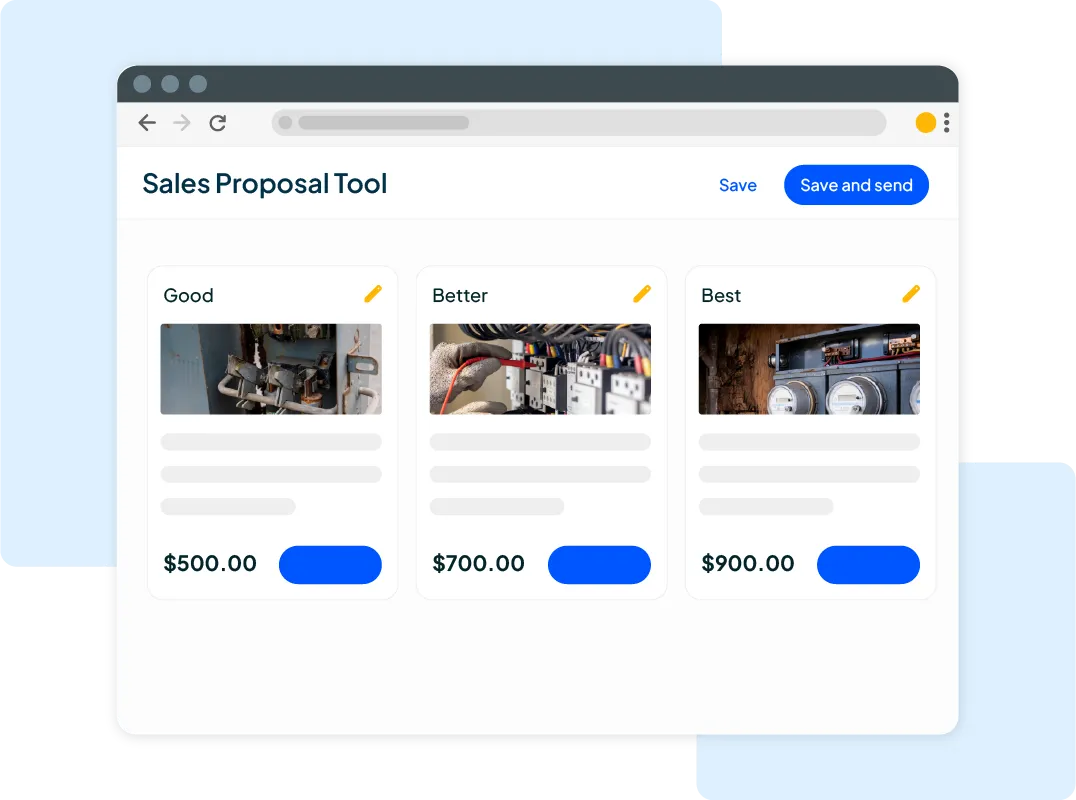
Be specific about the work you completed. Instead of writing “HVAC repair,” use a description like “Replaced capacitor and recharged refrigerant on 3-ton unit.” Clear line items help customers understand what they’re paying for and can reduce billing questions.
If your state taxes HVAC labor or materials, list sales tax as its own line item and make sure it’s calculated correctly.
Use invoice templates to save time
Use a reusable invoice template for every job instead of building each one from scratch. It keeps formatting consistent no matter who on your team sends it and cuts down on manual data entry, which means fewer pricing mistakes and missing line items.
Housecall Pro’s invoicing software pre-fills each invoice with the job and customer details already on file, so you’re not retyping the same information—just review, add your notes, and send.
Free download: Housecall Pro’s HVAC invoice template
4. Send your HVAC invoice the right way
The sooner you send an invoice, the sooner you can get paid. Whenever possible, send it before your technician leaves the job site.
Offer the delivery method that’s most convenient for the customer:
- Email for customers who want a printable record.
- Text message so they can pay from their phone in a few taps.
- Customer portal for repeat customers who want to view invoices, payment history, and past service in one place.
For system replacements or other multi-day jobs, don’t wait until everything’s finished to bill. Progress Invoicing lets you invoice by dollar amount or percentage at each milestone—deposit, rough-in, final walkthrough—so you’re collecting as the work happens instead of carrying the full job cost until it wraps.
However you send it, build in a follow-up: automated reminders (or an auto-charge to a card already on file) mean an unpaid invoice doesn’t just sit there waiting on you to notice.
5. Keep credit cards on file (with permission)
If you offer maintenance agreements or recurring service, ask customers for permission to securely store a payment method, then let the system charge it automatically once a visit is complete. This removes the step of asking for payment after every visit and cuts down on missed or late charges. Housecall Pro’s Card on File feature handles this for you—once the customer opts in, it stores the card securely and charges it automatically when the job’s marked done.
Remember to follow PCI Security Standards Council guidance: only retain card data for as long as it serves a legitimate business or legal purpose, and use a payment system that’s PCI-compliant to store it. Tell the customer upfront that the card will only be charged for approved services, and let them update or remove it whenever they want.
A simple way to request permission:
- Explain that the card will only be used for approved services or recurring maintenance visits.
- Get the customer’s authorization before storing the payment information.
- Let the customer know they can update or remove their payment method if their preferences change.
6. Use HVAC payment software to save hours every week
When your tech finishes the last repair or install of the day, the job isn’t done. Someone still has to write up the invoice, account for any parts or extra labor completed on-site, send it to the customer, track whether it’s been paid, and chase it down if it hasn’t.
Housecall Pro makes all of that easier by keeping invoicing. payment collection, and customer follow-up in the same system. Invoicing software generates the invoice the moment a job is marked complete, so nothing sits waiting on you to get back to the office. Housecall Pro Payments lets the customer pay however works for them—credit or debit card, ACH bank transfer, Apple Pay, Google Pay, or a card on file. The platform also syncs with QuickBooks, so invoice and payment details don’t have to be entered twice and your books stay current without duplicate work.
If you need funds faster, Instapay deposits eligible card and ACH payments in minutes for a small per-transaction fee, instead of making you wait the standard two business days. And if an invoice goes unpaid, the system automatically flags it and sends payment reminders—so overdue balances get followed up without you having to remember to do it yourself.
If you’re ready to send invoices, collect payments, and manage billing from anywhere, start your free Housecall Pro trial today.
Final tips for collecting on-time payments for HVAC jobs
Getting paid on time starts with a consistent process. Small improvements at each stage of the customer experience can lead to more predictable cash flow, fewer overdue invoices, and less time spent following up on unpaid balances.
Remember these HVAC payment best practices:
- Send invoices the same day the job is completed while the service is still fresh in the customer’s mind.
- Set clear payment expectations up front, including due dates, accepted payment methods, and deposit requirements for larger projects.
- Offer payment methods customers already use, including cards, ACH transfers, Apple Pay, Google Pay, and financing options for qualifying jobs.
- Let software handle invoice tracking and follow-up so overdue payments don’t depend on manual reminders.
When payments arrive sooner, you spend less time chasing invoices and more time serving customers and growing your HVAC business.
Read more: How to collect unpaid invoices
FAQs
What software helps HVAC businesses collect payments faster?
Housecall Pro combines invoicing, payment collection, and follow-up in one system built for HVAC and other field service businesses. It auto-generates invoices when a job is marked complete, lets customers pay by card, ACH, or a card on file, deposits eligible payments in minutes through Instapay, and automatically flags and follows up on overdue invoices.l
How can I get my HVAC service payments faster?
The fastest way to get paid for HVAC work is to send invoices immediately after the job is completed and offer multiple digital payment methods. Collecting payment in the field, accepting cards and mobile wallets, and using automated payment reminders can all help reduce the time between finishing a job and receiving payment.e
Should I send invoices by email, text, or a customer portal?
The best approach is to offer multiple invoice delivery options so customers can choose what works best for them. Email provides a detailed record, text messages often lead to faster responses, and a customer portal gives repeat customers a convenient place to review invoices and payment history.
When should I collect payment for an HVAC job?
The best time to collect payment for most HVAC jobs is immediately after the work is completed. For routine repairs and service calls, collecting payment on-site can improve cash flow and reduce outstanding invoices.
For larger projects, such as complete system replacements, many contractors collect a deposit before work begins and the remaining balance upon completion of the installation. This approach sets clear expectations while helping your business maintain a more predictable payment cycle.
Is it safe to keep a customer's card on file?
Yes, you can keep a customer’s card on file if you first obtain their permission and store the information through a payment system that follows Payment Card Industry (PCI) security standards. According to the PCI Security Standards Council, businesses may retain payment card information only when there is a legitimate business or legal need to do so, and should have a documented policy for how long it’s kept.
For HVAC companies with recurring maintenance plans, storing payment information through a secure platform can simplify future billing while reducing missed or late payments.
What if a customer disputes a card charge on an HVAC invoice?
Start by pulling the signed estimate, the completed invoice, and any before-and-after job photos—most disputes get resolved once the customer sees the documented scope of work. If the charge still gets disputed with the card issuer (a chargeback), respond by the deadline in the notice and submit that same documentation. Processing it through a platform like Housecall Pro keeps job records, signatures, and payment history in one place, which makes responding to a dispute faster.
Can I charge a late fee on an unpaid HVAC invoice?
Yes, as long as the fee is disclosed in your estimate or service agreement before the work begins. A common approach is a flat fee or a percentage of the unpaid balance (for example, 1.5% per month) charged after a set grace period, such as 15 or 30 days past the due date. Check your state’s rules on maximum late fees before setting yours, since limits vary.
Get In Touch: 858-842-5746
Let us earn your trust
On average, Pros increase monthly revenue generated through Housecall Pro by more than 35% after their first year.
See plan options and feature breakdown on our pricing page.