

UPDATED 2026 GENERAL CONTRACTOR LICENSING GUIDE
Wyoming General Contractor License Requirements: No State License, City-by-City Rules & the 5% Resident Bid Preference (2026)
Table of Contents
Download the Checklist!
If you’re planning to run a general contractor business in Wyoming, there is no state license to apply for and no state contractor board to answer to. Wyoming issues no statewide general contractor license, no residential builder license, and no statewide plumbing or HVAC license. Licensing, where it exists at all, is handled by individual cities and counties, and many unincorporated counties require no building permit and run no inspections. The one statewide exception is electrical, regulated by the Wyoming Department of Fire Prevention and Electrical Safety. What Wyoming does offer instead is something no other state in this series has: a voluntary resident contractor certification that carries a 5% bid preference on public projects under W.S. 16-6-102. This page covers the city-by-city reality, the electrical exception, the residency certification, the monopolistic workers’ compensation system, and what actually gates a job here.
Licensing rules vary a lot from one state to the next. Some hand the job to local governments entirely, while others run one central program that every contractor answers to. The demand behind those rules is steady either way. Bureau of Labor Statistics figures from the Occupational Employment and Wage Statistics survey for May 2025 count about 380,360 construction managers, 812,210 first-line supervisors of construction trades, 146,720 construction and building inspectors, and roughly 1,096,780 construction laborers working nationwide. Construction manager jobs are on track to rise 9% between 2024 and 2034, well ahead of the pace for the average occupation.
Wyoming has the most supervisor-heavy construction workforce in this entire series, and it is not close. BLS state figures (Wyoming OEWS, May 2025) count 3,270 first-line supervisors of construction trades and extraction workers at a mean of $41.67 an hour, or $86,670 a year, 3,350 construction laborers at $45,420, and 370 construction and building inspectors at $61,510. Construction managers earn a mean of $50.20 an hour, or $104,420, though BLS suppressed the Wyoming employment count for that occupation. The concentration numbers are extraordinary: supervisors run at a location quotient of 2.23, more than double the national rate and the highest figure in any of the thirteen states covered here. Laborers sit at 1.69 and inspectors at 1.38. Wyoming employs roughly one supervisor for every laborer, which tells you almost everything about how work gets organized in a state with no licensing board.
Quick answer: do you need a general contractor license in Wyoming?
No. Wyoming issues no statewide general contractor license, and there is no state contractor licensing board. There is no state exam, no state bond, and no state registration for general contracting.
That does not mean you can start work tomorrow. Four things usually apply:
- Local licensing. Cheyenne, Casper, Laramie, Gillette, Jackson, Cody, Sheridan, and other jurisdictions run their own contractor licensing or registration, each with its own requirements, fees, and insurance minimums.
- Electrical licensing. If you self-perform electrical work, the Wyoming Department of Fire Prevention and Electrical Safety licenses electricians and electrical contractors statewide. It is the only construction trade Wyoming licenses at the state level.
- Workers’ compensation. Wyoming is a monopolistic state, so coverage comes from the Department of Workforce Services rather than a private carrier.
- Building permits. Where they exist. Many unincorporated Wyoming counties require no building permit and conduct no inspections at all.
So the honest answer to “how do I get a Wyoming general contractor license” is: you don’t, because there isn’t one. You license the electrical work you self-perform, register in each city where you pull permits, and sort your workers’ compensation account.
Key takeaways
Everything you need to know about setting up as a contractor in Wyoming:
No state license exists: Wyoming issues no statewide general contractor license and has no contractor licensing board. No state exam, no state bond, no state registration.
Electrical is the only exception: The Department of Fire Prevention and Electrical Safety licenses electricians and electrical contractors statewide, with annual company renewal.
Cities and counties are the real gate: Cheyenne, Casper, Jackson and others run their own licensing. Requirements, fees, and insurance minimums vary by jurisdiction.
Many counties require no permit at all: On much unincorporated county land there is no building code, no permit, and no inspection. Plumbing and HVAC have no state license.
The 5% resident preference is real money: A certified resident wins a public bid up to 5% above the lowest nonresident bid. Certification must be in hand when bids are submitted.
Workers' comp is state-fund only: Wyoming is one of a handful of monopolistic states. Coverage comes through the Department of Workforce Services, not a private carrier.
Why Wyoming has no contractor license
Wyoming’s approach is deliberate rather than accidental.
The state has no contractor licensing board, no residential builder program, and no statewide building code mandate. Permits, code editions, and inspections are decided locally. Cheyenne, Casper, Sheridan, and Teton County have adopted the 2024 I-Codes. Much unincorporated county land has adopted nothing and requires no permit or inspection.
That produces a two-tier market. Work inside a municipality that licenses and enforces a code looks like work anywhere else: register, permit, inspect. Work on unincorporated land can involve almost no oversight.
The second tier is where judgment matters. No permit does not mean no liability. You still owe a workmanlike job, and if something fails years later, “the county didn’t inspect it” is not a defense.
The one statewide trade: electrical
Electrical is Wyoming’s single exception, and it is regulated thoroughly.
The Wyoming Department of Fire Prevention and Electrical Safety, operating under the State Fire Marshal’s Office, licenses electricians and electrical contractors statewide. A company license is required for any business performing electrical work, and it renews annually.
| Element | Detail |
| Authority | Dept. of Fire Prevention and Electrical Safety |
| Scope | Statewide, all jurisdictions |
| Company credential | Electrical contractor license |
| Individual credentials | Master, journeyman, and limited licenses |
| Master of record | A full-time Wyoming-licensed master electrician |
| Renewal | Annual |
| Code | Statewide electrical permit and inspection program |
| Reciprocity | Available for some out-of-state journeymen and masters |
| Apply through | Wyoming State Fire Marshal public portal |
To hold the company license you generally need to employ a full-time Wyoming-licensed master electrician as your master of record. Fees for the electrical contractor license are commonly cited in the $300 to $400 range for new applications and renewals, but confirm the current figure on the State Fire Marshal portal before budgeting, since these are set administratively and change.
That master-of-record requirement is the practical barrier, not the fee. In a state Wyoming’s size, keeping a licensed master electrician on full-time payroll is a real hiring constraint. Most general contractors here subcontract electrical, and the arithmetic favors it: a subcontract costs you margin on that scope, while a master of record costs a salary whether or not you have electrical work that month.
Limited and low-voltage credentials also exist for narrower scopes, which suit firms doing controls, security, or communications. Ask the Fire Marshal’s office which credential matches your scope, since the narrower licenses carry lower requirements.
Wyoming also runs a statewide electrical permit and inspection program under the National Electrical Code edition the state has adopted, which operates even in jurisdictions with no building department. That is worth noting: in a county with no building permit requirement at all, the electrical work is still permitted and inspected by the state.
One exemption exists for homeowners. Under W.S. 35-9-123, a property owner may wire their own home without a licensed electrician, provided the property is not intended for immediate resale. That exemption belongs to the owner, not to a contractor working for them.
Plumbing, HVAC, and roofing have no state license. Those are purely local, which means a plumber licensed in Casper may need a separate Cheyenne credential and no credential at all in an unincorporated county.
City and county licensing: the real layer
This is where Wyoming contractors actually get regulated, and there is no shortcut around calling each jurisdiction.
| Jurisdiction | Typical approach |
| Cheyenne | Local contractor licensing, 2024 I-Codes adopted |
| Casper | Local contractor licensing and classifications |
| Laramie | Local contractor registration |
| Gillette | Local contractor registration |
| Jackson and Teton County | Local licensing, 2024 I-Codes adopted |
| Cody | Local contractor registration |
| Sheridan | 2024 I-Codes adopted |
| Unincorporated county land | Often no permit and no inspection |
The pattern is worth naming. Wyoming’s licensing burden tracks construction volume. The jurisdictions doing the most building, Cheyenne, Casper, Jackson and Teton County, and Sheridan, are the ones with adopted codes and real licensing. The further out you go, the thinner the requirements, until in much of the state there are none.
Cheyenne and Casper, the two most formal systems
These two show what serious local licensing looks like in Wyoming, and their class letters do not mean the same thing.
Cheyenne runs a Contractor Licensing Board under its building department, issuing classes A, B, and R. Class A allows permits for any type or size of structure, provided the holder employs properly licensed subcontractors for the trades on the project. Class B covers residential buildings under the IRC of two stories or less plus limited commercial. Class R is residential.
The Cheyenne requirements that matter:
- Be or employ a Qualified Supervisor, who must pass an ICC examination approved by the Licensing Board
- A certificate of general liability insurance naming the City of Cheyenne Building Safety department as certificate holder
- Proof of registration with the Division of Workers’ Compensation at DWS
- Wyoming Secretary of State registration disclosing business structure
- A criminal and disciplinary history attestation
- Fees varying by class, commonly cited from $250 to $650, with trade licenses around $250
Casper licenses through building and inspections and publishes required exams by category, referencing specific ICC exam codes such as G11-N, G12-N, and G13-N or equivalent, with a City of Casper in-house exam offered for some classifications. Roofing references G14-N and G15-N. Casper also requires a written affidavit verifying work experience, two years for its entry-level general class, plus workers’ compensation and liability insurance.
Jackson runs its own process including Certificates of Qualification.
The lesson: do not assume a class letter transfers. Each city sets its own exam, experience, and insurance terms, and there is no reciprocity between Wyoming municipalities because there is no state framework to hang it on.
What local licensing commonly asks for, though it varies:
- General liability insurance, typically in the $500,000 to $1,000,000 per occurrence range, often with the city named as certificate holder
- Proof of workers’ compensation registration with DWS
- A local business license or registration fee
- An exam, frequently an ICC examination, plus documented experience
- A licensing board appearance, since some jurisdictions finalize applications at monthly board meetings
The operational rule is simple and non-negotiable: call the building department in every city and county where you plan to work, before you bid. Wyoming has 23 counties and a modest number of incorporated municipalities, so this is a manageable list rather than an impossible one, but the answers genuinely differ. Two towns 40 miles apart can have opposite requirements.
Resident contractor certification and the 5% bid preference
Here is the Wyoming-specific opportunity that almost no contractor guide explains properly, and it is worth real money.
Wyoming has no license to build, but it does have a certificate of residency administered by the Department of Workforce Services Labor Standards division. It is voluntary, it is not a license, and on public work it is a competitive weapon.
Under W.S. 16-6-102, when a contract is let by the state, a county, city, town, school district, community college district, or other public corporation for construction, alteration, or repair of a public building or public work:
- If no advertisement for bids is required, the contract goes to a resident of the state
- If advertisement for bids is required, the contract goes to the responsible certified resident making the lowest bid, provided that bid is not more than 5% higher than the lowest responsible nonresident bid
Read that second bullet again. A certified Wyoming resident contractor can bid 5% above an out-of-state competitor and still win. On a $2,000,000 school project, that is a $100,000 cushion.
What actually counts as a resident
W.S. 16-6-101 defines it, and there are several alternative routes rather than one test. The recurring number is one year. Depending on the path, that year attaches to the person, the entity, or the tax history:
- A natural person who has been a resident of the state for one year or more immediately before bidding
- A business entity where each member or equity owner has been a Wyoming resident for one year or more
- A business entity organized under Wyoming law that has existed in the state for one year or more, whose chief executive officer has been a Wyoming resident for a year or more, and which maintains its principal office and place of business in the state
- An entity that has paid workers’ compensation and unemployment taxes in Wyoming for at least one year and is in good standing with DWS when the bid is submitted
Two definitions matter. “Principal office and place of business” means a headquarters where management directs and coordinates business activities and where key functions happen including project bidding. A mailing address does not satisfy it. And certification comes by affidavit sworn to by a chief executive officer of the entity.
One point worth correcting, because it circulates in the wrong form. You will read that at least 50% of equity must be held by Wyoming residents. The statute runs the other direction: if at least 50% of the equity is owned by nonresidents, that nonresident equity must either have been acquired a year or more before bidding, or be publicly traded and registered under Section 13 or 15(d) of the Securities Exchange Act of 1934. It is a condition on nonresident ownership, not a resident-ownership floor.
Three more provisions bind the preference:
No retroactive certification. You must be a certified resident contractor at the time bids are submitted. The statute expressly bars contingent or retroactive certification, so there is no fixing it after the bid opening.
Decertification has teeth. Lose certification and you cannot be recertified for one year. Get denied for not meeting residency and you cannot reapply for 180 days. DWS may investigate eligibility, take evidence under oath, subpoena witnesses, and compel production of records. No one may be denied for an inadvertent omission, so an honest mistake is not fatal.
Reorganizing does not cost you residency. An entity that qualifies keeps its residency despite a conversion under W.S. 17-26-101 or another reorganization into a different business form.
There is a marketing angle too. Certified contractors may display the Resident Contractor Mark, a legitimate trust signal where no license exists to differentiate you. And W.S. 16-6-105 applies a parallel 5% preference to Wyoming materials in public purchases, so sourcing in state can matter to the award as well as the margin.
Should you certify as a resident contractor?
Worth thinking about properly, because the answer is not automatic and the certification carries obligations as well as advantages.
Certify if you bid any public work. School districts, counties, towns, and state agencies make up a large share of Wyoming’s construction spend, and 5% is a wide margin. One public bid a year justifies the affidavit.
Think harder if your residency is marginal. DWS investigates, takes evidence under oath, and subpoenas records. A residency denial locks you out for 180 days and decertification for a year. If your Wyoming presence is a mailing address and a registered agent rather than real operations, a failed application is worse than none.
Remember what comes attached. Public work brings prevailing wage and the resident labor requirement, so price that compliance into the bid.
Resident labor and prevailing wage on public works
Public work in Wyoming carries two more obligations that have nothing to do with licensing.
Resident labor. Under W.S. 16-6-203, anyone constructing, improving, altering, or repairing a public works project for the state or a political subdivision must employ only Wyoming laborers, subject to statutory exceptions. Plan for that at bid time, not at mobilization.
Prevailing wage. DWS administers it, and your crew must be paid the state-certified rate for their trade on qualifying projects. DWS publishes a Wyoming Preference Act guide in English and Spanish covering residency, materials, and labor preferences together.
None of this touches purely private residential work. For anyone bidding public jobs it is the framework that decides whether you win and whether you stay compliant.
The unincorporated county question
This has no parallel in any other state in this series, and it deserves honest treatment rather than a cheerful one.
On much unincorporated county land there is no adopted code, no permit requirement, and no inspection. For an owner-builder that is genuine freedom. For a contractor it is a set of risks nobody else is managing.
Three practical consequences.
No inspection means no third-party verification. Elsewhere a passed inspection proves the work met code that day. Without it the only record is yours, so photograph rough-in and keep submittals.
The state electrical program still applies. Wyoming permits and inspects electrical work statewide regardless of local code adoption, so “the county doesn’t inspect” is never true of the wiring.
Lenders and insurers may care when the county does not. Financing, refinancing, and homeowner’s insurance can all raise code questions on a house never inspected. Building to the current I-Codes anyway protects the customer’s resale.
Contractors who do well in unregulated counties behave as though a code official were coming, which in a referral-driven market is commercially smart as well as ethical.
Workers’ compensation: state fund only
Wyoming is one of a small group of monopolistic workers’ compensation states, alongside Washington, North Dakota, and Ohio.
Coverage comes from the Wyoming Department of Workforce Services state fund. You cannot shop this with a commercial carrier the way you would in Texas or Virginia. You open an account with DWS, and your rate is driven by your classification and claims experience rather than by negotiation.
Construction is treated as an extrahazardous industry in Wyoming, which means coverage obligations attach readily once you have workers. Confirm your specific situation with DWS rather than assuming, and note that local contractor licensing commonly requires proof of your state fund coverage as a condition of issuing the license.
Employer’s liability coverage, which defends against lawsuits rather than paying benefits, sits outside the state fund. Contractors typically add it through a private policy as a stop-gap endorsement.
Two notes for anyone used to a competitive market. You cannot shop the carrier, so your only levers are classification code and claims experience, which makes safety management a direct cost control. And because the fund is the sole source, there is no gap-filling: an account that is not open and current means no coverage at all, and local licensing will decline you.
Entity, taxes, and the use tax nobody mentions
Wyoming is famously business-friendly, and for a contractor that is genuinely true.
Entity formation. Register with the Wyoming Secretary of State. Wyoming LLC filing is inexpensive and the state is a popular domicile for good reason.
No state income tax. Wyoming levies no personal or corporate income tax, which is a real structural advantage over neighboring Colorado or Montana.
Sales and use tax. Register with the Wyoming Department of Revenue. Construction has specific treatment: contractors are generally the consumer of materials they incorporate into real property, and use tax follows materials brought in from out of state.
That last point is the tax nobody warns you about. Wyoming has no income tax, which is the headline everyone repeats, and the effect is that contractors stop thinking about state tax altogether. But if you buy a truckload of materials in Colorado and install it in Wyoming, Wyoming use tax generally applies on that material. Contractors working border counties, and that is a lot of Wyoming, accumulate exposure quietly over a few years and then meet it all at once in an audit. Involve an accountant early rather than after.
EIN. Free from the IRS.
Workers’ compensation and unemployment insurance. Both through the Department of Workforce Services once you have employees.
Wyoming startup budget
| Startup cost | Typical amount |
| State general contractor license | Does not exist |
| Wyoming LLC formation | Filed with the Secretary of State |
| EIN from the IRS | Free |
| Sales and use tax license | Filed with the Dept. of Revenue |
| Resident contractor certification | Notarized affidavit, filed with DWS |
| Electrical contractor license, if applicable | Commonly $300 to $400, verify |
| Local contractor license | Varies widely by city and county |
| General liability insurance | Varies by trade and payroll |
| Workers’ compensation | State fund rates through DWS |
| EPA RRP firm certification | Around $300 for five years |
Confirm every figure with the issuing body before budgeting. Local fees in particular vary enough that a single number would be misleading.
How to check out a Wyoming contractor
With no state license database for general contractors, verification takes more work here than anywhere else in this series, and it matters more.
There is no single lookup. What you can check:
- Electrical credentials through the State Fire Marshal’s licensee search
- Local licensing status with each city or county building department
- Resident contractor certification with the Department of Workforce Services
- Entity status with the Secretary of State
- Workers’ compensation coverage through DWS
- Insurance, by requesting the certificate from their carrier rather than accepting a PDF
That list is the price of a state with no licensing board: the diligence a board performs elsewhere is yours. The same absence argues for over-documenting yourself, because being easy to verify is a competitive advantage here.
Trades and activities licensed outside general contracting
| Work | Authority |
| General contracting | No state authority, local only |
| Electrical | Dept. of Fire Prevention and Electrical Safety |
| Plumbing | No state license, local only |
| HVAC | No state license, local only |
| Roofing | No state license, local only |
| Fire protection systems | State plan review, no state trade license |
| Home inspection | No state licensing agency or board |
| Pesticide application | Wyoming Department of Agriculture |
| Lead-safe renovation (RRP) | U.S. EPA firm certification |
Two entries deserve a note.
Fire protection is plan review, not licensing. The Department of Fire Prevention and Electrical Safety requires state plan review for installation, addition, or alteration of fire protection systems including sprinklers within its jurisdiction. That is a review and permit process rather than a statewide sprinkler contractor license. Local governments may impose their own requirements on top.
Home inspectors are unregulated. No Wyoming state agency licenses, registers, or regulates home inspectors. If you rely on inspection reports, or provide them, that absence is worth knowing.
The federal EPA Renovation, Repair and Painting rule still applies regardless of Wyoming law. Disturb painted surfaces in housing built before 1978 and your firm needs RRP certification with a certified renovator on the job.
The sequence that works with no license to file
With no license application to file, the sequence looks different from a licensing state.
Step 1: Map your jurisdictions
List every city and county where you expect to work and call each building department. Ask three questions: do you license contractors, do you require permits, and which code edition have you adopted.
Step 2: Decide what you will self-perform
Subcontract electrical and you need no state credential. Self-perform it and you commit to employing a full-time Wyoming-licensed master electrician and holding a company license.
Step 3: Form the entity and open tax accounts
Secretary of State registration, an EIN, and a sales and use tax license with the Department of Revenue. Wyoming has no income tax, but use tax on materials is real.
Step 4: Open your workers’ compensation account
Through DWS, because there is no private market. Do this before you hire, since local licensing often requires proof of coverage.
Step 5: Bind liability insurance at commercial levels
The state will not require it. Cities and customers will. $1,000,000 per occurrence with $2,000,000 aggregate clears most municipal registrations and private owners.
Step 6: Apply for local licenses where required
Each jurisdiction separately, before you bid work there rather than after you win it.
Step 7: Get your resident contractor certification
If you will ever bid public work, complete and notarize the affidavit and file it with DWS. The 5% preference only applies to currently certified contractors.
Step 8: Build a contract that does the work the state does not
With no licensing board, no statutory contract requirements, and in many counties no inspection, your written agreement is the document that defines scope, price, change orders, and dispute resolution. This is worth an attorney’s time once.
Coming in from Colorado, Utah, or Montana
There is no state license to reciprocate, so entering Wyoming is mostly a question of local registration and taxes.
Three things to plan for.
Local licensing applies to you as it does to a Wyoming firm. Check each jurisdiction, since some attach residency or local address requirements to registration.
Workers’ compensation does not travel. The monopolistic system means your home-state policy does not cover employees working here. You need a DWS account.
The 5% preference works against you. On public bids a certified Wyoming resident can come in 5% above your number and still win. For firms from Colorado, Utah, Montana, Nebraska, South Dakota, or Idaho that changes whether Wyoming public work is worth chasing, and it is the strongest argument for establishing genuine residency if you intend to compete seriously.
Use tax on materials brought in from another state is the other common surprise for anyone crossing the line with a loaded trailer.
Nine assumptions that cost Wyoming contractors
Assuming no license means no rules. Local licensing, electrical licensing, workers’ compensation, and permits all still apply.
Self-performing electrical without the credential. It is the one trade Wyoming licenses statewide, and the state inspects it even where counties do not inspect anything else.
Treating an unpermitted county as unregulated. No inspection does not remove your liability, and the state electrical program still applies.
Bidding a city before registering there. Registration takes time and holds up your permit, not your bid.
Skipping resident certification. Without it you get no preference on public work, even as a Wyoming business.
Letting certification lapse. Decertification blocks recertification for a year, and a residency denial blocks reapplication for 180 days.
Certifying after the bid. The statute bars contingent and retroactive certification. You must be certified when bids are submitted.
Assuming a class letter transfers between cities. A Cheyenne Class B and a Casper class of similar name authorize different work.
Forgetting resident labor rules. Public works projects require employing Wyoming laborers, subject to exceptions.
Assuming your home-state workers’ comp covers Wyoming work. It does not. The state fund is the only option.
Overlooking use tax on out-of-state materials. Wyoming has no income tax, which makes the tax people forget the one that actually applies.
Hiring a master of record you cannot keep busy. Self-performing electrical means a full-time Wyoming master electrician on payroll every month, whether or not you have electrical work.
What general contractors earn in Wyoming
| Wyoming, May 2025 | Employment | Mean hourly | Mean annual | Median annual | 10th percentile | 90th percentile |
| Construction managers | Not disclosed | $50.20 | $104,420 | $92,320 | $62,480 | $160,480 |
| First-line supervisors, construction trades | 3,270 | $41.67 | $86,670 | $78,250 | $57,000 | $127,170 |
| Construction and building inspectors | 370 | $29.57 | $61,510 | $61,870 | $35,920 | $93,470 |
| Construction laborers | 3,350 | $21.84 | $45,420 | $46,030 | $35,640 | $57,590 |
The concentration figures are the most extreme in the series. Supervisors sit at a location quotient of 2.23, more than double the national rate, with laborers at 1.69 and inspectors at 1.38. Wyoming employs 3,270 supervisors against 3,350 laborers, close to one per laborer, where the national ratio is roughly one to seven.
There is a structural reason. Wyoming construction runs on small crews spread across enormous distances, often on energy and infrastructure work, and a crew of three working two hours from the office needs a supervisor on site rather than a manager in town. That also explains the suppressed construction manager count: the role barely exists here as a separate salaried position.
The pay data reinforces it. Supervisors average $86,670 against $104,420 for managers, and at the 90th percentile $127,170 against $160,480. The ceiling is higher for managers, but the middle is close and there are very few manager roles to move into.
The implication is about career shape rather than pay. The path up here is running your own crews and bidding your own work, because the salaried management layer that exists in Texas or Virginia largely does not. It is also why resident certification matters: in a market this thin on formal credentials, a 5% public bid preference is one of the few structural advantages available. For how these figures compare across states, see our contractor and construction manager salary breakdown.
With no license to show, your paperwork is the proof
Wyoming asks less of you than any state in this series. No license, no exam, no bond, and in many counties no inspection. That cuts both ways: there is no credential to put on a bid separating you from whoever quoted before you, and no board standing behind your work. What a customer can check is your insurance certificate, your contract, your resident certification, and how organized you look.
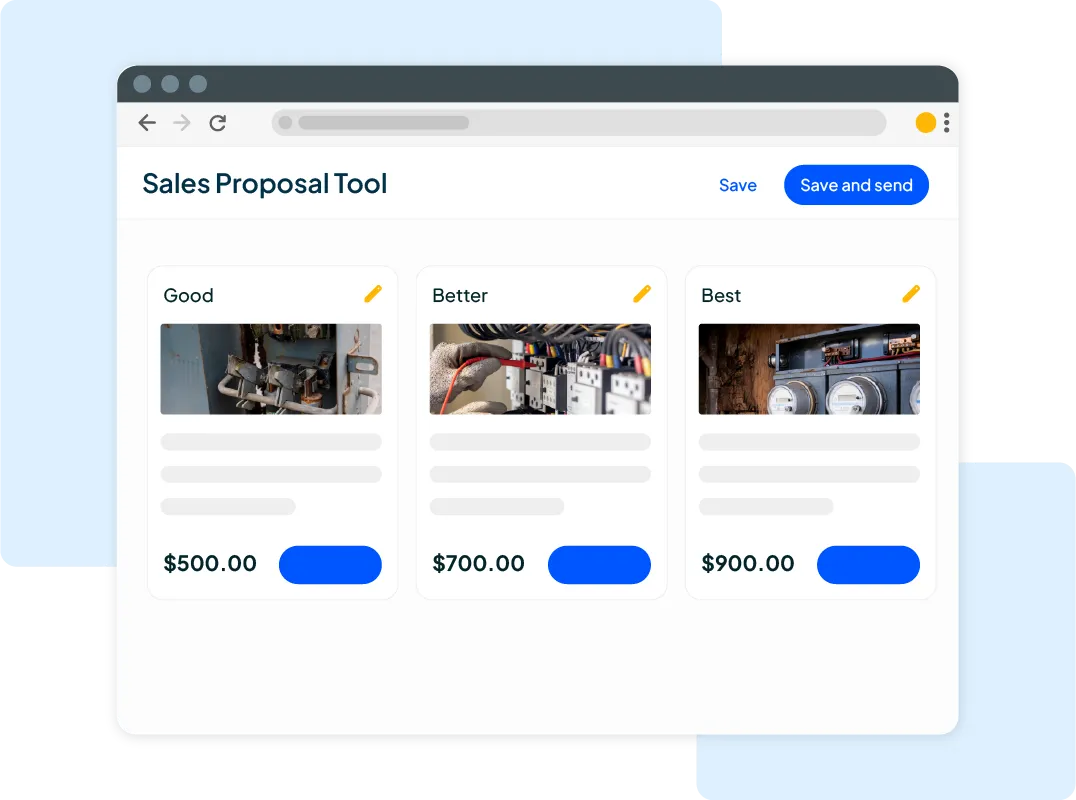
Housecall Pro’s general contractor software keeps job details, pricing, and customer records in one place, so scope and terms carry through from bid to final payment instead of living in three documents. Build quotes with cost breakdowns and margin visible before you send them with Estimates, collect a signature on the spot so the written agreement is handled as part of the sale, then bill larger projects in stages with Invoicing while automated reminders handle the follow-up. In a state with no inspection in many counties, the documentation you keep is also your defense years later. Running longer builds? Look at construction management software for remodelers or the general contractor resource hub for free templates. Smaller residential work fits handyman software.
Try Housecall Pro free for 14 days.
Wyoming contracting questions, answered
Do I need a general contractor license in Wyoming?
No. Wyoming issues no statewide general contractor license and has no contractor licensing board. Licensing happens at the city and county level, and electrical is the only construction trade licensed statewide.
Which trades does Wyoming license at the state level?
Only electrical, through the Department of Fire Prevention and Electrical Safety under the State Fire Marshal’s Office. Plumbing, HVAC, and roofing have no state license.
Do I need a license in every city?
Wherever the jurisdiction requires one. Cheyenne, Casper, Laramie, Gillette, Jackson, and Cody run their own contractor licensing or registration. Requirements and fees differ, so call each building department before you bid.
Do all Wyoming counties require building permits?
No. On much unincorporated county land there is no building code, no permit requirement, and no inspection. Cheyenne, Casper, Sheridan, and Teton County have adopted the 2024 I-Codes.
What is the resident contractor certification?
A voluntary certificate of residency from the Department of Workforce Services. It is not a license to build. It gives a certified Wyoming contractor a 5% bid preference on public projects under W.S. 16-6-102.
How does the 5% preference actually work?
On an advertised public bid, the contract goes to the responsible certified resident with the lowest bid if that bid is not more than 5% higher than the lowest responsible nonresident bid. Only currently certified contractors qualify.
What happens if I lose my resident certification?
You cannot be recertified for one year from decertification. If you are denied for not meeting residency requirements, you cannot reapply for 180 days. Reorganizing your entity does not itself cost you residency.
What counts as a Wyoming resident contractor?
W.S. 16-6-101 offers several routes, all turning on one year. Paths include a natural person resident a year or more, an entity whose equity owners are all Wyoming residents for a year or more, a Wyoming-organized entity in existence a year with a resident CEO and its principal office in state, or an entity that has paid Wyoming workers’ compensation and unemployment taxes for a year and is in good standing with DWS.
Do I have to hire Wyoming workers on public jobs?
Generally yes. W.S. 16-6-203 requires employing only Wyoming laborers on public works projects for the state or a political subdivision, subject to statutory exceptions.
Is workers' compensation required?
Wyoming is a monopolistic state, so coverage comes only through the Department of Workforce Services. Construction is treated as extrahazardous, so obligations attach readily once you have workers. Your home-state policy does not cover Wyoming work.
Can a homeowner do their own electrical work?
Yes, within limits. Under W.S. 35-9-123 a property owner may wire their own home without a licensed electrician provided it is not intended for immediate resale. That exemption belongs to the owner, not to a contractor.
Do I owe Wyoming tax if I buy materials out of state?
Generally yes. Contractors are treated as the consumer of materials they incorporate into real property, and use tax follows materials brought in from another state. It is the most commonly missed Wyoming tax for border-county contractors.
Does Wyoming have contractor license reciprocity?
Not for general contracting, since no license exists. Reciprocity is available for some out-of-state journeyman and master electricians, so check with the State Fire Marshal’s Office for your situation.
Are home inspectors licensed in Wyoming?
No. No Wyoming state agency licenses, registers, or regulates home inspectors.
Do I need insurance?
The state does not mandate it for general contractors, but local licensing commonly requires general liability in the $500,000 to $1,000,000 per occurrence range, and commercial owners require it contractually.
How much do general contractors earn in Wyoming?
Construction managers average $104,420 a year with a median of $92,320, according to BLS data for May 2025. The bottom 10% earn $62,480 and the top 10% earn $160,480. First-line supervisors of construction trades average $86,670.
LEARN FROM THE PROS
Helpful content for the trades
Explore our collection of helpful articles written by top experts in their field to seasoned pros in the field. Strengthen your field service knowledge and stay current on the latest industry topics and trends.
How contractors track job status without calling every technician
How to market your home service business and keep customers coming back
How HVAC companies with 10+ technicians manage GPS tracking and dispatch
How to price and scale a recurring lawn care route
How to evaluate field service apps: 8 things to check before you choose
How to compare payment processing options for home service contractors
Thumbtack vs. Angi: Which is better for your business?
TradeWire #50: Home Depot’s tool sweater, Milwaukee’s $200M trades pledge, and Trades Thursday
General contractor pricing guide: How to price jobs in 2026
Housecall Pro’s inaugural Trades Thursday draws thousands of pros nationwide
How to choose the right HVAC scheduling app
How to get junk removal leads: 15 proven strategies
Get $50 gift card
Talk to an expert and see how Housecall Pro can fit your needs.
Prefer to explore on your own?


