Want to win more jobs with less effort?
Grow your business and send quick quotes with our home service software.

Want to see your potential revenue?
See what businesses like yours earn with Housecall Pro in 1 - 2 minutes.
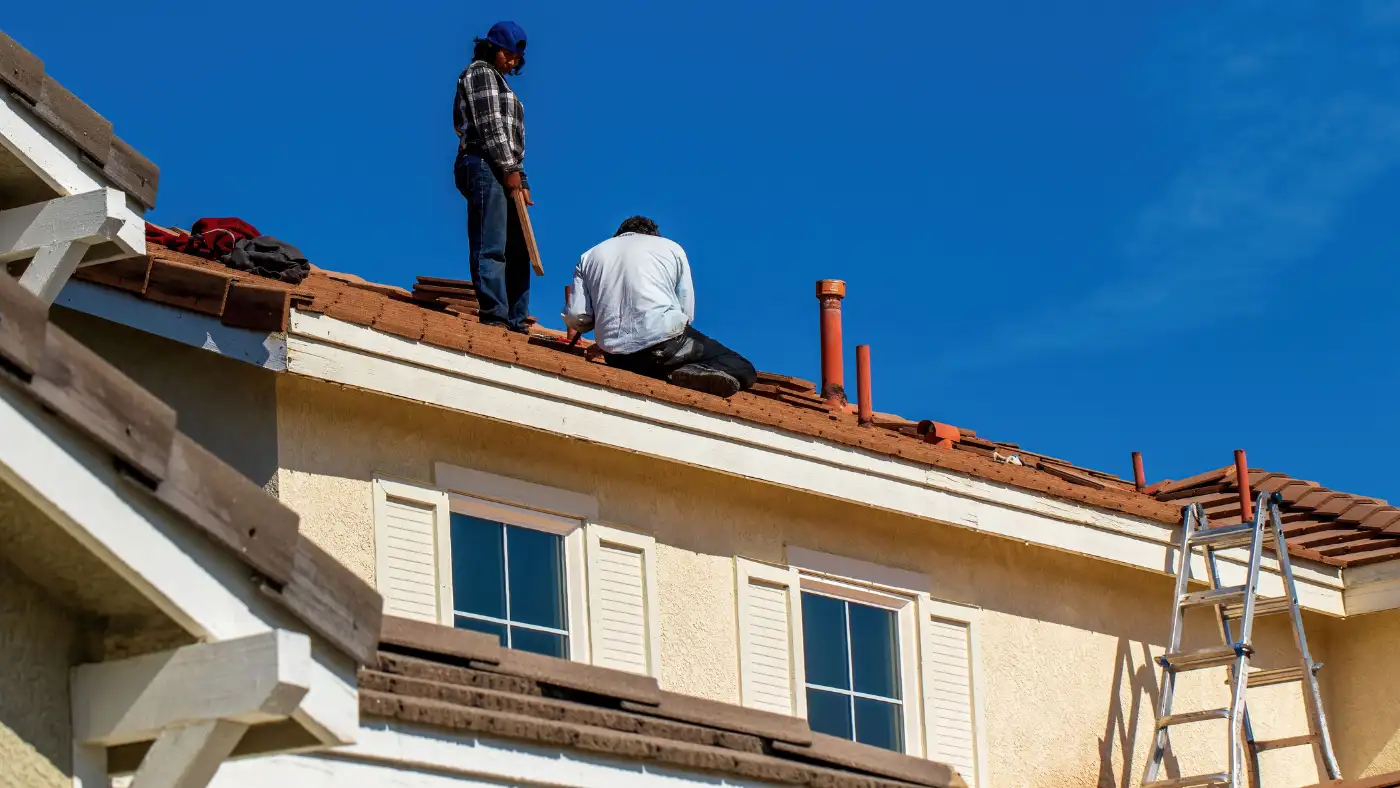
Roofing work can change with the season. One month your crews are booked out, and the next, the phone slows down. If larger roofing companies keep showing up above you in search results—and paid ads are getting more expensive—SEO can help you build a steadier source of leads.
SEO, or search engine optimization, helps your roofing company show up when homeowners in your area search for a roofer. It can also make your business easier for AI search tools to understand and include in relevant answers.
This guide walks through 12 practical steps to improve your rankings, reach homeowners who are ready to hire, and bring in more roofing jobs through your website.

Website SEO Grader
See how your website stacks up on SEO that help customers find you.
Key takeaways
Strong roofing SEO comes down to doing the right work consistently:
Own your local presence: Optimize your Google Business Profile and collect reviews to rank higher in local search results.
Target buyer-ready keywords: Focus on service and city terms that signal homeowners are ready to hire.
Build authority off-site: Earn backlinks, reviews, and local mentions to strengthen trust signals.
Fix technical gaps: Improve speed, mobile usability, and site structure so content can rank.
Track and refine: Monitor traffic and leads monthly, then adjust pages and keywords that underperform.
Table of contents
Roofing SEO services: Should you hire an expert?
SEO takes time, and most roofing business owners already have plenty competing for their attention. The decision is whether you have the time and knowledge to handle it yourself or whether hiring a specialist makes more sense.
An SEO company may research keywords, improve your website structure, write content, build backlinks, and track rankings and traffic. That help can free up your time and move the work forward, but you still need to review the strategy, understand the reports, and make sure the agency knows the roofing industry. Most local SEO retainers for home service businesses run $500 to $2,500 a month, depending on your market and how competitive it is.
Here’s a quick look at both sides.
| Pros of outsourcing SEO | Cons of outsourcing SEO |
| Saves you time to focus on running jobs | Monthly retainer fees add up |
| Access to specialized tools and experience | Results can take months |
| Clear strategy and reporting | Not all agencies understand roofing |
| Ongoing optimization and tracking | Less direct control over content |
Whether you keep SEO in-house or hire help, knowing the basics makes it easier to set priorities and understand whether the work is paying off.
Read more: Digital marketing agencies for home services
Local SEO for roofers
Local SEO helps your roofing company show up when homeowners search for services in your area. According to RBOA’s 2026 SEO Blueprint, 80% of consumers search for local businesses every week, yet 58% of local service businesses still don’t appear online. If your roofing company is one of them, nearby competitors have the first chance to win those jobs.
Start with these three steps.
Step 1: Optimize your Google Business Profile
Your Google Business Profile is often the first thing homeowners see. If you haven’t claimed and verified your listing, start there. Then complete every section and add accurate hours, service areas, and contact information.
Choose the right primary category, such as “Roofing contractor,” and add related services, such as roof repair or storm damage inspection. Upload high-quality photos of completed jobs, your crew, and branded trucks.
Frankwin Hooglander of Treasure Valley Solutions has seen the value of this firsthand. “We really optimized our Google Business Profile. I did a lot of research on that, and it seemed to be the best way to get a lot of people actually finding you because obviously everybody uses Google to find businesses. From the beginning, we’ve really heavily focused on getting reviews on that Google My Business page.”
Ask happy customers to leave reviews and respond to each one. An updated profile helps you appear in local map results and builds trust before someone even clicks your website. Because AI-generated local recommendations may also draw from Google Business Profile information, keeping your listing accurate can help your visibility beyond traditional search results.
Step 2: Use location-specific keywords
To reach homeowners in your service area, make it clear where you work. Include your city, neighborhood, or service area naturally in page titles, headings, and body copy. Add location terms to your meta descriptions and image alt text when relevant. Create separate service pages for each major city you serve.
For example, use phrases like “roof repair in Dallas, TX” or “metal roofing contractor in Orange County.” Avoid stuffing keywords. Write for real people first. Search engines connect your roofing services with nearby homeowners based on those location signals. AI search tools can use these same geographic signals to determine which roofing businesses are relevant to recommend in a specific area.
Step 3: Build local citations
Citations are online listings that show your business name, address, and phone number—often called NAP information. Keep those details consistent across every platform so customers and search engines know they belong to the same business. Start with major directories like Yelp, Angi, and the Better Business Bureau.
Add your company to local Chamber of Commerce sites and contractor industry directories. Check social media profiles, too. Keep everything consistent. Accurate citations strengthen your local presence and increase the chances of showing up when homeowners search for roofing services nearby. Consistent citations can also help AI systems verify that your roofing business is legitimate, established, and connected to the area you serve.
On-page SEO for roofers
On-page SEO refers to the changes you make directly on your website to help it rank higher in search results. This includes your page titles, headings, content, images, and internal links. When done right, it helps search engines understand what your roofing services are about and match your pages with the right homeowners.
Step 4: Do keyword research
Keyword research helps you understand what homeowners are actually typing into Google. Use tools like Google Keyword Planner or SEMrush to find phrases with enough searches to matter and a clear reason behind the search. Prioritize high-intent terms that suggest someone is ready to hire a roofer instead of simply researching a topic—think “roof repair near me” instead of “types of shingles.”
Combine service and location keywords for stronger local targeting. For example, target “roof replacement in Phoenix” or “emergency roof repair in Tampa.” Build pages around these terms. When your content matches real searches, you attract leads who are already looking for your services. Question-based and conversational phrases are also common in AI-powered searches, so include a few that reflect how homeowners naturally ask about roofing problems.
Step 5: Create blog content
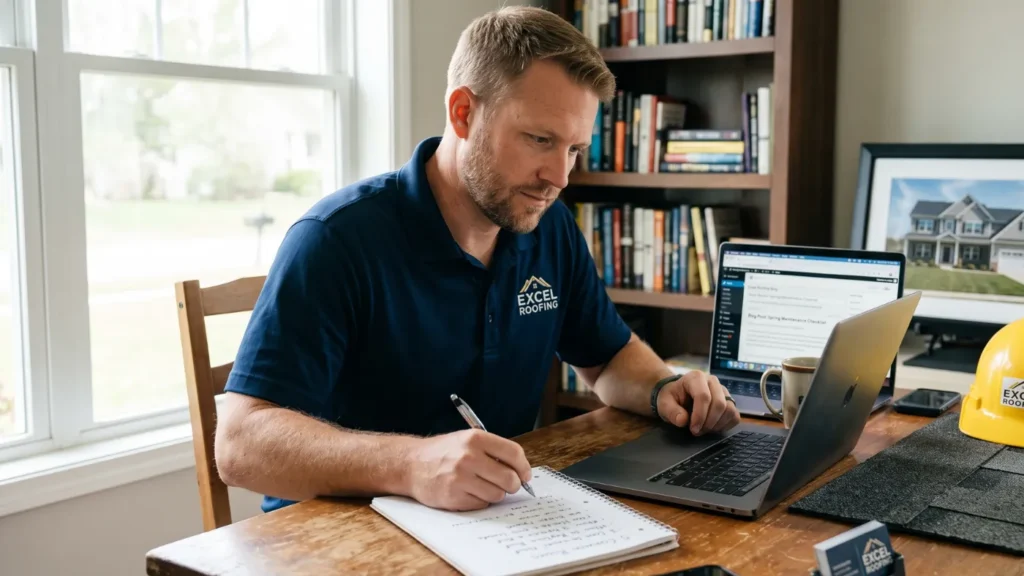
Blog content helps you rank for more searches and builds trust with homeowners. Start with the questions customers ask on calls, during estimates, and after storms. Focus on useful local topics, seasonal concerns, and clear answers homeowners can act on.
Here are some blog ideas to get started:
- How to tell if you need roof repair or full replacement
- What hail damage looks like on asphalt shingles
- How much does a new roof cost in [Your City]?
- What to expect during a roof inspection
- How to prepare your roof for storm season
- Signs of poor attic ventilation
- How to work with your insurance company after storm damage
Each post should help a homeowner solve a problem or make a decision. Clear, direct answers build credibility and make your content easier for both search engines and AI tools to understand and surface.
Step 6: Optimize page titles and meta descriptions
Your page title is the clickable headline in search results. Your meta description is the short summary below it. Both influence whether someone clicks. Include your primary keyword and location naturally. Keep titles under 60 characters when possible. Write meta descriptions under 155 characters and give homeowners a clear reason to click. Use the keyword when it fits, but don’t force it.
- Example title: Roof Repair in Denver | Fast Local Roofing Service
- Example meta description: Need roof repair in Denver? Licensed local roofers offering inspections and fast service. Call today for a free estimate.
Clear, keyword-focused titles help search engines understand your page. Strong descriptions help turn impressions into website visits. They can also provide context that AI search tools may use when summarizing or referencing a page.
Step 7: Use clear headers and page structure
Most homeowners will scan your website before they decide whether to read or call.
They don’t read every word.
- Break your content into sections using H2 and H3 headers.
- Use bullet points for lists and short paragraphs for clarity.
- Add tables when comparing services or pricing ranges.
This structure helps readers find what they need quickly. It also helps search engines understand your page layout and topic hierarchy.
Avoid large blocks of text. Stick to simple language. Each section should focus on one idea. Descriptive headers also help search engines and AI tools identify the section that best answers a homeowner’s question.
Step 8: Optimize images
Images help build trust, especially in high-cost service businesses like roofing. Show completed projects, close-ups of materials, and your crew in action. Rename image files before uploading. Instead of “IMG1234.jpg,” use “roof-replacement-austin-tx.jpg.”
Add descriptive alt text that explains the image and includes relevant keywords when appropriate. Alt text helps search engines understand your photos and supports accessibility.
Also, pay attention to file size. Large images slow down your website. Use compression tools to reduce file size to about 100 KB or smaller when the image still looks clear. Faster pages make it easier for homeowners to use your site and can support stronger rankings and more calls or booking requests.
Step 9: Improve website speed and mobile experience
Our 2025 Customer Service Report found that 96% of homeowners think a professional, user-friendly website matters when hiring a pro. If your site loads slowly or is hard to use on mobile, they may leave before they call or request an estimate.
Test your speed with tools like Google PageSpeed Insights. Compress large images. Limit unnecessary plugins. Choose solid hosting. Make buttons easy to tap and keep forms short. A fast, mobile-friendly site makes it easier for visitors to become leads.
Off-page SEO for roofers
Off-page SEO consists of the things you do beyond your website to improve your search rankings. This mainly involves building backlinks, earning reviews, and increasing brand mentions online. When other trusted sites and real customers talk about your roofing business, search engines see you as more credible.
Step 10: Build quality backlinks
Backlinks are links from other websites to yours. Search engines can treat them as signs that other organizations trust your business or content. Focus on quality over quantity: A few relevant links from reputable sites can be more useful than dozens from low-quality websites.
Start locally:
- Reach out to your Chamber of Commerce, supplier partners, or local business directories.
- Offer to write a short roofing safety article for a neighborhood blog.
- Sponsor a youth sports team and request a link from their website.
- Join roofing or contractor associations that list members online.
Skip offers that promise a large number of links for a low price. Build local relationships and earn relevant mentions instead. Links and mentions from reputable sources can help search engines and AI tools verify that your roofing company is established in its market.
Step 11: Get and manage customer reviews
Reviews influence both rankings and buying decisions. In our 2025 Customer Service Report, 93% of homeowners said online reviews influence their decision to hire a pro.
Ask happy customers to leave a review on Google after a job is completed. Make it simple. Send a follow-up text or email with a direct link.
Respond to every review. Thank customers for positive feedback. Address negative reviews calmly and professionally. Future clients read your responses, not just the rating.
“[Customers] tell me that they saw my Google reviews online, and because we had so many good reviews, that’s why they chose us over somebody else,” says Amber DeLong, co-owner of DeLong and Sons HVAC.
Step 12: Partner with local businesses
Local partnerships create exposure and new backlink opportunities. Team up with real estate agents, home inspectors, or restoration companies. Co-host a homeowner workshop about roof maintenance. Sponsor a community event and ask for a website mention.
You can also run joint promotions with complementary businesses, such as gutter installers or siding contractors. These collaborations often result in social media mentions, website links, and referral traffic.
Local website mentions can strengthen your online presence, while the relationships behind them can bring in referrals. That makes a good partnership valuable even when the backlink is not the main benefit.
Read more: 10+ referral program ideas to attract more customers
Get In Touch: 858-842-5746
Let us earn your trust
On average, Pros increase monthly revenue generated through Housecall Pro by more than 35% after their first year.
See plan options and feature breakdown on our pricing page.
Technical SEO for roofers
Technical SEO covers the behind-the-scenes work that helps search engines find, read, and understand your website. Strong content can still struggle to rank if pages load slowly, links are broken, or search engines cannot crawl the site. The same foundation can also make your content easier for AI crawlers to access and understand.
Focus on these core areas:
- Submit and monitor your sitemap: Add your sitemap to Google Search Console. Check for crawl errors. Fix broken links and remove dead pages so users and search engines don’t hit roadblocks.
- Add structured data: Use schema markup, which is extra code that clarifies your business details. Mark up services, service areas, contact information, and customer reviews so search engines better understand your pages.FAQ schema on your FAQ section and blog posts is one of the most direct ways to help AI tools pull an accurate, complete answer straight from your page.
- Use HTTPS: Secure your site with HTTPS to protect visitor data and avoid browser warnings that can reduce traffic.
- Organize site structure: Keep a clear page hierarchy. Group services, sub-services, location pages, and blog content in a logical way. Link related pages together to improve navigation.
- Fix performance issues: Address slow load times, poor mobile usability, duplicate content, and missing canonical tags that can confuse search engines.
Review your site regularly and run audits to catch problems early.
SEO mistakes to avoid
SEO takes time to build, but some shortcuts and overlooked problems can waste your marketing budget or make it harder to rank. Focus your time on work that can support steady, long-term growth.
Watch for these common SEO mistakes:
- Keyword stuffing: Repeating the same keyword too often makes content awkward to read and can hurt its search performance. Use keywords naturally and include related terms that fit the topic.
- Buying low-quality backlinks: Paying for large quantities of links from unrelated or questionable websites can do more harm than help. Focus on earning links from reputable local, industry, and community sources.
- Ignoring performance data: Publishing content without checking the results leaves you guessing. Review traffic, rankings, calls, form submissions, and booking requests to see which pages bring in leads and which need attention.
- Publishing thin or duplicate content: Pages with little useful information give homeowners few reasons to stay. Reusing nearly identical copy across multiple location pages can also make it harder for search engines to determine which page deserves to rank. Give every page a clear purpose and useful, original information.
- Writing only for traditional search: SEO is no longer limited to standard search results. AI search tools favor content they can easily understand and reference. Use descriptive headers, answer common questions directly, include accurate business information, and write in clear, conversational language.
How to measure SEO success
SEO needs regular attention. Review your results, look for changes, and make small adjustments based on what is—and isn’t—bringing in leads.

Track key metrics
Start with the numbers that tell a clear story.
- Website traffic: How many people visit your site each month? Organic traffic shows how many came from search engines.
- Local rankings: Where do you appear for terms like “roof repair in [your city]”?
- Bounce rate: How many visitors leave without clicking anything else?
- Time on page: Are people reading or leaving quickly?
- Conversions: How many calls, form fills, or booking requests came from your site?
Traffic shows how many people reached your site. Conversions show how many took the next step by calling, submitting a form, or booking.
Use SEO analytics tools
You don’t need advanced software to get started. Google Analytics shows how many people visit your site, where they come from, and what pages they view. Google Search Console shows which keywords bring visitors and flags technical issues.
One simple setup tip: track form submissions as conversions in Google Analytics. That way, you can see which pages generate leads, not just visits. You can also use call-tracking software to measure phone inquiries.
These free tools give you visibility into what is working and what needs attention.
Interpret data and adjust strategies
The numbers matter only when they help you make a decision. Look at which pages bring the most leads. Identify the keywords tied to those pages. If one service page attracts traffic but few calls, update the content, add clearer calls to action, or improve internal links.
If a blog post ranks well, build related content around that topic. Double down on what drives results. SEO improves through steady refinement. Small updates can lead to noticeable gains over time.
You don’t need to be a tech expert. Review your numbers monthly and make practical adjustments based on what you see.
Read more: 10+ roofing marketing & advertising strategies
How Housecall Pro’s roofing business software can help
Getting found is only part of the job. Once a homeowner reaches your website or calls your business, you need a simple way to follow up, book the work, and track where the lead came from. Housecall Pro brings those steps together so fewer opportunities slip through the cracks.
Here’s how our roofing software can support the work behind your SEO strategy:
- Review requests: Send review invites after each job to build your online ratings and improve local visibility.
- Online Booking: Capture leads directly from your website and convert traffic into scheduled appointments.
- Marketing tools: Stay in touch with customers through targeted email and postcard campaigns.
- Follow-up automation: Stay top of mind with past customers through scheduled emails and reminders.
- Integrated customer data: Connect marketing activity with job history to see which campaigns drive real revenue.
Pros who use Housecall Pro to run all of this together see it pay off—on average, Pros increase monthly revenue generated through Housecall Pro by more than 35% after their first year.
Ready to turn more website visitors into booked roofing jobs? Start your free 14-day trial today.
FAQs
What is search engine optimization for roofers?
Search engine optimization is the process of improving your website and online presence so it appears higher in search results. SEO helps your roofing company show up when homeowners search for services in your area. For example, a roofing company with strong local SEO might show up in the top 3 Google Map results when someone searches “roof repair near me,” instead of getting buried on page two.
Is SEO for roofers hard?
SEO isn’t necessarily hard, but your SEO efforts do need to be consistent. Regularly optimize your website, collect reviews, and target local keywords. The key is to be patient while results build over time. Most roofing companies see their first measurable movement, like improved local map rankings, within three to four months of consistent effort.
What is the 80/20 rule for SEO?
The 80/20 rule suggests that a small portion of your efforts often drives most of your results. For roofers, this usually means focusing on high-intent service pages and strong local visibility instead of chasing every keyword.
What is a good SEO strategy for roofers?
Focus on local search. This includes optimizing your Google Business Profile, creating service pages for each location, earning customer reviews, and building backlinks from local businesses and directories.
How long does SEO take to work for roofers?
SEO typically takes three to six months to show measurable progress. Rankings improve gradually as search engines index changes, gather signals from reviews and backlinks, and evaluate your content over time.