Want to win more jobs with less effort?
Grow your business and send quick quotes with our home service software.

Want to see your potential revenue?
See what businesses like yours earn with Housecall Pro in 1 - 2 minutes.
A full truck today doesn’t guarantee a full schedule next week. To keep jobs coming in, local customers need to find your business, see what you haul, and feel confident calling your crew.
This guide covers 10 ways to market your junk removal business, from improving your website and Google Business Profile to testing ads, earning reviews, and bringing past customers back.
Quick answer: How do you market a junk removal business?
Start with a clear website and Google Business Profile that show your services, service area, photos, and ways to book. Ask satisfied customers for reviews, build referrals, and test ads or direct mail where they fit your budget. Track which channels bring in booked jobs so you can spend more on what works.
Key takeaways
Start with these basic junk removal marketing tactics:
Show up locally: Keep your Google Business Profile and website up to date with your services, service area, and contact details.
Build trust and recognition: Share real photos and reviews, and make your crew and trucks easy to recognize.
Form local partnerships: Get to know realtors, movers, and property managers who can refer customers when they need a cleanout.
Stay connected with past customers: Use email and SMS campaigns to drive repeat business and referrals.
Track and improve results: Review lead sources monthly and shift budget toward your highest-performing channels.
Table of contents
- Build a strong junk removal brand
- Create a professional junk removal website
- Optimize your junk removal website for SEO
- Run paid junk removal ads
- Use direct mail marketing to reach local customers
- Generate junk removal leads with reviews and referrals
- Use social media for junk removal marketing
- Use email and text to turn one-time customers into repeat business
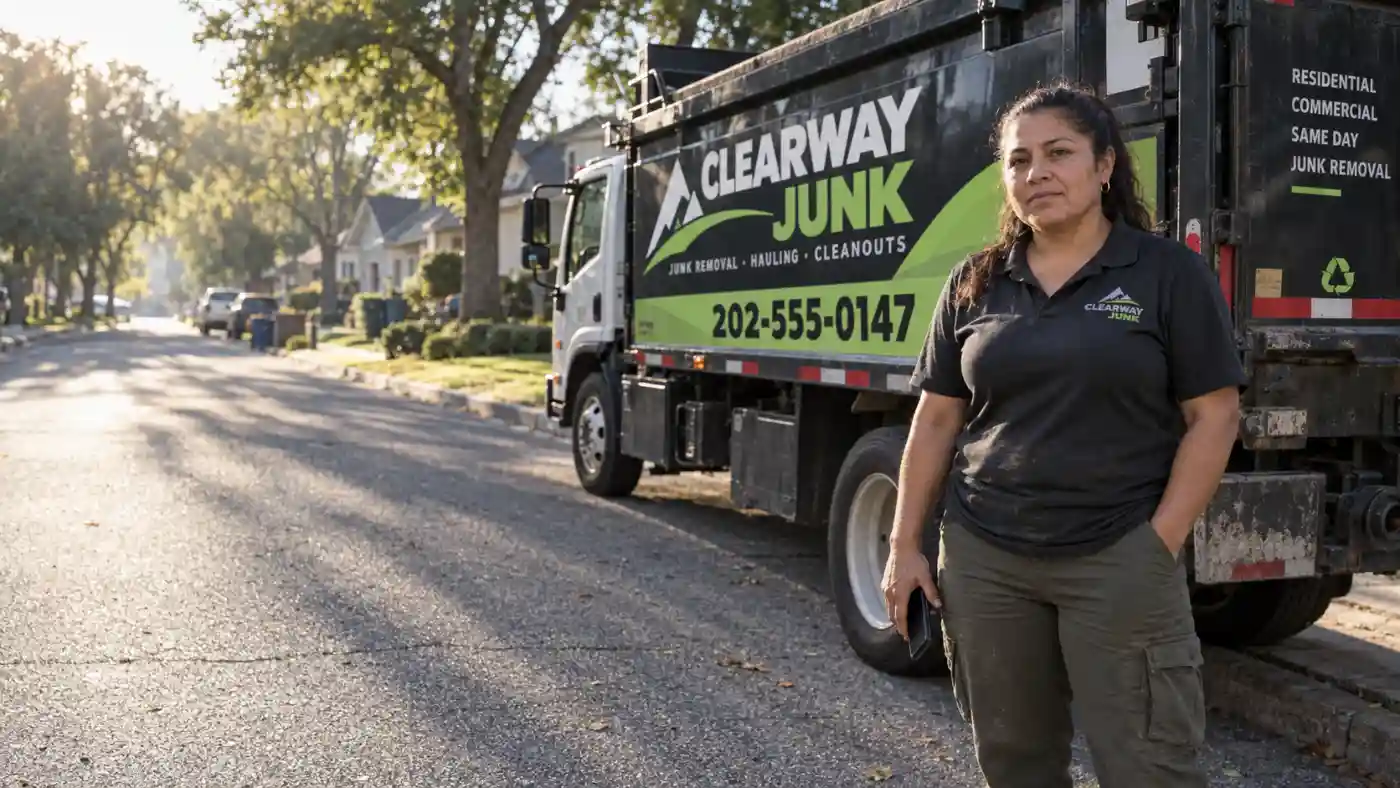
- Promote your junk removal business with vehicle wraps and signage
- Network and partner with local businesses
- How to make a junk removal marketing plan (step-by-step)
- How Housecall Pro's junk removal software can help
1. Build a strong junk removal brand
Start by making your business easy to recognize and trust. Use the same name, logo, and colors on your trucks, uniforms, website, and social profiles, and show customers how your crew works.
Start with the basics:
- Pick a business name people will remember
- Write a simple, clear slogan like “Fast, Friendly Junk Removal—We Haul It All”
- Design a clean, professional logo
Use that branding wherever customers see your business:
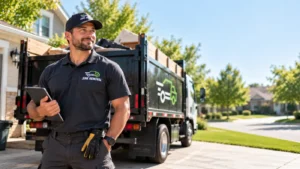
- Trucks: Add a readable phone number and, if useful, a booking QR code.
- Uniforms: Give your crew a consistent, recognizable look.
- Business cards: Add your logo, phone number, and website.
- Website and social media: Use the same logo and colors across your pages and profiles.
More resources:
2. Create a professional junk removal website
In our 2025 survey of 1,000+ U.S. homeowners, 96% said they expect a user-friendly, professional website. Make sure your website answers what you haul, where you work, and how to request a pickup.
Include the following:
- Homepage: This is the overview of your business, with each service you offer and why customers should pick you. Here’s where you make a good first impression of your value (same-day pickup, all the heavy lifting done for them, upfront pricing, responsible disposal for environmental hazards like fridges or printers, etc.).
- Services page: A fuller rundown of what you haul, including specialty jobs like estate and hoarding cleanouts, construction and demo debris, or appliance and e-waste pickup, plus the everyday stuff (furniture, mattresses, garage and yard cleanouts).
- Service areas: The cities and counties you cover. Include a map so customers can pinpoint whether their house (or other space) falls in your service area. This also helps lead outside your area to self-select out, so all your leads are good ones.
- About page: Talk about your experience, how long you’ve been hauling, whether you’re licensed and insured, where your junk actually goes, and whether your crews are background-checked. Say it plainly if you recycle or donate rather than landfill—”eco-friendly junk removal” is a real, growing search term, and homeowners actively look for haulers who dispose of items responsibly.
- Contact page: Phone, an online form, how to book, a secure payment option, plus links to your social media.
- Photos and videos: Real shots of your crew and trucks build more trust than generic stock photos. Before-and-after cleanout pictures are some of the strongest content you can put online.
- Reviews/testimonials: Real, recent reviews from customers you’ve helped.
Learn more: How to Ask for Google Reviews
Make sure your website is also:
- Mobile-friendly (many customers search on their phones)
- Fast-loading
- Easy to navigate
Pro tip: Add a “Book Now” button at the top of every page so customers don’t have to hunt to take the next step. A customer who can’t book you at 9 p.m. on a Sunday will just book whoever else answers. Housecall Pro lets you embed secure online booking right on your website and sync new jobs straight to your calendar, so new work comes in while you sleep.
Get In Touch: 858-842-5746
Let us earn your trust
On average, Pros increase monthly revenue generated through Housecall Pro by more than 35% after their first year.
See plan options and feature breakdown on our pricing page.
3. Optimize your junk removal website for SEO
Search engine optimization (SEO) is what helps you get found when someone searches for “junk removal near me.” Some businesses hire an agency to help with SEO, but you can handle the basics yourself.
Local SEO
Local SEO helps customers in the cities and neighborhoods you serve find your business. For example, a Fort Worth hauler that also serves Keller can explain its services and availability for each area on relevant pages.
Start with your Google Business Profile:
- Claim and verify your listing
- Add accurate business info (name, address, phone)
- Upload photos, like past jobs and your crew
- Collect and respond to reviews (both positive and negative)
Make sure your business info matches across all places it appears: your Google profile, website, social media, and business cards.
Pro tip: Claim and complete your profile on Yelp, Angi, Thumbtack, and Nextdoor Business too. Homeowners often cross-check a business on more than one site before calling, so each profile is another chance to get found and chosen.
On-page SEO
On-page SEO is what search engines and visitors see once they visit your website. Give each page a clear title, describe what you haul, and answer common booking questions.
Optimize your website by:
- Adding keywords like “same-day junk removal in [city].”
- Creating service area pages (for example, “Junk Removal in North Richland Hills,” “Junk Removal in Keller,” “Junk Removal in Weatherford”)
- Writing FAQs about common questions (what you haul, how much you charge, how pricing works)
- Adding “backlinks,” which are links from trustworthy outside sites. For a hauler, that might be a local Chamber of Commerce you belong to, a recycling or donation center you partner with, or a moving company you work alongside
Quick ways to improve your SEO today:
- Add your city name to your homepage title
- Include an FAQ section that answers your most common customer questions
- Update your Google profile weekly with photos or posts
4. Run paid junk removal ads
Paid ads can help you reach more customers sooner, especially when you have openings to fill, a new service to promote, or an area where you want more work. Start with a budget you’re comfortable testing and track which ads lead to booked jobs.
| Ad Type | Cost Model | Avg. Lead Cost Range | Best Use Case | Time to First Lead |
| PPC (Google Ads) | Pay-per-click | $35–$70/lead | High-intent searches (“junk removal near me,” same-day requests) | Ads live in 24–48 hrs; leads typically flow within the first week |
| Local Service Ads (LSAs) | Pay-per-lead (call/message) | $35–$80/lead | Ready-to-book customers who want a fast response | Same day, often within hours |
| Paid Social (Facebook/Instagram) | Pay-per-click or per-lead, campaign-dependent | $8–$25/lead | Seasonal offers, ZIP-code targeting, retargeting site visitors | Days to weeks—lower intent, needs more follow-up |
Pay-per-click ads (PPC)
Pay-per-click (PPC) ads can appear above unpaid results when someone searches for “junk removal near me.” They’re a way to reach customers who are already looking for a pickup.
Choose search terms that match the jobs you want, such as appliance removal, garage cleanouts, or construction debris pickup. You pay when someone clicks your ad, and the cost per click varies by search term and location. Set a budget, then check how many clicks turn into calls and booked jobs.
Here are search terms to consider for different types of work:
- Ready to book: “junk removal near me,” “junk hauling,” “same-day junk removal,” “junk pickup open now,” “trash removal service.”
- Residential: “furniture removal,” “mattress disposal,” “appliance removal,” “garage cleanout,” “junk removal [city].”
- Specialty or commercial: “construction debris removal,” “estate cleanout,” “hot tub removal,” “office cleanout,” “foreclosure cleanout.”
Pro tip: Start with one keyword group and a modest daily budget, then double down on whichever set brings in real calls.
Google Local Service Ads (LSAs)
Local Service Ads (LSAs) also sit at the top of the search page, but instead of paying per click, you pay each time a customer calls or messages you through the ad. They cost more than PPC, but the leads tend to be more serious.
Google also gives LSA advertisers a “Google Guaranteed” badge that tells customers your business has been vetted and verified by Google and that you’re insured. That badge alone builds trust with homeowners who’ve never worked with you before.
Pro tip: LSAs often generate calls from nearby customers almost immediately, so this is a good first paid channel to test.
Paid social ads (Facebook, Instagram, TikTok)
You can also advertise on social media like Facebook, Instagram, or TikTok. Sponsored posts and ads work well for customers who aren’t in a hurry today but will probably need you down the road.
Actionable tips:
- Target by location or ZIP code to stay hyper-local
- Promote seasonal offers or specials (e.g., “$30 off a full truck cleanout this month”)
- Retarget people who visited your website but didn’t book
Focus on Facebook Ads as your primary starting point, then expand to Instagram or TikTok once you know what messaging works.

5. Use direct mail marketing to reach local customers
Direct mail targets specific areas. Blanket a neighborhood you want to break into, like a subdivision full of older homes ready for a cleanout, or use mailers to highlight a deal or a new service.
Examples:
- Postcards with a promotion (“10% off your first pickup”)
- Flyers in neighborhoods with lots of garages and basements
- Fridge magnets with your number on them
- Keep the design simple and include:
- A clear call to action (tell the customer exactly what to do, like “call today” or “book a cleanout and save 15%”)
- Your phone number
- An offer or incentive
Add a unique phone number or QR code to the mailers to track how many jobs come in from it.
Learn more: 8 direct mail marketing strategies that work
6. Generate junk removal leads with reviews and referrals
Reviews from real, local customers are a stamp of approval. Ask for honest reviews after each completed job, and respond to feedback so customers can see you’re paying attention. Timing matters here: in our 2025 survey, only 40% of homeowners said they’re likely to leave a review at all. Asking right after the job, while the experience is fresh, is more likely to get you a response.
Good ways to make it a habit:
- Send a follow-up text or email
- Make it easy with a direct link
- Respond to every review, even the negative ones
With Housecall Pro, you can automatically send review requests so every request goes out right after the job without you having to remember.
Referrals are another great way to find new business. People trust people they know. Offer referral incentives such as:
- “Get $25 off your next pickup for every friend you send our way.”
- “Refer a neighbor, and we’ll haul one extra item free.”
Both work because they’re free proof from people who aren’t you. A five-star review convinces a stranger; a referral skips the convincing step entirely.
7. Use social media for junk removal marketing
You don’t need to be a content creator to do well on social media. Start with one platform your local customers use, whether that’s Facebook, Instagram, Nextdoor, or TikTok. Post regularly enough that you can keep it up, and show the work your crew already does.
Try sharing:
- Before-and-after photos of a cleanout, with the customer’s permission
- A short video of your crew loading the truck
- Answers to questions customers often ask about pickups or pricing
- Photos from community events your business takes part in
Reply to comments and messages so people can reach you when they’re ready to book. Once you see which posts get a response, you can test a paid ad to reach more people in your service area.
8. Use email and text to turn one-time customers into repeat business
Past customers already know your work. Relevant email and text messages can remind them to call you for another cleanout or refer a neighbor.
Stay in touch with:
- Seasonal tips (spring cleaning, post-holiday clear-outs, getting the garage ready for winter)
- Promotions and discounts
- Thank-you messages after a job
If you’re just starting out, aim for:
- Quarterly emails
- Monthly SMS promotions
- Appointment reminders
Housecall Pro makes it simple to send emails and texts to customers. You can sort customers into groups, such as leads who never booked or folks who’ve hired you before, and schedule reminders to generate repeat work.
Learn more: How to write marketing emails
9. Promote your junk removal business with vehicle wraps and signage
Your truck is a moving billboard, so put it to work.
Add a wrap with:
- Your business name
- Your logo
- Your phone number
- Your services
- QR code to book online
Other offline ideas worth trying:
- Yard signs at job sites
- Stickers or decals
- Postcard mailers in spring and fall when people typically deep-clean their homes
10. Network and partner with local businesses
Build relationships with realtors, property managers, contractors, moving companies, and apartment complexes in your community. These relationships can translate to steady commercial work.
Networking is more of a time investment than a money investment, so if you’re just starting out and don’t have a lot of jobs yet, you can spend time developing relationships with these people.
A few places to start:
- Join your local chamber of commerce
- Sponsor a youth sports team
- Show up to community events
If networking feels intimidating, set small goals, like:
- Go to one Chamber of Commerce event a month
- Reach out to three property managers this month and introduce yourself
- Sponsor something at a local school or sports organization
Learn more: Building a memorable junk removal business: Lessons from Junk Fairy
How to make a junk removal marketing plan (step-by-step)
Use these five steps to build a markeitng plan you can stick with.
Step 1: Define your marketing goals
Start with clear goals like:
- Increase monthly leads by 20%
- Get 50 new Google reviews
- Book 10 more jobs a week
Be specific and measurable.
Step 2: Identify your target customers
Think about the jobs you want more of and who usually needs them. Your main customers might include:
- Homeowners clearing out a garage or preparing to move
- Realtors and property managers handling cleanouts between occupants
- Contractors who need renovation debris hauled away
For each group, note where they’re located, how quickly they need pickup, and what matters most to them. A homeowner may want careful work inside the house, while a contractor may care most about reliable scheduling. Use those details in your ads, website, and outreach. If one type of customer won’t keep your crew busy, market to a mix that fits the services you offer.
Step 3: Choose your marketing channels
Don’t try everything at once. Start with:
- Google Business Profile
- Your website
- Reviews
- One paid ad channel
Add more as you grow and get the hang of it.
Step 4: Set your budget and timeline
Decide how much you can put in each month. Start with an amount you can afford to test, then compare spending with booked jobs before increasing it.
- SEO: Update useful pages and local business details over time; results take ongoing work
- Ads: Use for short-term lead generation. Fire up PPC and LSAs to cover slow stretches, then pause them when you’re slammed
- Direct mail: Do occasional campaigns, like seasonal specials or introducing a new service.
Set realistic timelines and stay consistent.
Step 5: Track performance and adjust
Check which marketing channels bring in the most inquiries—and which of those inquiries actually turn into booked jobs. That gives you a better basis for deciding where to spend your time and budget.
Track:
- Calls and form submissions by source
- Booked jobs from each source
- What you spent to get each booked job
Review the results each month. Keep investing in channels that bring in profitable work, and adjust the ones that aren’t paying off.
How Housecall Pro’s junk removal software can help
Marketing brings in inquiries. Your team still needs a way to answer, schedule, and follow up after the job.
Housecall Pro’s junk removal software helps you:
- Automate review requests: Build your online reputation without lifting a finger.
- Enable online booking: Let customers schedule a pickup directly.
- Simplify payments: Get paid quickly and easily.
- Run email and SMS campaigns: Stay connected with customers.
- Track performance: See which marketing efforts are actually driving jobs.
Instead of having a bunch of separate systems that don’t talk to each other, you can keep booking, customer follow-up, and campaign results connected so you can see what brings in work and respond to customers promptly.
Ready to get started? Pros have earned $100B+ running paid jobs on Housecall Pro—try it free for 14 days.
FAQs
What's the most effective marketing strategy for a junk removal business?
Local SEO and Google Ads are typically the most effective marketing channels for junk removal companies. Most customers are searching “junk removal in [City]” and usually book quickly once they decide they need a pickup.
How much should a junk removal business spend on marketing?
About 7%–8% of your annual revenue is the benchmark the U.S. Small Business Administration recommends for marketing spend. If you’re new, expanding services, or targeting new markets, many advisors suggest pushing that toward 10%–15% for a short-term ramp-up, then scaling back once you have steady repeat and referral business.
How do I market my junk removal business with no money?
Create and optimize your Google Business Profile, ask every customer for a review, post before-and-after photos on social media, and join local community groups. When you’re not working with customers, try to get where customers or potential referrals can see you, like community Chamber of Commerce and other networking events, or go to trade shows and introduce yourself.
What's the best way to get more junk removal customers?
Increasing your visibility using Google Ads, Local Services Ads, and a complete Google Business Profile usually gives the best quality leads. Set up alerts for new inquiries so you can respond quickly and get the job.
How long does it take for junk removal marketing to start working?
Paid advertising can generate leads within days of launching a campaign. Local SEO typically takes 3–6 months to show meaningful improvements in rankings and lead volume. Most of your marketing efforts, especially reviews and networking, can snowball and grow off each other.
Do junk removal businesses need a website to get customers?
You don’t have to have a website to take jobs, but skipping one can cost you real business: 96% of homeowners say a professional, user-friendly website matters when deciding who to hire. A simple one-page site with your services, service area, and a booking button is enough to start