Want to win more jobs with less effort?
Grow your business and send quick quotes with our home service software.

Want to see your potential revenue?
See what businesses like yours earn with Housecall Pro in 1 - 2 minutes.

Figuring out how to price junk removal jobs comes down to one thing: covering your costs while staying competitive in your market. Most jobs fall between $70 and $570, with standard pickups around $150 to $35. These ranges are helpful for context, but profitable pricing always starts with your numbers, not industry averages.
A strong quote should account for loading, hauling, fuel, dump fees, recycling costs, nonbillable drive time, insurance, overhead, and enough profit margin to keep your business healthy.
This guide breaks down common junk removal price ranges, pricing models, cost factors, and example calculations you can use to create consistent, profitable estimates.
Table of contents
- Average junk removal prices in 2026
- Residential vs. commercial junk removal pricing
- Popular junk removal add-ons and upsells
- Junk removal price list for common jobs
- Common pricing models for junk removal
- Factors that affect junk removal pricing
- How to set junk removal prices
- Example junk removal price calculations
- How to increase profit margins on junk removal jobs
- How to explain junk removal pricing to customers
- How to quote junk removal jobs consistently
Quick answer: How do you price junk removal jobs?
Price junk removal jobs by starting with truck volume as your base, then layering in labor, disposal fees, drive time, and overhead. Most businesses use volume-based pricing (how much space the junk takes in the truck), with minimum charges for small jobs and add-ons for heavy items, stairs, or specialty disposal.
A simple pricing formula:
- Calculate your true job cost (labor + overhead + disposal)
- Add your target profit margin
- Adjust for job complexity and access
Typical benchmarks:
- Minimum charge: $70–$150
- Standard pickup: $150–$350
- Full truckload: $600–$800+
Junk removal pricing methodology
The pricing ranges in this guide are based on aggregated data from leading home service marketplaces and pricing platforms. Sources include HomeAdvisor, HomeGuide, Angi, and Thumbtack, using their most recent available pricing benchmarks.
These numbers reflect typical junk removal pricing across the U.S., but they’re meant to be a starting point—not a pricing rule.
Your actual prices will vary based on:
- Local disposal fees and landfill rates
- Labor costs and crew size
- Truck capacity, fuel, and maintenance costs
- Job complexity, access, and material type
- Business overhead and operating expenses
- Your target profit margins
Use these benchmarks to gut-check your pricing, then adjust based on your real costs so every job stays profitable.
Key takeaways
Price jobs around costs, not guesswork.
Price based on real costs: Include labor, disposal, drive time, and overhead—not just truck space.
Use volume as your base: Anchor most jobs to truckload size for consistency.
Set a minimum charge: Ensure small jobs still cover travel, labor, and admin time.
Separate add-ons clearly: Charge extra for heavy items, stairs, and specialty disposal.
Track profit by route: Compare revenue against crew hours, dump fees, and drive time.
Average junk removal prices in 2026
Average junk removal prices typically range from $70 to $570, with most homeowners paying $150 to $350 for a standard pickup. Full truckloads often cost $600 to $800, while single-item jobs can run $60 to $150.
A “standard” job usually includes mixed household items, basic loading, normal access, and standard disposal.
These ranges are benchmarks based on industry data (see methodology). Your actual pricing should reflect your local disposal fees, truck size, labor costs, and market conditions.
| Job type | Typical price range | What’s usually included |
| Minimum pickup | $70–$150 | One small load or single bulky item |
| Small residential load | $100–$250 | Light household junk, simple access |
| Standard residential pickup | $150–$350 | Mixed household junk, loaded and hauled |
| Large cleanout | $450–$800+ | Garage, basement, or move-out cleanout |
| Full truckload | $600–$800 | Large volume, full-service hauling |
| Construction debris removal | $300–$800+ | Heavy debris, disposal, extra labor |
Price ranges assume a full-service junk removal pickup where the crew loads, hauls, and disposes of items. Truckload size varies by company.
Residential vs. commercial junk removal pricing
Residential junk removal is usually priced by truck volume, item count, or a flat rate for common jobs. Customers often expect the price to include loading, hauling, basic cleanup, and standard disposal.
Commercial junk removal jobs usually require more planning, tighter scheduling, and clearer scoping than residential work. A small office cleanout may be simple, but a warehouse, retail space, construction site, or property management job can mean bigger loads, tighter timelines, harder access, and more disposal rules.
Residential junk removal prices
Residential jobs are often smaller but more varied. One customer may need a couch removed, while another needs a garage, attic, basement, or whole home cleaned out.
| Residential job size | Typical price range | Common pricing approach |
| Single-item pickup | $70–$180 | Per item or minimum fee |
| Small load | $100–$250 | Minimum or 1/8 truckload |
| Medium load | $250–$450 | 1/4 to 1/2 truckload |
| Large cleanout | $450–$800+ | 3/4 to full truckload |
| Estate or move-out cleanout | Custom quote | Volume + labor + disposal |
Commercial junk removal prices
Commercial junk removal jobs are often priced by scope, frequency, access, and disposal requirements. A small office cleanout may look similar to a residential job, while a retail, warehouse, construction, or property management job may need a custom bid.
| Commercial job type | Typical price range | Pricing notes |
| Small office cleanout | $250–$600 | Volume-based or flat rate |
| Retail fixture removal | $400–$1,200+ | Labor, loading, and disposal vary |
| Property cleanout | $500–$2,000+ | Often requires onsite estimate |
| Recurring pickup | Custom monthly rate | Based on frequency and average load |
| Construction debris | $300–$800+ | Weight and material type matter |
Popular junk removal add-ons and upsells
Add-ons make pricing easier to explain because they show customers exactly what increases the cost. Instead of folding extra work into one lump sum, list add-ons separately for things like heavy items, stairs, specialty disposal, or same-day service.
| Add-on | Typical price range | Why customers accept it |
| Appliance removal | $60–$180 per item | Covers heavy lifting, safe handling, and disposal rules |
| Mattress removal | $75–$150 per item | Covers bulky handling and local disposal fees |
| Hot tub removal | $300–$800+ | Requires demolition, extra labor, and heavy hauling |
| Extra labor/stairs | $50–$150+ | Accounts for harder access and longer carry time |
| Heavy debris surcharge | $100–$300+ | Dense materials increase labor, truck weight, and dump fees |
| Same-day pickup | $50–$150+ | Covers schedule disruption and urgency |
Add-on ranges assume full-service junk removal with crew loading. Disposal fees vary by material and local transfer station rules.
Pro tip: Include add-ons as line items in the estimate. Customers are more likely to approve extra charges when they can see what’s included, what’s optional, and what adds labor or disposal cost.
Junk removal price list for common jobs

Use this price list as a starting point for common junk removal jobs. Your final rates should reflect your actual labor costs, disposal fees, truck expenses, market, and profit goals.
Small junk removal jobs
Small junk removal jobs are generally quick pickups with limited volume, simple access, and standard disposal. These jobs still need a minimum charge because travel, scheduling, loading, fuel, and disposal time don’t disappear just because the load is small.
| Job | Price range | Factors affecting cost |
| Single chair or small furniture item | $70–$125 | Item size, access, disposal |
| Mattress removal | $75–$150 | Local disposal fees, stairs |
| Appliance pickup | $60–$180 | Weight, recycling rules |
| Small garage pile | $100–$250 | Volume, sorting, access |
| Bagged trash pickup | $75–$200 | Number of bags, dump fees |
Small-job ranges assume one crew visit, standard access, and no hazardous or specialty disposal requirements.
Large junk removal jobs
Large junk removal jobs take more planning because the crew may need more time, a larger truck, multiple trips, or special disposal. These jobs often have more pricing variability because volume, weight, and access can change the real cost fast.
| Job | Price range | Factors affecting cost |
| 1/2 truckload | $300–$500 | Volume, labor, dump fees |
| Full truckload | $600–$800 | Truck capacity, weight, crew size |
| Garage cleanout | $300–$750 | Sorting, stairs, hazardous items |
| Basement cleanout | $400–$1,000+ | Access, hauling distance |
| Estate cleanout | $800–$3,000+ | Volume, timeline, number of trips |
Large-job ranges assume full-service loading and hauling. Final pricing may increase with stairs, sorting, heavy debris, or multiple trips.
Emergency and same-day junk removal
Emergency junk removal includes urgent pickups, move-out cleanouts, eviction cleanouts, and same-day hauling. Rates are usually higher because the job can disrupt the route, require crew overtime, or add after-hours travel.
| Service type | Price range | Pricing notes |
| Same-day pickup | Standard rate + $50–$150 | Best for urgent small loads |
| After-hours pickup | 1.5x–2x standard rate | Covers overtime and scheduling disruption |
| Eviction cleanout | Custom quote | Volume, safety, and condition vary |
| Storm debris pickup | Custom quote | Weight, hazards, and disposal matter |
Emergency and same-day pricing premiums added to the base job rate, U.S. market, 2026. Multiply base rate for after-hours; add flat fee for same-day.
Common pricing models for junk removal
Most junk removal companies use volume-based pricing as their main model. From there, they can add per-item, hourly, or flat-rate pricing when a job doesn’t fit cleanly into a standard truckload tier.
Volume-based pricing
Volume-based pricing charges customers based on how much space their junk takes up in your truck. It’s the most common model for junk removal because it’s simple for customers to understand and practical for crews to apply onsite.
Best for: Mixed household junk, garage cleanouts, move-out jobs, and full truckloads.
Pricing note: Standardize your truckload tiers so every estimator prices jobs the same way.
Per-item pricing
Per-item pricing works well for common bulky items, such as mattresses, couches, appliances, exercise equipment, and furniture.
Best for: Single-item pickups or small jobs with predictable labor.
Pricing note: Add separate fees for stairs, long carry distances, heavy items, or disposal surcharges.
Hourly pricing
Hourly pricing charges for crew time rather than truck space. It can work for sorting-heavy jobs, hoarding situations, estate cleanouts, or commercial jobs where the final volume is hard to predict upfront.
Best for: Labor-heavy jobs with uncertain scope.
Pricing note: Set a minimum number of hours so the job covers travel, setup, and admin time.
Flat-rate pricing
Flat-rate pricing gives the customer one price for a defined scope of work. It works when the job is predictable and your crew knows exactly what’s included.
Best for: Standard appliance pickup, mattress removal, small office cleanouts, or predefined service packages.
Pricing note: Put exclusions in writing so the flat rate doesn’t accidentally include extra labor or prohibited materials.
Tiered or package pricing
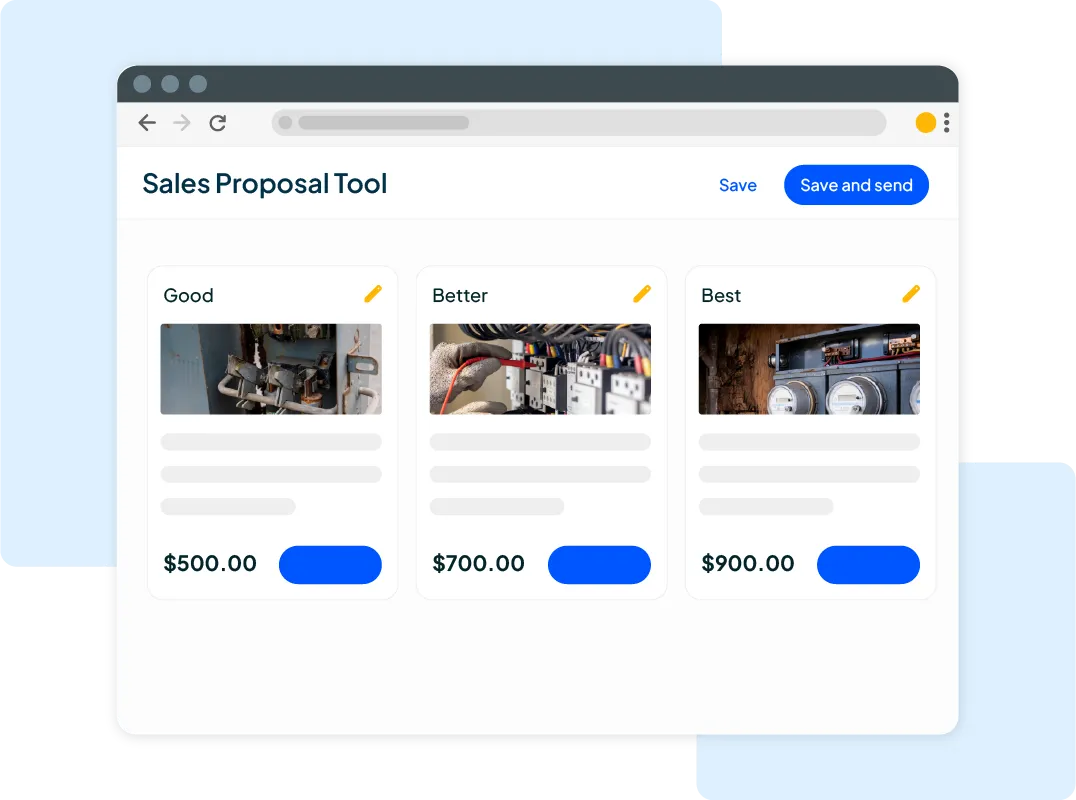
Tiered pricing gives customers “good,” “better,” and “best” options. For junk removal, this could mean curbside pickup, full-service pickup, and full-service pickup with sweep-up or donation drop-off.
Best for: Customers who want options and clarity.
Pricing note: Use tiers to price differences in service level—like convenience, urgency, or extra handling—rather than lowering your base price to win the job.
Factors that affect junk removal pricing
Several factors can change the final price of a junk removal job. Apply these adjustments consistently so your crew doesn’t underquote harder jobs or surprise customers with fees after the estimate.
- Volume and weight: Larger or denser loads take more truck space and may increase dump fees.
- Access and carry distance: Stairs, elevators, tight parking, or long walks add crew time.
- Item type: Appliances, mattresses, electronics, tires, and heavy debris may need special pricing.
- Disposal requirements: Landfill, recycling, donation, and transfer station fees vary by location.
- Urgency: Same-day, weekend, or after-hours pickups should carry a premium.
- Sorting needs: Donation, recycling, or debris separation adds labor time.
- Local market rates: Competitor pricing affects expectations, but should never replace cost-based pricing.
Disposal fees can change a lot by material. For example, mattress disposal typically runs $20–$50 per unit at transfer stations, while whole tires are banned from landfills in most states and require separate recycling drop-off. Build those fees into your price book so your crew isn’t forced to guess onsite.
How to set junk removal prices

A repeatable pricing process helps you quote faster and protect your margins. Use the steps below to build prices from your real costs instead of relying on guesswork.
Step 1: Calculate baseline costs
Start with the real cost of completing a job. That includes labor, payroll burden, fuel, truck expenses, disposal fees, insurance, admin time, and any nonbillable time spent driving or unloading.
Labor cost per job
(Hourly wage × labor burden) × job hours
Overhead cost per job
Total monthly overhead ÷ monthly billable hours × (job hours + nonbillable hours)
Break-even job cost
Labor cost per job + overhead cost per job + disposal fees
Read more: Overhead costs explained
Step 2: Research local junk removal rates
Use local competitor pricing, customer expectations, and national benchmarks to understand the market. The goal is not to copy the cheapest hauler. It’s to see where your pricing fits and how clearly you need to explain your value.
For example, a customer comparing a $150 pickup and a $225 pickup may choose the higher price if your estimate clearly includes loading, disposal, arrival window, cleanup, and responsible recycling.
Step 3: Choose your primary pricing model
Most junk removal businesses should start with volume-based pricing, then layer in per-item or hourly adjustments for jobs that don’t fit cleanly.
Common models include:
- Volume-based pricing: Best for mixed junk and cleanouts.
- Per-item pricing: Best for mattresses, couches, and appliances.
- Hourly pricing: Best for sorting-heavy or uncertain jobs.
- Flat-rate pricing: Best for repeatable jobs with clear scopes.
- Commercial pricing: Best for recurring or multi-location work.
Step 4: Set a target profit margin
Once you know your baseline costs, choose a target margin that supports the way your business operates. A newer junk removal company with one truck may price differently than an established business with multiple trucks, employees, higher insurance costs, and a bigger marketing budget.
Your margin should account for growth, not just covering today’s expenses.
A simple pricing formula is:
Final price
Break-even job cost ÷ (1 − target profit margin)
Step 5: Set minimum charges and base service fees
A minimum charge keeps small jobs from becoming money-losers. Even a one-item pickup still takes scheduling time, drive time, fuel, labor, truck space, payment processing, and disposal.
For most junk removal businesses, the minimum charge should cover:
- Travel time: Account for drive time to and from the job.
- Crew setup: Cover loading, prep, and cleanup time.
- Truck costs: Include fuel, maintenance, insurance, and wear.
- Disposal fees: Build in landfill, transfer station, or recycling costs.
- Admin time: Cover scheduling, estimating, invoicing, and payment processing.
Step 6: Adjust for job complexity and scope
Create predefined adjustments so your team prices consistently. These can be flat fees, percentage increases, or tier upgrades.
Common adjustment factors include:
- Stairs or elevators: Add labor time for difficult access.
- Long carry distance: Charge more when parking is far from the load.
- Heavy materials: Add fees for concrete, dirt, tile, brick, or roofing debris.
- Special disposal: Add line items for mattresses, electronics, tires, or appliances.
- Multiple stops: Charge extra for donation drop-offs or recycling runs.
Step 7: Price add-ons and optional services
Add-ons should be priced as separate services that go beyond the original pickup scope. Estimate the time, materials, disposal fees, and target margin, then convert the total into a clear line item.
Common junk removal add-ons include:
- Appliance removal: Covers heavy lifting and disposal requirements.
- Mattress removal: Accounts for bulky handling and local disposal fees.
- Hot tub removal: Covers demolition, cutting, loading, and hauling.
- Yard debris hauling: Accounts for volume, weight, and disposal rules.
- Construction debris removal: Covers heavy material and dump fees.
- Donation drop-off: Adds travel, sorting, and extra stop time.
- Sweep-up service: Adds cleanup time after hauling.
- Same-day pickup: Covers urgency and route disruption.
Step 8: Use pricing tools and software
When quotes live in your crew’s head instead of a shared system, you get inconsistent pricing and disputes at the door. Housecall Pro’s junk removal software keeps estimates, scheduling, payments, and job details in one place so every quote is built the same way.
Free download: Small business price book template
Step 9: Review and adjust regularly
Review pricing at least quarterly, or any time disposal fees, fuel, wages, insurance, or truck costs change. Track your revenue by truck, crew, route, and effective hourly rate so you can spot jobs that look profitable on paper but underperform in the field.
Read more: How to write a price increase letter (templates & tips)
Get In Touch: 858-842-5746
Let us earn your trust
On average, Pros increase monthly revenue generated through Housecall Pro by more than 35% after their first year.
See plan options and feature breakdown on our pricing page.
Example junk removal price calculations
The examples below use sample labor, overhead, fuel, and disposal assumptions to show how the pricing math works. Replace these numbers with your own job data before setting final prices.
Example 1: Standard garage cleanout
Scope: Two-person crew removes a mixed pile of household junk from a garage
Pricing model: Volume-based pricing
Estimated baseline cost: $210
Target margin: 30%
Price calculation:
$210 ÷ (1 − 0.30) = $300
Total price: $300
This price works because the job has a defined scope, easy access, and a predictable amount of truck space. The margin gives the business room to cover overhead and still profit after labor, fuel, and disposal.
Example 2: Couch, mattress, and appliance pickup
Scope: Customer needs a couch, mattress, and old refrigerator removed from a second-floor apartment
Pricing model: Per-item pricing + access fee
Estimated baseline cost: $185
Target margin: 35%
Base price:
$185 ÷ (1 − 0.35) = $285
Add-on: Appliance recycling/disposal fee = $40
Add-on: Second-floor stair carry = $50
Total price: $375
The higher price reflects the extra handling, appliance disposal, and stair access. Breaking those fees out separately also makes the estimate easier for the customer to understand.
Example 3: Commercial office cleanout
Scope: Small office needs desks, chairs, shelving, boxes, and electronics removed before a lease ends.
Pricing model: Custom flat-rate quote
Estimated baseline cost: $620
Target margin: 32%
Price calculation:
$620 ÷ (1 − 0.32) = $912
Total price: $912
This job needs a custom quote because it includes a larger volume, business timeline pressure, electronics handling, and more crew coordination than a standard residential pickup.
How to increase profit margins on junk removal jobs
Once your basic pricing is in place, focus on the parts of the business that affect profit over time: route efficiency, crew consistency, disposal costs, and the kinds of jobs you want more of.
- Use price anchors: Show minimum, half-load, and full-load pricing so customers understand the scale.
- Create service tiers: Offer curbside, full-service, and full-service-plus-cleanup options.
- Track revenue per truck hour: Measure how much each route earns after drive time and disposal.
- Charge for convenience: Same-day, weekend, and after-hours pickups should carry a premium.
- Standardize disposal fees: Build common landfill, mattress, appliance, and electronics fees into your price book.
- Filter low-value jobs: Raise minimums when small pickups keep blocking better routes.
- Adjust for peak demand: Spring (March–June) is the busiest season for most junk removal businesses. Raise your minimum charge by $25–$50 during peak months, or add a same-week scheduling premium when your calendar fills fast.
How to explain junk removal pricing to customers
Customers are more likely to accept a higher price when they understand what the quote includes. Keep the explanation simple, specific, and tied to the actual job.
Try language like:
“Your quote includes the crew loading everything, hauling it away, standard disposal fees, and basic cleanup of the pickup area. The extra charge is for the refrigerator because appliances require special handling and disposal.”
Or:
“This is priced as a half-truckload because the items take up more space than a small pickup, even though the load isn’t especially heavy. If the final volume is lower when we arrive, we’ll adjust the price before starting.”
If a customer says the quote is higher than expected, explain the cost drivers without sounding defensive:
“The price is higher because this load includes stairs, appliance disposal, and more than a quarter truckload. I can also separate the must-remove items from the optional items if you want to bring the price down.”
This keeps the conversation focused on scope, not haggling.
Pro tip: Put every estimate in writing before loading begins. This helps prevent disputes and gives customers a clear reason to approve the work.
How to quote junk removal jobs consistently (and stop leaving money on the table)
Knowing what to charge is only half the problem. The other half is quoting it consistently when the phone is ringing, trucks are moving, and your crew is trying to keep the day on schedule.
Housecall Pro helps junk removal businesses turn pricing into a repeatable system by solving the most common breakdowns that lead to inconsistent quotes:
- When prices vary by crew: Use a digital price book to keep standard services, add-ons, and disposal fees consistent.
- When estimates slow down the job: Send professional estimates quickly instead of relying on handwritten notes.
- When routes get messy: Use scheduling and dispatch tools to keep crews, pickups, and arrival windows organized.
- When truck time gets wasted: Fleet tracking helps you see where crews are and reduce unnecessary drive time.
- When payments get delayed: On-site and online payment tools help crews collect faster after the job is complete.
Sign up for Housecall Pro’s free 14-day trial and build a pricing system that helps every junk removal quote stay clear, consistent, and profitable.
Junk removal pricing FAQ
How much should I charge for junk removal?
You should charge enough to cover labor, overhead, drive time, fuel, disposal fees, and profit. Small pickups may start around $70 to $150, while larger cleanouts and full truckloads can reach $600 to $800 or more depending on volume, access, and material type.
What items should junk removal companies charge extra for or avoid?
Junk removal companies should charge extra for items that require special handling, such as mattresses, appliances, electronics, tires, and heavy debris. Many companies avoid hazardous materials like chemicals, paint, asbestos, fuel, and medical waste because those require special disposal rules.
How do I price junk removal add-ons?
Price junk removal add-ons by estimating the extra labor, disposal cost, risk, and target margin. Then list the add-on separately in the estimate so the customer can see why the total price changed. For example, if a stair carry adds 30 minutes for a two-person crew at $25/hour each, plus a $25 appliance disposal fee, your cost is $50 in labor plus $25 in disposal. Price the add-on at $110–$115 to hit a 35% margin.
How often should I update junk removal prices?
Update junk removal prices at least quarterly, and sooner if fuel, landfill fees, labor costs, insurance, or truck expenses increase. Small cost changes can shrink margins fast if your price book stays the same. A useful rule of thumb: if any single cost category (fuel, labor, or dump fees) rises 10%–15%, revisit your price book—that shift can erode margins by 3–5 points if your rates stay flat.
Should I charge a fuel surcharge for junk removal?
You have two options: fold fuel into your base rate, or list it as a separate line item. Most operators fold it in—cleaner estimates, fewer customer questions. A visible surcharge makes more sense when fuel costs spike sharply or when you’re quoting jobs with long drive distances. Keep it simple: a flat $10–$25 per job based on drive time, listed on the estimate before work begins.
How do I price recurring junk removal for commercial clients?
Start with your standard per-load rate and discount 10–15% for the guaranteed volume and predictable scheduling. Structure the agreement around a defined load size per visit—say, up to a half truckload—with overage charged at your standard rate if they exceed it. Get the scope in writing before you commit to a monthly number: visit frequency, load limits, access requirements, and which materials are included.