Want to win more jobs with less effort?
Grow your business and send quick quotes with our home service software.

Want to see your potential revenue?
See what businesses like yours earn with Housecall Pro in 1 - 2 minutes.
A professional quote helps customers understand what’s included in a job, what it’ll cost, and how to approve it. It also reduces back-and-forth and sets clear expectations before work begins.
Whether you’re quoting an HVAC installation, plumbing repair, electrical project, or other home service job, this guide covers what to include, how to write a quote step by step, and how to create, send, and track quotes in Housecall Pro.
Table of contents
Quick answer: What should a quote include?
Every quote should include:
- Business and customer information: Both parties’ names and contact details, plus the service address.
- Quote identifiers: A unique quote number, the date created, and an expiration date.
- Scope of work: A clear description of the work, including timeline and location (kitchen, bathroom, roof, etc.).
- Itemized pricing: Quantities and prices for parts, materials, and labor.
- Taxes, fees, and total: A subtotal, any discounts, applicable taxes, any delivery or disposal charges, and the final total.
- Payment terms and approval instructions: Any required deposit, payment due dates, accepted payment methods, and a simple way to accept the quote (e.g., e-signature or online approval).
- Disclaimers and job-specific terms: Anything that could change the price, such as extra parts or time.
What is a quote?
A quote is a document that gives a customer a specific price for a defined scope of work. It includes labor, parts, materials, and any other charges so the customer can see what’s included before approving the job.
What’s the difference between a quote and an estimate?
A quote gives a specific price for a defined scope of work, while an estimate gives an approximate cost based on what you know about the job. A quote should clearly explain what’s included, what it’ll cost, and when payment is due. In Housecall Pro, you build a quote as an estimate: add fixed pricing and an expiration date, and it works as a quote.
Once the customer approves the quote, use that scope and price to guide the work. If you uncover a problem that requires extra labor or materials, explain what’s changed and get the customer’s approval for any added costs before proceeding. Include how you’ll handle these changes in your quote so customers know what to expect.
Learn more: Estimate vs. proposal vs. quote
Why do I need to write a quote?
A clear quote gives customers the details they need to compare their options and decide whether to book. In Housecall Pro’s 2025 Customer Service Report, 97% of homeowners said transparent pricing matters when hiring a pro, and 93% said instant estimates influence their hiring decisions. A quote also gives your team a record of the work and price you’ve proposed, so everyone starts with the same expectations.
Treat the accepted scope and price as the starting point for the job. Explain how you’ll handle additional work or unexpected conditions, and get the customer’s approval for changes before moving ahead.
If you use field service management software like Housecall Pro, you can carry the approved job details into an invoice when the work is complete, then send it digitally with a payment link.
Pro tip: Quotes shouldn’t be valid indefinitely. Choose an expiration date that fits your supplier pricing and the job. For example, you might use 30 days for work with stable costs or a shorter window when material prices are changing quickly.
How to create a quote for a job
Follow these seven steps to create a clear quote that explains the work, breaks down the costs, and makes it easy for customers to approve.
1. Select or create a template
Use the same core fields on every quote so you can add job details quickly and check for missing information before sending it.
Adjust the template to fit your trade and services. For example, if you offer emergency or after-hours work, include a separate line for that charge so customers can see it upfront.
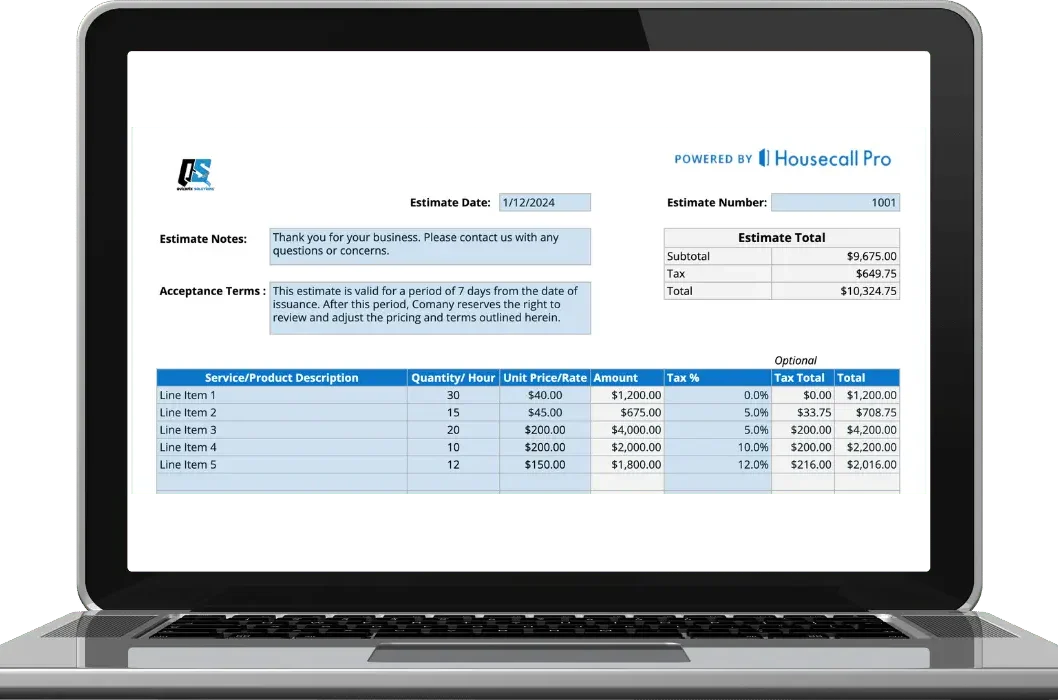
Download Housecall Pro’s free estimate template to get started. Add your business details, list the work and pricing, and customize the terms for each job. For bigger commercial projects, use the small business bid proposal template instead.
2. Add the date and quote number
Assign each quote a unique number, add the date you created it, and state when it expires. These details help you find the quote later and make it clear how long the proposed price is available.
Choose a numbering format that’s easy for your team to use consistently. Sequential numbers, such as Q-1001 and Q-1002, work well. You can also add a service code, such as PLR-284 for a plumbing repair. Whatever format you choose, make sure each number is unique.
3. Add your business information
Put your business name, address, phone number, and email at the top of the quote so customers can easily contact you when they’re ready to book service or have questions. If you send electronic quotes, consider adding a clickable email address so customers can reach you quickly.
Include the customer’s name, contact information, and service address. If the billing address is different, list that too.
You can also name the team member who prepared the quote so the customer knows who to contact with questions.
4. Add billing and payment information
State which payment methods you accept, when payment is due, and whether you require a deposit. For larger projects, explain any payment schedule tied to stages of the work.
If you’re collecting a deposit online, include payment instructions or a link where the customer can pay after approving the quote.
Learn more: Quote and invoice payment terms explained
5. Itemize parts and services
Use a separate line for each part, material, or service. Include the quantity, unit price, and line total, along with enough detail for the customer to understand what you’re providing.
If your job has multiple phases, consider organizing this portion by phase instead of a flat list. For a kitchen remodel, for example, you might have separate sections for counter installation, cabinetry, and plumbing, each with its own line items.
Example itemized quote:
| Item | Qty | Unit price | Line total |
| 50-gallon gas water heater | 1 | $1,150 | $1,150 |
| Labor | 3 hrs | $125 | $375 |
| Venting and gas connection parts | 1 | $90 | $90 |
| Old unit haul-away and disposal | 1 | $60 | $60 |
| Subtotal | $1,675 | ||
| Optional add-on, not in total: expansion tank | 1 | $85 | $85 |
Include add-ons and tiered pricing
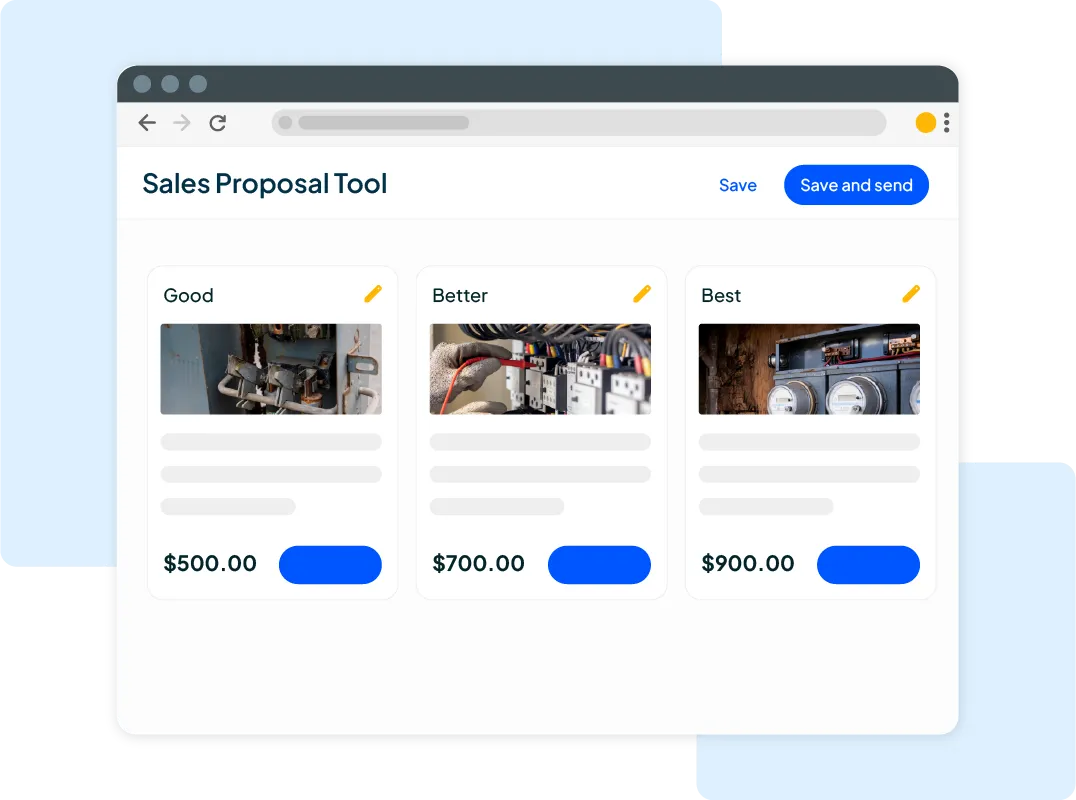
Separate optional add-ons from the quoted work so customers can see what’s included and what costs extra. In Housecall Pro’s 2025 Customer Service Report, 80% of homeowners said they want to know what options (“good, better, best”) are available.
For example:
- House cleaning: A standard clean (kitchen, bathrooms, common areas) with add-on line items for extras like inside-oven cleaning, interior windows, or a full deep clean.
- Lawn care: Basic, standard, and premium packages. Basic might cover mowing and edging, standard might add fertilization, and premium might include seasonal aeration and weed treatment.
- HVAC: A standard tune-up with optional add-ons such as filter replacement, duct cleaning, or a smart thermostat install.
This gives customers an easy way to choose the services that fit their needs and budget.
Build quotes faster with a price book
If you’re re-entering the same parts, labor rates, and packages on every quote, you’re losing valuable time. Housecall Pro’s Price Book lets you save service and material pricing when building estimates so you can create quotes faster—and without retyping the same line items job after job.
6. Include the subtotal and grand total
Add up the parts, materials, and labor to calculate your subtotal. Show any discounts, applicable taxes, and additional fees separately, then make the final total easy to find.
Before sending the quote, double-check the quantities, prices, and calculations. Make sure optional add-ons aren’t included in the total unless the customer has selected them.
7. Set terms and conditions
Explain any conditions that affect the scope, price, or timeline. For example, a plumbing quote might include cleanup but exclude landscaping repairs after excavation. State those limits clearly so the customer knows what to expect.
Include the expiration date, payment deadlines, and how you’ll handle changes to the work. Give the customer clear instructions for approving the quote.
If you require a deposit, spell out the amount and when it’s due. Base the deposit on your actual upfront costs, such as materials, scheduling, and labor planning, rather than a flat percentage. Some pros ask for 25%–50% on larger jobs, but requirements vary by state, and some states cap how much you can collect. Some cap how much you’re allowed to collect. California, for example, limits deposits to 10% of the job total or $1,000, whichever is less. Check your state’s rules before setting your deposit policy to keep your terms compliant.
Learn more: How to ask for a deposit
Get In Touch: 858-842-5746
Let us earn your trust
On average, Pros increase monthly revenue generated through Housecall Pro by more than 35% after their first year.
See plan options and feature breakdown on our pricing page.
How to send a quote to a customer
Send the quote in a format the customer can easily open, review, and keep for their records. Ask how they’d like to receive it, and explain the next step for approving the work.
The most common ways to deliver quotes to customers are:
- Text message. Send a link to a digital quote so the customer can review the scope, price, and terms on their phone.
- Email. Send a quote or a link to one when the customer needs to review more details or share it with someone else, such as a property manager or accounting team.
- In person. Walk through the quote with the customer after assessing the job. You can answer questions while the work is fresh in their mind, then send a digital copy for their records. Housecall Pro’s mobile app lets you create and present estimates from the job site.
How to follow up on a quote you’ve sent
Not every quote you send turns into a booked job right away. The customer may be comparing prices, waiting on another decision-maker, or simply busy. A follow-up gives them a chance to ask questions and take the next step.
Start by confirming they received the quote. Then ask whether they have questions about the scope, price, or timing. Include the quote link again so they don’t have to search for it.
Choose a follow-up schedule that fits the job. For example, you might check in after two days, follow up again the next week, and send a final reminder before the quote expires. Stop scheduled reminders once the customer accepts or declines.
Housecall Pro offers automated estimate follow-ups through its Pipeline feature, helping your team stay in touch without manually sending every message.
Read more: How to follow up on a quote
How can estimating software help my business?
Looking up prices, calculating totals, and entering the same job details on every quote takes time. Estimating software keeps your pricing and customer information in one place so you can prepare quotes more consistently and reduce manual entry.
If your quotes take too long to build, Housecall Pro lets you create estimates using saved service and material prices, present options to customers, and copy an approved estimate into a job. That helps your team carry the agreed details into scheduling and the work ahead.
You can also create estimates from the mobile app, giving technicians a way to prepare and share pricing without heading back to the office. Keeping your saved prices current helps the office and field team quote from the same information.
Ready to make quoting easier? Start a free 14-day trial to see how Housecall Pro helps you create estimates, schedule approved work, and manage invoicing and payments.
How to write a quote FAQ
What should a formal quote include?
A formal quote includes your business information and your customer’s information, an itemized breakdown of parts and labor, the total price, payment terms, and a unique number. It also should state how long the quote is valid for, so you’re not locked into old pricing.
What’s the difference between a quote and an estimate?
An estimate is an informal projection of what the job will likely cost and an approximation of how long it will take. A quote spells out all the details, including specific pricing, with fixed terms. Quotes are precise, and once the customer accepts them, the terms and pricing generally cannot change unless the job scope changes.
How long should a quote stay valid?
30 days from the quote date is a common timeframe for most service businesses. However, a shorter window (14–21 days) is best for trades where materials or labor pricing fluctuates regularly, such as jobs that depend on equipment or lumber prices. Clearly stating the expiration date prevents you from having to honor outdated pricing if a customer comes back months later and wants to book.
Should I ask for a deposit, and how much?
For larger jobs and jobs that require special-order materials, always ask for a deposit. Many pros ask for 25%-50% of the total job cost, or the cost of special materials. Check your state’s laws; some states, like California, cap deposit amounts.
What should a quote number look like?
Quote numbers should be unique identifiers that make it easy for you to track and reference them quickly. Some businesses use a number + letters that match the job type, like PLR-284 (for plumbing repair) or WHI-567 (for water heater installation); some use the customer’s initials plus the date; others use sequential numbers. Once you pick the format that works best for you, stick with it. Consistency prevents duplicate quote numbers.
Is a quote legally binding?
A quote the customer accepts generally works as an agreement on price and scope, but whether it’s legally binding depends on your state, your contract terms, and how you handle changes to the work. State the expiration date and what happens if the scope changes, and check your state’s rules or ask an attorney before you rely on a quote as a contract.