

UPDATED 2026 GENERAL CONTRACTOR LICENSING GUIDE
West Virginia General Contractor License Requirements: The $2,500 Threshold, the $90 Fee & the Wage Bond Affidavit (2026)
Table of Contents
Download the Checklist!
If you’re planning to run a general contractor business in West Virginia, the licensing threshold is one of the lowest in the country and the fee is one of the cheapest. Any business doing construction work with a total project cost of materials and labor of $2,500 or more must be licensed by the West Virginia Contractor Licensing Board, which sits inside the Division of Labor under the Contractor Licensing Act. The license costs $90, renews annually, and requires no experience, no education, and no continuing education. What it does require is a Business and Law exam plus a trade exam through ProV, a designated qualifier who is an officer, owner, member, or full-time employee, proof of workers’ compensation and unemployment compensation if you have employees, and a Wage Bond Status Affidavit that every applicant must file. This page covers the threshold, the classifications, the wage bond, the $10,000 written contract rule, and what unlicensed work costs.
Licensing rules vary a lot from one state to the next. Some hand the job to local governments entirely, while others run one central program that every contractor answers to. The demand behind those rules is steady either way. Bureau of Labor Statistics figures from the Occupational Employment and Wage Statistics survey for May 2025 count about 380,360 construction managers, 812,210 first-line supervisors of construction trades, 146,720 construction and building inspectors, and roughly 1,096,780 construction laborers working nationwide. Construction manager jobs are on track to rise 9% between 2024 and 2034, well ahead of the pace for the average occupation.
West Virginia has the most crew-heavy construction workforce in this series. BLS state figures (West Virginia OEWS, May 2025) count just 600 construction managers earning a mean of $49.06 an hour, or $102,040 a year, with a median of $95,740. Against that there are 5,380 first-line supervisors of construction trades and extraction workers at an $86,780 mean, 6,620 construction laborers at $45,550, and 540 construction and building inspectors at $68,180. Look at the concentration figures and the shape becomes clear: supervisors run at a location quotient of 1.47 and laborers at 1.34, both far above the national rate, while construction managers sit at 0.35, the lowest of any state in this series. Nine times more supervisors than managers, and the pay gap between them is the narrowest anywhere. In West Virginia, the foreman usually is the manager.
Quick answer: do you need a general contractor license in West Virginia?
Yes, and the threshold is low. Any business operating in the state doing construction work with a total project cost of materials and labor equaling or exceeding $2,500 is required to hold a contractor license.
The license comes from the West Virginia Contractor Licensing Board, part of the Division of Labor, under the West Virginia Contractor Licensing Act. The Act is codified at W. Va. Code §30-42, with the Board’s procedural rules at 28 CSR 4. Many published guides still cite the Act’s former location at §21-11, so check citations against the Legislature’s current code. It covers general contractors and many specialty trades, including plumbing, piping, HVAC, electrical, manufactured housing installation, and remodeling and repair, once the scope crosses the threshold.
Getting licensed involves six things:
- Classification confirmation from the Board, which tells you which exams you need
- The Business and Law exam, required of every applicant, plus any trade exam for your classification, through ProV, Inc.
- A designated qualifier: an officer, member, owner, or full-time employee who sits the exams
- A Business Registration Tax Number from the West Virginia State Tax Department
- Proof of workers’ compensation and unemployment compensation if you have employees
- A Wage Bond Status Affidavit, which every applicant files whether or not a bond is owed
The fee is $90, the license runs 12 months from issuance, and renewal is $90 a year. There is no experience requirement, no education requirement, and no continuing education.
Key takeaways
Everything you need to know about getting licensed as a contractor in West Virginia:
$2,500 is the threshold: Total materials and labor at or above $2,500 requires a license, among the lowest thresholds in the country.
The fee is $90, not $150 : Application and annual renewal are both $90, with a late fee if you miss the deadline. Licenses run 12 months from issuance.
Exams run through ProV, not PSI: Every applicant takes the Business and Law exam, plus a trade exam by classification. Several guides still name the wrong vendor.
Everyone files the wage bond affidavit: Form WBA1 is mandatory even when no bond is owed, and the bond itself attaches after one year in state, not five.
No experience or education required: West Virginia asks for no documented work history, no degree, and no continuing education. The exam is the competency gate.
$10,000 jobs need a written contract: Projects at or above $10,000 including materials and labor require a written contract signed by both the licensee and the customer.
The $2,500 threshold and who it catches
West Virginia sets the bar low, and the wording matters more than the number.
The trigger is the total project cost of materials and labor, not your profit and not your labor alone. A $2,600 job where $1,800 is materials still crosses the line.
You will see other figures online. Several guides state a $5,000 residential and $25,000 commercial threshold. West Virginia’s own business portal and the Contractor Licensing Board both state $2,500. The $25,000 figure that circulates is real but unrelated: it is the contract size at which a daily penalty attaches for unlicensed work.
| Situation | License required? |
| Residential remodel totaling $3,000 | Yes |
| Commercial job totaling $4,000 | Yes |
| Subcontractor whose own scope tops $2,500 | Yes |
| Plumbing, HVAC, or electrical work over the line | Yes, with the matching classification |
| Manufactured housing installation | Yes |
| Remodeling and repair work over the line | Yes |
| Single job totaling under $2,500 | No state license required |
| Work outside the Board’s covered scopes | Confirm with the Board first |
That last row is not a dodge. The Board asks you to send your scope to CLBoard@wv.gov so it can confirm the classification and exams, and some activities fall outside the licensed trades entirely. Asking in writing is free and the only answer that holds up.
Classifications and the qualifier
Your license carries a classification that defines what you may build. West Virginia issues general classifications covering General Building, General Engineering, Residential, and Multi-Family, plus specialty classifications for individual trades including electrical, plumbing, HVAC, masonry, piping, and manufactured housing installation. There is also a repair and remodel category, which is unusual among states and useful for contractors whose work is renovation rather than new build.
The Board does not publish a self-service classification tool. Describe your scope by email and let it tell you which classification and exams apply, before you book anything with ProV, because paying for the wrong exam is avoidable.
Then there is the qualifier. West Virginia licenses the business, and a designated individual sits the exams on its behalf. That person must be an officer, member, owner, or full-time employee, and the Board requires payroll records as proof. You cannot borrow a qualifier, and the payroll requirement is how the Board checks. For a firm whose license rests on an employee’s exam results, a departure is a licensing event rather than a staffing one.
Exams: Business and Law plus a trade test
Exams are administered by ProV, Inc., not PSI. Several otherwise-solid guides name PSI, which is out of date, so book through ProV at (866) 720-7768 or provexam.com.
| Exam | Who takes it |
| West Virginia Business and Law | Every applicant, no exceptions |
| Trade exam for your classification | Most classifications |
| NASCLA Accredited Examination | Accepted for General Building |
Two details are worth planning around.
The Business and Law exam is never waived. Not by reciprocity, not by NASCLA, not by an out-of-state license. If you hold a license in Virginia or Ohio and reciprocity covers your trade exam, you still sit West Virginia’s Business and Law test.
NASCLA can cover the trade exam. West Virginia is among the states accepting the NASCLA Accredited Examination for Commercial General Building Contractors, which is the fastest route for a contractor already holding it from another state.
Exam fees run in the range of roughly $52 to $60 each and are paid to ProV rather than to the Board. Confirm the current figure when you schedule.
The wage bond: the requirement that trips up applicants
This is West Virginia’s most distinctive requirement, and it is the one that most often sends an application back.
Every applicant must submit a Wage Bond Status Affidavit with the license application. Every applicant, without exception, including contractors who owe no bond at all. The affidavit is how you either post the bond or document your exemption, and an application arriving without it is incomplete.
Whether you owe an actual bond is a separate question. The wage bond sits in W. Va. Code §21-5-14, part of the Wage Payment and Collection Act, and exists to guarantee employee wages and fringe benefits get paid. Every company engaged in construction, mining, or the transportation of minerals in West Virginia must register with the Division of Labor in relation to the wage bond, and the exemption is claimed on Form WBA1, the Wage Bond Status Affidavit.
| Wage bond element | Detail |
| Statute | W. Va. Code §21-5-14 |
| Affidavit | Form WBA1, mandatory for every applicant |
| Bond amount | Four weeks gross payroll at full capacity, plus 15% |
| Adjustment | Amount rises and falls with your payroll |
| Purpose | Securing employee wages and fringe benefits |
| Statutory exception, §21-5-14(a) | One year actively in business in WV |
| Termination condition, §21-5-14(g) | Five consecutive years, all wages paid |
| Exemption, scope | Single-family dwellings or family farming only |
| Exemption, assets | Asset-based claim, documented to the Division |
| Filed with | Division of Labor, Wage and Hour Section |
A correction, because guides get this backwards. You will read that the bond applies to contractors who have not operated in West Virginia for five years. Subsection (a) says otherwise: the exception covers those doing business in the state, actively and actually engaged in construction work, for at least one year before posting. The five-year figure lives in subsection (g), the condition for terminating a bond you already hold.
So a contractor in their first year of employing people here is squarely inside the requirement, and five years is when you can ask the commissioner to release a bond, not when it attaches.
On the asset exemption. Several sources cite a flat $100,000 threshold. The Division’s packet describes an asset-based claim where a company without a balance sheet lists assets, showing current value less indebtedness. Read the packet and Form WBA1 rather than a round number, and expect supporting documentation.
The bond amount is not flat. It is four weeks of gross payroll at full capacity or production plus another 15% for benefits, which makes it a growth cost rather than a startup cost.
Work an example. A crew whose gross payroll runs $12,000 a week at full production generates four weeks of $48,000, plus 15%, for a bond around $55,200. The statute expressly requires the amount to rise and fall with your payroll, so it is worth calculating before you take a job that doubles your crew.
The purpose explains the structure. This is not a performance bond protecting your customer against bad work. It secures employee wages and fringe benefits, which is why it sits with Wage and Hour rather than Licensing, and why it scales with payroll rather than contract value. A customer cannot claim against it. Your unpaid crew can.
The $100,000 asset exemption is the one most established contractors qualify for, and the five-year longevity exemption covers firms with a track record elsewhere. But qualifying for an exemption does not excuse you from the paperwork. You still complete the affidavit to claim it.
The $10,000 written contract rule
West Virginia puts a contract requirement into its licensing framework, and it reaches further than most guides report.
Under W. Va. Code §30-42-10(b), before performing contracting work on a project with an aggregate value of $10,000 or more including materials, a licensee must have a written contract with the owner and with any subcontractor the licensee hires on the project. That second half is the part contractors miss.
The Board’s procedural rule, at 28 CSR 4, sets out what the document must contain. There is no required format, but there are required provisions, and they go well past “work and price.” Among them:
- A description of the work to be performed
- Change order provisions covering additions, modifications, or changes to the work description, the contract price, or any other terms and conditions
- A statement requiring the licensee and owner to confirm the licensee’s disclosure about whether the licensee holds a valid and current general liability insurance policy
- A description of the licensee’s responsibilities regarding subcontractors
The Board has also adopted a written contract form, attached to the rule as Appendix A and downloadable from the Division of Labor’s site. You may modify it as needed, provided your version still contains every required provision.
Two practical reads. The insurance disclosure requirement is unusual and useful: West Virginia makes you put your general liability status in writing and have the owner acknowledge it. And if you use your own template rather than Appendix A, check it against section 4 of the rule, because a template built for another state will be missing the disclosure confirmation and the subcontractor clause.
Applying to the Board, in the order that saves money
The order here saves money, because two steps can waste an exam fee if you take them out of sequence.
Step 1: Email your scope of work to the Board
Send a description of the work you intend to perform to CLBoard@wv.gov and ask the Board to confirm your classification and required exams. Do this before anything else.
Step 2: Register with the Secretary of State
Most businesses register with the West Virginia Secretary of State. Call a business specialist if you are unsure whether your structure requires it.
Step 3: Get your Business Registration Tax Number
Every entity needs one from the West Virginia State Tax Department. Registration is inexpensive, and the number is required on your license application. Unemployment compensation information is part of that registration even if you have no employees.
Step 4: Designate your qualifier
An officer, member, owner, or full-time employee. Gather payroll records if the person is an employee rather than an owner, because the Board asks for them as proof.
Step 5: Schedule and pass your exams with ProV
Book through ProV at (866) 720-7768 or provexam.com. Take the Business and Law exam plus any trade exam the Board specified. Bring proof of employment, since ProV and the Board both verify the qualifier’s status.
Step 6: Line up insurance and employer coverage
Carry general liability insurance. If you have employees, obtain workers’ compensation and unemployment compensation coverage and keep the certificates for your application.
Step 7: Complete the Wage Bond Status Affidavit
Everyone files it. Post the bond if you owe one, or document your exemption on the form.
Step 8: Mail the application with $90
Send the Contractor License Application and Affidavit with your exam results, business registration proof, insurance documentation, and wage bond affidavit, plus the $90 fee by check, money order, or credit card, to the West Virginia Contractor Licensing Board, 1900 Kanawha Boulevard East, State Capitol Complex, Building 3, Room 200, Charleston, WV 25305.
West Virginia licensing at a glance
| Requirement | Detail |
| Agency | WV Contractor Licensing Board, Division of Labor |
| Legal basis | Contractor Licensing Act, W. Va. Code §30-42 |
| Threshold | $2,500 total project cost, materials and labor |
| Application fee | $90 |
| Renewal fee | $90, annually |
| License term | 12 months from date of issuance |
| Exam provider | ProV, Inc. |
| Exams | Business and Law, plus trade by classification |
| NASCLA accepted | Yes, for General Building |
| Experience required | None |
| Education required | None |
| Continuing education | None |
| Wage bond affidavit | Mandatory for all applicants |
| Written contract | Required at $10,000, per 28 CSR 4 |
| Board email | CLBoard@wv.gov |
| Address | 1900 Kanawha Blvd. E., Bldg. 3, Rm. 200, Charleston |
Business registration: two agencies, one prerequisite
West Virginia routes contractors through two separate registrations before the license application, and mixing them up costs weeks.
The Business Registration Tax Number comes from the West Virginia State Tax Department, and it is the one the license application requires. Every entity needs it, and the form collects unemployment compensation information even if you have no employees. The fee is commonly cited at $30. Without this number your application is incomplete.
Secretary of State registration is separate. Most businesses must register with the West Virginia Secretary of State, though it depends on structure, and the office runs a business specialist line to answer that. An LLC or corporation does.
The sequence that works: pick your structure, register with the Secretary of State if required, get the tax number, then apply. Doing the tax registration last is the common mistake.
Insurance and employer obligations
West Virginia keeps this simpler than most states, with one strict piece.
General liability insurance is expected of licensed contractors, and while the Board does not publish the certificate-holder mechanics you see in Utah or Washington, you need coverage in practice because customers and general contractors require it.
Workers’ compensation is where West Virginia is firm. All employers in the state are statutorily required to carry coverage for employees, and proof goes in with your license application. Unlike Texas or South Dakota, there is no opt-out to consider.
Unemployment compensation coverage is required alongside workers’ compensation once you have employees, and the information is collected during tax registration even for businesses with no staff.
Get these right at application, because they are conditions of holding the license rather than one-time filings. A workers’ compensation lapse reaches your license, not just your insurance file.
Checking a license before you subcontract
The Board maintains a public license database searchable by name, business, or license number. Four things to confirm before you sign a subcontract:
- Active status, through your projected completion date rather than just today
- The classification, matched to the scope you are actually giving them
- The business name, matching your subcontract and their insurance certificate
- Workers’ compensation, because West Virginia gives employers no opt-out
The classification check matters more here than in states with broad general licenses. Because West Virginia assigns classifications by scope and confirms them case by case, a contractor working outside their classification is doing unlicensed work in that scope even while holding a valid license. That exposure lands on your project.
Homeowners use the same database, which cuts both ways. Your record is visible to anyone comparing bids.
Out-of-state contractors and reciprocity
West Virginia maintains reciprocity arrangements that can waive the trade exam for contractors licensed in good standing elsewhere, with Tennessee commonly cited and others depending on classification. Two limits apply.
The Business and Law exam is never waived. Whatever your home-state credential, you sit West Virginia’s.
Reciprocity is classification-specific. A state appearing on the list does not mean every classification transfers. Confirm your specific trade with the Board rather than assuming, and ask about current agreements in writing, because they are renegotiated periodically.
One more point if you hold credentials elsewhere. West Virginia has moved toward easing entry for out-of-state licensees in good standing, so ask the Board whether a current pathway applies before paying for exams you may not need.
There is no residency requirement. Applicants must be at least 18 with a valid Social Security number, and criminal history is reviewed case by case.
For a contractor working the Ohio, Pennsylvania, Virginia, Maryland, or Kentucky borders, West Virginia is cheap to enter. At $90 plus exam fees, adding the state is a smaller financial decision than in any neighbor, and the administrative burden sits in the wage bond affidavit rather than the license.
What the license does and does not buy you
Worth being direct, because West Virginia’s low fee invites a misreading.
A $90 license with no experience requirement and no continuing education is not a quality signal. What it does is three things: makes you legal above $2,500, lets you enforce your contracts, and puts you in a public database a homeowner can check.
What it does not do is differentiate you. In a state issuing roughly 29,000 to 30,000 licenses and certifications a year, holding one is the baseline. The contractors who win here supply what the license does not: verifiable insurance, a contract beyond the statutory minimum, local references, and photos of finished work. If the only thing separating you from a competitor is the same $90 license, the conversation becomes about price.
Penalties for contracting without a license
West Virginia’s penalties are modest in dollar terms and severe in commercial terms.
Civil fines. For a first offense of contracting without a license, the Contractor Licensing Board can impose fines ranging from $200 to $1,000.
A per-day penalty on larger jobs. Under W. Va. Code §30-42-10(d), anyone who undertakes construction work without a valid license when one is required, where the total cost of the construction contract is $25,000 or more, is assessed an administrative penalty of up to $200 per day for each day in violation, on top of any other penalty. On a job running three months, that arithmetic gets serious quickly.
That $25,000 figure is also where some of the confusion about West Virginia thresholds comes from. It is not a licensing threshold. It is the contract size at which the daily penalty attaches.
The permit counter is the gateway. Under §30-42-10(a), anyone applying to a building inspector or other permitting authority must either furnish satisfactory proof of a valid contractor’s license or file a written affidavit that they are not subject to licensure. The inspector may not issue a building permit to anyone who lacks a valid license when the Act requires one.
Stop-work orders. The Division of Labor employs field inspectors who travel the state performing routine and complaint-driven inspections, and unlicensed activity can draw a stop-work order that halts the job.
Collection problems. Contracting at or above the threshold without an active license puts your ability to enforce the contract and collect through West Virginia courts at risk. That is the expensive part, and it dwarfs the fine.
Put those together and the arithmetic is stark. A $1,000 fine on a $40,000 unlicensed job is a rounding error. Losing the ability to sue for the unpaid balance is the whole margin. Add the $200-per-day penalty above $25,000 and the fine stops being a rounding error too.
Lien deadlines are separate and tight. West Virginia’s mechanic’s lien rules run on their own clock with their own notice requirements, independent of licensing. That is a question for a West Virginia construction attorney, and worth the relationship before you need it.
Inspection is real, not theoretical. The Licensing Section issues and renews roughly 29,000 to 30,000 licenses a year, and field inspectors are part of the enforcement model rather than an afterthought.
Trades and activities licensed elsewhere
Holding a contractor license does not cover every credential a West Virginia job might need.
| Work | Authority |
| Contractor licensing | WV Contractor Licensing Board, Division of Labor |
| HVAC technician certification | WV Division of Labor |
| Plumber certification | WV Division of Labor |
| Electricians | Office of the State Fire Marshal |
| Home inspectors | Office of the State Fire Marshal, since July 2020 |
| Crane operators | NCCCO certification, OSHA 1926.1427 |
| Water well certification | WV Division of Labor |
| Lead-safe renovation (RRP) | U.S. EPA firm certification |
Two of these catch general contractors. Electrician licensing runs through the State Fire Marshal, not the Division of Labor, so a contractor who has learned the Division of Labor system will look in the wrong place. And home inspector certification moved to the Fire Marshal effective July 1, 2020, which matters if you also inspect.
West Virginia is a federal OSHA state, so job site safety enforcement comes from federal OSHA rather than a state plan. The EPA’s Renovation, Repair and Painting rule also applies on top of state licensing, and West Virginia’s older housing stock means a large share of residential remodeling disturbs pre-1978 painted surfaces.
Permits, renewal, and staying current
Building permits come from the local authority having jurisdiction, and most construction work needs one: new builds, additions, remodels, structural alterations, and electrical, plumbing, or mechanical installations and upgrades. West Virginia’s counties and municipalities vary widely in how they staff and run code enforcement, which shows up in the inspector data. With only 540 building inspectors statewide at a location quotient of 0.81, scheduling can be a real constraint in less populated counties.
Your compliance research is therefore per-county rather than statewide. A Kanawha County job runs through a staffed office. A rural county may involve a part-time official and a longer wait. Call the local office during preconstruction rather than after promising a completion date, because in thinly staffed jurisdictions inspection availability sets your schedule.
Renewal is annual. Licenses expire 12 months from the date of issuance and renew for $90, with a late fee if you miss the date. There is no continuing education requirement, which makes West Virginia renewal genuinely simple: pay the fee and keep your registrations, insurance, and coverage current.
What has to stay true between renewals is short but non-negotiable: your business registration stays active, your workers’ compensation and unemployment coverage stay in force if you have employees, and your general liability stays current.
Nine things that send a WVCLB application back
Believing the $5,000 or $25,000 threshold. The state’s own portal says $2,500 in total materials and labor. Higher figures circulating online are wrong.
Booking an exam before calling the Board. Email your scope to CLBoard@wv.gov first and let the Board tell you which exams you actually need.
Booking with PSI. The exam provider is ProV, Inc.
Skipping the wage bond affidavit. It is required from every applicant, including those who owe no bond.
Assuming an exemption removes the paperwork. The asset, longevity, and parent-company exemptions are claimed on the affidavit, not instead of it.
Using an outside qualifier. The person sitting the exams must be an officer, member, owner, or full-time employee, and the Board asks for payroll records.
Expecting the Business and Law exam to be waived. Neither reciprocity nor NASCLA covers it.
Working a $12,000 job on a handshake. Projects of $10,000 or more need a written contract signed by both parties.
Letting the annual renewal slip. The term is 12 months from issuance, not a calendar year.
Doing the tax registration last. The Business Registration Tax Number is required on the application, so get it before you file, not after.
Thinking the wage bond kicks in at five years. The statutory exception in §21-5-14(a) is one year in business in West Virginia. Five years is the bond termination condition.
Writing a contract with the owner but not the subs. §30-42-10(b) requires a written contract with the owner and with every subcontractor you hire on a $10,000 project.
What general contractors earn in West Virginia
| West Virginia, May 2025 | Employment | Mean hourly | Mean annual | Median annual | 10th percentile | 90th percentile |
| Construction managers | 600 | $49.06 | $102,040 | $95,740 | $57,490 | $152,180 |
| First-line supervisors, construction trades | 5,380 | $41.72 | $86,780 | $80,060 | $51,220 | $127,180 |
| Construction and building inspectors | 540 | $32.78 | $68,180 | $64,000 | $34,090 | $92,930 |
| Construction laborers | 6,620 | $21.90 | $45,550 | $42,670 | $30,770 | $60,550 |
The structure here is unlike any other state in this series. West Virginia employs nine first-line supervisors for every construction manager, with supervisors at a location quotient of 1.47 and laborers at 1.34, both well above national, while construction managers sit at just 0.35.
Pay reflects it. Supervisors average $86,780 against $102,040 for managers, a gap of about $15,000 and the narrowest in this series. In Washington the same gap exceeds $43,000. That describes a market of smaller firms where the working foreman runs the job with no salaried layer above him. The practical implication: the path up here is taking on your own work rather than moving into management at a larger company, because few of those roles exist. For how these figures compare across states, see our contractor and construction manager salary breakdown.
A cheap license still needs clean paperwork
West Virginia asks for $90 and an exam. What it asks for after that is steadier: a written contract on every job over $10,000, coverage that stays in force, a renewal every twelve months, and a Board that sends field inspectors rather than waiting for complaints. None of that is difficult. All of it is easy to let slide when you are running the crew and the office yourself, which in a state with nine supervisors for every manager is exactly what most contractors here are doing.
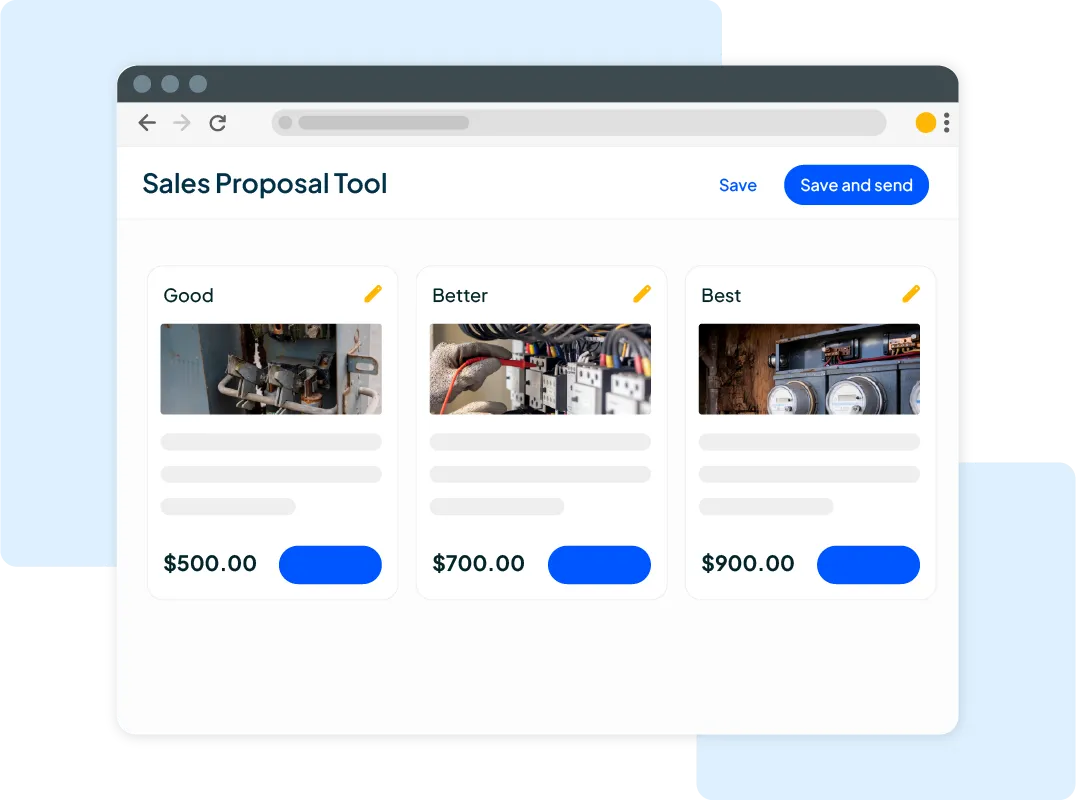
Housecall Pro’s general contractor software keeps job details, pricing, and customer records in one place, so your license number and contract terms carry through from bid to final payment instead of being rebuilt on every job. Build quotes with cost breakdowns and margin visible before you send them with Estimates, collect a signature on the spot so the written contract requirement is handled as part of the sale, then bill larger projects in stages with Invoicing while automated reminders handle the follow-up. Running longer builds? Look at construction management software for remodelers or the general contractor resource hub for free templates. Smaller residential work fits handyman software.
Try Housecall Pro free for 14 days.
West Virginia licensing questions, answered
Do I need a contractor license in West Virginia?
Yes, for any construction work with a total project cost of materials and labor of $2,500 or more. The license comes from the West Virginia Contractor Licensing Board under the Division of Labor.
How much does a West Virginia contractor license cost?
The application fee is $90, and annual renewal is also $90. Exams through ProV run roughly $52 to $60 each, and business registration with the State Tax Department carries its own small fee.
Is the threshold $2,500 or $5,000?
$2,500. The state’s own business portal and the Contractor Licensing Board both state that figure, counting total materials and labor. Guides quoting $5,000 residential or $25,000 commercial are not consistent with the Board.
Who administers the exams?
ProV, Inc., reachable at (866) 720-7768 or provexam.com. Sources naming PSI are out of date.
What exams do I have to pass?
The West Virginia Business and Law exam is required of every applicant, plus a trade exam for most classifications. NASCLA is accepted for General Building, but never in place of Business and Law.
Do I need experience to get licensed?
No. West Virginia requires no documented work experience, no education, and no continuing education. Applicants must be at least 18 with a valid Social Security number.
What is the Wage Bond Status Affidavit?
A mandatory form filed by every applicant. It is how you either post a wage bond or document an exemption from it. Applications without it are incomplete.
How much is the wage bond?
It is not a flat amount. The bond equals four weeks of gross payroll at full capacity or production, plus 15% for benefits, so it scales with your crew size.
Can I get out of the wage bond?
Commonly cited exemptions include being in business five or more years, holding total assets over $100,000, or being a subsidiary of a parent company in business five or more years. It is also generally not required for single-family residential work only. You still file the affidavit.
Do I need a written contract?
Yes, at an aggregate value of $10,000 or more including materials, under §30-42-10(b), and the requirement covers your agreement with the owner and with every subcontractor you hire on that project. The Board’s rule at 28 CSR 4 sets required provisions including change orders, a general liability disclosure the owner confirms, and a description of your responsibilities for subcontractors. The Board publishes a compliant form as Appendix A.
Is the wage bond triggered at one year or five?
One. The exception in §21-5-14(a) covers contractors actively doing business in West Virginia for at least one year before posting. The five-year figure in subsection (g) is the condition for terminating a bond you already hold.
Who can take the exam for my company?
An officer, member, owner, or full-time employee. The Board requires payroll records as proof of full-time employment, so an outside qualifier is not permitted.
Does West Virginia have reciprocity?
It maintains arrangements that can waive the trade exam for contractors licensed in good standing elsewhere, varying by classification. The Business and Law exam is never waived. Confirm your trade and state with the Board.
What is the penalty for contracting without a license?
For a first offense, the Board can impose fines from $200 to $1,000, and the Division of Labor inspectors can issue stop-work orders. You also risk being unable to enforce the contract or collect through West Virginia courts.
Do I need workers' compensation?
Yes, if you have employees. All West Virginia employers are statutorily required to carry coverage, and proof goes in with your license application along with unemployment compensation.
How much do general contractors earn in West Virginia?
Construction managers average $102,040 a year with a median of $95,740, according to BLS data for May 2025. The bottom 10% earn $57,490 and the top 10% earn $152,180. First-line supervisors of construction trades average $86,780.
LEARN FROM THE PROS
Helpful content for the trades
Explore our collection of helpful articles written by top experts in their field to seasoned pros in the field. Strengthen your field service knowledge and stay current on the latest industry topics and trends.
General contractor pricing guide: How to price jobs in 2026
Housecall Pro’s inaugural Trades Thursday draws thousands of pros nationwide
How to choose the right HVAC scheduling app
How to get junk removal leads: 15 proven strategies
Junk removal ads to win more customers (ideas, costs, and examples)
10 junk removal marketing strategies to grow your business
How to create a Google Business Profile: Step-by-step guide
TradeWire #49: A blade built for nails, an Amana recall, and the most unforgettable name in the trades
How to set up payment processing for recurring service agreements
How to write a junk removal business plan (+free template)
How to write a pressure washing contract (+free template)
Is a handyman franchise worth it? Costs and best brands
Get $50 gift card
Talk to an expert and see how Housecall Pro can fit your needs.
Prefer to explore on your own?


