Want to win more jobs with less effort?
Grow your business and send quick quotes with our home service software.

Want to see your potential revenue?
See what businesses like yours earn with Housecall Pro in 1 - 2 minutes.

Pricing general contracting jobs means keeping track of more than just labor and materials. Time spent coordinating trades, ordering supplies, and handling inspections can all add up. Leaving those costs out can mean less profit—even when your crew stays busy.
This guide walks you through common general contracting prices, the costs to include in your estimate, and how to set prices that cover your expenses and leave room for profit. You’ll also learn how to choose a billing method and handle changes when a project grows beyond the original scope.
Quick answer: How do you price a general contracting job?
To price a general contracting job, add up labor, materials, subcontractor bids, and other job expenses. Include the job’s share of overhead and a contingency allowance for expected costs you can’t price precisely yet. Then use your target profit margin to calculate the project price:
Project price = (direct job costs + allocated overhead + contingency) ÷ (1 − target profit margin)
Example: $24,000 in total estimated costs ÷ (1 − 0.20) = a $30,000 project price at a 20% target margin.
- Direct job costs are expenses tied to the project, such as labor, materials, and subcontractors.
- Overhead covers ongoing business expenses, such as insurance and office costs.
- Contingency is money set aside for expected costs you can’t price precisely yet.
Enter your target margin as a decimal: 20% becomes 0.20. Your actual margin will depend on your final job costs.
Table of contents
- How do you convert a target margin to markup?
- What should you include in a general contractor estimate?
- General contractor price examples: median prices for common jobs
- How to price a general contracting job step by step
- Which general contractor pricing method should you use?
- What can change a general contracting price?
- Common general contractor pricing mistakes
- Manage your general contractor pricing and jobs with Housecall Pro
How do you convert a target margin to markup?
Markup is the percentage you add to your estimated costs. If you price jobs using markup, use this formula to convert your target margin:
Markup = target profit margin ÷ (1 − target profit margin)
A 20% target margin requires a 25% markup. Applying a 20% markup would produce a margin of about 16.7%, assuming costs stay on budget. If you’d rather not run the conversion by hand, use Housecall Pro’s general contractor markup calculator.
What should you include in a general contractor estimate?
Use a consistent cost checklist for every estimate so you don’t overlook smaller expenses between the walkthrough and the proposal.
| Cost | What to include |
| Crew labor | Hours, wages, payroll costs, and supervision |
| Subcontractors | Current bids for clearly defined work |
| Materials | Quantities, delivery, and expected waste |
| Permits | Required fees and inspections |
| Equipment and disposal | Rentals, hauling, dumpsters, and site protection |
| Overhead | The job’s share of ongoing business expenses |
| Contingency | An allowance for foreseeable extra costs |
Be careful not to count the same expense twice. For example, if you’ve included your project supervision time in labor, don’t add it again under overhead.
Base your contingency allowance on the conditions you find during the walkthrough. You might allow for minor subfloor repairs when the existing floor shows signs of damage. If you can’t reasonably estimate hidden repairs before demolition, explain how you’ll price the extra work.
General contractor price examples: median prices for common jobs
The table below shows national median listed prices for selected services in Housecall Pro’s general contractor pricebook data. Use these figures as a starting point for comparison. The listed services may cover different project sizes, materials, and amounts of work. For example, the flooring figure doesn’t tell you the room size or whether subfloor repairs were included. Use your measurements, material quotes, and site conditions to build the customer’s price.
| Service listed in the dataset | Median listed price |
| Demolish kitchen cabinets and countertops | $1,400 |
| Install a bathroom exhaust fan and venting | $500 |
| Install a custom bathroom vanity and hardware | $650 |
| Install luxury vinyl plank flooring | $2,063 |
| Install granite or quartz kitchen countertops | $2,063 |
| Electrical work for a kitchen and laundry remodel | $1,800 |
| Replace and install a shingle roof | $7,500 |
Get In Touch: 858-842-5746
Let us earn your trust
On average, Pros increase monthly revenue generated through Housecall Pro by more than 35% after their first year.
See plan options and feature breakdown on our pricing page.
How to price a general contracting job step by step
Following the same pricing process on each job helps you stay accurate and consistent. Define the work, confirm your costs, and put the details in writing.
1. Walk the job and define the scope
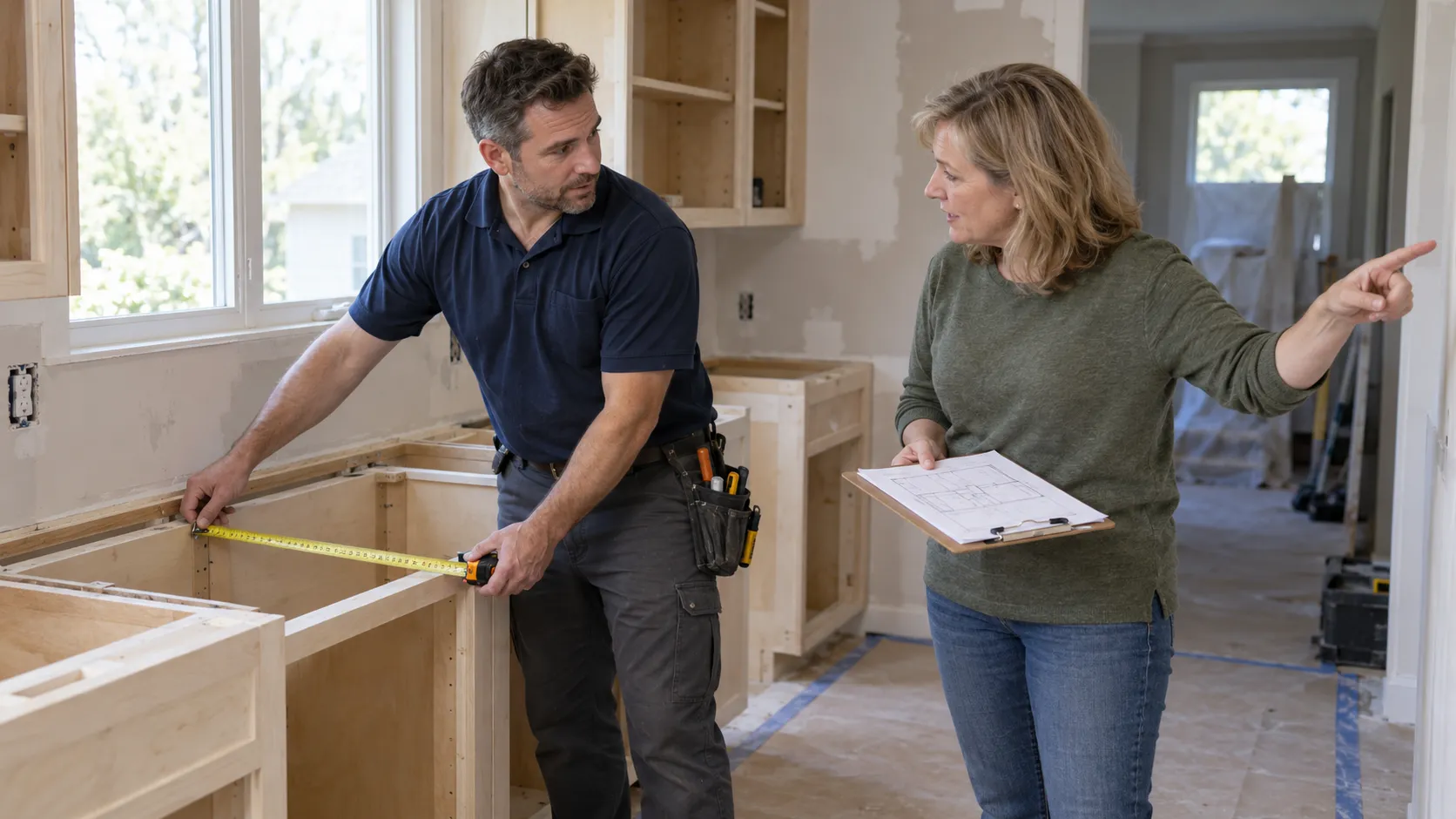
Write down what you’ll remove, build, repair, supply, and finish. Take measurements, confirm the customer’s material choices, and note anything that could affect access or scheduling.
For a kitchen remodel, “install new cabinets” leaves too much open for back-and-forth later. Specify who removes the old cabinets, whether wall repairs are included, who supplies the replacements, and whether plumbing or electrical changes are part of your price.
2. Estimate labor and get subcontractor bids
Estimate your crew’s time by task, including setup, cleanup, and supervision. Get written subcontractor bids that match the work in your estimate.
Check what each bid leaves out, how long the price is valid, and when the subcontractor can do the work. If a flooring bid excludes subfloor repairs, account for that work elsewhere or state the exclusion in your proposal.
3. Check materials and other job costs
Use current supplier prices for major materials. Add delivery, rentals, permits, disposal, and site protection where they apply.
If the customer hasn’t selected cabinets, tile, or fixtures, include a material allowance: a stated dollar amount for that selection. Explain how a choice above or below the allowance will affect the price.
4. Add overhead and calculate your price
To calculate overhead, divide your annual overhead by your annual billable labor hours, then multiply by the hours this job will take. Add any contingency allowance, then apply your target margin.
Here’s how the calculation works with sample costs and a 20% target margin. Choose your own target based on your business’s costs and profit goals.
| Estimate component | Example amount |
| Crew labor and subcontractors | $15,000 |
| Materials and delivery | $6,000 |
| Permits, equipment, and disposal | $1,000 |
| Allocated overhead | $1,000 |
| Contingency allowance | $1,000 |
| Total estimated costs | $24,000 |
With a 20% target margin:
$24,000 ÷ (1 − 0.20) = $30,000
That leaves $6,000 between your quoted price and estimated costs. If the job costs more than expected, your actual profit will be lower.
5. Send a clear proposal
Include the scope, material allowances, exclusions, expected schedule, and payment terms. Explain how you’ll document changes to the agreed work, price, or schedule and get the customer’s written approval before starting extra work.
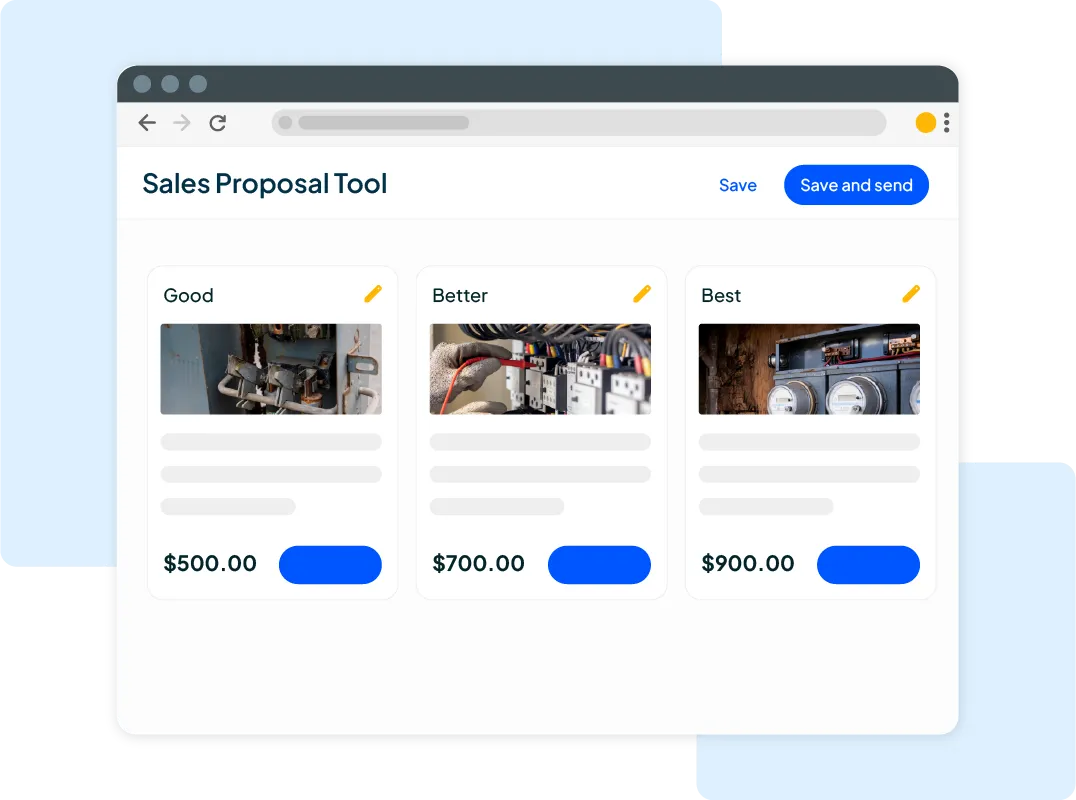
If you’re rebuilding the same line items for every quote, save them once as templates. Housecall Pro’s estimating software lets you create estimates from customizable templates and send them by text or email for customer approval.
6. Compare the estimate with the finished job
After the project, compare your estimated labor, materials, and subcontractor costs with what you actually spent. Check where you went over budget, such as extra cleanup hours, another dumpster, or material deliveries you didn’t account for.
If you can’t tell which jobs made money, use Housecall Pro’s job costing software to track job expenses and review profitability. Use what you learn to make your next estimate more accurate.
Which general contractor pricing method should you use?
Choose a method based on how clearly you can define the work before it starts. Explain what the customer will pay for and how you’ll calculate the final bill.
| Method | How it works | When it may fit |
| Fixed price | One agreed price for a defined scope | Plans and selections are largely settled |
| Time and materials | Bill for time and materials under agreed terms | Repair work is difficult to predict |
| Cost plus | Bill agreed job costs plus a contractor fee | Costs may change as work progresses |
For time-and-materials work, agree on hourly rates and material charges before starting. Your labor rate needs to account for wages, payroll costs, overhead, and profit.
For cost-plus work, spell out which costs the customer will pay and how you’ll calculate your fee. For a fixed-price job, make the scope and exclusions clear.
What can change a general contracting price?

Two kitchen remodels can come with very different costs. Check these factors before you finalize your estimate:
- Hidden damage: Opening a shower wall may reveal framing repairs you couldn’t see during the walkthrough.
- Material selections: Custom cabinets or tile may cost more than the allowances in your estimate.
- Access: Limited parking or a long path to the work area can add labor and hauling time.
- Schedule: A tight deadline can affect crew availability, deliveries, and subcontractor prices.
- Local requirements: Moving plumbing may require permits and inspections from the local building department.
Common general contractor pricing mistakes
Overlooked costs and unclear terms can cut into your profit. Check your estimate for these common mistakes before sending it:
- Leaving out management time. Ordering materials, scheduling trades, meeting inspectors, and answering customer questions take time. Include that work in your costs once, in either labor or overhead.
- Using an expired subcontractor bid. Confirm the price still applies to the current scope and schedule before you commit to the customer.
- Mixing up markup and margin. Convert your target margin to markup before adding a percentage to your costs.
- Leaving allowances vague. Give the customer a dollar amount and explain whether it covers materials, delivery, installation, or a combination of those costs.
- Starting extra work before approval. Get written customer approval for the added work, price, and any schedule changes before your crew begins.
Manage your general contractor pricing and jobs with Housecall Pro
Setting your price is the first step. Once work starts, you need to keep track of expenses, coordinate your crew, and keep customers informed. Housecall Pro helps you manage those details so you can see how each job is performing and make better pricing decisions.
- Build and send clear estimates: Use customizable templates to organize your services and prices, then send estimates by text or email for customer approval. Housecall Pro’s estimating software helps you reuse common details while adjusting each quote to the job.
- See where your money goes: Track job expenses and review profitability with job costing tools. Reviewing those costs can help you spot labor or material expenses you need to account for next time.
- Keep your team and customers organized: Manage schedules, estimates, and customer details with software for remodeling contractors, so you can find the information you need while coordinating work.
Ready to spend less time on paperwork and get a clearer picture of your job costs? Start your free trial of Housecall Pro.
General contracting FAQ
How much should a general contractor charge?
Your price should cover the specific job’s labor, subcontractors, materials, other expenses, overhead, and target profit. For example, $24,000 in estimated costs and a 20% target margin gives a $30,000 quote. For clearly defined work, you can quote a fixed project price. For repairs you can’t fully assess in advance, you may agree on time-and-materials billing.
What’s the difference between markup and profit margin?
Markup measures the amount added as a percentage of cost. Margin measures what remains as a percentage of the selling price. If your estimated costs are $800 and you charge $1,000, your markup is 25% and your estimated margin is 20%.
Should I use fixed-price or cost-plus pricing?
A kitchen remodel with approved plans and selected finishes may suit a fixed price. A renovation with substantial concealed conditions may be harder to price up front. On a fixed-price job you absorb cost overruns; on a cost-plus job the customer pays them, so approval rules matter. If you use cost plus, define reimbursable costs, your fee, documentation, and approval rules in the agreement.
How do I price subcontractor work?
Start with a written bid and check its exclusions. Include your time coordinating the sub, related project costs, overhead, and profit when setting the customer’s price. If a tile installer excludes demolition, account for removing the old tile separately.
Should I price general contracting work by the square foot?
A square-foot figure can help with an early comparison between similar projects. For the final bid, check the detailed scope and current costs. A kitchen’s size alone won’t tell you the cost of its cabinets, electrical work, or plumbing changes. Two 150-square-foot kitchens can price very differently if one needs new plumbing runs and the other keeps its layout.
When should I update my contracting prices?
Recheck major supplier and subcontractor quotes before each proposal, especially if an earlier quote has expired. After each completed job, compare estimated and actual costs. Update the assumptions that repeatedly come in low. Also update them when a finished job’s actual costs exceed your estimate by more than the contingency you built in.
How do you price a change order?
Write down the added work, the added direct costs, and any schedule change, then run the added costs through the same formula as the original job. If extra work adds $2,000 in direct costs and you target a 20% margin, the change order is $2,000 ÷ (1 − 0.20) = $2,500. Get the customer’s signed approval before your crew starts.
How should you structure payments on a remodel?
Tie each payment to a milestone you can verify, such as demolition complete or cabinets installed, and list the amounts in the proposal. Deposit limits and contract requirements vary by state, so check your state contractor licensing board before setting terms.