

UPDATED 2026 GENERAL CONTRACTOR LICENSING GUIDE
Washington General Contractor License Requirements: L&I Registration, the $30,000 Bond & No Exam (2026)
Table of Contents
Download the Checklist!
If you’re planning to run a general contractor business in Washington, there is no state license and no trade exam. What the state requires instead is registration with the Department of Labor and Industries, and the financial bar is the real gate. Under RCW 18.27, every construction contractor must register with L&I before bidding, advertising, or performing work. General contractors post a $30,000 continuous surety bond, specialty contractors post $15,000, and both carry general liability insurance with L&I named as certificate holder. The application fee is $150.20 and the process is paperwork rather than testing. The part that catches contractors is what happens if you slip: an unregistered contractor cannot sue to collect on a job, and each day worked unregistered is a separate infraction. This page covers the two registration types, the 2024 bond increase most guides still get wrong, the advertising rules, and the trades that need more than registration.
Licensing rules vary a lot from one state to the next. Some hand the job to local governments entirely, while others run one central program that every contractor answers to. The demand behind those rules is steady either way. Bureau of Labor Statistics figures from the Occupational Employment and Wage Statistics survey for May 2025 count about 380,360 construction managers, 812,210 first-line supervisors of construction trades, 146,720 construction and building inspectors, and roughly 1,096,780 construction laborers working nationwide. Construction manager jobs are on track to rise 9% between 2024 and 2034, well ahead of the pace for the average occupation.
Washington pays construction better than any state in this series. BLS state figures (Washington OEWS, May 2025) count 6,010 construction managers earning a mean of $76.39 an hour, or $158,890 a year, with a median of $155,070. There are 19,550 first-line supervisors of construction trades and extraction workers at a $115,800 mean, 25,060 construction laborers at $61,320, and 3,090 construction and building inspectors at $93,070. Every one of those figures leads the nine states covered in this series. A Washington trade supervisor averages more than a construction manager does in most states. Concentration is close to the national norm, with supervisors at a location quotient of 1.05 and laborers at 1.00, so this is not a state with unusually many construction jobs. It is a state where those jobs pay unusually well.
Quick answer: do you need a general contractor license in Washington?
Washington does not issue a general contractor license. It requires contractor registration with the Department of Labor and Industries, and for practical purposes registration is the license.
State law requires all construction contractors to register, and to be bonded and insured to protect the public. Once registered, you can bid, advertise, and perform construction work: constructing, remodeling, repairing, and demolishing buildings, roads, and other real property. Before registration, you can do none of those things, including advertising.
There are two classifications:
- General contractor. Can perform most types of construction work and hire subcontractors across multiple specialties. Bond requirement: $30,000.
- Specialty contractor. Can only perform work in the single specialty they registered in, and cannot hire subcontractors. Bond requirement: $15,000. L&I regulates 63 specialties under WAC 296-200A-016.
There is no general contractor exam. What you need is a UBI number from the Department of Revenue, a continuous surety bond or assignment of savings, a general liability policy naming L&I as certificate holder, a notarized application, and the $150.20 fee. Certain trades, including plumbing, electrical, elevators, mobile home installation, boilers, and asbestos, carry additional education, examination, and licensing requirements on top of registration.
Key takeaways
Everything you need to know about registering as a contractor in Washington:
Registration replaces licensing: L&I registers contractors under RCW 18.27. No general contractor exam, no experience requirement, no continuing education.
The bond is $30,000, not $12,000: General contractor bonds rose to $30,000 and specialty to $15,000 on July 1, 2024. Many published guides still show the old figures.
Insurance names L&I as holder: You need $200,000 public liability and $50,000 property damage, or $250,000 combined single limit, with L&I as certificate holder.
Specialty contractors cannot subcontract: If you hire subs in any trade, you need general registration. Specialty registration limits you to your one listed specialty.
Your number goes on everything: Business cards, ads, internet listings, estimates, and bid proposals all need your registration number once you are registered.
No disclosure form, no lien: RCW 18.27.114 bars a mechanic’s lien on any job where you skipped the Model Disclosure Statement, and unregistered work is uncollectible.
General or specialty: the choice that sets your bond
This decision is more consequential in Washington than the two-line description suggests, because it controls what work you can accept.
A general contractor registration covers most construction work and permits you to hire subcontractors across multiple specialties. If your model involves coordinating trades, register as general. No specialty registration lets you sub out work.
A specialty contractor registration limits you to the one specialty registered, and L&I is explicit that specialty contractors cannot hire subcontractors. They must provide only services in their specialty description, with a narrow exception for work incidental to the job.
| General contractor | Specialty contractor | |
| Scope | Most construction work | One registered specialty only |
| Can hire subcontractors | Yes, across specialties | No |
| Surety bond | $30,000 | $15,000 |
| Registration fee | $150.20 | $150.20 |
| Liability insurance | Same minimums | Same minimums |
| Exam | None | None for most specialties |
| Number of classifications | One | 63 under WAC 296-200A-016 |
Practical advice: if there is any realistic chance you will sub out part of a job, register as general. You pay a premium on the bond rather than the face amount, and reclassifying later has a catch. L&I will not let you reduce your bond amount for two years if you switch from general to specialty.
The 2024 bond increase that most guides still get wrong
If you read three articles about Washington contractor registration, at least one will say the bond is $12,000. That figure is obsolete.
Bond amounts increased effective July 1, 2024. General contractors post $30,000 and specialty contractors $15,000. The previous amounts, $12,000 and $6,000, had stood since 2001. L&I states that renewals dated July 1, 2024 or later require the higher bond before renewal.
The bond must be a Continuous Contractor’s Surety Bond on L&I’s form F625-003-000, carrying the bond number and your exact business name. L&I requires the original uncorrected document signed by your bonding agent with the company seal. Photocopies are rejected.
There is an alternative. Instead of a bond, file an Assignment of Account on form F625-008-000, posting the amount as cash, a CD, a time deposit, or a money market account at a bank, savings and loan, or credit union with a Washington branch. That ties up capital rather than costing a premium, which suits a contractor with cash and difficult credit.
A note on what the bond is for. It is not insurance for you. It protects the public if you fail to pay employees or suppliers, or fail to complete contracted work. A claim paid on your bond is money you owe the surety.
Insurance, and the certificate holder line that stalls applications
Washington’s liability minimums are modest by national standards, and the details cause more rejections than the amounts do.
You need either:
- $200,000 in public liability and $50,000 in property damage, or
- $250,000 combined single limit
Two requirements sit alongside those numbers, and both are where applications get delayed.
Your exact business name. Bond and certificate must use the exact name on file with L&I. “Smith Construction” when your registration says “Smith Construction LLC” is a mismatch.
L&I as certificate holder. A certificate naming your own company, a GC you sub for, or a homeowner does not satisfy it. Send your agent that requirement in writing.
Originals are required. L&I accepts certificates by mail, through its designated insurance agent portal, or in person. Email and fax are not accepted.
At renewal, L&I asks for a current certificate of general liability insurance for at least $250,000.
How to register with L&I
L&I recommends a specific order, and following it is the difference between a smooth registration and a month of back-and-forth.
Step 1: Settle your business structure and name
Sole proprietors and partnerships choose a business name. LLCs and corporations incorporate through the Secretary of State or an attorney first.
Step 2: Register with the Department of Revenue and get your UBI
Your Unified Business Identifier comes from DOR’s business licensing service. You need it for contractor registration, and it is the number that ties your business to state tax and licensing systems.
Step 3: Decide general or specialty
This sets your bond amount and your permitted scope. If you will hire subcontractors in any trade, you need general registration.
Step 4: Buy the bond or file an assignment of savings
$30,000 for general, $15,000 for specialty, on L&I’s continuous bond form with your exact business name and the bond number. Or post the equivalent as an assigned account.
Step 5: Bind liability insurance naming L&I
$200,000 and $50,000, or $250,000 combined single limit, with L&I listed as certificate holder.
Step 6: Open a workers’ compensation account if you have employees
Washington is a monopolistic state, so coverage comes from L&I rather than a private carrier. More on that below.
Step 7: Complete and notarize the application
The Application for Contractor Registration is form F625-001-000. All signatures must be original and notarized, and L&I cannot accept a copy. Staff at a local L&I office can help you complete the form and notarize signatures for applicants present.
Step 8: Submit with the $150.20 fee
Take everything to a local L&I office, or mail the notarized application with your bond, insurance certificate, and a check or money order to Contractor Registration, PO Box 44450, Olympia, WA 98504-4450. Mailed applications currently take three to four weeks to process, and your registration card arrives about two weeks after that.
L&I registration at a glance
| Requirement | Detail |
| Agency | Washington Dept. of Labor and Industries (L&I) |
| Legal basis | RCW 18.27, Registration of Contractors |
| Application fee | $150.20 |
| Renewal fee | $150.20 |
| Reinstatement fee | $70.90 |
| General contractor bond | $30,000 |
| Specialty contractor bond | $15,000 |
| Bond alternative | Assignment of Account, form F625-008-000 |
| Liability insurance | $200,000 and $50,000, or $250,000 CSL |
| Certificate holder | L&I |
| Exam | None for general registration |
| Experience requirement | None |
| Continuing education | None |
| Notarization | Required, original signatures only |
| Mail processing time | 3 to 4 weeks |
| Verify tool | secure.lni.wa.gov/verify |
| Contact | ContReg@Lni.wa.gov, 1-800-647-0982 |
The advertising rule and the Model Disclosure Statement
Two paperwork obligations attach the moment you are registered, and both carry enforcement weight.
Your registration number on all business communications. Whenever you advertise, solicit bids, or offer to perform work, your registration number must appear. L&I names business cards, directory ads, newspaper ads, internet ads, estimates, and bid proposals specifically.
The Model Disclosure Statement. This one has teeth that the form itself does not advertise. The governing statute, RCW 18.27.114, is titled “Disclosure statement required, prerequisite to lien claim,” and that second half is the part worth reading twice.
Under the statute, you must provide the Model Disclosure Statement Notice to Customer, form F625-030-000, before starting work, on:
- Repair, alteration, or construction of four or fewer residential units or accessory structures on such property, where the bid or contract price totals $1,000 or more
- Repair, alteration, or construction of a commercial building, where the bid or contract price is $1,000 or more but less than $60,000
Three obligations follow, and most contractors know only the first.
Retain a signed copy for three years and produce it to L&I on request.
Tell the customer if your registration lapses. If it expires or is revoked or suspended before the contract is completed, you must notify them. That duty sits in subsection (3) and almost nobody knows it exists.
No disclosure, no lien. Subsection (4) bars any lien claim under chapter 60.04 RCW without alleging and proving the disclosure was provided. Skip the form and you have given up your mechanic’s lien on that job. Non-compliance is also an infraction.
Two exclusions: the section does not apply to public works under chapter 39.04, nor to contractors contracting with other contractors. A sub working for a GC is outside it. A GC working directly for a homeowner is squarely inside it.
Build the disclosure into your estimate process rather than remembering job by job. The threshold is low enough that nearly all real work crosses it, and the penalty for forgetting is your strongest collection tool.
L&I also publishes contractor marketing cards, form F625-069-000, that you complete with your registration details and hand over with a bid. A small trust-building move in a state where consumers are told to check.
Trades that need more than registration
Contractor registration is the baseline. Several trades layer education, examination, and licensing on top of it.
| Work | Additional requirement |
| Plumbing | L&I plumber certification |
| Electrical | L&I electrical licensing, exams, and education |
| Elevators | L&I elevator contractor and mechanic licensing |
| Mobile home installation | L&I installer licensing |
| Boilers | L&I boiler exams, training, certification |
| Asbestos | L&I asbestos certification |
| Lead-based paint | WA Dept. of Commerce Lead Paint Program |
| Pesticide application | WA Dept. of Agriculture licensing |
Two of these catch general contractors regularly.
Lead paint runs through Commerce, not just the EPA. Before renovating pre-1978 residential or child-occupied facilities, contact the Washington Department of Commerce Lead Paint Program at 360-586-5323. That sits on top of the federal RRP rule.
Electrical and plumbing licensing is separate from your registration. A registered general contractor cannot self-perform electrical or plumbing work without the matching L&I credential. If you subcontract those trades, verify both the company registration and the individual certifications.
What contractor registration actually covers
The definition in RCW 18.27 is broad, and contractors sometimes assume their work sits outside it when it does not.
Registration applies to anyone in the business of, or acting in the capacity of, a contractor: constructing, altering, repairing, adding to, improving, moving, wrecking, or demolishing any building, highway, road, railroad, excavation, or other structure or improvement attached to real estate. That covers demolition, excavation, and site work as readily as framing a house.
L&I invites you to email ContReg@Lni.wa.gov or call 1-800-647-0982 if you are unsure whether your activity qualifies. Take that up before you bid rather than after a compliance inspector visits. The exemptions in RCW 18.27.090 exist, but they are narrow, and building a business around one is a poor plan.
Workers’ compensation: Washington is a monopolistic state
This surprises contractors moving in from almost anywhere else.
Washington does not allow private workers’ compensation insurance for most employers. Coverage comes from the L&I state fund, and you open an account directly with the department. You cannot shop this with a commercial carrier the way you would in Texas or Virginia.
If your business will have employees, open the workers’ compensation account before or alongside registration. L&I’s guidance also carries a warning worth heeding: assume any independent contractor or casual labor you hire is your employee unless they meet the independent contractor tests.
That is where the real audit exposure sits. When L&I audits, it asks whether each construction subcontractor is an independent contractor or a covered worker, applying two statutes. A sub needs to satisfy either RCW 51.08.180, the personal labor test, or the seven-part test in RCW 51.08.181. Not both.
The seven-part test is all-or-nothing. Fail even one item, and fail the personal labor test too, and L&I treats that sub as your covered worker and assesses industrial insurance premiums against you through a Notice and Order of Assessment. The items cover things like a separate place of business, required registration or licensing, filing your own business tax returns, and keeping books of account. A sub genuinely running a business usually clears it. A sub who is effectively your employee with a 1099 usually does not.
Practical defense: collect evidence for each sub at onboarding. Their UBI, registration number, liability certificate, and invoices showing they bill other customers. L&I publishes an Independent Contractor Guide, form F101-063-000. Doing this takes minutes. Reconstructing it three years later during an audit does not.
Employer’s liability coverage, which protects against lawsuits related to workplace injuries rather than paying benefits, is not part of the state fund. Contractors typically add it through a private policy as a stop-gap endorsement.
Two further points matter on real jobs. Washington premiums are calculated on hours worked rather than payroll dollars, which changes how you budget for a crew working overtime. And L&I makes safety a named responsibility for both employees and subcontractors, so your obligations on a site do not stop at your own payroll.
Coming from a state where you shop workers’ compensation, treat this as a tax account rather than an insurance purchase.
Working unregistered: infractions and lost claims
Washington’s consequences are unusually sharp, and the worst one is financial rather than punitive.
You cannot sue to get paid. RCW 18.27.080 provides that no person acting as a contractor may bring or maintain any action in any Washington court for the collection of compensation, or for breach of contract, without alleging and proving they were a duly registered contractor holding a current, valid certificate at the time they contracted. You did the work, and the courthouse door is closed.
The substantial compliance test is strict. A court will not find you in substantial compliance unless L&I has your required information on file, you have at all times had a current bond in force, and you have at all times had current insurance in force. A lapse mid-project can break it, which is why treating bond and insurance renewal dates as hard deadlines matters more here than the paperwork suggests.
Each day and each worksite is a separate infraction. Working without registration, working while suspended or revoked, or working under another contractor’s registration counts as a separate infraction for each day and for each worksite.
After a citation, it becomes criminal. Once L&I has cited you, continuing to work unregistered, suspended, or revoked makes you guilty of a separate gross misdemeanor for each day worked, and for each worksite.
Using an unregistered sub is a violation against you. Subcontracting to or using an unregistered contractor is itself an infraction. There is a safe harbor: it is not unlawful to employ a contractor who was registered when you contracted with them, unless L&I has notified you in writing that they have become unregistered.
Consumer protection exposure. Unregistered contracting also opens the door to Consumer Protection Act claims from homeowners, independent of anything L&I does.
A two-year audit follows you in. L&I runs a two-year audit and monitoring program for contractors who register after receiving an infraction or conviction as an unregistered contractor, and notifies the Departments of Revenue and Employment Security so those agencies can determine whether taxes or fees are owed.
That last one is the part people do not anticipate. Registering after being caught does not close the file. It opens a two-year monitoring window and hands your name to two agencies who will check whether you paid B&O tax and unemployment insurance while working unregistered. The registration penalty is rarely the expensive part. The tax reconstruction usually is.
Contractors also face additional penalties under RCW 39.12.055 for performing work unregistered, which reaches into the prevailing wage system.
Suspension and reinstatement
L&I suspends a registration when requirements stop being met: a bond or insurance policy cancels or expires, or a judgment against you goes unsatisfied.
You will be notified by certified mail within two days of the suspension, and the letter explains what to fix. To reinstate, you provide your 12-character registration number, contact details, and proof you corrected the problem, then pay the $70.90 reinstatement fee. Reinstating online makes your registration active as soon as payment goes through.
The thing to notice is what triggers suspension. It is not a complaint or an inspection. It is an administrative lapse, usually an insurance policy that cancelled for non-payment. Keeping bond and insurance current is the single highest-value habit for a Washington contractor, because a lapse both suspends you and, under the “at all times” rule above, can cost you your right to collect.
How to verify a Washington contractor
Washington gives you a free public tool and tells consumers to use it, so your record is visible to every customer who looks.
Verify a Contractor, Tradesperson, or Business at secure.lni.wa.gov/verify shows registration status, bond and insurance status, and unsatisfied judgments. It is the same tool homeowners are pointed to.
Before signing a subcontract, confirm four things:
- Status is active, not expired or suspended
- The classification matches the scope, since a specialty contractor cannot legally take a multi-trade portion
- Bond and insurance are current, because a lapsed sub creates exposure on your job
- The name matches your subcontract and their insurance certificate
That second item matters in Washington specifically. Because specialty contractors cannot hire subcontractors, giving a specialty firm a scope requiring another trade puts them in violation and your project in the middle of it. Read the specialty, not just the word “contractor.”
L&I appoints compliance inspectors who may investigate job sites where a contractor has bid or is working to check registration.
Seattle, Spokane, and local requirements
State registration lets you work statewide. Cities add their own layer.
Seattle requires a business license tax certificate from the Office of City Finance for anyone doing business inside city limits. Gas piping, HVAC, and refrigeration work require separate licensing through the Seattle Department of Construction and Inspections, which also runs permitting and inspections.
Spokane works differently. Rather than a separate city application, you add the Spokane city endorsement to your Washington business license through the state’s business licensing service. The endorsement functions as your Spokane business license.
Many other Washington cities use the same state-administered city endorsement system, which means you can often add jurisdictions through DOR rather than applying city by city. Check each city where you plan to work, since fee schedules and trade-specific rules vary.
Renewal and keeping registration active
Washington registrations run on a two-year cycle and L&I mails a renewal card ahead of the date. Renewal is the same $150.20, online, by mail, or in person.
Before renewing, use the Verify tool to confirm your bond or assignment of account and liability information are current, your bond meets the current amount, and your registration is not suspended.
If anything changed, handle it before you renew. A new bonding company, bond amount, insurance carrier, or coverage amount has to be on file first. A new bond must be the original uncorrected document with your agent’s signature and the company seal, showing your exact business name, and it must arrive before the filing date printed on it. Changes to partners, business name, structure, or specialty cannot go through the standard renewal path.
Watch your insurance renewal date more closely than your registration date. A registration lapse is an annoyance. An insurance lapse mid-project reaches into your right to get paid.
Business setup, B&O tax, and prevailing wage
Entity formation. LLCs and corporations register with the Secretary of State. Sole proprietors can operate under their own name or file a trade name.
Business license and UBI. Through the Department of Revenue, which also handles city endorsements.
No state income tax. Washington instead levies the Business and Occupation tax on gross receipts, with construction classifications carrying their own rates. B&O applies to gross revenue rather than profit, which is a meaningful difference for a low-margin job. Talk to an accountant.
Sales tax on construction. Washington’s treatment differs between retail construction services, speculative building, and public road work. Get this right at setup rather than discovering it at audit.
Public works and prevailing wage. Bidding public work adds a compliance layer under RCW 39.04.350, which sets responsible bidder criteria you must meet at the time of bid submittal: active registration under chapter 18.27, a current UBI, industrial insurance plus employment security and state excise tax registration numbers where applicable, not being disqualified from bidding, and no recent apprenticeship violations where apprenticeship utilization applies.
One criterion catches first-time bidders: you must have received L&I training on public works and prevailing wage law, unless you have been in business three or more years and completed three or more public works projects. Before award, the bidder signs a statement under penalty of perjury verifying compliance.
Then the paperwork. Statements of intent filed before payment, affidavits of wages paid after completion, both prerequisites to releasing retainage, plus certified payroll under RCW 39.12.120 with the state affirmation page. Budget for it in the bid rather than absorbing it later.
What it costs to get registered
| Startup cost | Typical amount |
| L&I registration application | $150.20 |
| Renewal | $150.20 |
| Reinstatement, if suspended | $70.90 |
| General contractor bond | $30,000 face amount, premium varies |
| Specialty contractor bond | $15,000 face amount, premium varies |
| Assignment of account alternative | Full amount held, no premium |
| Liability insurance | Varies by trade and payroll |
| Workers’ compensation | L&I state fund rates, if employees |
| Secretary of State filing | Varies by entity type |
| Seattle business license tax certificate | Set by Seattle |
Bond figures above are face amounts. What you pay a surety is a premium driven by credit and financials, not the full amount.
Out-of-state contractors
Washington has no reciprocity for contractor registration with any state, and there is nothing to reciprocate, since no exam exists. An out-of-state contractor completes the same process: UBI from DOR, Washington bond, liability insurance naming L&I, notarized application, $150.20.
Two operational notes. Your bond must be a Washington continuous contractor surety bond, not a bond written for another state. And if you are bringing employees into Washington, the monopolistic workers’ compensation system means your home-state policy does not cover them here. That requires an L&I account.
For contractors crossing from Oregon or Idaho, the contrast is worth planning around. Oregon runs a CCB licensing program with training and testing requirements. Washington asks for none of that and more money up front in bonding. Neither credential transfers.
Ten things that stall an L&I registration
Using old bond figures. $30,000 and $15,000 since July 1, 2024. Guides showing $12,000 and $6,000 predate the change.
Naming the wrong certificate holder. L&I must be listed on the liability certificate.
Name mismatches. Bond, insurance, and registration must all show the exact same business name.
Registering as specialty then subcontracting. Specialty contractors cannot hire subs. If you coordinate trades, register as general.
Sending a photocopy or an unnotarized application. Original notarized signatures only.
Emailing an insurance certificate. Mail, agent portal, or in person. Email and fax are not accepted.
Advertising before registration. You cannot bid, advertise, or offer to perform work until registration is active.
Leaving the number off a bid proposal. Estimates and bid proposals count as business communications.
Skipping the Model Disclosure Statement. Required on residential jobs of $1,000 or more and commercial jobs from $1,000 to $60,000.
Letting insurance lapse mid-job. The substantial compliance test requires coverage in force at all times, and a lapse can cost you the right to collect.
Giving a specialty sub multi-trade scope. Specialty contractors cannot subcontract, so scope that forces them to bring in another trade puts both of you in violation.
Skipping the disclosure and losing your lien. No signed Model Disclosure Statement means no mechanic’s lien on that job under RCW 18.27.114(4).
What general contractors earn in Washington
| Washington, May 2025 | Employment | Mean hourly | Mean annual | Median annual | 10th percentile | 90th percentile |
| Construction managers | 6,010 | $76.39 | $158,890 | $155,070 | $105,770 | $217,920 |
| First-line supervisors, construction trades | 19,550 | $55.67 | $115,800 | $109,570 | $73,410 | $167,120 |
| Construction and building inspectors | 3,090 | $44.75 | $93,070 | $96,140 | $63,840 | $121,700 |
| Construction laborers | 25,060 | $29.48 | $61,320 | $57,720 | $39,930 | $95,110 |
The numbers here are in a different league. Washington construction managers average $158,890 against $122,250 in Tennessee and $112,680 in Texas, and the 10th percentile alone, $105,770, exceeds the median in every other state in this series. Trade supervisors average $115,800, more than construction managers earn in Utah or Vermont.
What makes that striking is the entry bar. No exam, no experience, no continuing education. The gate is financial: a $30,000 bond, insurance, and a $150.20 fee. Highest ceiling in the series, one of the lowest barriers to entry, so competition happens on execution rather than credentials. Concentration bears that out, with supervisors at a location quotient of 1.05 and laborers at 1.00, both at the national norm. Washington does not have unusually many construction jobs. It pays unusually well for them. For how these figures compare across states, see our contractor and construction manager salary breakdown.
In a state with no exam, your reputation is the credential
Washington makes registering straightforward and then puts real weight on the things that come after: your number on every bid, a disclosure statement on nearly every job, insurance that has to stay in force at all times, and a public verification tool your customers are told to use. None of that is hard. All of it is easy to let slip when you are running three jobs.
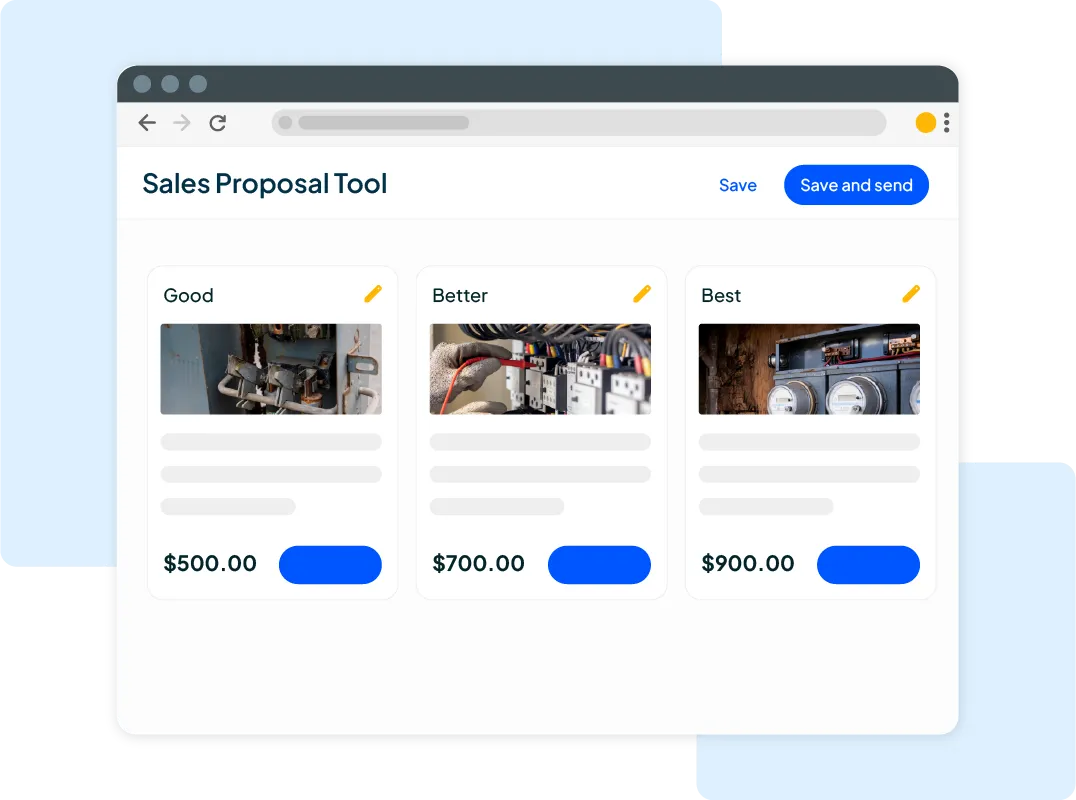
Housecall Pro’s general contractor software keeps job details, pricing, and customer records in one place, so your registration number and standard terms carry through from bid to final payment instead of being retyped each time. Build quotes with cost breakdowns and margin visible before you send them with Estimates, collect a signature on the spot so disclosures and approvals are handled as part of the sale, then bill larger projects in stages with Invoicing while automated reminders handle the follow-up. Running longer builds? Look at construction management software for remodelers or the general contractor resource hub for free templates. Smaller residential work fits handyman software. Try Housecall Pro free for 14 days.
General information, not legal advice. Fees, bond amounts, and requirements change. Verify with the Washington Department of Labor and Industries, the Department of Revenue, and the building department in every city where you work.
Frequently asked questions
Do I need a general contractor license in Washington?
Washington issues registration rather than a license. All construction contractors must register with L&I under RCW 18.27 before bidding, advertising, or performing work. Registration functions as the license.
How much does Washington contractor registration cost?
The application fee is $150.20, and renewal is also $150.20. Reinstatement after suspension costs $70.90. Bond premiums and insurance are separate.
How much is the Washington contractor bond?
$30,000 for general contractors and $15,000 for specialty contractors. These amounts increased on July 1, 2024 from $12,000 and $6,000, so any source showing the older figures is out of date.
Is there an exam for a Washington contractor license?
No exam for general or most specialty registration, and no experience or continuing education requirement. Plumbing, electrical, elevators, mobile home installation, boilers, and asbestos carry their own exam and licensing requirements.
What insurance do I need?
$200,000 in public liability and $50,000 in property damage, or a $250,000 combined single limit, with L&I listed as certificate holder and your exact business name on the certificate.
Can I use savings instead of a bond?
Yes. An Assignment of Account on form F625-008-000 lets you post the required amount as cash, a CD, a time deposit, or a money market account at a bank, savings and loan, or credit union with a Washington branch.
What is the difference between general and specialty registration?
General contractors can perform most construction work and hire subcontractors across specialties. Specialty contractors are limited to their one registered specialty and cannot hire subcontractors.
How long does registration take?
Applications mailed to L&I currently take three to four weeks to process and activate. Your registration card arrives about two weeks later. Registering in person at a local L&I office is faster.
Do I have to put my registration number on ads?
Yes. Whenever you advertise, solicit bids, or offer to perform work, your registration number must appear, including on business cards, print and internet ads, estimates, and bid proposals.
What is the Model Disclosure Statement?
Form F625-030-000, required before starting work on projects of four or fewer residential units at $1,000 or more, and commercial buildings from $1,000 to under $60,000. Keep a signed copy for three years.
What happens if I skip the disclosure statement?
Under RCW 18.27.114(4) you cannot bring or maintain a mechanic’s lien on that contract, and failure to comply is an infraction. It does not apply to public works or to contractors working for other contractors.
Do I owe workers' comp premiums on my 1099 subs?
Possibly. L&I checks whether each construction sub satisfies either RCW 51.08.180 or the seven-part test in RCW 51.08.181. Fail both and L&I treats them as your covered worker and assesses premiums against you.
What happens if I work without registering?
You cannot sue to collect payment or for breach of contract under RCW 18.27.080. Each day and each worksite is a separate infraction, and working after a citation is a gross misdemeanor for each day.
Can I hire an unregistered subcontractor?
No. Subcontracting to or using an unregistered contractor is an infraction. If a sub was registered when you contracted and later lapsed, you are protected unless L&I notified you in writing.
Is workers' compensation from a private carrier?
No. Washington is a monopolistic state, so coverage comes from the L&I state fund. Open an account with L&I if you have employees.
Does Washington have reciprocity with other states?
No. There is no exam to reciprocate. Out-of-state contractors complete the full Washington registration, including a Washington bond and an L&I workers’ compensation account if bringing employees.
How much do general contractors earn in Washington?
Construction managers average $158,890 a year with a median of $155,070, according to BLS data for May 2025. The bottom 10% earn $105,770 and the top 10% earn $217,920. Trade supervisors average $115,800.
LEARN FROM THE PROS
Helpful content for the trades
Explore our collection of helpful articles written by top experts in their field to seasoned pros in the field. Strengthen your field service knowledge and stay current on the latest industry topics and trends.
How contractors track job status without calling every technician
How to market your home service business and keep customers coming back
How HVAC companies with 10+ technicians manage GPS tracking and dispatch
How to price and scale a recurring lawn care route
How to evaluate field service apps: 8 things to check before you choose
How to compare payment processing options for home service contractors
Thumbtack vs. Angi: Which is better for your business?
TradeWire #50: Home Depot’s tool sweater, Milwaukee’s $200M trades pledge, and Trades Thursday
General contractor pricing guide: How to price jobs in 2026
Housecall Pro’s inaugural Trades Thursday draws thousands of pros nationwide
How to choose the right HVAC scheduling app
How to get junk removal leads: 15 proven strategies
Get $50 gift card
Talk to an expert and see how Housecall Pro can fit your needs.
Prefer to explore on your own?


