Want to win more jobs with less effort?
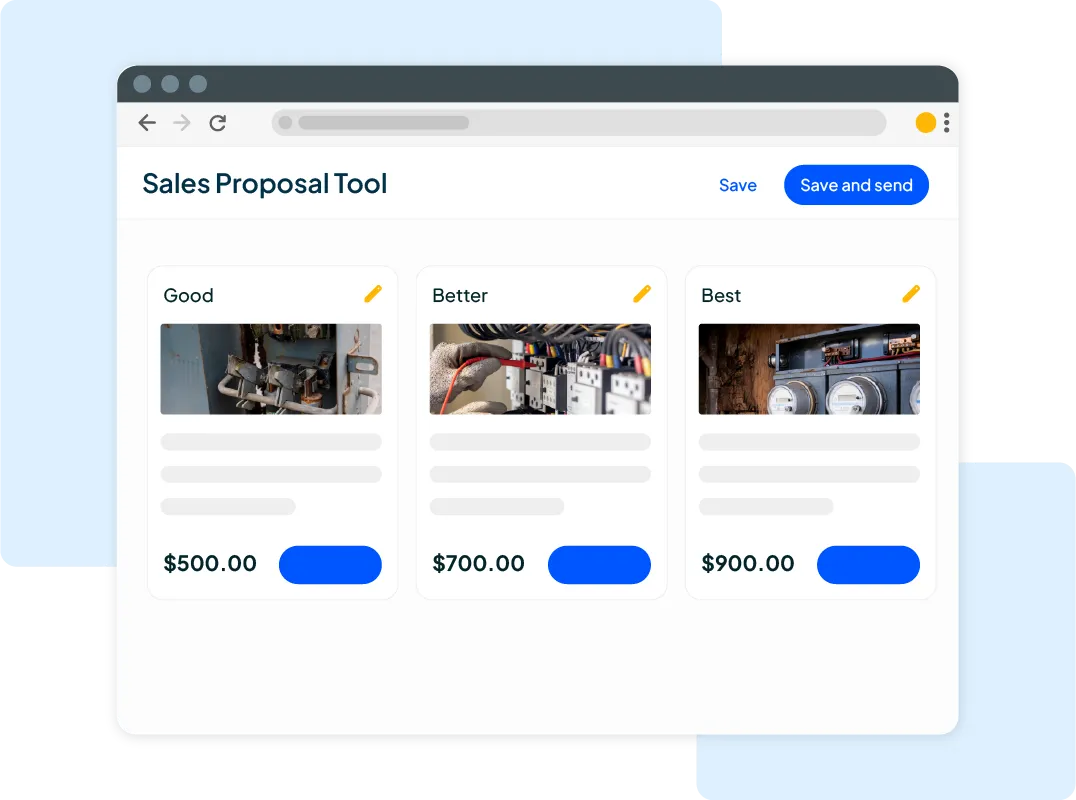
Grow your business and send quick quotes with our home service software.

Want to see your potential revenue?
See what businesses like yours earn with Housecall Pro in 1 - 2 minutes.

You finished your trade school training and know how to do the hands-on work. Now, you need to figure out how to turn those technical skills into consistent jobs and real income. Starting a home service business might feel overwhelming when you’re staring at a long to-do list, but you don’t need a huge budget or decades of corporate experience to launch.
Many successful pros start small, focus on one service they do well, and grow their business job by job. This guide helps by breaking down how to start a profitable home service business straight out of school.
Quick answer: How do you start a home service business?
Start by offering a service you already know how to do well. Then, register your business, set clear pricing, and begin marketing locally.
New trade school graduates can succeed by starting with small repair, maintenance, or installation jobs. These service calls are simplest to schedule, price, and finish without a crew. Early on, focus on getting real jobs booked, building a strong reputation, and keeping expenses low while you grow.
Read more: 35+ home service business ideas
Key takeaways
Prioritize steady growth (not overnight scale) when starting your home service business:
Start with repeatable jobs: Smaller service calls help you gain business experience and bring in customer referrals faster.
Track what actually makes money: Some jobs keep you busy without actually putting money in your pocket.
Build systems early to save time later: Messy scheduling and invoicing get harder to fix as your workload grows.
Table of contents
- How to turn your trade skills into a home service business
- What do you need to do to legally set up your home service business?
- How much does it cost to start a home service business?
- How to price your services (and still stay competitive)
- How to get your first customers
- What tools and software do you need to run a home service business?
- How to get repeat customers and grow your home service business
- Common mistakes to avoid when starting a home service business
How to turn your trade skills into a home service business
The fastest path to launching your business is usually the simplest one. You don’t need to offer every service in your trade on day one. Instead, narrow your focus to a few high-demand jobs that fit your experience and local market. A smaller service list is easier to price, market, and deliver consistently as you build your customer base.
Start with the services you already know how to do well
Start with work you’re already comfortable doing. That might include:
- HVAC: Tune-ups, maintenance visits, thermostat installations, and filter replacements
- Electrical: Outlet replacements, ceiling fan installations, lighting upgrades, and basic troubleshooting
- Plumbing: Faucet replacements, toilet repairs, garbage disposal installations, and drain cleaning
- Handyman: Drywall patching, door repairs, furniture assembly, and fixture installation
- House cleaning: Recurring residential cleaning, move-in/move-out cleaning, and deep cleaning services
- Lawn care: Mowing, edging, seasonal cleanups, weed control, and basic landscaping maintenance
As your business grows, you can expand into more specialized or higher-ticket services. But in the beginning, a focused service offering is often easier to market, schedule, and manage than trying to do everything at once.
Daniel Felt of the Minnesota-based Kura Home backs this up. “We tried to do too many different things,” he says of his early days of entrepreneurship. “It’s so hard in the very beginning when you’re trying to pay the bills and get food on your table…but I wish I would have just really focused because I wasted a ton of time.”
Research demand before expanding your services
When you’re deciding which services to offer, focus on work that’s in demand, profitable, and manageable with the tools and experience you already have.
Before investing in marketing, equipment, or specialized training, spend some time researching your local market. Start by searching terms related to your services in an incognito window to see the exact businesses ranking in your city. For example:
- “Electrician near me”
- “HVAC repair near me”
- “Lawn care in [city]”
- “House cleaning near [city]”
This shows you both who you’re up against and what services they lead with. Pay close attention to competitors’ websites, Google Business Profiles, and customer reviews. Look for the services companies promote most heavily, the types of jobs customers mention most often, and recurring complaints. If homeowners frequently mention issues like poor communication, missed appointments, or long wait times, those may be opportunities for your business to stand out.
You can also monitor Facebook community groups, Nextdoor posts, local Reddit communities, and Craigslist service listings to see what types of projects homeowners regularly ask about. These conversations can help you identify which services are most needed in your area and where demand may be underserved.
As your business grows and revenue becomes more predictable, you can expand into specialized services that require additional tools, training, or staffing.
For more industry-specific advice, check out our other guides:
- How to start an HVAC business
- How to start an electrical business
- How to start a plumbing business
- How to start a handyman business
- How to start a cleaning business
- How to start a lawn or landscaping business
What do you need to do to legally set up your home service business?
Most home service businesses need to take the same basic legal steps before accepting paid work. You need to register the business, secure the right licenses, buy liability insurance, and completely separate your personal money from your business money.
Doing this the right way from the beginning protects you from avoidable fines and keeps your business compliant.
Business registration
First, pick a legal structure for the business. Most new owners start as either a sole proprietorship or a limited liability company (LLC).
A sole proprietorship is the easiest business structure to get started with. It requires little paperwork and can be a good fit if you’re launching a side hustle or testing the waters as a business owner. The tradeoff is that there’s no legal separation between you and your business, so your personal assets could be at risk if your business faces debts or legal issues.
An LLC requires a bit more paperwork and a filing fee, but it can provide valuable protection as your business grows. Unlike a sole proprietorship, an LLC helps separate your personal assets from your business liabilities. If a customer files a claim or an unexpected issue arises on a job, that separation can help protect your personal finances.
Sole proprietorship requires little to no formal registration in most states—you can often start legally operating the same week you decide to. An LLC typically takes 1–10 business days with online filing, though some states like California can take several weeks. Registration rules vary by state, but you can usually file online through your secretary of state’s website.
Licenses, permits, and insurance
Some home service businesses require trade licenses, certifications, or local permits before you can legally operate. HVAC, electrical, and plumbing businesses often have stricter licensing requirements than other businesses, like cleaning or lawn care companies.
Requirements vary by state and city, so check your local rules before taking on paid work. For example, federal law requires all HVAC technicians to hold an EPA 608 certification before handling refrigerants—and some cities, like Chicago, require a separate local contractor registration on top of any state trade license.
You’ll also want general liability insurance early on. It’ll help cover property damage, accidents, or claims that may come up while you’re working. Even small jobs can create expensive problems if something goes wrong on-site. Here are a few real examples:
- A ladder damages a customer’s siding
- Water leaks during a plumbing repair
- A customer trips over equipment on site
Insurance helps protect you and helps customers feel more comfortable hiring you, especially if you’re competing against more established companies.
Some commercial contracts or municipal jobs may also require bonding, which gives the customer financial protection if a project isn’t completed to the contract terms.
Business finances
Mixing your personal cash with your business revenue makes it almost impossible to track your actual profit margins.
Start by opening a separate business bank account as soon as you register your business name. Then use your business card for every company purchase, and deposit every customer check directly into that account. Even if you’re operating alone, this separation makes it easier to:
- Track your real income and expenses
- Manage small business and self-employment taxes
- Monitor profitability
- Stay organized during busy seasons
You don’t need a complicated accounting system early on. A simple spreadsheet or bookkeeping app is enough to track your early fuel, material, and tool costs. As your schedule fills with multiple jobs a day, you’ll need automated tools to prevent admin work from eating into your field hours. Platforms like Housecall Pro can automate much of that administrative work, giving you more time to focus on serving customers and growing your business.
How much does it cost to start a home service business?
Startup costs vary depending on your trade, but many home service businesses can get off the ground without a massive investment. If you already have basic tools and a reliable vehicle, you may only need a few thousand dollars for lower-barrier trades like cleaning or handyman work.
Most early expenses fall into four categories: equipment, transportation, licensing and insurance, and basic marketing.
| Startup expense | Estimated cost |
| Basic tools and equipment | $500–$5,000+ |
| Licensing and insurance | $300–$3,000 |
| Website and marketing materials | $100–$1,000 |
| Vehicle upgrades or branding | $0–$3,000+ |
Table: Estimated startup costs for solo home service operators in the U.S., 2026. Licensed trades (HVAC, electrical, plumbing) typically fall at the higher end. Costs vary by state, trade, and existing equipment.
Tool costs depend heavily on the type of work you do. A cleaning business can start with standard residential vacuums and supplies, but an electrical or HVAC business requires specialized meters, testing tools, and safety gear.
A vehicle can be one the biggest upfront investments. To keep costs under control, many new pros start with the truck, van, or SUV they already own. Others buy a reliable used work vehicle or lease one to avoid a large upfront purchase. Unless your services require specialized equipment or storage, it often makes sense to wait until revenue is more predictable before investing in a fully outfitted work truck or van.
Marketing is usually one of the easier expenses to control. A Google Business Profile, a simple website, yard signs, and referrals are often enough to start bringing in local leads.
How to start with a small budget
You can start lean and grow over time. You don’t need to buy top-tier equipment or rent a premium shop space to open your business. Instead, stick to the absolute essentials required to complete jobs safely and professionally.
Follow these rules to keep your initial expenses low:
- Only buy the tools you need for your core services
- Use your current vehicle if it’s reliable
- Start with a focus on quick repair jobs with low material expenses
- Reinvest profits into better equipment and upgrades over time
- Avoid taking on debt for unnecessary upgrades in the first year
Pro tip: Tracking which jobs bring in the most profit helps you decide which equipment or tools to invest in first as your business expands. If you’re not sure which jobs are actually making you money, Housecall Pro’s Job Costing tool lets you see your profitability on every invoice so you can stop guessing and start focusing on the work that pays best.
How to price your services (and still stay competitive)
Pricing affects everything from your profit margins to the types of customers you attract. Charge too little, and you might stay busy without actually making much money. Charge too much without showing value, and customers may keep shopping around.
The trick is to price your work so it covers your costs, pays you fairly for your time, and remains competitive in your local market.
Understand your true costs
Your price needs to cover more than just labor and materials. Every job takes time, fuel, travel, and overhead to complete.
Before setting prices, estimate the total time and expenses required to complete each job from start to finish. Include costs like:
- Time spent on the job
- Drive time between appointments
- Materials and supplies
- Fuel and vehicle expenses
- Insurance and licensing
- Taxes and business software
For example, a one-hour plumbing repair may actually take closer to two hours when you factor in travel, setup, cleanup, and picking up parts. Knowing your real costs helps you avoid taking on jobs that look profitable but barely cover your take-home pay.
Once you know your costs, compare your pricing to three to five local competitors to make sure you’re in the right range for your market. Your goal isn’t necessarily to be the cheapest option. Even as a new business, you can stand out by being responsive, showing up when you say you will, communicating clearly, and providing professional estimates and invoices. Those factors often matter just as much to homeowners as price.
“The biggest thing with your customers is connection and honesty,” says John Hagner of the Pennsylvania-based Hagner HVAC. “You can’t be ridiculous, but if you’re a few hundred dollars more than the next guy and they liked you and the other guy was just in and out, they’re going to more likely go with you.”
Choose a pricing model that works for you
Most home service businesses start with either hourly pricing or flat rate pricing.
Hourly pricing works great when:
- Job times vary substantially
- You’re still learning how long work takes
- Projects are harder to estimate upfront
Flat-rate pricing works well when:
- You perform the same services regularly
- Jobs follow a predictable process
- Customers want clear, upfront pricing
For example, an electrician might charge hourly for troubleshooting but use flat rates for common jobs like ceiling fan installations or outlet replacements. It’s fine to use both, but keep your pricing simple, clear, and consistent. Customers are more likely to trust pricing they can easily understand.
Common pricing mistakes to avoid
New business owners often make the same pricing mistakes. The good news is they’re fixable when you know what to watch for:
- Undercharging to win jobs: Competing on price alone usually leads to burnout and low profits. Focus on reliability, communication, and quality work instead.
- Forgetting time and travel costs: Incorporate drive time, setup, cleanup, and supply runs into your pricing.
- Not adjusting your prices over time: As your skills, speed, and demand increase, your pricing should increase, too. The same goes for material cost increases.
- Pricing every job differently: This often leads to confusion for both employees and customers. Keep it consistent across the board to help customers trust your business and make estimating easier.
- Guessing instead of tracking costs: Review your labor, materials, and profit regularly so you know which jobs actually make money.
For step-by-step instructions by industry, check out our pricing guides:
- How to price HVAC jobs
- How to price plumbing jobs
- How to price electrical jobs
- How to price handyman jobs
- How to price house cleaning jobs
- How to price lawn care jobs
How to get your first customers
Getting your first customers as a new home service business often means simple, local outreach. You don’t need a huge marketing budget to start building momentum.
Focus on visibility and consistency early. The more people who know you’re available for work, the more opportunities you create for referrals, repeat business, and steady jobs.
Start with people you already know
Your first customers are often closer than you think. Friends, family, neighbors, former coworkers, and existing trade connections can all help you get early jobs and referrals.
Let people know:
- What services you offer
- Which areas you service
- How customers can contact you
Don’t assume people already know you’re taking work. A simple social media post or text message can lead to your first few jobs.
Once you complete a job, ask satisfied customers to refer you to others. Word of mouth is one of the fastest ways to build trust when your business is new.
“When it comes to getting those first customers, nothing beats local trust and referrals,” says Danny Wilcox, marketing manager at the San Diego-based Carini Home Services. “Make reviews a habit from day one, and use them as your most powerful marketing tool. Have customers post photos of the [results] and mention the service and city where the work was performed.”
As you grow, tools like Housecall Pro can automatically send review requests after each job, making it easier to collect feedback and build your online reputation.
Watch: How to get more reviews automatically
Set up your online presence
Most customers search online before hiring a home service business. That means you need to show up.
Start with the basics:
- Create a Google Business Profile
- Add your phone number and service area
- Upload photos of your work
- Collect customer reviews
- Build a simple website or landing page
It doesn’t have to be perfect. Customers mainly want to know what you do, where you work, and how to contact you.
Use simple, local marketing tactics
Local marketing works best when it consistently puts your name in front of nearby homeowners.
A few easy ways to market your business include:
- Posting before-and-after photos on social media
- Leaving flyers or door hangers in neighborhoods
- Offering discounts for first-time customers
- Partnering with local businesses
- Joining community Facebook groups
Pick two or three tactics to try first and review your results every few weeks. As you learn what brings in leads, spend more time on the channels that work and stop using the ones that don’t.
Pro tip: When you get a lead, respond fast, even if you’re busy. Fast replies often matter just as much as pricing when homeowners choose who to hire.
What tools and software do you need to run a home service business?
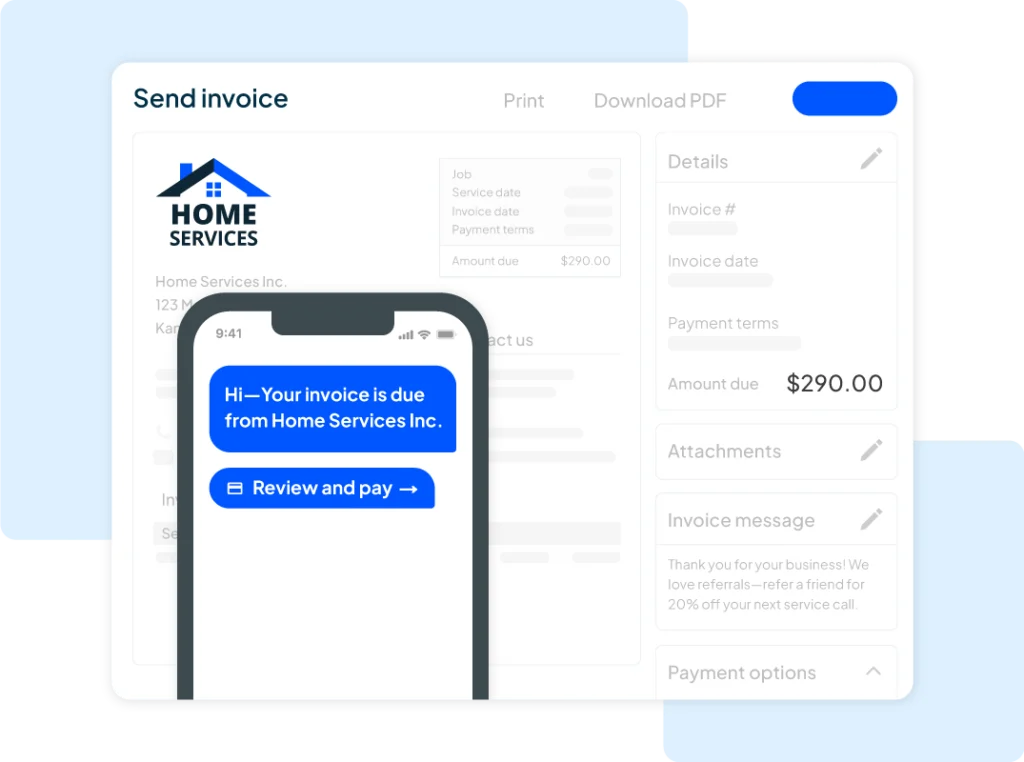
The right tools help you stay organized and keep jobs moving without extra admin work slowing you down. Start with the basics: You need a reliable way to schedule jobs, send invoices, and keep customers updated.
Scheduling and calendar tools
You’ll need a reliable way to track appointments and customer information. Many new business owners start with Google Calendar or a paper planner, but those systems can become difficult to manage as you get more jobs.
As your schedule fills up, scheduling software can help you organize appointments, customer details, estimates, and job history in one place.
“Don’t underestimate how useful it is to jump on a management software like Housecall Pro early, even if you’re a one-guy show…” says Preston Hiller of Gecko Garage Doors, Inc. “You’re going to hit your capacity for handling your jobs and keeping them in order really quickly.”
Invoicing and getting paid
Fast payments matter, especially when you’re trying to keep cash flow steady early on. Digital invoicing tools make it easier to send invoices, accept credit card payments, and keep records organized.
Some business owners start with tools like QuickBooks, Square, or PayPal, while others use field service software to handle invoicing and payments alongside scheduling and customer management.
Bookkeeping and expense tracking tools
Keeping business finances organized from day one can save you headaches later. Whether you use a spreadsheet, QuickBooks, Wave, or another accounting tool, make sure you’re tracking income, expenses, and receipts consistently.
Having accurate records also makes it easier to understand profitability and prepare for tax season.
Customer communication tools
Customers expect updates before, during, and after a job. Even simple tools like text messaging, email, and Google Voice can help you communicate professionally.
As your business grows, automation tools can send appointment reminders, on-the-way notifications, review requests, and follow-up messages automatically, helping you deliver a better customer experience without adding more administrative work.
When to switch to all-in-one business software
Many home service business owners start with separate tools for scheduling, invoicing, payments, customer communication, and bookkeeping. That approach can work when you’re first starting out, but once you’re juggling more than a handful of jobs a week, managing tasks across separate apps can start eating up hours.
Platforms like Housecall Pro pull all of these functions into one place, helping you schedule jobs, send estimates and invoices, collect payments, communicate with customers, request reviews, and track business performance without constantly switching between apps. Starting with an organized system early can save time and make it easier to scale as your business grows. Try Housecall Pro free for 14 days and see if it’s the right fit for your new service business.
Get In Touch: 858-842-5746
Let us earn your trust
On average, Pros increase monthly revenue generated through Housecall Pro by more than 35% after their first year.
See plan options and feature breakdown on our pricing page.
How to get repeat customers and grow your home service business
Once the jobs are flowing in consistently, shift your focus from simply staying busy to building a business that can grow steadily. That usually comes down to three things: delivering a great customer experience, creating repeat business, and knowing when it makes sense to expand.
Read more: How to scale a service business
Deliver a great customer experience
Small details make a big difference in home service businesses.
Showing up on time, communicating clearly, and leaving a clean jobsite all help customers feel more inclined to hire you again. Create a consistent customer experience by confirming appointments, providing arrival updates, explaining the work before you begin, and following up after the job is complete. Those experiences also lead to stronger reviews and more referrals.
Customers might not remember every detail of the repair or installation itself, but they will remember whether you were reliable, professional, and easy to work with.
Read more: How to give great customer service (+free downloadable guide)
Turn one-time jobs into repeat customers
Repeat customers are often easier and less expensive to keep than constantly finding new ones.
Before you leave a job, identify the next reason you’ll need to contact that customer. Depending on your trade, that might include:
- Seasonal maintenance reminders
- Follow-up texts or emails
- Recommended future repairs
- Service plan options
- Referral requests
For example, an HVAC business might remind customers in the spring about a seasonal AC tune-up. A landscaping company might send a follow-up with recurring maintenance packages.
Keeping a simple customer database and scheduling future follow-ups can help you generate more repeat business without constantly looking for new leads.
Know when to expand or hire
Growth usually becomes easier to spot once your schedule consistently stays full.
Review your schedule, revenue, and workload regularly to identify growth opportunities. You may be ready to hire help or expand your services if you’re:
- Booking jobs weeks in advance
- Turning down work regularly
- Falling behind on scheduling
- Spending more time on admin work than on field work
Before making a hire, make sure your workload has been consistently strong for several months and that you can comfortably support the additional payroll expense. Many business owners start small by hiring a part-time office assistant, subcontractor, or additional technician before taking on a full team.
Pro tip: Don’t rush into expansion too early. A smaller operation with strong profits and solid customer service is usually easier to grow than a larger business that feels disorganized.
Common mistakes to avoid when starting a home service business
Most new business owners hit a few bumps early on. It’s to be expected, but most mistakes are fixable once you realize what’s slowing you down.
Taking on jobs outside your skill set
It’s tempting to say yes to every opportunity when work is coming in. But taking unfamiliar or overly complex jobs too early can lead to delays, callbacks, unhappy customers, or expensive mistakes.
The fix: Stick with services you can complete confidently and safely while you build experience.
Waiting too long to answer customers
Homeowners often contact multiple businesses before booking a job. If someone else responds fast, they might win the work, even if your pricing is better. The data backs this up: in Housecall Pro’s 2025 survey, 97% of homeowners said response time influences their hiring decision.
The fix: Respond fast, even if it’s just to let customers know when you can follow up.
Mixing personal and business finances
Using one account for everything makes taxes, expense tracking, and budgeting much harder later on.
The fix: Open a separate bank account as soon as you start taking paid jobs.
Forgetting to track profitable jobs
Some jobs keep you busy without bringing in much profit. Without tracking labor time, materials, and travel, it’s hard to know which work actually helps you grow.
The fix: Review your most profitable jobs regularly so you can focus on the services that deliver the best returns.
Buying too much equipment too early
New business owners often feel pressure to upgrade tools, vehicles, or equipment immediately. Large upfront purchases can strain cash flow before your revenue becomes consistent.
The fix: Stick with reliable essentials and gradually upgrade as finances allow.
Trying to handle everything alone
At some point, doing every estimate, phone call, invoice, and job yourself becomes unsustainable.
The fix: Build systems early and look for small ways to free up your time as demand increases.
Bret Martine of Rescue Air and Heat learned this lesson himself. “I would tell anybody thinking about growing: Hire somebody to help with the office. It’s the hardest pill to swallow because that person’s not out making you money, but they are making you money by keeping you on task.”
Starting a home service business FAQ
-
Are home service businesses profitable?
-
Yes. HVAC and plumbing businesses can net 15%–25% profit margins when well-run, though industry averages are closer to 5%–12%. Cleaning and lawn care typically run 10%–20% net. Profitability improves once you build repeat customers; return jobs cost less to acquire than new ones.
-
How much does it cost to start a home service business?
-
Many home service businesses cost a few thousand dollars or less to start, especially if you already own basic tools and a vehicle. Your highest early costs are usually equipment, licensing, insurance, and marketing.
-
Do I need an LLC to start a home service business?
-
No, you don’t necessarily need an LLC to start a home service business. Many states allow home service businesses to be started as sole proprietorships. However, many business owners eventually form an LLC because it helps separate personal and business finances and adds liability protection.
-
What’s the most profitable home service business to start?
-
The most profitable home service business varies with local demand, your skills, and operating costs. HVAC and plumbing tend to have higher average ticket prices—HVAC service calls typically run $150–$500, with repairs and installs going significantly higher—while cleaning and lawn care build revenue through recurring weekly or monthly contracts.
-
Can I start a home service business with no money?
-
You can start some home service businesses for a few hundred dollars. For example, house cleaning, lawn mowing, and handyman services often require only supplies and a vehicle. Some new pros rent or borrow tools for their first few jobs until revenue covers equipment costs. Trades like electrical or HVAC require more upfront investment.
-
How long does it take to start a home service business?
-
Business registration can take as little as one day. Sole proprietors can often start operating immediately, with a DBA filing (if needed) typically processed same day to a few days. An LLC usually takes 3–10 business days with online filing, though some states like Arizona take 3–4 weeks. If your trade requires a license, factor in additional time for the application and any required exams.
-
What insurance does a home service business need?
-
Most home service businesses need at least three types of coverage:
- General liability insurance covers property damage, accidents, or injuries that happen while you’re working, like a ladder scratching a customer’s siding or a client tripping over your equipment. For solo operators, expect to pay $500–$1,500 per year depending on your trade and location. Higher-risk trades like electrical and plumbing tend to run toward the higher end.
- Commercial auto insurance covers your vehicle when it’s being used for work. Your personal auto policy typically won’t cover accidents that happen on the job, so this is worth getting before your first service call.
- Workers’ compensation insurance is required in most states as soon as you hire your first employee. It covers medical costs and lost wages if someone on your crew gets hurt on the job.
Start with general liability—it’s the most commonly required coverage for permits, commercial contracts, and customer peace of mind. Add the others as your business grows.
-
What should a home service estimate include?
-
A professional estimate should have your business name, contact info, and license number; the customer’s name and service address; a line-by-line breakdown of labor and materials with prices; the estimated timeline; and your payment terms (deposit required, due on completion, etc.).
Send the estimate in writing—email or a digital estimate tool—so the customer has a record and can approve it with a signature. Follow up within 24–48 hours if you haven’t heard back. A simple message like “Just checking in on the estimate I sent—happy to answer any questions” is enough. Most customers who go quiet aren’t saying no; they just got busy.