Want to win more jobs with less effort?
Grow your business and send quick quotes with our home service software.

Want to see your potential revenue?
See what businesses like yours earn with Housecall Pro in 1 - 2 minutes.
Housecall Pro customer data shows a typical price range of $140-$220 for standard home cleaning and $220-$400 for a move-in or move-out deep clean. Your rate will depend on the home’s size, condition, service frequency, and what’s included.
The right number comes from knowing your costs and what each job demands. Start with your labor, supplies, travel, and overhead, then build in enough profit to make the job worthwhile. Below, we break down average U.S. house cleaning rates, pricing models, and how to adjust for each job.
Table of contents
- How we sourced house cleaning pricing data
- Average house cleaning prices in 2026
- Standard house cleaning price
- Deep cleaning house price
- Move-in and move-out cleaning prices
- Construction cleanup price
- House cleaning cost by home size
- House cleaning prices by region
- House cleaning prices by city
- House cleaning add-on price list
- House cleaning pricing models: Which is right for your business?
- Hourly house cleaning rates
- Flat rate house cleaning
- House cleaning rates per square foot
- How to charge for cleaning services: step-by-step
- Factors that affect house cleaning prices
- How to explain a price increase to house cleaning customers
- How to handle price pushback for house cleaning
- What to do when a homeowner googles prices and finds a lower one
- The faster way to quote, book, and get paid for cleaning jobs
How we sourced house cleaning pricing data
The pricing ranges in this guide come from real cleaning service records from Housecall Pro customers over a 12-month period. We group similar services, filter out unusually high and low prices, and give more weight to recent data when calculating national benchmarks. Ranges show the 25th to 75th percentile of those prices. To check our numbers against the broader market, we compared 2026 pricing and benchmarks from Angi, HomeAdvisor, HomeGuide, Thumbtack, Taskrabbit, and National Cleaner Connect.
Ranges reflect individual services and may not include every charge on the final bill. Your actual pricing will vary based on:
- Local labor rates and cost of living
- Cleaning type, scope, and job complexity
- Frequency of service and client relationship
- Business overhead and operating expenses
- Whether you’re a solo operator or run a crew
How to use these prices:
- As a read on customer expectations. Many homeowners look at numbers like these before they call you.
- Not as your starting point. Start with your cost per job and target margin (Steps 1-2), then compare the result to the range.
- With room for gaps. Reported prices may include cleaners with less overhead than you, such as solo operators without insurance or payroll. Your price can be higher and still fair.
- Adjusted for your market. Check local competitors before you quote.
Average house cleaning prices in 2026
What you charge depends on which areas you’re cleaning, how much work they need, and how long the job will take. Use the national ranges below as a starting point, then adjust for your costs and what’s included in each service.
| Service | Average price range |
| Standard cleaning (one-time) | $140-$220 |
| Kitchen and bathroom deep cleaning | $125-$400 |
| Move-in or move-out deep cleaning | $220-$400 |
| Post-construction cleaning | $200-$1,045 |
Standard house cleaning price
Housecall Pro customer data shows a typical price range of $140-$220 for cleaning bedrooms, bathrooms, and common areas. Before quoting, confirm which rooms you’ll clean, the home’s condition, and any tasks that need extra time. Make your checklist clear so customers know what’s included.
What a standard clean usually includes:
- Dusting
- Vacuuming
- Mopping
- Bathroom sanitizing
- Kitchen wipe-downs
- General tidying
How to quote it:
- List what’s included so the customer knows what they’re paying for.
- Offer flat rates, especially for repeat appointments. Homeowners prefer predictable pricing.
- Adjust the price by home size and visit frequency.
Deep cleaning house price
Deep cleaning and sanitizing kitchens and bathrooms typically runs $125–$400, based on Housecall Pro’s national data. This range covers those areas only. For a whole-home deep clean, Angi reports a typical range of $180–$375, with a national average of $260. When setting your price, account for the extra time needed for additional rooms, heavy buildup, or cleaning inside appliances.
Many people schedule a deep cleaning before or after hosting guests, during spring refreshes, or for a first-time service. A large home with multiple bathrooms can easily run higher.
What a deep clean usually includes:
- Baseboards
- Vents
- Inside appliances
- Tile and grout
- Window sills
- Cabinet fronts
- Heavy buildup that a standard clean skips
How to quote it:
- Time the job before you set a flat price. Deep cleans are the easiest to underestimate.
- Charge flat after a walk-through (or photos) when you can. Switch to hourly when the condition is unclear.
- Price a first visit as a deep clean for new recurring customers, then move them to standard pricing. It sets a clean baseline and keeps later visits short.
- List what’s included so the customer knows what they’re paying for.
Move-in and move-out cleaning prices
Move-in and move-out deep cleaning ranges from $220-$400. Inside cabinets, refrigerators, and ovens are listed as optional add-ons. Confirm whether the customer needs those extras before sending the quote.
What moves the price:
- Home size and number of bathrooms
- Condition and buildup
- Inside appliances, cabinets and closets
- A landlord or agent checklist
- How soon the job has to be done
How to quote it: Ask for photos or do a walk-through, quote a flat price against a written checklist, and offer add-ons like carpet cleaning or interior windows.
Construction cleanup price
Post-construction cleaning ranges from $200-$1,045, but can vary widely depending on square footage and how much debris is left behind. Inspect the property before quoting. The amount of dust, surfaces involved, and number of cleaning passes can change how much time and labor you’ll need.
What a construction cleanup usually includes:
- Dust removal
- Debris clearing
- Adhesive residue removal
- Detailed window cleaning
- Surface cleaning
What moves the price:
- Types and amount of debris
- Surface types (wood, tile, glass, or metal), since each may need different products
- Property size
- Number of passes needed
How to quote it: Walk the site or ask for photos before you price it, since debris levels are hard to judge sight unseen. Quote flat per square foot for clear scopes, and use hourly when the condition is unclear.
Read more: How to price commercial cleaning jobs
House cleaning cost by home size
The number of bedrooms gives you a starting point for pricing a job. Before you quote, check the home’s condition and confirm what needs cleaning. The ranges below cover one-time home cleaning.
| Home size | Standard cleaning | Deep cleaning |
|---|---|---|
| 1-bedroom | $75–$110 | $90–$130 |
| 2-bedroom | $100–$150 | $120–$200 |
| 3-bedroom | $130–$200 | $150–$300 |
| 4-bedroom | $150–$210 | $200–$420 |
How to use this when you quote: If your price lands above these ranges, tell the customer why up front: insurance, trained staff, supplies, a guarantee on the work. If it lands below, check your cost per job before you send the quote.
How much should you charge to clean a 2,000-square-foot house?
For a standard clean of a 2,000-square-foot home, plan on about $150–$220. A standard clean usually takes 3–4 hours for one cleaner, or about 1.5–2 hours with two cleaners working together. Deep cleans will run higher.
Worked example: Two cleaners at $45 per cleaner per hour for 2 hours comes to $180. Before you send that quote, check that it covers wages, payroll taxes, supplies, travel, and overhead. Step 1 below shows how to work out your cost per job.
House cleaning prices by region
What you charge for cleaning depends partly on where you work. Housecall Pro customer data shows how prices for common cleaning services compare across U.S. regions.
Your costs for labor, travel, and insurance all play a part in setting your rates. Use these regional prices as a starting point, then check how they line up with your costs and the jobs you take on. Compare services with similar home sizes, cleaning needs, and tasks included.
| Region | Standard home cleaning | Move-in or move-out deep cleaning |
| Northeast | $140-$210 | $205-$425 |
| Southeast | $140-$200 | $230-$390 |
| Upper Midwest | $150-$270 | $200-$343 |
| South | $145-$200 | $220-$455 |
| Southwest | $135-$250 | $200-$410 |
| Northwest | $150-$225 | $235-$530 |
| West | $159-$220 | $220-$380 |
House cleaning prices by city
Your city can shift your rates, too. According to 2026 data from Taskrabbit, cleaners in Boston average $58 an hour, versus $39 in Denver, and the average job runs $224 in Washington, D.C. versus $158 in Austin. Find the market closest to yours, then check it against your own costs.
| City | Average hourly rate (per cleaner) | Average invoice total |
|---|---|---|
| Boston, MA | $58 | $205 |
| Washington, D.C. | $56 | $224 |
| San Francisco Bay Area, CA | $51 | $176 |
| New York, NY | $48 | $196 |
| Seattle, WA | $47 | $189 |
| Miami, FL | $44 | $192 |
| Los Angeles & Orange County, CA | $43 | $175 |
| Chicago, IL | $43 | $170 |
| Austin, TX | $43 | $158 |
| Denver, CO | $39 | $159 |
If you’re in a high-cost market, don’t undercharge just to compete. Your insurance, supplies, travel, and overhead are higher too—and your rates should reflect that.
House cleaning add-on price list
Add-ons let customers book extra cleaning while helping you get paid for the time and work involved. List each service separately and make sure customers know what’s included before you arrive.
Once you’ve set your add-on prices, look for services that make sense to offer together. You could pair window washing with a deep clean or offer inside-oven cleaning to customers who want a bigger task off their list. Seasonal extras, like carpet shampooing during spring cleaning, can also give customers a reason to book again.
Use the prices below as a starting point, then adjust for your costs and the work each add-on requires.
| Service | Average price range |
| Inside oven cleaning | $30-$50 |
| Inside refrigerator cleaning | $31-$100 |
| Interior cabinet cleaning | $75-$230 |
| Additional bathroom or bedroom cleaning and sanitizing | $30-$60 |
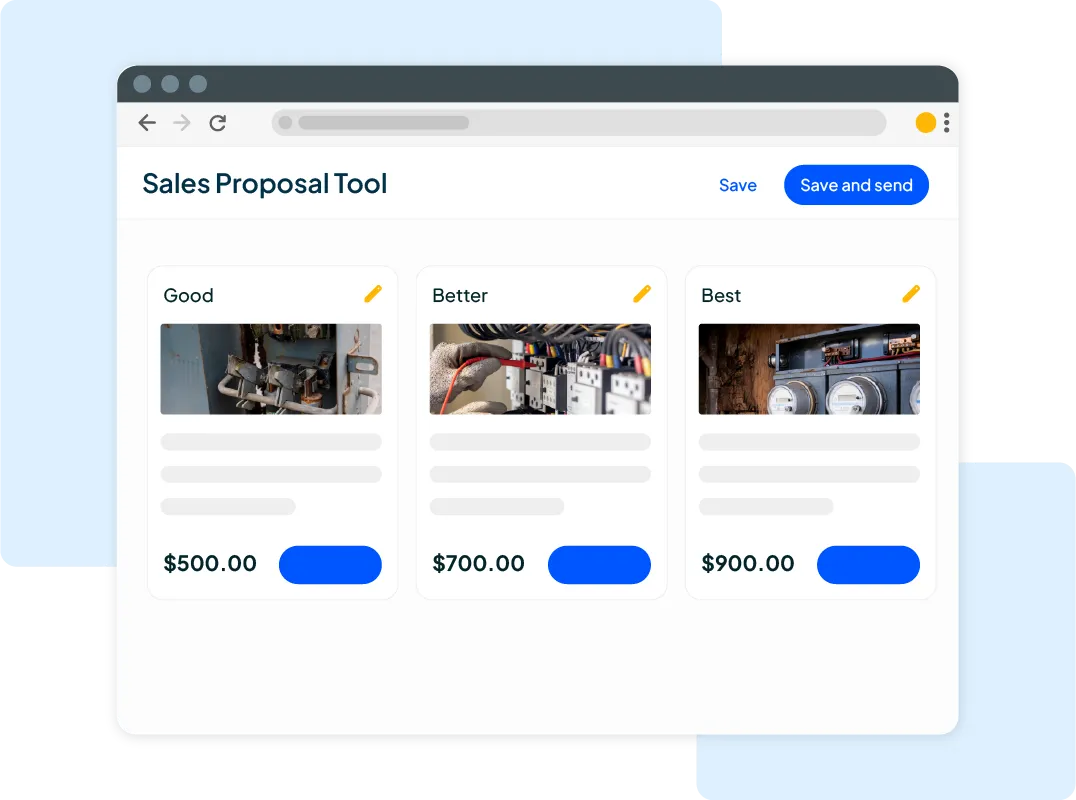
Pro tip: If you’re tired of talking through add-ons on every call, put them in front of the customer instead: Housecall Pro’s Price Book lets you list add-ons directly on your booking form and invoices, so customers self-select extras and you pick up more revenue without an added conversation.
House cleaning pricing models: Which is right for your business?
Before setting your rates, you’ll need to choose a clear pricing structure. House cleaners have a few options:
- Hourly rate: Bill customers for every hour you spend cleaning.
- Flat rate: Charge one set price per visit, no matter how long the job takes.
- Room-based rate: Price the job based on the number or type of rooms.
- Square-foot rate: Charge based on the home’s total square footage.
- Recurring packages: Weekly and biweekly customers may receive a lower per-visit rate because regular service usually reduces buildup and shortens the time required for each cleaning. Make sure the discounted rate still covers labor, supplies, overhead, and your target profit margin.
Each model has pros and cons depending on your business goals, customer base, and the types of homes you clean. Don’t worry if it feels like a lot to choose from. We’ll break down each pricing structure and how to calculate your rates so you can decide what makes the most sense for your business.
| Pricing Structure | When to Use | When to Avoid |
|---|---|---|
| Hourly rate | When jobs vary visit-to-visit or you’re unsure how long they’ll take | When clients want set pricing or flat rate work pays more |
| Flat rate | When clients want a set price or you know how long the job will take | For large or messy homes, or when job time is hard to estimate |
| By room | When pricing quickly or setting rates for large/commercial spaces | Home with large, tricky rooms or uneven cleaning times |
| By square footage | Big homes or repeat jobs | Deep cleaning for homes that haven’t been cleaned in a while |
| Recurring packages | Weekly, biweekly, or monthly clients | One-time jobs or homes that vary a lot from visit to visit |
Many cleaners use a mix of pricing structures depending on the job and client. For example, you might charge a flat rate for a typical two-bedroom home, switch to hourly for unpredictable or large jobs, and offer a discount on recurring visits.
If your rates change based on the job, let potential clients know they can reach out for a custom quote. Consider including a few example prices or typical ranges for common home sizes so they have an idea of what to expect.
Pro tip: If chasing down recurring payments is eating into your time, Housecall Pro’s recurring billing charges the card on file automatically after every visit, so you can run payments on autopilot.
Hourly house cleaning rates
House cleaners typically charge $30-$80 per hour per cleaner. Most standard visits run about two hours with two cleaners, costing $120-$320 per visit.
Hourly pricing is great for new cleaners or jobs where the amount of work is hard to estimate, because it ensures you’re paid for all of your time. However, it makes the final bill less predictable for customers. If you pay employees by the hour, that can also discourage efficiency because the longer they take, the more they get paid, which can reduce your overall profit on a job.
How much do house cleaners make per hour?
House cleaners make an average of $21.01 per hour, according to 2026 data from Indeed, with pay typically ranging from $14 to $32 depending on experience, location, and the type of work. As a business owner, think about what your cleaners are capable of, how tricky the jobs are, and what other cleaning companies in your area are paying. Paying a fair wage will help to attract and retain good workers.
Wages vs. what you charge: A cleaner earning $21.01 an hour costs you about $24–$25 an hour once you add payroll taxes, workers’ comp, and other employer costs (15%–20%). That’s before supplies, travel, and overhead, which is why your billing rate has to sit well above what you pay.
How to calculate your hourly price
To set an hourly rate for your cleaning business, you need to cover all your costs and still make a profit. Try this simple formula:
Hourly Rate = (Total Monthly Expenses + Desired Monthly Profit) ÷ Total Billable Hours per Month
For example, if your monthly expenses are $5,000, you want $3,000 in profit, and you plan to work 160 billable hours in a month, your hourly rate would be:
(5,000 + 3,000) ÷ 160 = 50
So you’d charge $50 per hour to cover costs and meet your profit goal.
Read more: Flat rate vs. hourly pricing
Flat rate house cleaning
Flat-rate pricing is one of the most common models in the cleaning industry. For a standard home, Housecall Pro customer data shows flat rates of $140–$220 for standard cleaning. Deep cleaning costs more, since it takes more time and covers more detailed work.
Customers like this structure because they know the total price upfront. It’s also great for businesses because it rewards efficiency; unlike hourly pricing, finishing faster doesn’t reduce how much you make. However, if a job takes longer than expected, you might end up earning less per hour. For this reason, flat rates work best for recurring clients and homes where the scope of work is predictable.
How to calculate your flat rate
To create a flat rate, add up all your costs and profit goals using this formula:
Flat Rate = (Estimated Hours × Labor Cost) + Supplies + Overhead + Desired Profit
For example, if a deep clean takes three hours with two cleaners at $25/hour each, labor is $150. If you add $15 for supplies, $30 for overhead, and $60 profit, your flat rate would be:
(3 × $50) + 15 + 30 + 60 = $255 total
This predictable structure lets you present clear, all-in pricing while making sure you’re covering expenses and still generating profit.
House cleaning rates per square foot
Some cleaning businesses charge by square footage, which helps standardize pricing across homes of different sizes. Typical rates range from about $0.10–$0.30 per square foot: $0.10–$0.20 for standard cleaning and $0.12–$0.30 for deep cleaning.
Most cleaning companies quote by hourly rate, crew size, and bedroom and bathroom count, and use square footage as a cross-check, especially for homes over 3,000 square feet.
| Square Footage | Standard Cleaning | Deep Cleaning |
|---|---|---|
| 1,000 or less | $100–$200 | $120–$300 |
| 1,500 | $150–$300 | $180–$450 |
| 2,000 | $200–$400 | $240–$600 |
| 3,000 | $300–$600 | $360–$900 |
How to calculate your square footage pricing
Once you know your rate per square foot, you can apply a simple formula to cover costs and build in profit.
Square-Foot Rate = (Total Square Footage × Price per Sq. Ft.) + Supplies + Overhead + Desired Profit
For example, if you charge $0.12 per square foot for a 2,000-square-foot home, the base cost is $240. Add $15 for supplies, $30 for overhead, and $60 profit.
(2,000 x 0.12) + 15 + 30 + 60 = $345 total
Pro tip: If you’re not sure whether your per-square-foot rate is actually covering your costs, Housecall Pro’s job costing reports break down labor, supplies, and overhead by job, so you can see your real margin instead of guessing.
Get In Touch: 858-842-5746
Let us earn your trust
On average, Pros increase monthly revenue generated through Housecall Pro by more than 35% after their first year.
See plan options and feature breakdown on our pricing page.
How to charge for cleaning services: step-by-step
Knowing the market averages is useful. Knowing your own numbers is what keeps you profitable. Here’s how to work through your pricing from scratch.
Step 1: Calculate your real cost per job
Before you can set a rate, you need to know what it actually costs to complete a job. Add up:
- Labor: Your hourly wage (or your cleaners’ wages) × estimated hours per job. If you have employees, add 15%–20% on top of wages to account for payroll taxes.
- Supplies: Cleaning products, cloths, bags, gloves. Estimate a per-job cost by dividing your monthly supply spend by the number of jobs you run.
- Transportation: Fuel and vehicle wear. A simple estimate is $0.76/mile (the IRS business rate effective July 1, 2026) for the round-trip distance to each job.
- Overhead: Include the job’s share of liability insurance, software, marketing, office expenses, and nonbillable administrative time. Divide your total monthly overhead by the number of jobs you expect to complete that month to determine how much each job needs to cover.
Also decide upfront how you’ll handle a short-notice cancellation and whether you’re charging sales tax on cleaning services in your state. Both affect what a job actually nets you, and both are easy to miss when you’re building your first rate.
Example: A two-hour job with one cleaner at $20 per hour costs $40 in labor. Add $8 for supplies, $6 for transportation, and a $12 share of monthly overhead, including insurance and administrative costs. Your total cost is $66 before profit.
Step 2: Set your minimum rate
Add your target profit margin to your cost per job.
Minimum Rate = Cost per Job ÷ (1 − Target Margin)
Using the example above at a 25% margin:
$66 ÷ (1 − 0.25) = $88 minimum per job
Anything below $66 loses money, and anything below $88 falls short of your 25% target.
Step 3: Check your rate against the market
Look up what competitors charge in your area using Angi, Thumbtack, or local Facebook groups. If your minimum rate falls within or below local rates, you have room to price at or above market. If your floor comes in above local averages, you’re facing a cost problem—not a pricing problem. Either reduce costs or position as a premium service that justifies the higher rate.
“One of the most common pricing mistakes I’ve observed is undervaluing services to attract clients,” says Nick Disney, founder and CEO of Sell My San Antonio House. “Successful cleaning firms are able to charge premium prices by offering unparalleled reliability and attention to detail, rather than engaging in price wars. My top-performing cleaning partners charge 20% to 30% more than their competitors because they guarantee punctuality, proactive communication, and treat every property as if it were their own.”
Step 4: Choose your pricing model and build your actual rate
Pick a pricing model that matches how you work:
- Flat rate for recurring clients on homes you know well
- Hourly for first-time or unpredictable jobs where scope is unclear
- Per square foot for large homes (3,000+ square feet) where room count alone doesn’t capture the full job
Build your flat rate by starting with your minimum and adding a buffer for jobs that run long. On an $88 floor for a two-hour job, a flat rate of $110–$130 gives you real cushion.
Step 5: Test and adjust after 30–60 jobs
Your first rates are estimates. After 30–60 jobs, look at the data:
- Jobs consistently run longer than quoted? Raise your flat rates or switch to hourly for that job type.
- Turning away more than 35% of quotes? You may be above market—or you may need to improve how you present your value.
- Almost every quote gets accepted without hesitation? You’re likely undercharging.
Adjust 5%–10% at a time and track your quote acceptance rate. Aim for 65%–75% close rate—high enough to stay booked, not so high that you’re leaving money behind.
Once you’ve set your rates, the next step is getting them in front of clients without a back-and-forth every time someone asks for a quote. Here’s how Housecall Pro’s pricing tools make that easier.
Factors that affect house cleaning prices
Regardless of the pricing strategy you choose, these factors determine your final rate.
1. Location
Location is one of the biggest factors in what you can charge, with major cities running roughly 20%–75% higher. In high-cost metros like Boston, Washington, DC, and San Francisco, average hourly rates run about $51–$58 per cleaner; in lower-cost markets like Austin and Denver, about $39–$43.
How to adjust your pricing:
- Check Angi, Thumbtack, or local Facebook groups to see what competitors charge in your area.
- Don’t price below your actual costs just to match a solo operator—your overhead is higher, and your rates should reflect it.
- Revisit your local market rates at least once a year, since labor costs and competition shift.
2. Labor
Labor is usually your biggest cost. How long a job takes—and how many cleaners it requires—has a direct impact on whether your rate is profitable.
How to adjust your pricing:
- Time each job type at least a few times before setting a flat rate, so you’re not guessing on scope.
- Factor in travel time between jobs when calculating your true hourly yield.
- Be upfront with clients about how long a clean takes—it sets expectations and reduces disputes.
3. Frequency
Recurring clients are cheaper to serve than one-time jobs—less buildup, faster cleans, more predictable scheduling. Most cleaners pass some of that savings back as a discount to lock in repeat business.
How to adjust your pricing:
- Offer a small discount for weekly or biweekly recurring bookings if your costs allow it.
- Price one-time and first-time cleans higher—they almost always take longer than a maintenance visit.
- Use recurring packages to build a stable baseline of income before taking on more one-time work.
4. Overhead and supply costs
Every job has costs beyond labor. If you’re not factoring in supplies, insurance, transportation, and admin time, you’re likely undercharging.
How to adjust your pricing:
- Calculate your actual cost per job: supplies, fuel, insurance allocation, and any software or admin time.
- Buy supplies in bulk to reduce per-job costs without cutting corners on product quality.
- Review your overhead quarterly—costs like fuel, insurance, and supplies tend to creep up over time.
- Set a policy for short-notice cancellations (many cleaners charge a portion of the visit price inside a 24–48 hour window) so a last-minute opening doesn’t cost you a full day’s revenue.
5. Profit margin
Covering costs isn’t the same as running a profitable business. Build your target margin into your rate from the start, not as an afterthought.
How to adjust your pricing:
- Set a target margin that fits your overhead, team size, and service mix. The examples in this guide use 25%.
- Use the pricing formulas in this guide to work backward from a profit goal, not forward from a competitor’s rate.
- Review margins by job type—deep cleans and move-outs often yield differently than recurring standard cleans.
How to explain a price increase to house cleaning customers
When labor, supplies, insurance, and transportation cost more, your cleaning rates may need to go up, too. Review your expenses and work backward from your target profit margin to figure out how much to adjust your prices.
Give recurring customers written notice before the change takes effect. Clearly state the new rate, the effective date, and the reason for the adjustment. Keep the message direct and focus on the costs required to maintain the same level of service.
Example:
“Starting [date], your recurring cleaning rate will change from $[old rate] to $[new rate] per visit. This update reflects higher labor, supply, insurance, and operating costs and allows us to continue providing reliable service at the same standard. Your current schedule and service scope will remain the same.”
Read more: How to write a price increase letter (templates & tips)
How to handle price pushback for house cleaning
If a customer pushes back on your price, ask which cleaning tasks matter most and what budget they’re working with. You may be able to adjust the service to fit their needs while keeping the job profitable.
Before offering a discount, look for ways to reduce the work included. You could focus on priority rooms, remove an add-on, or switch from weekly to biweekly cleaning. Make sure any lower price reflects a clear change in the scope or frequency of service.
Pro tip: If price objections keep turning into back-and-forths, Housecall Pro’s customer communication tools keep the revised quote, updated scope, and customer approval in one thread. That gives you a clear record of what everyone agreed to if questions come up later.
What to do when a homeowner googles prices and finds a lower one
Homeowners often search before they call. The number they find might be a national average, a solo cleaner’s rate, or a different level of service. A lower number isn’t a reason to cut your price automatically.
1. Ask what they’re comparing. Stay curious, not defensive: “Totally fair to check. What price did you see, and what did it include?” The gap is often scope, home size, or crew size.
2. Compare like for like. Check these before you respond:
- Cleaning type (standard vs. deep)
- Home size and bathroom count
- Crew size and time on site
- Supplies and equipment included
- Insurance, bonding, and background-checked staff
- Guarantee or re-clean policy
3. Explain what your price covers. Keep it to a sentence or two:
“Prices online vary a lot. Ours includes [two insured, trained cleaners, all supplies, and a free re-clean within 24 hours]. If the other quote doesn’t include those, it’s worth asking.”
4. Check your own number first. If your price is above the ranges in this guide, you should be able to say why. If it’s below your minimum rate from Step 2, don’t match a lower price. That’s a cost problem, not a competition problem.
5. Change the scope before the price. If budget is the real issue, offer to clean priority rooms only, drop an add-on, or move from weekly to biweekly. Don’t discount the same work.
6. Know when to let it go. Some customers only want the lowest price. Losing them is cheaper than winning them at a rate that doesn’t cover your costs.
Pro tip: Itemized quotes in Housecall Pro list what’s included line by line, so customers compare scope, not just the total.
The faster way to quote, book, and get paid for cleaning jobs

Once you know your rates, the next problem is getting them in front of clients without a back-and-forth every time someone asks for a quote. A well-built pricing form does that automatically—customers see your service types, select what they need, and book without a phone call.
Housecall Pro’s cleaning software lets you customize fields to charge per bedroom, per bathroom, or per square foot, with options for add-ons like pets or preferred cleaning products built right in. If your rates vary by service type or frequency, create separate forms for each—weekly, biweekly, deep, move-out—so clients always see the right pricing for what they’re booking.
The result: fewer calls, more accurate quotes, and recurring jobs that run on autopilot.
Ready to simplify your pricing and win more jobs? Try Housecall Pro free for 14 days.
House cleaning pricing FAQ
How do I price my house cleaning services?
Calculate your labor, supplies, travel, and overhead, then build in your target profit margin. Compare your quote with national and regional benchmarks for similar work, and adjust for the home’s size, condition, and requested services.
How much should I charge to clean someone's house?
Housecall Pro customer data shows a typical price range of $140-$220 for cleaning bedrooms, bathrooms, and common areas. Move-in and move-out deep cleaning ranges from $220-$400. Your quote should reflect the work included and your costs.
How do I calculate what to charge to clean a house?
To calculate the price to clean a house, add your labor, supplies, and overhead to get your cost per job. Then divide by one minus your target profit margin. For example, if a job costs $150 and you want a 25% margin, your price is $150 ÷ 0.75 = $200. Choose a pricing model (hourly, flat rate, per room, or per square foot) to turn that total into a quote.
How do I give a quote for house cleaning?
To give a quote for house cleaning, assess the home’s size, condition, and type of cleaning needed, then calculate costs for labor, supplies, overhead, and profit. Present a clear price using an hourly rate, flat rate, per-room, or per-square-foot model, and let clients know if the quote can be customized for special requests.
For example, a 3-bedroom home in a mid-cost market might get a flat-rate quote of $130–$200 for a standard clean, with a note that deep cleaning costs more and pet fees may apply. Always confirm the quote in writing before the job.
How much should I pay a cleaner per hour?
House cleaners earn about $21 an hour on average, with most pay falling between $14 and $32 depending on experience, location, and the type of cleaning. That’s different from what you bill customers ($30–$80 per cleaner per hour), which also covers payroll taxes, supplies, travel, and overhead. Paying a competitive wage will help you attract and retain good workers.
How long does it take to clean a 2000 sq ft house?
A standard clean of a 2,000-square-foot house typically takes about 3–4 hours for one cleaner. With two cleaners working together, plan on about half that, roughly 1.5–2 hours. Deep cleaning can take 3–6 hours and move-out cleaning 4–8 hours, depending on condition and crew size.
How much does house cleaning cost?
Housecall Pro customer data shows a standard house cleaning typically costs $140–$220 per visit, and a move-in or move-out deep clean typically costs $220–$400. Prices rise with home size, condition, and local labor costs.
How much do house cleaners charge per hour?
House cleaners typically charge $30–$80 per hour per cleaner. Most standard visits run about two hours with two cleaners, which puts a typical visit at $120–$320.
How much should I charge for a deep clean?
Deep cleaning takes more time than a standard clean, so price it higher. Housecall Pro customer data puts kitchen and bathroom deep cleaning at $125–$400. For a whole-home deep clean, Angi reports that most homeowners pay $180–$375, with a national average of $260. Time the job first, and price flat after a walk-through when you can.
How much does move-out cleaning cost?
Move-in and move-out deep cleaning typically runs $220–$400 in Housecall Pro customer data, depending on home size and condition. Heavy buildup, inside-appliance cleaning, and landlord checklists push the price toward the high end.
What is the average cleaning lady rate?
Most house cleaners charge $30–$80 per hour. The average house cleaner earns about $21.01 per hour in wages. The gap covers payroll taxes, supplies, travel, insurance and overhead.
Should I charge hourly or flat rate for house cleaning?
Charge flat for recurring clients and homes you know well, and hourly for first-time or unpredictable jobs. Flat rates reward efficiency, and hourly rates protect you when the scope is unclear.
What should I do if a customer finds a lower price online?
Ask what the lower price includes, compare scope, crew, insurance, and guarantees, and explain what yours covers. If budget is the issue, reduce the scope or frequency instead of the rate. Never go below your minimum rate.