Want to win more jobs with less effort?
Grow your business and send quick quotes with our home service software.

Want to see your potential revenue?
See what businesses like yours earn with Housecall Pro in 1 - 2 minutes.
Cleaning is one of the most affordable trades to break into as a business owner. You don’t need a truck full of equipment or a big crew on day one, but knowing what to invest in (and what to hold off on) makes a big difference early on.
In this guide, we’ll walk through typical cleaning business startup costs and how to keep your expenses under control as you grow.
Quick answer: How much does it cost to start a cleaning business?
Starting a cleaning business typically costs between $500 and $5,000+, depending on your niche, location, and whether you hire from day one (see methodology). Use this formula to estimate your number:
Startup cost = one-time setup costs + first month of recurring costs + emergency cushion (1–3 months of expenses)
One-time costs (pay once to launch):
- Equipment: $200–$2,000 (basic residential gear on the low end; commercial tools on the high end)
- Initial supplies: $100–$500
- Business registration: usually under $100
- Licenses and permits: varies by city, county, and state
- Initial marketing: $100–$1,000+
Recurring monthly costs (ongoing after launch):
- General liability insurance: ~$54–$75/month
- Cleaning supplies: $50–$300/month
- Fuel and vehicle maintenance: varies by area and job volume
- Software and admin tools: varies by plan
- Wages and payroll taxes: if you hire
What drives your number up or down:
- Residential vs. commercial: Residential costs less to launch; commercial takes more equipment and a longer sales cycle (30-90 days), but the contracts are bigger.
- Solo vs. team: Adding employees can double or triple your overhead.
- Owned vs. leased equipment: Buying costs more upfront; leasing is cheaper but adds monthly overhead.
- Local licensing and insurance requirements: Costs vary by state.
Check your city, county, and state rules before opening. As the U.S. Small Business Administration notes, permit fees and requirements vary by location and business activity.
Methodology: How we built these estimates
Figures in this guide reflect a blend of industry benchmarks and small business cost data. Insurance ranges are sourced from our business insurance partner, Coverdash. Marketing benchmarks reflect Small Business Administration (SBA) guidance for businesses under $5M in revenue. Supply and equipment costs are based on published ranges for solo operators and small teams doing primarily residential work in the U.S. Your actual costs will vary by location, service mix, and business size.
Key takeaways
Here’s a quick look at what matters most when budgeting for a cleaning business:
Separate one-time and recurring costs: Equipment and licensing are different from ongoing costs like fuel, wages, insurance, and marketing.
Don't buy everything at once: Start with core tools and legal setup. Add specialty gear when jobs require it.
Marketing and transportation matter early: Both are recurring costs that add up fast if you don’t track them.
Software can lower admin friction: The right tools can save time and reduce costly disorganization.
Table of contents
- How to estimate your cleaning business startup costs
- Cleaning business startup budget: 2026 estimates
- Startup costs by cleaning business type
- Residential vs. commercial cleaning startup costs
- Cleaning equipment and supply costs
- Marketing costs
- Transportation costs
- Licenses, insurance, and bonding costs
- Hiring and payroll startup costs
- Software and admin tools
- How much should you set aside for unexpected costs?
- More resources
How to estimate your cleaning business startup costs
Start by separating what you pay once from what you pay every month. Onetime investments include equipment, legal setup, and the first round of supplies. Recurring costs include wages, insurance, marketing, transportation, software, and replacement supplies.
That distinction matters. One-time costs impact how much you need to spend upfront, while ongoing costs determine whether your business stays profitable over time.
A basic startup budget should cover:
- Equipment and supplies: Vacuums, mops, cloths, chemicals, gloves, buckets, and storage
- Legal setup: Business registration, licenses, permits, compliance fees
- Insurance: General liability, bonding, workers’ comp, commercial auto coverage (as needed)
- Marketing: Website setup, local ads, branding, lead generation
- Transportation: Fuel, maintenance, vehicle use or lease costs
- Labor costs: Wages, payroll taxes, potential hiring/training time
- Software and admin: Tools for scheduling, estimating, invoicing, payments, and customer relationship management (CRM)
You should also set aside extra cash to cover unexpected expenses or slow months. This helps you stay afloat while you build a steady stream of jobs. A good rule is to budget at least 1–3 months of operating expenses, depending on how quickly you expect to start bringing in revenue.
Once you know your costs, you can use them to set a price floor—the minimum you need to charge per job to break even. “Understand your costs, margins, and break-even point before you build anything else,” says April Prothero, founder of Going GreenHouse, a nontoxic cleaning company based in Arizona.
Learn more in our pricing guides for cleaning businesses:
- How to price house cleaning jobs
- How to price commercial cleaning jobs
- How to price window cleaning jobs
- How to price carpet cleaning jobs
- How to price duct cleaning jobs
- How to price gutter cleaning jobs
- How to price chimney cleaning jobs
Cleaning business startup budget: 2026 estimates
The table below gives you a starting point based on average 2026 startup and monthly operating costs for small U.S. cleaning businesses. Your actual costs will vary based on your location, services, insurance needs, and hiring plans.
| Cost category | One-time or recurring | Typical cost | Notes |
|---|---|---|---|
| Basic equipment | One-time | $200–$2,000 | Higher for commercial tools |
| Initial supplies | One-time | $100–$500 | Replenish monthly as jobs grow |
| Business registration | One-time | Usually under $100 | Varies by state and local rules |
| Licenses and permits | One-time/annual | Varies by location | Check city, county, and state rules |
| General liability insurance | Recurring | $54–$75/month | Varies by coverage and risk |
| Marketing | Recurring | $150–$1,000+/month | SBA recommends 7%–8% of gross revenue |
| Transportation | Recurring | $100–$500/month | Fuel, maintenance, parking, repairs |
| Software/admin tools | Recurring | Varies by plan | Scheduling, invoicing, payments |
| Emergency cushion | One-time | 1–3 months of expenses | Helps cover slow starts or repairs |
Typical 2026 startup and first-year operating costs for a solo or small-team U.S. cleaning business. Annual costs are noted where applicable.
Learn more: Business insurance: What it is, what it covers, and how much it costs
Startup costs by cleaning business type
Here’s how the most common cleaning business types compare on cost and fit.
| Business type | Startup cost level | Best fit |
| Residential cleaning | Low | You want to launch fast and start solo |
| Window cleaning | Moderate | You’re OK with heights and want a mix of clients |
| Office cleaning | Moderate | You want recurring contracts with predictable hours |
| Post-construction cleaning | Moderate to high | You want repeat work from builders and remodelers |
| Commercial cleaning | High | You want big contracts and don’t mind a longer ramp up period |
| Carpet cleaning | High | You want to own a niche and aren’t trying to do it all |
| Medical/facility cleaning | High | You want to charge premium rates and can meet strict standards |
You don’t have to limit yourself to just one type of cleaning service. Many businesses start with a single, low-cost option like residential cleaning, then expand into higher-ticket or specialized services as they grow. To choose where to start, consider your budget, comfort level with the work, and how quickly you want to land consistent clients.
Learn more: 50+ types of cleaning services you can offer
Residential vs. commercial cleaning startup costs
Your niche affects almost every line item in your budget: equipment, insurance, labor, and how long it takes to land your first contract.
Residential cleaning is often the easier path. The tools are simpler, the upfront investment is lower, and you can start booking jobs faster. The trade-off is that you’ll need more clients to match the revenue of a single commercial contract.
Commercial cleaning businesses are more expensive to start because the equipment is heavier, clients have stricter expectations, and the sales cycle is longer. The upside is more predictable, higher-value contracts once you’re established.
Cleaning equipment and supply costs
Equipment is one of your first major expenses—and one of the easiest places to overspend. Focus on what you need for the jobs you have now, then expand as demand grows.
The table below shows standard equipment and supply costs for a small U.S. residential cleaning business in 2026:
| Item | Estimated cost range | Notes |
|---|---|---|
| Vacuum | $100–$500+ | Commercial-grade models cost more |
| Mop, bucket, and broom | $30–$100 | Must replace as they wear out |
| Microfiber cloths | $20–$75 | Buy enough for multiple jobs |
| Cleaning chemicals | $50–$300/month | Depends on job volume and services |
| Gloves and PPE | $25–$100 | Needed for safety and sanitation |
| Caddy or storage bins | $20–$100 | Keeps supplies organized |
| Trash bags and paper goods | $25–$150/month | Recurring cost |
| Specialty tools | Varies | Add only when jobs require them |
Estimated one-time purchase costs for a U.S.-based residential cleaning business, 2026. Commercial cleaning businesses will skew toward the high end or above.
Monthly cleaning supply costs depend on how many jobs you book, what types of surfaces you clean, whether clients provide supplies, and whether you use standard or eco-friendly products.
Learn more: What cleaning business supplies do you need?
Should you buy or lease cleaning equipment?
Whether you buy or lease depends on your finances and the type of cleaning business you’re building.
- Buy everyday tools: Low-cost tools like vacuums, mops, microfiber cloths, gloves, sprayers, and cleaning caddies are worth owning right away.
- Lease expensive specialty equipment: Leasing can make sense for more expensive commercial equipment you don’t need for every job, such as floor buffers and extractors.
- Avoid buying ahead of demand: Only invest in specialty tools when you have consistent work.
- Compare maintenance costs: Leasing may include service or replacement support; owning means paying for repairs yourself.
Marketing costs
Marketing is how you get your first customers and keep new jobs coming in. It’s not a one-time expense, but an ongoing investment.
Common marketing expenses include:
- Website and branding: Domain, hosting, logo, basic design
- Local advertising: Flyers, yard signs, community boards, local ads
- Digital marketing: Paid ads, social media, lead generation platforms
- Reputation building: Review management or customer referral incentives
Many cleaning businesses set a rough marketing budget as a percentage of projected revenue to stay consistent without overspending. The SBA recommends small businesses allocate 7%–8% of gross revenue to marketing, so if you expect to bring in $5,000 per month, that’s roughly $350–$400 to keep new leads coming in.
Learn more: How to market a cleaning business
Transportation costs
Transportation is a core part of delivering your service. If you can’t reliably get to jobs, the rest of your business breaks down.
These costs vary based on how far you travel, how many jobs you book, and the condition of your vehicle.
Common transportation expenses include:
- Fuel: Every job requires travel time
- Vehicle maintenance: Oil changes, tires, and unexpected repairs
- Parking and tolls: Costs vary by area and job location
- Vehicle use or lease: Wear and tear or monthly payments
Reliable transportation helps you stay on schedule, maintain trust with customers, and avoid costly disruptions.
Licenses, insurance, and bonding costs
Legal setup is one of the easiest costs to underestimate. Requirements vary by location, but common legal and insurance costs for cleaning businesses include:
- Business registration and licenses: Local business licenses, state registration, and permits based on your location
- Insurance coverage: General liability, plus workers’ comp if you hire employees and commercial auto insurance if you drive for work
- Bonding: Surety bonds (sometimes called janitorial bonds) protect clients if an employee steals or causes damage. They typically cost $100–$300/year for small cleaning businesses and are increasingly required by commercial clients and platforms like care.com or Angi.
- Tax and payroll setup: Employer identification number (EIN), sales tax permits, and payroll compliance if you hire
- Local regulations: Zoning laws, environmental rules, or chemical handling requirements depending on your services
License and permit costs depend on your business activity and the agency issuing them, so check federal, state, and local requirements. For example, a home-based cleaning business in California may need a local business license ($50–$100), a seller’s permit if selling products, and—in some counties—a home occupation permit. In Texas, requirements are lighter, but individual cities may add their own.
Missing a requirement can lead to fines, delays, or lost jobs.
Hiring and payroll startup costs
If you plan to hire employees, treat labor as a startup cost, not something to figure out later. Payroll includes more than hourly wages. It also covers taxes, admin time, training, and the cost of slower productivity while new hires ramp up.
Starting solo can help keep costs manageable early on. Hiring sooner may make sense if your business depends on volume. The right approach depends on your pricing, demand, and how quickly you expect to book recurring work.
Before hiring, plan for:
- Hourly wages: What you’ll pay cleaners for billable work
- Payroll taxes: Employer-side taxes and payroll costs
- Workers’ compensation: Required in many states once you hire
- Training time: Paid time before a cleaner reaches full productivity
- Supplies and uniforms: Extra tools, shirts, or PPE
- Scheduling complexity: More people means more coordination
Planning for these costs upfront helps you protect your margins as you grow.
Software and admin tools
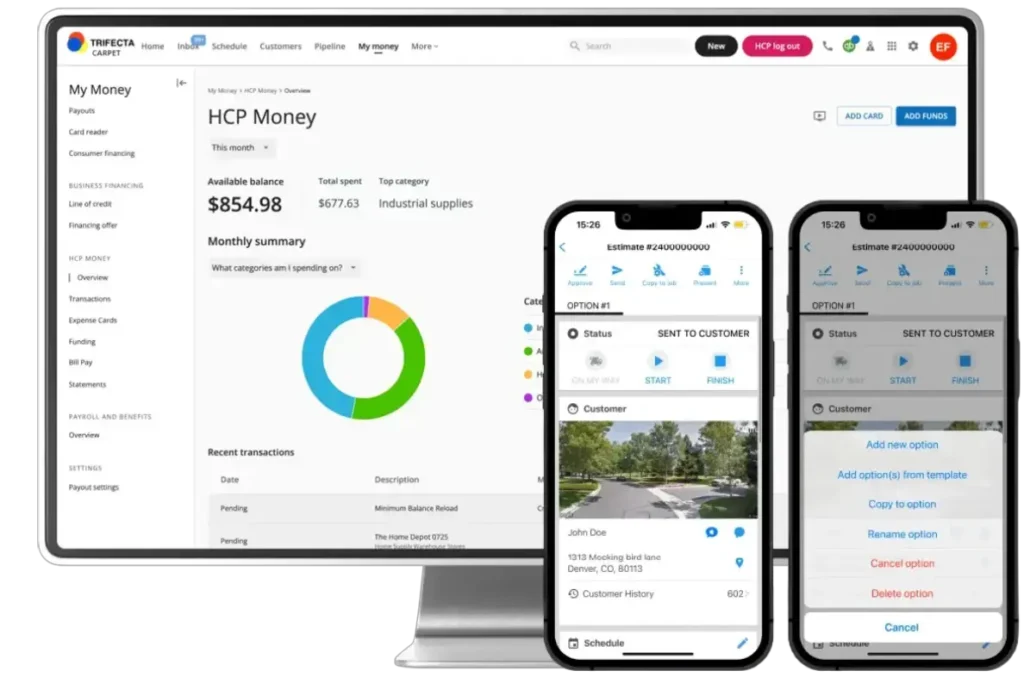
Software helps you stay organized and avoid costly mistakes as your business grows. While you can start with manual systems, admin work quickly becomes harder to manage as jobs, customers, and invoices stack up.
These tools are typically monthly expenses, but they can save time and reduce lost revenue.
- Scheduling tools: Keep one-time and recurring jobs organized
- Estimating tools: Create and send quotes quickly
- Invoicing and payments: Bill customers and collect payments faster (including processing fees)
- Customer management (CRM): Store contact details, job history, and preferences
- Communication tools: Phone, email, or messaging systems to stay in touch with customers
Housecall Pro does all of this in one place—scheduling, estimating, invoicing, payments, and customer communication—so you can stay organized without juggling multiple apps. Learn more about our cleaning business software or sign up for a free 14-day trial to try it out firsthand.
Get In Touch: 858-842-5746
Let us earn your trust
On average, Pros increase monthly revenue generated through Housecall Pro by more than 35% after their first year.
See plan options and feature breakdown on our pricing page.
How much should you set aside for unexpected costs?
Unexpected costs are part of running a cleaning business—they’re just harder to plan for. Equipment breaks, jobs take longer than expected, or a client needs something outside your usual scope.
You’ve already built an emergency cushion into your startup estimate. This is where it comes into play—helping you handle issues without disrupting your cash flow or day-to-day operations.
Common unexpected costs include:
- Equipment replacement: Vacuums, sprayers, or specialty tools can fail midweek
- Client-specific supplies: Some jobs require products you don’t normally carry
- Extra labor time: First-time or deep cleanings often take longer than expected
- Vehicle repairs: Car issues can delay jobs and impact income
- Insurance or compliance changes: Larger clients may require higher coverage limits
- Slow payments: Some clients—especially commercial—may take longer to pay
Planning for these scenarios upfront helps you stay flexible and avoid scrambling when something goes wrong.
More resources
- How to start a cleaning business
- How to write a cleaning business plan
- How to start a house cleaning business
- How to start a commercial cleaning business
- How to start a window cleaning business
- How to start an office cleaning business
- How to start a janitorial business
- How to start a carpet cleaning business
- How to start a pool cleaning business
Cleaning business startup costs FAQ
Is residential or commercial cleaning cheaper to start?
Residential cleaning is usually cheaper to start because it needs simpler equipment and lower upfront investment. Commercial cleaning often requires more industrial-grade gear and a larger initial budget. A residential cleaning business can often launch for under $1,000; a commercial operation typically requires $2,000–$5,000 or more.
What are the main startup costs for a cleaning business?
The main startup costs are equipment, initial supplies, legal setup, insurance, marketing, transportation, training, and software. After launch, recurring costs like wages, fuel, and marketing become especially import
How much should a cleaning business budget for supplies?
Monthly cleaning supplies for a small business often range from $50 to $300, depending on the size of the business and the types of jobs it handles.
Do you need a business license to start a cleaning business?
In most cases, yes. Most cities and counties require a general business license to operate legally, typically costing $50–$100/year. Some states also require a sales tax permit if you charge for supplies. Requirements vary, so check your city, county, and state separately.
Should you buy all your cleaning equipment upfront?
Usually not. It’s smarter to prioritize core tools and add specialty equipment later as demand grows. A practical starting point: buy the five tools you’ll use on every job (vacuum, mop, cloths, caddy, chemicals) and rent or borrow specialty equipment like carpet extractors until you’ve booked at least 5–10 jobs that require them.
Do I need an LLC to start a cleaning business?
No, but it’s worth considering. A sole proprietorship is the simplest and cheapest structure to start, but an LLC separates your personal assets from business liability. LLC formation costs $50–$500 depending on the state. Many cleaning business owners start as sole proprietors and form an LLC once they have consistent clients.