Want to win more jobs with less effort?
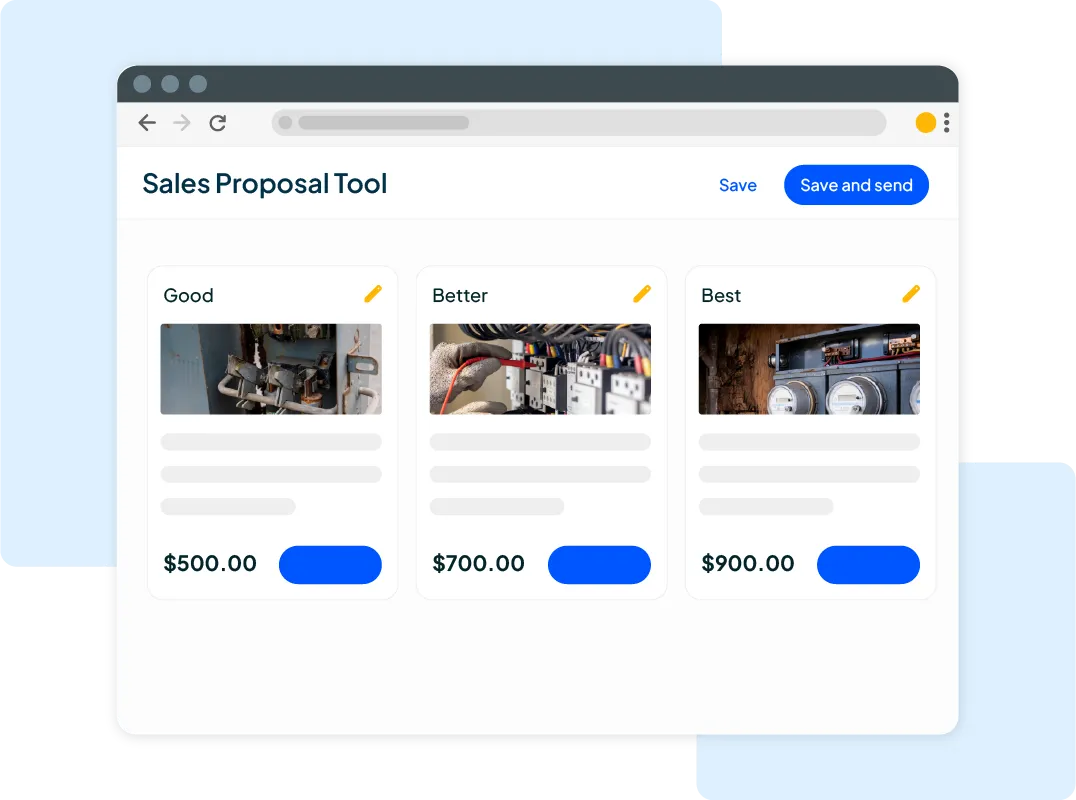
Grow your business and send quick quotes with our home service software.

Want to see your potential revenue?
See what businesses like yours earn with Housecall Pro in 1 - 2 minutes.
The right tools and equipment can make all the difference in your cleaning business—affecting how fast you clean, how professional your results look, and how smoothly each job goes.
This guide breaks down a complete supply list for starting and running your cleaning business, covering the professional tools, equipment, and products you need to deliver consistent work. You’ll get a simple starter checklist, tips on what to buy first, what to save for later, and how to manage supply costs as your business grows.
Quick answer: What supplies do you need to start a cleaning business?
Most cleaning businesses should start with a core kit built around hand tools, multipurpose chemicals, basic equipment, safety supplies, and daily prep items. That usually includes microfiber cloths, a mop system, scrub brushes, a vacuum, labeled spray bottles, disinfectant, glass cleaner, gloves, trash bags, and a cleaning caddy.
Cleaning business supplies include the tools, chemicals, equipment, PPE, and prep items a cleaner uses to complete jobs safely, consistently, and professionally. From there, the right supply list depends on your service mix. Residential, office, commercial, janitorial, medical, industrial, and move-out jobs all require slightly different kits.
→ Want more insights and expert tips? Check out our comprehensive guide to starting a cleaning business.
Key takeaways
Here are some quick tips to pick the right tools for your cleaning business:
Start with core tools first: Basic hand tools cover most early jobs.
Match supplies to job type: Commercial jobs need heavier-duty equipment.
Don’t overbuy upfront: Add specialty tools as demand grows.
Track supply costs early: Supplies directly affect your margins.
Table of contents
Essential cleaning tools for every cleaning business
Every cleaning business needs a core set of hand tools that work across homes and commercial spaces. These items handle daily tasks and form the foundation of your cleaning kit:
- Microfiber cloths (color-coded by area to reduce cross-contamination)
- Mop and bucket system
- Broom and dustpan
- Scrub brushes and sponges
- Extension dusters
- Squeegees for glass and mirrors
- Spray bottles with clear labels
- Toilet bowl brush
- Grout brush
- Handheld scraper
- Feather duster
- Detail cleaning brushes
- Melamine sponges (magic-eraser style)
Standardize your kit and make it easy to restock so your team can work faster, deliver consistent results, and avoid slowdowns between jobs. “Neglecting systems creates stress. Put processes in place early,” says April Prothero, founder of the Arizon-based nontoxic cleaning company Going GreenHouse.
Cleaning equipment you can usually buy later
Most new cleaning businesses can wait on floor buffers, carpet extractors, industrial vacuums, large janitorial carts, and specialty chemicals until they have jobs that require them. Renting or buying used equipment can also make sense for occasional deep cleans or one-off commercial work.
This helps you avoid spending money on equipment that sits unused. Start with what your first customers actually need, then upgrade once you know which services you’ll sell regularly.
Professional cleaning chemicals and solutions
Cleaning products do the heavy lifting, but most cleaning businesses don’t need dozens of specialty chemicals to start. A focused product list is easier to train on, easier to restock, and less likely to create confusion on the job.
- All-purpose cleaner: Use this for everyday surface cleaning.
- Disinfectant and sanitizer: Use this for bathrooms, kitchens, and high-touch areas.
- Glass and window cleaner: Use this for mirrors, windows, and glass partitions.
- Bathroom cleaner: Use this for tubs, tile, sinks, toilets, and fixtures.
- Degreaser for kitchens: Use this for greasy buildup on counters, appliances, and break room surfaces.
- Floor cleaner matched to surface type: Choose products based on tile, vinyl, laminate, hardwood, or other flooring.
- Carpet spot remover: Use this for small stains and spot treatments.
- Stainless steel cleaner: Use this for appliances, sinks, and commercial kitchen surfaces.
- Wood-safe cleaner: Use this on approved wood surfaces only.
- Odor neutralizer: Use this when jobs involve pets, trash areas, smoke, or stale odors.
- Descaling solution: Use this for hard-water buildup around fixtures and appliances.
- Disinfectant wipes: Use these for quick touchpoint cleaning when appropriate.
More products don’t always mean better results. Too many chemicals can make training harder, increase storage costs, and raise the risk of using the wrong product on stone, wood, stainless steel, or glass.
Cleaning equipment by job type
Use these lists as starting points by service type. Many businesses will combine items across categories based on building size, traffic, and contract requirements.
The type of cleaning work you do directly affects the equipment you need. Residential jobs typically require portable tools and flexible supplies, while office, commercial, janitorial, healthcare, and industrial jobs may require more durable equipment, stricter sanitation supplies, and better storage systems.
House cleaning supplies
House cleaning focuses on efficiency, surface care, and working in smaller spaces. Equipment should be lightweight, easy to transport, and flexible enough to move from room to room.
- Vacuum cleaner: Choose corded or cordless based on job size and battery needs.
- Handheld vacuum: Use this for furniture, stairs, and detail areas.
- Vacuum attachment set: Use attachments for edges, upholstery, and tight spaces.
- Mop system: Choose a system that works for the flooring you clean most often.
- Mop replacement heads: Keep backups so crews are not reusing dirty mop heads.
- Bucket and wringer: Use this when a traditional mop setup is more practical.
- Step ladder: Keep one available for high shelves, ceiling fans, and fixtures.
Office cleaning supplies
Office cleaning usually involves recurring schedules, shared spaces, and high-touch areas. Equipment should support consistent results across multiple rooms and floors.
- Backpack or commercial vacuum: Use this to clean larger spaces more efficiently.
- Wet/dry vacuum: Keep this available for spills or heavier cleanup.
- Mop and bucket system: Use this for hard floors, break rooms, and restrooms.
- Floor fan for faster drying: Use this when wet floors need to dry quickly.
- Extension cords and power strips: Keep these available for larger layouts.
- Step ladder: Use this for high dusting and fixture cleaning.
Commercial cleaning supplies
Commercial spaces see heavier foot traffic and larger square footage than residential or office spaces. Equipment needs to be durable, reliable, and built for repeat use.
- Industrial vacuum: Use this for larger or higher-traffic spaces.
- Floor scrubber or buffer: Use this for hard-floor maintenance when required.
- Wet/dry vacuum: Keep this available for spills, debris, and heavier cleanup.
- Carpet cleaner or extractor: Use this for carpets, rugs, and upholstery work.
- Janitorial cart: Use this to move supplies efficiently through larger spaces.
- Floor fan for drying: Use this to speed up drying after floor cleaning.
Janitorial cleaning supplies
Janitorial cleaning typically supports schools, offices, and large facilities with consistent foot traffic. Supplies focus on speed, efficiency, and keeping crews mobile.
- Commercial or backpack vacuum: Use this for routine floor care.
- Floor scrubber or buffer: Use this for larger hard-floor areas.
- Wet/dry vacuum: Keep this available for spills and messes.
- Janitorial cart with storage: Use this to organize supplies by area or task.
- Mop system with multiple heads: Keep clean replacements ready for different areas.
- Bulk disinfectants and cleaners: Use these when recurring contracts require steady product volume.
Janitorial setups often overlap with commercial cleaning but prioritize speed, coverage, and centralized storage of supplies.
Medical and healthcare cleaning supplies
Medical and healthcare environments require stricter sanitation standards, especially around touchpoints, PPE, product labeling, and cross-contamination prevention. For healthcare-related jobs, align your supplies with the facility’s requirements and current CDC or OSHA guidance. CDC guidance for healthcare environmental cleaning includes detailed procedures by setting and surface type, while OSHA’s Safety Data Sheet guidance explains how chemical hazards, protective measures, and handling precautions should be documented for workers.
Always confirm product requirements with the facility before accepting healthcare, dental, or clinic cleaning work.
- Hospital-grade disinfectants: Use products approved for the facility’s cleaning requirements.
- Color-coded microfiber cloths and mop heads: Separate tools by room type or task.
- Disposable gloves and masks: Keep PPE stocked for workers and job-specific requirements.
- Touchpoint disinfectant wipes: Use these for high-contact surfaces when appropriate.
- Closed-lid trash containers: Use these to reduce exposure and contain waste.
- Clearly labeled chemical containers: Make products easier and safer to identify.
These supplies are typically used in clinics, dental offices, outpatient facilities, and medical offices.
Industrial cleaning supplies
Industrial environments often involve tougher messes, larger floor areas, and stricter safety requirements. Your supply list will depend on the facility, industry, and type of work.
- Heavy-duty industrial vacuum: Use this for larger debris and industrial spaces.
- Floor machines for large surface areas: Use these for hard-floor maintenance.
- High-capacity wet/dry vacuum: Keep this available for spills and heavy cleanup.
- Industrial-rated extension cords: Use cords rated for the job environment.
- Safety signage and barriers: Mark wet floors, restricted areas, and active work zones.
- Air movers or floor fans: Use these for drying and ventilation support.
Move-out and deep cleaning supplies
Move-out and deep cleans are typically one-time, higher-intensity jobs. You’ll want supplies that can handle tougher buildup and longer hours on site.
- Carpet cleaner or extractor: Use this for carpets and upholstery when included in the scope.
- Heavy-duty scrub brushes: Use these for built-up grime and detailed cleaning.
- Descaling solution: Use this for hard-water buildup in bathrooms and kitchens.
- Oven and appliance cleaners: Use these for kitchens, rentals, and move-out work.
- Handheld scraper: Use carefully on approved surfaces only.
- Extra microfiber cloths and sponges: Bring more than you would for a standard recurring visit.
Because these jobs often involve heavier buildup, appliance cleaning, and more room-by-room detail work, price them separately from standard recurring cleanings.
Eco-friendly cleaning supplies (optional but in demand)
You don’t need eco-friendly supplies to start a cleaning business, but they can help stand out with customers who ask about odors, kids, pets, low-VOC products, or workplace wellness policies. The EPA’s Safer Choice program helps consumers and businesses find products that perform while using ingredients that are safer for human health and the environment.
If you charge more for green cleaning, explain exactly what products and standards are included so customers know what they’re paying for.
- Nontoxic all-purpose cleaners: Use these for general cleaning when customers request safer product options.
- Plant-based disinfectants: Use these only when they meet the job’s sanitation needs.
- Low-VOC surface cleaners: Use these for customers who are sensitive to odors or indoor air quality concerns.
- Refillable spray bottles: Use these to reduce single-use packaging.
- Reusable microfiber systems: Use these to reduce disposable wipe and paper towel use.
You can typically charge 10%–20% more than standard cleaning for green cleaning (Buyerzone; Pipehire). However, be specific about which products and certifications are included—vague green claims reduce trust and are harder to justify.
Safety supplies and personal protective equipment (PPE)
Protecting yourself and your team is just as important as getting great results. Safety supplies help reduce injuries, chemical exposure, and liability risks on every job.
- Disposable or reusable gloves: Use these for routine cleaning and sanitation work.
- Face masks or respirators: Use these when dust, odors, or stronger chemicals are involved.
- Safety goggles: Use these when handling splash-prone products or stronger chemicals.
- Non-slip footwear: Use these to reduce slips on wet floors.
- First-aid kit: Keep one in each vehicle, cart, or supply area.
- Aprons or coveralls: Use these for messier jobs or chemical-heavy work.
- Chemical-resistant gloves: Use these when standard gloves are not enough.
- Spill containment kit: Keep this available for leaks or chemical spills.
- Safety Data Sheet binder: Keep SDS information available for hazardous products your team uses. OSHA says SDSs include information about chemical properties, hazards, protective measures, and safety precautions for handling, storing, and transporting chemicals.
How to manage supply costs as your business grows
Supplies are a recurring expense, and unmanaged costs can slowly eat into your margins as you take on more jobs. The goal isn’t to buy cheaper products—it’s to control how supplies are used, replaced, and priced into each service.
For example, if a recurring job uses $12 in supplies and takes two labor hours, that cost should be built into the job price—not treated as an afterthought.
To keep supply costs predictable as you scale:
- Standardize supply kits by job type: Create a set list of equipment and products for house cleaning, office cleaning, and commercial jobs so crews use the same setup every time.
- Track usage, not just purchases: Keep an eye on how fast items like chemicals, gloves, and wipes are used per job, not just what shows up on your monthly receipts.
- Set reorder points for consumables: Restock before you run out, but avoid bulk-buying items that expire or go unused.
- Review supply costs alongside labor: Together, supplies and labor determine whether a job is profitable, especially on recurring contracts.
As a general benchmark, supply costs for residential cleaning businesses typically run 2%–6% of revenue; specialty and deep cleaning services run closer to 5%–10% due to higher-cost chemicals and equipment. If your costs are consistently above those ranges, review whether jobs are priced to cover actual usage or whether crews are over-using consumables per visit.
Where to buy cleaning supplies
For consumables like chemicals, gloves, and trash bags, janitorial supply distributors, such as Grainger, Uline, or local janitorial wholesalers, typically offer better per-unit pricing than retail once you’re buying in volume. For equipment, starting with a big-box retailer like Home Depot or Costco is fine early on; move to commercial suppliers once you know which tools you’ll use consistently across most jobs.
How Housecall Pro helps cleaning businesses stay organized
Running a cleaning business means juggling schedules, pricing, customer details, and job costs—all while maintaining consistent service quality. When these things all live in different places, things fall through the cracks: a recurring booking gets missed, a supply cost doesn’t make it into the invoice, a follow-up never goes out.
Housecall Pro puts those pieces in one place so cleaning businesses can stay organized without adding admin work as they grow. With Housecall Pro’s cleaning software, you can:
- Schedule one-time and recurring cleaning jobs: Manage residential cleanings, recurring service plans, and multi-crew schedules from one calendar.
- Create consistent estimates and invoices: Standardize pricing, scopes of work, and approvals so estimates and invoices stay consistent across every job.
- Track job costs and profitability: See how labor, supplies, and equipment affect margins so you can price cleaning services with confidence.
- Store customer details and service history: Keep notes, access instructions, photos, and past job records organized for faster repeat bookings.
- Accept payments faster and reduce admin work: Take card and ACH payments, shorten billing cycles, and spend less time on follow-ups.
As contracts, crews, and schedules get more complicated, keeping everything in one system helps prevent costly gaps. Start your free trial of Housecall Pro today and see how much easier it is to stay organized.
Get In Touch: 858-842-5746
Let us earn your trust
On average, Pros increase monthly revenue generated through Housecall Pro by more than 35% after their first year.
See plan options and feature breakdown on our pricing page.
FAQ
-
What supplies do I need to start a cleaning business?
-
Most cleaning businesses start with microfiber cloths, a mop system, an all-purpose cleaner, disinfectant, glass cleaner, gloves, a vacuum, and a cleaning caddy. For residential jobs, that starter kit typically costs $200–$500. Add a commercial vacuum or floor scrubber for office or commercial work and startup costs can reach $1,000–$2,500.
-
How much does it cost to buy cleaning business supplies?
-
A basic residential kit typically runs $200–$500 in supplies and equipment. Commercial or janitorial work can require $1,000–$3,000 or more upfront, mainly due to industrial vacuums, floor scrubbers, and janitorial carts. Renting heavy equipment for occasional deep cleans can reduce startup costs significantly.
-
Do residential and commercial cleaners use different supplies?
-
Yes. Commercial cleaning typically requires industrial equipment and bulk supplies, while residential cleaning uses lighter tools.
-
Should I buy eco-friendly cleaning supplies?
-
Eco-friendly supplies aren’t required, but they’re worth considering if your market includes customers with pets, young children, or chemical sensitivities. If you do offer green cleaning, be specific about which products and certifications are included—vague claims are harder to justify and easier for competitors to undercut.
-
How should I store and transport cleaning supplies for a cleaning business?
-
Use a dedicated caddy or tote for each crew member, with labeled spray bottles organized by surface type. For vehicles, a plastic storage bin works for most residential kits—keep chemicals stored upright and separated from PPE to prevent contamination. As you add crew members, standardize each kit so every cleaner carries the same setup. It simplifies restocking, training, and quality control without adding management overhead.