Want to win more jobs with less effort?
Grow your business and send quick quotes with our home service software.

Want to see your potential revenue?
See what businesses like yours earn with Housecall Pro in 1 - 2 minutes.
Window cleaning is a simple, low-cost trade with reliable demand in most markets, especially in larger cities or suburbs with plenty of glass storefronts and multi‑story homes. If you want control over your schedule, like hands-on work, and don’t want to invest in heavy machinery or complex inventory, starting your own window cleaning business could be a great way to break into entrepreneurship.
You can get started with just basic equipment and a few hundred dollars. Because the job is active and visible, homeowners and business owners can quickly see your work—making it easier to earn repeat bookings and referrals.
This guide will walk you through everything you need to launch your window washing company, from choosing the right business structure and getting licensed to buying equipment, setting prices, and landing your first clients.
Key takeaways
Here’s a look at what goes into starting a window cleaning business:
Low startup costs: You can start with basic tools and minimal overhead, making it easy to launch on a small budget.
Recurring revenue:: Repeat cleanings help build predictable income and fill your schedule throughout the year.
Straightforward requirements:: Most areas only need a basic business license and insurance to get started legally.
Room to grow: Add new services, expand your service area, or hire help as your business and customer base increase.
Window cleaning business startup checklist
- Step 1: Build your window cleaning expertise
- Step 2: Create a window cleaning business plan
- Step 3: Create a budget for your window washing business
- Step 4: Register and license your business
- Step 5: Get window cleaning insurance and bonding
- Step 6: Buy window cleaning tools and equipment
- Step 7: Price your cleaning services
- Step 8: Market your business
- Step 9: Grow your window cleaning business
- Starting a Window Cleaning Business FAQ
Step 1: Build your window cleaning expertise
Unlike industries like HVAC or electrical, starting a window cleaning business doesn’t require a lengthy apprenticeship or formal trade school. You don’t necessarily need any formal qualifications or degrees, but on-the-job training and work experience are very helpful.
Grow your skills and learn safe techniques
Start by learning the fundamentals: streak-free cleaning, ladder setup, water-fed pole use, and proper handling of tracks, screens, and specialty glass.
Practicing on your own windows or helping friends and family is a great way to build confidence. You can also learn through workshops, professional tutorials, or by working alongside an experienced pro to see efficient workflows in real conditions.
If you want to go further, invest in optional training through organizations like the
International Window Cleaning Association (IWCA), which teaches safety, tools, and best practices. Training from the Occupational Safety and Health Administration (OSHA) can also be helpful if you’ll use ladders or work on commercial buildings. High-rise work typically requires additional rope-access or suspension training that may be regulated at the city level.
Know your local licensing and safety requirements
Licensing and permitting requirements vary by state and municipality, but many window cleaners simply need a general business license and insurance to get started. Some cities add extra rules for commercial or multi‑story work, like permits or documentation for rope descent systems, anchorage points, or compliance with OSHA fall protection standards.
Check with your city or county business office and state small business resources to confirm what’s required.
Step 2: Create a window cleaning business plan
A solid business plan gives your window cleaning business direction from day one. It helps you define who you’ll serve, what services you’ll offer, how much you’ll charge, and what it’ll take to stay profitable as you grow.
Outline your mission, target market, service list, pricing approach, marketing plan, and basic operations. Even a one-page plan is helpful. You can refine the details over time, but having everything in one place keeps you from guessing as you go.
We’ll cover how to get started below. Download our small business plan template to get set up quickly.
Research your market and competitors
Start by looking at nearby window cleaners on Google Maps, Yelp, and social media to see which neighborhoods they’re targeting, how they position themselves, and where they may be falling short. Pay attention to reviews—customers often mention issues like slow response times, inconsistent quality, or services they wish were offered.
Use this research to find gaps you can fill. For example, you might notice that few companies provide same-week appointments, screen cleaning, or hard-water stain removal. Or, you might see an opportunity in underserved commercial segments, like storefronts, medical offices, or property-managed buildings.
Use your findings to figure out who your ideal customers are and how you’ll reach them.
Create your window cleaning services list
Once you understand local demand, outline the services you’ll offer. Start with core window cleaning services, like interior and exterior cleaning, tracks and sills, and screen washing.
Then, as you get established and want to raise average ticket size, consider add‑ons like:
- Hard water stain removal
- Gutter cleaning
- Pressure washing
- Solar panel cleaning
A clear service list also helps you narrow down what equipment you need now and what you can wait to buy later.
Set smart goals for your first year
Your business plan should include short-term goals for customer growth, revenue, and workflow. Think in terms of the next 6–12 months. To identify those goals, ask yourself:
- How many recurring clients do I want to book?
- How many jobs do I want to complete each month?
- When do I want to hire my first employee?
- What problem am I solving?
- What does success look like?
- How much funding do I require initially and on an ongoing basis?
- How will I manage day-to-day tasks and assignments?
Set simple, realistic milestones and revisit them regularly. As you learn how long jobs take and which services are most profitable, you can tighten your pricing and tweak your plan for the next stage of growth.
Step 3: Create a budget for your window washing business
Window cleaning may not require a lot of money upfront, but you’ll still need some cash for tools, insurance, marketing, and basic operating expenses.
How much does it cost to start a window cleaning business?
Startup costs depend on the type of jobs you plan to take on, the equipment you choose, and how professional you want everything to look on day one. Here’s a general breakdown to use for planning:
| Category | Estimated cost | Includes |
| Equipment and supplies | $500–$1,000 | Squeegees, scrubbers, poles, buckets, and cleaning solution |
| Ladders and safety gear | $200–$500 | Multi-position ladder and gear |
| Uniforms and branding | $200–$500 | Professional uniform and brand design |
| Marketing and website | $500–$1,000 | Business cards, flyers, basic website |
| Business insurance and permits | $50–$500 | Costs vary by state |
| Insurance | $500–$1,000 per year | Liability coverage; exact cost depends on provider and limits |
Your exact numbers may land above or below the ranges above, but mapping them out in your business plan will help you build a realistic budget for your first year. If you focus on basic residential work at first, many owners can get started with a core kit and essentials. As you add commercial routes, vehicles, and higher‑end equipment, your investment will naturally increase.
Funding options
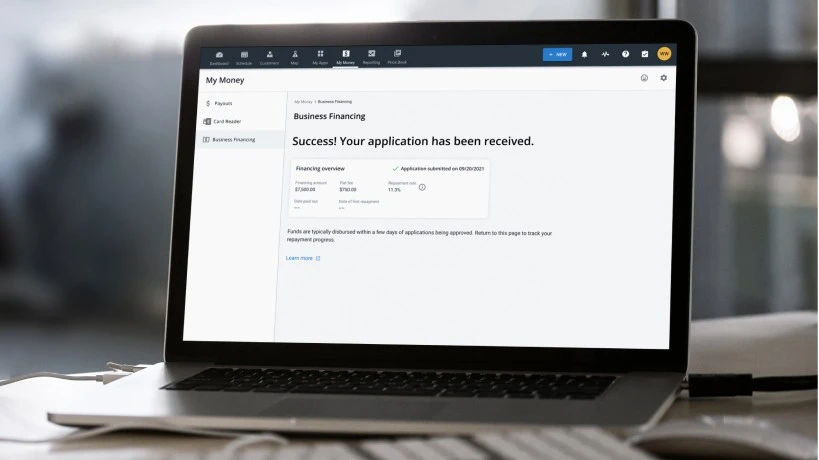
Some owners self‑fund through savings, while others use small business loans, credit lines, or help from friends and family.
If you’re starting lean, personal savings or a modest credit line may cover the basics. For bigger purchases—like upgrading your vehicle, adding water-fed pole equipment, or investing more heavily in marketing—external financing can give you some breathing room.
Here are a few options to consider:
- Small Business Administration (SBA) microloans: These are designed for newer businesses with relatively low capital needs; they have low interest rates and flexible repayment terms.
- Business credit cards or lines of credit: These give you access to a set amount of funds you can draw from as needed; you only pay interest on what you actually use. They’re good for managing cash-flow gaps or seasonal slowdowns.
- Local grants or community development programs: Some cities offer incentives and programs for local small service businesses.
- Friends and family loans: Helpful for small investments when formal financing isn’t accessible; be sure to formalize with clear terms.
Step 4: Register and license your business
Before you start booking jobs, make sure your business is legally set up and recognized in your state and city. The process takes time and a bit of paperwork, but it protects your personal finances and establishes your company as a legitimate service provider. Requirements vary by state and municipality, so check your local guidelines early to avoid delays once customers start calling.
Choose a business structure
Your business structure affects how you’re taxed, how much paperwork you handle, and whether your personal assets are protected. Here are the most common options:
- Sole proprietorship: A popular starting point for solo window cleaners because it’s quick and inexpensive to set up. It’s simple to run, but it doesn’t offer personal liability protection.
- Limited Liability Company (LLC): A common choice for service business owners who want personal liability protection without a lot of complexity. An LLC is relatively easy to set up and manage compared to a corporation.
- Corporation: Less common for small window cleaning businesses, but useful if you plan to scale quickly, bring on investors, or separate ownership from day-to-day operations. Corporations offer strong liability protection but come with more paperwork and ongoing compliance requirements.
- Partnership: A straightforward option if you’re starting the business with one or more partners. Responsibilities, profits, and liabilities are shared, so it’s important to have a clear partnership agreement in place. Personal assets may still be at risk depending on the structure.
If you’re unsure which option best fits your long‑term goals, talk with a tax professional who understands small service businesses. You can also check out our guide to paying yourself as a business owner to understand how each structure affects payroll and taxes.
Pro tip: Regardless of the structure you choose, set up a separate business bank account and keep records of all expenses. This makes tax filing easier and helps you track profitability as you grow.
Apply for a business license and tax registration
Once you’ve picked a structure, complete the registrations required to operate legally. This typically involves applying for an Employer Identification Number (EIN) from the IRS. You can apply online for free.
Next, apply for any city or county business licenses your area requires. These often run between $50 and $500. Some jurisdictions also ask for proof of insurance or zoning approval, especially if you’ll run the business from home or store equipment on-site.
Because window cleaning sometimes involves ladders, water-fed poles, and work near public walkways, a few cities have additional safety or permit requirements for commercial or multi-story buildings. These typically relate to fall protection, rope descent systems, or OSHA training. Checking with your city clerk’s office or state contractor board ensures you’re covered from the start.
Step 5: Get window cleaning insurance and bonding
Insurance protects your business when something goes wrong, whether that’s a customer slipping on a wet floor, a ladder damaging siding, or an employee getting hurt on the job. Without proper coverage, a single incident could wipe out your business. Proof of coverage also gives customers confidence in hiring you and may be required for commercial or property management contracts.
Common policies for window cleaners include:
- General liability insurance: Covers accidental property damage or third‑party injuries; usually the primary requirement for commercial work.
- Workers’ compensation insurance: Required in most states once you have employees; covers medical expenses and lost wages if someone is injured while working.
- Commercial auto insurance: Covers vehicles used for work and the equipment you keep in them, since personal auto policies generally exclude business use.
- Tools and equipment coverage: Helps replace ladders, squeegees, water‑fed poles, and other gear if they’re stolen or damaged.
- Bonding: Some property managers and government contracts require janitorial or service bonds, which help assure clients that work will be completed as agreed.
Pro tip: Compare quotes from multiple providers before you buy. Look beyond the monthly premium and pay close attention to coverage limits, exclusions, and deductibles so you know what’s actually protected.
Step 6: Buy window cleaning tools and equipment
You don’t need much to get started in window cleaning. Many owners can launch for around $500–$1,000 with a basic starter kit, then upgrade tools and equipment as their schedule fills.
Essential tools to start with
In the early days, focus on simple, reliable window cleaning tools that will help you deliver quality work, including:
- Squeegees and scrubbers
- Buckets, towels, and cleaning solution
- Extension poles
- Ladders for multi-story homes (used with proper ladder safety)
Tools to grow into
As you book more work or expand into bigger homes or commercial properties, these upgrades will help you work faster and take on more types of jobs:
- Water-fed poles and pure-water systems for faster exterior work
- Screen-cleaning tools for add-on services
- Heavy-duty ladders and fall-protection gear for multi-story commercial buildings
- High-rise equipment, like harnesses or rope-access systems, for advanced work
Get In Touch: 858-842-5746
Start your 2-week free trial now.
Boost efficiency, productivity, and profitability with window cleaning software.
On average, Pros increase monthly revenue generated through Housecall Pro by 35% after their first year.
See plan options and feature breakdown on our pricing page.
Step 7: Price your cleaning services
Your pricing should cover your labor, materials, overhead, and a healthy profit margin while staying on par with local competitors. Don’t just guess on the numbers; use clear cost breakdowns and local market research to set prices that are competitive and profitable.
→ Check out our full guide to pricing window cleaning jobs for competitive benchmarks, example walkthroughs, and other tips.
Choose a pricing model
Most window cleaners use a mix of pricing structures, depending on the job type:
- Per‑pane or per‑window pricing: Common for residential work. You might charge a set price per window (inside and outside), with higher rates for large panes or French doors. This keeps estimates straightforward and transparent.
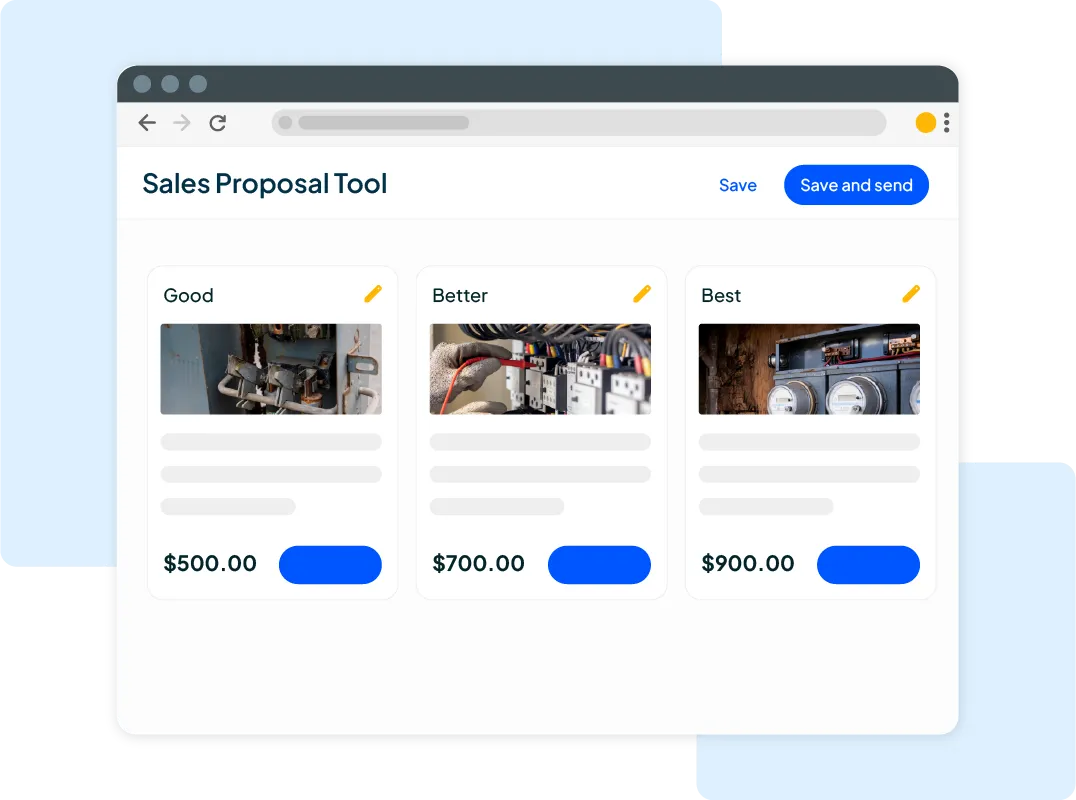
- Flat‑rate packages: “Good, better, best” packages can increase your average ticket size by bundling services like interior/exterior glass, screens, and tracks.
- Hourly pricing: Useful for homes and buildings with unusual layouts, very dirty windows, or jobs with a lot of unknowns. Make sure to build travel, labor, and equipment time into your hourly rate.
- Square‑foot pricing: Helpful for commercial spaces and storefronts where window counts don’t match actual workload, especially with large glass surfaces or multi‑story work.
Set your rates
Once you pick a pricing strategy, follow these steps to set your rates:
- Calculate your base costs: Start with the true cost of completing a job, including labor, payroll taxes, supplies, fuel, and equipment. This gives you a minimum price you must exceed to stay profitable.
- Add your profit margin: Build in a margin that reflects your skill, travel time, and business goals. You might aim for a healthy 20%–40% margin, then adjust up depending on the service.
- Research competitor pricing: Check what other local window cleaners charge to stay competitive without underpricing. Use your research to position your business confidently in the market.
- Adjust based on service type: Charge more for jobs with upper-floor access, skylights, French panes, storm windows, and post-construction cleaning. Jobs that take longer or require more effort should always be priced accordingly.
Setting pricing isn’t a one-time job. Revisit your rates regularly and adjust based on market changes and as your skills improve.
Pro tip: Housecall Pro’s Job Costing tools can help you calculate rates accurately, ensuring your prices reflect your overhead, time, and desired profit.
Step 8: Market your business
Marketing helps customers find and remember you. Window cleaning is often a repeat service, so every job is a chance to turn a first‑time customer into a monthly, quarterly, or seasonal client.
We’ll cover the basics below. Check out our in-depth guide to marketing your cleaning business for more ideas and tips.
Design your brand
Your brand helps customers recognize you. Aim for a clear, simple identity that reflects how you work and who you serve.
Check domain availability and social media handles so everything matches your business name. Create a straightforward logo and use consistent colors, fonts, and tone across your website, uniforms, vehicle signage, and printed materials. Consistency makes your business look organized and trustworthy, which matters when people are inviting you onto their property.
More resources:
- 750+ Cleaning Company Names (and How to Pick One)
- 70+ Cleaning Company Slogans (and How to Write the Perfect One)
Build your online presence
A professional cleaning website is the foundation of your online presence. Include your services, service areas, basic pricing structure and a clear call‑to‑action so visitors know how to request a quote or book an appointment. Make sure your website loads quickly and is easy to navigate; customers will leave if they can’t find what they’re looking for.
Next, create or claim your Google Business Profile so you show up in local search results when people search “window cleaning near me.” Add accurate hours, photos, service descriptions, and links to your site. Encourage happy customers to leave reviews; this plays a major role in which companies get contacted first for, and search engines are more likely to rank you if you have recent feedback.
Pro tip: Use Housecall Pro’s automated review management tools to help you get more 5-star ratings without extra effort.
Use offline marketing strategies
Digital marketing is important, but don’t neglect traditional outreach—it still works, especially in local service areas where homeowners want familiar, reliable providers. Your offline marketing strategy might include:
- Distributing flyers and postcards to advertise in your local area
- Placing ads in local newspapers and on community bulletin boards
- Networking with local businesses to inquire about referral partnerships
- Building relationships with real estate agents, property managers, and small business owners (a great way to generate recurring commercial accounts)
Each of these tactics can help get your business in front of customers who aren’t actively searching online.
Step 9: Grow your window cleaning business
Once your foundation is in place, focus on growing at a manageable pace. Most window cleaning businesses grow by streamlining their systems, adding high-value services, and slowly expanding their service area.
Start by tracking your numbers:
- Which services are most profitable?
- Which routes are most efficient?
- Which clients generate the most recurring revenue?
Tools like Job Costing and Reporting in Housecall Pro make it easier to see where you’re earning strong margins and where you might be underpriced.
As you build a steady base of recurring clients, consider:
- Offering higher‑value services like hard‑water stain removal, gutter cleaning, pressure washing, or solar panel cleaning to boost your average ticket.
- Adding more storefronts or small commercial routes for predictable weekly or monthly revenue.
- Expanding into nearby neighborhoods or towns where you’re already getting referrals or inquiries.
- Hiring a part-time tech or subcontractor to help you complete more work and take on commercial accounts that require extra hands.
Revisit your business plan and goals regularly so you know you’re growing with purpose instead of just reacting to each new opportunity.
How Housecall Pro’s window cleaning software can help
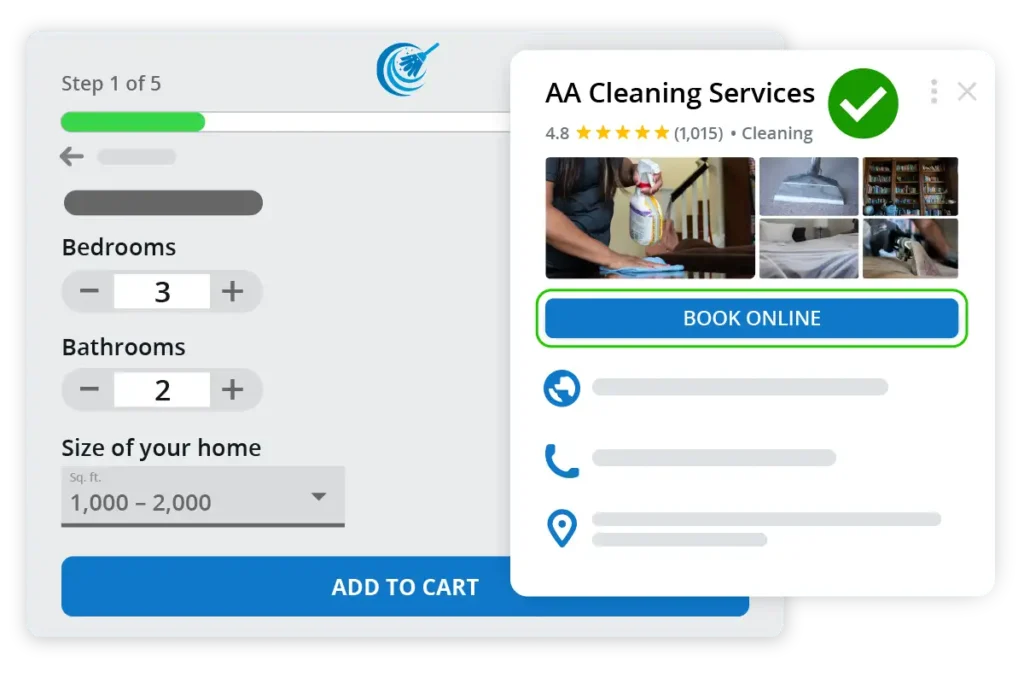
Running your own window cleaning business means keeping track of jobs, staying on top of customer communication, and making sure you get paid on time.
Housecall Pro’s window cleaning software helps you manage those day-to-day tasks in one place. With it, you can:
- Schedule and manage clients: Keep your calendar organized, book one-time or recurring cleanings, and send customers quick confirmations or reminders.
- Price and invoice jobs: Build estimates, create invoices, and take payments in the field or online—all doable from a convenient app.
- Market and follow up with clients: Request reviews automatically and send simple email or text updates to stay connected with past customers.
- Stay on track with operational tools: Save photos, job notes, and checklists so you have the details you need before, during, and after a job.
- Run daily operations efficiently: Assign jobs to team members, map efficient routes, and keep everyone’s schedule in sync.
Try Housecall Pro free for 14 days today to set up your window cleaning business for success from day one.
Starting a Window Cleaning Business FAQ
Is starting a window cleaning business a good idea?
Yes—starting a window cleaning business can be a great idea if you want low startup costs, flexible hours, and steady demand. It’s especially appealing if you like working outside, don’t want a lot of overhead, and are comfortable doing hands-on work.
What qualifications do you need to be a window cleaner?
You don’t need strict or formal qualifications, but on-the-job training is helpful. Basic skills like attention to detail and physical fitness are essential. You can also become certified through organizations like the IWCA.
What equipment do I need to start a window cleaning business?
To start a window cleaning business, you need basic equipment like squeegees, scrubbers, buckets, extension poles, cleaning solution, ladders, and safety gear. You’ll also need a reliable vehicle to transport your equipment.
How many houses can a window cleaner clean in a day?
An experienced cleaner can typically clean 3–5 average-sized houses (15–20 windows each) per day. This depends greatly on factors like window count, stories, and how dirty the windows are.
How much do window cleaners earn?
According to the Bureau of Labor Services, the median pay for window cleaners is around $19 per hour. Experienced cleaners often earn $20–$30 per hour. Commercial and high-rise jobs pay the most.