Want to win more jobs with less effort?
Grow your business and send quick quotes with our home service software.

Want to see your potential revenue?
See what businesses like yours earn with Housecall Pro in 1 - 2 minutes.
Pricing tree service jobs can get complicated fast. Two trees that look similar from the street can require completely different amounts of labor, equipment, time, and risk once your crew gets on site.
That’s why profitable pricing starts with knowing what actually drives the cost of each job. Tree height and condition matter, but so do access, equipment needs, cleanup, hazards, permits, and the crew time required to get the work done safely.
In this guide, we’ll break down the biggest tree service pricing factors, common pricing ranges, and a practical way to build estimates that cover your costs and leave room for profit.
Quick answer: How do you price tree service jobs?
Price tree service jobs based on tree height and diameter, site access, job complexity, equipment needs, and proximity to structures or power lines. Then factor in labor, overhead, disposal fees, permits, and your target profit margin to calculate the final estimate.
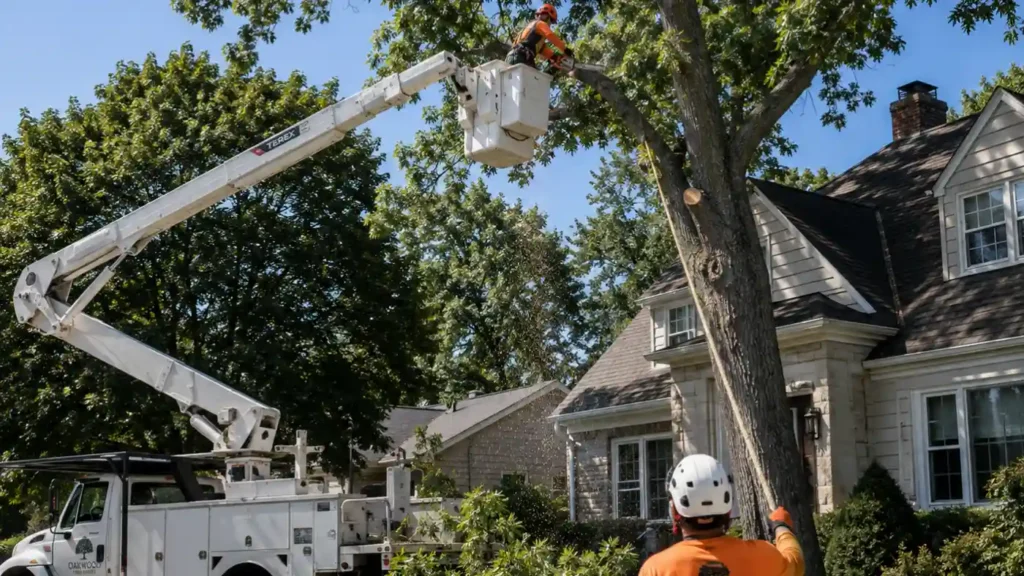
Avoid pricing based on tree size alone. A 50-foot tree in an open yard may require far less labor, equipment, and risk than a 50-foot tree hanging over a roof, so the two jobs should be priced differently.
Key takeaways
Keep these best practices in mind when setting profitable tree service rates:
Know your break-even costs: Calculate crew time, overhead, equipment, and insurance before adding profit.
Adjust for complexity: Height, access, cranes, permits, and utility lines should play into the final price.
Price add-ons intentionally: Bundle services or itemize them based on your pricing strategy.
Review rates regularly: Update prices as labor, fuel, insurance, and equipment costs change.
Explain every estimate: Clear, itemized quotes help customers understand exactly what they’re paying for.
Table of contents
- How we sourced tree service pricing data
- Average tree service prices in 2026
- Residential vs. commercial pricing
- Popular add-ons and upsells
- Tree service price list for common jobs
- Common pricing models for tree service
- What factors affect tree service pricing?
- How to set your tree service prices
- Example tree service price calculations
- How to improve your tree service business profits
- How to explain tree service pricing to customers
- How to quote tree service jobs consistently
How we sourced tree service pricing data
The price ranges in this guide are based on 2026 national consumer pricing data from Angi, with supporting information from other industry sources where noted.
These are national ranges. Actual prices vary by:
- Local labor rates and cost of living: Higher wages, insurance, fuel, etc. all raise your baseline.
- Tree height, diameter, and species: A dense hardwood like oak or hickory takes much longer to process than a smaller softwood.
- Access and equipment: A climb, bucket truck, crane, or long carry from the backyard changes the crew hours.
- Power lines and structures: Work near energized lines, roofs, pools, fences, and tight drop zones carries more risk (and may require utility coordination).
- Permits: Protected trees, heritage trees, and local removal rules can add application fees and admin time.
- Storm response: After-hours calls for emergencies demand fast movement and should be charged a separate emergency rate.
Use these ranges to gut-check your pricing, then adjust based on your actual equipment costs, insurance overhead, and target margin.
Average tree service prices in 2026
National tree service prices vary widely by service type, job scope, and location. The ranges below can help you compare your rates with typical 2026 pricing and spot jobs where your estimates may be running high or low.
Treat these figures as a starting point rather than a pricing formula. Your final rates should reflect your own operating costs, local market, and profit goals.
| Service | Typical price range* |
| Small tree removal (under 30 ft) | $150–$450 |
| Medium tree removal (30–60 ft) | $450–$1,200 |
| Large tree removal (60–80 ft) | $800–$1,500 |
| Extra-large tree removal (over 80 ft) | $1,000–$2,000+ |
| Tree trimming/pruning | $75–$1,800 |
| Stump removal (first stump) | $195–$600 |
Residential vs. commercial pricing
Tree service pricing changes with the type of customer and the scope of the work. A homeowner might hire you to remove one tree after a storm. An HOA could ask for seasonal trimming across an entire neighborhood. A municipality may be looking for ongoing right-of-way maintenance throughout the year. Each job calls for a different approach to pricing.
Residential tree service prices
Most residential tree work is quoted per tree. Factors like height, access, nearby structures, and cleanup contribute to the final price, so two trees of the same size can still get very different estimates.
Most customers expect your quoted price to cover the agreed-upon tree work and basic cleanup. Price stump removal, hauling away large logs, permit fees, and emergency response separately—and make sure your estimate spells out what’s included.
Commercial and municipal tree service prices
Commercial tree service pricing often looks different from pricing for residential jobs. Instead of quoting one tree at a time, you might be bidding on an entire property, a land-clearing project, or a recurring maintenance contract. Factors that’ll affect your pricing include:
- The size of the property
- The number of trees
- Scheduling requirements
- Contract scope
A lower price isn’t always the strongest bid here. Commercial clients also compare contractors based on experience, safety practices, insurance coverage, and the ability to complete work on schedule. Your estimate should reflect the value your business brings to the table, not just the cost of the actual work.
Read more: How to get commercial landscaping contracts
Popular add-ons and upsells
Many customers think of tree work as one job: removing the tree. In reality, removing the tree is just the beginning. Additional services can increase the value of the job while solving problems the customer may not have considered.
Add-ons and upsells to consider include:
- Stump removal: Many homeowners choose to get rid of the stump after the tree comes down, especially if they plan to landscape, add sod, or use the space for something else. Because stump removal requires different equipment and labor than tree removal, quote it separately (unless you’ve bundled it into your estimate).
- Debris hauling and wood chipping: Some customers want every branch and log hauled away, while others prefer to keep firewood or mulch on the property. Offering different cleanup options lets customers choose the level of service they want while helping you recover disposal and hauling costs.
- Log splitting and firewood: Large trees often leave behind usable firewood. Offering to cut, split, and stack the wood gives homeowners an alternative to hauling everything away and creates an additional revenue opportunity for your business.
- Cabling and bracing: Some trees can be preserved instead of removed. Cabling and bracing can provide additional support for trees with weak branch unions or structural defects, helping reduce the risk of limb failure.
- Tree health treatments: If you notice signs of insects, disease, or nutrient deficiencies during an estimate, recommend a follow-up visit for treatment. Solving the underlying problem helps protect the customer’s remaining trees while creating recurring work for your business.
You can offer these as optional add-ons or bundle them into service packages. Say a customer wants a tree cut down, the stump removed, and the debris hauled away. Instead of pricing those separately, bundle all three into a full removal package and offer a small discount to encourage the upsell. The customer gets a slight break, and your average ticket goes up.
Tree service price list for common jobs
A written price list gives you a consistent starting point for estimates. It won’t replace an on-site assessment, but it speeds up quoting and keeps pricing consistent—whether that’s you working solo or two crew members pricing similar jobs differently.
If you’re building your price list from scratch, try using Housecall Pro’s Field Service Price Book Template to organize common services, standard rates, and optional add-ons in one place.
Small jobs
Small tree jobs are usually quicker to schedule and complete, but they still cost you travel time, equipment, and cleanup. Set a minimum service charge to keep them profitable.
Smaller jobs may include:
| Job | Price range | Factors affecting cost |
| Small tree removal (under 30 ft) | $150–$450 | Tree species, access, cleanup |
| Tree trimming (small/medium tree) | $200–$800 | Tree size, branch density, pruning goals |
| Shrub or hedge trimming | $100–$600 | Shrub size, hedge length, and cleanup required |
| Palm tree trimming | $125–$800 | Palm height, number of fronds, cleanup |
Large jobs
Larger projects usually require more planning, specialized equipment, and additional safety precautions. The time spent removing the tree is only one part of the estimate. Access, cleanup, and equipment often have just as much impact on the final price.
| Job | Price range | Factors affecting cost |
| Large tree removal (60+ ft) | $800–$2,000+ | Crane access, cleanup, hazards, specialized equipment |
| Tree removal near power lines | $1,500–$10,000+ | Utility coordination, tree size, site access, emergency conditions |
| Stump grinding (per stump) | $100–$150 | Stump diameter, root system, accessibility |
| Multi-tree land clearing (per acre) | $1,500–$12,000+ | Tree density, terrain, equipment requirements, debris |
| Tree cabling/bracing | $350–$1,500+ | Tree size, structural condition, materials, installation time |
Emergency services
Emergency tree work should be priced higher than scheduled jobs because it means responding after hours, working around storm damage, and/or handling unstable trees in hazardous conditions. Many tree service companies charge two to three times their standard rates for emergency calls, though the exact markup depends on the situation and your pricing policy.
| Service type | Price range* |
| Emergency/storm-damage tree removal | $450–$6,000+ |
| After-hours hazard limb removal | $400–$2,400+ |
Common pricing models for tree service
Most tree service businesses use a mix of pricing models depending on the work they’re performing. Common pricing models include:
- Flat-rate per tree: Charge one fixed price based on the tree’s size, condition, access, and the work involved. This model is commonly used for standard residential removals and trimming because customers know the total cost before work begins. Just make sure you’ve accounted for factors like difficult access, nearby structures, or additional cleanup before setting the price.
- Hourly (crew + equipment): Charge for your crew’s time and the equipment needed to complete the job. This model works well for storm cleanup, emergency calls, and projects where the scope may change after work begins because you’re billing for the time actually spent on-site. Track hours carefully and explain your rates upfront to avoid billing disputes.
- Per-acre or per-job bid: Quote one price for the entire project instead of pricing individual trees. Contractors often use this approach for land clearing, commercial properties, and municipal work because it reflects the full scope of labor, equipment, disposal, and project management. Walk the site before submitting a bid so unexpected obstacles don’t cut into your profit.
- Recurring contract pricing: Set a fixed price for scheduled tree maintenance you do throughout the year. This pricing model is common for HOAs, commercial properties, and municipalities because it creates predictable costs for the customer and recurring work for your business. Review contracts regularly to account for changes in fuel, labor, insurance, and equipment costs.
What factors affect tree service pricing?
Two trees can look nearly identical from the street but take very different amounts of time and equipment to remove. Build these factors into every estimate so you price jobs consistently and avoid surprises once work starts:
- Height and diameter: Taller, thicker trees usually require more labor, larger crews, and specialized equipment. For example, removing a 75-foot oak typically takes more time and planning than removing a 20-foot ornamental tree.
- Access: A tree in an open front yard is generally easier to remove than one tucked behind a fence, growing on a steep slope, or surrounded by landscaping. Limited access can increase labor time or require specialized equipment.
- Proximity to power lines or structures: Trees growing near homes, garages, fences, or utility lines often require additional safety precautions and more careful removal methods. These jobs might also require coordination with the local utility company before work begins.
- Permits: Some cities require permits before removing protected trees or trees above a certain size. Permit fees and the time spent completing the application process should be factored into your estimate.
- Species and wood density: Dense hardwoods like oak and hickory generally take longer to cut and process than softer species, which can increase labor and equipment wear.
- Debris volume and disposal: Large trees produce more branches, logs, and wood chips, which increases cleanup time and disposal costs. If hauling debris isn’t included in your base price, list it as a separate line item so customers know exactly what they’re paying for.
Apply these factors consistently so similar jobs are priced the same way.

How to set your tree service prices
Using a consistent pricing process ensures you cover labor and overhead, account for added risk, and build in a healthy margin on every job. Follow the steps below to create prices based on the work each job requires, rather than just matching what competitors charge.
Step #1: Calculate baseline costs
Before you can price a job, you need to know what it costs your business to complete it. That includes factoring in overhead that isn’t tied to a single repair, such as insurance, vehicle maintenance, and software.
Keep in mind that labor costs go beyond hourly wages. Payroll taxes, workers’ comp, benefits, paid time off, and other employee expenses all contribute to your true labor cost.
Don’t forget the ongoing costs of maintaining chainsaws, chippers, and cranes, along with any additional insurance required for higher-risk work.
Use these formulas:
- Labor cost per job = (hourly wage x labor burden x crew size) x job hours
- Overhead cost per job = Total monthly overhead ÷ monthly billable hours × (job hours + nonbillable hours)
- Break-even job cost = Labor cost per job + overhead cost per job + equipment/disposal cost
Your break-even cost is the minimum you need to charge for a job without losing money.
Step #2: Set your target profit margin
Next, add a profit margin that supports your business goals. Tree service businesses typically target margins in the 10%–20% range, with smaller operators sometimes pricing routine residential trimming closer to 20%–30% to cover lower job volume. Higher-risk jobs involving crane work, utility coordination, or specialized expertise often justify pricing at the higher end of your range or above it.
Step #3: Match your pricing model to the job
Match your pricing model to the job type instead of picking one model for everything. Flat-rate pricing works well for many residential jobs, hourly pricing is often better for emergency work or uncertain scopes, and per-project or per-acre pricing fits commercial contracts. Standardize which model applies to which job type across your team.
Step #4: Set minimum charges and base service fees
Every service has fixed costs, even if the job is small. A minimum charge helps cover travel time, crew wages, equipment transport, and admin work before the first cut is ever made.
Use this formula:
Base service fee = (average mobilization time × crew labor rate) + equipment transport cost.
For emergency work, create a standard after-hours surcharge or multiplier ahead of time instead of deciding on pricing during the call.
Step #5: Adjust for job complexity and scope
Add costs for anything that increases labor, equipment needs, or risk. Walk through the job site and note factors such as limited access, nearby power lines, crane requirements, permits, steep terrain, or structures that affect how your crew can work.
Estimate the extra crew hours, equipment rental or operating costs, permit fees, and other expenses tied to each factor, then add those costs to your base price. Using a consistent checklist for every estimate can help you account for the same complexity factors each time and avoid underpricing difficult jobs.
Step #6: Price add-ons and optional services
Calculate add-on prices the same way you price the main job: estimate the additional labor, equipment, materials, disposal, and overhead required, then add your target profit margin.
You can list services such as stump removal, debris hauling, cabling and bracing, and tree health treatments separately on the estimate so customers can choose what they need.
Step #7: Research local tree service rates and validate your pricing
Once you’ve calculated your price, compare it with similar tree service jobs in your market. Review publicly available pricing, local competitors’ service pages, and estimates for jobs with comparable tree size, scope, access, and risk.
Use those rates as a reference point rather than copying them. If your estimate falls well above or below the local range, review your calculations to see what’s driving the difference. Higher rates may make sense if you offer ISA Certified Arborist expertise, greater insurance coverage, specialized equipment, or other services that increase the value of the job. Don’t underprice just to match competitors—use their rates as a reference point to frame your value.
Step #8: Build and present the estimate
Turn your calculations into an itemized estimate that shows customers exactly what they’re paying for. Include the work being performed, tree location and access, equipment required, debris removal, permits, optional services, and any exclusions or additional charges.
Spell out anything that could affect the final price or schedule before the customer approves the job. For example, note whether utility coordination is required, whether stump grinding is included, or whether additional charges apply if site conditions differ from what was visible during the estimate.
Step #9: Review and adjust regularly
Track your estimated costs against what each job actually costs to complete. Compare projected and actual crew hours, equipment use, fuel, disposal fees, and other expenses to identify where your pricing may be too low or too high.
Update your rates when recurring costs such as labor, insurance, fuel, disposal, or equipment increase. It’s also worth reviewing pricing after busy or storm-heavy periods, when overtime, demand, and disposal costs may shift. As a general rule, reassess your pricing any time a major operating expense increases by more than 10%.
Keeping your estimates, price lists, and customer information in one place makes those updates much easier. With Housecall Pro’s Price Book, you can update pricing, create consistent estimates, and help your team quote jobs using the same rates instead of relying on memory or outdated spreadsheets.
Get In Touch: 858-842-5746
Let us earn your trust
On average, Pros increase monthly revenue generated through Housecall Pro by more than 35% after their first year.
See plan options and feature breakdown on our pricing page.
Example tree service price calculations
Every tree service business has different labor costs, overhead, and profit goals. These examples show you how you can turn those costs into a final price.
Example 1: Medium backyard tree removal
Scope: Remove 45-ft maple from fenced backyard; haul debris; grind stump.
Pricing model: Flat-rate per tree
- Estimated baseline cost (crew, equipment, disposal): $575
- Target margin: 30% ($173)
- Removal price: $748
- Add-on: Stump grinding ($125)
Total price: $873
Why it works: Flat-rate pricing gives the homeowner total cost clarity up front. The stump grinding is captured as a distinct, profitable add-on.
Example 2: Storm-damage removal near power lines
Scope: Emergency removal of storm-damaged oak near power lines.
Pricing model: Hourly (crew + equipment) with emergency multiplier
- Standard baseline cost (crew, crane, disposal): $1,850
- Power-line coordination and safety upcharge: $650
- Emergency service surcharge: $1,500
Total price: $4,000
Why it works: Combining an hourly base with risk upcharges and a documented emergency surcharge covers specialized equipment and high liability without undercutting your time.
Example 3: HOA recurring tree trimming contract
Scope: Trim 40 trees throughout HOA community, four visits per year.
Pricing model: Recurring contract, volume-discounted per-tree rate
- Standard per-tree trim rate: $300
- Volume discount (40+ trees): 15% off ($45 per tree)
- Discounted per-tree rate: $255
- Per-visit total (40 trees): $10,200
- Annual contract (4 visits): $40,800
Total price: $40,800
Why it works: Offering a modest volume discount secures recurring commercial revenue. It also optimizes crew routing for an entire neighborhood.
How to improve your tree service business profits
Once you’ve built a consistent pricing system, look for ways to increase the value of each job instead of just raising your prices. Small changes to how you package services and evaluate work can move your bottom line a lot:
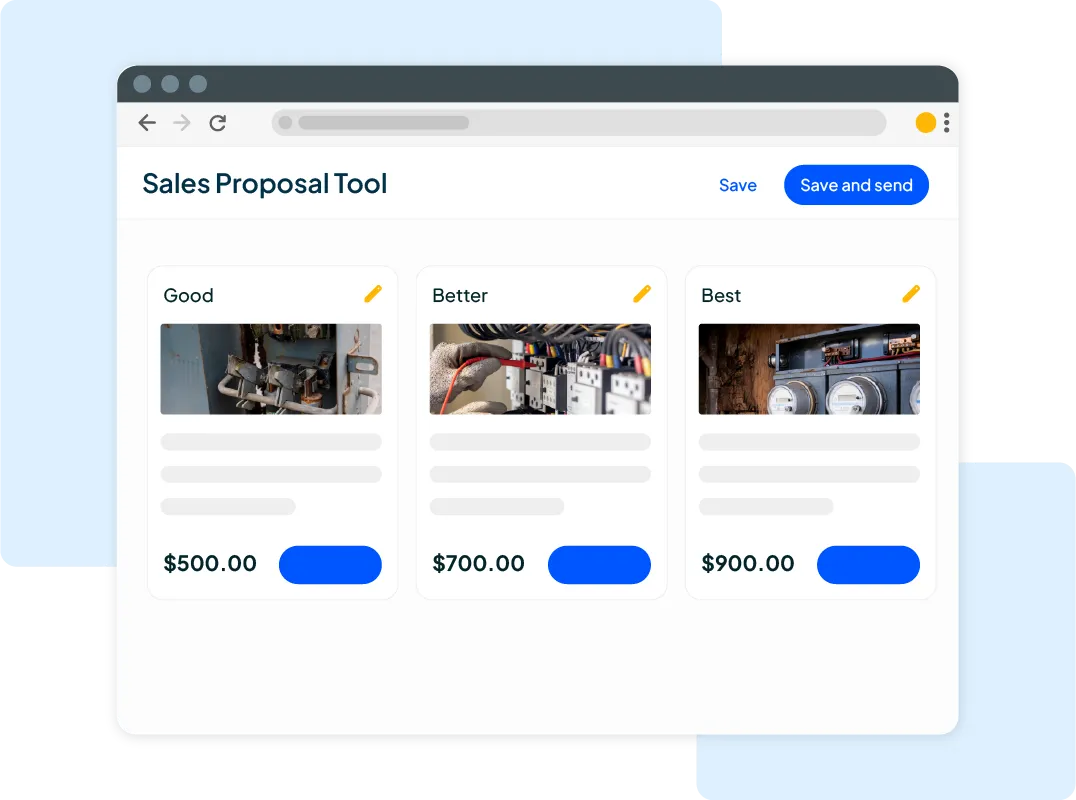
- Use price anchors: Show a full-service package alongside a basic tree removal so customers can easily compare their options. Bundling services like stump removal and debris hauling often increases the average ticket size.
- Create tiered service levels: Offer a basic removal package, a full-service option with cleanup, and a premium package that includes services like an ISA Certified Arborist assessment or tree health recommendations.
- Adjust pricing based on demand: Storms and severe weather create urgent demand. A documented emergency pricing policy helps you recover the additional costs of after-hours work without making pricing decisions on the spot.
- Track revenue by job type: Compare the profit from routine removals, crane-assisted work, emergency calls, and commercial contracts to see which jobs generate the strongest returns.
- Set minimum prices for administrative work: Permit applications, utility coordination, and other time-consuming tasks add labor before the crew ever arrives. Make sure your pricing reflects that effort.
How to explain tree service pricing to customers
Clear pricing can make it easier for customers to understand the value behind your estimate and feel confident moving forward. That transparency matters: in a 2025 Housecall Pro survey of 1,000+ U.S. homeowners, 77% cited hidden or surprise costs as a top frustration when hiring a pro. Explaining what’s included, what could affect the final cost, and why certain work carries a higher price can help reduce uncertainty before the job begins.
Instead of focusing only on the total price, walk customers through the scope of work. Explain whether stump removal, debris hauling, and cleanup are included. Let them know if any permits or utility coordination could affect the timeline. Highlight qualifications like ISA Certified Arborist credentials or comprehensive insurance coverage when they add value to the job.
Before: “Tree removal: $2,100”
After: “Tree removal: $2,100. This estimate includes removing the tree, hauling away debris, and site cleanup. Stump removal is available as an optional service. Because the tree is growing near utility lines, we’ll coordinate with the utility company before work begins, which may affect scheduling.”
How to quote tree service jobs consistently
Every estimate should follow the same process, no matter who’s building it. That’s what makes it easier to price jobs consistently, explain estimates to customers, and protect your margins as you grow.
Housecall Pro’s tree care software is built to put that consistency into your day-to-day workflow, from creating estimates to collecting payment. Here are some of the key features:
- Price Book: Store your most common services, add-ons, and pricing adjustments in one place so every estimate starts from the same baseline. If you update a stump removal price or add a crane surcharge, your team can use the new pricing on future estimates instead of relying on memory.
- Dispatching and Online Booking: Keep new requests moving from the first phone call to the schedule without bouncing between multiple systems. Your office can book estimates faster, and your crews always know where they’re headed next.
- Mobile, itemized estimates: Build estimates on-site while you’re looking at the tree. Customers can see exactly what’s included, review optional services like stump removal and debris hauling, and approve the work before you leave the property.
- Payments and InstaPay: Finish the job and collect payment without adding another trip to the office. Faster payments improve cash flow and reduce the number of outstanding invoices your team has to chase down.
Housecall Pro helps tree service businesses quote jobs the same way every time. Start your free 14-day trial today.
Read more: How to start a tree service business
FAQs
How much does tree removal or trimming typically cost?
Tree removal typically costs $200–$2,000 or more, while tree trimming usually ranges from $75–$1,800, according to Angi’s 2026 national pricing data. The final price depends on factors like tree height, site access, nearby structures, equipment requirements, and cleanup.
Should tree service jobs be priced per tree or by the hour?
Tree service jobs should be priced based on the job type. Per-tree pricing works well for most residential removals and trimming, while hourly pricing is often a better fit for emergency work, storm cleanup, or projects where the scope may change after work begins.
How do I price emergency or storm-damage tree removal?
Price emergency or storm-damage tree removal by starting with your standard pricing, then accounting for added time, risk, and equipment required to respond quickly. Many tree service companies charge two to three times their standard rates for emergency work because of after-hours labor, hazardous conditions, and rapid crew mobilization.
What's included in a standard tree removal price versus add-ons like stump grinding?
Standard tree removal pricing often includes removing the tree and basic cleanup, but services like stump removal, debris hauling, log splitting, or tree health treatments are commonly priced separately. Clearly listing what’s included helps avoid misunderstandings once the work begins.
What profit margin should a tree service business target?
Tree service businesses typically report profit margins between 10% and 20%, with smaller operators sometimes targeting 20%–30% to offset lower job volume. Yours should reflect your costs, your market, and the level of risk involved in each job. Higher-risk work involving cranes, utility coordination, or specialized equipment often supports margins at the higher end of that range.
How do I price commercial or recurring tree maintenance contracts?
Price commercial or recurring tree maintenance projects by the overall scope of the work rather than by individual tree. Commercial estimates are often based on the property size, contract requirements, scheduling, equipment, and labor involved, with volume discounts applied for recurring work when appropriate.
Do I need a permit to remove a tree, and how should that affect my quote?
Permits are often required to remove trees within city limits, and it should be reflected in your estimate. Include any application fees and the administrative time needed to get them rather than absorbing those costs yourself.