Want to win more jobs with less effort?
Grow your business and send quick quotes with our home service software.

Want to see your potential revenue?
See what businesses like yours earn with Housecall Pro in 1 - 2 minutes.
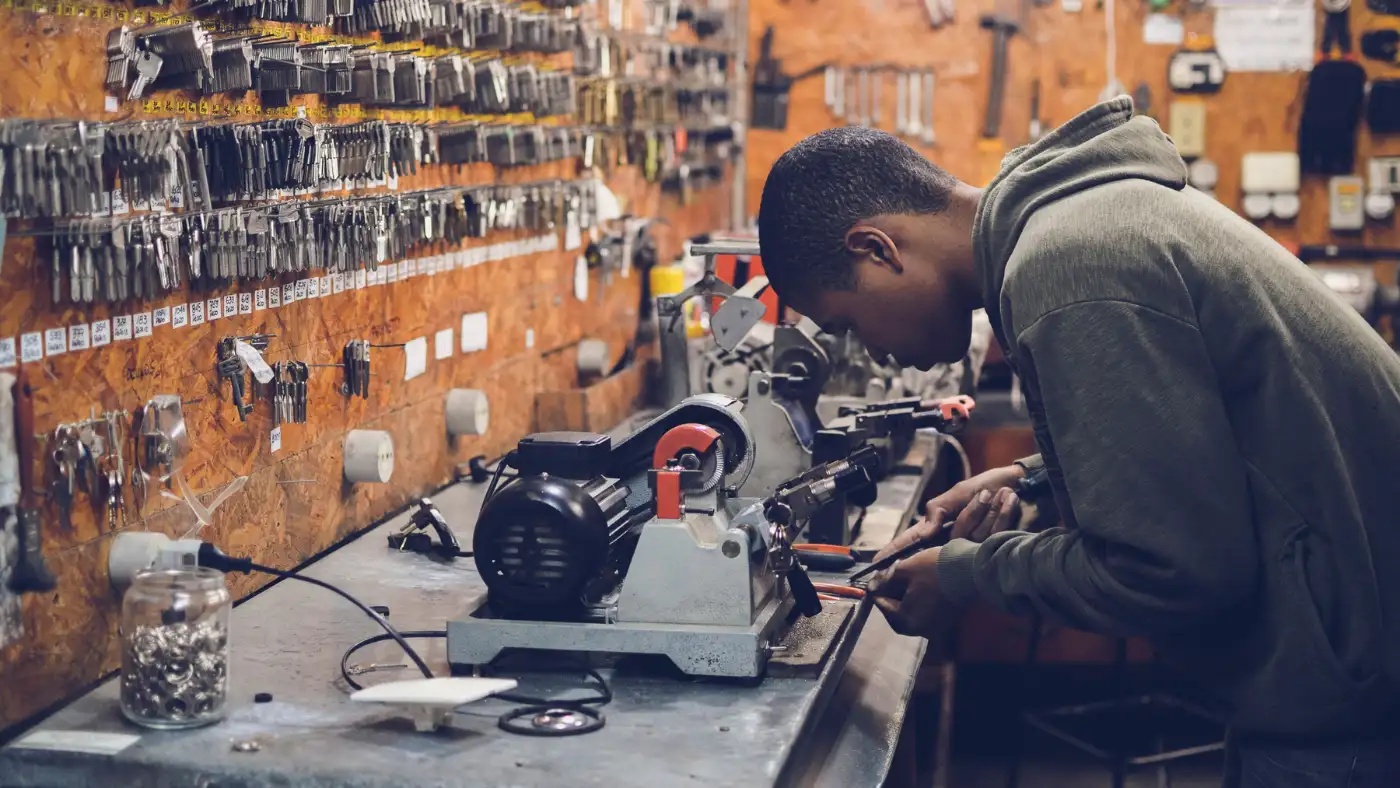
Pricing locksmith jobs can get complicated fast. A simple lockout might only take a few minutes on-site, but drive time, labor, fuel, parts, and overhead can quickly eat into what you make.
Your pricing should account for those real job costs, along with factors like the type of service, lock complexity, travel, risk, and time of day. Residential, commercial, automotive, and emergency jobs may also need different rates.
This guide breaks down how to price locksmith jobs so you can cover your costs, stay competitive, and leave room for profit.
Quick answer: How do you price locksmith jobs?
Price locksmith jobs by adding your service call fee, labor, materials, travel costs, and any after-hours or emergency charges. Then adjust the price based on the type of service and lock complexity.
Your final price should cover the full cost of completing the job, including overhead, while leaving room for profit. Residential, commercial, automotive, and emergency locksmith jobs may all require different rates.
Key takeaways
Remember these points when pricing locksmith jobs:
Know your costs: Calculate labor, overhead, and break-even cost before setting any customer price.
Standardize pricing: Use flat-rate lockouts, per-lock rekeys, and hourly pricing for complex commercial work.
Protect your margins: Charge separately for emergency dispatch, high-security hardware, and difficult access.
Quote with transparency: Itemize service fees, hardware, labor, and optional upgrades to reduce pricing objections.
Review rates annually: Increase prices by 3%–5% each year and update them when costs or services change.
Table of contents
- How we sourced locksmith pricing data
- Average locksmith prices in 2026
- Residential vs. commercial vs. automotive pricing
- Popular locksmith add-ons and upsells
- Locksmith service price list for common jobs
- Common pricing models for locksmiths
- What factors affect locksmith pricing?
- How to set your locksmith prices
- Example locksmith price calculations
- How to improve your locksmith business profits
- How to explain locksmith pricing to customers
- How to quote locksmith jobs consistently
How we sourced locksmith pricing data
The pricing guidance in this article is based on publicly available cost data and pricing research from Angi, HomeAdvisor, and Thumbtack as of 2026. Published price ranges are benchmarks, not fixed rates.
Actual pricing varies based on factors like:
- Local labor and living costs: Higher payroll, fuel, rent, and insurance costs need higher rates.
- Lock type and security grade: High-security, electronic, smart, and restricted-keyway locks take more time and skill than standard pin-tumbler locks.
- Time of day: Nights, weekends, and holidays need a separate emergency rate.
- Bonding and insurance: Add the cost of staying bonded and insured to every job, not just commercial work.
- Job size: A six-door rekey needs a different price than one cylinder.
- Vehicle complexity: Make, model, key type, and programming requirements drive automotive pricing.
Use these ranges to gut-check your pricing, then adjust based on your actual costs, bonding/insurance overhead, and target margin.
Average locksmith prices in 2026
Most locksmith jobs fall between $107 and $242. However, the final price depends on the type of service, lock complexity, travel time, and whether the work is performed during normal business hours or as an emergency call.
A standard locksmith job usually includes travel to the property, diagnosing the issue, completing basic labor on a standard residential lock, and testing the lock before leaving. Replacement hardware, high-security locks, electronic access systems, automotive programming, and additional labor are typically priced separately.
Treat national averages as a starting point, not your final price—your Step 1 baseline costs below are what should set your actual rate.
Average locksmith service call fee
Most locksmiths charge a service call fee—also called a trip fee—just for showing up to a job. It helps cover dispatch, drive time, fuel, vehicle expenses, and technician time before the actual service begins.
The average fee is $35–$100. You can include it in your total price or list it separately. Either way, it helps protect your margins on short jobs, cancellations, and calls that don’t turn into additional work.
Residential vs. commercial vs. automotive pricing
Locksmiths typically use three pricing models rather than a single universal rate sheet because residential, commercial, and automotive work have different labor requirements, equipment costs, and profit margins.
Residential jobs are often priced as a flat rate per lock or per service call, commercial work is usually based on the number of doors and the complexity of the master-key or access-control system, and automotive services are priced according to the vehicle’s make, model, and key or key fob type.
Building separate pricing for each service category makes it easier to cover labor, overhead, and risk without overcharging simple jobs or underpricing more specialized work.
Residential locksmith prices
Most residential locksmith work is priced by the service performed, with flat rates for lockouts and per-lock pricing for rekeys, installations, and replacements. Customers also expect the service or trip fee to be disclosed before the technician arrives, with labor and replacement hardware listed separately when applicable.
| Residential service | Typical price range |
| Basic home lockout (business hours) | $75–$200 |
| Rekey (per lock) | $50–$130 |
| Deadbolt installation (per lock) | $50–$200 |
| Smart lock installation | Base installation + $30–$100 |
| Full lock replacement (per lock) | $100–$300 |
Commercial locksmith prices
Commercial jobs are usually quoted by the project, not a flat per-visit fee, because the scope changes too much from site to site. The number of doors, the master-key design, and code compliance requirements all shift the labor and hardware involved. Pricing varies widely as a result, but total cost scales fast with size: a small office master-key system (6–12 locks) typically runs $300–$800, and a larger job—12+ locks or complex access-control—can climb to $600–$2,500 or more
Common commercial pricing structures include:
- Per-door pricing for lock installation, replacement, and rekeying across offices, retail spaces, warehouses, and multifamily properties
- Flat project bids for master-key system design, installation, and rekeying, with pricing based on the number of doors, cylinders, and access levels
- Recurring service contracts for access-control maintenance, scheduled inspections, credential management, and ongoing system support
Commercial customers also expect more documentation than residential clients. Before preparing a final quote, verify whether the customer requires a certificate of insurance (COI), licensing documentation, or other vendor paperwork. Many property managers, general contractors, and facility managers will not allow work to begin until these requirements are met, so treat a COI as a prerequisite for quoting rather than an optional document.
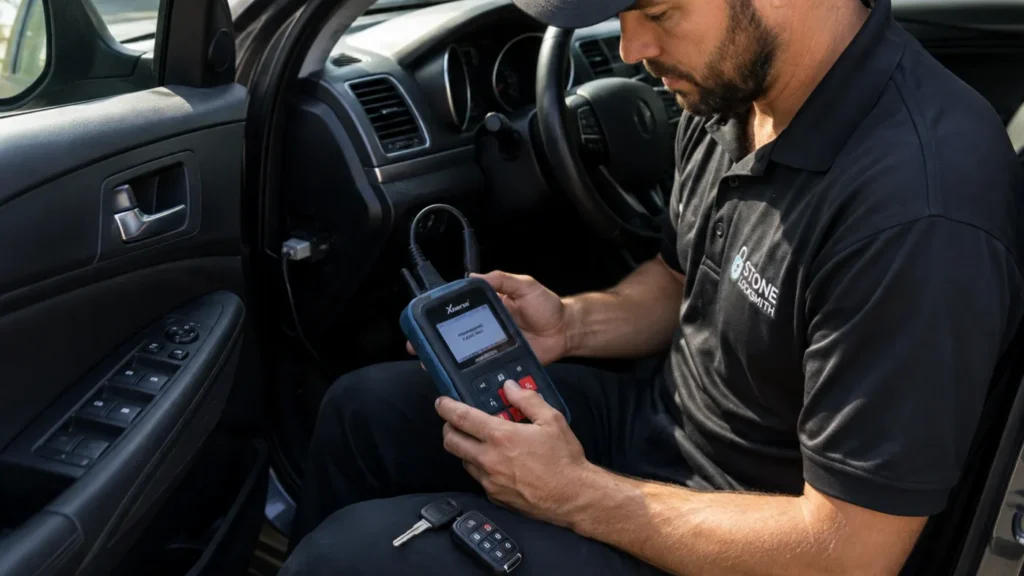
Automotive locksmith prices
Vehicle lockouts, key duplication, and transponder or fob programming each carry their own cost structure because they depend on the vehicle’s key technology, not just labor time.
| Automotive service | Typical price range |
| Car lockout (business hours) | $50–300 |
| Key extraction (broken key in lock) | $50–200 |
| Basic car key or lock replacement | $25–$150, depending on make, model, and age |
| Transponder (chip) key replacement | $100–$400 |
Vehicles that need a full smart-key or push-to-start fob replacement typically land at the top of the transponder range or above it. Quote those individually rather than against the transponder benchmark.
Popular locksmith add-ons and upsells
Add-ons boost the value of a service call without an extra trip out. Recommend upgrades that fit the job you’re already there for—not something unrelated.
Here are some common locksmith add-ons:
- Extra or duplicate keys
- High-security cylinder upgrades with pick- and drill-resistant hardware
- Smart lock or keypad installation
- Master key system design and setup
- Home or business security consultations
Say a customer just moved in and needs three exterior doors rekeyed. Instead of billing that separately from a smart lock install and five duplicate keys, bundle all three into one move-in security package. Price it slightly below what those services would cost apart—the customer feels like they’re getting a deal, and your average ticket goes up.
Locksmith service price list for common jobs
A written price list gets customers on the same page before you even bring up the dispatch fee. Grab the Housecall Pro field service price book template to build yours—it’s a starting point you adjust to your own labor costs, overhead, and local market.
Small jobs
Small locksmith jobs usually wrap up in one visit with minimal materials—perfect for flat-rate pricing. Even on quick calls, make sure your rate covers travel time, dispatch, labor, and overhead.
| Job | Price range | Factors affecting cost |
| Basic house lockout | $75–$200 | Time of day, lock type, and whether destructive entry is required |
| Car lockout | $50–$300 | Vehicle make and model, lock design, and location of the vehicle |
| Rekey (per lock) | $50–$130 | Number of locks, cylinder type, and keyway complexity |
| Key duplication | $2–$20 | Standard vs specialty keys, transponder chips, & quantity ordered |
| Mailbox lock repair | $60–$150 | Lock type, replacement parts, and emergency service requests |
Large jobs
Large locksmith projects take more planning, coordination, and specialized knowledge than a typical service call. Price them based on the number of locks, hardware selection, system design, and labor required.
| Job | Price range | Factors affecting cost |
| Whole-home rekey (4 to 6 doors) | $200–$500 | Number of locks, cylinder types, replacement hardware needed |
| Master key system (small office with 6 to 12 locks) | $300–$800 | Doors, access levels, key hierarchy, hardware compatibility |
| Smart lock system (whole home) | $150–$500 | Number of locks, smart home setup, and network programming |
| Safe opening (no combination) | $150–$400 | Safe type, lock mechanism, drilling, and repairs needed |
| Commercial door hardware installation (12+ locks) | $600–$2,500 | Openings, hardware grade, code requirements, complexity |
Emergency services
After-hours fees help cover the added cost of keeping technicians available outside normal business hours, including overtime labor, late-night or weekend dispatching, and the inconvenience of urgent scheduling. Many locksmiths charge a higher rate for nights, weekends, and holidays to make those calls worthwhile–typically a $150–250 surcharge, or 1.5–2x the standard daytime rate.
Common pricing models for locksmiths
Pricing isn’t one-size-fits-all. Locksmiths often use a combination of pricing methods depending on the service, so each job reflects the time, materials, and skill it actually takes.
- Flat-rate pricing: Charges one set price for a specific service, such as a standard lockout. Best for routine jobs because customers know the price upfront, but rates should be reviewed regularly to keep pace with rising costs.
- Per-unit (per-lock/per-door) pricing: Charges for each lock, cylinder, or door serviced. Common for rekeys and commercial projects because pricing scales with the scope of work.
- Hourly pricing: Bills for time spent on complex or unpredictable jobs, such as safe work or custom security installations. Track labor carefully to avoid billing disputes.
- Tiered or package pricing: Bundles related services at one price, such as a move-in security package. This increases average ticket size while giving customers better value than purchasing each service separately.
What factors affect locksmith pricing?
The same job can cost more or less depending on the circumstances. Apply these factors consistently across your team so similar jobs get similar quotes.
- Time of day: Charge a separate rate for nights, weekends, and holidays because on-call availability increases operating costs.
- Lock complexity: A high-security cylinder or electronic lock takes longer to service than a standard pin-tumbler lock.
- Number of locks or doors: Rekeying six locks takes more labor and materials than rekeying one.
- Access and location: Long drive times, gated properties, and remote locations increase travel costs.
- Vehicle type: Automotive pricing varies by make, model, and whether transponder keys or key fobs require programming.
- Bonding and insurance overhead: Your pricing should recover licensing, bonding, liability insurance, and other business expenses on every job.
How to set your locksmith prices
Setting your locksmith prices starts with knowing exactly what each job costs before you add profit. Begin by calculating the business expenses that support every service call, including bonding and liability insurance, vehicle maintenance, tool and lockpick replacement, and key-cutting machine upkeep.
Step 1: Calculate baseline costs
Start by calculating how much it costs to complete a job. That includes:
- Overhead: Vehicle payments and insurance, tool and equipment upkeep, software subscriptions, phone and dispatch costs, office or storage space, and bonding and liability insurance
- Labor burden: Employee wages plus payroll taxes, workers’ comp, and benefits
Use these formulas:
- Labor cost per job: (Hourly wage × labor burden) × job hours
- Overhead cost per job: (Total monthly overhead ÷ monthly billable hours) × (job hours + nonbillable hours)
- Break-even job cost: Labor cost per job + overhead cost per job
Step 2: Add your target profit margin
Once you’ve calculated your break-even cost, turn it into a price using this formula:
Price = Break-even cost ÷ (1 − target margin)
Set a higher margin on commercial work than residential—the added planning, documentation, and liability justify it. Do the same for automotive work and smart lock installations, since the specialized equipment and expertise involved make you harder to undercut on price.
Step 3: Match your pricing model to the job
Match your pricing model to the job type instead of picking one model for everything. Use flat-rate pricing for residential lockouts and standard installations, per-lock pricing for rekeys, and hourly pricing for commercial access-control projects or other work with uncertain labor. Standardizing which model applies to which job type speeds up quoting, keeps your team aligned, and cuts down on inconsistent estimates.
Step 4: Set minimum charges and base service fees
A minimum service charge covers dispatch, travel time, and setup, even if the job takes only 10 minutes. Calculate your base service fee using (average travel time × labor rate) + overhead per job, then add labor and materials as needed. For nights, weekends, and holidays, charge an emergency dispatch fee equal to 1.5 to 2 times your standard base service fee before adding the cost of the work performed.
Step 5: Adjust for job complexity and scope
Create standard upcharges for jobs that require more time or specialized skills. Charge more for high-security locks like Medeco or Mul-T-Lock, which often require specialized pinning or drilling techniques, and for mortise locks that take longer to remove and align than standard cylindrical locks. Also account for difficult access—high-rise buildings, gated properties—and add a separate charge whenever drilling or destructive entry replaces a non-destructive opening.
Step 6: Price add-ons and optional services
Treat add-ons as separate services, not extra work folded into the original job. Items like duplicate keys, smart lock or keypad upgrades, and master key system consultations should each have their own line item.
Price each add-on based on the following:
- Labor time
- Hardware costs
- Your target profit margin
Step 7: Research local locksmith rates and validate your pricing
Compare your prices against local competitors only after calculating your costs. Collect quotes for common services, compare what’s included, and note differences in trip fees or emergency charges. If your prices are higher, explain the value through licensed technicians, bonding, insurance, and faster response times instead of lowering your rates.
Step 8: Build and present the estimate
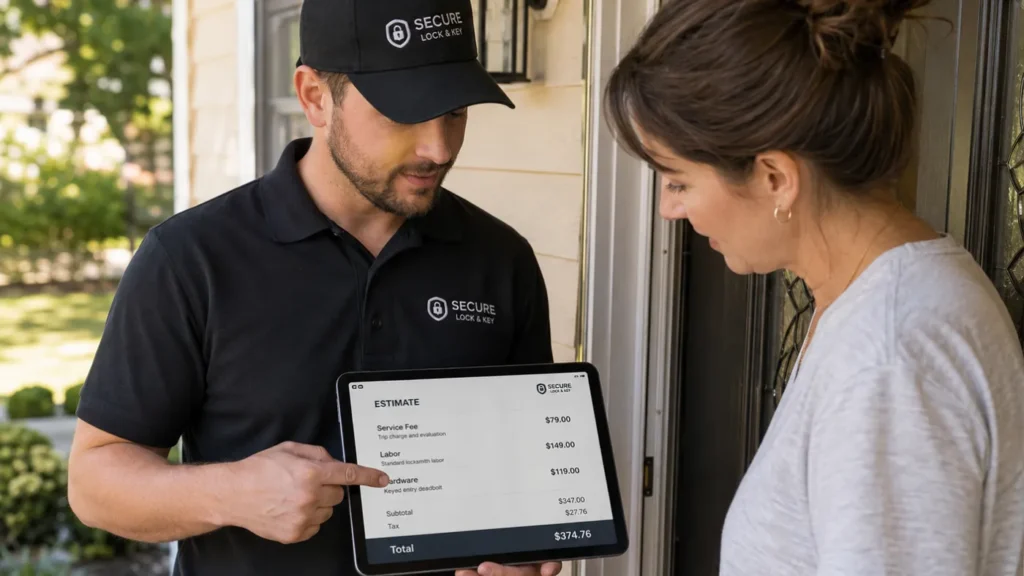
Write estimates that clearly define the work, hardware brand and model, pricing, exclusions, and expiration date. For commercial projects, include your bonding and insurance information since many contracts require proof before work begins. A detailed estimate reduces questions about pricing and change orders.
Step 9: Review and adjust regularly
Review labor costs, overhead, completed job times, and profit margins throughout the year. Reassess pricing any time hardware costs, such as smart locks or high-security cylinders, increase by more than 10%, or when you add a new service like automotive key programming.
Tracking those changes across every technician gets messy fast without a system. Housecall Pro helps by centralizing job costing, price book management, and estimate creation in one place.
Get In Touch: 858-842-5746
Let us earn your trust
On average, Pros increase monthly revenue generated through Housecall Pro by more than 35% after their first year.
See plan options and feature breakdown on our pricing page.
Example locksmith price calculations
These examples show how baseline costs, pricing models, and profit targets translate into customer-facing prices.
Example 1: Weekday home lockout
- Scope: Residential lockout during business hours
- Pricing model: Flat-rate
- Estimated baseline cost: $75
- Target margin: 35%
- Base service price: $115
- Rounded market rate: $125
Total price: $125
A flat-rate quote is easy to explain and falls within the range of common residential lockout pricing. It also protects profitability when the job finishes faster than expected.
Example 2: Whole-home rekey after move-in
- Scope: Rekey three exterior door locks
- Pricing model: Per-lock
- Estimated baseline cost per lock: $40
- Target margin: 35%
- Base price per lock: $65
- Three-lock rekey: $195
- Add-on: Five duplicate keys for $25
Total price: $220
Bundling the rekey and duplicate keys into a single visit increases ticket size without requiring a second trip.
Example 3: After-hours commercial lockout with master-key consult
- Scope: Emergency commercial lockout with on-site master-key consultation
- Pricing model: Flat-rate service fee + hourly consultation
- Emergency base service fee (2× standard): $200
- On-site master-key consultation: $250
Total price: $450
Charging separately for the emergency dispatch and consultation reflects the added technician availability, planning, and commercial expertise required.
Note: These calculations assume you know your actual overhead, bonding and insurance costs, and labor burden rates. If you haven’t calculated those yet, start with Step 1.
How to improve your locksmith business profits
Being established and profitable doesn’t mean your locksmith business is done improving. Small changes in pricing and sales often move the needle more than simply booking more jobs—focus on revenue per service call, not just call volume. Here are a few ways to do that:
Here are a few ways to do that:
- Create tiered service levels: Offer basic, security-plus, and smart-home packages. Giving customers clear options encourages many to choose higher-value services without a sales pitch.
- Track effective hourly revenue by job type: Compare how much revenue each service generates per labor hour. Automotive locksmith work and smart lock installations often outperform basic lockouts, making them worthwhile services to promote.
- Price to filter low-value work: Increase your minimum service fee for jobs outside your primary service area. This helps cover additional travel time and keeps technicians focused on the most profitable calls.
How to explain locksmith pricing to customers
Some customers will inevitably have questions about your pricing. And when they do, don’t assume they disagree with your rates or won’t pay your fee. Most customers simply want to understand what they’re paying for.
The best way to reduce pricing objections is to explain your pricing before work begins.
- Explain what’s included: Break out the service fee, labor, hardware, and any emergency or after-hours charges so customers know exactly what they’re paying for.
- Separate optional add-ons: List services such as duplicate keys, smart lock upgrades, or security consultations as separate line items rather than folding them into the base price.
- Explain your qualifications: If you’re licensed, bonded, and insured, mention it during the estimate. An estimated 72% of customers are willing to pay more for a premium service, including working with a locksmith who holds the proper credentials and protection.
Original language: “The total is $425.”
Improved language: “The total is $425, including the emergency service call, non-destructive entry, and rekeying three locks. Smart lock installation is available as an optional upgrade for $175 if you’d like to add it today.”
How to quote locksmith jobs consistently
Keeping your pricing in your head can lead to inconsistent quotes, missed costs, and underpriced jobs. It also makes it harder for technicians to price work the same way, which can hurt margins and create confusion for customers.
Housecall Pro gives locksmiths a single system for quoting, dispatching, and collecting payment, so every technician follows the same process on every job.
- Price Book: Create standardized prices for lockouts, rekeys, installations, and add-ons so every estimate starts with the same approved rates.
- Dispatching and online booking: Assign jobs faster and send technicians with the right pricing already attached, reducing quoting mistakes.
- Mobile, itemized estimates: Build professional estimates from the field that clearly separate service fees, labor, hardware, and optional upgrades.
- Payments and InstaPay: Collect payment on-site and access funds faster, improving cash flow after every completed job.
With pricing that’s consistent and itemized, every call gets quoted the same way no matter which technician answers—and every job keeps the margin you built into it. Sign up for your free Housecall Pro trial today to see the difference firsthand.
FAQs
How much does it cost to hire a locksmith?
Most locksmith jobs cost $107–$242, with the average service call falling around $170–$180. The final price depends on the type of service, travel time, lock complexity, and whether the work is performed after hours. Emergency calls, commercial work, and automotive services typically cost more than standard residential jobs.
Should locksmiths charge a flat rate or hourly for lockouts?
Most locksmiths prefer flat-rate pricing for lockouts. Because residential and automotive lockouts are predictable, they are generally easy to price with a standard service fee. Hourly pricing works better for commercial jobs or situations where the scope is unknown, such as troubleshooting access-control systems or repairing damaged hardware.
How much should I charge to rekey a lock?
Most locksmiths charge $50–$130 per lock, plus any applicable service or trip fee. Pricing should reflect the lock type, the number of locks, and the time required. For larger rekey projects, use consistent per-lock pricing and offer optional add-ons like duplicate keys or smart lock upgrades.
What's a fair price for emergency or after-hours locksmith calls?
Emergency pricing should include both the standard job price and an after-hours dispatch fee. Many locksmiths charge 1.5 to 2 times their normal base service fee, with after-hours surcharges commonly ranging from $150–$250 depending on the market and time of day.
How do I price commercial master-key and access-control jobs?
Price commercial security work by project, not by the hour alone. A small office master-key system (6–12 locks) typically runs $300–800, depending on the number of doors, access levels, and hardware compatibility. Account for planning, programming, hardware, travel, and testing in your estimate, and factor in the higher administrative costs of commercial work—documentation, bonding, and insurance requirements—when setting your price.
What profit margin should a locksmith business target?
Many locksmiths target 30%–40% on residential work and 40%–50% on commercial projects. Automotive locksmith services and smart lock installations can often support higher margins because they require specialized tools, equipment, and technical expertise.
How often should I raise my locksmith prices?
Review your pricing at least once a year. Small annual increases of 3%–5% are often easier for customers to accept than large, infrequent jumps. You should also update your rates whenever hardware costs increase significantly, fuel and labor expenses rise, or you introduce a new service such as automotive key programming.