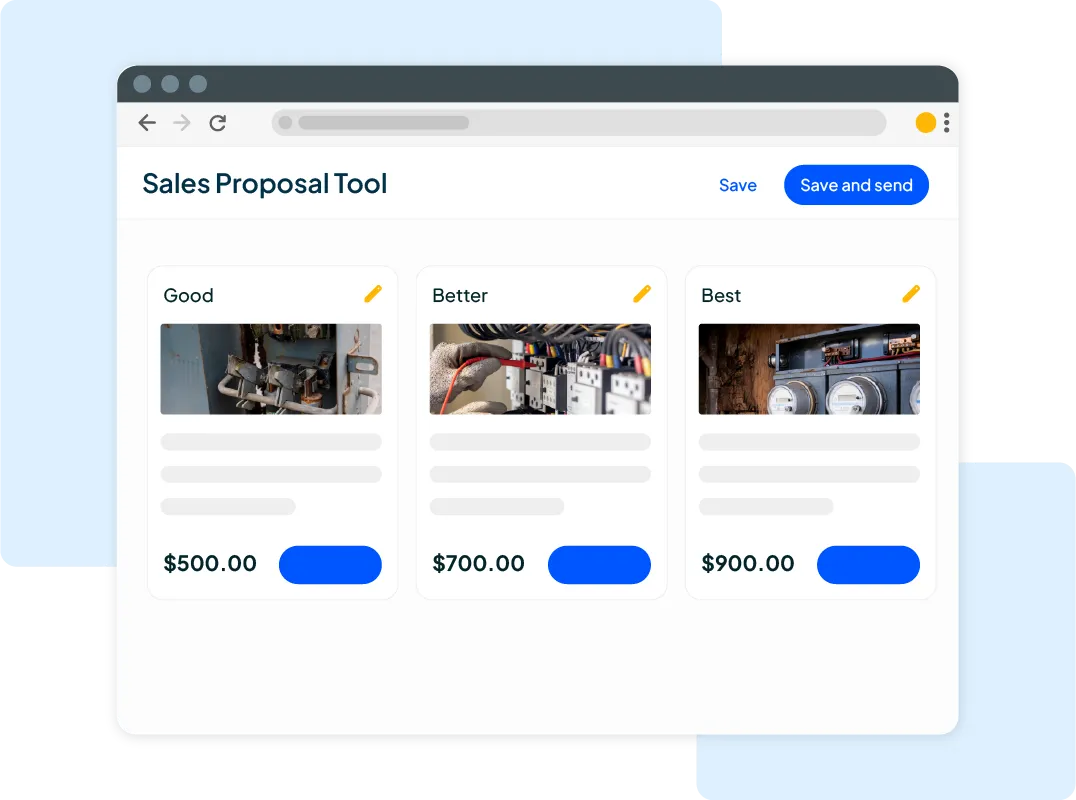
Want to win more jobs with less effort?
Grow your business and send quick quotes with our home service software.

Want to see your potential revenue?
See what businesses like yours earn with Housecall Pro in 1 - 2 minutes.

Starting a locksmith business can be a great way to build a steady service company. Customers need locksmiths for everything from emergency lockouts to rekeying and security upgrades, creating year-round demand.
If you’re ready to start your own locksmith business, this guide walks through every step, from training and licensing to pricing your services, finding customers, and running an efficient operation.
Quick answer: How do you start a locksmith business?
Start by getting hands-on training through an accredited program or apprenticeship, since most states require some level of skill verification before you can legally work. From there: write a business plan, budget $11,600–$40,500 for licensing, insurance, and tools, register your business structure (most locksmiths choose an LLC), get general liability insurance and bonding, then set flat-rate pricing for common jobs like lockouts and rekeys. Plan to spend 7%–10% of revenue on marketing—a Google Business Profile and local SEO drive most first-year leads—and only hire or expand services once you’re consistently turning down work.
Key takeaways
Starting a strong locksmith business comes down to a few key decisions:
Get certified early: Certifications can help you win more work and charge higher rates sooner.
Choose your business model first: Mobile and storefront businesses have different costs and marketing needs.
Offer more than lockouts: Add higher-value services before your schedule fills up.
Know your licensing requirements: Confirm background check rules before you apply for a license.
Hire when demand grows: Consistently turning away work is a good sign it’s time to expand.
Table of contents
- Gain locksmith experience
- Create a locksmith business plan
- Create a budget for your locksmith business
- Register and license your locksmith business
- Get locksmith business insurance and bonding
- Buy locksmith tools and equipment
- Price your locksmithing services
- Market your locksmith business
- Grow your locksmith business
- How Housecall Pro’s locksmith business software can help
Step 1: Gain locksmith experience
To be successful in any business, you need experience. Locksmithing is a trade where skill matters. You’re responsible for the security of people’s homes, vehicles, and businesses; you need to know what you’re doing before you start charging for your services.
Explore training programs
Look for accredited locksmith training programs offered by reputable institutions. Many community colleges and vocational schools offer courses that cover the basics, including:
- Different types of locks and how they work
- Key cutting and duplication
- Lock picking techniques
- Basic security systems
These programs give you a solid foundation and help you build confidence before working with real customers.
The Associated Locksmiths of America (ALOA) also offers certification tiers below Certified Master Locksmith (CML), including Certified Registered Locksmith (CRL) and Certified Professional Locksmith (CPL). Earning one of these earlier in your training can help you land apprenticeships faster and justify higher rates on commercial jobs sooner.
Understand licensing requirements
Some states require locksmiths to be licensed. Others may have fewer rules, but still expect a certain level of training. Before you move forward, check with the ALOA for endorsed training options and state-specific requirements. This will help you avoid legal issues later.
Consider an apprenticeship
An apprenticeship is one of the best ways to learn. It means working under an experienced locksmith while you build your skills on the job. You’ll see real service calls, learn how to handle different situations, and understand how the business side works.
Many apprentices train under a Certified Master Locksmith, who has completed advanced training and holds a recognized certification. This type of mentorship can fast-track your learning and help you build a strong foundation for your business.
Step 2: Create a locksmith business plan
Your business plan is more than a startup checklist. It helps you make smarter decisions as your business grows, from managing cash flow to setting prices and planning for expansion. Taking the time to build one now will pay off long after you launch.
Your business plan should consist of the following sections:
- Executive summary: A quick overview that explains your business, the services you offer, and the goals you are setting out to achieve
- Business description: What you offer and who you serve, as well as how you differentiate yourself from your competitors
- Market analysis: An overview of the local demand (i.e., is there a need for a locksmith in your area), competitors, and pricing trends
- Services offered: Residential, commercial, automotive, and emergency services
- Pricing structure: How you will charge for jobs and service calls
- Marketing plan: How you plan to attract and retain customers
- Operations plan: Daily workflow, tools, and service area
- Financial plan: Startup costs, projected revenue, and expenses
- Funding needs: Information on how you plan to fund your business, such as through loans or capital, or if you plan to pay for everything yourself
- Growth plan: How you plan to expand services or hire in the future
- Appendix: Supporting documents like licenses, permits, resumes, or financial statements
Decide early whether you’re running a mobile locksmith business or a storefront shop—the two have very different cost structures. A mobile setup keeps startup costs lower since you skip rent and retail buildout, but you’ll rely more heavily on Google Business Profile and local search to get found. A shop adds walk-in key-cutting and retail sales revenue, but adds lease and staffing costs from day one.
Free download: Business plan template

Research your market and competitors
Start by looking at the needs in your local area and what competitors are already doing.
Search “locksmith near me” on Google Maps, Yelp, and local business directories. This will show you who is already serving your area and how visible they are online. Take note of how many competitors show up, where they’re located, and how they position their services.
Next, review their websites and listings. Look at pricing, service areas, and the types of jobs they promote, such as emergency lockouts, commercial work, or automotive services. Pay attention to reviews as well. Customers often point out what they liked and what was missing.
As you compare, look for gaps. Response times may be slow, pricing may be unclear, or certain services may be limited. These gaps can help you shape your offer and stand out in your market.
Create a locksmith services list
A one-service locksmith business competes on price alone. The businesses that build steady income offer more than lockouts—they give customers a reason to save their number for rekeys, smart lock installs, and commercial work too.
Common locksmith services to consider include:
- Residential lock installation and repair
- Rekeying locks for homes and rental properties
- Key cutting and duplication
- Smart lock installation and setup
- Commercial lock systems and master key systems
- Access control systems for offices and buildings
- Safe installation, opening, and repair
- Automotive key programming and key fob replacement
- Broken key extraction
- Door hardware installation, including deadbolts and handles
- Security consultations for homes and businesses
- Emergency lockout services (home, car, and business)
Set goals
Your services list gives you something to sell. Goals give you a way to measure whether it’s working. Set goals that are SMART (specific, measurable, achievable, relevant, and time-bound) so you always know where you stand.
For example, instead of saying you want more customers, set a goal to book 20 service calls per month within your first 90 days. Or aim to generate a set amount of monthly revenue by the end of your first year.
You can also set goals around response time, customer reviews, or expanding your service area. The clearer your goals are, the easier it is to track progress and make adjustments as your business grows.
Step 3: Create a budget for your locksmith business
Before you launch, you need a clear picture of what it will cost to get started. Your total budget will depend on your niche, location, and how quickly you plan to scale. For example, a mobile locksmith focused on lockouts may spend less up front than someone offering commercial access control services.
As you build your budget, focus on what you need to start earning income right away. You can always upgrade tools and expand services later. Look for ways to save, such as buying lightly used equipment, starting with a simple website, and limiting ad spend until you see what works.
Typical startup costs include:
- Equipment and supplies: $3,000–$10,000 for professional-grade tools and machines.
- Licensing and permits: $100–$500, depending on your state and local requirements.
- Business insurance: About $700 per year (roughly $58/month) for General liability insurance; a Business Owner’s Policy is closer to $1,750 per year
- Marketing and branding: $500–$3,000 for a small business website, plus $200–$5,000 for initial advertising.
- Initial operational expenses: $1,000–$5,000 for transportation, uniforms, fuel, and small tools.
Insurance figures are based on internal data from our business insurance partner, Coverdash, and broader industry benchmarks. Licensing/permit costs match published state fee ranges (Wexford Insurance). Equipment, marketing, and operational expense ranges reflect industry startup-cost benchmarks
Secure financing
Not everyone can cover startup costs out of pocket. If you need help getting started, there are several ways to fund your business:
- Government funding: Local or state programs that support small business startups.
- Small Business Administration (SBA) loans: Structured loans with competitive rates for new businesses.
- Business line of credit: Flexible access to funds you can use as needed and pay back over time.
Step 4: Register and license your locksmith business
Before you take on your first job, you need to legally set up your business. Requirements vary by state and city, so check your state and local government websites for specifics.
Pick a business name
Choose a name that’s clear, easy to remember, and reflects your services. Check availability through your state’s business registry, then look up the domain name and social media handles. Some states have naming rules for licensed trades, so review those before you commit.
Choose a business structure
Common options include sole proprietorship, LLC, partnership, and corporation. A sole proprietorship is simple to set up but offers no liability protection for your personal assets. An LLC separates your personal and business assets and is a popular choice for many service businesses. Corporations can offer tax advantages, but they come with more setup and reporting requirements.
To compare options, review our guide on LLCs vs. sole proprietorships, and explore the differences between a C corp and an S corp. If you’re unsure which path fits your situation, talk with a lawyer or accountant.
Apply for a business license
Check your city, county, and state websites for general business license requirements. A business license allows you to operate legally in your area, but it’s different from any locksmith-specific licensing that may also be required. Some states or municipalities require additional approvals, background checks, or trade licenses specific to locksmith work.
Make sure you understand both sets of requirements before you begin offering services. Once approved, keep your documents organized and easy to access. If a customer, inspector, or commercial client asks for proof of licensing mid-job, digging through a filing cabinet costs you the sale. Housecall Pro lets you store licenses and insurance digitally so they’re one tap away.
Get In Touch: 858-842-5746
Let us earn your trust
On average, Pros increase monthly revenue generated through Housecall Pro by more than 35% after their first year.
See plan options and feature breakdown on our pricing page.
Step 5: Get locksmith business insurance and bonding
Insurance helps cover costs tied to property damage, accidents, injuries, and customer disputes. Without it, one claim could set you back financially.
It’s also important to understand the difference between insurance and bonding. Insurance protects your business. A bond protects your customer. If something goes wrong, a bond can compensate the client, and you repay the bond provider.
Most locksmith businesses need:
- General liability insurance: Covers property damage or injuries related to your work
- Workers’ compensation: Covers employee injuries if you have a team
- Commercial auto insurance: Covers service vehicles used for jobs and travel
- Bonding: May be required for certain contracts or local regulations
The cost of a surety bond is usually a small percentage of the total bond amount, often between 0.5% and 10%. Your level of risk plays a big role in what you pay. Lower risk often means lower rates.
To get the right coverage at a fair price, request quotes from multiple insurance providers. Compare what each policy includes so you know exactly what you’re getting.
Step 6: Buy locksmith tools and equipment
Having the right tools affects how quickly you can complete jobs, how safe you are on-site, and how professional you appear to customers. As a locksmith, you’ll need a combination of hand tools, power tools, safety equipment, and a vehicle to get you where you need to go.
Hand tools
These are the tools you’ll use on almost every job, especially for lockouts and basic repairs.
- Lock pick sets and tension wrenches
- Key extractors
- Plug spinners and pinning kits
- Screwdrivers, pliers, and wrenches
Power tools
These help you handle more complex jobs and speed up tasks that would take longer by hand.
- Key cutting machines
- Drill and drill bits for lock removal
- Portable grinders
- Key programming devices for automotive work
Safety equipment
These protect you on the job and prevent injuries so you can keep working without interruption.
- Safety glasses and gloves
- Work boots
- Flashlights or headlamps for low-light jobs
Vehicles
Your vehicle is your mobile workspace, so organization and storage matter.
- Service van or truck with storage for tools
- Shelving or lockable compartments for organization
New locksmiths can expect to spend between $5,000 and $20,000, depending on the services offered and whether equipment is purchased new or used.
To manage costs, look for trusted suppliers with solid reviews. Consider refurbished tools when possible, and set aside part of your budget for maintenance and replacement.
Pro tip: Managing your equipment becomes a headache as you grow. Housecall Pro’s job management software lets you track your tools and assign equipment to technicians so nothing gets left behind on a jobsite.
Step 7: Price your locksmithing services
Pricing isn’t just about choosing a number. It’s about building rates that support a healthy business. Start with a pricing model that fits the way you work, then calculate your costs, add a profit margin, and compare your rates with other locksmiths in your area.
Read more: Service pricing strategies to maximize profit
Choose a pricing model
Different pricing models work better for different types of locksmith services:
- Hourly pricing: Best for complex or unpredictable jobs where time can vary.
- Flat-rate pricing: Ideal for common services like lockouts or rekeying, where the scope is clear.
- Hybrid pricing: Combines a service call fee with hourly or flat rates for added work.
Set your rates
Your pricing should cover your costs and leave room for profit. Professional locksmith services often range from $107–$242, depending on the job and lock system. Use these steps to set your rates:
- Calculate your costs: Include labor, materials, fuel, insurance, and overhead.
- Add your profit margin: Price for sustainable growth, not just to win more jobs.
- Research local competitors: Compare rates to understand your market.
- Adjust by job type: Charge more for emergency calls, after-hours work, and specialized services.
Step 8: Market your locksmith business
Getting your business off the ground is one thing. Getting customers to call you is another. Marketing helps people find you, trust you, and choose you over the competition. The SBA recommends setting aside 7%–8% of your gross revenue for marketing.
Start with a mix of online and offline marketing to reach customers where they’re already looking for locksmith services. As your business grows, track which channels generate the most calls so you can focus your budget on what works. For a deeper look at what works, review our guide to locksmith marketing strategies.
Design your brand
Your brand is how people recognize and remember your business. It starts with your name, logo, and overall look, but it also includes how you present yourself online and in person. A clean, professional brand can help you stand out in a crowded local market.
Consistency matters. Use the same colors, fonts, and messaging across your website, business cards, uniforms, and vehicle decals. When everything looks connected, customers are more likely to remember your business.
Build an online presence
Most customers search online before calling a locksmith, especially in urgent situations. That means your online presence needs to be clear, simple, and easy to find. Start with a basic website that lists your services, service area, pricing, and contact information.
Set up and verify your Google Business Profile. This helps your business appear in local search results and on maps when people search for locksmith services nearby. Keep your hours up to date and respond to reviews to build credibility.
Social media can also help you stay visible. Platforms like Facebook, Instagram, and LinkedIn give you a place to share updates, post photos of completed jobs, and connect with your community. Adding customer testimonials and before-and-after photos can go a long way in building trust with new customers.
Use offline marketing strategies
Even in a digital-first environment, offline marketing still works. Many locksmith jobs come from local connections and word of mouth. Simple efforts can go a long way, especially when you’re just starting out.
Consider handing out flyers in your service area or leaving business cards at local shops. Door-to-door outreach can help introduce your services to homeowners. Attending community events or joining local business groups can also help you build relationships.
Partnerships can bring in repeat work. Real estate agents, property managers, and landlords often need locksmith services regularly. Building those connections can lead to ongoing jobs. Don’t forget to ask satisfied customers for referrals. A single happy client can lead to several new calls.
Read more: 8 proven direct mail marketing strategies to win more jobs
Step 9: Grow your locksmith business
Becoming a locksmith is one thing, but growing your business is something else entirely. Growth should happen in stages so you don’t take on more than you can handle. Start by building a strong base of repeat customers and a reliable income before expanding.
As demand increases, look for ways to expand your services or service area. You might add commercial work, smart lock installations, or automotive programming if you don’t already offer them. You can also expand into nearby neighborhoods or cities once you’re consistently booking jobs in your current area.
Before making any move, review your numbers:
- Are your current services profitable?
- Are you pricing correctly?
- Do you have the capacity to take on more work without sacrificing quality?
Answering these questions first helps you grow without creating new problems. A common trigger point: if you’re consistently booking 25-plus jobs a month and turning away same-day requests, that’s usually a sign to add capacity—either a new hire or an additional service line.
Hire locksmith employees
At some point, you may not be able to handle all the work on your own. That’s usually a sign it’s time to hire. This could mean bringing on a full-time technician, part-time help, or even subcontractors during busy periods.
When hiring, look for candidates with hands-on experience or formal training. Always check references and verify any certifications. During interviews, ask open-ended questions like:
- Can you walk me through how you would handle a late-night lockout call?
- What types of locks or systems are you most comfortable working with?
- How do you handle difficult or frustrated customers?
- Can you describe a challenging job and how you solved it?
- How do you stay up to date with new tools or security technology?
Once hired, invest time in onboarding and training. Show new team members how you handle jobs, interact with customers, and represent your business. Consistent training helps maintain quality as your team grows.
How Housecall Pro’s locksmith business software can help
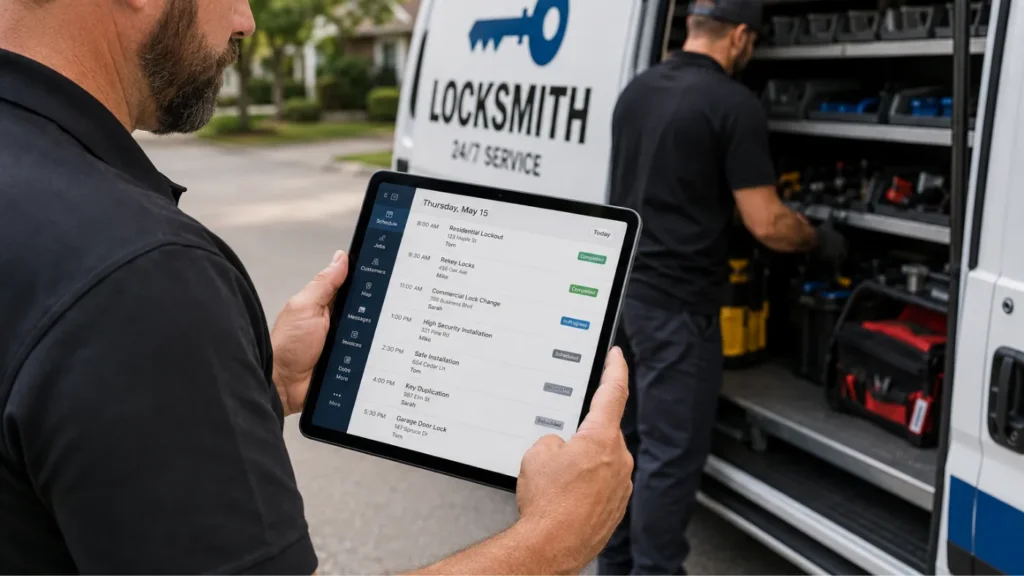
As your job volume increases, managing everything on paper or spreadsheets will lead to missed appointments and lost revenue. Using a central system helps you stay organized and professional as you scale.
Here’s how Housecall Pro’s locksmith business software helps you grow:
- Scheduling: Keep your day organized with one schedule and automatically send “on my way” texts so customers know when to expect you.
- Invoicing: Create professional invoices, accept payments in the field, and get paid faster.
- Customer management: Keep every customer’s service history, locks, keys, and access details in one place for faster repeat visits.
- Team tracking: Use GPS tracking to see where your technicians are and dispatch the closest locksmith to urgent calls.
- Automated marketing: Automatically send review requests, follow-ups, and referral campaigns to stay connected with customers after every job.
Try Housecall Pro free for 14 days to make running your business easier from day one.
Starting a locksmith business FAQ
Is it hard to start a locksmithing business?
Starting a locksmith business isn’t easy, but it’s achievable with the right preparation. You’ll need technical training, specialized tools, and, in many states, a locksmith license. After that, you’ll follow the same core steps as other home service businesses: choosing your services, setting prices, marketing your business, and serving customers. Most people can complete training or an apprenticeship and secure any required licensing within 6 months to 2 years, depending on state requirements and whether they pursue ALOA certification.
How much do locksmiths make?
Locksmith income varies based on location, services offered, and experience. Locksmith salaries typically range from $34,750– $79,340 per year. Top-paying areas include Connecticut, Rhode Island, and Washington, D.C. These figures reflect employee wages—as a business owner, your income depends on job volume, pricing, and margin per job rather than a set salary.
What other services do locksmiths offer?
Beyond lockouts, locksmiths commonly offer lock installation, rekeying, key duplication, smart lock setup, safe services, commercial access control, and automotive key programming. Most new locksmiths add these services in roughly that order—starting with rekeying and installation, then adding automotive and commercial work as they build the equipment and experience to support it.
Do locksmiths need a background check?
In some states, yes. Roughly a dozen states—including California, Texas, and Illinois—require a criminal background check as part of locksmith licensing, since the trade involves legal access to other people’s property. Check your state’s licensing board or ALOA’s state requirements page before you apply, since a failed or skipped background check can hold up your license for weeks.
Should I start a mobile locksmith business or open a shop?
Most new locksmiths start mobile because it’s cheaper to launch. You skip the lease and retail buildout and can be earning within weeks of getting licensed. A shop adds walk-in key-cutting and retail lock sales as revenue streams, but it also adds fixed costs from day one, so it’s usually a better fit once you have a proven customer base and steady cash flow to support the overhead.