Want to win more jobs with less effort?
Grow your business and send quick quotes with our home service software.

Want to see your potential revenue?
See what businesses like yours earn with Housecall Pro in 1 - 2 minutes.

Home warranty work can help fill your schedule with a steady stream of jobs without relying entirely on marketing, referrals, or lead generation. Instead of finding customers yourself, you receive service requests through a home warranty provider’s contractor network.
Like any business opportunity, home warranty work comes with tradeoffs, including documentation requirements, approval processes, and payment timelines. But it can be a great way to stay busy, especially during slower seasons.
This guide explains how to become a home warranty contractor, what requirements you’ll need to meet, how the application process works, how contractors get paid, and what to expect after you’re approved.
Quick answer: How do you become a home warranty contractor?
To become a home warranty contractor, you’ll typically need the required trade licenses, active business insurance, and a service area that matches a home warranty company’s needs. You usually apply directly with one or more warranty companies, submit licensing and insurance documents, and pass a vetting process.
After approval, you’ll receive service requests through the company’s contractor network, complete covered repairs, submit documentation, and get paid according to your contractor agreement.
Key takeaways
Here's what to know before becoming a home warranty contractor:
Check your qualifications: Make sure your licenses and insurance meet provider requirements before applying.
Find the right partners: Choose warranty companies that serve your area and align with your capacity.
Understand how the work flows: Expect assigned jobs, approval processes, and documentation requirements.
Prepare for delayed payments: Build payment timelines into your cash-flow planning.
Stay organized as you grow: Strong scheduling and job-tracking systems make it easier to manage warranty and direct-pay work side by side.
Table of contents
- What is a home warranty contractor?
- Pros and cons of becoming a home warranty contractor
- Is becoming a home warranty contractor worth it?
- What you need to apply
- How do you apply to become a home warranty contractor?
- How home warranty contractors get paid
- Major home warranty companies for contractors
- Tips for succeeding as a home warranty contractor
- How to manage home warranty jobs without the paperwork pile-up
What is a home warranty contractor?
A home warranty contractor is a service professional who completes repair jobs for homeowners with an active home warranty plan.
Instead of generating leads and collecting payment directly from customers, home warranty contractors receive service requests through the warranty company and are paid according to the terms of their contractor agreement. Contractors still perform the repair work, but pricing, approvals, and documentation requirements are often determined by the warranty provider.
Pros and cons of becoming a home warranty contractor
The home warranty industry has grown steadily over the last few years. According to data from IBISWorld, the market expanded at a 3.9% compound annual growth rate (CAGR) between 2020 and 2025. For contractors, that growth can translate into a steady source of service calls, but it’s important to understand how the model works before you apply.
Benefits of home warranty contractor work
Joining a warranty network gives you access to homeowners who are already looking for service, without having to generate every lead yourself. If you’re looking to keep technicians busy or fill gaps in your schedule, home warranty work offers several potential advantages:

- Reliable job volume: Service requests are assigned through the warranty network, which can help keep your schedule full.
- Lower marketing costs: Because warranty companies dispatch work directly to contractors, you may be able to spend less on advertising and lead generation.
- More predictable scheduling: A steady flow of service requests can make it easier to plan technician workloads and forecast staffing needs. Read more about technician scheduling tips.
- Opportunities for future direct-pay work: Homeowners who have a positive experience may contact you directly for future repairs that fall outside their warranty coverage.
- Additional work during slower seasons: Partnering with multiple providers can help fill open time slots when demand is lower.
Downsides of home contractor work
While home warranty work can help increase job volume, it also comes with additional requirements and operational constraints. Consider these factors before joining a contractor network:
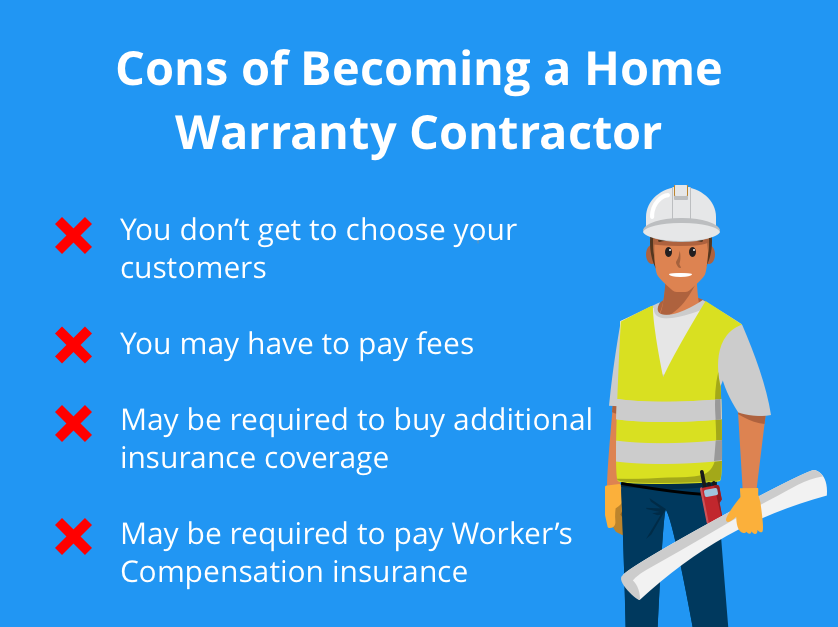
- Flat-rate pricing: Many warranty companies use predetermined fee schedules that may differ from your standard pricing model.
- Longer payment timelines: Depending on the provider, reimbursement may take longer than collecting payment directly from customers, which can affect cash flow.
- Additional approval requirements: Extra work often requires authorization from the warranty company before it can be completed or billed.
- Customer expectation challenges: Homeowners may assume all repairs are covered, leaving you to explain coverage limitations and approval requirements.
- Assigned service calls: Contractors are typically assigned jobs rather than choosing which customers to work with.
- Additional business requirements: Some providers require specific insurance coverage, workers’ compensation policies, or other participation requirements before contractors can join their networks.
Pro tip: Juggling multiple warranty portals alongside your regular customer base can quickly lead to scheduling conflicts and paperwork headaches. If you’re waiting until you get back to the office to sort out job details, field service software like Housecall Pro helps you manage warranty dispatches and direct-pay jobs from one place, with a live calendar, customer records, and job details your team can access from anywhere.
Is becoming a home warranty contractor worth it?
For many contractors, yes—home warranty work can be worth it if your goal is to increase job volume and stay busy. Home warranty work is often a good fit for businesses that want to fill schedule gaps, reduce seasonal slowdowns, or supplement their existing customer base. It can also help newer companies build experience and establish a presence in their local market.
That said, home warranty contracting isn’t the right fit for every business. Companies that focus on premium pricing, highly specialized services, or larger-margin direct-pay projects may find warranty fee schedules and approval requirements restrictive. For example, a luxury remodeling company, a custom electrical contractor focused on large commercial projects, or an HVAC business that primarily sells high-ticket system replacements.
Before applying, evaluate your business goals, pricing model, administrative capacity, and available workforce. The right opportunity should support your long-term growth—not create operational challenges that outweigh the benefits.
What you need to apply
Most home warranty companies look for licensed, insured contractors that can provide reliable service and a positive customer experience. While requirements vary by provider, companies such as American Home Shield, First American Home Warranty, Choice Home Warranty, Cinch Home Services, and Select Home Warranty commonly review the following qualifications during the application process.
Licensing requirements
Most home warranty companies require contractors to hold all licenses required for their trade and location. This may include licenses for HVAC, plumbing, electrical, appliance repair, or general contracting services. Some companies may also require proof of a valid business license before approving an application.
Licensing requirements vary by state, county, and municipality. A license that’s required in one area may not be necessary in another. Before applying, confirm that your licenses are current and review each provider’s contractor requirements to make sure you meet their standards.
View our licensing guides for more information.
Insurance requirements
In addition to licensing, most home warranty providers require contractors to carry active insurance coverage before accepting work assignments.
Common requirements include:
- General liability insurance: Protects against claims involving property damage or bodily injury related to your work.
- Workers’ compensation insurance: May be required if you have employees, depending on state laws and company policies.
- Certificate of insurance (COI): Many warranty companies require a current COI listing coverage amounts and policy dates as part of the application process.
Keep digital copies of your insurance documents readily available, as you’ll likely need to submit them during the application process and whenever policies are renewed.
How do you apply to become a home warranty contractor?
Once you’ve decided home warranty work is a good fit for your business, the next step is finding providers that match your trade, service area, and capacity. While every company has its own application process, most contractors follow the same general path.
1. Research active warranty companies in your service area
Start by identifying which warranty companies assign work in the ZIP codes, cities, or counties you already serve. Look for companies that need your trade, whether that’s HVAC, plumbing, electrical, appliance repair, garage doors, roof repair, or another service category.
2. Review contractor requirements
Each company has its own application process and contractor standards. For example, American Home Shield is part of Frontdoor, and contractors may apply through the Frontdoor network to serve multiple home warranty brands.
First American Home Warranty uses a more direct service provider application process. Review requirements before gathering paperwork so you can focus on providers that align with your business.
3. Gather required documents
Most warranty companies ask for proof of licensing, insurance, tax information, and business registration. You may also need to provide your service area, number of technicians, trade specialties, and years in business.
Keeping these documents organized in a single folder can make it easier to apply to multiple providers and speed up the approval process.
4. Submit applications
Complete each application carefully and only select service categories you can realistically support. If the application asks about technician availability or service areas, be honest about your capacity.
Taking on more work than your team can handle can lead to scheduling challenges and customer service issues once dispatches start coming in.
5. Complete vetting or background checks
Many warranty companies review licensing, insurance, business history, and technician qualifications before approval. Some may also require background checks for technicians who enter customers’ homes.
Responding quickly to requests for additional information can help keep your application moving forward.
6. Review contractor agreements and fee schedules
Before accepting work, review the agreement carefully. Pay close attention to service fees, flat-rate pricing, approval requirements, payment timelines, callback policies, and documentation expectations.
Make sure the numbers work for your labor costs, travel time, and business goals before committing to a provider.
7. Receive dispatch credentials and complete onboarding
Once approved, you’ll typically receive access to a contractor portal, dispatch system, mobile app, or service provider dashboard. This is where you’ll accept jobs, update statuses, submit invoices, upload documentation, and track approvals.
Before taking on a high volume of work, make sure your office staff and technicians understand the provider’s processes and expectations.
How home warranty contractors get paid
Getting paid for home warranty work looks different from a typical retail service call. Instead of collecting payment directly from the homeowner, contractors submit documentation to the warranty company and receive payment based on the provider’s policies and fee schedules.
- Flat-rate fee schedules: Many warranty providers pay predetermined amounts for specific repairs or service categories. This creates pricing consistency, but it may differ from what you typically charge direct-pay customers.
- Invoicing and approval workflows: After completing a job, contractors generally submit invoices along with notes, photos, diagnostic findings, or other supporting documentation.
- Payment timelines: Payment schedules vary by provider. Based on publicly available information from several warranty companies, contractors can often expect payment within approximately 45 days after an approved invoice is received.
- Direct deposit or mailed payment methods: Most providers offer payment by check or electronic methods, though options vary by company. For example, Choice Home Warranty provides weekly payments via USPS-mailed checks or electronic payments.
- Common causes of delayed reimbursement: Missing documentation, incomplete invoices, unapproved repairs, incorrect contractor information, and coverage disputes can all slow reimbursement. Following each provider’s submission requirements to the letter—correct form fields, required photos, diagnostic notes—is the fastest way to keep payments on schedule.
Major home warranty companies for contractors
Several home warranty providers maintain contractor networks across the United States. While requirements vary by provider and location, these are some of the largest networks to consider.
Note: Requirements listed reflect publicly available information as of 2026 and are subject to change. Confirm current standards directly with each provider before applying.
American Home Shield (AHS)
One of the largest home warranty providers in the country, AHS works with contractors across a wide range of trades.
- Trades: HVAC, plumbing, electrical, appliance repair, general home services
- Requirements: General liability, workers’ comp, auto insurance
- Apply: Through the Frontdoor contractor network
First American Home Warranty
First American serves homeowners nationwide and uses a direct application process for service providers.
- Trades: HVAC, plumbing, electrical, appliance repair, pool and spa services, general trades
- Requirements: General liability insurance and workers’ comp
- Apply: Service provider application on the company website
Choice Home Warranty
Choice Home Warranty partners with contractors in several core home service trades and offers multiple payment options.
- Trades: HVAC, plumbing, electrical, appliance repair, garage doors
- Requirements: General liability and auto insurance
- Apply: Service provider application process
Cinch Home Services
Cinch operates in many major markets and works with contractors who service both home systems and appliances.
- Trades: HVAC, plumbing, electrical, appliance repair, home systems
- Requirements: General liability, auto insurance, workers’ comp
- Apply: Contractor network application
Select Home Warranty
Select Home Warranty maintains a national contractor network and uses a direct invoicing model for completed work.
- Trades: HVAC, plumbing, electrical, appliance repair, home repair
- Requirements: General liability, auto insurance, workers’ comp
- Apply: Service provider recruitment channels
AFC Home Warranty
AFC Home Warranty offers contractor opportunities across multiple home service categories, with requirements that vary by location.
- Trades: HVAC, plumbing, electrical, appliance repair, home services
- Requirements: Vary by trade and location
- Apply: Contractor application process
Tips for succeeding as a home warranty contractor
Once you’re approved, strong systems and clear communication can help you get the most value from home warranty work. These best practices can help you stay organized, keep customers happy, and avoid common operational challenges.
- Respond quickly to dispatches: Many warranty companies track response times and customer satisfaction. Promptly accepting and scheduling service requests can help you maintain a strong standing within the network.
- Keep documentation organized: Save photos, diagnostic notes, invoices, approvals, and customer communications for every job. Thorough records can help prevent payment disputes and support reimbursement requests.
- Communicate clearly with homeowners: Explain what’s covered under the warranty, what may require additional approval, and what the next steps will be. Setting expectations early helps reduce confusion and frustration.
- Track reimbursement timelines: Monitor submitted invoices and payment dates so you can quickly identify missing payments and follow up when needed.
- Avoid scheduling overload: Warranty work can help fill your calendar, but taking on too many dispatches at once can lead to missed appointments and unhappy customers. Be realistic about your team’s capacity.
- Work with multiple warranty companies strategically: Partnering with several providers may increase job opportunities, but every company has different requirements, portals, and payment processes. Start with one or two providers and expand only when your systems can support the additional administrative work.
How to manage home warranty jobs without the paperwork pile-up
Home warranty work often comes with extra documentation, approvals, invoices, and follow-ups. Without a system in place, it’s easy to lose track of approvals, miss paperwork deadlines, encounter scheduling conflicts, or spend time chasing payments—especially when you’re working with multiple warranty companies.
If that’s where things are breaking down for you, Housecall Pro can help by:
- Managing schedules from a single calendar: View warranty and direct-pay jobs in the same place to reduce scheduling conflicts.
- Simplifying invoicing workflows: Create, send, and track invoices without relying on spreadsheets or paper records.
- Tracking follow-ups and job status: Monitor where each job stands, from dispatch through completion and payment.
- Keeping customer and job information organized: Store notes, photos, estimates, and service history in one system.
- Supporting field teams with mobile access: Technicians can access schedules, job details, and customer information from their mobile devices.
- Reducing missed paperwork: Keep documentation attached to the correct job record, making it easier to submit required information to warranty providers.
As Abel Lozano from 2nd Generation Carpet Cleaning says, “Housecall Pro is the easy button. All you’ve got to do is push the button.”
Sign up for a free two-week trial today.
Home warranty contrator FAQ
-
How much do home warranty companies pay contractors per job?
-
Compensation varies by company, trade, and service type. Based on publicly available contractor reports and industry discussions, those rates often range from roughly 30%–60% of prevailing market rates for similar work, though the actual amount depends heavily on your trade, region, and the specific provider.
Warranty rates are generally lower than what established contractors charge direct-pay customers, which is why this model works best for filling open schedule time rather than replacing your primary revenue stream. For newer businesses or contractors building a local presence, the consistent dispatch volume can outweigh the lower per-job rate.
-
Do I need a license to work with a home warranty company?
-
In most cases, yes. Home warranty companies generally require contractors to hold any licenses required by state or local regulations. Requirements vary by trade and location, so verify both licensing rules and company-specific requirements before applying.
-
Can I work with multiple home warranty companies at the same time?
-
Yes. Many contractors work with multiple home warranty providers to increase job opportunities and keep technicians busy. Before expanding to additional providers, make sure your scheduling, invoicing, and documentation processes can handle the load. Each company runs a different portal with different submission requirements—adding providers without the right systems in place creates more administrative work than it’s worth.
-
How long does the home warranty contractor approval process take?
-
Approval timelines vary by company. Some contractors are approved within a few days; others wait several weeks, depending on how quickly licensing verification, insurance review, and background checks are completed. Responding promptly to any requests for additional information is the most reliable way to keep your application moving.
-
Which trades are in the highest demand for home warranty work?
-
HVAC, plumbing, electrical, and appliance repair contractors are the most commonly sought trades across major home warranty networks. Demand can vary by region, season, and the makeup of each company’s customer base. Check with providers in your specific service area to gauge actual dispatch volume.
-
Can home warranty work lead to repeat customers?
-
It can. While warranty jobs are assigned through the warranty provider, homeowners often remember contractors who do quality work and communicate well. When future repairs fall outside their warranty coverage—or when they need service on a system the warranty doesn’t cover—they may reach out to you directly. How you handle the job and the follow-up conversation matters: leaving a business card and explaining what you do beyond warranty work is a simple way to make that transition more likely.