Why You Need a Plumbing Inspection Report Template
A plumbing inspection report template provides a structured way to document system conditions, including fixtures, pipes, flow, leaks, water heaters, and shut-off valves. These reports are essential for residential and commercial inspections, insurance walkthroughs, maintenance checks, and code compliance reviews. A well-designed template ensures field techs capture the right information every time and deliver professional, readable reports to clients.
The technical complexity of modern plumbing—from tankless water heaters to intricate greywater recycling—demands high-level documentation. Without standardization, plumbers often rely on handwritten notes or ad-hoc forms that vary by technician. This leads to missing details, inconsistent reporting, and excessive admin time. A downloadable template eliminates guesswork and creates efficiency from the initial inspection to the final client presentation.
Furthermore, a professional report acts as a critical line of defense. Water damage is a leading cause of insurance claims; having a verified record that a system met standards can protect you from liability. By standardizing checks on hydrostatic pressure and drainage performance, you move from “guessing” a system is functional to “proving” its integrity with empirical data.
What’s Included in the Plumbing Inspection Report Template
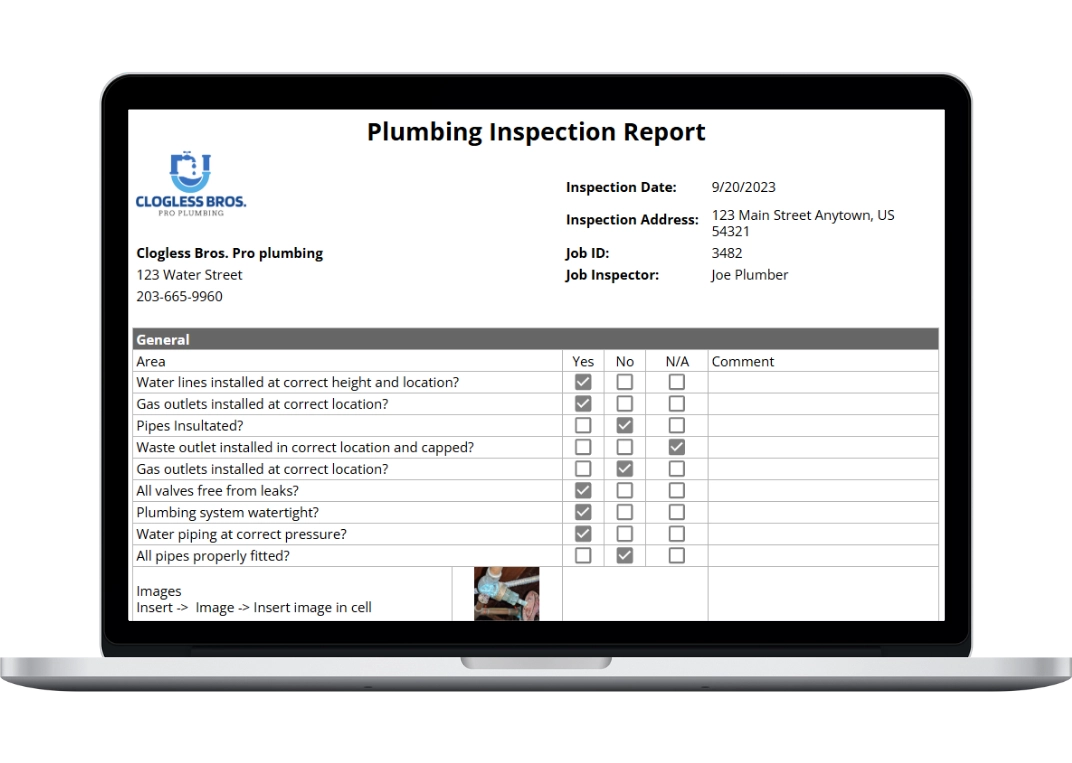
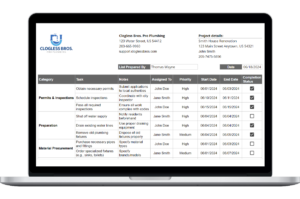
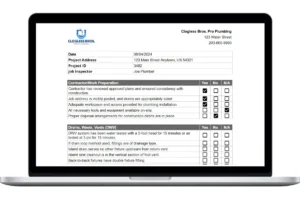
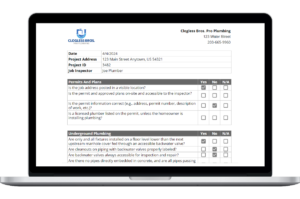
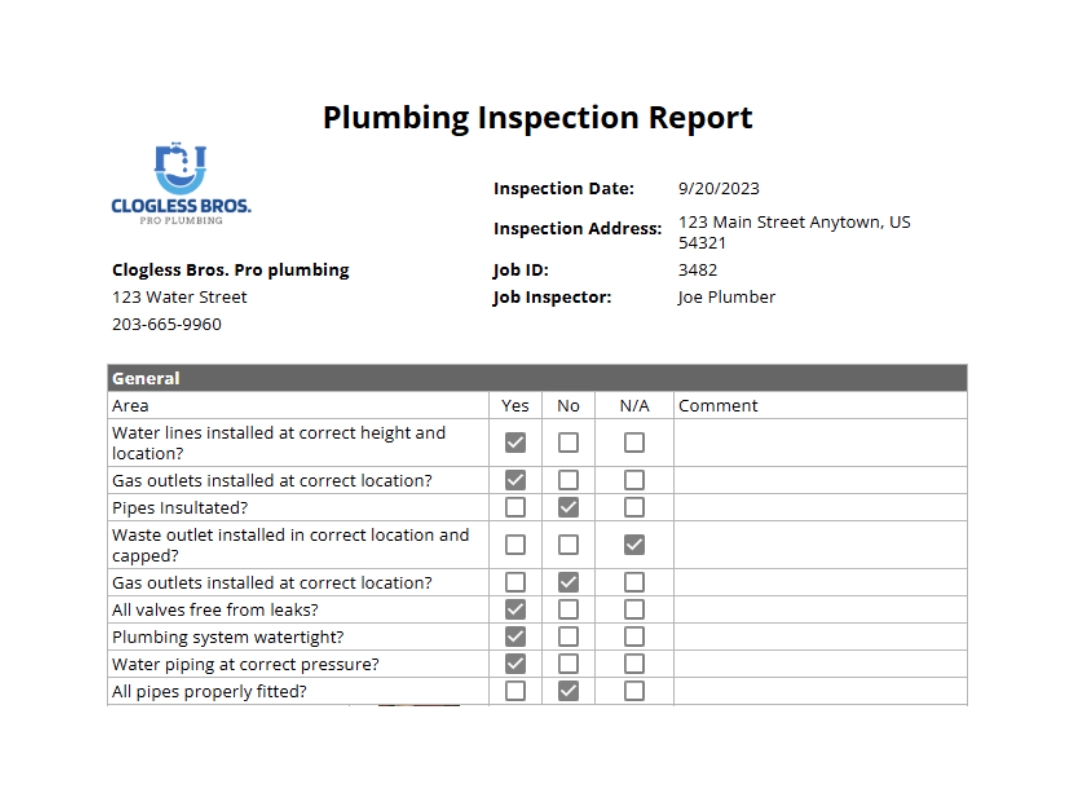
This Plumbing Inspection Report Template includes clearly defined sections that help plumbers document every important aspect of a plumbing system. The template is compatible with Excel and Google Sheets so you can edit, print, or fill it out digitally on a tablet or laptop while on site.
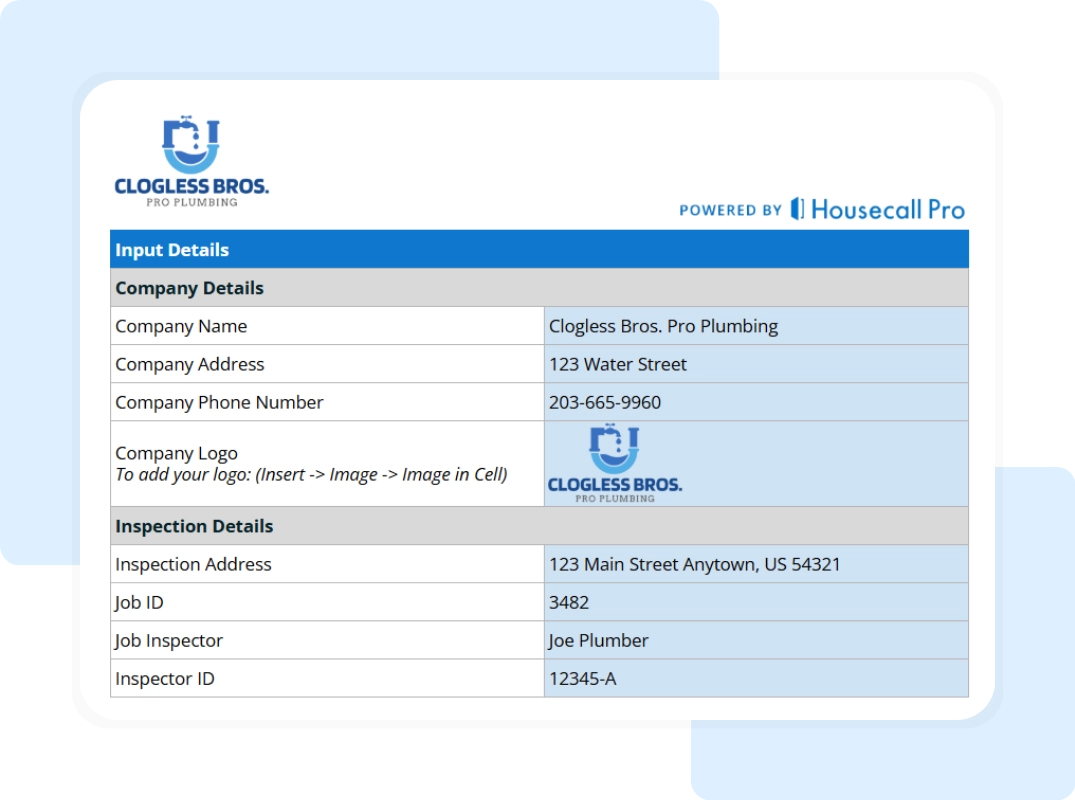
Inspection date, inspector name, and property address used to identify and document each plumbing inspection.
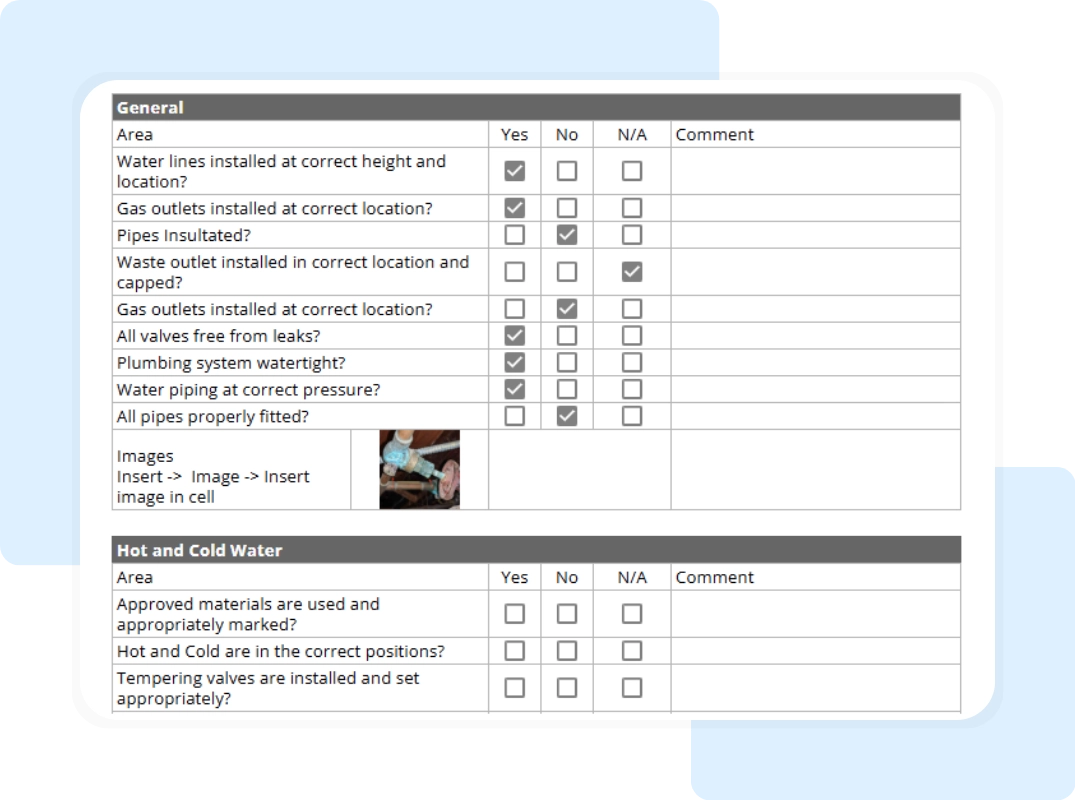
General plumbing system areas reviewed using the checklist items provided in the template.
-
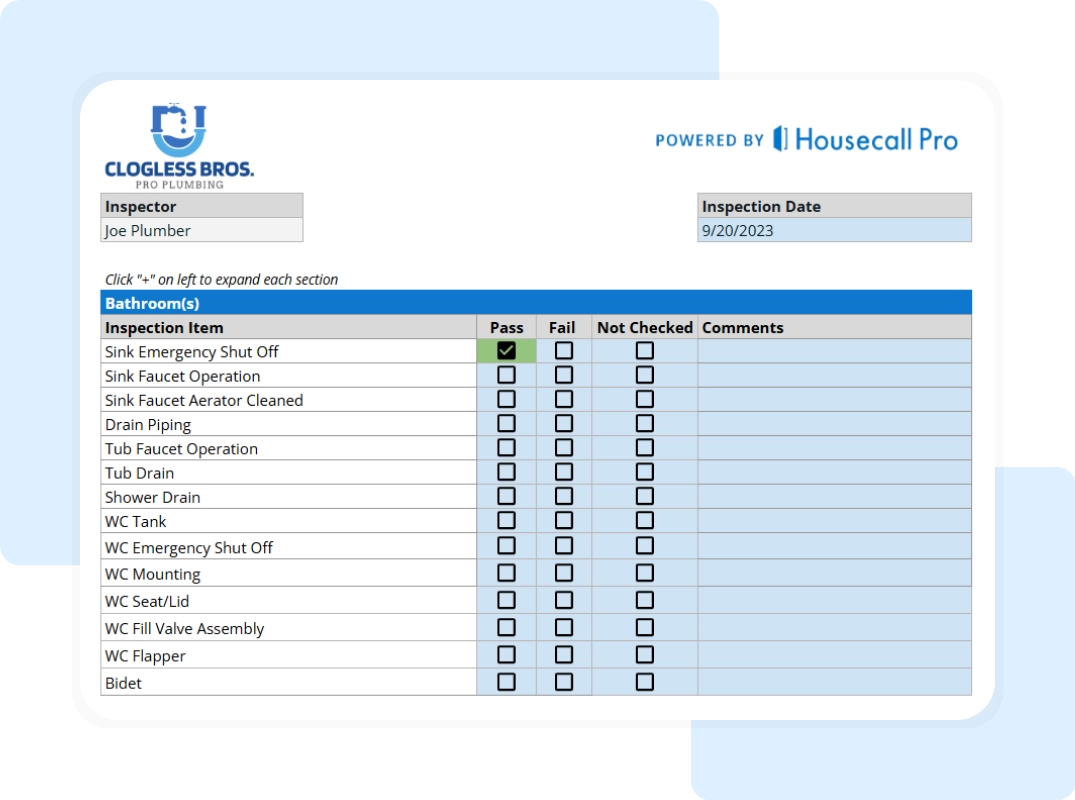
Component Inspection Checklist
Condition status of plumbing components listed in the checklist, including visible piping, valves, and connections.