Want to win more jobs with less effort?
Grow your business and send quick quotes with our home service software.

Want to see your potential revenue?
See what businesses like yours earn with Housecall Pro in 1 - 2 minutes.
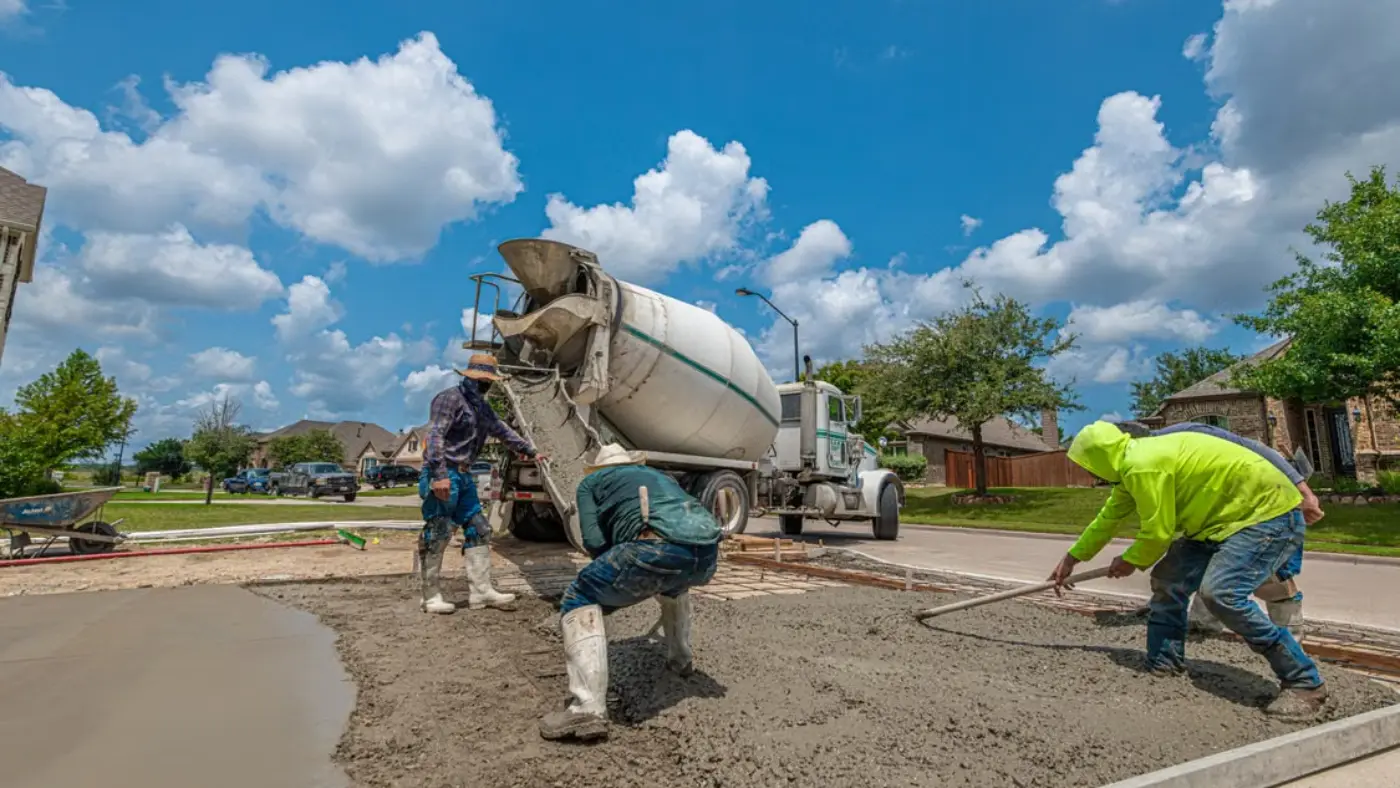
If you want to price concrete jobs profitably, you need to look beyond the finished slab. A driveway, patio, walkway, or foundation may seem straightforward, but costs can add up quickly when you factor in excavation, grading, base preparation, reinforcement, material delivery, and labor.
The challenge is finding a price that’s competitive for your customer and profitable for your business. While national averages can help you benchmark your rates, the most accurate estimates come from understanding your own labor costs, material expenses, equipment usage, overhead, and target profit margin. In this guide, you’ll learn how to calculate concrete job costs, build accurate estimates, and price your work with confidence.
Quick answer: How do you price concrete jobs?
Price concrete jobs by calculating labor, materials, equipment, overhead, job complexity, and your target profit margin, then checking that number against local market rates. Most residential concrete work is priced by the square foot, cubic yard, flat-rate job, or custom quote based on the scope.
One of the biggest pricing mistakes is relying too heavily on competitor rates. Local market pricing can help you sanity-check a quote, but your final price should reflect what it actually costs your business to prep, pour, finish, cure, clean up, and stand behind the job.
Key takeaways
Build concrete prices around your numbers.
Build pricing around your actual costs:: Your labor, overhead, materials, and profit goals should drive every quote.
Look below the surface:: Demo, grading, base prep, and site access can have a bigger impact on profit than the concrete itself.
Use square-foot pricing carefully:: It works best when thickness, finish, and scope are clearly defined.
Separate add-ons:: List sealing, demo, reinforcement, drainage work, and other upgrades as separate line items.
Track actual hours:: Compare estimated time to actual job hours so you can improve future pricing
Review prices often:: Update rates when concrete, fuel, labor, or supplier costs change.
Table of contents
- How we sourced concrete pricing data
- Average concrete prices in 2026
- Residential vs. commercial concrete pricing
- Concrete add-ons worth pricing separately
- Concrete service price list for common jobs
- Rush and emergency concrete repair: what to charge
- Common pricing models for concrete jobs
- What factors affect concrete pricing?
- How to set your concrete prices
- How to improve your concrete business margins over time
- How to explain concrete pricing to customers
- How to build a consistent concrete estimating process across your team
How we sourced concrete pricing data
The pricing ranges in this guide are based on 2025 and 2026 cost data from Angi, HomeGuide and wage data from the Bureau of Labor Statistics. Use them as benchmarks, then adjust for your labor costs, supplier pricing, overhead, local market, and job conditions.
Your actual prices will vary based on:
- Local labor rates and cost of living: Contractors in higher-cost markets typically need higher rates to cover wages and operating expenses.
- Supplier and material costs: Concrete, reinforcement, fuel, disposal fees, and delivery charges can vary significantly by region and supplier.
- Business overhead: Insurance, vehicles, equipment, software, office expenses, and payroll burden all affect what you need to charge to stay profitable.
- Crew size and efficiency: A highly efficient crew may complete the same project faster than a newer or smaller team, which can affect pricing and margins.
- Profit goals: Some contractors prioritize volume and competitive pricing, while others charge more to support higher margins, larger teams, or premium service.
- Service offerings and warranties: Contractors who include detailed prep work, longer warranties, higher-quality materials, or additional services may need to charge more than competitors who don’t.
Average concrete prices in 2026
Most concrete jobs cost between $4 and $20 per square foot, depending on the project type, slab thickness, finish, site prep, and local labor rates. Simple slabs and walkways sit near the lower end, while driveways, reinforced slabs, stamped concrete, and complex repairs can cost more.
A standard job usually includes basic site prep, forming, concrete delivery, pouring, finishing, and cleanup. It may not include demolition, hauling, permits, drainage corrections, heavy reinforcement, staining, stamping, sealing, or hard-to-access pours.

| Concrete job type | Typical price range | What affects the price |
| Basic concrete slab | $6–$12 per sq. ft. | Thickness, reinforcement, site prep, access |
| Concrete patio | $4–$30 per sq. ft. | Size, finish, stamping, color, drainage |
| Concrete driveway | $6–$15 per sq. ft. | Thickness, reinforcement, demo, slope, permits |
| Concrete resurfacing | $3–$9 per sq. ft. | Surface condition, prep, coating type |
| Crack filling | $0.50–$3 per linear ft. | Crack width, material, prep, minimum charge |
| Stamped concrete | $8–$30 per sq. ft. | Pattern, color, complexity, sealing |
Table: Installed U.S. concrete price ranges by job type, 2026; most ranges include labor and materials unless noted.
Residential vs. commercial concrete pricing
Residential and commercial jobs often require different pricing approaches. Residential projects are usually easier to scope and commonly priced by the square foot or as a flat-rate project. Commercial work often involves larger pours, stricter specifications, phased schedules, and coordination with other trades, making custom bids more common.
Residential concrete prices
When pricing residential work, your customers want to know exactly what they’re paying for. A detailed estimate that outlines prep work, reinforcement, finish type, cleanup, sealing, warranty coverage, and exclusions helps set expectations and makes it easier to justify your price.
| Residential concrete job | Typical range | Common pricing approach |
| Small walkway | $800–$2,500 | Flat rate or square foot |
| Patio slab | $1,600–$6,000 | Square foot or project quote |
| Two-car driveway | $2,400–$8,600+ | Square foot or custom quote |
| Garage slab | $2,400–$6,900+ | Square foot with reinforcement details |
| Crack repair | $150–$600+ | Minimum charge or linear foot |
| Resurfacing | $3–$9 per sq. ft. | Square foot with condition notes |
Commercial concrete prices
Commercial pricing depends heavily on project scope, specifications, scheduling requirements, and risk. While some small commercial repairs may look similar to residential jobs, larger projects often require more planning, documentation, and coordination.
Commercial quotes may include:
- Mobilization and equipment: Pumps, skid steers, saw cutting equipment, traffic control, or multiple concrete trucks.
- Crew scheduling: Night work, phased projects, weekend scheduling, or weather-sensitive timelines.
- Engineering requirements: Specific PSI requirements, reinforcement schedules, testing, documentation, or curing procedures.
- Compliance and safety: Insurance certificates, site-specific safety requirements, PPE standards, and contractor coordination.
- Payment terms: Longer payment cycles that can impact cash flow.
Before accepting a commercial project, consider how payment schedules, job complexity, and crew availability will affect profitability—not just the contract value.
Concrete add-ons worth pricing separately
Add-ons work best when they solve a real customer problem. Instead of presenting them as upgrades for the sake of increasing revenue, position them as improvements that help protect the concrete, improve appearance, or reduce future maintenance.
Common concrete add-ons include:
| Add-on | Typical price range | Selling point |
| Concrete sealing | $1–$3 per sq. ft. installed | Helps protect the surface from moisture and stains |
| Staining or coloring | $2–$6 per sq. ft. | Improves appearance without replacing concrete |
| Stamped finish | $8–$30 per sq. ft. | Creates a decorative patio or driveway look |
| Extra reinforcement | Custom quote | Adds strength and durability for heavy-use areas |
| Demolition and haul-away | $2–$6 per sq. ft. | Provides a clean foundation for a longer-lasting replacement |
| Drainage correction | Custom quote | Helps prevent water damage, pooling, and premature concrete failure |
Pro tip: Keep add-ons as separate line items in your estimate. That makes it easier for customers to see what’s required, what’s optional, and how each choice changes the final price.
Concrete service price list for common jobs
Concrete pricing can change quickly based on prep work and site conditions. Still, a simple price list helps your team quote repeat work faster and avoid guessing in the field.
Small concrete jobs
Small jobs may look simple on paper, but they still require travel time, setup, materials, equipment, and cleanup. That’s why many contractors establish minimum charges for repairs and smaller projects.
Without a minimum charge, short jobs can consume valuable crew time without generating enough revenue to cover your costs.
| Job | Price range | Price model | Factors affecting cost |
| Minor crack filling | $0.50–$3 | Per linear ft. | Crack width, material, prep, minimum charge |
| Small patch repair | $150–$600+ | Flat rate | Surface condition, depth, matching existing concrete |
| Walkway section | $1,200–$3,200 | Flat rate | Demo, grading, forms, finish, access |
| Small patio slab | $1,000–$3,500 | Flat rate | Size, thickness, finish, drainage |
| Shed pad | $600–$4,800 | Flat rate | Dimensions, reinforcement, base prep |
| Concrete sealing | $1–$3 | Per sq. ft. installed | Cleaning needs, sealer type, square footage |
Table: Common small concrete job prices in the U.S., 2026; all prices reflect installed cost (labor and materials) unless otherwise noted.
Large concrete jobs
Larger projects involve more materials, more coordination, and more variables that can affect profitability.
A driveway replacement with demolition, drainage corrections, and reinforcement requires a very different pricing approach than a straightforward new slab installation.
| Job | Price range | Factors affecting cost |
| Standard concrete slab | $4–$12 per sq. ft. | Thickness, forms, gravel base, reinforcement |
| Patio installation | $4–$30 per sq. ft. | Finish, stamping, site prep, drainage |
| Driveway installation | $6–$15 per sq. ft. | Size, thickness, rebar, slope, permits |
| Garage slab | $6–$12+ per sq. ft. | Load requirements, reinforcement, access |
| Foundation slab | $4–$14 per sq. ft. | Engineering, excavation, vapor barrier, specs |
| Stamped concrete | $8–$30 per sq. ft. | Pattern, color, detail, sealing |
Rush and emergency concrete repair: what to charge
Concrete work isn’t always an emergency trade, but urgent jobs do happen. Trip hazards, broken commercial walkways, failed driveway sections, storm damage, and safety-related repairs may need faster scheduling or after-hours work.
If a rush job disrupts your schedule, requires overtime, or creates additional liability, build those costs into your pricing and explain the reason for the fee upfront.
| Service type | Price range |
| Rush inspection or service call | $150–$400+ |
| Trip hazard repair | $300–$1,500+ |
| Urgent commercial patch | Custom quote based on hazard level, access, traffic control, and repair size |
| After-hours concrete repair | Premium labor rate or custom quote |
Common pricing models for concrete jobs
Most concrete businesses use more than one pricing model. The best approach depends on the type of work you’re quoting and how predictable the scope is.
- Square-foot pricing: Used for slabs, patios, driveways, resurfacing, and other flatwork where the area is easy to measure.
- Cubic-yard pricing: Used when concrete volume is the main cost driver, especially for larger pours or material-heavy jobs.
- Flat-rate pricing: Used for repeat services like small slabs, crack repair, sealing, or standard walkway sections.
- Hourly pricing: Used for troubleshooting, small repairs, demo, or jobs where the scope is unclear.
- Custom bid pricing: Used for commercial, structural, decorative, or complex jobs that need detailed estimating.
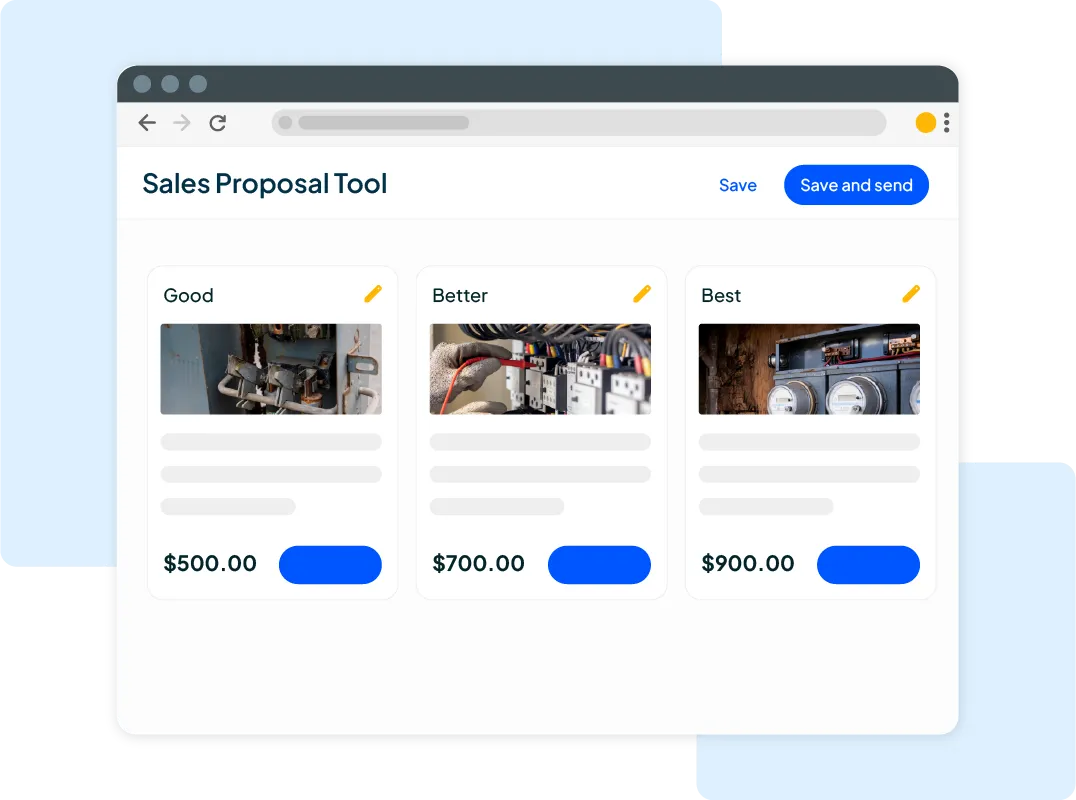
- Tiered pricing: Used for good/better/best options, such as basic broom finish, sealed finish, and decorative finish.
Flat-rate and square-foot pricing are easier for customers to understand, but they only work when your scope is clear. A 400-square-foot patio with easy truck access is not the same job as a 400-square-foot backyard patio that needs old pavers removed, wheelbarrow access, and drainage correction.
What factors affect concrete pricing?
Concrete pricing changes when the work takes more time, uses more material, or carries more risk. Build these factors into your estimate so your team is not trying to recover profit after the job starts.
- Job size: Larger pours usually cost more overall, but the price per square foot may drop because mobilization is spread across more area.
- Slab thickness: A 6-inch driveway slab uses more concrete than a 4-inch patio slab and should be priced accordingly.
- Concrete mix: Higher PSI mixes, additives, fiber reinforcement, accelerators, or specialty mixes can raise material costs.
- Reinforcement: Wire mesh, rebar, thicker edges, and structural reinforcement add material and labor.
- Site prep: Excavation, grading, compaction, gravel base, and vapor barriers can change the job before concrete arrives.
- Demolition: Removing and hauling old concrete adds labor, disposal costs, equipment use, and schedule time.
- Access: A backyard patio with no truck access may require wheelbarrow runs, a concrete buggy, or a pump.
- Finish: Broom finish is usually the baseline, while stamped, stained, exposed aggregate, or polished finishes cost more.
- Weather and seasonality: Cold-weather pours may require accelerators, blankets, shorter scheduling windows, or added labor to protect curing concrete.
- Permits and inspections: Driveways, sidewalks, curb cuts, and commercial concrete may require permits or inspections.
- Warranty and callback risk: Jobs with poor drainage, weak base, or customer expectations around appearance may need a higher margin.
Pro tip: Material price changes between estimate and pour can quietly kill your margin. Protect yourself by including a quote expiration date (typically 15–30 days) and a clause that flags fuel or ready-mix surcharges if costs rise before the job starts. Spell this out in your estimate so customers aren’t surprised—most will understand if you explain it upfront.
How to set your concrete prices
A repeatable pricing system helps you quote faster without losing control of your margins. The goal isn’t to force every job into the same formula—it’s to make sure every estimate accounts for the same core costs.
Step 1: Calculate baseline costs
Start by figuring out what it costs to run your business before materials are added.
Calculate:
- Loaded labor rate (hourly wage + payroll taxes + workers’ comp + benefits)
- Monthly overhead (insurance, fuel, vehicles, software, rent, office expenses, marketing)
- Billable hours per month
Use this formula:
Overhead cost per job
(Total monthly overhead ÷ monthly billable hours) × job hours
This gives you a baseline cost for every hour your crew spends on a job.
Step 2: Estimate materials and concrete volume
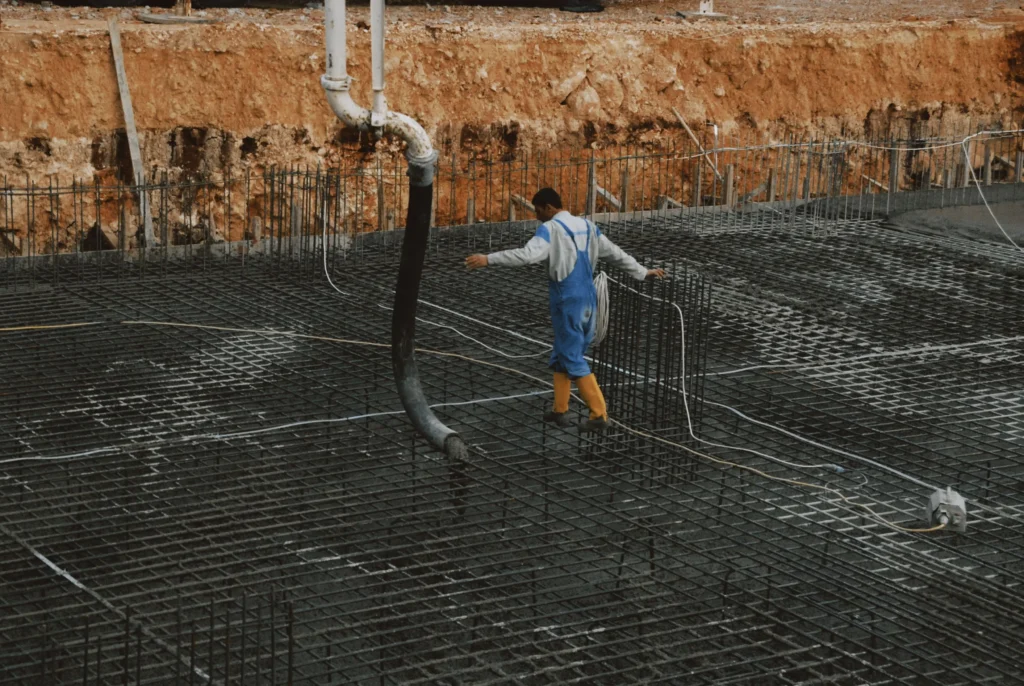
Next, calculate the materials needed for the project
To estimate concrete volume:
- Multiply length × width × thickness to get cubic feet.
- Divide by 27 to convert cubic feet to cubic yards.
- Add 5%–10% for waste, spillage, and uneven subgrades.
Example:
20 × 20 × 0.33 = 132 cubic feet
132 ÷ 27 = 4.9 cubic yards
With a 10% waste allowance, order approximately 5.4 cubic yards.
Then add all other materials, including:
- Rebar or wire mesh
- Forms
- Gravel base
- Vapor barriers
- Sealers
- Disposal costs
Step 3: Calculate your break-even cost
Add together all direct and indirect job costs.
Break-even job cost
Labor + materials + equipment + overhead
This is the minimum amount you need to charge before making a profit.
Step 4: Set your target profit margin
Decide how much profit you want each job to generate.
Your target margin should account for:
- Business growth
- Equipment replacement
- Slow seasons
- Unexpected job costs
- Project risk
Most concrete contractors target a gross profit margin of 20%–35% per job—higher for decorative work, commercial bids, and repairs; lower for straightforward flatwork.
Calculate your final selling price:
Break-even cost ÷ (1 − target margin)
Example:
$2,800 ÷ (1 − 0.30) = $4,000
Learn more: How to calculate markup and margin
Step 5: Build pricing rules for common job types
One of the biggest pricing challenges is consistency. When every estimator builds quotes differently, it’s easy to underprice jobs or leave out profitable services.
Document your pricing rules and build repeatable templates for common jobs.
For example:
- Patios: Square-foot pricing adjusted for thickness and finish
- Driveways: Square-foot pricing plus reinforcement and prep
- Repairs: Minimum charge plus labor and materials
- Decorative concrete: Square-foot pricing with finish tiers
- Commercial work: Custom bid pricing
Tools like Housecall Pro can help you standardize estimates with saved line items, pricing templates, and digital price books, making it easier to quote jobs consistently as your business grows.
Step 6: Set minimum charges
Small jobs still require travel, setup, cleanup, and administrative work. Create a minimum charge that covers those fixed costs before labor and materials are added.
Minimum service fee
(Average travel and setup time × loaded labor rate) + overhead per job
Example
If travel and setup take two hours at $75 per hour and overhead is $85:
(2 × $75) + $85 = $235
If materials cost $40 and your target profit margin is 30%:
($235 + $40) ÷ (1 − 0.30) = $393
In this example, your minimum charge would be about $393, which many contractors would round up to $395 or $400 for easier pricing.
Step 7: Adjust for project-specific conditions
After building your base price, account for factors that increase labor, materials, equipment needs, or risk.
Common adjustments include:
- Difficult site access
- Demolition and haul-away
- Extra slab thickness
- Reinforcement
- Drainage correction
- Decorative finishes
- Permit requirements
- Tight schedules
Add these items separately whenever possible so customers can see exactly what’s affecting the price.
Step 8: Add optional services and upgrades
Price add-ons like standalone services.
Common concrete add-ons include:
- Sealing
- Staining
- Stamped finishes
- Control-joint cutting
- Additional reinforcement
- Drainage improvements
- Resurfacing
Listing upgrades separately makes estimates easier to understand and gives customers flexibility.
Step 9: Compare against local market rates
Once you’ve built a price based on your costs and margin goals, compare it against local market pricing.
Review competitor quotes, local pricing guides, and completed projects in your area to make sure your estimate is competitive and realistic.
If your prices are consistently higher than the market, look for ways to better communicate your value. Highlight items competitors may leave out, such as reinforcement, site prep, cleanup, warranty coverage, drainage work, or higher-quality materials.
If your prices are significantly lower than similar quotes, review your labor assumptions, overhead costs, and profit margin to make sure you’re not underpricing the work.
Step 10: Review and update your pricing regularly
Review your pricing whenever major costs change.
Common triggers include:
- Ready-mix price increases
- Fuel increases
- Labor rate changes
- Insurance increases
- New equipment purchases
- Expanding service areas
Track estimated versus actual labor hours after every job. If your team consistently spends more time on prep, forming, finishing, or cleanup than expected, update your pricing.
Learn more: How to write a price increase letter
Get In Touch: 858-842-5746
Let us earn your trust
On average, Pros increase monthly revenue generated through Housecall Pro by more than 35% after their first year.
See plan options and feature breakdown on our pricing page.
How to improve your concrete business margins over time
Once your core pricing is set, look for ways to improve profitability without raising prices across the board.
- Bundle complementary services: Package sealing, drainage improvements, crack repair, or maintenance services with larger projects to increase average ticket value.
- Compare close rates across service types: If customers regularly approve patios but hesitate on decorative concrete, review how you’re presenting those services. You may need clearer photos, better explanations of the benefits, or more tiered pricing options.
- Identify your most profitable job types: Review which jobs generate the most profit after labor, materials, and overhead. If certain services are consistently more profitable, look for ways to book more of that work through your marketing, sales process, and service offerings.
- Review callbacks and warranty claims: If certain project types consistently lead to rework, build additional labor, quality control, or margin into future estimates.
How to explain concrete pricing to customers
Customers may compare your quote to a national average, a neighbor’s project, or a competitor’s estimate. The goal is to help them understand what’s included—not defend your price.
When reviewing an estimate, explain:
- Scope: What work is included in the quote.
- Prep work: What demo, grading, forming, or base prep is required.
- Finish: Whether the price includes broom finish, sealing, staining, stamping, or another finish.
- Exclusions: What’s not included in the base price.
- Add-ons: Which upgrades are optional and how they affect the total.
- Timeline: How long the job, curing, and cleanup should take.
For example:
Weak: “I know this seems expensive, but concrete prices have gone up.”
Strong: “This quote includes demo, haul-away, base prep, forms, reinforcement, a 5-inch pour, broom finish, cleanup, and curing instructions. I separated the sealing option so you can decide whether you’d like to add it now or later.”
A detailed explanation gives customers something meaningful to compare and makes it easier to see the difference between your estimate and a lower-priced quote.
How to build a consistent concrete estimating process across your team
When every estimator follows a different process, pricing mistakes happen. Disposal fees get missed, add-ons aren’t included, and similar jobs end up with different prices.
Housecall Pro helps create a more consistent estimating process by making it easier to standardize pricing across your team. With our concrete business software, you can:
- Keep pricing consistent: Save common services and add-ons so patios, driveways, repairs, sealing, and demo work follow the same pricing structure.
- Include profitable add-ons: Build optional services like reinforcement, drainage correction, sealing, and demolition into your estimate templates.
- Send professional estimates: Share detailed quotes that clearly outline scope, prep work, finishes, exclusions, and optional upgrades.
- Keep job details organized: Manage customer information, estimates, invoices, payments, and job notes in one place.
- Improve follow-up: Automatically remind customers about open estimates so opportunities don’t slip through the cracks.
Housecall Pro has helped Pros create 40M+ estimates. Ready to build consistent concrete estimates without starting from scratch every time? Try Housecall Pro free for 14 days.
Concrete pricing FAQs
-
How much should I charge for concrete work?
-
Most concrete jobs cost between $4 and $20 per square foot, depending on the project type, thickness, finish, prep work, and local labor rates. Basic slabs may sit closer to $4–$12 per square foot, while driveways and decorative concrete often cost more.
-
How much should I charge to pour a concrete slab?
-
A basic concrete slab usually costs $4–$12 per square foot installed. Charge more for thicker slabs, reinforcement, poor access, excavation, vapor barriers, or structural requirements. Example: a standard 400 sq. ft. backyard slab at 4 inches thick, broom finish, with basic site prep typically runs $1,600–$4,800 depending on local labor rates and access.
-
How much should I charge for a concrete driveway?
-
Concrete driveway pricing commonly ranges from $6–$15 per square foot. The final price depends on driveway size, slab thickness, reinforcement, demolition, drainage, slope, permits, and finish. Example: a two-car driveway (roughly 400–600 sq. ft.) at 5-inch thickness with demo and basic reinforcement runs $2,400–$8,600+ depending on your market. Get the exact scope in writing before quoting—driveway jobs vary more than almost any other concrete type.
-
What profit margin should I target on concrete jobs?
-
Most concrete contractors target a 20%–35% gross profit margin per job, meaning 20%–35% of the job price goes toward overhead and profit after direct costs (labor, materials, equipment). Straightforward flatwork like patios and slabs often runs 20%–25%. Decorative concrete, commercial bids, and repair work with higher callback risk typically justify 30% or more. Keep in mind that net profit—what’s left after all overhead, taxes, and owner pay—will be lower, typically 5%–10%. Use your break-even cost as the floor, and build your target margin on top of that
-
Should I price concrete jobs by the square foot or cubic yard?
-
Use square-foot pricing for customer-facing quotes when the job is easy to measure, and use cubic-yard calculations internally to estimate material needs. Customers usually understand square-foot pricing, but contractors still need cubic-yard math to order the right amount of concrete and avoid short-load or waste costs.
-
How much concrete do I need for a job?
-
To estimate concrete volume, multiply length × width × thickness, then divide cubic feet by 27 to convert to cubic yards. Add 5%–10% extra for waste, uneven subgrade, spillage, or small measurement differences.
-
How do I know if my concrete prices are too low?
-
Your concrete prices may be too low if your schedule is full but you still cannot cover equipment replacement, payroll burden, callbacks, and owner pay. Compare estimated vs. actual labor hours after each job to find where profit is leaking.