Want to win more jobs with less effort?
Grow your business and send quick quotes with our home service software.

Want to see your potential revenue?
See what businesses like yours earn with Housecall Pro in 1 - 2 minutes.
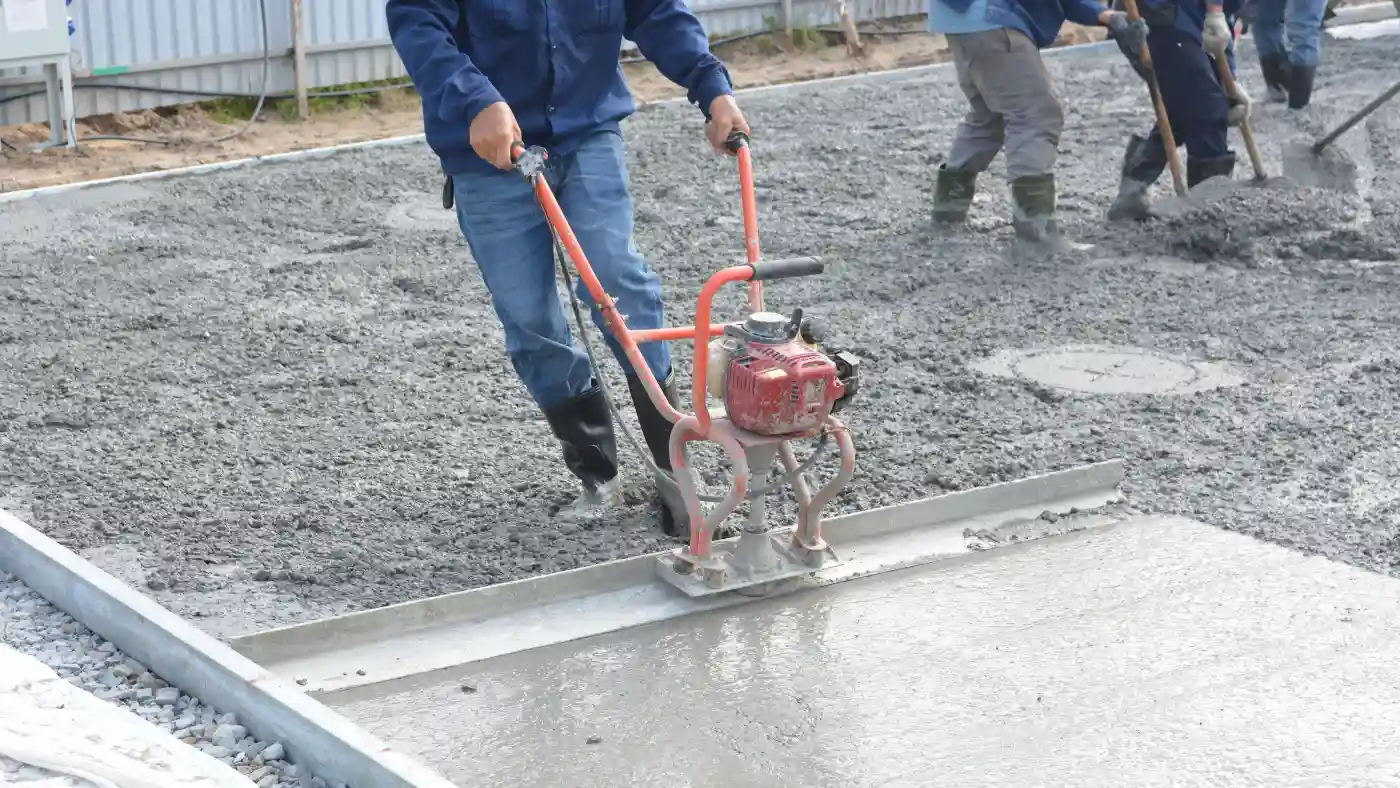
A concrete business can be a rewarding way to turn your trade skills into a successful company. From foundations and driveways to patios and decorative concrete, property owners consistently need experienced contractors they can trust to get the job done right.
If you have hands-on concrete experience and a strong work ethic, starting your own business can give you more control over your schedule, income, and growth opportunities. This guide covers the key steps to launch, manage, and grow a professional concrete business—from planning and licensing to finding customers and building a reliable crew.
Key takeaways
Here’s a quick summary of what you’ll need to do to move your business forward:
Build a strong foundation: You’ll need the right skills, certifications, and a solid plan before you take on your first job.
Know your numbers: Tracking costs and setting clear pricing helps you protect your profit as the business grows.
Market with intent: Local outreach and an online presence help customers find and hire you faster.
Invest wisely: It’s best to start lean with essential tools and staff, then expand as demand increases.
Use the right software: A single platform can help you streamline scheduling, invoicing, and daily operations.
Table of contents
- Develop skills and gain certifications
- Create a business plan
- Create a budget for your concrete business
- Register and license your concrete business
- Get concrete business insurance and bonding
- Buy concrete tools and equipment
- Price your concrete services
- Market your concrete business
- Scale your concrete business profitably
- Spend less time on admin, more time on jobs
Step 1: Develop skills and gain certifications
There’s very little room for guesswork in this trade because the results can affect a building’s safety and structure. Customers want to see proof that you know what you’re doing before they trust you with a major project.
Before you start taking paid jobs, check your state’s licensing requirements—many states require a specialty contractor license before you can legally bid on concrete work. In states like California, working without one isn’t an option. Start at your state contractor board to find out what applies to you.
Once you understand what’s required, you have a few paths to build your skills and credentials:
- Working under a licensed contractor: If you’re new to concrete work, this is often how people start—and in some states, it’s a required step toward getting your own license. You get hands-on experience on real job sites while staying legally compliant.
- Attending trade school: Trade schools offer a structured way to learn the technical side of cement masonry, from mix ratios to finishing techniques.
- Getting certified: Programs through the American Concrete Institute (ACI) or the American Society of Concrete Contractors (ASCC) validate your training and knowledge. ACI offers over 30 certification programs recognized across the industry, including Concrete Field Testing Technician and Flatwork Finisher—both widely required by contractors and municipal project managers.
Even where certifications aren’t mandatory, they help you price jobs confidently, build client trust, and win commercial work.
Step 2: Create a business plan

A business plan serves as a roadmap for your goals. You’ll refer to this document often to stay on track, and most lenders will require it if you need funding.
Download our free field service business plan template to map out every section covered in this step, so you’re not starting from scratch.
Research your market and competitors
Before you build your business, you need to understand who else is serving your area. Start by searching Google Maps and local directories for concrete contractors near you, then:
- Analyze local companies: Visit their websites, read their reviews, and see what customers say they’re doing well—and where they’re falling short.
- Break down their offerings: Look at their pricing, turnaround times, and whether they focus on residential or commercial work.
- Find the gaps: Look for gaps in the market. If no one is offering weekend service or small repairs, those unmet needs can guide how you position your business.
Create a services list
Before you list individual services, step back and decide what type of concrete business you want to run. Your niche will dictate your equipment needs, pricing, crew size, and the types of customers you attract.
Use the following categories to help define your business model:
| Consideration | Options to think through |
| Type of construction | Heavy construction, commercial projects, residential work, or a mix |
| Concrete types | Ready-mix, high-strength, lightweight, decorative, specialty blends |
| Core services | Concrete forming, pouring, finishing, cutting, demolition, repairs |
| Specialty work | Stamped concrete, patios, pool deck, driveway, sidewalk, countertop |
| Customer focus | Homeowners, builders, property managers, or municipalities |
| Project size | Small repairs, mid-size installs, or large multi-phase jobs |
It’s often better to start with a focused list of services that fit your current experience and equipment, then expand as your crew grows. For example, a new concrete contractor might start with residential driveways and sidewalks—jobs with predictable scope and fast turnaround—before moving into stamped concrete or commercial flatwork.
Set SMART goals
Clear targets keep your business moving in the right direction. Aim for goals that are specific, measurable, achievable, relevant, and time-based (SMART).
Your business plan should cover services offered, pricing approach, marketing tactics, daily operations, and financial projections. These pieces work together and give lenders and partners a clear picture of how you plan to operate. Break larger objectives, like annual revenue targets, into smaller monthly milestones to keep progress manageable.
Pro tip: Vague cost estimates are one of the biggest reasons business plans fall apart. Housecall Pro’s Job Costing tools track labor, materials, and overhead per job, so your projections reflect what you actually spend.
Step 3: Create a budget for your concrete business
Starting a concrete company requires a significant upfront investment, mainly due to the cost of heavy machinery and reliable transportation. Your total startup costs will vary based on your location and the specific niche you choose. A residential contractor focusing on driveways, for example, will have much lower upfront costs than a company handling large-scale infrastructure.
The goal in your first year is to budget honestly, avoid overbuying equipment, and plan for slower months. You can keep costs in check by buying used gear or renting specialty tools until you have steady demand.
The table below outlines some typical startup expenses to expect.
| Expense category | What to budget for | Approximate cost range* |
| Equipment and supplies | Mixers, pumps, screeds, hand tools, truck, trailer | $500–$40,000 depending on item |
| Licensing and permits | State and local contractor license fees | $300–$1,000 |
| Insurance (annual estimate)** | Business Owner’s Policy, workers’ comp, commercial auto | $10,350/yr median for concrete contractors*** |
| Marketing and branding | Logo, website, decals, listings; ongoing ads | $1,000–$5,000 upfront; 7%–8% ongoing |
| Initial operating expenses | Fuel, software, storage, tools, payroll | Varies by size |
*Equipment and licensing ranges are estimates and will vary by state, crew size, and coverage limits.
**Based on median annual premiums for Concrete & Asphalt businesses: business owner’s policy ($3,100), workers’ compensation ($4,650), and commercial auto ($2,600). A BOP bundles general liability and commercial property coverage—most small contractors carry a BOP rather than a standalone GL policy. Figures reflect small home service businesses with ~$200K annual revenue and 1–3 employees. Source: Housecall Pro x Coverdash, 2026. Actual premiums vary by location, crew size, and claims history.
***Additional coverages—including professional liability, commercial umbrella, builder’s risk, and surety bonds—are not included in this estimate and will increase your total cost.
Secure financing
Most new business owners don’t have enough cash on hand to cover all startup costs. Financing can provide the support you need to buy a reliable truck or cover material costs before a customer pays their invoice. Common options include:
- Government funding: Local, state, or federal programs that support trade businesses through low-interest loans or funding programs tied to workforce development.
- Small Business Administration (SBA) loans: Bank-issued loans backed by the SBA that often offer longer repayment terms and lower down payments than traditional loans. The SBA 7(a) loan program is a common option for small contractors, with loan amounts up to $5 million and repayment terms up to 10 years for working capital.
- Business line of credit: Flexible funds you can use for fuel or short-term cash flow gaps.
- Business grants: Funding that doesn’t require repayment, often based on your industry or location. Search Grants.gov and your state’s small business development center (SBDC) for trade-specific grant programs in your area.
Step 4: Register and license your concrete business
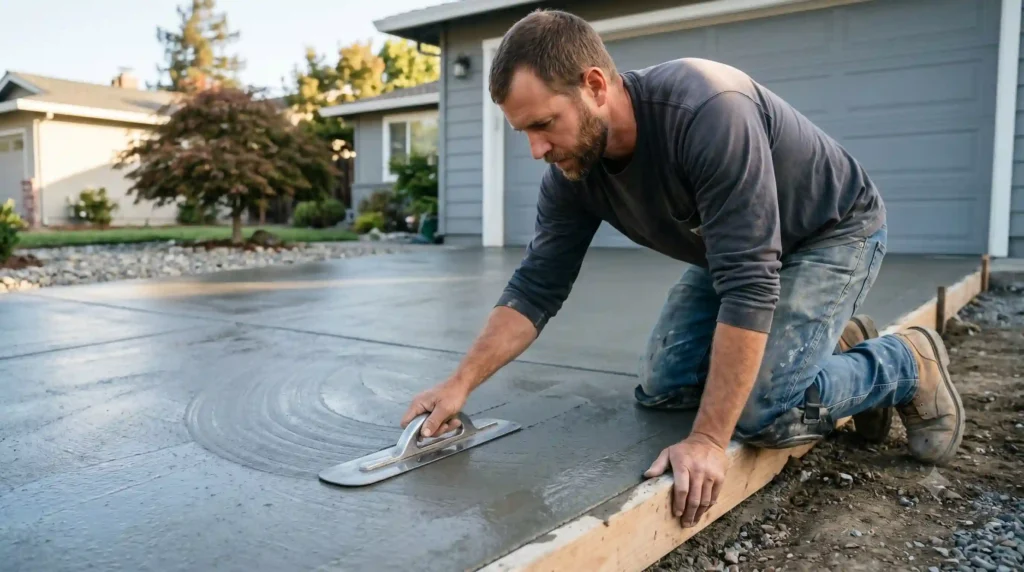
Setting your business up legally protects your personal assets and builds trust with clients. While rules vary by city and state, most of the registration process can be handled online. It helps to keep a checklist so nothing slips through the cracks.
Pick a business name
Your name should be easy to remember and clearly explain what you do. Names like “Northside Concrete Services” leave no confusion. Avoid clever names that don’t explain your work, especially early on. Check availability with your state registry and secure matching domain names and social media handles early.
Some licensed trades have naming rules, such as requiring the owner’s name or banning words like “licensed” unless you meet specific state criteria. Check your state contractor board or secretary of state website to confirm what’s allowed.
Choose a business structure
Your choice of structure affects how you pay taxes and your level of personal liability:
- Sole proprietorship: This is the easiest to set up, but it doesn’t separate your personal assets from your business debts.
- Limited liability company (LLC): A common choice for trade businesses because it protects your personal assets and offers flexible tax options. Many solo concrete contractors start as an LLC.
- Partnership: Shared ownership between two or more people; this requires a clear agreement on responsibilities and profits.
- Corporation: Best for larger companies, as it provides strong liability separation but requires more formal recordkeeping.
Rules vary by state, so review your local requirements before filing. If you’re unsure which structure fits your goals, speak with an accountant or attorney.
Read more: LLC vs. sole propietorship
Apply for a business license
Most areas require a general business license and a specific contractor or specialty trade license. Check your city website and state contractor board for specific rules. You’ll likely need to pay a fee, show proof of insurance, and (potentially) pass an exam.
Step 5: Get concrete business insurance and bonding
Concrete work involves risks like property damage and on-the-job injuries. Without the right coverage, a single accident could put your business at risk. And many clients, especially for commercial work, will require proof of insurance before signing a contract. Here’s what to know:
| Coverage type | What it covers | Why it matters |
| General liability | Property damage, third-party injuries, and related claims | Protects you if the concrete cracks, spills, or causes damage |
| Workers’ compensation | Medical costs and lost wages for injured employees | Often required by law if you have staff |
| Commercial auto | Vehicles used for work, including trucks and trailers | Personal auto policies usually won’t cover work use |
| Bonding | Financial protection for incomplete jobs | Required for some contracts and most public projects |
Most general contractors and municipalities require a certificate of insurance (COI) before awarding a job. Keep a current COI in your truck and on file digitally so you can send it the same day a client requests it.
Pro tip: You can store your digital insurance documents in Housecall Pro so they’re easy to access when you’re bidding on new jobs.
Read more: Workers’ compensation: what it is, what it covers, and how much it costs
Get In Touch: 858-842-5746
Let us earn your trust
On average, Pros increase monthly revenue generated through Housecall Pro by more than 35% after their first year.
See plan options and feature breakdown on our pricing page.
Step 6: Buy concrete tools and equipment
The right tools help your crew work faster, stay safe, and reduce costly mistakes. While you don’t need to buy every piece of equipment at once, you’ll need these basics before taking on paid work.
- Hand tools: Trowels, floats, edgers, shovels, rakes, and levels.
- Power tools: Concrete mixers, power trowels, screeds, and saws for cutting control joints.
- Safety equipment: Steel-toe boots, gloves, eye protection, respirators, and high-visibility vests.
- Vehicles: A dependable pickup truck or flatbed and a trailer for hauling forms and tools.
To help keep costs down, build relationships with local rental shops for specialty equipment you’ll only need occasionally.
Pro tip: Keep your equipment list organized from day one with a free field service equipment list template.
Step 7: Price your concrete services
Pricing is a balancing act: set rates too low and you won’t make money, but set them too high and you won’t win bids. Your goal is to cover all expenses while leaving room for a healthy profit margin.
Your pricing model shapes how customers view your business and how predictable your income is.
Different jobs often require different pricing methods:
- Hourly pricing: Customers pay for time and materials used. This works best for repairs or small jobs where the total time is hard to predict. Rates vary significantly by region and crew size—research what local competitors charge before setting your own.
- Flat-rate pricing: You charge a single price for the entire job. This model is ideal for repeatable projects like patios or driveways. Residential driveways typically run $6–$10 per square foot for standard concrete, or $10–$20 per square foot for decorative finishes like stamped or stained, depending on design complexity and region (Concrete Network; Angi).
- Hybrid pricing: You use flat rates for standard work but charge by the hour for unexpected extras.
To set your rates, add up your labor, materials, fuel, and software costs, then add a profit margin of 10%–20%. Aim for at least 15% net margin on residential work and higher on specialty finishes like stamped or exposed aggregate, which require more skilled labor and carry higher liability if the finish is inconsistent. Research your competitors to understand market pricing, but avoid blindly copying their prices.
Pro tip: Housecall Pro’s field service price book template can help keep pricing consistent as jobs and materials change.
Step 8: Market your concrete business
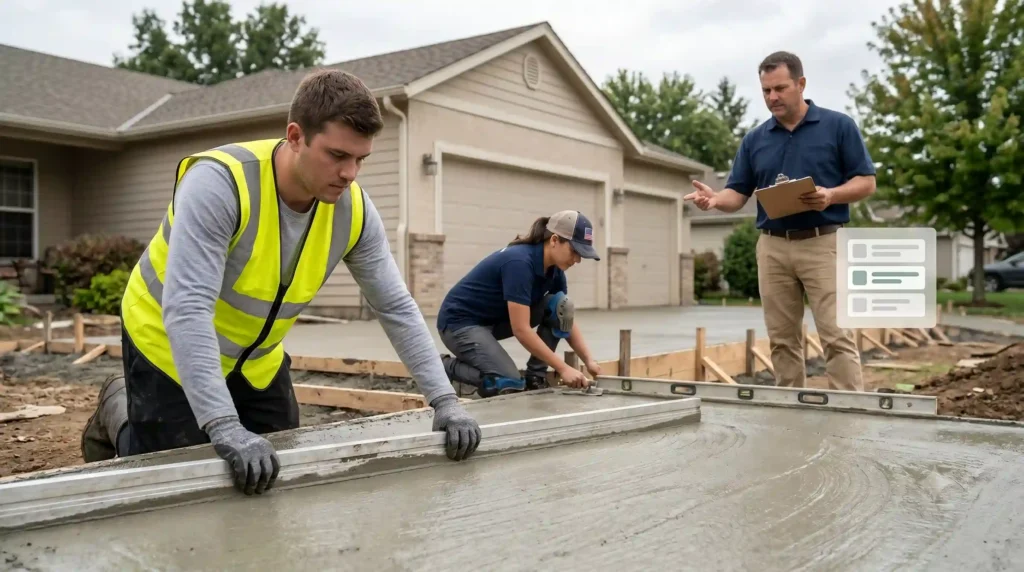
Most customers start their search online. Relying solely on word of mouth isn’t enough to bring in steady work. You need to stay visible where people are looking.
Design your brand
Your brand is how people recognize and remember your business. Start with a name, logo, and color scheme that match your niche. A stamped concrete specialist may look different from a contractor focused on commercial foundations. Keep it simple and professional.
Before settling on a name or logo, check that the matching website domain and social media handles are available. This makes it easier for customers to find you later. Your logo doesn’t need to be expensive, but it should be clear and readable on trucks, invoices, and online profiles.
Use the same branding across your website, social pages, estimates, and uniforms. When everything looks consistent, customers feel more comfortable reaching out and booking work.
Build an online presence
A strong online presence helps homeowners find your business, understand what you offer, and feel confident reaching out. According to Housecall Pro’s 2025 Customer Service Report, 96% of homeowners expect a user-friendly, professional website, so start with the basics: what you do, where you work, and how to contact you.
Focus on the channels that help customers find and trust you:
- Make your website mobile-friendly: Mobile devices now account for roughly 60% of global web traffic, and your site’s mobile version impacts how well you perform in Google search. Make sure your site is easy to read, navigate, and contact from a phone. Include your services, service area, photos, and a clear call-to-action on every key page.
- Complete your Google Business Profile: Add your services, hours, service area, and photos. Then ask happy customers for reviews after each completed job. According to BrightLocal, review signals account for roughly 20% of Google’s Local Pack ranking factors, making reviews one of the most important ways to improve your local visibility.
- Share photos of finished work: Post project updates, before-and-after photos, and completed jobs on your website, Google Business Profile, Facebook, or Instagram. Driveways, patios, and decorative concrete finishes are especially helpful for showing the quality of your work.
Don’t have a website yet? Housecall Pro builds them for you—optimized for mobile, local search, and lead capture right out of the box. See how it works.
Use offline marketing strategies
Offline marketing still plays a strong role in local service businesses. Here are a few effective strategies you might implement for your concrete business:
- Direct mail: Postcards and neighborhood mailers work well in areas where you’ve recently finished a job. A simple “we just worked in your neighborhood” postcard mailed within a week of finishing a driveway can help build local awareness and generate new leads close to your existing jobs.
- Yard signs: Place signs and door hangers to reinforce your presence in a specific neighborhood.
- Networking: Introduce yourself to real estate agents, property managers, and trade groups who often need concrete work done. General contractors and home builders are especially high-value referral sources—one relationship can lead to repeat work across multiple job sites.
- Personal referrals: Let friends, family, and early customers know you’re open for business. A satisfied client sharing your name with a neighbor can often lead to your next job faster than paid advertising.
Read more: Marketing referral program ideas to attract more customers
Step 9: Scale your concrete business profitably
Scaling a trade business is about more than just chasing the biggest contracts you can find. Expanding too fast can lead to burnout, so the goal is to make gradual, profitable changes that keep your workload manageable.
As your reputation grows, you can look for logical ways to increase your capacity and reach:
- Tighten your operations: Look for bottlenecks in your scheduling or invoicing to ensure you aren’t leaving money on the table.
- Invest in equipment: Moving from manual tools to specialized machinery can help your crew finish pours faster and with more precision.
- Expand your service area: Once you have a reliable system in place, consider taking on jobs in nearby counties or municipalities to tap into new markets.
- Track your data: Pay close attention to which types of jobs—like decorative patios versus standard driveways—offer the highest margins. You need to know where to focus your marketing efforts. Specialty concrete work like stamped finishes and exposed aggregate typically command higher margins than standard flatwork because of the skill required and lower competition.
Read more: How to scale a service business
Hire a crew that builds your reputation
You can only handle so many jobsites on your own before quality starts to slip. To grow, you need a team that takes as much pride in a finished slab as you do. Building a reliable crew allows you to take on larger projects and keeps your business running even when you aren’t on-site.
When you’re ready to bring on staff, use a structured approach to find the right fit:
- Define specific roles: Clearly outline what you need, whether it’s a general laborer for prep work, a skilled finisher for detail work, or a crew lead to manage the jobsite.
- Prioritize attitude: It’s often easier to teach someone how to use a power trowel than to teach them a strong work ethic. Look for people who are reliable, follow safety rules, and show up on time.
- Invest in ongoing training: Clear communication and regular training help your crew work faster, reduce expensive mistakes, and improve overall customer satisfaction.
How to decide between employees and subcontractors
Before you hire, decide whether you need W-2 employees or 1099 subcontractors. Employees cost more upfront—payroll taxes, workers’ comp, and benefits—but give you more control over scheduling and quality. Subcontractors offer flexibility for overflow work but can’t always be available when you need them. Many growing concrete businesses hire their first W-2 laborer for core work and use 1099 subcontractors for larger pours or specialty finishes until demand justifies a full crew.
Pro tip: Building out your first job descriptions? Download a free job description template to get started.
Spend less time on admin, more time on jobs
When you’re running jobs, managing a crew, and chasing down invoices at the same time, the admin work adds up fast. Housecall Pro is built for concrete contractors like you—so you can run your business from your phone instead of drowning in paperwork.
Our concrete business software helps with:
- Scheduling and client management: Book new pours, dispatch your finishers, and send automated arrival windows to customers from a single dashboard.
- Pricing and invoicing tools: Use Price Book to set consistent rates, then send professional invoices and collect payments right from the jobsite.
- Marketing and client acquisition: Track reviews, automate follow-ups, and manage referral programs to help turn one happy homeowner into a whole neighborhood of new leads.
- Operational efficiency: Take payments, complete digital forms, upload photos, and access job details from your phone or tablet on the go.
- Growth support: Manage employees, subcontractors, and multiple service areas as you expand.
Ready to see how it works? Start your 14-day free trial today.
Starting a concrete business FAQ
Is concrete a good business to start?
Yes. Concrete is a strong trade with steady demand because it is essential for housing, infrastructure, and repairs. The National Ready Mixed Concrete Association (NRMCA) estimates U.S. producers delivered 393 million cubic yards of ready-mix concrete in 2023—reflecting consistent underlying demand tied to housing and infrastructure activity. As with any trade, success depends on quality work and managing your business operations efficiently.
What do I need to start a small concrete business?
You need basic hands-on skills, a registered business name, and the proper trade licenses and insurance for your state. For equipment, you’ll need hand tools, safety gear, a dependable truck, and access to a mixer or ready-mix supplier. Starting small helps control costs while you learn which services bring the best return.
How much can I make in the concrete business?
The Bureau of Labor Statistics reports a median salary of $54,660 for cement masons and concrete finishers in 2024, but owner-operators running their own business typically earn more once job markup and overhead recovery are factored in. Income can grow significantly as you add crew and take on larger jobs. Strong pricing, tight cost control, and repeat work are the biggest factors in taking home more money. Specialty work—stamped concrete, exposed aggregate, polished floors—tends to command the highest margins and is worth pursuing once you have the skills and equipment.
How do I get my first concrete jobs?
Start by offering discounted or portfolio-rate work to 2–3 neighbors, friends, or local businesses in exchange for photos and reviews. Post before-and-after photos on Nextdoor, Facebook, and your Google Business Profile immediately after each job. Steady posting and review collection typically starts generating inbound leads within your first few months of active marketing.
Do I need a license to start a concrete business?
It depends on your state and the type of work you do. Most states require a contractor’s license for concrete work over a certain dollar threshold. California, for example, requires a C-8 Concrete Contractor license from the CSLB for any concrete work billed at over $500—and passing the required exams takes preparation time, so factor that into your launch timeline. Check your state contractor board’s website for exact requirements before taking paid jobs.