Want to win more jobs with less effort?
Grow your business and send quick quotes with our home service software.

Want to see your potential revenue?
See what businesses like yours earn with Housecall Pro in 1 - 2 minutes.
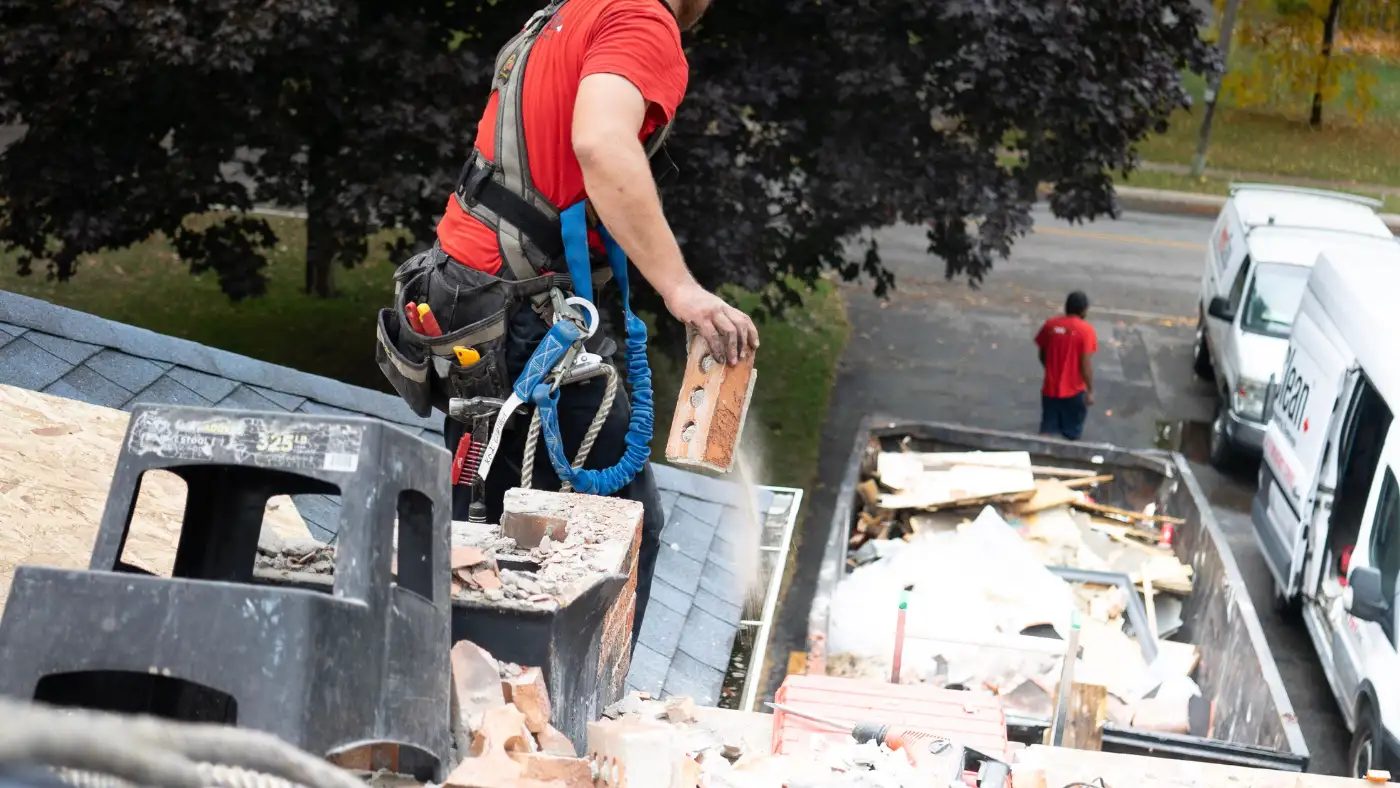
Chimney sweep prices can look simple on the surface: one fireplace, one appointment, one cleaning. But the price has to cover more than the sweep itself. You’re paying for drive time, setup, ladders, drop cloths, cleanup, tools, insurance, office work, and the risk that comes with working on roofs or inside dirty flues.
That means pricing chimney jobs profitably starts with understanding your real costs—not just matching the company down the road. In this guide, you’ll learn how to calculate chimney sweep prices, account for labor and overhead, choose the right pricing model, charge for add-ons and complex jobs, and build a pricing strategy that protects your margins while staying competitive in your market.
Quick answer: How do you price chimney sweep jobs?
Price chimney sweep jobs by adding up your labor, travel, overhead, equipment, inspection time, job difficulty, and target profit margin, then comparing that number against local chimney sweep rates. A standard residential chimney sweep often falls around $129 to $381, with Angi reporting an average cost of $254 for annual cleaning.
One of the biggest mistakes pros make is setting rates without knowing whether each job is actually profitable. A low price may help you book more jobs, but it can hurt your margins if it doesn’t cover travel, setup, cleanup, insurance, callback risk, and the time needed to do the job safely.
Key takeaways
Use these rules to keep chimney sweep pricing profitable:
Start with job costs: Build prices from labor, travel, overhead, setup time, and margin.
Set a minimum charge: Short jobs still need to cover admin, drive time, and cleanup.
Charge for complexity: Extra flues, steep roofs, and heavy buildup should raise the price.
Separate add-ons: List inspections, caps, nests, and repairs as separate line items.
Review before peak season: Update prices before fall demand puts pressure on your schedule.
Table of contents
- How we sourced chimney sweep pricing data
- Average chimney sweep prices in 2026
- How to price chimney inspections separately from sweeping
- Popular chimney sweep add-ons and upsells
- Commercial and property management chimney sweep pricing
- What factors affect chimney sweep pricing?
- Common pricing models for chimney sweep jobs
- How to set your chimney sweep prices
- Example chimney sweep price calculations
- How to improve your chimney sweep profit margins over time
- How to explain chimney sweep pricing to customers
- How to quote chimney sweep jobs consistently—without doing the math every time
How we sourced chimney sweep pricing data
The price ranges in this guide are based on 2026 homeowner cost data from Angi, Thumbtack, HomeGuide, and Fixr. Use these ranges to understand what homeowners may expect to pay, then adjust your pricing based on your labor costs, overhead, job complexity, and profit goals.
Your prices may vary based on:
- Local labor rates and cost of living: A chimney sweep in a high-cost metro prices differently than one in a smaller rural market. Labor expectations, minimum charges, and what customers are used to paying all shift by region.
- Business overhead and operating expenses: A solo chimney sweep working out of a truck prices differently than a company running multiple crews, a dispatcher, and a service vehicle fleet. Higher overhead isn’t a reason to underprice—it’s a signal to build those costs into your rate.
- Labor model: Whether you run employees or subcontractors affects your labor burden, scheduling flexibility, and how you price risk.
- Insurance and licensing tier: Contractors carrying commercial general liability, workers’ comp, and roof-access coverage have higher fixed costs than those at minimum coverage—and that difference needs to show up in pricing.
- Experience and credentials: A CSIA– or NFI-certified sweep can charge more than an uncertified competitor—and should. Credentials signal expertise, reduce liability risk, and justify a higher rate to homeowners who are comparison shopping.
- Service level and warranty policy: A business that backs its work with a written warranty and detailed inspection reports has higher operating costs than one that does not. Build that in rather than absorbing it later.
Average chimney sweep prices in 2026
A standard residential chimney sweep typically costs $150 to $400, with complex jobs costing more if the chimney has heavy creosote buildup, difficult roof access, animal nests, damaged components, or inspection needs.
| Service | Typical price range | What affects the price |
| Standard one-flue sweep | $129–$381 | Access, buildup level, fireplace type |
| Gas fireplace cleaning | $80–$150 | Lower buildup, simpler scope |
| Additional flue | $75–$150 | Same visit, extra cleaning time |
| Heavy creosote removal | $100–$300 add-on | Labor, tools, cleanup time |
| Camera inspection | $150–$300+ | Equipment, time, written notes |
| Nest or debris removal | $150–$500+ | Blockage size, access, safety risk |
| Chimney cap installation | $200–$850+ | Cap type, roof access, materials |
| Dryer vent cleaning | $130–$220 | Vent length, access, buildup |
How to price chimney inspections separately from sweeping
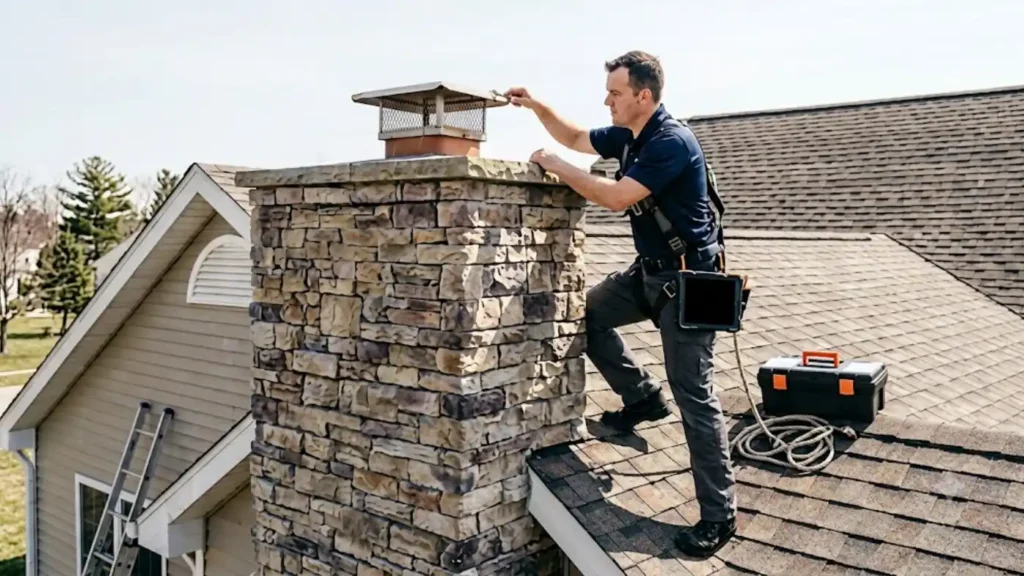
A basic Level 1 visual check can be included with a standard sweep, but camera inspections, written reports, Level 2 assessments, and repair evaluations should be priced as separate services. They take more time, require documentation the customer keeps, and carry more professional responsibility than a walkthrough visual.
Use inspection levels as your pricing framework:
- Level 1:Standard visual check of accessible areas. Typically included with an annual sweep at no extra charge.
- Level 2: More detailed assessment covering accessible and concealed areas, often with video scanning. Required when buying or selling a home, after a chimney fire, or before major system changes. Price this at $250–$600 (Angi, 2026).
- Level 3: Involves removing structural components to investigate hidden damage. Only necessary when Level 2 reveals a problem that can’t be assessed from the surface. Price this at $900–$5,000 depending on scope and flue count.
Listing each level as a separate line item in your estimate makes it easier for customers to understand what they’re paying for—and easier for you and your team to charge for the work consistently.
Popular chimney sweep add-ons and upsells
Add-ons increase job value when they solve a real condition the customer can understand. They shouldn’t feel like random extras. Use photos, notes, and clear descriptions to show why the work is recommended.
Common chimney sweep add-ons include:
- Camera inspection: Useful when the customer needs a closer look at the flue, liner, blockage, or suspected damage.
- Heavy creosote removal: Applies when buildup requires more time, tools, or multiple cleaning passes.
- Nest or debris removal: Covers bird nests, leaves, sticks, animal debris, or other flue blockages. Wildlife removal—including squirrels, raccoons, and birds—typically runs $180 to $560, while protected species like bats may require special permits and cost mor
- Chimney cap installation: Helps prevent animals, rain, and debris from entering the chimney.
- Waterproofing: Protects masonry when moisture damage or exposure is a concern.
- Dryer vent cleaning: Works well as a same-visit add-on for homeowners already thinking about fire safety. A dryer vent cleaning typically runs $130 to $220 and cross-sells well into your existing customer base.
- Minor masonry repair: Covers small repair needs found during inspection, when your business offers that service.
A simple bundle could look like this:
Chimney safety package: Standard sweep + visual inspection + camera scan + cap check.
This type of package can work well when customers want more than a basic cleaning but are not ready for repair work yet.
Commercial and property management chimney sweep pricing
Property managers, HOAs, apartment complexes, and rental property owners can become valuable long-term customers—especially in areas where wood-burning fireplaces are common. A property manager scheduling service for 20 fireplaces has very different needs than a homeowner booking a single chimney sweep, so your pricing should reflect the additional scope and complexity.
Factors to include in commercial pricing:
- Volume discounts that protect profitability: Offering a lower per-unit rate for multi-unit properties can help win larger contracts, but make sure you set a minimum price that covers travel, setup, reporting, and overhead. Even a large project can become unprofitable if access challenges or administrative work take longer than expected.
- Inspection reports and documentation: Many property managers require photos, inspection reports, and service records for insurance, maintenance tracking, or compliance purposes. Since documentation takes time, be sure to include it in your pricing.
- Access and scheduling requirements: Coordinating with tenants, working around building schedules, or navigating elevators and stairwells can increase labor time. Clearly outline access expectations and any additional fees before work begins.
- Service agreements and contract terms: Annual maintenance agreements are often the best fit for multi-unit properties. Define the scope of work, per-unit pricing, cancellation terms, and how additional repairs or maintenance recommendations will be handled.
While commercial chimney sweeping jobs typically require custom quotes, starting with a per-unit pricing model makes it easier to scale services as a property’s needs grow.
What factors affect chimney sweep pricing?
The same “one fireplace” job can land at very different prices depending on access, buildup, risk, and what the customer needs documented. Use the factors below to keep your adjustments consistent instead of making a judgment call every time.
Number of flues
A single-flue fireplace is usually faster to clean than a home with two or three fireplaces. Charge less than a full second job when the extra flue is cleaned during the same visit, but increase the fee if it requires separate access, extra setup, or heavier cleaning.
Creosote buildup
Heavy creosote buildup can add time, mess, tools, and risk. A basic sweep may be enough for light buildup, while heavier buildup may need an added charge or a separate cleaning recommendation. Third-degree or glazed creosote—the hardest and most dangerous type—may require chemical treatments or multiple visits and should always be priced as a separate scope, not an upcharge on the standard rate.
Roof height and pitch
Steep roofs, tall chimneys, and difficult ladder setups should raise the price because they add safety risk and labor time. Create a written access policy, such as adding a set fee for roofs above a certain pitch, chimneys over two stories, or jobs that require two techs for safe ladder work.
Fireplace or stove type
Wood-burning fireplaces, inserts, pellet stoves, wood stoves, and gas fireplaces may each require different cleaning steps. A gas fireplace cleaning may cost less than a wood-burning chimney sweep, while inserts or stoves may require more disassembly and care.
Animal nests and blockages
Bird nests, leaves, sticks, squirrels, and other debris can turn a basic sweep into a more involved job. Price these as separate line items because the work goes beyond normal soot and creosote removal.
Inspection level
A basic visual check may be included with a standard sweep. A Level 2 inspection, camera scan, written report, or real estate inspection should be a separate paid service. These take more time, generate documentation the customer keeps, and carry more professional responsibility than a visual check.
Seasonality
In colder markets, demand often rises from late summer through early winter as homeowners prepare fireplaces for regular use. If your schedule fills up during peak season, your minimum charge, emergency fee, and cancellation policy should all reflect that demand—not just your off-season baseline.
Travel distance
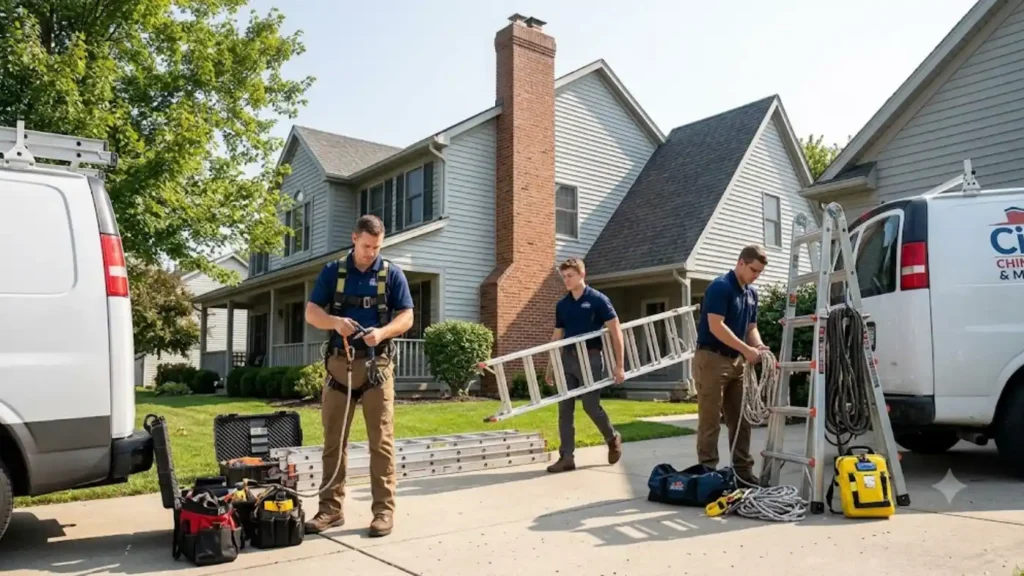
Long routes need to be priced into the job. For example, a 45-minute rural drive each way can turn a one-hour sweep into a three-hour job once travel, setup, cleanup, and office time are included.
Common pricing models for chimney sweep jobs
Most chimney sweep businesses use a mix of flat-rate pricing, add-on pricing, and custom quotes, depending on the job.
- Flat-rate pricing: Best for standard residential sweeps where the scope is predictable.
- Per-flue pricing: Works when one property has multiple fireplaces, stoves, or flues.
- Hourly pricing: Useful for unusual jobs, heavy buildup, blocked flues, or unknown conditions.
- Tiered pricing: Helps package basic, standard, and premium service levels.
- Emergency pricing: Applies to urgent smoke backup, blocked flues, or after-hours service.
- Commercial contract pricing: Works for recurring work with property managers, restaurants, or multi-unit buildings.
Flat-rate pricing is usually easiest for customers to understand. Hourly or custom pricing is better when you cannot confirm the full scope until you inspect the system.
How to set your chimney sweep prices
Pricing chimney sweep jobs is easier when you follow a repeatable process each time. Here’s what to do.
Step 1: Calculate baseline costs
Start by calculating the true cost of completing a chimney sweep before profit. Include labor, labor burden, travel, setup, cleanup, overhead, materials, software, insurance, and administrative time.
Labor cost per job
Hourly wage × labor burden × job hours
Overhead cost per job
Monthly overhead ÷ monthly billable hours × job hours
Break-even job cost
Labor cost + overhead + materials + travel cost
For example, if a standard sweep takes 1.5 hours, your loaded labor rate is $38/hour, your overhead allocation is $45/job, and travel costs $20, your break-even cost is $122.
Step 2: Choose your primary pricing model
Use flat-rate pricing for standard chimney sweep services, then create predefined add-ons for work that falls outside the base scope.
For example:
- Standard chimney sweep: Base flat rate
- Additional flue: Add-on fee
- Heavy creosote buildup: Condition-based upcharge
- Camera inspection: Separate line item
- Emergency service: Premium rate
A consistent pricing model makes estimates faster and easier for customers to understand.
Step 3: Set a target profit margin
Once you know your break-even cost, add your profit margin—the percentage of your final price you keep after covering all costs. A 35% margin on a $188 job means $66 in profit; without it built in from the start, that money gets absorbed by slow weeks, callbacks, or equipment costs.
Start with your business goals: if you need to cover a slow season, replace equipment, or build cash reserves, your margin needs to reflect that. Higher-risk jobs—steep roofs, unknown buildup, older systems—warrant a higher margin than a straightforward one-flue sweep on easy access.
Use this formula:
Price = Break-even cost ÷ (1 − target margin)
If your break-even cost is $122 and you want a 35% margin: $122 ÷ (1 − 0.35) = $188.
Also build a contingency into your price for jobs where the scope may change once you’re on-site. A job that looks like a standard sweep at booking can become a heavier cleaning once you see the flue—price that risk in upfront rather than trying to renegotiate at the door.
Step 4: Set minimum charges and service fees
A minimum charge keeps short jobs from eating into your day. Even a quick chimney sweep includes driving, setup, protecting the work area, cleaning, customer communication, payment collection, and office time.
Minimum charge = travel time + setup time + expected cleaning time + overhead allocation + profit
For many chimney sweep businesses, a practical minimum charge may start around $150 to $200, but your number should come from your actual costs.
Step 5: Adjust for job complexity and scope
Create standard pricing adjustments for factors that increase labor, risk, or time on site.
Common adjustment factors include:
- Additional flues
- Heavy creosote buildup
- Steep or difficult roof access
- Animal nests or debris removal
- Limited property access
- After-hours or emergency service
Using predefined adjustments helps technicians price jobs consistently in the field.
Step 6: Price add-ons and optional services
Offer additional services as separate line items rather than including them in your base price.
Common chimney sweep add-ons include:
- Camera inspections
- Chimney cap installation
- Chimney waterproofing
- Animal guard installation
- Dryer vent cleaning
- Minor masonry repairs
- Smoke chamber inspections
- Creosote treatment
Price each add-on based on labor, materials, overhead, and your target margin, then standardize those prices across your team.
Step 7: Build and present the estimate
Create a clear estimate that outlines what’s included in the service, what costs extra, and any optional upgrades. Include scope details, exclusions, add-ons, and estimate expiration dates when applicable.
As your business grows, using estimate templates and a standardized price book can help keep pricing consistent across your team. Tools like Housecall Pro make it easier to build estimates, organize common services and add-ons, and present pricing clearly to customers.
Step 8: Research local chimney sweep rates and validate your pricing
Compare your pricing to local competitors after calculating your costs and building your pricing structure.
Call several local chimney sweep companies as a prospective customer and ask about pricing for a standard one-flue sweep, what’s included, and whether inspections are priced separately.
Use this research to validate your pricing and understand customer expectations, not to replace your own cost calculations.
Step 9: Review and adjust pricing regularly
Review your pricing before peak season and whenever major costs change.
Reassess rates when:
- Fuel costs increase significantly
- Labor costs rise
- Insurance premiums increase
- Equipment costs increase
- A major cost category rises more than 10%
- Standard jobs consistently take longer than expected
Regular pricing reviews help protect your margins as costs and demand change.
Get In Touch: 858-842-5746
Let us earn your trust
On average, Pros increase monthly revenue generated through Housecall Pro by more than 35% after their first year.
See plan options and feature breakdown on our pricing page.
Example chimney sweep price calculations
These are sample pricing calculations only. Replace the labor, overhead, travel, and margin assumptions with your actual business numbers.
Example 1: Standard one-flue residential sweep
Scope: One wood-burning fireplace, easy access, light buildup
Pricing model: Flat rate
Estimated baseline cost: $122
Target margin: 35%
Calculation: $122 ÷ (1 − 0.35) = $188
Total price: $189
This price works for a predictable job with simple access and no extra cleaning needs. It covers the sweep, setup, cleanup, travel, and profit without adding unnecessary complexity.
Example 2: Two-flue home with heavy buildup
Scope: Two fireplaces, moderate creosote buildup, extra cleaning time
Pricing model: Flat rate + add-ons
Estimated baseline cost: $185
Target margin: 35%
Base price: $185 ÷ (1 − 0.35) = $285
Heavy buildup add-on: $125
Total price: $410
The add-on keeps the base sweep price clear while still charging for the extra time, tools, and cleanup created by heavier buildup.
Example 3: Emergency smoke backup call
Scope: Urgent call for smoke backing into the home
Pricing model: Emergency service rate
Estimated baseline cost: $160
Target margin: 40%
Base emergency price: $160 ÷ (1 − 0.40) = $267
After-hours premium: $100
Total price: $367
Emergency work should cost more because it disrupts the schedule, may require faster dispatch, and often involves more diagnostic risk.

How to improve your chimney sweep profit margins over time
Once your core pricing is set, these strategies can help you improve margins without raising every base rate.
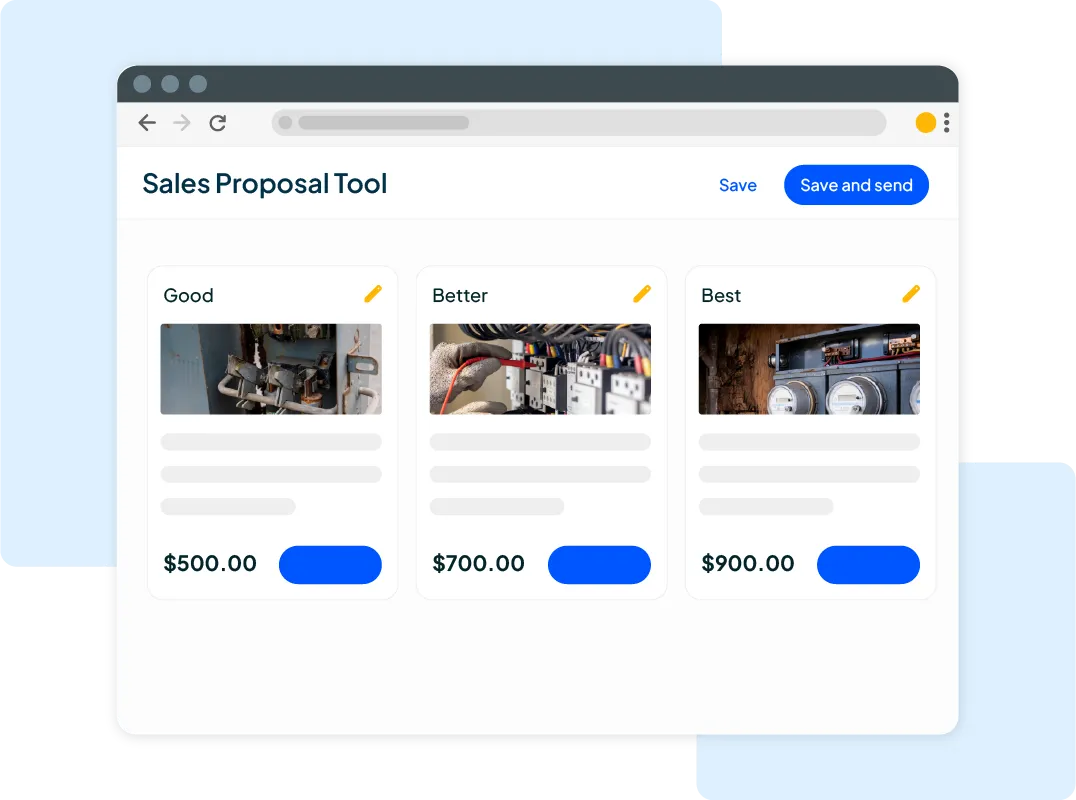
- Create good-better-best packages: Offer a basic sweep, sweep plus visual inspection, and sweep plus camera inspection.
- Use photos to support add-ons: Show heavy creosote, cracked crowns, missing caps, or nest blockages so customers understand the recommendation.
- Track effective hourly revenue: Divide total job revenue by all time spent, including travel, setup, cleanup, and office time.
- Price for peak season: Set firmer minimums during busy months when your schedule fills up quickly.
- Bundle related services: Offer dryer vent cleaning, cap checks, or annual maintenance reminders when they fit the job.
How to explain chimney sweep pricing to customers
Customers are more likely to accept your price when they understand what is included and why certain work costs extra. Explain the base sweep first, then call out condition-based add-ons separately.
Use plain language like:
Weak: “I know it seems expensive, but this is what we charge.”
Strong: “This price includes the chimney sweep, fireplace area protection, debris removal, cleanup, and a basic visual check. The nest removal is listed separately because it adds extra time and requires a different process.”
That kind of explanation gives the customer something concrete to react to. You are not defending the price. You are explaining the scope.
How to quote chimney sweep jobs consistently—without doing the math every time
Inconsistent estimates are one of the most common ways chimney sweep businesses lose margin. One tech charges for the camera inspection, another includes it for free. Someone forgets the heavy buildup upcharge. A cap installation gets quoted differently depending on who picks up the phone. Over time, those gaps add up.
If your team is missing add-ons, rebuilding estimates from scratch, or losing job details between the field and the office, here’s how Housecall Pro can help:
- Missed add-ons: Build approved services and add-ons into your price book so extra flues, camera inspections, and heavy buildup charges are easier to apply consistently.
- Slow estimates: Create professional quotes from saved services instead of rebuilding the math on every call.
- Unclear scope: Send estimates with line items that separate the base sweep from optional or condition-based add-ons.
- Slow billing: Convert completed jobs into invoices and let customers pay online.
- Scattered job details: Keep customer history, job notes, estimates, invoices, and payments tied to the same record.
Try Housecall Pro free for 14 days to build clearer estimates, standardize chimney sweep pricing, and keep more of your quoting process in one place.
Chimney sweep pricing FAQ
How much should I charge for chimney sweeping?
Most standard chimney sweep jobs fall around $129 to $381, but your price should be based on labor, travel, overhead, access, buildup, and profit margin. If your break-even cost is $122 and you want a 35% margin, your base price would be about $188 before rounding.
Should chimney sweeps charge flat rate or hourly?
Flat-rate pricing works best for predictable one-flue chimney sweeps because customers know the price upfront. Hourly pricing is better for unknown conditions, such as heavy creosote, smoke backup, blocked flues, or jobs where access cannot be confirmed before arrival. Most chimney sweep businesses use flat-rate pricing as the default and switch to hourly only when a job’s scope can’t be confirmed at booking.
How much should I charge for an additional flue?
Many chimney sweep businesses charge around $75 to $150 for an additional flue during the same visit. Charge more if the second flue requires separate access, extra setup, heavier cleaning, or a different fireplace or stove system.
How do I know if my chimney sweep prices are too low?
Your prices may be too low if your effective hourly revenue drops below target after travel, setup, cleanup, and office time. Another warning sign is staying busy while still struggling to cover fuel, insurance, tools, payroll, and overhead. A quick check: divide your last 10 job invoices by the total hours worked including drive time. If that number consistently falls below your target hourly rate, your pricing isn’t keeping up with your actual cost of delivery.
What is a good minimum charge for chimney sweeping?
A good minimum charge should cover travel time, setup time, expected cleaning time, overhead, and profit. Many chimney sweep businesses may start around $150 to $200, but the right minimum depends on your service area, labor rate, route density, and business costs.
Can chimney sweep businesses offer annual maintenance pricing?
Yes. Annual chimney sweep plans can help smooth seasonal demand by bundling a yearly sweep, basic visual check, reminders, and priority scheduling into one recurring service. This can also make it easier to keep past customers on the calendar before peak season fills up. Recurring service plans work especially well for chimney businesses because the NFPA recommends annual chimney inspections—giving you a built-in reason to reach out every year.
How often should chimney sweep businesses raise prices?
Review chimney sweep prices at least once a year, ideally before peak fireplace season. You should also review rates when fuel, insurance, payroll, equipment, or other major costs rise by more than 10%.
What's the difference between a Level 1, Level 2, and Level 3 chimney inspection—and how should I price each?
A Level 1 inspection is a standard visual check of accessible areas, typically included with an annual sweep. A Level 2 inspection is more thorough, covers accessible and concealed areas with video scanning, and is required when buying or selling a home, after a chimney fire, or before major system changes—price this at $250 to $600. A Level 3 inspection involves removing structural components to investigate hidden damage and runs $900 to $5,000. Pricing each level separately protects your time and sets clear expectations with customers.