Want to win more jobs with less effort?
Grow your business and send quick quotes with our home service software.

Want to see your potential revenue?
See what businesses like yours earn with Housecall Pro in 1 - 2 minutes.
Pricing flooring jobs correctly is one of the most important parts of running a profitable flooring business. While square footage gives you a starting point, the final price depends on factors like material selection, subfloor condition, demolition, room layout, and installation complexity.
The most accurate flooring estimates account for every cost involved in the job—not just materials and labor. To protect your profit margin, you also need to factor in waste, prep work, disposal, overhead, and the level of finish your customer expects.
This guide walks through how to price flooring jobs step by step, including common pricing methods, cost calculations, and real-world estimate examples.
Quick answer: How do you price flooring jobs?
Price flooring jobs by calculating the total cost of materials, labor, removal, subfloor prep, waste, overhead, and your target profit margin. Most flooring projects are priced by the square foot, but repairs, stairs, custom layouts, and small jobs often require flat-rate minimums or hourly labor charges.
One of the biggest pricing mistakes flooring contractors make is relying too heavily on competitor pricing. A job that looks profitable on paper can quickly lose money if you overlook demolition, moisture issues, floor leveling, transitions, hauling, callbacks, or administrative costs.
Key takeaways
Use these rules to keep flooring jobs profitable:
Measure beyond the room size:: Add waste, transitions, closets, stairs, and prep time before quoting.
Separate prep from install:: Removal, leveling, and underlayment should not disappear into your labor rate.
Protect small-job profit:: Set minimum charges for repairs, transitions, and single-room installs.
Built-in margin:: Material markup and labor profit help cover callbacks, slow weeks, and growth.
Put scope in writing:: A clear estimate protects you when hidden floor problems show up.
Table of contents
- How we sourced flooring pricing data
- Average flooring prices by material in 2026
- Residential vs. commercial flooring pricing
- Flooring add-on pricing: what to charge for removal, underlayment, and more
- Flooring service price list for common jobs
- Common pricing models for flooring jobs
- What factors affect flooring pricing?
- How do you set flooring prices? (Step-by-step guide)
- Example flooring price calculations
- How to increase your average flooring ticket without raising base rates
- How to explain flooring pricing to customers
- How to build a consistent flooring estimating process across your team
How we sourced flooring pricing data
The pricing ranges in this guide are based on 2026 and 2025 cost data from sources including Angi, HomeGuide and HomeAdvisor. Your actual flooring prices will vary based on several factors, including:
- Local labor rates: Wages, payroll burden, drive time, and nonbillable hours all affect your real labor cost.
- Material type: Carpet, vinyl, laminate, hardwood, tile, and engineered wood all carry different material and labor costs.
- Removal and disposal: Old flooring removal commonly adds $1.50 to $3.50 per square foot, with tile removal often higher.
- Subfloor condition: Leveling, moisture barriers, patching, and underlayment can change the scope.
- Layout complexity: Stairs, closets, hallways, diagonal layouts, borders, and pattern work add labor time.
- Business overhead: Insurance, vehicles, tools, payroll burden, software, marketing, and admin time all need to be built into the final price.
Use these benchmarks as a starting point, then adjust your pricing based on your actual costs, local market conditions, and profit goals.
Average flooring prices by material in 2026
Most flooring installation projects fall between $4 and $15 per square foot installed, though premium materials, custom layouts, extensive prep work, and specialty installations can push costs higher. Labor alone typically ranges from $2 to $8 per square foot, depending on the material, room layout, and amount of prep required.
| Flooring job | Typical installed price range | Pricing notes |
| Carpet installation | $2–$8 per sq. ft. | Broader projects may reach $3–$11 per sq. ft. |
| Vinyl flooring | $2–$12 per sq. ft. | Sheet, plank, glue-down, and click-lock vary |
| Luxury vinyl plank | $4–$16 per sq. ft. | Plank thickness, wear layer, and prep affect cost |
| Laminate flooring | $4–$14 per sq. ft. | Underlayment and trim affect final price |
| Hardwood installation | $6–$25 per sq. ft. | Species, grade, plank width, and finish matter |
| Tile flooring | $12–$50 per sq. ft. | Layout, tile type, prep, and cuts drive labor |
| Hardwood refinishing | $3–$7 per sq. ft. | Wider ranges may hit $2–$8 per sq. ft. |
| General floor removal | $1.50–$3.50 per sq. ft. | Tile and glued floors usually cost more |
| Tile removal | $2–$7 per sq. ft. | Dust, debris, and labor increase cost |
| Carpet removal | $0.70–$1.60 per sq. ft. | Glued-down carpet can cost more |
Table: National installed price ranges for U.S. residential projects in 2026, based on data from Angi and HomeGuide. Ranges include materials and standard installation labor. Subfloor prep, removal, and specialty layouts are typically priced separately.
Pro tip: Keep removal, disposal, and subfloor prep as separate line items so customers understand why two rooms with the same square footage can cost very different amounts.
Residential vs. commercial flooring pricing
While both residential and commercial flooring jobs are often priced by square footage, the factors that drive pricing can look very different.
Residential customers typically want a straightforward quote that explains exactly what’s included, such as old flooring removal, furniture moving, underlayment, installation, trim work, cleanup, and disposal.
Commercial projects often involve larger spaces, tighter timelines, more durable materials, and site-specific requirements. Pricing may also need to account for phased work, restricted access, after-hours scheduling, or coordination with other contractors.
For example, a 10,000-square-foot carpet tile installation may carry a lower per-square-foot rate than a 150-square-foot office repair. However, scheduling restrictions, adhesive removal, or working around business operations can increase the overall project cost.
Residential flooring prices
Residential flooring prices depend heavily on the material being installed and the condition of the existing floor. A simple carpet replacement in a spare bedroom requires far less labor than a hardwood installation in an older home with subfloor issues.
| Residential job type | Typical price range | What affects price |
| Small bedroom carpet install | $400–$1,200 | Carpet grade, padding, removal, furniture |
| LVP install in one room | $600–$2,000 | Plank quality, underlayment, prep, trim |
| Laminate in living room | $1,000–$4,000 | Room shape, transitions, underlayment |
| Hardwood in main living area | $3,000–$10,000+ | Wood species, finish, layout, removal |
| Tile bathroom floor | $900–$3,000+ | Waterproofing, backer board, cuts, pattern |
| Hardwood refinishing | $800–$3,200+ | Floor condition, stain, finish, dust control |
Table: Typical ranges for U.S. residential projects in 2026. Prices vary by region, material grade, and subfloor condition.
Common factors that affect residential pricing include:
- Material selection
- Flooring removal and disposal
- Furniture moving
- Subfloor repairs
- Underlayment requirements
- Room layout and transitions
- Trim and finishing work
When quoting residential projects, be clear about what’s included and what could trigger additional charges if hidden issues are uncovered during the job.
Commercial flooring prices
Commercial flooring pricing is usually driven by project volume, scheduling requirements, durability expectations, and jobsite conditions.
A small retail store may price similarly to a residential project, while a medical office, restaurant, multifamily property, or office complex often requires a more detailed proposal.
Commercial flooring jobs are usually quoted by square footage, unit count, schedule requirements, and site conditions rather than a single national average.
| Commercial job type | Common quote basis | Pricing notes |
| Office carpet tile | Square footage | Often includes adhesive, layout, and phasing |
| Retail LVP install | Square footage + schedule | Durability and after-hours work affect cost |
| Restaurant tile flooring | Square footage + prep | Moisture, slope, grout, and code needs matter |
| Multifamily flooring turnover | Unit count or sq. ft. | Volume pricing may apply |
| Commercial floor repair | Flat rate or hourly | Access, matching materials, and downtime matter |
Table: Quote basis varies significantly by project type, site conditions, and schedule. Prices shown are general starting points for U.S. markets in 2026.
Commercial flooring projects are typically quoted based on:
- Square footage
- Unit count
- Site access
- Schedule requirements
- Material specifications
- Phasing requirements
- Occupancy considerations
Because commercial work often involves more stakeholders and tighter deadlines, clear scope documentation is critical for protecting your margins.

Flooring add-on pricing: what to charge for removal, underlayment, and more
Flooring add-ons work best when they solve a problem the customer already has or improve the long-term performance of the floor.Position them as options that add value—not surprise charges that appear after the estimate is approved.
Here are some of the most common flooring add-ons and their typical prices:
| Add-on | Typical price range | Selling point |
| Old flooring removal | $1.50–$3.50 per sq. ft. | Saves the customer time and avoids disposal issues |
| Tile removal | $2–$7 per sq. ft. | Handles a messy, labor-intensive part of the project |
| Underlayment | $0.50–$3.50 per sq. ft. | Improves comfort, sound reduction, and floor performance |
| Furniture moving | $25–$75 per room | Makes installation easier and more convenient |
| Subfloor patching | $100–$500+ | Creates a smoother, longer-lasting installation |
| Moisture barrier | $0.50–$2+ per sq. ft. | Helps protect flooring from moisture-related damage |
| Baseboard removal/reinstall | $1–$5 per linear ft. | Delivers a cleaner, more finished appearance |
| Stair installation | $50–$160+ per step | Creates a seamless look across stairs and flooring |
Bundling can help increase average ticket size while simplifying the buying decision. For example, you might offer a “ready-to-install” package that includes flooring removal, haul-away, minor subfloor repairs, and underlayment for one price. Customers can evaluate the full scope of work instead of focusing only on the installation rate.
Flooring service price list for common jobs
A flooring price list gives your team a starting point for common installs, repairs, removal work, and add-ons. Remember: Use these as a starting point only. Your final price should reflect your labor costs, materials, job complexity, overhead, and profit goals.
| Job | Price range | Factors affecting cost |
| Carpet install in small bedroom | $400–$1,200 | Carpet grade, padding, removal, furniture |
| LVP install in one room | $600–$2,000 | Plank quality, prep, trim, underlayment |
| Laminate flooring install | $4–$14 per sq. ft. | Layout, underlayment, transitions |
| Hardwood refinishing | $3–$7 per sq. ft. | Floor condition, stain, finish type |
| General floor removal | $1.50–$3.50 per sq. ft. | Material, adhesive, disposal, access |
| Carpet removal | $0.70–$1.60 per sq. ft. | Staples, padding, glue, disposal |
As projects get larger, the scope becomes more important than the square footage alone. Prep work, demolition, stairs, layout complexity, and customer expectations can all have a significant impact on the final price.
| Large job | Price range | Factors affecting cost |
| Whole-home LVP install | $4–$16 per sq. ft. | Material grade, transitions, prep |
| Hardwood installation | $6–$25 per sq. ft. | Wood species, grade, width, finish |
| Tile flooring install | $12–$50 per sq. ft. | Tile type, layout, cuts, prep |
| Commercial carpet tile | Custom quote | Volume, adhesive, phasing, schedule |
| Multifamily flooring turnover | Custom quote | Unit volume, speed, materials |
| Stairs | $50–$160+ per step | Nosing, cuts, finish, material |
Common pricing models for flooring jobs
The best pricing model depends on how predictable the job is. A standard LVP install may work well on a per-square-foot basis, while a small repair, stair job, or subfloor issue may need flat-rate or hourly pricing to protect your time.
Square-foot pricing
This is the most common model for flooring installation because it ties price to measurable job size. It works well for carpet, vinyl, laminate, hardwood, tile, and refinishing projects. Just make sure prep work and complexity adjustments aren’t buried in the base rate.
Flat-rate pricing
Flat rates are often the best choice for small repairs, transition installations, stair repairs, and minimum service calls. They help ensure small jobs remain profitable even when travel and setup time exceed the work itself.
Hourly pricing
Hourly pricing works well for troubleshooting, demolition, subfloor repairs, and situations where the scope is unclear. For standard installations, however, customers typically prefer a clear project price over an open-ended hourly rate.
Material-plus-labor pricing
This approach breaks out materials, labor, markup, and add-ons separately. It can help build trust on larger projects because customers can see exactly where the costs come from.
Tiered pricing
Tiered packages give customers options without requiring you to discount your work. For example, you might offer a basic installation package, an upgraded package with premium underlayment, and a premium package that includes upgraded trim and finishing details.
What factors affect flooring pricing?
Two flooring jobs with the same square footage can have very different costs. That’s why accurate estimates look beyond measurements and account for the actual scope of work.
Before you build a quote, evaluate the following factors:
- Material type: Different flooring materials require different tools, installation methods, and skill levels. A luxury vinyl plank installation is typically faster than a custom tile layout or hardwood installation.
- Floor condition: Uneven subfloors, rot, moisture, adhesive residue, squeaks, cracks, or old tile can add hours before installation even starts.
- Removal requirements: Removing carpet is generally faster than removing glued-down vinyl, tile, or hardwood. Always account for demolition, hauling, and disposal when pricing replacement jobs.
- Room layout: Open rectangular rooms are usually quicker to install than spaces with hallways, closets, angled walls, fireplaces, built-ins, or stairs.
- Waste factor: Most flooring projects require extra material to account for cuts, pattern matching, mistakes, and future repairs. More complex layouts typically require a larger waste allowance.
- Access: Upstairs units, elevators, parking restrictions, long material carries, and occupied spaces can increase labor time.
- Moisture and leveling: Moisture testing, vapor barriers, self-leveling compounds, and floor prep help protect the finished installation but add to the project cost.
- Customer expectations: Premium finishes often require additional labor. Stain matching, flush transitions, dust control, detailed trim work, and custom patterns should be priced as separate upgrades whenever possible.
- Import tariffs and material cost volatility: Imported flooring—LVP, laminate, and engineered hardwood—has faced significant tariffs since 2025, with manufacturers passing on increases of 5%–35% on specific hard surface lines.
How do you set flooring prices? (Step-by-step guide)
Once you understand the market ranges, build a pricing system around your actual costs—not just what competitors charge. The goal is to create a repeatable process your team can use for every job, whether you’re pricing a bedroom carpet replacement or a whole-home flooring project.
Step 1: Calculate baseline costs
Start by adding up the costs required to complete the job before profit. That includes labor, materials, waste, prep supplies, disposal, travel, and overhead.
Use these formulas:
Labor cost per job
Hourly wage × labor burden × job hours
Material cost per job
Flooring + underlayment + adhesive + trim + transitions + waste
Overhead cost per job
Monthly overhead ÷ monthly billable hours × job hours
Break-even job cost
Labor + materials + overhead + disposal + travel
Your break-even cost should reflect every expense required to complete the project—not just what happens on-site.
Step 2: Measure the full scope
Measure the floor area first, then account for waste based on the material and layout.
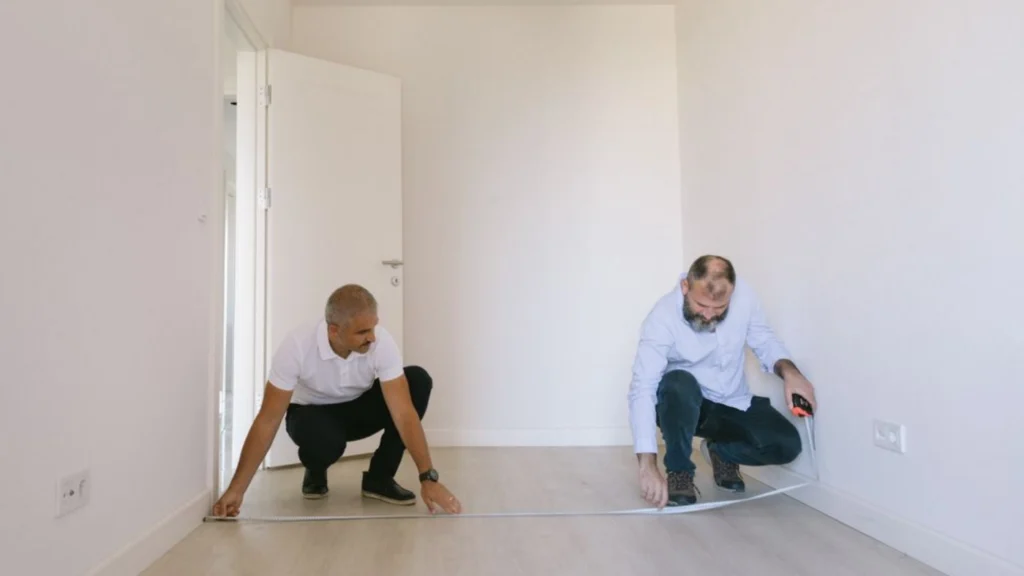
A simple rectangular room may require a smaller waste allowance, while closets, stairs, diagonal layouts, and patterned installations often require more material because cuts and matching reduce usable product.
Be sure to document:
- Room dimensions: Include closets, hallways, landings, and connected spaces.
- Existing flooring: Note what must be removed and how it’s attached.
- Subfloor condition: Look for moisture issues, cracks, squeaks, dips, rot, or soft spots.
- Trim and transitions: Count thresholds, reducers, stair noses, doorways, and baseboards.
- Customer responsibilities: Clarify whether the customer will move furniture or prepare the space before installation.
Step 3: Choose your pricing model
Use one primary pricing model to keep estimates consistent.
- Per-square-foot pricing: Best for standard installations and refinishing.
- Flat-rate pricing: Best for repairs, thresholds, stairs, and minimum-service jobs.
- Hourly pricing: Best for demolition, troubleshooting, and unknown repair work.
- Tiered pricing: Best for presenting multiple options without discounting labor.
For many flooring businesses, square-foot pricing paired with clearly defined add-ons provides the simplest and most scalable approach.
Step 4: Set your target profit margin
Your profit margin should do more than cover your paycheck. It should help fund equipment, vehicles, marketing, training, future hiring, and slower seasons.
Many flooring businesses use a 20%–40% gross margin as a planning benchmark, but your ideal margin depends on your labor burden, overhead costs, material markup strategy, and callback risk.
Jobs with high material costs may support a lower margin percentage while still producing strong dollar profit. Labor-heavy projects often support higher margins because labor carries greater risk and variability.
It’s also important to decide whether material markup is separate from labor profit. Many contractors mark up materials to cover ordering, delivery coordination, warranty risk, storage, damaged products, and cash-flow requirements—not just the cost of the material itself.
Price formula
Break-even cost ÷ (1 − target profit margin) = final price
Example:
$2,800 break-even cost ÷ (1 − 0.30) = $4,000 final price
Step 5: Set minimum charges
Minimum charges help make sure small flooring jobs are profitable. Even a quick repair involves travel, customer communication, setup, cleanup, invoicing, and follow-up.
A simple minimum charge formula:
Minimum charge = Travel + setup + labor + overhead + profit
For example, a transition repair may only take an hour on-site, but once you account for travel, material pickup, setup, and admin work, it could consume three or more hours of your team’s time
Step 6: Adjust for complexity
Not every flooring job fits neatly into a standard square-foot rate. Creating predefined adjustments helps your team quote consistently and protects your margins when projects become more labor-intensive.
Common complexity adjustments include:
- Stairs: Add per-step pricing because cuts, nosing, and detail work take longer.
- Tile removal: Add a higher demo rate for dust, debris, and disposal.
- Subfloor leveling: Price separately by material and labor time.
- Furniture moving: Charge by room, item, or crew time.
- Pattern layouts: Add labor for herringbone, diagonal, borders, or custom patterns.
- Tight access: Add labor for condos, upper floors, parking issues, or long carries.
Step 7: Price add-ons and optional services
List add-ons as separate line items so customers understand which services are required and which are optional upgrades.
Common flooring add-ons include:
- Removal and haul-away: Old flooring, padding, tile, adhesive, or debris.
- Underlayment: Moisture, sound, or comfort upgrades.
- Baseboards and trim: Removal, reinstall, replacement, or painting.
- Moisture barrier: Especially important for slab, basement, or wood-product installs.
- Furniture moving: Helpful for occupied homes.
- Floor protection: Dust barriers, walkway protection, or plastic sheeting.
Pro tip: If inconsistent estimates are costing you jobs—or worse, winning jobs you lose money on—you can use flooring estimating software like Housecall Pro to build a repeatable structure for every quote: materials, labor, removal, add-ons, and optional upgrades in one document customers can actually compare.
Step 8: Review and adjust regularly
Your pricing shouldn’t stay the same forever. Material costs, labor rates, fuel expenses, insurance premiums, and disposal fees all change over time.
Review your pricing quarterly and track:
- Estimated vs. actual labor hours: Identify jobs that consistently take longer than expected.
- Material waste: Compare what was ordered to what was installed.
- Callback costs: Determine which services need better scoping or higher pricing.
- Gross margin by service: Understand which flooring services generate the most profit.
- Close rates: See how pricing affects sales performance.
Get In Touch: 858-842-5746
Let us earn your trust
On average, Pros increase monthly revenue generated through Housecall Pro by more than 35% after their first year.
See plan options and feature breakdown on our pricing page.
Example flooring price calculations
Use these examples to see how the numbers come together before you send the quote. The exact costs will change based on your labor rates, material prices, prep work, and margin, but the process stays the same: start with your real costs, then price the job so it covers overhead and leaves room for profit.
Example 1: LVP installation in a 500-square-foot living area
Scope: Luxury vinyl plank installation in a living room and hallway
Pricing model: Per-square-foot plus add-ons
- Material and supplies: $1,650
- Labor: $1,200
- Overhead and travel: $350
- Removal and disposal: $750
- Break-even cost: $3,950
- Target margin: 30%
- Final price: $3,950 ÷ (1 − 0.30) = $5,643
Total price: $5,650
This example highlights why flooring estimates should account for more than installation labor. Removal, disposal, overhead, and material handling all affect profitability.
Example 2: Hardwood refinishing for 800 square feet
Scope: Sanding, staining, and refinishing existing hardwood floors
Pricing model: Per square foot
- Baseline cost: $3,200
- Target margin: 35%
- Final price: $3,200 ÷ (1 − 0.35) = $4,923
Total price: $4,925
Price per square foot: $6.16
This falls within common hardwood refinishing ranges and reflects the labor, finish quality, floor condition, and dust-control requirements involved.
Example 3: Small tile bathroom floor
Scope: Remove existing flooring, prep the subfloor, and install tile in a 75-square-foot bathroom
Pricing model: Minimum charge plus per-square-foot pricing
- Tile and setting materials: $650
- Labor: $1,000
- Removal and disposal: $300
- Overhead and travel: $250
- Break-even cost: $2,200
- Target margin: 30%
- Final price: $2,200 ÷ (1 − 0.30) = $3,143
Total price: $3,150
Small tile jobs often have a higher per-square-foot price because setup, layout, cuts, curing time, and cleanup don’t decrease just because the room is smaller.
How to increase your average flooring ticket without raising base rates
Once you’ve built a solid pricing system, look for opportunities to improve profitability without simply increasing rates.
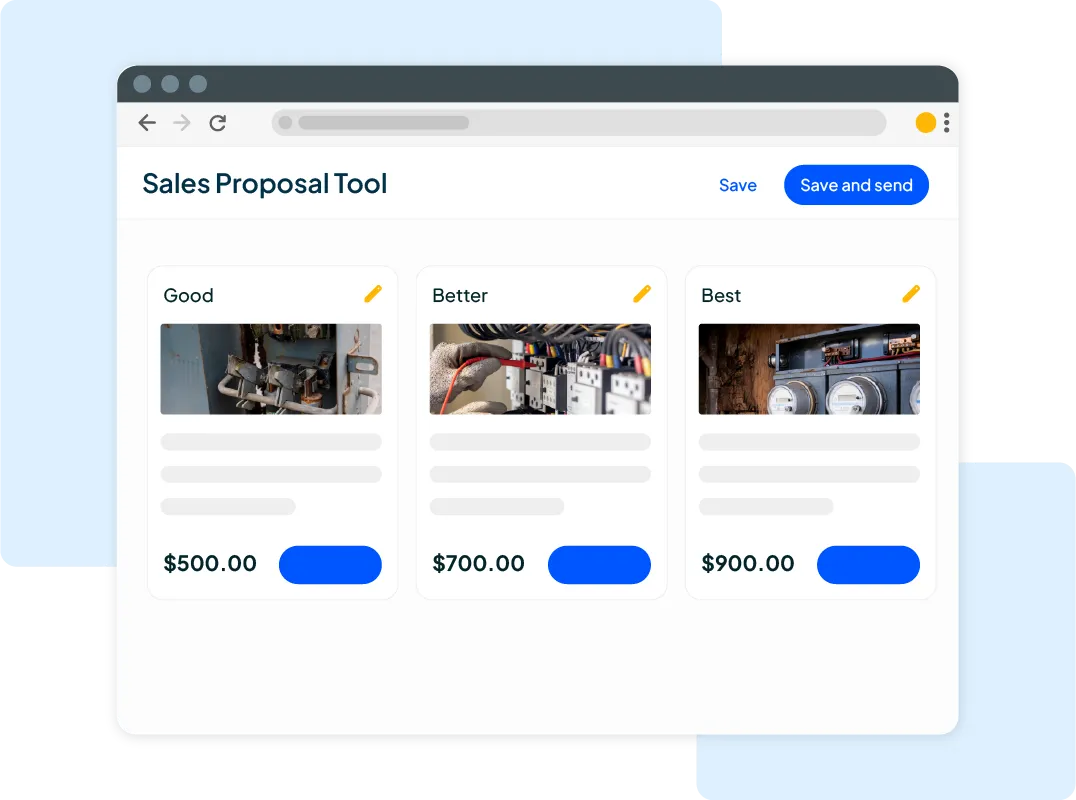
- Offer good/better/best packages: Give customers multiple options, such as standard installation, upgraded underlayment, or premium finishing details. This can increase average ticket size while helping customers choose the level of service that fits their budget.
- Track profit by flooring type: You may discover that some services generate significantly more profit than others, helping you decide where to focus your marketing and sales efforts.
- Monitor material waste: If certain projects consistently use more material than expected, investigate whether the issue is training, installation methods, measuring errors, or pricing assumptions.
- Bundle complementary services: Group related services—such as underlayment, moisture barriers, transitions, and trim work—into upgrade packages that are easier for customers to understand and purchase.
- Analyze your close rate by job type: If customers frequently approve one type of estimate but hesitate on another, it may signal an opportunity to adjust pricing, improve how you present the value, or refine your service offering.
- Raise prices strategically, not universally: Review pricing by service line instead of increasing every rate at once. If hardwood refinishing consistently books out weeks in advance while carpet installs remain competitive, the refinishing service may support a higher price.
How to explain flooring pricing to customers
According to a 2025 Housecall Pro survey of 1,000+ U.S. homeowners, 97% say transparent matters when hiring a pro—and 77% cite hidden or surprise costs among their top home service frustrations. A flooring estimate that clearly separates installation, removal, underlayment, and potential change orders does more than protect your margin. It’s what gets you hired over the contractor who quoted lower.

Be sure to explain:
- What’s included: Materials, labor, removal, prep, transitions, cleanup, and disposal.
- What’s not included: Hidden subfloor damage, major leveling, mold, rot, or unexpected repairs.
- Why prep matters: Skipping floor prep can lead to installation issues and costly callbacks.
- How add-ons work: Separate upgrades from required work so customers can make informed decisions.
- How changes are handled: Explain upfront how unexpected conditions will be documented and approved.
For example:
Less effective: “Flooring costs are just higher right now.”
More effective: “This quote includes removal, disposal, subfloor prep, underlayment, installation, transitions, and cleanup. If we uncover hidden subfloor damage during removal, we’ll review repair options and pricing with you before moving forward.”
The more clearly you explain the scope, the easier it is for customers to compare quotes based on value—not just price.
How to build a consistent flooring estimating process across your team
Accurate flooring estimates depend on consistency. When every estimator uses a different process, it’s easy to overlook prep work, removal, trim, stairs, or other details that affect profitability.
Housecall Pro’s flooring software has helped Pros create 40M+ estimates. It allows contractors to build a more repeatable estimating process by keeping customer information, estimates, job details, invoices, and payments in one place.
Common challenges it helps solve include:
- Inconsistent pricing: Save common services, add-ons, and pricing structures so similar jobs are quoted the same way.
- Missed upsell opportunities: Add optional line items for removal, prep work, underlayment, trim, moisture barriers, and upgrades.
- Unclear estimates: Send professional estimates that clearly outline the scope of work, exclusions, and optional services.
- Scattered job information: Keep notes, photos, customer communication, estimates, invoices, and payments connected to the same job.
- Slow follow-up: Use automated reminders to keep estimates moving and reduce missed opportunities.
Try Housecall Pro free for 14 days.
Flooring pricing FAQ
-
How much should I charge for flooring installation?
-
For most residential flooring work, installed prices land between $4 and $15 per square foot—but that range is too wide to quote from. Your actual price depends on material type, removal requirements, subfloor condition, room layout complexity, and your local labor market.
A 500-square-foot LVP job with standard prep runs $2,000–$8,000 installed. A hardwood install in an older home with subfloor issues can easily reach $15,000–$20,000 or more. Build your quote from real costs (labor burden, materials, overhead, disposal) rather than matching what a competitor quoted. Your break-even point is your floor; your target margin is your ceiling. Anything below break-even is a loss.
-
Should flooring contractors charge by the square foot or by the hour?
-
For most flooring businesses, square-foot pricing for installs combined with flat-rate or hourly charges for demo and repairs is the most reliable approach. It gives customers a predictable number while protecting your time when conditions are uncertain.
-
How much should I charge for flooring labor?
-
Flooring labor commonly ranges from $2 to $8 per square foot, but specialty work can be higher. Tile, hardwood, stairs, custom patterns, and subfloor repairs usually require more labor than carpet, vinyl, or laminate.
For jobs with uncertain prep work, quote the standard install separately from demo, leveling, or repair labor.
-
How do I price flooring removal?
-
Flooring removal commonly costs $1.50 to $3.50 per square foot, but tile, glued-down floors, and difficult tear-outs can cost more. Carpet removal may be closer to $0.70 to $1.60 per square foot, while tile removal often runs $2 to $7 per square foot.
Price removal separately so customers understand that demo, hauling, and disposal are not part of basic installation.
-
What profit margin should a flooring business aim for?
-
Many flooring businesses use a 20%–40% gross margin target as a planning range, depending on job type, material costs, labor burden, and local competition. Jobs with high material costs may need a lower margin percentage but a higher dollar profit target, while labor-heavy repairs may support higher margins.
The right margin is the one that covers your real costs and leaves enough profit to grow.
-
How do I know if my flooring prices are too low?
-
Four warning signs: your jobs stay busy but cash stays tight; labor hours regularly exceed your estimate; callbacks eat into margins on jobs that looked profitable; or you can’t budget for tools, insurance, or payroll without stress. The clearest indicator is close rate—if nearly every customer says yes without negotiating, your prices may not reflect your real costs or local demand. A healthy close rate for most flooring contractors is 40%–60% on quoted jobs. Above 80% consistently is a sign your pricing has room to move.
-
How often should I update flooring prices?
-
Review flooring prices at least quarterly, and update them any time material costs, labor rates, fuel, insurance, or disposal fees change. A good rule is to review pricing whenever material, disposal, fuel, or labor costs rise more than 10%.
You should also review pricing after any job that takes much longer than estimated.
-
How much waste factor should I add for flooring?
-
Standard waste allowances vary by material and layout: carpet typically requires 5%–10%; vinyl plank and laminate in rectangular rooms run 5%–8%; tile in a standard layout adds 10%; diagonal, herringbone, or pattern-matched tile can require 15%–20% extra. For stairs, closets, or rooms with lots of cuts, add an additional 5%. Always order based on the calculated square footage plus waste—never just room measurements—and keep extra material for future repairs.
-
How do I handle unexpected subfloor damage during a flooring job?
-
Document it before touching anything. Take photos, note the scope, and contact the customer before proceeding. If your estimate excluded subfloor repairs (which it should, as a line item), this is a change order—not a cost you absorb. A simple change order form covering the issue found, the repair required, the cost, and the customer’s signature protects you and sets the right expectation. Price subfloor repairs separately: patching typically runs $100–$500+ for minor repairs, while full subfloor replacement commonly costs $3–$10 per square foot.