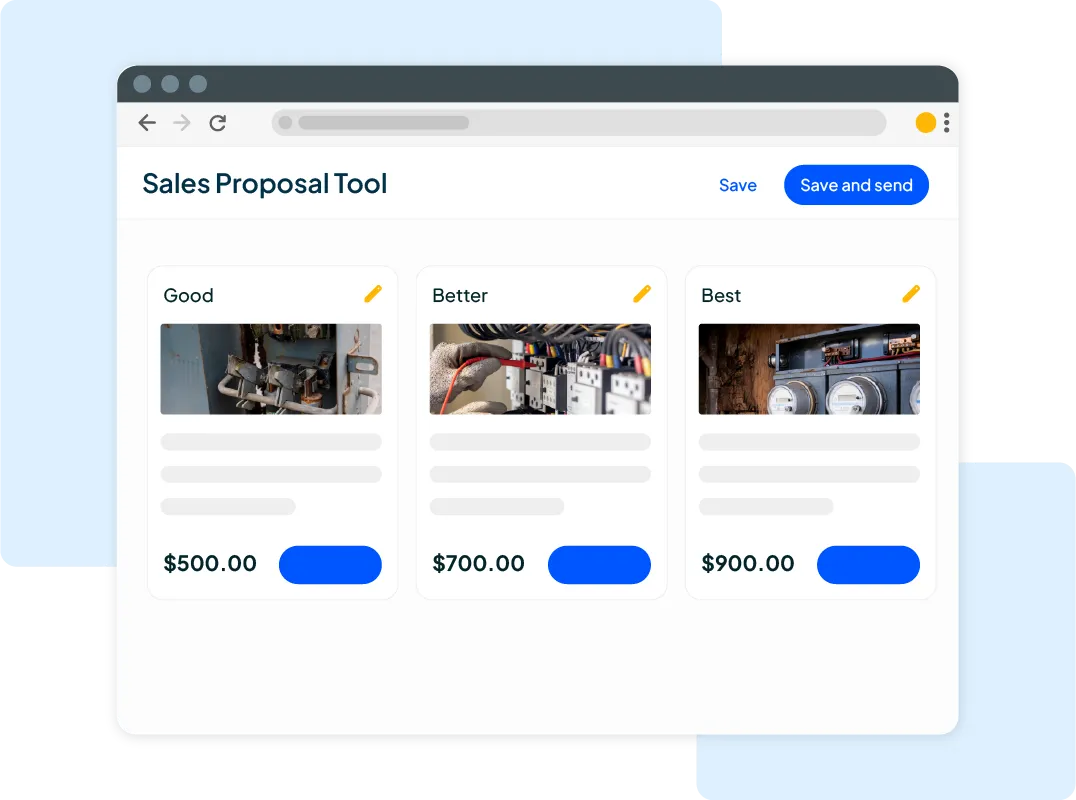
Want to win more jobs with less effort?
Grow your business and send quick quotes with our home service software.

Want to see your potential revenue?
See what businesses like yours earn with Housecall Pro in 1 - 2 minutes.

If you’re a contractor, you already know lead generation websites can be a mixed bag. Some months they’re sending you more jobs than you can handle. Other months you’re paying for leads that go nowhere. The difference usually isn’t the platform—it’s knowing which ones are worth your time and how to use them right.
Platforms like HomeAdvisor, Angi, Thumbtack, Houzz, and Google Business Profile each work differently, and the right fit depends on your trade, your service area, your average job size, and even how fast your team can pick up the phone. A commercial electrician and a residential plumber are going to have very different experiences on the same site.
In this guide, we’ll break down the top lead generation websites for contractors, compare the pros and cons of each, and help you figure out which ones are actually worth your time and money.

Website SEO Grader
See how your website stacks up on SEO that help customers find you.
Quick answer: What are the best lead generation websites for contractors?
Top contractor lead generation platforms include HomeAdvisor, Angi, Thumbtack, Houzz, BuildZoom, ConstructConnect, and Google Business Profile, among others. The right platform depends on your trade, typical job size, budget, response time, and contract terms. For the best results, combine lead platforms with local SEO, customer referrals, review generation, email marketing, and a high-converting website.
Best lead generation platforms by use case
Choose a lead generation platform that fits your trade, budget, and goals.
Best overall contractor lead platforms: HomeAdvisor, Angi, and Thumbtack for residential service leads with broad reach.
Best free lead generation channel: Google Business Profile drives local search visibility, inbound calls, and map traffic at no cost.
Best for remodeling and design projects: Houzz connects design-focused contractors with higher-end residential clients.
Best for commercial contractor leads: ConstructConnect and The BlueBook support bid-driven project discovery.
Best for small one-off jobs: TaskRabbit and Bark for flexible, low-commitment local work.
Best for urgent service calls: 33 Mile Radius and EverConnect for fast-turn, high-intent leads.
- What is a lead generation website for contractors?
- Why use lead generation services?
- Common lead generation pricing models
- Shared vs. exclusive leads: what to know before you spend
- Best lead generation platforms for contractors
- How else do contractors get leads?
- What should contractors look for in a lead generation website?
- Which lead generation website is right for you?
- How Housecall Pro helps contractors manage leads and book more jobs
What is a lead generation website for contractors?
A lead generation website is a platform that helps service businesses attract and capture inquiries from people actively looking for work. These websites usually include business listings, reviews, service pages, contact forms, and click-to-call options that make it easier for homeowners or commercial clients to reach out.
Unlike your own business website, lead generation websites already have built-in traffic. That can help contractors get in front of more potential customers faster, especially in competitive markets or when they need jobs now. For example, a roofing contractor in a new market might use HomeAdvisor to generate immediate inquiries while their Google Business Profile builds traction—two channels serving different timeframes.
Why use lead generation services?
Many contractors use lead generation websites because they need a faster way to connect with potential customers without building every lead source from scratch. If your team is busy running jobs, answering phones, building estimates, and following up with customers, it can be hard to consistently market your business at the same time.
Lead generation websites can help by:
- Saving time: They put your business in front of customers who are already searching for services.
- Improving speed to lead: Many platforms deliver inquiries quickly, which helps you respond before competitors do.
- Supporting growth: They can help you book jobs while you build longer-term channels like SEO, customer referrals, and repeat business.
Irena Martincevic, an industry analyst for Fixr.com, says lead generation platforms can be especially helpful you’re just starting out. “Instead of spending months tinkering with ads and marketing….Your focus should be on getting leads quickly and then turning them into paying jobs.”
For example, if you’re a solo HVAC contractor spending about $500 a month on Thumbtack leads, you might land 3–5 jobs worth $400–$800 each. That’s an extra $1,200+ of booked work—a solid return, especially if you keeping a close eye on your job costs, margins, and how those leads turn into real revenue.
Common lead generation pricing models
Most lead generation platforms charge in one of three ways.
Pay per lead
You’re charged each time a potential customer contacts you or your info is shared, whether you win the job or not.
- Best for: Contractors with strong close rates and fast response times
- Example: If you pay $40 per lead and close 1 in 4, your cost to acquire a job is ~$160. Your average job needs to support that margin
Subscription or ads
You pay a monthly fee or for visibility (like ads or listings) to get in front of customers.
- Best for: Contractors focused on long-term visibility, branding, and steady inbound leads
- Example: Paying $300/month for visibility can make sense if it consistently brings in a few qualified calls without per-lead fees
Pay per booking or commission
You pay only when a job is booked or completed through the platform.
- Best for: Contractors who want lower upfront risk or are testing a new channel
- Example: Giving up 10%–20% of a $500 job may be worth it if you didn’t have to pay for unqualified leads
How to choose the right pricing model:
- If you can respond quickly and close well → pay-per-lead
- If you want predictable costs → subscriptions or ads
- If you want to minimize risk → pay per booking or commission
Shared vs. exclusive leads: what to know before you spend
Not all leads work the same way.
- Shared leads are sold to multiple contractors at once. The same homeowner request goes to several competitors simultaneously, so speed and price become your main differentiators.
- Exclusive leads go to one contractor only, typically cost more per lead, but come with no competition to close them.
We’ve added a Lead type label to each platform below so you can factor it in before committing budget.
Best lead generation platforms for contractors
If you’re evaluating which lead generation platforms are worth using, the list below provides a clear starting point. These 15 options are widely used by contractors and can help you generate consistent leads while maintaining control over your marketing spend.
1. Angi: Broad reach with multiple lead options
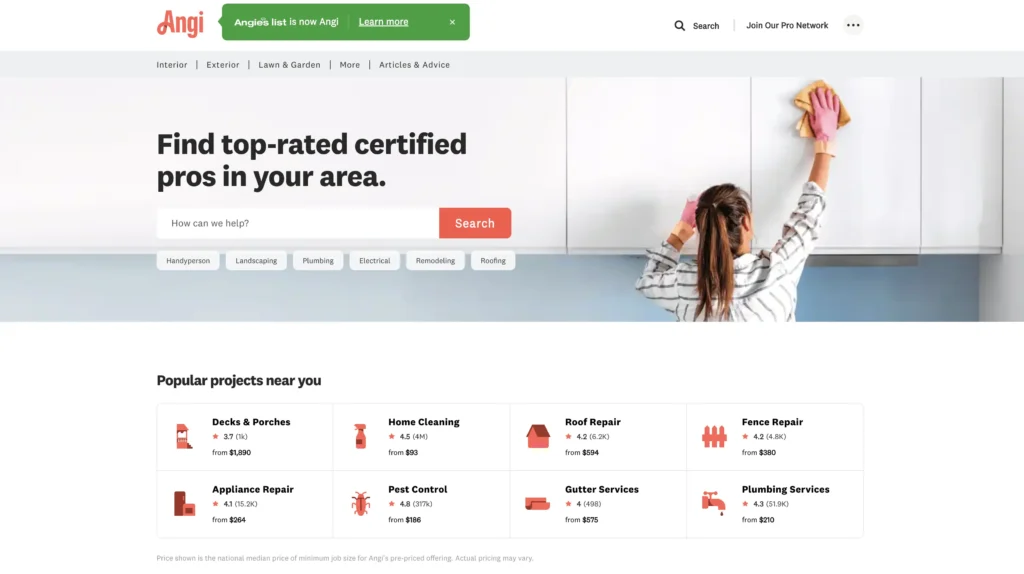
Angi is one of the most recognized platforms for connecting contractors with homeowners. It offers a mix of advertising and lead-based options, making it a flexible choice in competitive markets.
- Best for: Contractors in competitive residential markets who want strong visibility and multiple ways to generate leads
- Pricing model: Ads and lead-based options
- Lead type: Shared
- Pros: Strong brand recognition, large audience, local visibility
- Cons: High competition, paid features can get expensive
Learn more: What is Angi and how does it work for contractors?
2. Home Advisor: High-volume residential leads
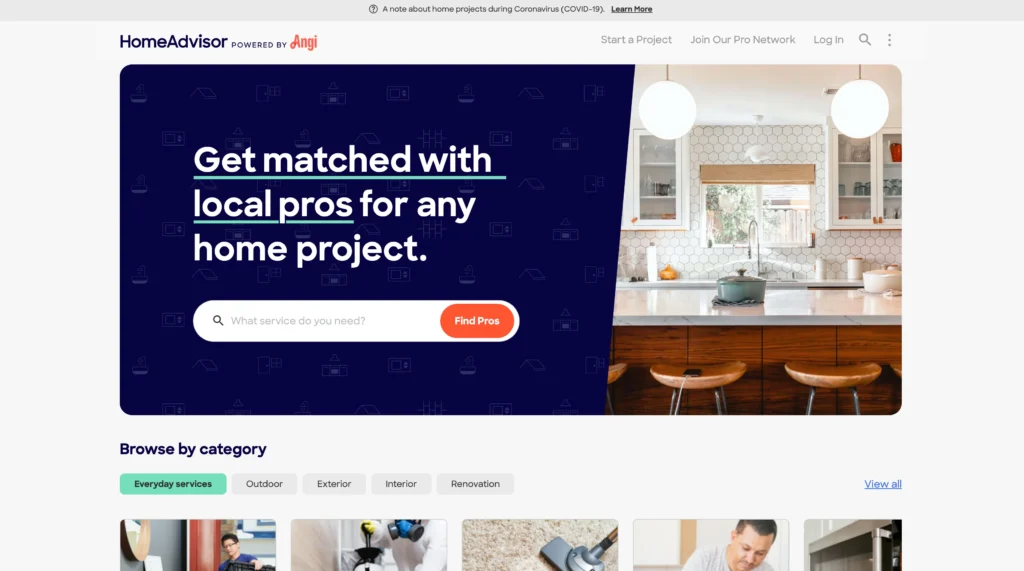
HomeAdvisor operates as a separate platform under the same parent company as Angi, but focuses more heavily on pay-per-lead delivery.
- Best for: Contractors who want consistent residential lead volume and can close efficiently at scale
- Pricing model: Pay per lead
- Lead type: Shared
- Pros: High lead volume, detailed lead info, nationwide reach
- Cons: Lead costs can add up, quality varies, shared leads
3. Thumbtack: Flexible leads you can control
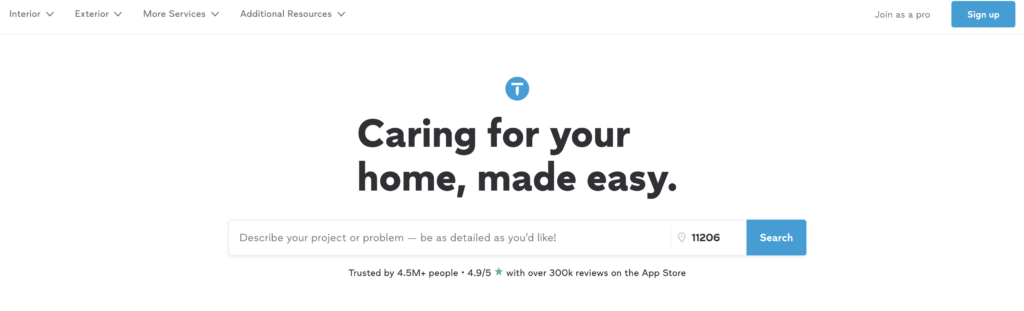
Thumbtack connects contractors with clients across hundreds of service categories, ranging from house cleaning to electrical to painters and more. This extensive range allows contractors to reach sizable audiences while tailoring their offerings to meet specific customer needs.
- Best for: Contractors who want steady residential leads with control over spend and job types
- Pricing model: Pay per lead or quote opportunity
- Lead type: Shared
- Pros: Broad reach, simple setup, strong visibility for local service categories
- Cons: Shared leads, variable quality, costs can add up fast in competitive markets
4. Modernize: Pre-qualified leads for high-ticket projects
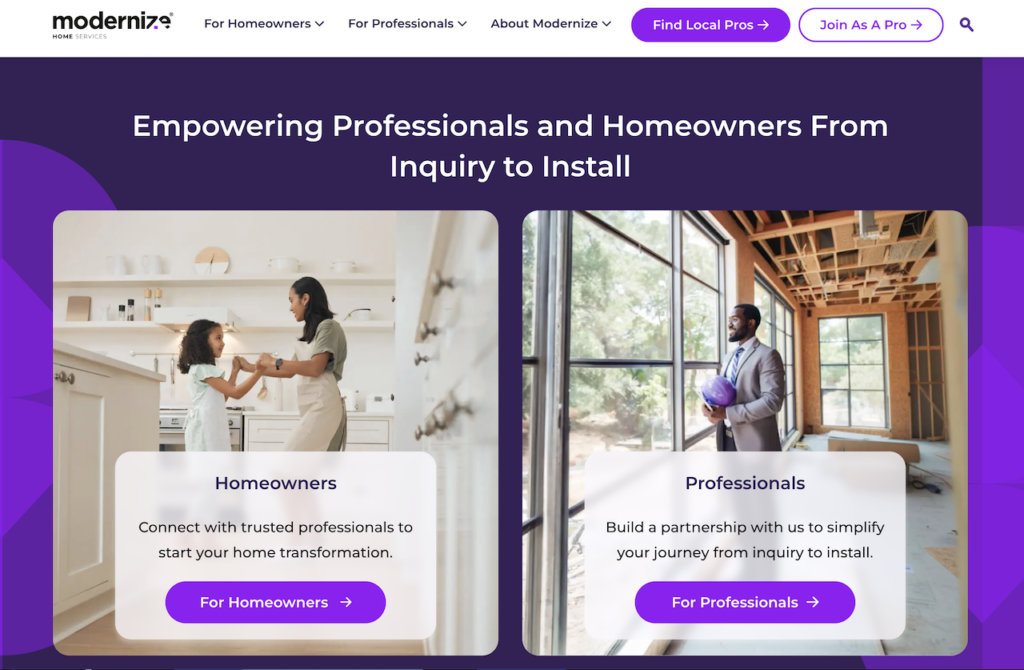
Contractors who waste money chasing leads from homeowners who are “just looking” have a specific problem: the platform they’re using doesn’t qualify intent before selling the lead. Modernize addresses this by putting homeowners through a detailed project form, then qualifying leads through in-depth questions, phone verification, and project matching before connecting them with contractors.
- Best for: Roofing, HVAC, windows, solar, and bath remodeling contractors focused on larger jobs
- Pricing model: Pay per lead; pricing varies by trade and market and is not publicly listed
- Lead type: Varies
- Pros: Matches contractors with high-intent homeowners + offers shared leads, live phone transfers, and branded exclusive lead programs
- Cons: Lead costs are higher than generalist platforms; success requires a fast, persistent sales follow-up
5. Yelp: Free leads driven by reviews and local search
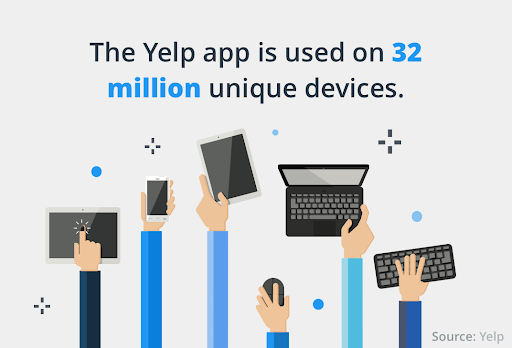
Yelp helps contractors get discovered through local searches and customer reviews, especially in competitive service categories. Customers are actively comparing providers, so strong reviews and responsiveness directly impact lead flow.
- Best for: Contractors who want to build trust and generate inbound leads through reviews and local SEO
- Pricing model: Free profile with optional ads
- Lead type: Shared
- Pros: Strong local intent, credibility through reviews, long-term visibility
- Cons: Requires active reputation management, ads can be costly
6. Google Business Profile: Free local leads from search
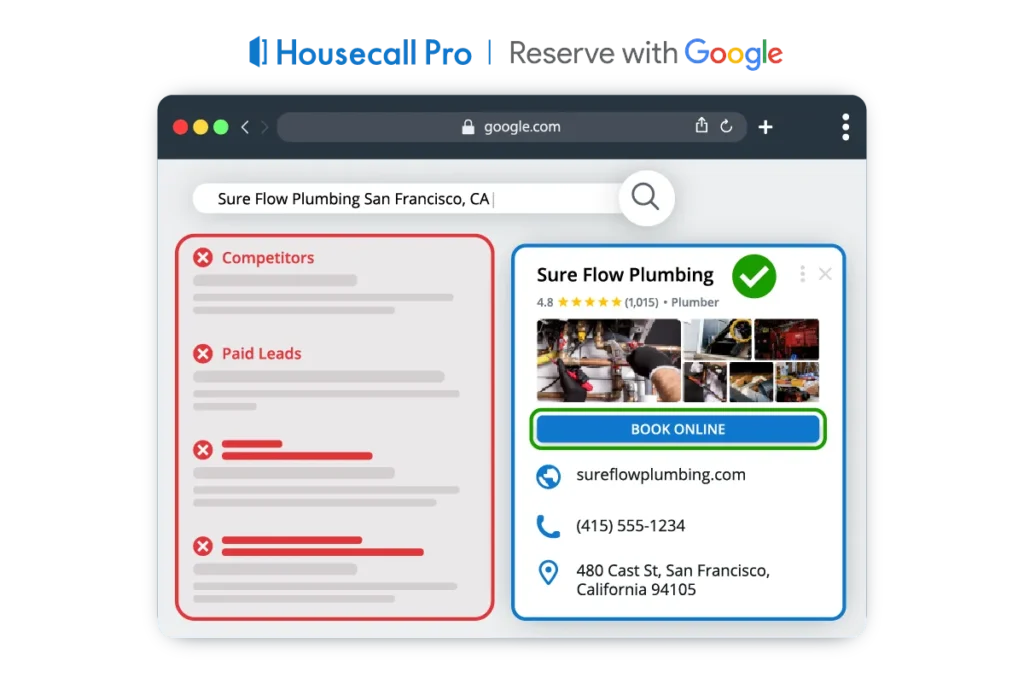
Google Business Profile (formerly Google My Business) is a high-priority tool for contractors looking to attract local clients. By increasing visibility in Google search results and Google Maps, it helps businesses connect with homeowners in their area efficiently and affordably.
- Best for: Contractors who want long-term local inbound leads
- Pricing model: Free, with optional support through SEO or ads
- Lead type: Exclusive
- Pros: High-intent traffic, supports calls and reviews, no direct cost
- Cons: Takes time to build, depends on reviews and optimization
Housecall Pro’s Google Business Profile integration lets customers book directly from your listing— reducing the steps between discovery and a confirmed appointment.
Get In Touch: 858-842-5746
Let us earn your trust
On average, Pros increase monthly revenue generated through Housecall Pro by more than 35% after their first year.
See plan options and feature breakdown on our pricing page.
7. Nextdoor: Local referrals and neighborhood visibility
Nextdoor connects contractors with homeowners through neighborhood recommendations, posts, and local discussions, not search. It works like digital word-of-mouth, so trust matters more than ranking.
- Best for: Contractors who rely on word-of-mouth, local trust, and community visibility
- Pricing model: Free presence with optional paid ads
- Lead type: Exclusive
- Pros: High trust, hyper-local targeting, strong referral-style leads
- Cons: Less predictable volume, depends on engagement and reviews
8. TaskRabbit: Quick, small-job opportunities
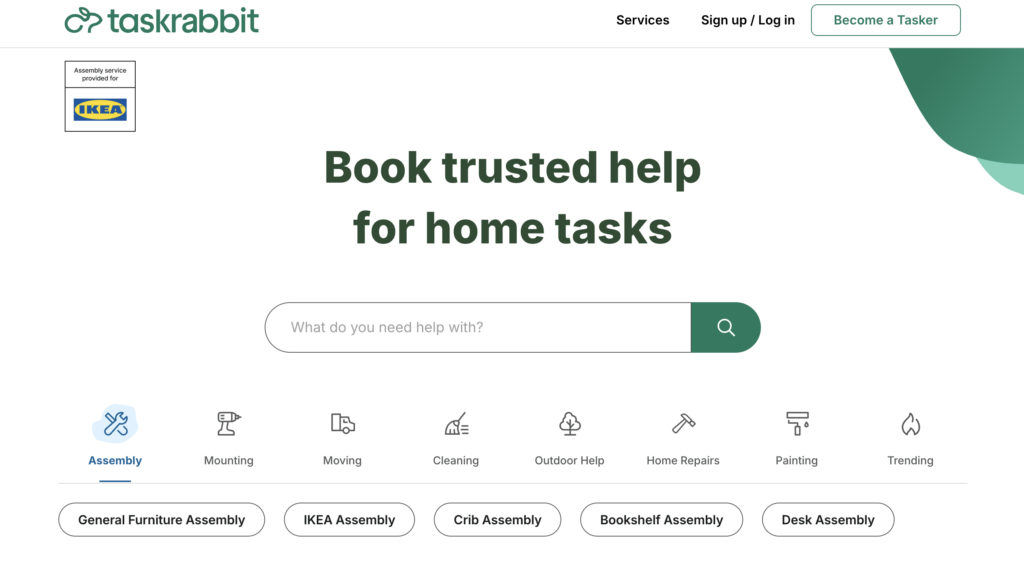
TaskRabbit connects contractors with customers looking for fast, one-time services, making it a great option for contractors offering handyman or small-scale services.
- Best for: Handyman services and contractors filling schedule gaps with smaller jobs
- Pricing model: Platform fees or commissions
- Lead type: Exclusive
- Pros: Fast job access, simple onboarding
- Cons: Lower ticket size, limited for specialized trades
9. EverConnect: Additional home service leads
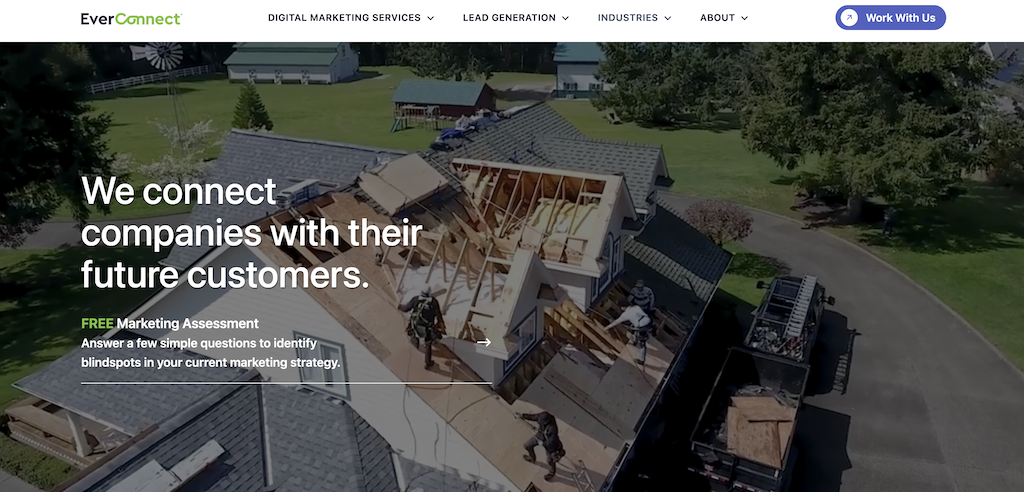
EverConnect focuses on connecting contractors with homeowners in core home service categories like HVAC, plumbing, and electrical. It typically doesn’t replace higher-volume platforms, but it can help fill gaps and add incremental leads. It works best alongside a primary channel like Thumbtack or Google Business Profile, not as your only source of demand.
- Best for: Contractors adding another paid residential lead source to increase volume
- Pricing model: Paid leads or program-based pricing
- Lead type: Varies
- Pros: Built around home services, can supplement other channels, geared toward lead delivery
- Cons: Less brand recognition than larger platforms, quality may vary by market, cost needs close tracking
10. Houzz: Built for design-focused, high-end jobs
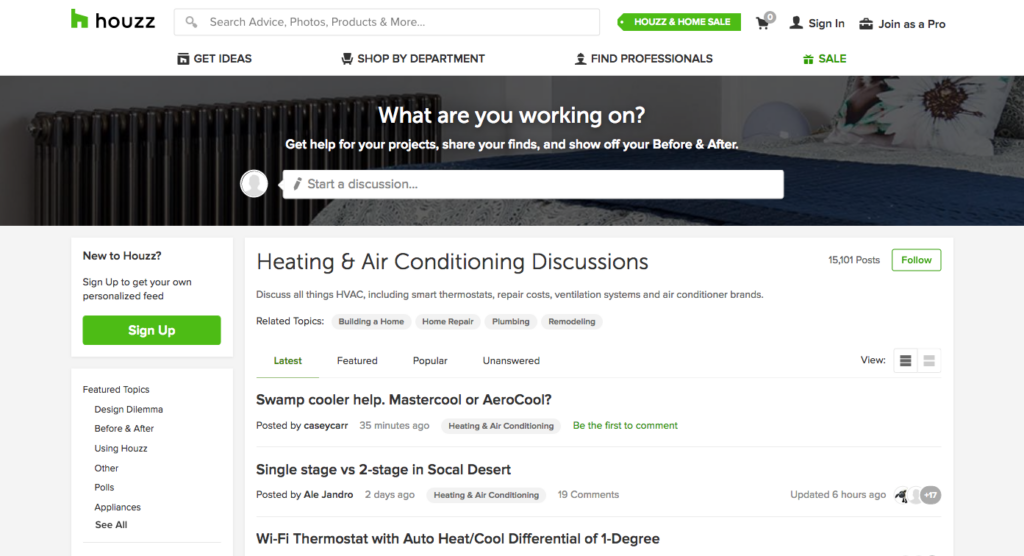
Houzz combines inspiration, portfolios, and contractor listings, making it a strong platform for pros who win work based on visuals and project quality. It skews toward homeowners spending $25,000+ on remodels, so it’s less useful for repair-and-replace service calls and better suited for design-build firms or custom remodelers.
- Best for: Remodelers, design-build firms, and contractors targeting higher-end residential projects
- Pricing model: Advertising and profile-based visibility
- Lead type: Exclusive
- Pros: High-intent homeowners, strong visual portfolio tools, credibility through reviews
- Cons: Competitive, requires high-quality photos, can be expensive
11. BuildZoom: Larger, higher-value projects
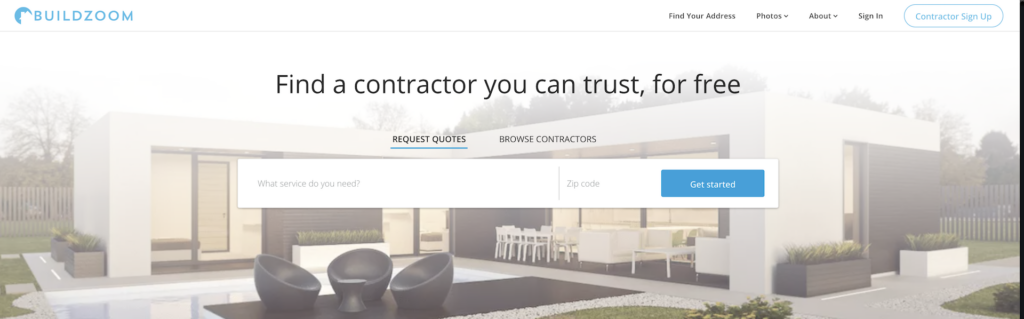
BuildZoom focuses on connecting contractors with higher-value residential projects using licensing data, project history, and customer intent signals.
- Best for: Contractors targeting mid-to-large residential jobs
- Pricing model: Lead-based or platform-driven visibility
- Lead type: Shared
- Pros: Better fit for bigger projects, strong project intent, useful for credibility
- Cons: Less useful for small service jobs, lead flow may be more limited, competition can still be strong
- Bottom line: Best for contractors who want fewer, higher-value project opportunities.
12. ConstructConnect: Commercial jobs and bid opportunities
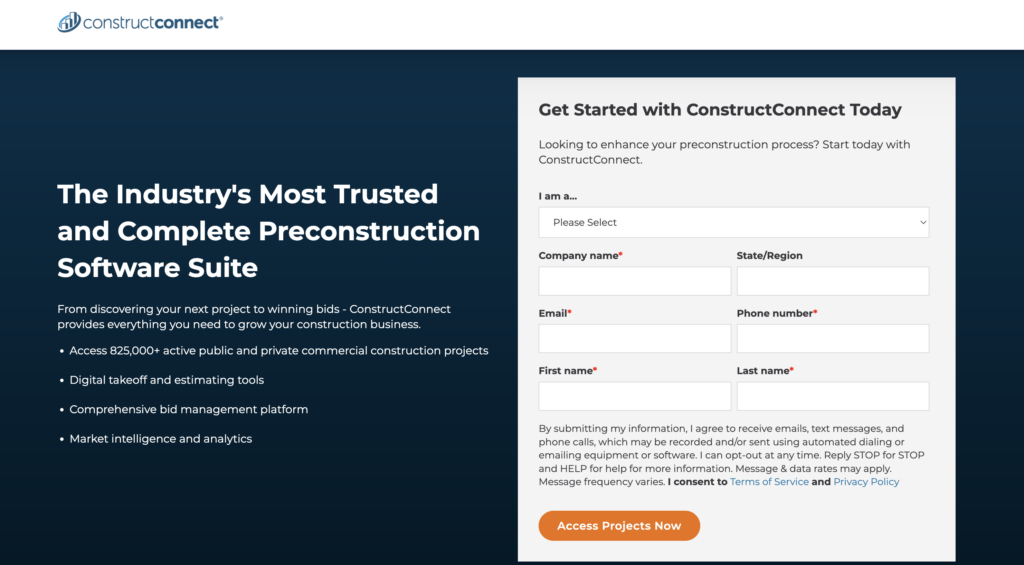
ConstructConnect is a leading platform for contractors focusing on commercial and industrial construction leads for large-scale projects.
- Best for: Commercial contractors who rely on bids and long-term projects
- Pricing model: Subscription
- Lead type: Shared
- Pros: Commercial project visibility, bid pipeline support, useful market intelligence
- Cons: Not built for residential service work, higher cost, longer sales cycle
13. The BlueBook: Commercial networking and project leads
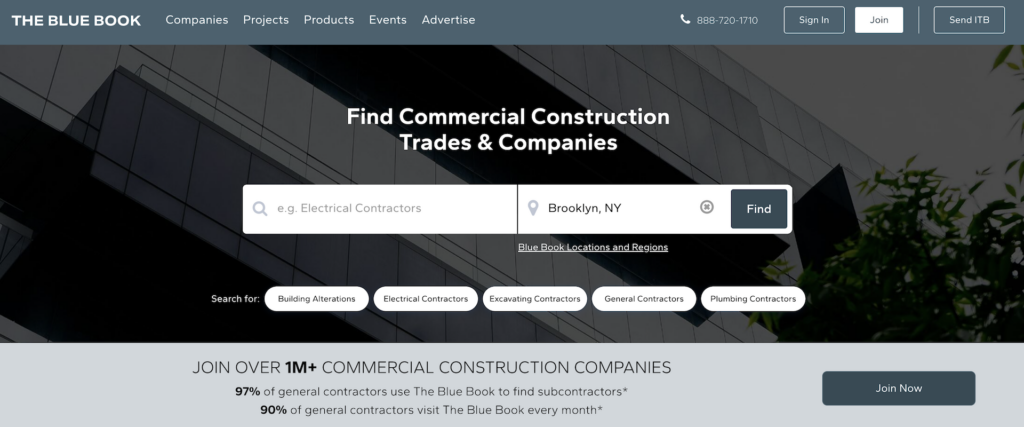
The BlueBook is a platform designed specifically for commercial contractors looking to connect with project owners, general contractors, and subcontractors.
- Best for: Commercial contractors building relationships and pursuing larger projects
- Pricing model: Subscription or listing-based
- Lead type: Shared
- Pros: Industry credibility, B2B connections, project visibility
- Cons: Not relevant for most residential contractors, longer sales process
14. 33 Mile Radius: Emergency and call-driven leads
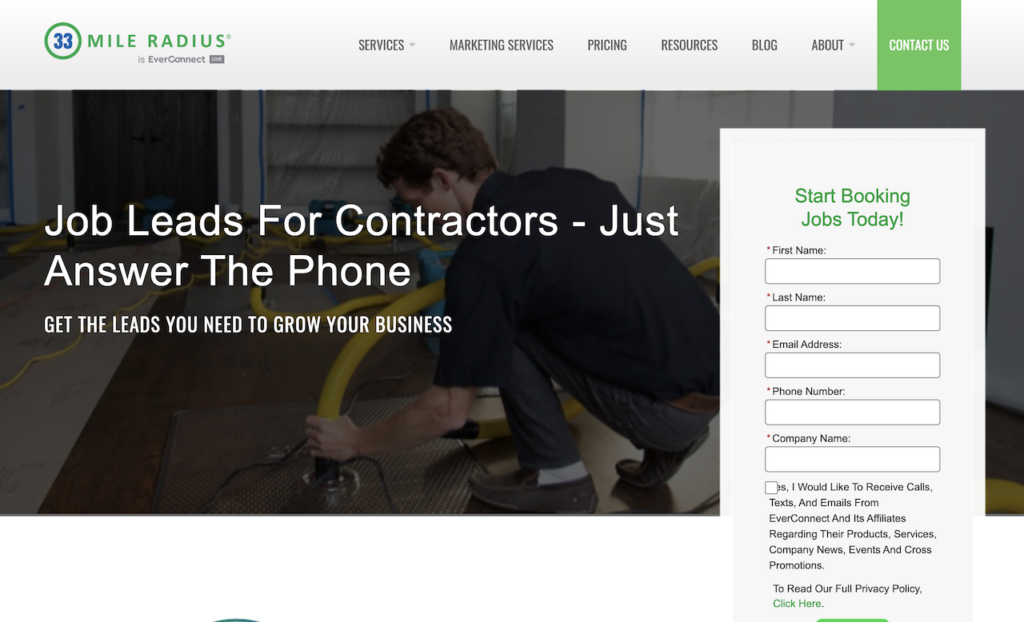
33 Mile Radius focuses on providing exclusive, high-intent leads for urgent home services like HVAC, plumbing, and restoration.
- Best for: Contractors handling emergency or high-intent service calls
- Pricing model: Performance-based (pay per call/lead)
- Lead type: Exclusive
- Pros: High intent, strong for service categories
- Cons: Higher costs, depends heavily on close rate
15. Bark: Broad leads across service categories
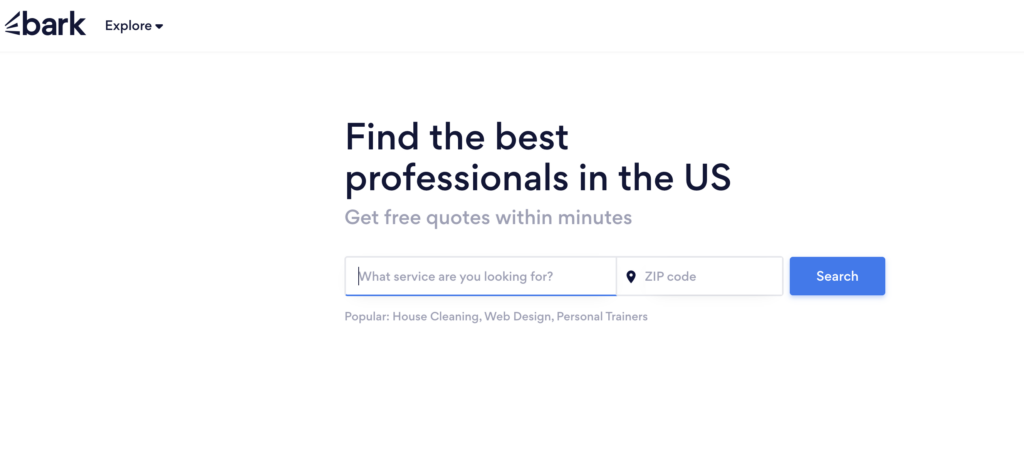
Bark connects contractors with a wide range of service requests across industries.. Its flexibility and broad reach appeal to businesses looking for unique job opportunities that they might not be able to find otherwise.
- Best for: Smaller contractors testing new lead sources or exploring additional demand
- Pricing model: Pay-as-you-go credit system
- Lead type: Shared
- Pros: Easy setup, flexible, wide category coverage
- Cons: Mixed lead quality, less targeted for contractors
How else do contractors get leads?
Lead generation websites can be useful, but they shouldn’t be your only marketing channel. The strongest contractor marketing strategies combine paid lead sources with channels you own and control.
Other lead sources include:
- Local SEO: Helps your business show up in search results for service-related searches
- Google Business Profile: Drives calls, map visibility, and review-based trust
- Referral marketing: Turns happy customers into repeat work and word-of-mouth leads
- Email marketing: Keeps your business in front of past customers
- Your own website: Gives you a place to convert traffic into calls, forms, and bookings
- Review generation: Builds trust and improves local search performance
A balanced strategy gives you more stability. Contractors chasing commercial and B2B accounts often layer in a B2B-focused lead gen partner that builds targeted prospect lists and runs the outbound so the phone keeps ringing between homeowner jobs. If one platform gets more expensive or slows down, you still have other ways to bring in work.
Check out more resources on contractor lead generation:
- How to get more plumbing leads
- 11 major lead generation strategies for HVAC contractors
- 10 ways to get more electrician leads
What should contractors look for in a lead generation website?
Choosing the right lead generation website comes down to more than just volume. The best platform for your business should match your services, margins, and ability to respond quickly.
- Lead quality: Choose platforms that match your trade, service area, and ideal job type.
- Pricing model: Make sure pay-per-lead, subscription, or ad spend fits your budget.
- Competition: Shared leads mean speed, reviews, and close rate matter even more.
- Job size: Pick a platform that aligns with your average ticket and service mix.
- Contract terms: Check billing structure, refunds, cancellation policies, and commitments and whether the platform clearly outlines how customer data is handled in its privacy policy.
- Follow-up speed: Some platforms only work if your team can respond fast.
When evaluating return on investment (ROI), track cost-per-booked-job, not just cost-per-lead. Divide your monthly platform spend by the number of jobs you actually closed—not inquiries received. A platform sending 20 leads at $10 each but closing only 1 job costs $200 per job. One sending 5 leads at $25 each and closing 2 costs $62.50. The second platform is three times more efficient.
“We track every campaign full-funnel, not just by cost per lead, but all the way through to revenue per lead and ROI by channel,” says Jensen Savage, CEO and founder of Savage Growth Partners, a full-service marketing firm for service businesses. “It’s not enough to know how many leads you’re getting, you need to know what those leads are worth.”
Which lead generation website is right for you?
The right lead generation website depends on the kind of work you want and how your business makes money.
Choose HomeAdvisor, Angi, or Thumbtack if…
- You want residential service leads
- You can handle fast follow-up
- Your average job value supports paid lead costs
Choose Houzz or BuildZoom if…
- You want better-fit project leads instead of raw volume
- You work in remodeling, design-build, or specialty residential services
- Your portfolio and reviews help sell the job
Choose ConstructConnect or The BlueBook if…
- You bid commercial work
- Your sales cycle is longer
- You want project visibility and bid-related opportunities
Choose Google Business Profile or Yelp if…
- You want stronger local visibility
- You want to build a lower-cost inbound lead channel over time
- Reviews are a major factor in how customers choose you
The best long-term strategy is usually a mix. Use lead generation websites to increase visibility now, but keep building channels you control like SEO, referrals, reviews, and your website.
How Housecall Pro helps contractors manage leads and book more jobs
Lead generation websites can help contractors bring in more opportunities, but you still need the right tools to respond quickly, stay organized, and turn leads into paying jobs. Housecall Pro helps contractors manage new inquiries, schedule work, send estimates, and keep jobs moving from first contact to final payment.
- Respond faster to new inquiries: Stay on top of incoming leads and follow up before opportunities go cold.
- Schedule jobs more efficiently: Organize appointments, dispatch technicians, and keep your calendar full.
- Send estimates quickly: Build and send professional estimates that help move leads toward booked work.
- Convert more leads into jobs: Create a smoother process from inquiry to scheduling to payment.
- Keep customer information organized: Manage communication, job details, and history in one place.
- Support contractor marketing efforts: Pair lead generation websites with tools that help you run your business more efficiently.
Start a 14-day free trial to see how Housecall Pro can help manage leads, book more jobs, and grow your business.
FAQ
-
What is the best lead generation website for contractors?
-
The best lead generation website for contractors depends on your trade, service area, average job value, and budget. For many residential contractors, HomeAdvisor, Angi, Thumbtack, Houzz, and Google Business Profile are common starting points. For commercial contractors, ConstructConnect and The BlueBook may be a better fi
-
Are lead generation websites worth it for contractors?
-
They can be worth it if the cost per lead still leaves enough room for profit after labor, overhead, and close-rate realities. They tend to work best when paired with fast follow-up and a broader marketing strateg
-
What is the cheapest way for contractors to get leads?
-
Google Business Profile, referrals, reviews, and local SEO are often lower-cost long-term lead sources than paid marketplaces, though they usually take longer to build.
-
Which lead generation websites are best for small contractors?
-
Small contractors often do best with one or two focused channels instead of signing up for everything at once. Google Business Profile, Yelp, Thumbtack, or one carefully chosen paid platform are common places to start.
-
Should contractors use paid lead services or SEO?
-
Most contractors should use both. Paid lead services can help generate jobs faster, while SEO and Google Business Profile can build more durable inbound demand over time.
-
How should contractors handle negative reviews on lead platforms?
-
Respond within 48 hours, acknowledge the concern without disputing details publicly, and offer to resolve it offline. On platforms like Angi and Yelp, a professional response to a 1-star review is often more trust-building than the negative review is damaging—future customers see how you handle problems.
-
What should contractors track before choosing a lead platform?
-
Track cost per lead, cost per booked job, close rate, average ticket size, refund policies, and whether leads are shared or exclusive.