Want to win more jobs with less effort?
Grow your business and send quick quotes with our home service software.

Want to see your potential revenue?
See what businesses like yours earn with Housecall Pro in 1 - 2 minutes.

Pricing plumbing jobs isn’t just about crunching numbers—it’s about knowing your market and protecting your bottom line. Material costs change, every property comes with surprises, and one wrong estimate can eat into your profits.
The challenge is finding the right balance between staying competitive and making sure every job covers your costs. A profitable price needs to account for labor, materials, overhead, drive time, callbacks, risk, and enough margin to keep your business growing.
This guide breaks down average plumbing rates, pricing models, service call fees, common add-ons, and a repeatable process for building estimates that protect your margins.
Quick answer: How to price plumbing jobs in 2026
To price plumbing jobs profitably, start with your true labor cost, add materials and overhead, build in your target profit margin, then adjust for job complexity, access, urgency, and local market rates.
Most residential plumbers charge $80 to $130 per hour, while commercial plumbing work often starts at $100+ per hour (see methodology). Emergency and after-hours calls usually cost more, often reaching $150 to $300 per hour or 1.5–3x the standard rate.
For routine residential jobs, flat-rate pricing usually works best because customers want to know the cost before the work starts. Hourly pricing still makes sense for diagnostics, older plumbing systems, commercial work, and jobs where the scope can change once a tech gets eyes on the issue.
Key takeaways
Follow these best practices to price plumbing jobs accurately and profitably:
Track true job costs: Include labor, overhead, materials, permits, and drive time before setting prices.
Match pricing to the work: Use flat-rate, hourly, or hybrid pricing based on job predictability and risk.
Standardize your estimates: A consistent price book helps techs quote accurately and protects margins.
Adjust for local conditions: Factor in market rates, material costs, access challenges, and demand in your area.
Review prices regularly: Monitor margins, close rates, and operating costs to know when price increases are needed.
Table of contents
- Plumbing pricing methodology
- Average plumber rates by service type
- Service call fees and trip charges
- Emergency and after-hours plumbing pricing
- Plumber labor rates
- Flat-rate vs. hourly: Which pricing model is right for your plumbing business?
- How to price plumbing jobs
- Example plumbing estimate walkthrough
- How to adjust plumbing prices for your market
- Pro insight: How to make your pricing easy to explain
- Common plumbing add-ons and upsell pricing
- Recurring plumbing service and maintenance plan pricing
- When to raise your plumbing prices
- Build faster estimates with plumbing software
Plumbing pricing methodology
The pricing ranges in this guide are built from aggregated data across leading home service platforms and contractor cost studies. Sources include HomeGuide, Angi, and Modernize, using their latest available 2026 pricing data and benchmarks.
These numbers reflect typical residential and light commercial plumbing pricing across the U.S., but they’re meant to be a baseline. Plumbers who use Housecall Pro report charging higher rates, especially in metro areas or for specialized, after-hours, or emergency work.
Your actual pricing will vary based on:
- Local labor rates and cost of living: Wages and customer expectations vary by market.
- Parts costs and supplier relationships: Material pricing can change quickly.
- Job complexity and access difficulty: Crawlspaces, walls, slabs, and older systems add time.
- Business overhead and operating expenses: Vehicles, insurance, software, admin, and marketing need to be covered.
- Permits, licensing, and inspection requirements: Local rules can add time and cost.
- Service level and callback risk: Emergency, after-hours, and warranty-sensitive work should be priced accordingly.
Use the numbers in this guide as a general starting point, then adjust pricing based on your local market and the true costs of running your business. The most reliable pricing comes from comparing outside benchmarks against your own completed jobs, average ticket, material costs, and profit reports.
Average plumber rates by service type
From small fixes to major replacements, average plumbing prices vary based on labor time, materials, access, permits, and risk. Use these 2026 ranges as a baseline when building your own price book.
Plumbing price list: common services at a glance
Here are 2026 U.S. averages for common residential plumbing services. Prices vary by market, access, materials, and job complexity.
| Service | Typical price range |
|---|---|
| Drain clearing | $125–$300 |
| Toilet repair | $100–$250 |
| Faucet or fixture install | $150–$535 |
| Garbage disposal install | $200–$450 |
| Minor leak repair | $150–$400 |
| Water heater replacement | $1,600–$7,000 |
| Whole-home repipe | $4,000–$15,000 |
| Sewer line replacement | $3,000–$10,000 |
| Emergency service call | $150–$350+ dispatch fee |
| After-hours repair | 1.5–3x standard rate |
Small plumbing jobs
Small plumbing jobs are usually routine repairs or replacements that take less than two hours. They’re good candidates for flat-rate pricing when your team has a consistent process.
| Job | Typical price range | Typical time | What changes the price |
| Faucet or fixture install | $150–$535 | 1–2 hours | Fixture type, prep, access |
| Toilet repair | $100–$250 | 1–2 hours | Parts, clog severity, flange condition |
| Drain clearing, sink or tub | $125–$300 | 1–2 hours | Blockage depth, pipe length, access |
| Minor leak repair | $150–$400 | 1–3 hours | Pipe location, fittings, wall access |
| Garbage disposal install | $200–$450 | 1–2 hours | Electrical access, disposal model |
Large plumbing jobs
Large plumbing jobs take more planning, labor, materials, and sometimes permits. These jobs should always be priced from true job cost. National averages won’t account for your local labor rates, permit costs, or material prices.
| Job | Typical price range | Typical time | What changes the price |
| Water heater replacement | $1,600–$7,000 | 3–8 hours | Tank vs. tankless, permits, venting |
| Main water line repair | $400–$5,000 | Half day to multi-day | Depth, digging, pipe material |
| Whole-home repipe | $4,000–$15,000 | Multi-day | Home size, access, material type |
| Sewer line replacement | $3,000–$10,000 | Multi-day | Excavation, permits, line length |
| Commercial plumbing install | $5,000–$50,000+ | Project-based | Scale, code needs, materials |
Emergency plumbing services
Emergency plumbing jobs usually cost more because they interrupt the schedule, require fast response, and may happen after hours, on weekends, or during holidays.
| Service type | Pricing unit | Typical range | Notes |
| Emergency service call | Dispatch fee | $150–$350+ | Usually separate from repair cost |
| After-hours repair | Rate multiplier | 1.5–3x standard rate | Applies to nights, weekends, holidays |
| Urgent leak repair | Total repair range | $150–$600+ | Depends on access and damage risk |
| Emergency drain clearing | Total repair range | $200–$600+ | Higher if equipment or camera work is needed |
Table: Typical 2026 emergency plumbing pricing; dispatch fees are usually separate from the final repair price unless stated upfront.
Service call fees and trip charges
A service call fee covers the cost of traveling to the customer’s property. It may also be called a diagnostic fee, dispatch fee, or trip charge.
Most residential plumbing businesses charge a service call fee between $75 and $150, though rates can range from $50 to $200 depending on your market, travel distance, and the type of visit. Some companies choose not to charge a separate fee and instead build travel and dispatch costs into their labor rates, which can be a good fit in highly competitive residential markets.
A good service call fee should cover:
- Drive time: Time spent getting to and from the job
- Fuel and vehicle costs: Mileage, gas, maintenance, and wear
- Initial diagnosis: Time spent identifying the issue
- Scheduling and dispatch: Office time required to book and route the call
- Opportunity cost: Time blocked on the schedule, even if the customer declines the repair
Be upfront about the fee when the customer books. If you apply the fee toward approved work, say that clearly before dispatching the tech.
Example script: “Our diagnostic fee is $95. That covers the trip and the time to inspect the issue. If you approve the repair, we’ll apply that fee toward the final job price.”
Emergency and after-hours plumbing pricing
Emergency plumbing calls should cost more than standard scheduled work. You’re not just charging for the repair. You’re charging for immediate availability, schedule disruption, after-hours labor, and higher callback risk.
Most plumbing businesses charge either:
- A higher emergency dispatch fee: For example, $150–$350+ before repairs
- A rate multiplier: Often 1.5–3x the standard hourly rate
- A flat emergency price: Common for repeatable urgent jobs like drain clearing
- A combination: Emergency dispatch fee plus repair cost
Explain emergency pricing before sending a tech. Customers may be stressed, but they still want to understand what they’re approving.
Example:
“Because this is an after-hours emergency call, the dispatch fee is $225. Once our plumber diagnoses the issue, we’ll give you the repair price before starting the work.”
Plumber labor rates
Labor makes up a big part of your overall costs, and what you pay your team affects both your profits and your reputation. The average plumber earns $22–$43 per hour, depending on experience, location, and specialty. Paying competitive wages helps you attract and keep skilled plumbers, reduce turnover costs, and maintain high-quality work as you scale.
Not sure what to charge—or pay? Use our free Plumbing Labor Rate Calculator to find your ideal rate or learn more in our plumber salary guide.
Flat-rate vs. hourly: Which pricing model is right for your plumbing business?
Most plumbing companies use one of three pricing models: hourly, flat-rate, or hybrid. The right model depends on how predictable the work is and how much risk you’re taking on.
| Pricing model | Best for | Pros | Watch out for |
| Hourly pricing | Diagnostics, complex repairs, commercial work | Protects you when scope changes | Customers may worry about open-ended costs |
| Flat-rate pricing | Common residential repairs and installs | Clear upfront price for customers | Can hurt margins if the job takes longer than expected |
| Hybrid pricing | Most service businesses | Gives structure and flexibility | Requires clear rules for when each model applies |
Hourly pricing for plumbing: When it works best
Hourly pricing works best when you don’t know exactly what the job will take until you’re on-site.
Use hourly pricing for:
- Leak diagnostics: Hidden leaks behind walls, ceilings, or floors
- Older or unknown pipe systems: Jobs where the condition of the system is unclear
- Commercial work: Time-and-materials jobs with changing scope
- Slab leaks or hard-to-access repairs: Jobs where labor time is difficult to predict
- Expanded-scope jobs: Work where the customer may approve additional repairs after diagnosis
Hourly pricing protects your margin when labor time is unpredictable. Just make sure the customer understands your hourly rate, service call fee, material markup, and any minimum charge before work begins.
Flat-rate pricing for plumbing: When it works best
Flat-rate pricing works best for repeatable jobs where your team knows the average labor time, materials, and risk.
Use flat-rate pricing for:
- Drain clearing: Standard sink, tub, shower, and main-line clogs
- Toilet repairs and replacements: Common part swaps or standard installs
- Faucet and fixture installs: Jobs with predictable labor and materials
- Garbage disposal installs: Straightforward replacement work
- Water heater maintenance: Flushes, inspections, and basic maintenance tasks
Customers usually like flat-rate pricing because they know the cost before approving the work. Industry data from Simpro finds that flat-rate systems raise average ticket size by 20%–30% compared to hourly billing. For the business, it also makes estimating faster and helps techs quote consistently.
The hybrid model
A hybrid model is often the most practical setup for plumbing businesses. You can charge flat rates for standard residential jobs and use hourly or time-and-materials pricing for jobs with more uncertainty.
For example, you might charge a flat rate for a basic toilet replacement but switch to hourly if the tech finds rotted flooring, damaged flange work, or hidden plumbing issues once the toilet is removed.
The key is to define those rules clearly so your team knows when to use each pricing model.
How to estimate plumbing work
Accurate plumbing estimates come from a repeatable process. Use these steps to build quotes that cover your costs and protect your margin.
Step 1: Research your market
Start by understanding what plumbers in your area charge for common services. Check competitor websites, local directories, job boards, supplier pricing, and customer-facing cost snippets.
Focus on your specific service area. Labor costs, permitting, traffic, demand, and cost of living vary widely by region.
Step 2: Choose your pricing model
Once you know your local averages, decide how you’ll charge for different types of jobs. Most plumbing businesses use a mix of hourly and flat-rate pricing.
Use flat-rate pricing for common services like drain clearing, toilet repairs, fixture installs, and standard water heater maintenance. Use hourly or time-and-materials pricing for diagnostics, commercial work, hidden leaks, slab work, and older systems where the scope may change.
Step 3: Calculate true job cost
Before adding profit, calculate what the job actually costs.
Include:
- Labor: Wages, payroll taxes, benefits, and non-billable time
- Materials: Parts, fittings, fixtures, consumables, and disposal
- Overhead: Vehicles, insurance, licensing, admin, software, and marketing
- Job-specific costs: Permits, rentals, specialty tools, or subcontractors
Use these formulas:
Overhead Rate = Total Annual Overhead ÷ Billable Hours
True Labor Cost = (Wage + Taxes + Benefits) × Hours Worked
Note that most plumbing businesses apply a 40%–60% markup on parts and materials to cover acquisition, truck stock, storage, and warranty risk—not just the wholesale cost of the part. Apply markup consistently across your price book so it doesn’t slip job to job.
Step 4: Add margin and job modifiers
Once you know your base cost, add your target profit margin. Profit gives you room to replace tools, maintain vehicles, hire help, cover slow weeks, and grow without relying on every job to go perfectly.
Use this formula:
Billable Rate = True Hourly Cost × Profit Multiplier
Then adjust for job conditions:
- Add 10%–20%: Hard-to-access locations like slabs, crawlspaces, attics, or tight walls
- Add 5%–10%: Premium or specialty materials like copper, PEX-A, or tankless systems
- Add 10%–15%: Permits, special equipment, inspections, or multi-day work
- Add 1.5–3x: After-hours, holiday, or emergency response
Step 5: Include service and emergency fees
Add a service call, diagnostic, or trip fee to cover dispatch, travel, and diagnosis. Many plumbing businesses charge $50 to $250 for standard service calls and $150 to $350+ for emergency dispatch.
Be clear about whether the fee is separate or applied toward approved repairs.
Step 6: Standardize and review regularly
When prices live in notebooks, spreadsheets, or a tech’s memory, quotes can drift. Standardize your price book, cost calculations, and job-profit tracking so your team quotes from the same approved numbers.
Free download: Use our plumbing invoice template to easily bill clients, track hours, and ensure your payments are accurate and professional.
Get In Touch: 858-842-5746
Let us earn your trust
On average, Pros increase monthly revenue generated through Housecall Pro by 35% after their first year.
See plan options and feature breakdown on our pricing page.Read more: 11 ways to improve your plumbing business’s profitability
Example plumbing estimate walkthrough
Let’s walk through an example using a standard residential plumbing job, like unclogging a drain or replacing a faucet.
Step 1: Calculate overhead rate
Say your business spends $120,000 per year on overhead (fuel, insurance, software, etc.), and you typically bill 2,000 hours annually.
Overhead Rate = $120,000 ÷ 2,000 = $60/hour
Step 2: Calculate true labor cost
Your plumber earns $35/hour. Payroll taxes add 10% ($3.50) and benefits add 15% ($5.25), bringing the true labor cost to:
True Labor Cost = ($35 + $3.50 + $5.25) × 1 hour = $43.75/hour
Step 3: Combine labor and overhead
Add your totals from steps 1 and 2.
Base Cost = $60 + $43.75 = $103.75/hour
This is what you need to cover just to break even.
Step 4: Add profit margin
If you want a 20% profit margin, multiply by 1.2.
Billable Rate = $103.75 × (1.20) = $124.50/hour
Step 5: Apply modifiers for emergency or after-hours work
If the job happens after hours or on a weekend, you might charge 1.5× your normal rate:
After-Hours Rate = $124.50 × 1.5 = $186.75/hour
Want to skip the manual calculation? Download our free plumbing estimate template to build quotes faster.
How to adjust plumbing prices for your market
National averages are useful, but your local market should shape your final rates. A plumber in a high-cost metro usually needs different pricing than a plumber in a rural market with longer drive times and lower labor costs.
Use this process to adjust your prices for your local plumbing market:
- Check local job boards: Look at posted wages for apprentice, journeyman, and master plumbers in your service area.
- Review competitor pricing: Compare competitor websites and collect 2–3 local quote examples for common services.
- Search local cost snippets: Look for “plumber near me” and service-specific searches in your area to see what Google and local directories surface.
- Track your own close rate: If nearly every estimate is accepted, you may be priced too low. If too many good-fit customers decline, review your pricing, presentation, or market fit.
- Compare supplier costs: Check whether your parts and materials are running higher than the averages used in national pricing guides.
As a rough benchmark: high-cost metros like New York, San Francisco, and Chicago may need to price 15%–25% above national averages. Rural or lower-cost markets may land 10%–20% below, though longer drive times can offset those savings.
The goal is not to be the cheapest plumber in town. The goal is to charge enough to cover your costs, pay your team well, and deliver reliable service without racing to the bottom.
Pro insight: How to make your pricing easy to explain
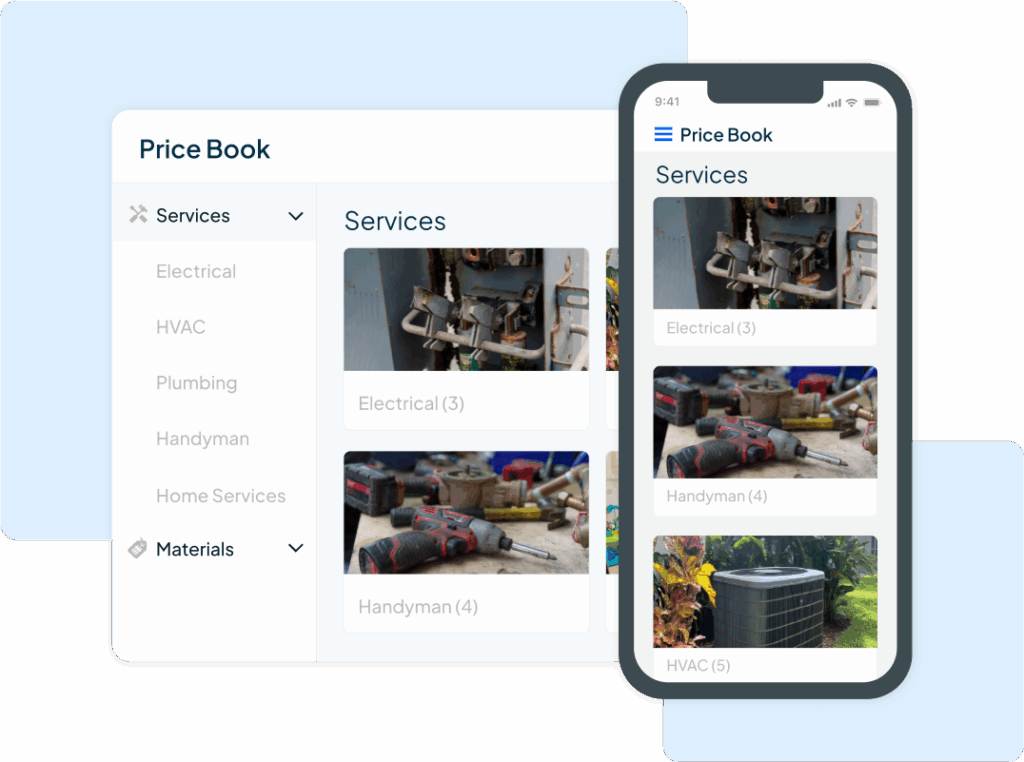
If a customer asks, “What am I paying for?” your team should be able to answer in seconds. That starts with a clear, well-organized price book that helps techs quote confidently and customers understand the value behind the price.
“We spent a lot of time on our price book. We wanted to make sure it was right and descriptive. It’s a flat rate price book that encompasses the entire job, not hourly. And it’s very easy to explain to the client what they’re getting. The price book is key to our success.”
— Chad L., Rapid Rooter Plumbing
Your techs shouldn’t have to rebuild the math every time they quote a common repair. Build your price book with approved rates, detailed service descriptions, and clear line items that show what’s included in the job. This gives techs a consistent starting point, speeds up quoting, and helps customers feel confident in the recommendation. Reserve custom pricing adjustments for jobs that truly fall outside your standard scope.
Read more: 11 ways to improve your plumbing business’s profitability
Common plumbing add-ons and upsell pricing
Add-ons work best when they solve a real customer problem and make sense with the job already being done. They shouldn’t feel like a random upsell.
Use these as starting-point ranges:
| Add-on service | Suggested price range | When to offer it |
| Water heater flush | $100–$250 | During water heater repair or inspection |
| Expansion tank install | $250–$600 | During water heater replacement |
| Drain camera inspection | $150–$400 | After repeat clogs or main line concerns |
| Shut-off valve replacement | $150–$350 per valve | During fixture, toilet, or sink work |
| Pressure regulator inspection | $75–$200 | When pressure is too high or inconsistent |
| Fixture upgrade option | Varies by fixture | During faucet, showerhead, or toilet repair |
The easiest way to present add-ons is to explain the reason first, then the option.
Example:
“Your water heater is working now, but there’s sediment buildup. Since we’re already here, we can flush it today for $175. That can help it run better and may reduce future service issues.”
If your techs offer add-ons, keep the approved options in your price book. That way, every customer gets the same clear pricing and your team doesn’t have to guess in the driveway.
Recurring plumbing service and maintenance plan pricing
Recurring service plans can help plumbing businesses smooth out slow seasons and stay in front of customers before small issues turn into urgent repairs.
A simple residential plan might start around $150–$250 per year, then increase based on included visits, discounts, priority scheduling, and service area. A basic plumbing maintenance plan might include an annual inspection, water heater flush, drain check, priority scheduling, and discounted service calls.
Price the plan so it covers the visit cost, admin time, and any included service discounts—not just the parts. If you’re discounting service calls for plan members, that discount needs to be baked into the plan price, not absorbed from your margins.
If you’re losing track of when plan customers are due for a visit, that’s a revenue and retention problem. Housecall Pro’s service agreement software lets you create agreements, automate recurring visit scheduling, and keep plan customers from falling through the cracks.
Free download: Plumbing service agreement template
When to raise your plumbing prices
You don’t need to wait until profit disappears to raise prices. Small, planned increases are usually easier to manage than one big jump after costs get out of control.
It may be time to raise your plumbing prices when:
- Your close rate is extremely high: If nearly every estimate gets approved, your rates may be too low.
- Your margins are shrinking: Labor, parts, fuel, insurance, or financing costs are rising faster than your prices.
- Your schedule is overloaded: If you’re booked out but cash still feels tight, you may be underpricing demand.
- You’re avoiding higher-cost jobs: If certain jobs feel “not worth it,” your pricing may not reflect the labor, risk, or access involved.
- Your team is growing: Hiring, training, payroll taxes, vehicles, and benefits need to be built into your rates.
Start by testing a 5%–10% increase on your most common services. Track close rate, callbacks, customer complaints, and average ticket size for 30–60 days.
When communicating a price increase, keep it simple. Explain that your pricing has been updated to reflect labor, material, and operating costs, and that customers will still receive upfront estimates before work begins.
Read more: How to write a price increase letter (templates + tips)
Build faster estimates with plumbing software
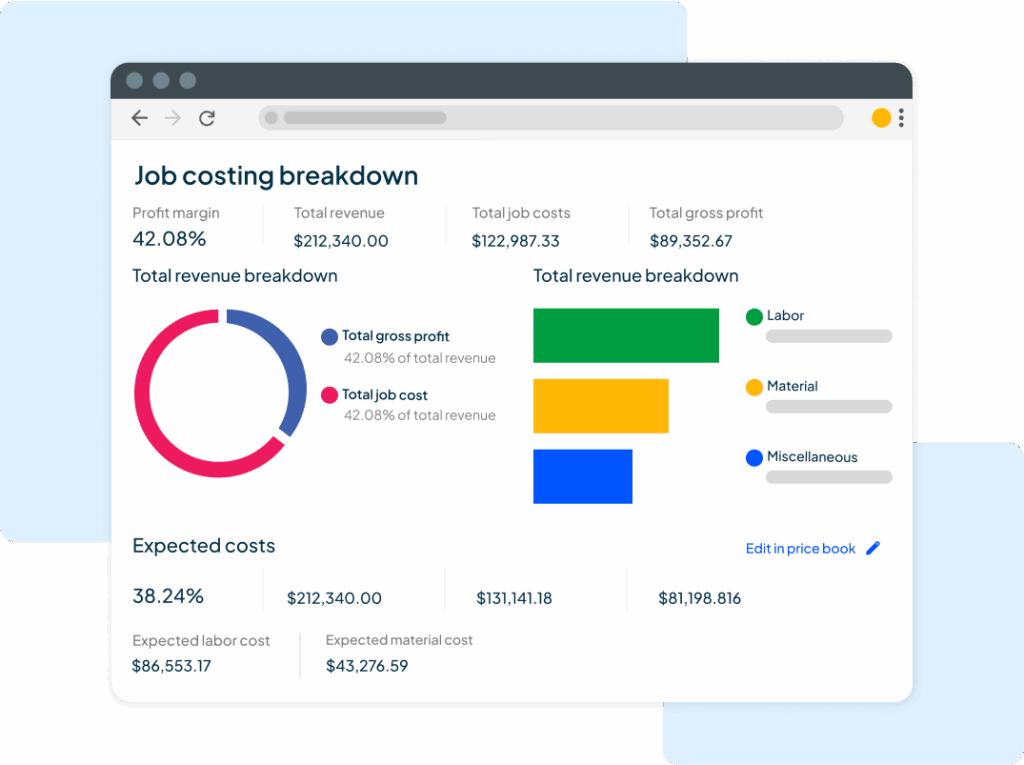
When you’re juggling multiple service calls, it’s easy to lose track of costs, forget markups, or miss follow-ups. Housecall Pro’s plumbing software gives your team a single system to handle it all—without rebuilding the math on every call. You can:
- Build professional estimates on-site in minutes.
- Auto-calculate overhead, fees, and profit margins.
- Apply emergency pricing rules automatically.
- Track expenses and profitability in one dashboard.
- Integrate scheduling, payments, and invoicing.
Take it from Byron Hoch, who took his San Diego-based plumbing company All American Plumbing from $500K to $3.5–$4M over 11 years. “Year over year, we’re literally doubling, and a lot of it is contributed to Housecall Pro.”
Start your free 14-day trial and make pricing the easiest part of your business.
FAQ
-
How much should I charge for a plumbing job?
-
Your price should cover four things: burdened labor cost (wages + taxes + benefits + nonbillable time), materials with markup, overhead, and your target profit margin. In 2026, most residential plumbers land between $80 and $130 per hour for standard work before service fees. Start with your true cost per hour, then add your margin—don’t start from a competitor’s rate and work backward.
-
What’s the average hourly rate for plumbers in 2026?
-
Residential plumbing rates typically range from $75 to $150 per hour for standard work during business hours, with most homeowners paying around $90 to $125 per hour. Master plumbers and commercial work start at $100 to $200 per hour. Emergency and after-hours rates run $150 to $300 per hour.
-
Is flat-rate pricing better than hourly pricing for plumbers?
-
Flat-rate pricing is usually better for standard residential jobs. Customers prefer knowing the price before approving the work, and flat rates eliminate the risk of scope disputes once a job is underway. Industry data suggests flat-rate systems raise average ticket size 20%–30% compared to hourly billing.
Hourly pricing still works well for diagnostics, uncertain repairs, commercial time-and-materials work, or any job where the scope can change once a tech is on-site. Most plumbers use both.
-
How do plumbers calculate labor costs correctly?
-
Labor cost should include wages plus payroll taxes, employer benefits, and nonbillable time like drive time, supply runs, and setup. This is called your burdened labor rate.
For example, a plumber earning $35/hour might actually cost $43–$48/hour once taxes and benefits are added. Using the burdened rate in your estimates—rather than just the wage—is what separates jobs that look profitable on paper from jobs that actually are.
-
What’s a standard material markup for plumbing jobs?
-
Most plumbing businesses apply a 40%–60% markup on parts and materials, according to benchmarks from Simpro. This isn’t arbitrary—it covers truck stock, ordering time, storage, handling, and warranty risk. Smaller consumables like fittings and tape often carry higher markups; large-ticket items like water heaters typically carry lower percentage markups but higher dollar amounts. Set your markup consistently in your price book so it’s applied the same way on every job.