Want to win more jobs with less effort?
Grow your business and send quick quotes with our home service software.

Want to see your potential revenue?
See what businesses like yours earn with Housecall Pro in 1 - 2 minutes.
Running a plumbing business doesn’t always mean strong profits. You can stay busy, keep the schedule full, and still feel pressure on cash and margins. That usually comes down to a few issues: pricing that doesn’t fully cover your costs, overhead that keeps creeping up, or too much time spent on work that isn’t very profitable. If you’re trying to tighten that up, it helps to look at your pricing model, your service mix, and the systems you use to run the business.
This guide breaks down what healthy plumbing profit margins look like and the practical steps you can take to improve them.

Business valuation calculator
See your valuation, how you compare, and get a customized growth plan.
Table of contents
Quick answer: What is a good profit margin for a plumbing business?
Most plumbing businesses operate at a 5%–12% net profit margin, while 15%–20%+is considered strong (per financial benchmarks from Profitability Partners, based on P&L data from 200+ home services acquisitions).Gross margins should be high enough to cover labor and materials comfortably, but net margin is the true measure of business health because it includes overhead like vehicles, admin, insurance, and software. Tracking both helps identify whether issues come from pricing, job costs, or overall operations.
Key takeaways
Improving plumbing profitability comes down to a few key levers you can control:
Busy doesn’t guarantee profit: A full schedule can still hide underpriced jobs, rising overhead, and wasted labor hours.
Pricing has a huge impact: Flat-rate, time-and-materials, hybrid, and project pricing can all work if your real costs are built in.
Better job mix helps: Higher-margin services and recurring work can make revenue steadier and improve overall margins.
Tracking matters: Better reporting makes it easier to catch profit leaks before they turn into bigger problems.
Gross profit margin vs. net profit margin for plumbing businesses
Gross margin shows how well your jobs are priced by measuring what’s left after labor and materials. Net margin shows how profitable the business actually is after all expenses, including overhead and admin.
Both matter, but they answer different questions. Strong gross margins with weak net margins usually point to overhead, inefficiencies, or cash flow issues—not pricing alone. This is why a business can stay busy, bring in revenue, and still feel tight on cash.
If you want clearer pricing decisions, focus on tracking both consistently rather than relying on revenue or a single margin number.
If margins are what’s tripping you up, Housecall Pro’s guide to calculating markup and margin can help clarify the difference and make pricing decisions easier.
11 ways to increase your plumbing company’s profitability
Improving profitability usually comes down to a few repeatable habits: knowing your numbers, pricing with enough margin, keeping crews productive, and making it easier for customers to approve and pay for work. Use these strategies to find where profit is leaking and where small changes can make the biggest difference.
1. Track plumbing job costs and profit margins
If you want to improve your plumbing company’s profitability, start by reviewing your numbers. Revenue doesn’t tell you enough on its own. You also need to look at your most and least profitable jobs, travel time, labor hours, admin time, material costs, job costing, and overhead.
Pull reports from the last 30–90 days and compare jobs side by side. Identify which services have the highest margins and which ones are costing you time or money, then adjust pricing, scheduling, or service focus based on what you find.
Housecall Pro’s profit margin calculator can help you break down your numbers and spot whether issues are coming from pricing, job costs, or collections.
2. Raise your prices when the numbers support it
Many plumbing owners hesitate to raise prices because they don’t want to lose customers. But pricing too low puts pressure on every part of the business. A thoughtful increase can improve margins without pushing you out of the market.
Your close rate can help here. If nearly every estimate turns into work, that can be a sign your pricing is too low. Start by testing 5%-10% increases on your most-booked services, then track your close rate and average ticket size to see how customers respond. If your close rate stays above 70%, your pricing is likely landing well in your market.
More resources:
3. Account for overhead on every job
It’s easy to price around labor and materials and forget everything else it takes to run your business. But real profitability depends on more than covering the work itself. Fuel, vehicles, insurance, office costs, software, payroll, and other overhead all need to be part of the equation.
Calculate your monthly overhead, break it down into a per-job or per-hour cost, and build that into your pricing. When you include those costs in your job pricing, it’s much easier to hit a real target margin instead of relying on volume to make up the difference.
According to Profitability Partners, well-run plumbing businesses typically keep operating overhead around 18%–22% of revenue (excluding marketing). If yours is higher, it’s usually a sign that some fixed costs haven’t been reviewed in a while, like unused software, extra space, or roles that could be streamlined.
4. Mark up materials on every job
Pricing labor carefully but leaving materials at cost is a common way plumbing businesses quietly lose margin. Materials should be priced to cover more than just the part—they also need to account for handling, sourcing, and price changes.
Many plumbing businesses use material markups in the 25%–50% range, depending on the job type, supplier costs, and local market. What matters most is applying your markup consistently so rising material costs don’t quietly cut into your margins. Using a percentage-based markup keeps your pricing aligned with your actual costs, while flat fees can fall behind when material prices increase.
Set your markup in your price book and apply it to every job. Use a percentage-based markup instead of a flat fee so your pricing stays aligned with material costs as they change. Regularly review supplier pricing and update your price book so you’re not absorbing increases.
5. Focus on the most profitable plumbing services
Some services naturally produce better returns, and some are much more likely to lead to repeat work. If you want stronger profitability, look closely at which jobs are actually helping your bottom line instead of assuming all revenue is equally valuable.
Review your past jobs and identify which services have the highest margins and lowest time investment, then prioritize scheduling and marketing those jobs.
If you want ideas for higher-value service categories to lean into, Housecall Pro’s plumbing services list is a useful place to start.
6. Increase average ticket size with upsells and add-ons
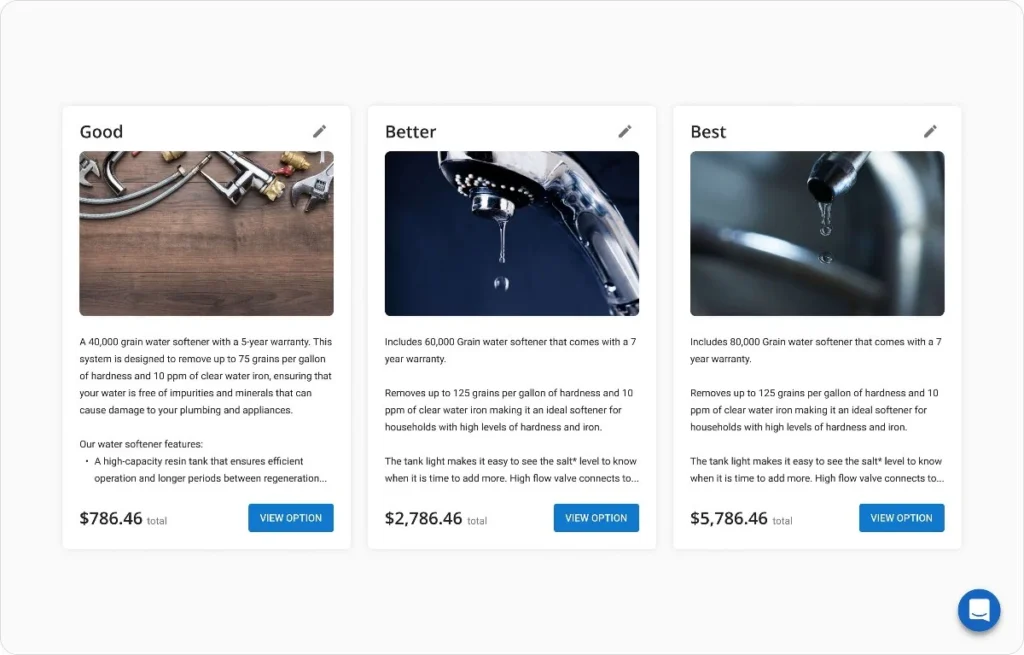
You don’t always need more customers to increase profit. Small add-ons and well-timed recommendations can significantly improve margins without adding more time to your schedule.
Start by identifying common upsell opportunities that make sense alongside your core services. For example, when handling a repair, you might also recommend replacing worn components, adding shut-off valves, or upgrading fixtures. For inspections or maintenance visits, you can suggest preventative work that helps customers avoid bigger issues later.
To make this consistent:
- Build common add-ons into your price book so techs can quote them quickly
- Train your team to spot and explain upgrade opportunities clearly
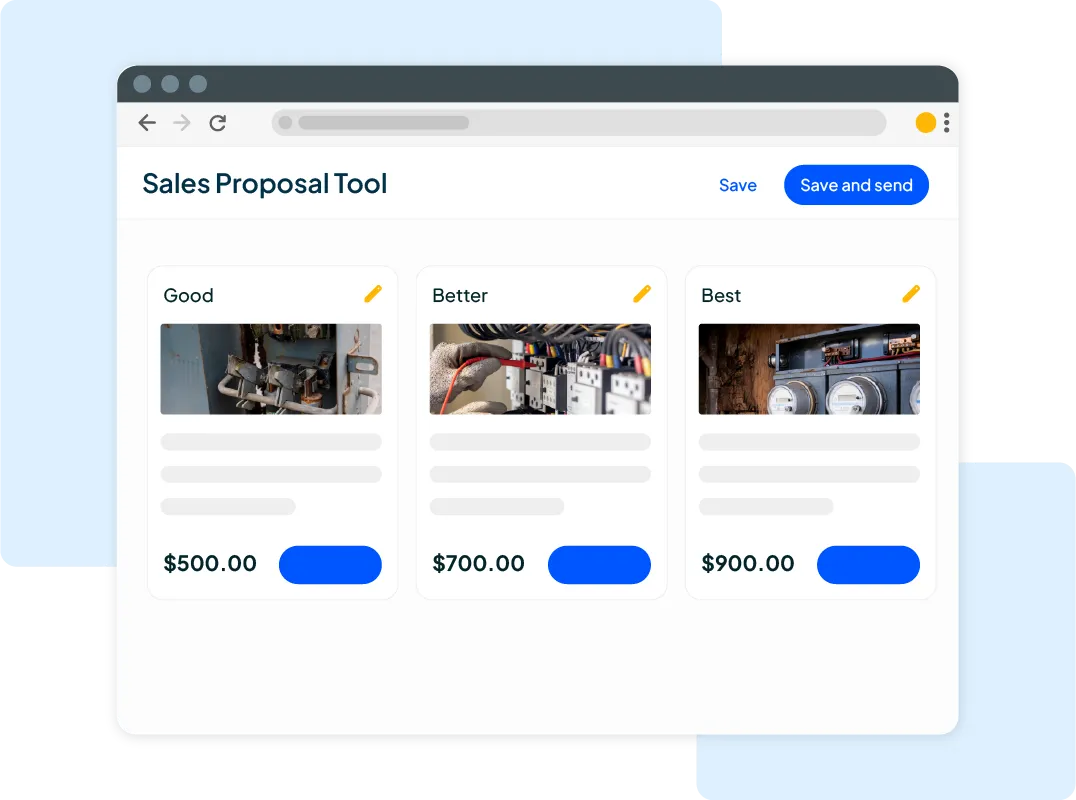
- Use good-better-best options so customers can choose what fits their budget
- Focus on recommendations that genuinely improve the system, not just increase the ticket
Even a small increase in average ticket size across your jobs can have a noticeable impact on overall revenue and profit—without needing to book more work.
7. Plan for slow seasons before they hit
Most plumbing businesses know slow season is coming. The difference is whether you prepare during busy months or scramble when work slows down.
Start by building a buffer while revenue is strong: set aside enough cash to cover one to two months of fixed expenses like payroll, insurance, and vehicle payments. At the same time, collect deposits on larger upcoming jobs to keep cash flowing even if new calls dip.
Use service agreements to keep work on the schedule during slower periods. They give you pre-booked jobs and consistent customer touchpoints that can turn into additional work. The best time to sell them is when you’re already busy, so they’re in place before demand drops.
8. Find more profitable plumbing service areas
Sometimes the issue isn’t the quality of your work. It’s the market around it. If your current area is too saturated or demand is too limited, expanding into nearby service areas can create better opportunities.
Look at nearby ZIP codes or neighborhoods with higher home values, more service calls, or less competition. Start small by targeting one new area with ads or promotions, then track job volume, pricing, and travel time before expanding further.The goal is to expand where jobs are more profitable—not just more available.
9. Reduce admin time and protect billable hours
Scheduling, dispatching, invoicing, and payment collection all take time, and none of that work directly earns revenue. When those tasks are manual, they start wasting money. Identify where your team is spending the most time on admin tasks, then automate or streamline those steps with plumbing business software so your team can spend more time on billable work.
10. Improve your plumbing business’s cash flow
Even profitable businesses can feel strained when cash flow is inconsistent. Faster invoicing, better payment timing, and fewer delays between suppliers and customers can make a big difference.
Set clear payment terms, collect deposits for larger jobs, and invoice immediately after work is completed. Offer multiple payment options and follow up on unpaid invoices consistently.
11. Market your plumbing business to attract higher-margin jobs
Many plumbing companies underinvest in marketing or only do so when business slows down. Consistent marketing helps keep the pipeline full and gives you a better shot at landing the kinds of jobs you actually want more of.
Choose a few core channels (like Google reviews, local SEO, or paid ads), set a monthly budget, and track which ones bring in the most profitable jobs—not just the most leads. The goal is to build a plan you can sustain and improve over time, treat marketing like a last-minute fix when the calendar starts looking thin.
Read more: 10+ plumbing marketing strategies to keep your schedule full
How software helps improve plumbing profitability
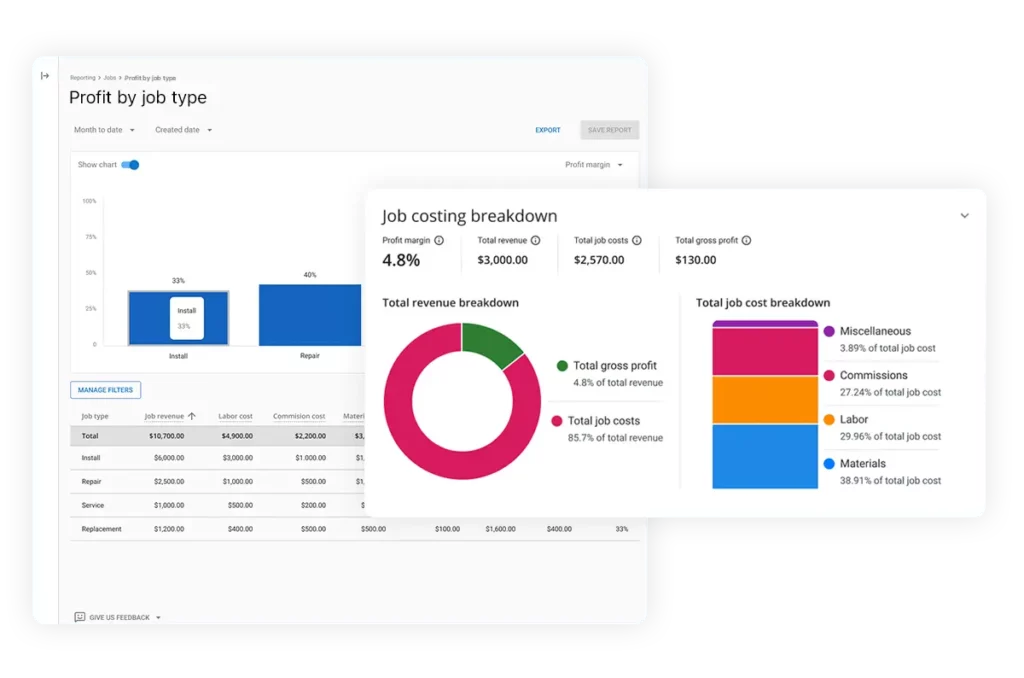
Inconsistent quotes, slow invoicing, and admin overhead are some of the most common ways plumbing businesses lose margin without realizing it. Housecall Pro’s plumbing software centralizes pricing, job costing, scheduling, and payments in one place so those gaps stop costing you.
It covers the spots where margin usually leaks, such as:
- Techs quoting different prices for the same job: Build a price book so every job is quoted consistently, every time.
- No visibility into which jobs are actually making money: Track job-level profitability so you can see what’s working and cut what isn’t.
- Too much time on scheduling, dispatching, and paperwork: Automate the admin so your team spends more time on billable work.
- Recurring revenue that’s hard to manage and easy to lose: Support service agreements and repeat visits so maintenance work runs itself.
- Cash sitting in unpaid invoices: Invoice faster and collect payments sooner so cash flow matches your workload.
Start your free Housecall Pro trial to see how better job costing, smoother scheduling, and faster payments can help improve your plumbing company’s profitability.
Plumbing business profitability FAQ
What is the difference between gross profit margin and net profit margin in plumbing?
Gross profit margin is what is left after direct job costs like labor and materials are paid. Net profit margin is what is left after those direct costs plus overhead, admin, insurance, vehicles, software, and other business expenses are covered. Gross margin shows whether jobs are priced well. Net margin shows whether the business is actually healthy.
Why is my plumbing company busy but not very profitable?
A full calendar doesn’t mean healthy margins, it just means you’re busy. The most common culprits are pricing that doesn’t cover the full cost of the work and a service mix that leans too heavily on lower-margin jobs.
Start by pulling a job cost report for the last 90 days and ranking jobs by margin. Most businesses find two or three service types dragging down the average. Fixing those moves the number faster than chasing more volume.
What pricing model is best for a plumbing business?
The best pricing model depends on the kind of plumbing work you do. Flat-rate pricing works well for routine service work where customers want clear upfront pricing. Time-and-materials pricing works better when labor or scope is harder to predict. Hybrid pricing can work well if you want a mix of consistency and flexibility.
How can plumbing businesses improve profit margins?
Most plumbing businesses improve profit margins by tightening pricing, tracking job costs more accurately, reducing overhead, improving cash flow, focusing on higher-margin services, and cutting down on administrative waste. The businesses that improve fastest usually have a clearer picture of what each job actually costs and which services are worth doing more often.
Do recurring service agreements help plumbing profitability?
Yes. An annual plumbing maintenance agreement priced at $150–$250 per customer creates predictable revenue during slow months and keeps you in front of customers who might otherwise call someone else next time. Even 20 agreements at $200 per year adds $4,000 in recurring revenue before a single new job is booked.
The bigger benefit is consistency. Service agreements smooth out the slow-season cash pressure that most plumbing businesses feel, and scheduled visits regularly turn into additional repair or replacement work. If you’re not offering them yet, they’re one of the faster ways to stabilize revenue without adding new customers.
Why does my plumbing business feel cash-strapped even when revenue looks good?
That usually happens when invoicing is delayed, receivables are slow, deposits aren’t collected, or overhead is eating up more revenue than expected. Revenue and cash flow are not the same thing. A plumbing business can look healthy on paper and still feel strained if money is coming in too slowly.
How much should a plumbing business owner pay themselves?
Owner pay works best when it’s structured in two parts. The first is a market-rate salary for the work you actually do in the business—estimating, managing jobs, running the crew. For an owner-operator, that typically runs $70,000–$120,000 per year depending on your market and how much you’re working in the field versus running the business. The second part is a profit distribution from what’s left after all operating expenses are covered.
The most important thing to get right: your salary should be built into overhead before you calculate profit margin, not pulled from whatever is left over at the end of the month. If your salary isn’t in the numbers, your margin looks healthier than it actually is, and you’ll underprice your work without knowing it.
How does software help plumbing business profitability?
Software helps plumbing profitability by standardizing pricing, improving job-costing visibility, reducing manual admin work, supporting recurring revenue, and speeding up invoicing and payments. It helps plumbing companies run more efficiently and makes it easier to spot where profit is being lost.