Call Now
Coronavirus News & Press Resources

The 5-Cs of High Level Leadership

May 13, 2020 quick update

The Johns Hopkins CSSE dashboard is reporting 4,336,973 confirmed cases globally and 296,252 deaths with 1,540,464 recovered. 1.38 million US cases and 83,791 deaths and over 240,0000 recovered as of 3:32pm on May 13. 

The majority of countries are currently exhibiting doubling times of more than 10 days. Compared to the end of March—when most countries’ epidemics were doubling faster than 8 days—this is an encouraging sign. A number of countries in Africa, however, are doubling faster.  The New York Times continues to track state-level COVID-19 incidence, with a focus on state policies regarding social distancing.  

More than half the states have started to reopen their economies in some meaningful way or have plans to do so soon, raising concerns among public health experts about a possible surge in new infections and deaths. Many states that are reopening failed to meet criteria recommended by the Trump administration before loosening restrictions on businesses and social activities. 

In Georgia, barbers are giving haircuts with face masks and gloves. In Texas, movie theaters are filled with customers. People are going to the gym again in Tennessee.

Washington state continues its process of relaxing social distancing measures, Governor Jay Inslee released guidance for various sectors under the state’s “Safe Start” plan. Through the Safe Start approach, counties with a population of less than 75,000 that have not had a new case of COVID-19 in the past three weeks can apply for a variance to move to Phase 2 of “Safe Start” before other parts of the state. Under Phase 2 of the state’s plan, retail stores must remain below 30% occupancy, Restaurants must maintain below 50% occupancy as well. This guidance also outlines provisions for employee safety and facility hygiene as businesses begin to resume in-person operations.  

One major point of contention as state and local governments adjust social distancing measures is the use of face masks or coverings. Face coverings are mandatory in some parts of the country but not others, and some governments have maintained requirements for mask use in public as they ease other restrictions. In some states where mask use is not mandatory, individual businesses are permitted to set their own requirements, which can result in variations within the same community. 

US SENATE COVID-19 HEARING

 Yesterday, the US Senate Committee on Health, Education, Labor, and Pensions held a hearing with several senior officials from the US government’s COVID-19 response. The experts addressed a broad scope of topics, including the potential for increased transmission as states relax stay at home measures, the timeline for vaccine availability, the distribution of Remdesivir, and the US COVID-19 death toll.

NEW US HOUSE COVID-19 BILL

Democrats in the US House of Representatives introduced a new economic stimulus bill to support essential workers, including frontline healthcare professionals and first responders. The bill—called the Health and Economic Recovery Omnibus Emergency Solutions Act (HEROES Act)—would provide an estimated US$3 trillion in funding to individuals and state, local, and tribal governments. In addition to funding for stimulus checks, supplemental unemployment benefits, student loan forgiveness, small businesses, and healthcare, the new bill includes a number of other provisions. Notably, the HEROES Act would provide supplemental pay for “essential frontline workers”—$25,000 each through the end of 2020—and a $15,000 recruitment incentive to facilitate expanding the healthcare workforce. The House of Representatives is expected to vote on the bill by Friday, but 

Senate Majority Leader Mitch McConnell  reportedly indicated that the bill is unlikely to pass the Senate. 

Video topic: The 5-Cs of high level leadership

Interview with Special Guest: Captain George Dom

Tell us about yourself, your background, who you are and how did you rise to those extraordinary levels?

I grew up in Western Pennsylvania, the youngest of three boys. My father had served in the Navy in World War II. And while he didn’t pressure us in any way, I could tell that he had a desire for one of his sons to have a military experience. Being the youngest that came down to me. Other than proposing to my wife, applying for the ROTC Scholarship and getting commissioned into the Navy and to go off to flight school was the smartest decision I made. I would just say that I have been very, very fortunate. 

Give me your thoughts on how you go build a team? How do you get into the fight and actually do well and get to the point of thriving in the COVID-19 world?

There’s no silver bullet. It takes time. It takes patience, it takes dedication.

The most important ingredient in building a team is hiring the right people. You need to make sure that you bring into the organization, the people that share your values and have the characteristics that you think are necessary in order to be successful. 

When I joined the blue angels as the leader, interestingly enough, you don’t come in as the wingman and then fleet up to be the leader. You come in as the leader. For me to be successful as the flight leader of the blues, I had to figure out how to develop a level of trust with my wingman that they would come to work every day and literally put their life in my hands every single day. Frankly,  I wasn’t smart enough to figure it all out ahead of time, but we had two amazing years and when I look back on that experience, I realized there were five things that I had to pay attention to. 

In order to earn that level of trust, you have to do all five:

  1. Character – Do you walk your talk? Do you keep your promises? Do you live up to your commitments and your obligations? Do you live our shared core values?
  2. Commitment – Are you going to be with us when the going gets tough and not just are you going to be with us, but are you going to show up and play your A-game and lead us to victory on the other side of the storm? Because if you’re just going to show up and cast blame, take names, make excuses, CYA, forget about it.
  3. Competence – Are we going to hire somebody? Are we going to promote them? Where did they go to school? What’s their resume say and so forth? And believe me, being competent and skilled is really important. No question about it. You’ve got to be good at what you do. But I put it third for a reason because I believe that if you don’t get the first two, if the person doesn’t walk his or her talk and isn’t committed and all, the competence doesn’t really matter. But if you can get the first two, if you hire somebody who shares your values as core values and won’t compromise and is all in committed to your company’s mission and purpose, then by and large you can teach them what they need to know.
  4. Connection – The fundamental thought is that you have to step away from your window and look at the world through their window. We always assume that everybody is looking at the world the same way we are, but they’re not because they’re not you. They come with a whole different set of experiences and you know, perspective and temperament and all of that. So we have to find ways, and typically the biggest skill to accomplish this unfortunately isn’t taught in school. And that is just simply being able to be a really good listener. Listening is the most powerful one to make sure that you understand not what you think their story is, but what do they think that their story is?
  5. Communication – Connection is about, do they believe I understand them. Communication is, do they understand me? How many times have you been working for somebody or in a team with somebody and you just can’t understand them? You need to have a mechanism that confirms that the message that you intended to send was actually the one that’s received. And too often we forget to do that and we assume that people get it, but they don’t. Not yet anyway. Ask them to tell me what or how you’re planning to do this. What have you heard? And make sure that they can recite back to you satisfactorily. You’ll be surprised how often they heard something different. 

Was there a time along the way that they saw that commitment in you? Was there a breakthrough moment along the way where they understood that you really had that commitment, that you were someone they wanted to follow?

The story I often tell is about an air show that we did in El Paso, Texas my first year. And the weather was pretty turbulent. The wind was blowing 24, 26 knots, coming over a ridge line over the airport and just causing a lot of turbulence and we made some adjustments and nobody on the ground had any idea how hard we were working that day. But when we landed we were a different team because that day they learned that in the toughest conditions I was going to show up and fly a really solid jet. And I learned that on the toughest days they were going to join up and fly close information with me. And so our performance went to a new level after that show because we went to a new level of trust and confidence. 

So every day you keep working incrementally to improve tight routines type practices. And that was a kind of a breakthrough day for you. Was that early on in the, in the team building for you? 

Yeah it was, it was fairly early in that season. I mean whenever you come out of winter training, we go to winter training from early January to the middle of March. And throughout that, the entire squadron, it’s all about building trust. Because think about it, when you see the team fly, three of the pilots are in their first year and three are in their second year. It’s a two year rotation, so 50% turnover in the formation every year. And for the support personnel, they’re on a three year assignment. So for them, 33% turnover. So just imagine if you had that amount of turnover in your company. It’s amazing. So a lot of the winter training is all about just like any sports team that goes into summer camp to build trust and confidence in each other.

The question my team was asking about me every day in the pre-flight briefing are you good enough to be our leader today? Are you better than you were yesterday? But not as good as you’re going to be tomorrow? Because we don’t want to stay here. We want to keep getting better and better and better. And we can’t get better as a team unless you as a leader keep getting better and better. 

It was an atmosphere of continuous learning. We were always trying to improve and get better. We never were satisfied with a performance. And we spent a lot of time debriefing after every flight demonstration and every practice in order to be able to analyze what went well, what can we learn, what can we do better next time? 

You talk a lot about living in constant discomfort and always being uncomfortable as a process of part of your learning and a deliberate practice. Maybe elaborate a little bit on that piece. Because I feel like sometimes it’s easy for our pros to get comfortable and you kind of get in a groove, but then ultimately you’re not doing your team any favors, especially when you’re talking about their ability to trust in your competence. 

The challenge that we have as leaders is we get to a point of success and then we develop this sort of ego or self esteem and so forth. And we just try to protect it all the time. And consequently, we stop learning.

If anybody’s ever seen the Ted Talk with Ken Robinson, he tells a story about an elementary school where they’re having art and the teacher tells him they could just, you know, draw a picture, whatever they want. And she’s walking around the room and she goes to the back of the room and here’s little Mary back there working away on this picture. And she says, Mary, what are you drawing? And Mary looks up and says, I’m drawing God. And the teacher says, Mary, nobody knows what God looks like. And Mary says, they will in a minute. 

I think that’s a great lesson for us because kids aren’t afraid to give it a go. They will get after it and they will just keep trying until they get there. And we need to be more like that. Your teams will give you great credit if they know that you’re trying to get better, even if you stumble a little bit here and so forth, they will admire that. And you’re leading by example cause you want them to get better too. 

Challenge for pros to develop their listening skills

Do a debrief after a call to a prospective customer on how much did I talk and how much did they talk. Because too often we are transmitting and we don’t give them a chance. We’ve got a solution and we’re going to tell them how great it is, but I suggest a technique is to just keep asking. Well, what else? What else can you tell me? What, what more is there? Is there anything else until you hear them say, Nope, that’s it a couple of times, then you’re good. But until then we should just keep listening. 

At Housecall Pro, Brooks challenges the sales team to go through the day and every person that you run into, you have to ask them three questions and hear them out. And I mean the bus driver, the person on the Metro, the Uber driver, your employees or significant other and you will be exhausted. You find that it is really hard to ask genuine questions and wait for the answer and probe and follow up until you really get the depth of it.

So most of the time when you’re in a conversation, how do you become aware of how much you’re actually speaking? How do our pros go back to their truck or maybe hang up the phone when they’re done on a call and figure out how much talking they did, how much question asking they did? 

If they just go into the engagement with that as an objective and just be mindful of that. Just being aware of that as a criteria. I think they’ll be able to figure out the answer. If you have somebody else with you on the call, they could be your truth teller and they can tell you afterwards.

People have this notion, I’m an active listener and what they mean by that is you tell me something and I’m going to tell you a story about how I did the same thing or I had a similar experience. My advice on that is look, if they want to hear about your experience, they’ll ask. 

Why is connection so important?

I think that’s the most important one because I think Stephen Covey has it right. That you can be efficient with things but you can’t be efficient with people. And the only way to make connections with somebody else where they feel truly understood, you have to slow down and you have to take time and you have to invest into that relationship. And unfortunately, many of us are just traveling too fast and we got these phones and all these things that distract us that when we, even when we are with somebody and sometimes it’s the people we say are most important to us, we’re really not there. We’re there physically, but we’re really not present. 

For pros that might not realize who Stephen Covey is,  people know him best for The 7 Habits of Highly Effective People, but his best book secretly is Speed of Trust, which goes really well with all of the things that you’re saying. So if you haven’t read that, that is super valuable. If you like what you’re hearing here, you want to dive in even deeper. 

George, what was your nickname

Thankfully with the Blue Angels, the tradition is the leader’s always referred to as the boss. So for two years, I was known as the boss. In the fleet, my call sign was Elwood, which was a blues brothers thing that is a little embarrassing. But here we are. 

We talked briefly earlier about the lady pros community that we have this movement of women who are in the trades. What advice do you have for these lady pros in our audience for establishing leadership trust with an all male or predominantly male team based off of those Five C’s that you just took us through? 

The 5 C’s are not gender specific, they work regardless. I think this is a great place to focus

I was at the commanding officer of an 18 squadron. Um, whenever we, uh, the Navy decided or the American public decided that the Navy was going to be a equal opportunity employer and that women were given the opportunity to serve in combat, uh, units, and we had women coming aboard the aircraft carrier. And, um, that was a, that was a very interesting experience and, and very successful one. I think. Uh, and, but th the key to the success I found out was that, you know, uh, the women had the play to the same. It had to be one standard. 

We’re seeing some more jobs coming through to our pros. It’s not V-shaped by any means, but it’s starting to come back. So how do you go about recruiting and figuring out is someone trustworthy or not to bring back on your team? How do you think about that? How did you do it? And do you have any stories about that? 

We had a saying that you want to hire slow and fire fast. We need to take our time whenever we’re hiring because if you make a bad hire, it’s just extraordinarily painful. So take your time and be creative in figuring out these different characteristics.

During an interview, I want to find out, tell me a time when you had to sacrifice for your team or you had to show commitment even though things were just really tough and you had adversity or, or show me a time where you sacrifice for a core value that you just wouldn’t compromise on.

You have to do your best to try to connect with people and find out who that person is. I will literally call the references,  and when I’m talking to somebody that they’ve referred me to, I’m not expecting them to make any criticism or they wouldn’t have given me their name. But I will say to them, at the end of the nice chat, I ask them two questions. I’ll say, you know, nobody’s perfect. So if he or she was working for you, now, what would you be coaching them in order to help them raise their game? And that helps me get at what they may see as a gap in their performance. And then the other thing I ask is, and who else should I be talking to so I can get to know this person better? And they typically give you a couple names that were not given to you and you know, continue to build a full picture before you make that a decision.

I’ll tell you how the blue angels hire, and people may adapt some of this to your hiring practice. The Blue Angels and Top Gun are unique in that they’re about the only organizations in the Navy that select their own .Normally there’s a group in Washington and in Tennessee that decide where people are going to go. But the Blue Angels and Top Gun get to pick and at both organizations, it’s not the CEO who decides, the whole team gets to vote on who it’s going to be. It has to be a unanimous vote for the Blue Angels. So what that means is that all 16 officers, whether we’re hiring a pilot or a flight surgeon or support officer or whatever, maintenance officer, all 16 officers have to agree this is the person we want on our team. And so effectively that gives everybody in that room a veto where you can say, you know, I don’t want that person on my team. Now you have to say why. But you don’t have to convince anybody else and that gives a powerful sense of ownership to that group that this is our team, this isn’t the bosses team or the hiring manager’s team or whatever. This is my team.

Audience questions

I spent about a hundred hours in the right seat, various Cessnas with my then fiance captain in the Air Force. And the number one thing I learned from that experience was that it’s not usually the big thing that takes the plane down. It’s a series of smaller mistakes and miss details. I applied this lesson to everything I do. Do you find that life is in the details that way?

Absolutely. In aviation we talk about any mishap involved, we call it the stack of cheese. Where the Swiss cheese gets to the point where any, if you pulled out any one of these, the mishap wouldn’t happen. But they all at some point line up and the holes line up and you get, you get an accident. And so as we look at, you know, trying to mitigate risk and so forth, we’re always trying to evaluate where is the risk and what we have to do to make sure that the cheese doesn’t line up? Yeah. It’s a bunch of little things that come together.

What motivational tools are used in the military that could possibly be implemented in our home service businesses?

Character is all about shared values, core values. This gets into commitment and mission and purpose. It also gets into connection and people bonding together. One thing the military does very well is we do ceremonies, and we do changes of command, we do holiday stuff, we do all kinds of traditional ceremonies.I have come to appreciate how valuable those times were for us to stop from the day to day, just working really hard. Take time to stop and reflect on who we are and what are our values and what do we stand for and what are the stories that we tell about ourselves, about the company that we are, the squadron that we are and so forth. And I think that’s something that too often companies miss. So I would encourage you to capture your stories, the things when you have people who are doing, living your values, going above and beyond, doing the right thing. Capture those stories and, and you know, advertise them in some form or fashion so that they become part of your culture and it reinforces this upward spiral. 

They want to hear all about this debrief and what they can, what characteristics they can take from it and implement into their businesses?

The debrief is an important part of our routine that when we get done with a flight, even in combat, we come back and we dissect it. What can we learn in order to get better tomorrow? The only people in the room are the people that were involved in the flight. So it’s the pilots of course, but also each of the support officers has a role on the ground as well. We don’t want any distraction. We don’t want anybody holding back from being transparent because they don’t know who this person is that’s sitting over there in the corner now. 

We sit down and then we follow a very strict routine and so the leader starts in order to set the example. And when I was on the team, I would get up and I would say a few words about generally how I thought it went and then I would do something that business leaders that I’ve met and worked with are very hesitant to do. I would confess, if you will, I would list every significant mistake I know I made during the practice or during the demonstration and that did a couple of things for us. First of all, it helped the rest of the team understand to what degree that I have awareness of my own performance because if I’m making a mistake and I don’t know it, then we’ve got a problem. If I’m making a mistake and I won’t admit it, we got another problem that we need to work on as well. And then it also sets the example that, Hey, people are people, mistakes are going to happen. So as long as you own the mistake and you are committed to not letting it happen again, if at all possible, then people, you know, they’re okay with it. 

And then we go around the room and each person does the same thing. 

Then we ended our comments all of the same way. This has become a blue angel tradition. And at first I thought this is kind of hokey, but you know, I had to play the game. But I found that after a while to be really powerful and we ended up by reminding ourselves what a privilege it is to be part of this team. 

No matter how bad a day we’ve had, we all end our comments the same way. We say simply, I’m glad to be here. When you hear all your colleagues express that gratitude, it really changes the chemistry. It’s pretty cool. 

If somebody had what we call a significant emotional event where somewhere in there they had “the Jesus scared out of them” because something happened and we’re flying pretty close together. Then we want to get that out on the table now because learning isn’t going to happen if somebody is grinding their teeth. How many times have you been in a meeting where there’s an 800 pound gorilla that nobody wants to talk about, but nobody’s really getting anything out of the meeting because the tension is so high and so forth. And so we would drop anchor in it. It may take a little while, but we needed to clear the air because otherwise moving forward it wasn’t going to do anything productive for us.

If you’re a pro sitting in their seat, what’s one thing that they should do tomorrow when they get up and go to work? What’s the one thing that helps move them towards the fight, move them towards thriving again.

So at the risk of being repetitive, I would just say that tomorrow, think about how you can build trust proactively because I believe that it’s a huge opportunity for everybody that’s listening here because very, very few people are thinking about building trust proactively. They wait until it’s broken or lost and then they are scrambling to get it back. Frankly, if you look around now, I’ve never seen in my lifetime such levels of trust across all dimensions of life. So I think it’s a wonderful opportunity for you. You don’t have to conquer the world the first day. But I would think about tonight, what is one key relationship that I would like to improve on? It doesn’t have to be the most important one, but what’s one that I would like to get better? And if you think about that relationship and you run it through the five CS, I think you’re going to find at least one if not two or three that you could work on to help you know that person.

How can I show her that I walked my talk that I live our values. How can I show that I’m fully committed to this and I’m going to sacrifice and I’m going to make it right? Whatever happens, I am in it, I own it, or how can I show her that I’m really good and I’m the one that she wants to do this work? And I’m continuing to try to get better. I’m just not good in general, I am the best one for this person and their situation and their problem. How can I make this person feel like I understand them, that I understand what they’re trying to accomplish and what they need and how I can help. And then finally, how can I communicate to them that they will understand me?

If there is miscommunication, who’s, is it? Is it the receiver or is it the transmitter? Well, it may be a little of both, but I submit it’s mostly on the transmitter. In this COVID-19 environment, there are a lot of people that are hurting and if you are willing to go help them and be there for them, you are going to build such a powerful bond and a level of trust that’s going to carry you far into the future after this is all over and it will be over. It’s going to take longer than any of us would imagine or desire now but at some point it’s going to be over and those of us that are still standing are going to be able to move in some pretty cool places because we’ve made the investments now, beforehand.  


Housecall Pro Author

Housecall Pro

Official Corporate Communications
Contact | 
Last Posted April, 2026
About the Author Solutions for your business Whether you need to improve dispatching, reduce paperwork, increase workforce or grow revenue, we have a solution.
Coronavirus

Hiring landmines to watch out for

Service companies are the backbone of the economy and Housecall Pro is committed to doing everything we can to help during the Coronavirus pandemic.

I hope you find the resources below helpful. Please share this email with other home services companies. 

____________________________________________

VIDEO RECORDING → 

Brandon Vaughn joins the crew 👉 discussing Hiring Landmines to watch out for in a recession economy

READ THE UPDATE → keep scrolling

_____________________________________________

May 4, 2020 quick update

The Johns Hopkins CSSE dashboard is reporting 3,573,864 million global cases and 250,134 deaths with 1,159,015 recovered as of 2:32pm on May 4.

In the US we are at 1,177,784 confirmed cases, 68,442 deaths and 187,180 recovered.

President Trump increased his prediction for the coronavirus death toll to 100,000 during a Fox News Channel town hall at the Lincoln Memorial in Washington yesterday. Previously, Trump said fatalities would max out around 65,000. 

A draft government report projects that cases will surge to about 200,000 per day by June 1, with 3,000 deaths per day. 

President Trump reassured Americans that it is safe for states to reopen amid the coronavirus pandemic “I really believe that you can go to parks, you can go to beaches . . . [if] you stay away a certain amount,”

He noted that Americans have been wearing face masks and social distancing in recent weeks and said that “you’re going to have to do that for a while,” even as states reopen their economies.

TRAVEL BUBBLES

We are starting to hear about the concept of travel bubbles. Australia and New Zealand are reportedly considering a “travel bubble” that would allow individuals to travel between the two countries without requiring a quarantine upon arrival. The idea behind a “travel bubble” is that countries within that bubble would maintain low transmission risk, which would allow individuals to travel within that area without significantly increasing their individual risk of transmission or the higher-level risk of a larger outbreak.

Some people are forming “social bubbles” too. Forming a group – like an extended family – to go through the next few months as social distancing guidelines are expected to be in place throughout the summer. Hunkering down with a few others could be a next step as governments begin to lift some restrictions.

“You don’t want it to get too big,” Dr. Daniel Griffin, an infectious disease specialist at Columbia University Medical Center said. “Just about 10 people or less. Beyond that, the risk is an issue.”

IMPACT TO HEALTH CARE

The health-care industry is suffering a historic financial collapse due to coronavirus as well. As most elective surgeries were postponed, dentists offices were closed and physicians stopped seeing patients, more than 200 hospitals furloughed workers. The result was that health-care spending declined at an annualized rate of 18 percent in the first three months of the year.

There are real health impacts as well, for example, routine cancer screenings have decreased over the past several weeks. Routine screenings for breast, cervical, and colon cancer decreased by 86-94% compared to previous years. Medical professionals fear that if this trend continues, delayed screening could result in later diagnosis of these cancers and, subsequently, elevated morbidity and mortality.

May 4 Topic: Hiring landmines to watch out for in a recession economy with Brandon Vaughn

Special Guest: Brandon Vaughn 

Brandon Vaughn is the Chief Strategist at CONQUER, where he helps small business owners systemize and scale their companies through personalized mentorship and training programs. He’s joining us tonight to talk about how to overcome 3 challenges owners will begin to face: the logistics of bringing employees back to work, quickly training employees to catch up with post-shutdown demand, and hiring people taking jobs they hate because their field of expertise is in a recession.

Let’s talk about what you’ve been seeing when it comes to hiring and people over the last 8 weeks and the current state of it all.

  • I think that there’s a few hiring landmines that kind of exist out there in the hiring landscape that we have to be very, very cautious about because we’re kind of going through some unprecedented times.
  • We have to be cautious as to how we rehire people, bringing them back on, being careful not to discriminate, making sure that we have some good policies and procedures of bringing people back on or choosing not to bring people back on when work starts picking up again.
  • There’s some really unique challenges that we face now, feeling like we’re competing against unemployment as well. You have employees that are making more money on unemployment or on some kind of work relief program and they’re making more money than if they are actually working. The hiring landscape has changed and in some ways it hasn’t. All the same general principles when it comes to managing a team, having a great company culture, making sure that you have your policies and procedures really documented and well put in place. All of these general principles and the HR still apply. 

Let’s talk about the logistics of bringing employees back to work. What are best practices here? 

  • Pay attention to recall rights. Most of you probably don’t have a situation with guaranteed recall rights for employees unless they are union or it was in your separation paperwork but check to see because this affects your flexibility as to who you bring back and when.
  • Past performance issues
    • if you decide not to bring back an employee off of furlough status because of past performance issues, you still have to be cautious, especially in some States in particular. Because you don’t want any employee looking at it as discrimination. Whether it is race, religion, age, any of those other federally protected categories because if a legal case does arise losing it is more expensive than even getting involved. 
    • You need to keep good records of who you are hiring back, when and why.
    • Don’t discriminate who comes back on due to risk.
    • You cannot discriminate from bringing on older employees or those that are pregnant or otherwise at a higher risk for COVID-19. Now you can communicate concerns to employees and talk to them and work these things out and get things signed off in writing. But you have to navigate carefully who you decide to bring on and who you don’t decide to bring back on.

What if I don’t want to bring an employee back and instead hire a new person, does this impact my PPP funds?

  • There are 2 conditions for your PPP funding, one is payroll costs, the amount of money you’re paying out. And the second is, is full time equivalent. It’s not literally a count of people but rather a count of the full time equivalent. So if you have four 40 hour people, that’s four FTEs. If you have four 40 hour people plus two 20 hour people, that’s five FTE. So full time equivalent. They’re not looking at the social security numbers of the individuals. 
  • So if the skills needed for your jobs changes because like we heard Mark Cuban suggesting to our folks have more disinfecting services, you maybe need a different skill set than the folks that you had previously. 
  • If someone leaves or if you don’t bring them back, you can rehire someone else and count them as a full time equivalent.

There’s a good leadership opportunity in this to make sure you are communicating with your team members because we have three things to wrestle as business owners:

  • First is the health of our family as a business owner, the health and safety, our income level personally as a business owner and for every pro that’s watching this, that is as a business owner, you created this business and it is a tool for you and for your personal family. First and foremost, you have to remember that that is really what this vehicle is for. Now that doesn’t mean you can be heartless with your employees. You still want to take care of your employees and consider their needs. But first and foremost, you have to understand what’s best for your family. 
  • Second is the health of the business itself. It’s its own separate entity. If the business is unhealthy, it causes all kinds of problems. It can lead to the business dying. So you have to protect your business entity itself to make sure that it can be self sustaining.
  • Thirdly, is your employees. They are part of the equation but really need to be the third consideration that needs to be made and that that hierarchy is very important. Again, it doesn’t mean that you are not serving your employees, you’re just kind of casting them out to the wind. But when you’re looking at the greater good of the health of your business, everyone loses if you make poor decisions and trying to keep everyone on and keep everyone employed and make sure everyone is taking home an income can then lead to bankrupting the company.

What are your thoughts on how you bring employees back on? 

  • I would recommend that any of the offers that you’re making to your former employees that you do so in writing, and that if they call you up and say, Hey man, I just can’t you say, Hey, great, can you reply to that email for me and just put that in writing for me just so I have that for my records. It’s just a good idea in general business just to have, have those things documented, but you’re in case you need them, you don’t want to have to go trying to string together a bunch of text messages or voicemails. You’re going to want to have just a nice record of it. 
  • Transparency is key and really how you’ve handled your company culture and your environment before this all happened is going to make a drastic difference on how these conversations go. 

What if someone doesn’t want to come back to work?

  • Say, Hey, I absolutely understand that we want you to be safe. We want you to make sure that your family’s taken care of. I understand that this is really good for you. I hope you won’t have any hard feelings and understanding that we also have to make sure that the business is protected as well. So this may mean that we’re going to hire someone and I can’t guarantee you that your position will still exist here. I just want you to be really crystal clear on that and I hope you understand, but we have to protect the business and make sure that the business is healthy so that everyone can stay employed long term.
    • Then follow up with an email afterwards like, Hey, you know, as I mentioned, it was great to talk with you earlier, completely respect all the hard decisions that you’re making as we talked about. And then I would just outline a little bit about the conversation so you’re not introducing anything new, you’re just summarizing and writing your conversation out for written records. 

Let’s talk about training employees to catch up with post-shutdown demand

  • Dialing in your training systems and having a really detailed outline on what happens with your technician on day one when they show up at eight o’clock in the morning is so important. These standard operating procedures will then be in place for the future too. 
  • So the thing you can do right now, especially if you’re stuck at home, is build out your training system
  • You have your cell phone, you have all your equipment sitting in your driveway, get out there and start mowing your own lawn and videoing the process for employees. Start getting in front of the windows and squeezing the windows and Washington window and have your daughter hold your, you know, your camera phone and just start recording some of these things and start building out your training video library. 
  • When we brought someone onto the team, they sat in our office for like two full days watching videos and taking tests and really orienting themselves in the company. 
  • This also takes less investment of your time. If you can get people up to speed quicker and you don’t have to spend weeks riding along side by side, all of a sudden now you can double, triple, quadruple your hiring and onboarding.

Hiring people taking jobs they hate because their field of expertise is in a recession- are people like this actively looking for jobs? Do pros even have to hire people like this?

  • Think about the restaurant industry which has been severely impacted. You have people who used to be a chef or server and there’s no job for them to go back to just yet and they need to take a job to pay the bills. They are looking for a job outside of their industry.
  • And if they take a job and then their industry does come back to life again and the jobs that they were originally trained in start rehiring, are they going to stay with you?
    • Maybe, maybe not. They might jump ship. For business owners and CEOs, company culture is going to be more important than ever. And how you treat your employees, how you engage your employees is going to be more important than ever. And then also being really clear in some of your screening processes.

What questions could you ask during the interview process that can help you figure out if this is something they’re just doing for a paycheck to kind of hold them over until their true line opens up like a chef? Or is this more of a permanent career switch?  

  • “Hey, this might not be what you’re, you’re looking to do in life. And I get that and I will absolutely respect that. Are you willing to give me the best of what you’ve got for the days that you’re here? Like while, while we’re together, are you all in? Cause I will be all in for you and I’m going to invest in you.”
  • That investment will pay back with someone giving you two weeks notice, three weeks notice, you know, to go take something else. They’ll refer to someone who could take their place.
  • I like questions that just get to the heart of who a person is because I can’t change your heart and soul with a checklist. Right? So I ask people, how do you have fun at work? Because what I want to hear is that fun comes not at the expense of their coworkers or the expense of the customer but that they find ways to infuse fun at work.
  • I also truly love talking to references and there’s such a misconception that no one will tell you anything because everyone’s so afraid of being sued. That is not true. Great people have great references. And say “hey look, I’m really interested in hiring Brandon. He and I have spent some good time together, but you worked with him for three years, so you’re going to know him better than I do. Help me understand how I can make him successful in his first few months. Tell me more about Brandon. You know, tell me about the things that he really shines out that he’s great at. Tell me about the things that he’s still working on that might take me a while to stumble upon. What kind of jobs would he thrive under and which one he would just hate. The last thing I wanted to do for Brandon is to have him come aboard on a company doing work that he just hates.”
    • So just focus on culture and then get that training system down to six days instead of six months , because then you’re going to be less fearful of making the wrong hire and you’re going to be able to make bolder decisions and to choose people who you feel inspired around and that are going to need training. 
  • This is such gold and can save you literally not only heartache, but tens of thousands if not hundreds of thousands of dollars to your bottom line over the course of years. Because company culture is everything. We don’t sell the squeegees and the pressure washers and the wrenches and you know, the, the mowers, we really sell people. I mean, we sell services and that people component is so insanely important in the service industry. 

PRO TIP: Go by the book Dream Manager by Matthew Kelly. It is a powerful, powerful book and it talks about a janitorial company that had a 400% turnover every single year. Every employee turned over four times every year. And how they reverse that completely. And it’s all about focusing on employees’ dreams. It’s like one of the best books on company culture.

We talked about reference checks, what about reverse reference checks?

  • Anyone that I’ve hired to come work for me, I offer the opportunity for them to talk to someone who doesn’t work for me anymore but can tell you all about what I’m like to work for as a boss. 
  • This is something that you can do with people who have left your business and are off doing that other thing. They’re doing that web design that they wanted to do or maybe they’re running their own shop, they moved somewhere and you can say, Hey, this is an important decision, I know you have options. I would like to put you in touch with someone who used to work for me that started right in the position that you and I are talking about. They were here for two years and this is what they’re doing now. And I’d love for you to be able to ask them any and all questions about what this job is really like. I mean, imagine if you’re allowed to check the references of your future boss. 
  • You’re building your references every day as a leader when you show up and how you treat your team is how they’re going to be able to talk about you in the future. So you leave a legacy whether you want to or not. Are you proud of the legacy that you’re living today?

Questions from the Audience

What profession were you in and are you currently in Brandon?

  • I owned an exterior cleaning business, started in 2012 built that from zero employees to over 70 employees over the course of about five and a half years. I ended up selling that business and now my current profession is I help other service businesses do the same thing, grow and automate and scale their companies. We do that through a program that’s called conquer. We have a couple hundred service owners that work together in a mastermind kind of format, share resources, documents, tools, um, lots of education, lots of content, kind of similar to this thread around building a service business, getting out of the field, having more time and freedom.

What are some examples of checklists you could give employees, whether that’s on their first day or within the first week?

  • Beginning of day routine, a checklist of every single thing they need to make sure they have, vehicle management checklists where every morning they would go through their vehicle and walk through every little component, check the tire pressure, the oil levels, all those things, just to make sure that they weren’t be driving down the road and something disastrous happened. Also inventory management checklists. 
  • And the nice thing about what Housecall Pro has with the checklists is you can automate this stuff right into the jobs. So you can have your technician check off these things as they go through them in order to close out a job. And that’s a mega powerful feature. And if you’re not utilizing it, go utilize it.

How about on the employer side or on the owner side? What are some checklists that they can be making for themselves to prepare for their employees coming back?

  • Make sure you have a documented reason(s) for why you are hiring certain employees back and why you aren’t hiring others back. Make sure that you have some good SLPs in place. Like making sure you have a good employee handbook and a manual, which is an important thing.
  • Take the time to create a hiring rubric for your most commonly hired position and then work out from there. This helps prevent the bias of I really liked that person when I chatted with them and instead puts the focus on how did they do on my rubric. 

I’m hiring a salesperson and he wants us to provide him a car to run sales calls or to run calls. So what should I do? He is willing to work a hundred percent on commissions. Is there any way he can generate the leads?

  • Every single one of my sales people were on commission only and we gave them a company car, a company cell phone, and a company credit card for incidentals. And they had like a $300 a month stipend for incidentals. 
  • We pay them flat commission on everything but it really kind of depends on your total compensation package, you know, whether it makes sense to include that stuff in there or not. If you’re paying them less commission, then maybe it makes sense to give them a lot more or if you’re paying them more commission maybe have them run around with their own rigs. But for us personally, having their own sales car was a really big benefit because it was wrapped and it was beautiful and we got lots of extra leads from a company car being provided.

Brandon, of those 25 employees you hired in 30 days, how many stuck with you?

  • I would say probably about 80% stayed with us for the entire year. We ended up having a lot more than that over the course of time.The people who did end up moving on, we actually celebrated and congratulated them and, and you know, really set them on their way and some of those people, you know, grass is greener on the other side actually realized that grass is greener where you water it and actually came back because of how well we treated them and how gracious we were with them when they moved on to another job. Make sure you don’t burn bridges with people, especially when they part ways. 

Brandon, do you provide any training and videos, where can they find those?

  • Yeah, on our website: go.conquernow.com
  • You can go and you can get a free account all set up. We have a whole bunch of courses that we’ve made and we have a lot of free courses too.

_____________________________________________

Legal disclaimer

Housecall Pro is offering the Coronavirus Evening Update for Home Service Businesses for informational purposes only and to foster thoughtful communication and discussion regarding the COVID-19 pandemic; Housecall Pro is not offering advisory services or otherwise advising or representing any members of the group invited to participate.  Housecall Pro is not offering legal, medical or other professional advice in the Coronavirus Evening Update and makes no representations or warranties regarding the content of the Coronavirus Evening Update.  Participants should obtain independent advice relating to their businesses and their particular circumstances.


Housecall Pro Author

Housecall Pro

Official Corporate Communications
Contact | 
Last Posted April, 2026
About the Author Solutions for your business Whether you need to improve dispatching, reduce paperwork, increase workforce or grow revenue, we have a solution.
Community

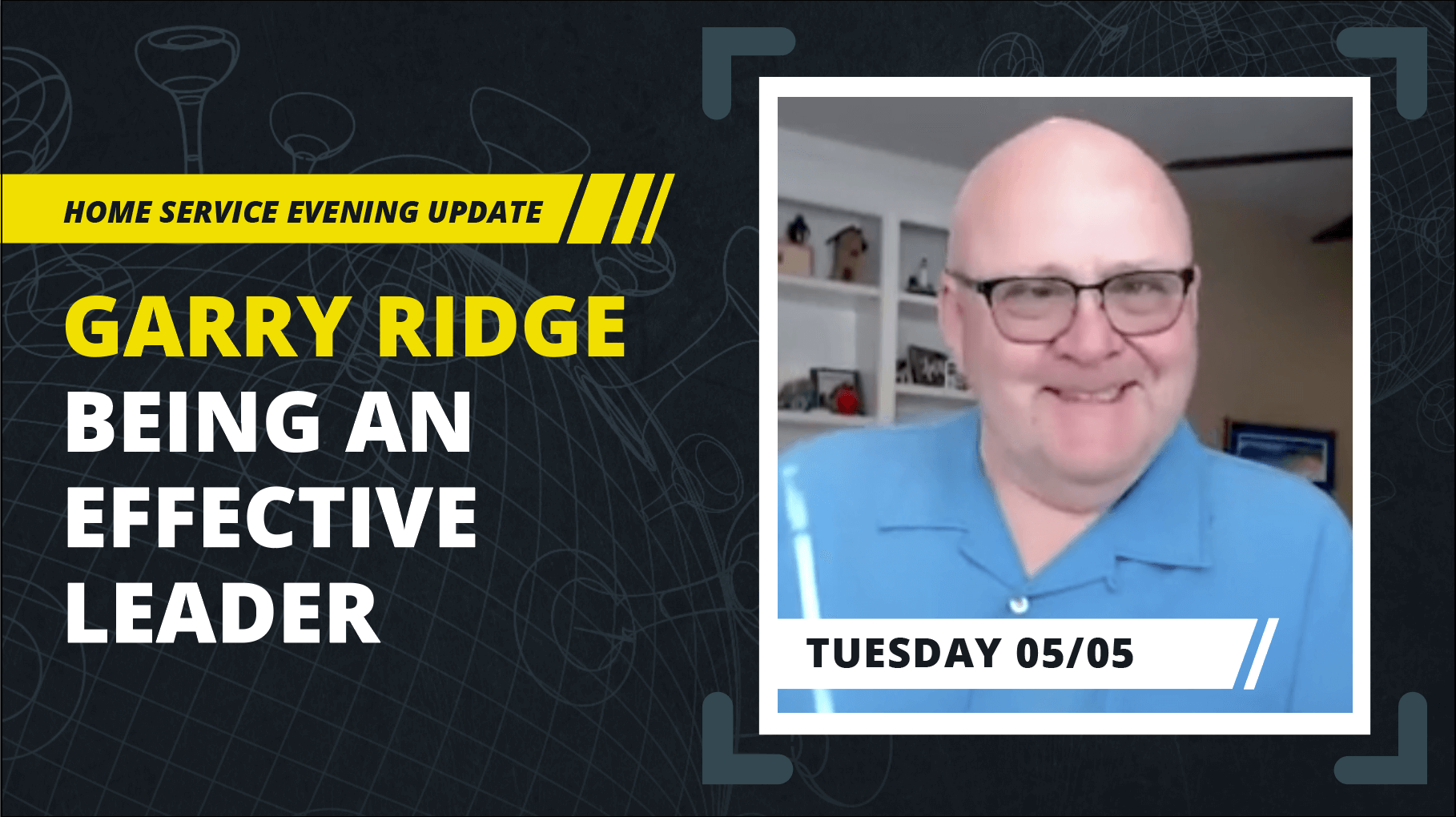
Key Principles of Being an Effective Leader With Garry Ridge

Service companies are the backbone of the economy and Housecall Pro is committed to doing everything we can to help during the Coronavirus pandemic. 

I hope you find the resources below helpful. Please share this email with other home services companies. 

Join the Facebook community for regular updates and webinars about the latest in the trades.

May 5, 2020 update

The Johns Hopkins CSSE dashboard is reporting 3.6 million global cases and over 250,000 deaths and more than a million recovered as of 3:32pm on May 5.

The United States still leads the world with 1.2 million cases and over 70,000 deaths. We’ve also celebrated almost 190,000 recovered. 

Yesterday, New York state reported 2,538 new cases, its lowest daily incidence since March 18. 

Several states across the Midwest and Plains have recorded increased case counts over the past 2 weeks or so—including Indiana, Iowa, KansasMinnesota, and Nebraska—all of which have reported COVID-19 outbreaks at meat processing facilities.

US SOCIAL DISTANCING

A number of states in the US are beginning to relax social distancing measures implemented under “stay at home” or “safer at home” orders. 

Florida began that process yesterday, allowing most of the state’s counties to start reopening non-essential businesses, with some restrictions.

Vice President Pence said this afternoon and the President later confirmed that the White House’s coronavirus task force could be disbanded within a month. The task force is headed by Pence and made up of officials from the administration.

In promising news, Pfizer is testing multiple versions of an experimental coronavirus vaccine in healthy young people this week with an ambitious goal of having a vaccine ready for use in high-risk groups by the fall.

How to avoid being soul-sucking

Special guest: CEO: Garry Ridge the CEO of WD-40 Company

Chairman and Chief Executive Officer of WD-40 Company

Besides being the CEO of one of the world’s most recognizable brands, Garry is passionate about learning and organizational culture. Garry is a professor at the University of San Diego’s Master of Science in Executive Leadership program. He also co-authored a book with the iconic Ken Blanchard titled “Helping People Win at Work”

History of WD-40

Invented 1953 in San Diego to stop corrosion in the umbilical cord of the Atlas space rocket. The reason it’s called WD 40 is the chemists at that time mixed up 39 formulas that didn’t work and the 40th one worked and it’s named water displacement 40th formula. 

COVID19 experience for WD-40

This started for us back on January 17th because we have quite the operation in mainland China and that’s when China started to shut down. I was actually in Italy when it started to outbreak in Italy and Europe. So we’ve been watching countries go into the COVID virus situation and then actually come out the other side and that’s encouraging. Now, our China office is the only WD-40 office in the world that’s actually fully functioning right now and is back to about 80 to 90% of the workflow and the order flow over there.

This is a tough time. I call it the economic ice age. Never before in the history that we would all remember has such an attack been made on humanity everywhere at one time. The good side of it is that it’s helping us become better leaders. 

Every morning I really ask myself, how can I make the biggest difference today? And if I can’t influence something, I let it go because we don’t have the time to be able to focus on things that we can’t influence. 

And this is a great time for us as businesses to really understand the value of having a highly engaged workforce. You know, it’s very sad that in most organizations, 70% of the people go to work every day and they’re disengaged. And in these times they’re going to be even more disengaged. I’m very proud of the fact that our tribe has a 93% employee engagement. And it’s because we’ve learned the power of servant leadership. 

We get up every day to create an environment where people go to work, they make a contribution to something bigger than themselves. They learn something new, they’re protected and set free by a compelling set of values and they go home happy. Our mission as an organization is to make life better at home and at work. 

What we have learned during this time

  • It’s not a time to be judgmental. 
  • It’s a time when we have to forgive ourselves for being human. But more importantly, forgive others for being human. And it’s okay. You know, I don’t know how many calls I’ve been on, on WebEx or on zoom where max my dog starts barking. Where the lawn mower outside is turned on and we just have to forgive ourselves for that. I was actually on a call the other day and the guy on the other side, when he was in his office and his little girl walked in to pick up some paper, hi daddy. It was kind of a special moment. So we have to forgive ourselves for being human and we have to forgive others for being human. 
  • It’s really also a time to be mindful. It’s a time to be mindful of others and understanding. A great thing to do every day is to reach out to someone and ask them, how are you today? I love that saying, if you knew you weren’t going to be here tomorrow, who would you call and why are you waiting? So it’s our time now to touch people in a special human way.

Leadership in the Economic Ice Age

  • We need to be intentional in what we do but also set boundaries. 
  • We want people in this time to be creative. We want to bring out the best juices we can. And We naturally tend to shift over into micromanagement during these sorts of times
  • In times of turbulence, you have to ease off the controls. 
  • Teamwork is extremely important for not only you to be successful now, but it’s so important for us to help our teammates be successful. 
  • We need to make sure that we’re being very clear of what success and a good job looks like so that we can reward and applaud people for the great things that they’re doing. It’s a shame that a lot of people only know they’re doing a good job because no one yelled at them today. So now’s the time for us to reach out and do that.

How to be a true leader

  • The true leader involves their people and loves their people. And there’s no problem in using the word love or care in a business. The true leader is always in servant leadership mode.
  • Great leaders are connected and have emotional intelligence
  • We say at WD 40, we don’t make mistakes. We have learning moments. And why do we say that? Well, one of the greatest fears people have is failure. And we like to take that word out and say we can learn from every opportunity we have. So a learning moment to us is a positive or negative outcome of any situation that can be openly and free, freely shared for everybody. Great leaders have a heart of gold, but they have a backbone of steel because they have to care for their people. We say care, candor, accountability and responsibility. And care is caring for your people. Candor is no lying, no faking, no hiding. I believe most people don’t lie, but what I do believe happens is they fake and hide because of fear. 
  • Leaders know that micromanagement is not scalable and leaders do what they say they’re going to do. 
  • Leaders value the gift of feedback. 

Feedback breeds Innovation

  • I was listening to Simon Sinek this morning and he said, he went out to everybody in his organization and all the people he works with and he asked them, I want you to come tomorrow with 15 things we could do differently to make our business better. Now he said, why did I ask for 15? He said, because if I asked for three, we all would’ve come up with the same three because they would have been very obvious. 
  • Imagine if all of your pros talked to their family, to the people in their organization and said, tell me 15 things that we might do tomorrow to take our business forward and have an open conversation about their ideas and who knows what will come out of them.

Developing Your Own Unique Leadership Point of View

  • Leadership point of view is a bit like also finding your why. They’re very, very close. 
  • It’s an understanding of what you really stand for.
  • I get up every day to help people create positive lasting memories. It’s the most exciting thing that I do. And finding all the different ways to do that is what gives me my satisfaction. So everything I’m asked to do, I put it through the lens of will this help create a positive, lasting memory? The reason I’m on the show today, Mel, is you’re a friend of mine. You called me up and you said, you know, would you mind doing it? I thought, yes, because hopefully I can share some learning that I’ve learned.
  • Start reading the book Start with Why by Simon Sinek, he takes the leadership point of view and turns it into something really powerful.
  • Most organizations know what they do. Some organizations know how they do it. Not many organizations know why they do what they do.

What is the Why for your Employee

Lean into your employees and find out what their why is. Because the why of your organization or as a leader is not necessarily the same as an individual coming into your business. 

What’s important to them? Why do they get up every day and do the work? 

This is often something overlooked by leaders. They think we all have the same why. And guess what, most people’s why is not just to make money. 

Advice for Finding Your Leadership Style

  • DISC Model: https://www.discprofile.com/what-is-disc/overview/
    • D- Dominance: Person places emphasis on accomplishing results, the bottom line, confidence
    • I- Influence: Person places emphasis on influencing or persuading others, openness, relationships
    • S- Steadiness: Person places emphasis on cooperation, sincerity, dependability
    • C- Conscientiousness: Person places emphasis on quality and accuracy, expertise, competency

When you take that next step and you start to hire, how do you make sure that you can really give the ownership mentality to your employees? So that way they’re taking ownership of your brand as a company, as you, as an individual as well, but you’re also empowering them to do their best work. Like what’s your strategy there and how would you kind of counsel our, our pros? 

  • Be deliberate around what expectations are
  • You have to have a set of values that are clearly defined that absolutely empower the employee
  • Now we have a set of values at WD 40 company. Our first value is we value doing the right thing. The second one is we value creating positive lasting memories in all of our relationships. These are hierarchical and the last value is we value the WD 40 economy. Because they are hierarchical people can make decisions. I’ll give you an example. We could make a product that was less expensive than the product we make if we put chemicals in our brands that were prop 65 chemicals. We have no prop 65 chemicals in our products whatsoever.That is living our first value. We value doing the right thing. If the first value was we value sustaining the WB 40 economy which was making profit, then our people would probably be encouraged to use cheaper chemicals that are not good for the health of our people in the field. So if you’ve got these values, the people then make the decisions.

Micromanagement isn’t Scalable, but Culture is 

  • 20 some years ago, 80% of our business was in the United States and we wanted to go global. Today, 65% of our businesses are outside of the United States. And we operate in 176 countries around the world. 
  • Micromanagement wasn’t scalable. We had to come up with a clear purpose and a clear set of values so people could go to work and do what they needed to do. 
  • Culture is very important. And here’s an equation that I’ll give you for culture.
    • Culture = (Values + Behavior) x Consistency = “What Happens When”
  • So if you want to build a great culture, you have a clear set of values. And what happens when you have a clear set of values is that you then are brave enough and loving enough to your tribe to be able to redirect bad behavior. And you do it every day, every day, every day, every day, every day, every day until it becomes embedded in your business. And then it becomes the natural state of your business. 
  • What you permit, you promote. So if you let someone get away with it, you might as well just be making it part of your process. 
  • What gets recognized gets repeated. So when you see something good, say something. And you know what? You see so much more good in your business than you do bad. 

How do you continue to be a visionary in your company while still upholding your leadership principles?

  • I think again, it goes back to, listening to the customer, listening to the end user
  • We’ve innovated with a number of new delivery systems over time for one reason and that’s to make the job easier.We want the pros that use our product to get in, do their job, do it safely, do it quickly and get out because that’s how they move on to the next job. So listening to and respecting the feedback from your end users is very, very, very important. 
  • We extended our product into a range of specialty products and as I mentioned earlier, one of the key deliverables was we were going to deliver best in class and safest products we could to our end users and our pros. Because our second value is we value creating positive, lasting memories in all of our relationships. If we’re delivering a product that’s prop 65 or something like that and there are products out there like that, that’s not going to create any positive lasting memories. 
  • My brother was a tradesman, he was an electrostatic painter in Australia and unfortunately he died of cancer and he developed that by using products that had cancer causing chemicals in them. And I, from that day on, I said, this will never happen again within our company. 

What are you doing at WD 40 to keep your employees safe? Or what advice would you have for our viewers that could apply to their businesses on how to keep employees safe or at least to talk about and think about employee safety during these times?

  • When we went out and started this journey back on January 17th, in China, we had three primary objectives. The number one objective was the safety and the wellbeing of our tribe members. 
  • I think the best advice we can give from our learning is to be very transparent. Talk, ask them what they are concerned about, why they are concerned about it and be transparent about working with them. We’ve just started and in fact, out of our organizational development and human resource people just put out today a protocol of how we’re going to think about going back to work. And we’ve talked about red, green, yellow and white. So our first state will be a red, which will have certain things that we are going to mandate, around distancing, cleaning of our premises. 
  • We can’t force them to feel safe. We want them to feel safe and help make them feel safe by providing an environment of clear safety with a lot of transparency.

How are you all thinking about your business and the world moving forward? You’ve mentioned being so incredibly global. How is business going to be different? 

  • When we come out of this economic ice age that we’re in, it is going to be different. I think we’ve all learned a lot of news tools. I’ve certainly become a lot more proficient on zoom and WebEx than I ever have before. But I can’t answer that question directly. 
  • What I do know is that we’re going to capture all of the learning. I went out to our tribe globally a week ago and I said, please share what has changed in your life and what you have learned in the last seven or eight weeks while we’ve been working virtually. So they’re sharing back to us all of those learnings and we’re going to bring them all together with our leadership team and look at what are the things that we can take from this to go forward to make it better than it is today. Which in fact is one of our values. One of our values is we value making it better than it is today. So we’re going to make sure that we don’t waste the opportunity of being a curious learning organization during this time.

Questions from the Audience

How do you deal with conflicting leadership? Even on the minor details, things change often depending on who is in charge that day, things can change even in the same day sometimes. How would you handle that?

  • Leadership is not about being in charge. Leadership is about taking care of the people in your charge and what you promote, you get and what you don’t stop, you get more of Leadership itself is a bit like being on Broadway, 24 hours a day, seven days a week with the lights on. You’re always being observed as the leader and I have a zero tolerance policy for poor leadership behaviors in the organization and our values help us do that as well. 
  • I’ll give you a very quick example of that. We were in a leadership meeting not long ago and one of our leaders came in and they were not creating positive lasting memories and it wasn’t a natural state for this person.So when the meeting was over, I called this person aside and I said, let’s just go for a walk. We walked out into our parking lot and I started looking under a car and I looked in the trash can and I looked behind a tree and this person said, what the hell are you doing Gary? I said, I’m looking for you. He said, what do you mean you’re looking for me? I said, You, I know. And you were not in that room today. Help me understand why the best leader didn’t come to work today. And we had an open conversation. I did a little coaching. That person went back and went to the people who were in that meeting and apologized for bringing some toxic air into that meeting, because that toxic air left that meeting and went with those leaders to other places in the company. Interestingly enough, the next day I observed that the people were going to that person and checking in on and seeing how their day was today.
  • So the answer to the question is you have to be deliberate. You have to love someone enough to be brave and courageous enough to be able to go and redirect the behavior, but not in a way that means them harm. Rather in a way that needs love and care. 

What are three surprising uses for WD 40?

  • Okay, I’ll give you three that I think are really funny. 
  • There was a lady in the Midwest who had a bird feeder and the bird feeder was on a pole and had a dish on the top and she put the bird feed in it. Well, there were some pesky squirrels that would climb up this pole and eat the bird feed. So she used WD-40 to spray the pole. The squirrel couldn’t get up the pole. The squirrel was safe, the birds got fed, the lady in the Midwest was happy. 
  • There was a burglar in Colorado who was breaking into a facility and he was entering through sliding through the air conditioning back.He actually stripped off and was naked and he got stuck in the air conditioning duck, so they called the paramedics and the police came and they sprayed WD 40 around the outside edge so they could pull him out from the air conditioning duck.
  • A third one for you, I’ll take you to Hong Kong. There was a Python snake that was caught in the underbody of a public transport bus. They actually sprayed around the suspension of the bus so the snake could then move. The snake moved out into the street and off into the Hills of Hong Kong through stores. 
  • On our website we actually have 2000 uses listed for WD 40

What’s the average life of a bottle of WD 40. It seems like your bottles have a lifetime supply in them. Am I using mine wrong?

  • Well, it depends who you are.
  • Many of our pros that are on this call right now and our artisans are using between 40 and $70 worth of WD 40 a year. So 60% of our consumption actually goes into construction and trades, maintenance, repair and overhaul and artisans and passionate hobbyists. 
  • But if you go on that site and look up the 2000 uses, I’m sure that can help you empty that bottle a little quicker than it is now. We would be most grateful.

If you do not have an employee handbook where or how would you suggest starting one?

  • You could simply do it on a web page or you could do it in a PowerPoint. It doesn’t have to be the biggest and most complex thing ever. Just put down the 10 basic things that you think are important. 
  • It’s not just your policies on tardiness or attendance or if you get vacation, but to start with the why, start with the big thing. Start with why are we in business, who are we, what’s our mission as a company? 
  • You can find templates online for free, reliable ones with just about all the employment law you need for your state and your County. So start writing the introduction for this template with your values and your purpose. 

If you were to tell our pros to do one thing tomorrow what would it be?

  • When you get up in the morning, ask yourself, how can I make the biggest difference in my work, in my company today? And then do it. 

How to Get a Free Can of WD-40

  • Text WD 40 (no dash) to 31996
  • You will get a link in the response to you, click on it and let us know what address to ship it out to you

Legal disclaimer

Housecall Pro is offering the Coronavirus Evening Update for Home Service Businesses for informational purposes only and to foster thoughtful communication and discussion regarding the COVID-19 pandemic; Housecall Pro is not offering advisory services or otherwise advising or representing any members of the group invited to participate.  Housecall Pro is not offering legal, medical or other professional advice in the Coronavirus Evening Update and makes no representations or warranties regarding the content of the Coronavirus Evening Update.  Participants should obtain independent advice relating to their businesses and their particular circumstances.


Housecall Pro Author

Housecall Pro

Official Corporate Communications
Contact | 
Last Posted April, 2026
About the Author Solutions for your business Whether you need to improve dispatching, reduce paperwork, increase workforce or grow revenue, we have a solution.

Michigan-based Best Way Carpet Cleaning brought in $19,800 with suspended operations during the state-wide stay-at-home ban.

How did they do it? Gift Cards.

How to Implement Gift Cards

Business owner Jason Lawrence explained, “We are located in Ann Arbor and people around here have taken the Coronavirus very seriously. A week before our governor issued the lockdown we were only getting calls to postpone scheduled jobs and then the phone just stopped ringing altogether. We soon decided that even though we qualify as an essential service, it made more sense to just suspend operations to keep our employees and their families safe for the time being.”

Jason started seeing businesses set up “Go Fund Me” pages to save their businesses — something he wasn’t comfortable doing for his own business. “A week later I had the idea to start selling gift cards to our clients for future us so they could purchase something of value for themselves while helping our business too.

Whether or not you’re currently open for business, you want to let your customers know that you’ll be around when things begin to stabilize. What follows are tips on how to best implement gift cards during the coronavirus crisis.

1. Use an Incentive

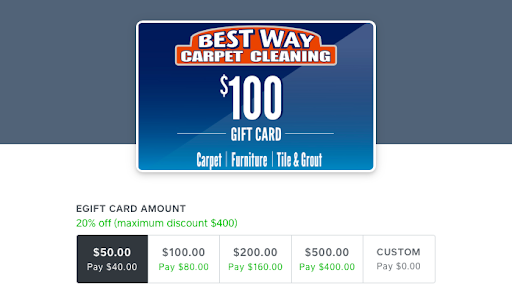
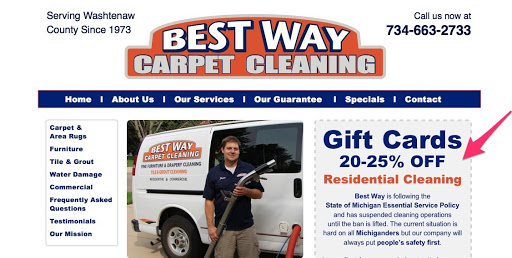
“Make your gift cards discounted so that clients see a value in pre-purchasing your services. We gave 20% off but take into account any charges that the gift card website will be taking from your sales,” Jason said. When customers go to purchase a gift card, they can easily see how much they’re saving.

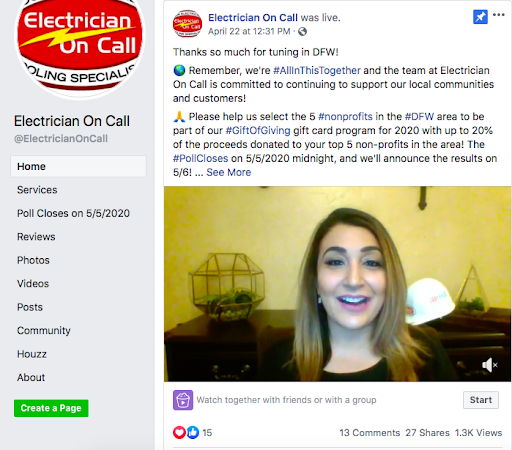
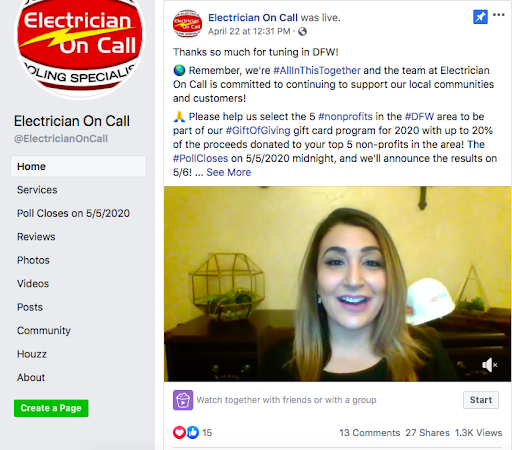
Irum Rashid Jones, Chief Operating Officer of Electrician on Call, created another kind of incentive for her customers. Customers got to vote on which area nonprofits they’d give up to 20% of their gift card sales to.

Irum explained how to use this incentive: If you’re donating to a nonprofit, make sure to have their EIN and tax info to write off the donation on your taxes. You also need permission from the nonprofit. 

“Have the Gift Card set to NO REFUNDS, and disburse the amount to nonprofit annually or quarterly,” she explained. “If helping another small business, create a relationship to provide service to them in order for you to support them.”

2. During COVID-19, Consider No Expiration Date

Under normal circumstances, there are different ways that expiration dates can be used to encourage sales. As shown in the models above, you can use expiration dates to encourage people to book a service call before their card or the BOGO offer expires. These are commonly used incentives that you can consider in the future.

For the time being, Jason recommends that you keep the crisis in mind and consider no expiration date. “Let your clients decide when they feel comfortable having workers in their home again,” he explained.

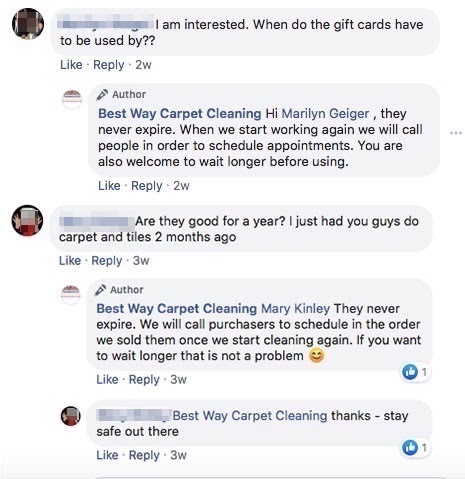
On Best Way’s Facebook post promoting the gift cards, several customers asked about the expiration date. This gave the company an opportunity to express care for their customers and further encourage the sale of the card.

3. Promote Them Everywhere

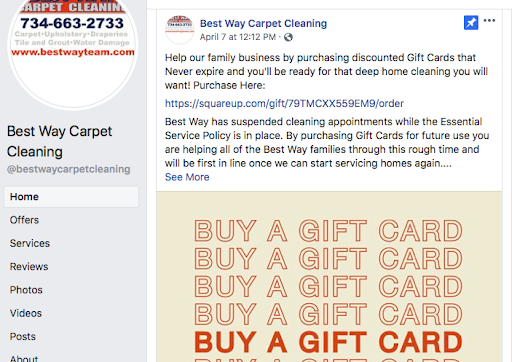
Promote your new gift cards on your website and social media profiles. Jason recommends boosting the post on Facebook so that everyone in your area is sure to see it.

4. Send Out an Email to Your Existing Customers.

“We have been using Housecall Pro for one year now. In the past year we have added 1200 client email addresses that we didn’t have before Housecall Pro,” Jason explained. 

“Being able to email all of our clients the gift card offer is what made it explode. Watching the sales come in by the minute was extremely heartwarming. Write a heartfelt email with your gift card offer that lets them know they will be helping all of your employees’ families through this time.”

Here’s the first part of the template used by Best Way which you can edit for your own business:

Dear valued clients,

Best Way Carpet Cleaning is following the State of Michigan Essential Service policy and we have suspended cleaning operations until the ban is lifted.

The current situation is hard on all of us Michiganders but our company will always put people’s safety above profits.

As an offer of our appreciation to all of you we are offering discounted Gift Cards for the next 3 weeks (until April 15th) which Never Expire and you save 20% to 25% which you can purchase online 24 hours a day and use towards that Super Deep Cleaning you will want for your home in the near future.

Click Here To Purchase Gift Cards

Or you can also call us at [phone number] to purchase the Gift Cards, as well.


Best Way ends the email by explaining the process of how to purchase gift cards online. The steps will vary depending on which service you use.

5. Promote them Over the Phone

“When people call to see if you are working, sell them on your gift cards,” Jason said. “That way, they are locked into using your company once things open back up. Even though our gift card offer has expired we are still selling them over the phone to lock people in.”

If you have a recorded message, remember to add the gift cards to the recording, as well.

6. Add Gift Card Purchases as Liabilities, Not Revenue

The Quickbooks team suggests adding gift cards as a product, then creating a new liability account for gift cards issued. The gift card amount should not be recognized as revenue until it is redeemed.

Listing them as liabilities can also help you keep the funds in perspective. “Remember that you still have to do the work down the road so try not to spend any of the money unless it’s absolutely necessary,” Jason said.

Try Gift Up With Housecall Pro

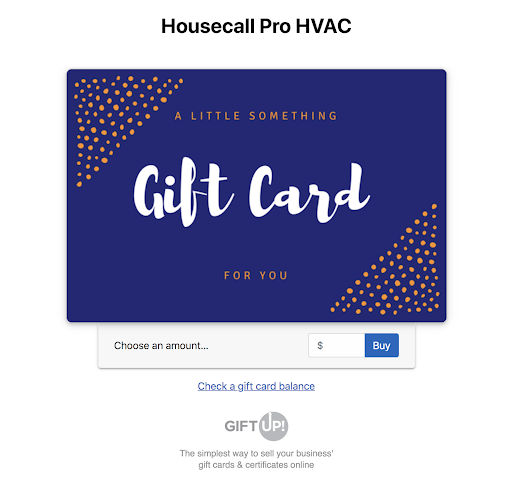
Housecall Pro has teamed up with Gift Up to allow our users to easily sell gift cards to their customers. The first $5,000-worth of cards that Housecall Pro users sell through Gift Up is fee-free through the end of June 2020. Current users can connect to Gift Up in the Housecall Pro App Store to get started.


Housecall Pro Author

Housecall Pro

Official Corporate Communications
Contact | 
Last Posted April, 2026
About the Author Solutions for your business Whether you need to improve dispatching, reduce paperwork, increase workforce or grow revenue, we have a solution.
Coronavirus

Changes to Google reviews during the Coronavirus pandemic

April 22, 2020 quick update

The Johns Hopkins CSSE dashboard is reporting that globally, we are at over 2.5 million cases and 176,000 deaths.

Here in the US we have reached 823,257 cases and 46,497 deaths. Notably, the dashboard shows the highest daily incidence for the United States—39,500 new cases—since the beginning of the pandemic. Based on recent daily incidence trends, the United States could reach 1 million cases by the end of April and 50,000 deaths by April 25. New York state again reported its lowest daily incidence (4,178 new cases) since March 20. This is the state’s sixth consecutive day of declining incidence.

GLOBAL SITUATION

  • Germany has experienced several consecutive weeks of overall declining new cases.
  • But even as many countries begin to loosen social distancing restrictions, the World Health Organization says that the pandemic is far from over. According to the WHO, complacency is the ‘greatest danger’ facing countries in the fight against coronavirus. Speaking at a press conference today, the director general Tedros Adhanom Ghebreyesus said the virus ‘remains extremely dangerous’ and ‘make no mistake, we have a long way to go. This virus will be with us for a long time.”

US SITUATION

Yesterday, the US Senate passed an amendment to the Paycheck Protection Program and Health Care Enhancement Act which will provide further support for small businesses and the US healthcare system. 

The bill will be sent to the House of Representatives, which is expected to vote on it later this week. The new amendment will provide an additional US$484 billion—including $380 billion for small businesses, $75 billion for hospitals, and $25 billion to expand testing capacity—to support the US COVID-19 response. 

US President Donald Trump formally announced that he will direct additional restrictions on immigration in response to the economic impact of the US COVID-19 epidemic. The new measures will suspend immigration for those seeking a Green Card—for a period of at least 60 days as states relax social distancing measures and businesses resume operation. 

Exemptions are expected to be included for seasonal workers, who are critical to the agriculture industry and food supply chain.

Topic: What’s up with Google reviews? Review generation in a crisis

Special Guest: Podium with Wade Brown

  • Background on Podium
    • About 40,000 businesses use the Podium platform for reviews and messaging and about 13,000 of those are in home services. They have helped generate over 16 million reviews for businesses and about 5 million of those have been in home services
    • Wade works exclusively with Podium’s home service customers and has been for the past 3 years

Once you earn that review, it compounds

  • As funds become a little tighter and marketing budgets decrease, the thing that still will always exist is the reviews for the past work that you’ve done, which is very organic, helps you rank super high. 
  • The importance of reviews, especially in these times is, is more now than ever, because once you earn that review, it compounds. It’s very similar to the way that you should be saving so that money can compound and compound. And likewise the same for your reviews

What is going on with Google Reviews?

  • Podium has a fairly unique relationship with Google and we work pretty closely with their reviews team. We meet with them frequently. They’re actually based in Japan, their core reviews team. And we go out there and meet with them very, very regularly. So we feel like we’re pretty tight in the loop with Google. And so we’ve had some, some interesting conversations with them during the COVID-19 crisis. I think a few things happened:
    • Google had all employees go remote. Just like most businesses, they had to send everybody home. People are working from home. So that’s obviously gonna interrupt normal workflows.
    • Google reprioritized some of their staff and staffing resources for COVID-19 specific initiatives which took away resources from the reviews team.
    • This matters because Google reviews all reviews prior to posting them and with a reduced staff they do not have capacity to keep up with all incoming reviews
    • In Google’s words one of the reasons they wanted to be careful and not just throw everything out there when they couldn’t review it is because there’s a lot of pros like you that are working extremely hard and still trying to provide the best possible service
  • Google has still been collecting the reviews customers write and we are seeing some of them starting to be posted 
  • All reviews collected during the COVID-19 crisis will be reviewed and posted by Google and that they have reprioritized staff to better meet the demand on this front
  • Responding to reviews is working again so you can respond to reviews you have received

Responding to reviews builds trust

  • When you’ve got a little extra time on your hands, it’s really important to reply to all of your reviews that you get. Start with more recent reviews and then make your way back.
  • If someone took the time to leave you a review, take the time and thank them or compliment them on something that they said in it 
  • If it’s a negative review, use our framework and templates to craft a professional response
  • Customers want to build confidence before they interact with you especially during times like this and replying to reviews helps build this confidence because you show that as a business you actually care about what your customers think and you’re not there just to make a dollar
  • It takes more confidence right now for me as a consumer to want to invite someone over and I need to understand who this business is
  • Businesses that implement a review generation strategy and ask customers for reviews have seen a slight increase in that conversion percentage
  • They’re taking that extra touch, that extra level of service. And they’re giving that to them and as they’re interacting with their customers, then the customers feel more grateful and they’re more willing to give a positive review. 
  • Customers are 11 times more likely to leave you a negative review organically because when they get upset, they want to burn the world down. 

Customers want to support local businesses

Now is the perfect time to ask for reviews because people have more time on their hands to actually write the reviews and people are focused on their communities and supporting local businesses

How to get positive reviews

  • Provide great service and care about your customers by telling them what you’re doing to protect them from Coronavirus so that they feel like you’re going over the top to protect them and have their best interest in mind
  • Ask them for a review — customers don’t know these are important to you and they aren’t inclined to do it on their own, they have to be prompted
  • The more you communicate with your customers and the better you are at that communication, even if they have a bad experience, if you’re in good communication with them, you’re going to catch that bad experience before they go post a negative review. And then you can go back and you can solve whatever’s wrong. 

Communication is crucial

  • The number one complaint customers usually have is that they felt like there’s a miscommunication and almost every issue can be traced back to communication
  • If you can communicate well, then customers are gonna be so much more willing to give you a positive review and just feel good about your business.
  • This is also critical for direct referrals 

How to ask for a review

  • During COVID-19 people don’t want to stand around and chit-chat so the face to face interaction is less so utilize technology, text and email, to ask for reviews and make it easy for your customer
  • When you finish a job:
  • “Hey we just finished the job just so you know, you’re gonna be getting a text. I use a service that will send a link out that makes it easier for you to leave me that review. Would you please leave me that review?”
  • You set the expectation, Hey, you’re going to get something. I’m asking you to do something. 

How to approach past customers for reviews

  • You want to be thoughtful, really thoughtful about how you approach this
  • The last thing you want to do is make them feel like they’re getting spammed
  • You need to make sure that it’s relevant and you’re just thoughtful about how you ask them
  • When you know you’ve had a good experience, you’ve provided a good customer experience it’s okay to go back and even if it’s been six months or 12 months or however long since you last interact with that customer
  • But as you do so help them understand why you’re reaching out now
    • “Roland, we recognize that reviews are even more important right now given the current conditions and so we’re reaching back out to some of our top customers that we’ve had some great experiences with and just asking them if they wouldn’t mind leaving a review and letting everyone else know how your experience was with us. Is that something you’d be willing to do?”
  • Don’t be pushy
  • They might not remember you or the service you provided especially if it was something smaller but this can open the communication for possible new work if they need you for something
  • Calling your customers to check in is another natural way into asking your customers for a review 

Advice for getting customers to leave detailed reviews

  • It comes down to how you ask
  • Most people just say, Hey, would you, would you leave this review, right? Or would you go to Google and leave us a review?
  • Instead think about something like, “Would you please give us some feedback about the timeliness and quality of our work by leaving us a review on Google?” or “Hey, would you give us a review? And we’d love it if you tell us why you give us whatever rating you give us. What led to that? Was it a great experience with the technician, was it, you know, how we had mask and gloves on?”
  • Especially during COVID-19 its a time to say “Hey, we know this is a crucial time for consumers that really vet out who they’re working with. Would you mind leaving us a review on Facebook and in your review, if you don’t mind mentioning how you felt about how we handled COVID-19 and helped protect you. That would just be really helpful for us.”
  • It’s not any bigger of an ask, it’s just giving a little more detail as to what you’re asking for

What matters to the search algorithms

  • Proximity to search is always number one/ How close are they to you and where your Google My Business Listing is located
  • Overall star rating
  • Quantity of reviews
  • Frequency of reviews — Consistency is key! This includes both the reviews customers leave you and your responses

Where to focus your review strategy

  • Start with looking at where your business is coming from first and foremost
  • Recognize that most searches start on Google and they may end up on other sites, but Google is also indexing other sites
  • The stats are very compelling as to why you need to have a good reputation on Google
  • Getting reviews on any site will be helpful though
  • Wade sees that 90% of his home service Pros with Podium have Google as the primary target followed by Facebook and then either HomeAdvisor or HomeStars if in Canada

What should pros do to get good reviews and referrals on Nextdoor?

  • Give your customers an easy way to get into Nextdoor and leave you a review
  • Get a deep link to your listing in Nextdoor and share that with your review generation service, like Podium, or send that to your customers so they can leave a review more easily
  • If your customer doesn’t already use Nextdoor its difficult for them because they then have to sign up and create a login and then login and learn how to leave you a review
  • You need to make leaving a review as easy as possible for your customer

If someone leaves you a red negative review what is the easiest way to go about removing that review? 

  • if it’s a consumer who did business with you and, and they left you a negative review, you’re probably not going to get rid of that review. Honest truth. The key with that comes back to what we talked about earlier with the consistency of getting reviews because that should be an outlier for your business. You’re providing a good service, a bad review should be an outlier and so you don’t need to worry about the one unhappy customer who just can’t be happy
  • If it’s a disgruntled employee or maybe a competitor, every platform’s a little bit different, but almost all platforms, Google and Facebook and Yelp and everybody has a way to contest a review.
    • When you are logged into the admin side of your account you can contest the review as illegitimate, not a customer
    • If it’s an employee it’s easier to prove they used to work for you and you fired them
    • If it’s a competitor sometimes harder especially if they use a fake or different name online
    • Each platform handles this differently and unfortunately in some cases there’s nothing you can do but atleast submit the contestment 
    • I would say you probably have like a 30 to 40% chance of getting it done if you have a strong case
  • It’s just really important to make sure you’re getting those positive reviews. Cause if you just leave it to organic, whatever’s going to happen, whether it’s a legitimate review or not, you’re gonna get those negative views popping in. It’s going to bring down your average. So if you have 10 reviews and you get two negative ones, that really hurts you. If you have 150 reviews, you get two negative views. It’s not really going to impact very much.

How to incentivize employees to ask for reviews

  • Recognition — Recognize the behavior you want to see repeated and make a big deal about it. Shout out employees each time they get a review. But don’t make it about just one employee that “wins” 
  • Culture — Create a positive culture of encouragement so that your employees feel great about where they work and what they’re doing and that they feel appreciated. “You can catch more flies with honey”
  • Process — Reviews need to be part of the process, it’s just what you do. 
  • Competitions — These can be a great way to get initial buy in from employees but go beyond the coffee shop gift card and make it unexpected so that employees value the prize and the experience more and builds your company culture more too
  • Badges/Stickers — little stars they can put on the back of their truck or shirt for every review they get, you know, something that can’t be bought can only be earned. Maybe each one also has some sort of monetary reward attached or so many silver stars earn you a gold star and a gold star has a monetary prize attached to it.

Housecall Pro Author

Housecall Pro

Official Corporate Communications
Contact | 
Last Posted April, 2026
About the Author Solutions for your business Whether you need to improve dispatching, reduce paperwork, increase workforce or grow revenue, we have a solution.
Resources

How to spend your home service business loans efficiently

April 20, 2020 update quick update

The Johns Hopkins CSSE dashboard is reporting close to 2.5m global cases and almost 170K deaths. 

According to the WHO COVID-19 Situation Report for April 19 the European Region reached 100k total COVID-19 deaths. Europe accounts for half of the total global reported cases but two-thirds of the reported deaths.

In the US we have seen 782k cases and 41.5k deaths as of 2:49pm on April 20. New York state reported 222k cases and 14k deaths—6k new cases from the previous day and 20.5k new cases and 1.7k new deaths since Friday’s briefing. New York state has reported declining daily cases incidents for 4 consecutive days, down from its high of 11.6k new cases on April 14. 

GLOBAL RESPONSE

Globally, Germany has reportedly begun reopening businesses after approximately a month of “lockdown”. Schools and certain businesses like hair salons are currently scheduled for opening May 4. While Germany contains the fifth-highest number of cases in the world, its number of deaths has remained relatively low, potentially a function of its extensive testing strategy. 

CHINESE GOVERNMENT CALLS FOR STRONGER TESTING

 As China gradually eases physical distancing, the government has called for more rigorous testing to prevent a resurgence of cases, from either travelers or from local transmission. Depending on how those efforts play out, China could provide key lessons for other countries that are anticipating similar efforts in the coming weeks and months. 

RELAXING SOCIAL DISTANCING

Following US President Donald Trump’s unveiling of the federal government’s plan to relax social distancing last week, groups of protesters gathered in states across the country over the weekend in opposition to lockdowns. The protestors called for governors to lift “stay at home” orders, including reopening non-essential businesses and permitting large gatherings. 

Dr. Anthony Fauci expressed his opposition to the protests, noting that prematurely relaxing physical distancing could “backfire” and increase transmission, which could further delay economic recovery.

Today, Georgia Governor Brian Kemp announced that certain businesses in the state would be able to reopen this week in a “small step forward” in effort to mitigate the novel coronavirus pandemic.

Kemp, said specifically that fitness centers, bowling alleys, body art studios, barbers, hair and nail salons, and massage therapy businesses can reopen as early Friday, April 24. Theaters and restaurants will be allowed to open on Monday, April 27 while bars and nightclubs will remain closed for now.

The move comes alongside similar announcements from the governors of South Carolina and Tennessee.

Earlier today, President Trump, at the daily white house coronavirus briefing said Americans need to continue practicing social distancing.

SMALL BUSINESS LOANS

In business news, no deal has yet been passed by Congress for the next-round of small business coronavirus relief. 

Congress is looking at an interim coronavirus relief bill according to NBC news that includes:

  • $310B – SBA Paycheck Protection Program
  • $75B – Hospital funding
  • $25B – Testing funding
  • $60B – SBA Economic Injury Disaster Relief Loan program (EIDL)

Shake Shack 

Speaking of the PPP, Shake Shack, one of several large restaurant chains that got federal loans through the coronavirus stimulus law, said Sunday night that it is giving all $10 million back.

The New York-based burger company is among more than a dozen companies with annual revenues in the hundreds of millions that are reported to have received money from the Paycheck Protection Program, or PPP. Less than two weeks after it started, the program has already run out of money.

 In a statement Sunday night on LinkedIn, Danny Meyer, Shake Shack’s founder and CEO of its parent company and Randy Garutti, Shake Shack’s CEO, said they had no idea the fund would dry up so quickly, so after they were able to secure separate funding last week, “we’ve decided to immediately return the entire $10 million” so restaurants that “need it most can get it now.” 

Topic: So you got your pandemic loan, now what? 

Special Guests:

  • Sarah Hughton, owner of Golden Rule Cleaning & More (10 person company) based out of Illinois. Sarah has not received her funding quite yet, but should be at the end of the week.
  • Brandon Medcalf, owner of Medcalf Mechanical (5 employees) based out of Indiana.
    • Attended the Chicago Mastermind and shortly after became our Pro Leader for Indianapolis. He went from being homeless ~7 years ago to owning a super successful HVAC company. He HAS received his EIDL funds and has a virtual interview lined up for tomorrow to bring on another tech. 
  • Garett Baird, owner of Thompson Plumbing, Heating & AC (XL company with 7 employees) based out of San Diego.
    • Garett and his wife were funded the full amount last week for the EIDL and are feeling at ease.

Set yourself up for success

  • You can choose to set yourself up not only to survive, you can choose to set yourself up to actually succeed and thrive in the future, but you have to take action
  • You can’t control everything, right? You can’t really control what the government is going to do at the federal level. You can’t really control what your state is going to do, but you can control what you’re going to do about your business each and every day to get yourself on the path towards success both now and for the long term. So taking action, any action and moving forward is a big, big start. 

You are CEO of your company, BE the CEO

  • What is the culture of your business? Your mindset that you want to have is you’re the CEO of your company. It doesn’t matter how big or small your company is. You are the CEO of your business. So what is the culture in this crazy hard to believe environment that you want to create for your company, for your people. And so your culture should be one of, look, I want to get super lean. I want to cut down all my expenses, I’m gonna figure out what I have to have and what is nice to have, and I want to go bare bones.
  • Go look at how you can get cash on my books? What can you do to shore up your balance sheet? Save costs where you can be really smart on that front and you want to get some cash on your balance sheet. 
  • What are you as a leader of your business doing, to invest in you? What are you doing to feed your mind? You are the leader of your team and everyone’s looking for direction. What are you doing to invest in your own growth? What are you reading? What are you listening to in a podcast? You should set aside time every day to express great gratitude and focus on investing in your growth and development so that you can be the leader that your family needs, that your company needs and your community and your country need in that order. So keep investing in yourselves and a growth mindset and keep them yourself toward the fight you’ll be in great shape.

Discussion with Brooks Pettus, COO of Housecall Pro

Sarah, given that you are in the home cleaning space which has not been the easiest space to be in, yet you remain optimistic and have put a plan into place.

I had a baby six weeks ago. So I went from having a baby to like a week later being locked down and damage control for my business. 

Our first step was communication. We communicated very well with our staff and with our clients. So let them know we were open and we were essential and we’re here to serve them. And then our second communication was how were we going to serve them? What’s going to be different with the carnal virus? 

Our second step was making a marketing plan that was very aggressive compared to any other month that we’ve ever done marketing. Marketing is like rock bottom prices right now. So our 90 day plan is that we’re staying with our marketing where we’re here, we’re essential. When we are opening back up, we’ll be changing our message to, cleaning is not a luxury anymore. It is a public safety issue. So now we need to get our businesses on a plan for disinfecting. 

We have been very lucky that we have actually increased our revenue during this time. We’re more worried about when we reopen all of our clients returning since we have so many new clients on the books.

So what I hear there is that you looked at your business, you looked at what’s going on around you, and you realize the message you had 90 days ago was not going to work. Right. The world has changed. Yeah. So you’ve evolved your message twice since then.

When it comes to your marketing spend, diversify it. This lets you test and see what works and what doesn’t and adjust accordingly. 

Garrett, tell me what your plan is and what, what are you thinking about for the next 90 days with your business?

My wife and I began making a 30 day plan, a 60 day plan and a 90 day plan. We had enough saved for six months of our personal savings anyways to float the company for six months. We received both the EIDL and PPP, which helps us sleep better at night since we don’t know how long this will go on for. 

Marketing efforts are the same since pre-COVID-19 and we are continuing these efforts. We’re focusing on paying vendors and paying off credit card debt. And we have been seeing more emergency plumbing calls but weather is supposed to get really hot this upcoming week so eager to see how customers react and if AC service calls jump up.

We went through Kabbage to get our PPP since Wells Fargo, who we bank with, was a mess.

Brandon, can you tell us what’s going on with your business where you are in your process? What are you thinking about for the next three months and how to run your company?

At first we started sending people home and wanted to let customers know that they are open for business and here for them and taking steps to protect customers and technicians.

We are currently working on implementing a virtual estimate process and leveraging every form of communication to get in front of customers with messaging.

We are also offering special payments plans to customers and deals, such as “free service call with repair.” And we’re having a virtual interview with a technician tomorrow because the company is still growing and now we need to get 2 new technicians.

Already was working on making the company more lean and role out a new sales plan and we aim to press forward with this approach of streamlining sales and service processes.

Your opportunity is with a future customer

Market to raise awareness of the future customer too. They may not be ready to buy, but as Roland said, their demand is getting backed up. They may have a lot fewer options in town, but their go to person may be stuck.or sadly go out of business. You get a shot at that opportunity. Build that new customer in and when they are ready for you, provide them with a 5 star experience, get them on a maintenance agreement and look, you just found one new customer you have a lifetime relationship with. I think that’s the opportunity. Everyone we see that’s doing well, they built a plan. 

Utilize customer or job tags and ask new customers how they heard about you so that you can see what marketing channels are working and bringing in paying customers.

Remember though that just because it didn’t work this month doesn’t mean it wont work next month, so diversification is key.

What if I’m not doing so well right now and I’m just trying to get my company on its feet?

All three of you guys are doing really well. It sounds like it in this challenging environment. Not everyone’s doing as well as you are right now. Yet they may get some money in from the government here from the idea for the PPP program, but they’re going from a cold start, right? They’re not doing well in terms of how to accelerate the business. You’re trying to help get the business off its feet off its heels and moving forward. Do you think that brand marketing is the right thing to do? If you’re in that situation, we should be looking at more customer acquisition marketing or look at more of your free options like email and maybe a little postcard. Or just  calling all my customers. How do you guys think about that?

Sarah: I started my business with $2000 and I had no money for marketing but the key is to determine how much you are allocating to what. . If you spend on marketing, spend it where your target customers are going. If high end customers, don’t go newspaper because they don’t look there. We did postcards and used our own website 

Garrett: online reviews are our main source of leads. Yelp, although it doesn’t work everywhere, in Southern California it works. Google local services have been really good.

Reach out and show compassion to customers

Advice from the panel about ways your business can start to connect with customers compassionately:

  • Send mass email to customer list to let them know what they are doing differently to keep them safe
  • Reached out to non-profits to let them know how they can help for free
  • Call your customers and ask how are you doing? How’s your family doing? How’s your community? Can we help you in some way?If you do the same thing, you’ll find a lot of people that respond to that, remember you are planting the ideas in their mind and they may not need that service today, but they’ll remember that call and that care that you show for them. And three months from now, six months from now, nine months from now, they’ll call you when they have business or they’re going to talk about you when they’re putting their friends at church going to talk about you in their neighborhood. They’re talking across the fence to a neighbor and still still six feet away. Like you never know that level of care, what the return is going to be for you today, tomorrow and down the road.
  • If you’ve got people that are being essentially subsidized by the PPP, and if you don’t have a lot of jobs, the best thing that you can do is just go deliver these goods with just a handwritten little note that says, Hey, we’re thinking of you, here’s a piece of soap. Even if it’s a bar of soap or an air filter or rolls of toilet paper/paper towels. Who cares, just have your people drive around and just hand those out because you are planting these seeds and that’s definitely something you all should be thinking about and doing cause it costs you next to nothing. 

Get to using your pandemic loan now

  • Make a plan and put it on paper
  • Talk to your team, do training with them, and get them on board with your plan. They may even have some ideas of how to get there. 
  • If you can, spread your marketing money around in different sources
  • Streamline internal processes
  • Pick up the phone, and call each one of your customers and use the script that Brooks just gave you, which is: Hey NAME, I’m just giving you a quick call. Just want to let you know we’re still open. Is there anything I can do for you in the meantime? I hope everything’s okay. That’s it. And just see where the conversation takes you. You’ll go through your customer list and in a couple of days worth of time, and if you’re not able to connect, make sure you just leave a voicemail and it’s just a simple script. Again. Hey NAME, sorry I missed you here. I’m just giving all my customers a call. Thank you so much for the business that we did six months ago or a year ago. Just so you know, we’re still open. If there’s anything you ever need or delivery you want us to run, we’re happy to help. And that’s it.  

Housecall Pro Author

Housecall Pro

Official Corporate Communications
Contact | 
Last Posted April, 2026
About the Author Solutions for your business Whether you need to improve dispatching, reduce paperwork, increase workforce or grow revenue, we have a solution.
Resources

Advice on service business success with Mark Cuban

April 21, 2020 quick update

The Johns Hopkins CSSE dashboard is reporting that globally, we are at over 2.5 million cases and 175,000 deaths. truly a staggering number.

 Here in the US we have reached more than 800,000 cases and over 43,000 people have perished 

GLOBAL SITUATION

  • India continues to see elevated COVID-19 cases, despite a nationwide “lockdown”. Pakistan is showing a concerning acceleration as well
  • In contrast, Austria, who had backed off of some social distancing measures recently, has reported that new cases have been remaining at a low level, despite reopening some businesses, which is extremely good news.
  • Iran this week opened some “medium-risk” businesses like bazaars and markets. 
  • Spain and Italy both continued their decline in daily new cases. And Spain announced that the annual running of the bulls in Pamplona has been cancelled.
  • Munich Germany also cancelled its annual Oktoberfest celebration

US SITUATION

Back at home, here in the US yesterday, New York state reported its lowest daily incidence since March 20th. This is the state’s fifth consecutive day of declining case counts. 

The US Centers for Disease Control and Prevention reported that the United States appears to be showing a slight decline in daily new cases. Current cases have been in the 25-26,000 per day range, compared to 27-28,000 per day in previous weeks – certainly a welcome sign.

EASING RESTRICTIONS

We’re starting to see some states opening up a bit as well. The governors of GeorgiaSouth CarolinaTennessee, and Texas all announced changes and some businesses were allowed to reopen. 

Yes, each state is taking a different approach, but all acknowledge that the efforts are designed to provide a balance between economic relief and minimizing the risk of infection.  

US ECONOMY

The big news today is that Congress thankfully is on the verge of passing a new $480 billion dollar stimulus deal

– It was approved by the Senate just hours ago.

$310 billion dollars is authorized for the Paycheck Protection Program, that’s the loan program run directly through lenders and specifically designed to help small employers fund payroll costs. $60 billion of that will be set aside for smaller lending facilities.

There will also be $10 billion for grants under the Emergency Economic Injury Disaster Loan program (the EIDL) and $50 billion for disaster recovery loans, which are administered by the U.S. Small Business Administration. 

Many of you have applied for one or both of these programs, – as we have been talking about them near-nightly and walking you through the application process for the past few weeks. I’m happy to report that I’ve been seeing lots of celebrations in our Facebook group – many of you have been receiving funds but we know that there are still a lot of you waiting. If you haven’t applied, this bill is expected to pass the House later this week and be signed by the President, so hang in there and make sure that your bank is ready to submit your application for the PPP. And if you’re applying for the EIDL, remember that you can do that directly at sba.gov once more funds are appropriated.

Mark Cuban on success, leadership, and the small business economy

Mark Cuban – entrepreneur and investor, owner of the Dallas Mavericks, and one of the main sharks on ABC’s shark tank to our show. He’s here to talk about success, leadership and saving the small business economy. Brooks, Roland, Mark – over to you.

Key takeaways and quotes from Mark Cuban

  • Get through your email inbox or your voicemails each day
  • Have a Learning Mindset and don’t stop learning
  • It’s all about the grind- just do it
  • Things will go bad and will not go your way…Don’t get mad about it. 
  • Leadership means bad news is coming but it’s how you anticipate and handle it and turn bad news into good news
  • Trust is built when you take bad situations and turn them into good situations
  • Be honest and authentic with yourself, your employees, and your customers
  • Be clear with your communication and messaging to customers of why they need you and your services during this time
  • When the economy opens back up it will be a rush so do you have the tools, systems, and processes in place to handle that rush? You need technology to help with this.
  • There are two types of employees, those that cause stress and those that reduce stress. When you find the good ones that reduce stress you have to keep them. Give them equity and let them share in the upside so that they have ownership in your success.
  • The American Dream is still alive and well and entrepreneurship and innovation will get us through this and in a better spot
  • Now is not the time to sit around, it’s the time to act so that when you come out on the other side, you’re more efficient, more productive, and more ready to go. 

Interview transcript

BROOKS: You made a Billion+ in 1999, you famously buy yourself a basketball team and you’ve been a tireless investor in start-ups (and SMBs) through Shark Tank. You are a family man and you invest in your community. That’s a lot of success, so what’s your superpower? What’s the secret to your success?

MARK: No secret. I just grind and I tried to learn, I tried to be a learner. I try to keep on reading while I’m drinking that beer. I keep on going through those emails. That’s why I try to respond to all the emails because I learn so much. And to me being excited about learning and learning how to learn no matter what industry you’re in is key. 

BROOKS: Given your story career, can you think of one or two examples where you had to deal with adversity and you overcame it and what got you there?

MARK: Things aren’t going to go your way. Things break just when you think you’ve got your software written, there’s a book you can try to extend. You could try to say it’s a feature, but it’s still a bug when you do that HVAC and all of a sudden. That’s just the nature of every single business, and leadership means that you know bad news is coming. It’s just a question of anticipating and how you’re going to deal with it and calming everybody and let them know this is what we do. If there was no bad news, there’d be no reason for anybody to hire us. And that’s our job to take bad news and turn it into good news because when we walk out of there, you know, we feel better about it.

BROOKS: Let’s switch gears, If you were having a beer with Doe’s Family HVAC and Plumbing, what would you want to say to him? What do you think John Doe needs to hear right now? 

MARK: The first thing is you have to be honest and authentic. This is uncertainty for all of us. Tell customers: I’m here to listen and I’m here to help. As we start to go through this, who knows what’s going to happen.

If you don’t have the right HVAC providers then they’re not going to trust the air that’s circulating. And you can honestly tell them that if something bad comes through the air here, we’re going to filter it out. You’ve got to be able to give them confidence so they can give their customers or their family confidence. That’s a unique service only an HVAC provider can provide and there’s nobody walking in that store, whether it’s retail, restaurant, bowling alley, whatever unless that air is filtered and circulated and those air conditioning and all those units are working correctly.

You gotta be authentic and not to sugarcoat. You’ve got to be really honest and it’s okay to say you’re concerned as well because you’ll have that connection and that that honesty will build a lot of points when it comes time to them making whatever decisions they have to make when they open up. Business is going to be less than when it was before and people are going to be really concerned about costs and effectiveness and service. 

ROLAND: What value do you see technology bringing to the home service industry particularly for the professionals and their businesses during these times? (do you think your answer will change or will stick, post pandemic?)

MARK: Technology is going to be critically important on all sides. First of all, there’s going to need to be protocols on what is required for each different type of business that your pros are servicing. Most importantly from your perspective, from the pro’s perspective, you’ve got to be able to have guidelines and easy to use systems to make sure that when you’re in the heat of the moment and you’re working with all your customers, you have all your bases covered.

You know, when things open back up, it’s going to be a rush, right? So it’s not going to be like a normal course of business where you’ve got, you know, one or two or three, whatever your normal number of calls is, it’s going to be 10 X that on one day. And if you don’t have the right system in place to be able to manage that and to be able to do follow ups and call in and return calls and you know, all the nuance things that you need, trying to do that manually would be ridiculous. Trying to scale and keep up with smaller systems or homegrown systems is going to be ridiculous, but you guys have so much depth, and you’re going to need those systems in place. And I think what you’ll have to add is the protocol that each new business is going to need so that.

ROLAND: You reference America 2.0 and as we take a look at what’s happening, obviously it’s going to be a big change. You’ve talked a lot about employee ownership and is this a time when these businesses should start thinking about the employees that they currently have that are maybe on an hourly, how do they transform their businesses? Something that maybe becomes more equitable or they have some sort of ownership or maybe profit sharing. And is this something that small businesses should start thinking about and in times like these to help close, close that gap or is it just a big company kind of a thing or VC backed startup thing? 

MARK: I’m a big believer, every single company I’ve ever had, I’ve given stock to the employees because I want them to see the vision. I want them to buy-in individually and want them to know when they bust their ass. We’re side by side. I’ll never ask an employee to do a job that I won’t do myself. And knowing that they have equity or profit sharing of some sort, it gives me confidence that they’re all in with me and gives them confidence that when they put in that extra time, when they go the extra mile, if I make money, they make money.

When you’re getting paid by the hour, you can never catch up. Unless you have something that can appreciate and value, you’re always playing catch up. You want your employees, particularly since you know your pros deal with such a skill based environment, when you’ve got somebody who’s good, you need to keep them. When they own shares, the stock in your company, no matter how you structure it, they have to think twice if someone else is trying to compete with you and trying to pay them more. 

There are two types of employees, those who cause stress and those who reduce stress. When you find the right people that reduce your stress, those are the people you just got a keep cause they’re just as important to the company as you are. And that’s the thing you learn as a leader. And that’s the thing you learn. You want to keep your stress reducers and giving employees equity and letting them share in the upside always is important. 

ROLAND: What do you think is different about America and the trades compared to the rest of the world and what good do you think is going to come out of this pandemic?

MARK: The one thing that is incredible about this country is we’re the one country in the world that’s built on entrepreneurship. We thrive on innovation. We thrive on effort and thrive on just going out there and starting businesses left and right.

Even though this is hell right now, we will get to the other side, but we’ll learn along along the way when we get there, all those pros, you have all of those entrepreneurs, all those people who put all of their blood, sweat and tears, they know what it’s like to have to push the business forward. They’re going to innovate. They’re going to come up with new ideas. They’re going to tell you things. We evolve, we adapt, and that is the opportunity that we have. That’s what makes us different.

ROLAND: Now’s the time to build. Now’s the time to build and now’s the time to hustle because other people are sitting around. You’re going to be the one that’s going to find yourself ahead. 

MARK: All your pros out there know that there are good times. Now is the time to do it so that when you come out on the other side, you’re more efficient, more productive, and more ready to go. 

ROLAND: I always tell our viewers and Pros you don’t get what you don’t ask for, who is somebody you think we should have on the show and give valuable advice like you just did and can you introduce us?

MARK: Barbara Corcoran from Shark Tank. Yep. Barbara Corcoran has the best people skills that I’ve ever seen. And because she’s in the real estate business, she understands exactly what you guys do.

Questions from the audience

In a scenario like this, do you recommend relying more on gut or data for internal investment in business decisions? 

MARK: First of all, because it’s an external threat that we don’t really understand. You’re working with imperfect data. We don’t know when this virus is going to be over. And so I would tell you the number one skill is being agile. When we get to the other side, then I start using data. I want to know what’s right in front of me because now we’re on the other side, but there’s so much in perfect information.

What changes would you make personally or professional if you were a home service business to take advantage of this type of economy?

MARK: Depends what city I’m in, depends on what services I’m offering, but I look to see which companies that are my potential customer base are doing well. Number two, I’m redoing all my marketing material and being flexible and all my social media and everything because it’s going to be a little different on the other side. Number three, I’m putting together a punch list across my customer base. Once we get on the other side of this, one of the things they need to do to get open and what are the services I can sell to them to help them get open. And part two, part B to that is to keep them open too once they’re open.

I might be, you know, a plumber right now, but I see this business needs helping them to go subcontract for them. And I’ve got lots of people that are ready to work. Let’s go take up that work. People work for them. And that’s a great one. Just, just look out there. You’re getting paid to learn and network and can lead to business for you. 

What is the one thing you’d be better at tomorrow than you are today?

MARK: Technology is next and because it’s new technology, I don’t know anything about it, right? I’m right where everybody is. And so I look at artificial intelligence as being one of the next big things, that, and robotics. The one thing I can control is trying to get knowledge that puts me ahead. And if there’s something that I visualized that gives me a competitive advantage, that’s directly where I’m going. Because everybody talks about AI and robotics, but very few people truly understand how they work. And I need to have a meter for when I’m looking at investments and when I’m helping my companies. And that’s where I’m at.

Legal disclaimer

Housecall Pro is offering the Coronavirus Evening Update for Home Service Businesses for informational purposes only and to foster thoughtful communication and discussion regarding the COVID-19 pandemic; Housecall Pro is not offering advisory services or otherwise advising or representing any members of the group invited to participate.  Housecall Pro is not offering legal, medical or other professional advice in the Coronavirus Evening Update and makes no representations or warranties regarding the content of the Coronavirus Evening Update.  Participants should obtain independent advice relating to their businesses and their particular circumstances.

Housecall Pro Author

Housecall Pro

Official Corporate Communications
Contact | 
Last Posted April, 2026
About the Author Solutions for your business Whether you need to improve dispatching, reduce paperwork, increase workforce or grow revenue, we have a solution.
Resources

Advice for starting your service business from Jocko Willink

April 28, 2020 quick update

The Johns Hopkins CSSE dashboard is reporting over 1 million confirmed US cases, over 115,000 recovered and over 58,000 deaths as of 2:05pm on April 28.

Notably, with global cases just over 3 million (and deaths at over 215,000) the United States represents a third of the global cases and more than a quarter of the global fatalities from coronavirus.  

US COVID-19 ECONOMIC RELIEF AND RESPONSE

Today, President Donald Trump held a press conference to talk about the economic stimulus CARES Act for small businesses. With phase two of the Paycheck Protection Program (PPP) now underway, the President reported that 450,000 loans have been funded during this phase two totaling $50 billion so far.  

The US government continues to evaluate options to provide financial support for both businesses and individuals to offset the economic impact of the COVID-19 pandemic. 

US Secretary of the Treasury Steven Mnuchin announced that the US government will audit companies that received loans of more than $2 million from the Paycheck Protection Program.  

President Trump will sign an executive order today meant to prevent a shortage of chicken, pork and other meat on American supermarket shelves because of the coronavirus. The order will use the Defense Production Act to classify meat processing as critical infrastructure to keep production plants open.  

We sit down with Jocko Willink, a true expert on leadership and growth, to get his core tenants of building leaders in his companies. How to go from on-you-own to employing your first tech – watch Jocko explain how to start your plans.

The secret to success and self discipline

Your 20 years in the military was just the start, you’ve gone on to start a company, Echelon Front, that obsesses around leadership and building high-performing teams. There is nothing average about you – What’s the secret to your success?

I have no superpower, that’s my superpower. Growing up was never great at anything and when joined navy after high school he had a clean slate and could become good at things and he worked hard to help fill the gap between those with talent.

What are your daily habits that you think others should adopt?

The most important habit for me in terms of living a disciplined life is to get up early. I get up early because I like to get stuff done that I know if I push to later in the day it might not get done. The first step to being more disciplined is to start getting up 30-45 minutes earlier than you normally do.

How do you invest in your mind?

Reading keeps me thinking about leadership all the time. Keeps me thinking about decision-making, keeps me thinking about the laws of combat and how they apply to everything in life. 

Having an open mind all the time is how I exercise my brain to get smarter. 

If you don’t exercise your brain, it’s not going to be as sharp as you want it to be when the time comes to make critical decisions.

Leadership and employee management

How do you think your experience and model for success is transferable to others?

It doesn’t matter what you do for a living, leadership is leadership and it doesn’t matter what situation you’re in. The leadership principles that I talk about all the time apply to any leadership environment. 

It’s all about extreme ownership. This idea that you’re not going to put the blame on anybody else, you’re not going to point your finger. 

You’re going to take ownership of the problem and you’re going to solve it. And that’s something that if you, if you have that for yourself, it will start to spread throughout your organization and you’ll see problems get solved and it improves your life, your business, everything that you do. 

What are some tactics to get your employees to take ownership over their job? 

The best thing that you can do is take ownership of yourself. Instead of me pointing my finger, I take ownership of the problem and I’m actually asking, what can I do to help overcome this problem? As soon as you point your fingers at people, they get defensive. So you want people to take ownership, take ownership yourself.

How do you become respected by your employees and how do you show them the respect so that way they respect you back?

You want to use one of the most underrated tools and leadership and that is your ears. 

If you want to get people to respect you, you have to respect them. And one of the best ways to do that is to listen to what people have to say.

When you were your younger self, did you have that discipline to ask questions and be that thoughtful leader through the line of questioning versus the telling, or is that a skill you developed later in your life?

When I was younger, I wasn’t in a leadership position inside of a seal platoon. Instead of me sitting there and figuring out how I was going to lead, I was observing. I was watching how my leaders lead.

It was about three years into my seal life that I had a platoon commander that everyone respected and admired and wanted to follow. And one of the things that I noticed was he listened to what we had to say and that cued me in- his humility made us want to follow him.

Facing challenges

At any point in your life have you intentionally sought out mentors?

I wanted to learn, I want to do a good job. I was wanting to get critiqued. I was wanting to get told how I could do something better. And that’s what every good seal was; they show up at a seal team, they’re humble, they want to learn. 

Even though there might not be this active official mentoring that happens, it is so embedded in the culture of the seal teams and the military that it’s happening, whether you realize it or not.

What are some of the pivotal moments that you’ve gone through that maybe our pros could learn a little bit from, to then take into the situation that they’re all now under because they’re just entirely different levels of extreme? 

Learn how to detach, to learn how to take a step back, learn how to mentally detach from the chaos and mayhem that’s happening, detached from their own emotions so that they can make good decisions, not based on their emotions, not based on a screaming client, not based on a hazardous situation, but based on what is actually unfolding.

You can only make a decision if you can take a step back, take a breath, detach, look around, make a call and execute.

If you can learn to do that your whole life as a leader, as a human will change because no one makes good decisions when they’re emotional, panicked or scared. 

How do our pros of watching start practicing that and being more aware of becoming detached and be able to take a deep breath and assess the situation?

You need to pay attention to your emotions. Once you lose control, you lose your temper. You lose respect.

Stop and say, you know what? Hey, hold on. Let me think about this for a second. I can see I’m losing my temper because I care about this job and I care about you guys and I want to do a good job for the client. So you take ownership of that and you say, let me take a step back.

As you get closer to that goal, how do you relate that to our world right now where there’s just a lot of uncertainty. How do you think about that? 

When you don’t know what is going to happen, first of all, don’t try and act like you do. Don’t try and put on a front in front of your team that you know everything because they’re going to see right through it. And even if they don’t see through it, whatever you said you thought was going to happen, I guarantee won’t happen because of Murphy’s law. 

Don’t guarantee things, don’t make big commitments. Iterative decision making means you make basically the smallest decision that you can based on what your best guess of what you think is going to happen. 

There is a theme amongst some of our pros that these times are so extraordinary. How do you think you reconcile that if you’re talking to a pro who is trying to figure out if they got the mental for it. 

We can get through pivots in our business, we can get through changing environments and we can come out on the other side and win.

You wrote a book, Extreme Ownership in 2015 that changed the lives of a lot of people. What was your motivation to write that book?

When I got out of the Navy, I started working with companies teaching leadership and the demand signal was very high. Eventually I partnered up with a guy that worked for me in the battle of Ramadi. He was one of the platoon commanders, Leif Babin. We started growing this business. As we grew the business, there was a huge demand signal of people saying, do you have this stuff written down anywhere? Can you give us a pamphlet?

Eventually, we decided we’d better write this stuff down for the civilians. And when we did that.

Questions from the audience

Do you have any recommendations on how to motivate staff while also taking care of their personal fears and struggles right now?

If you want to bring people on board, if you want them to get engaged, if you want them to take ownership, you have to give them ownership. If you want them to get motivated, the best way to do that is to let them run with their plan, with their ideas, let them go out there and execute. 

My business has slowed down significantly after other businesses have started to close. What is the best strategy to continue to inspire our locations or partners or customers to get back into the grind and not rest on their past successes? 

When we want to build relationships with people and get people doing what we want them to do, the best thing to do is ask, Hey, how can I help you? What can I do for you? 

Building relationships and the best way to build relationships, especially in the initial stages is to ask people what you can do to help them.

PRO TIP:  If you’re out in your local neighborhood and you see a local plumber or you see their truck, stop by, give them a call. Say, Hey, you know, I’m the local HVAC guy. Is there anything I can do to help? How’s your business doing? Just starting to build those relationships right now during this time is going to be remembered pretty much forever and there is no ego there. Pros don’t do that enough and now is a great time to do that.

Any suggestions to make the switch from work to life balance a bit easier? 

Number one, set up a space where you work. Don’t work in your living room. Don’t work on your kitchen table. I don’t care if you have to go into a closet.

Number two, change your clothes. So when it’s time to work, put on some work clothes and then when you’re done, change your clothes again. 

Your family will know when they see you based on what you are wearing if you are working or if it’s family time. 

What is your favorite book that you would recommend for our audience? 

My favorite book is About Face: The Odyssey of an American Warrior written by Colonel David Hackworth. It’s the first book that I covered on my podcast and I am actually writing a forward for that book.

What do you think is the one thing that our audience should focus on tomorrow morning? 

There’s probably only one decision a week that you make that has some long term lasting effect on your life. But when you take those other 99 decisions and you add them up together that you made every day and you add that up into a week, into a month, into a year, that’s how you get better, not by one thing but by making the right decisions, small decisions. Over and over and over again.

Legal disclaimer

Housecall Pro is offering the Coronavirus Evening Update for Home Service Businesses for informational purposes only and to foster thoughtful communication and discussion regarding the COVID-19 pandemic; Housecall Pro is not offering advisory services or otherwise advising or representing any members of the group invited to participate.  Housecall Pro is not offering legal, medical or other professional advice in the Coronavirus Evening Update and makes no representations or warranties regarding the content of the Coronavirus Evening Update.  Participants should obtain independent advice relating to their businesses and their particular circumstances.


Housecall Pro Author

Housecall Pro

Official Corporate Communications
Contact | 
Last Posted April, 2026
About the Author Solutions for your business Whether you need to improve dispatching, reduce paperwork, increase workforce or grow revenue, we have a solution.
ProTalks

Embracing community during the Coronavirus crisis

Stephen Connor and Summer Douglass got serious about starting their own company as their disabled daughter aged out of high school. They needed the flexibility to take care of her while supporting their family. The decision was made in December of 2018, and DC Appliance Service came into being.

Stephen has been in the trades for over twenty years, moving from heating and air conditioning trade to appliance repair, and working for different companies. Summer had already run her own lighting design business on the side and knew the difficulties of growing a young business.

But what they learned in that first year of building a company together is that the highs are high and the lows are low:  “The bad days are hard to deal with,” Summer explained. “It doesn’t matter if you have a hundred really awesome days and then five minutes of hard, it’s a hard crash. But then you wait it out, you go back up again and it gets easier over time because you understand the bigger picture.”

Stephen and Summer had grown their company to two full-time techs are were preparing to hire a third when the crisis hit. JC talks to them about how owning your own business is like riding a rollercoaster, how they’ve learned to be adaptable and find support and community.


Housecall Pro Author

Housecall Pro

Official Corporate Communications
Contact | 
Last Posted April, 2026
About the Author Solutions for your business Whether you need to improve dispatching, reduce paperwork, increase workforce or grow revenue, we have a solution.
Coronavirus

What is the Canadian Wage Bill and how do I apply?

Canada’s COVID-19 Emergency Response Act, No 2 was signed into law on April 11, 2020. The legislation provides a 75% wage subsidy for eligible employers for up to twelve weeks and a 100% refund on employer contributions to insurance and pension plans.

We’ll walk you through what you need to know about the Act, how to apply, and frequently asked questions from home service companies.

The details

Canadian Emergency Wage Subsidy (CEWS)

Employees can seek a subsidy for remunerations paid between March 15 and June 6, 2020. Remunerations include salary, wages, and things like taxable benefits.

The subsidy amount is 75% of the employee’s pre-crisis weekly remuneration up to $847 per week.

This is based on the employees’ average pay between January 1 and March 15. But employers can seek a subsidy for the salaries or wages paid to new employees, as well.

There are three program periods a business can apply for: 

  • A subsidy for wages paid between March 15 — April 11 based on a loss of revenue in March.
  • A subsidy for wages paid between April 12 — May 9 based on a loss of revenue in April.
  • A subsidy for wages paid between May 10 — June 6 based on a loss of revenue in May.

Once you apply, the subsidy will be paid within two to five weeks.

Payroll Contribution Refund

The Act also includes a 100% refund for certain employer-paid contributions to Employment Insurance, Canada Pension Plan, Quebec Pension Plan, and the Quebec Parental Insurance Plan.

The refund is available for contributions made each week that employees are on leave with pay and if the employer is eligible to claim the wage subsidy for those employees.

There is no limit to this refund amount.

Who Is Eligible

Individuals and taxable businesses of all sizes and across all sectors are eligible for the subsidy if they’ve seen at least a 15% drop in their revenue in March or 30% drop in April or May. 

Note: You cannot receive this subsidy if your employees went without pay for 14 or more days in the period you’re applying for. 

How to Apply

Businesses can apply for the wages subsidy and the refund through the Canada Revenue Agency’s My Business Account portal.

FAQs

I applied for the temporary 10% wage subsidy. Am I eligible for this new subsidy, as well?

Yes, but it will reduce what you can claim under this new subsidy in the same period.

How do I calculate the drop in revenue?

There are two ways to calculate your drop in revenue. You can choose to compare your revenue of a given month between 2019 and 2020 (such as what you made in March 2020 compared to March 2019) or compare your average revenue between January and February of 2020 with the period you’re applying for (March, April or May 2020).

You can also choose to calculate your revenue via accrual accounting (as funds are earned) or cash accounting (as they are received).

Do I need to apply for each period separately?

Once you’ve proven your eligibility for one period, you will automatically qualify for the next period. For instance, if you lost more than 15% revenue in March, you will qualify for both the first and second periods (wages paid between March 15 through May 9). You’ll need to reapply for the last period (wages paid between May 10 through June 6).

Online Resources


Housecall Pro Author

Housecall Pro

Official Corporate Communications
Contact | 
Last Posted April, 2026
About the Author Solutions for your business Whether you need to improve dispatching, reduce paperwork, increase workforce or grow revenue, we have a solution.

Get a $50 gift card

Talk to an expert and see how Housecall Pro can fit your needs.

Prefer to explore on your own?

No credit card required

Book a Free Demo
Are you a Sherwin Williams Pro?

By clicking 'Book a demo' you agree to our Terms of Service (including the mandatory arbitration provision) and you acknowledge you have read our Privacy Policy. You also consent to receive marketing calls or SMS messages relating to our business, including by automated dialer, pre-recorded voice, or AI-generated voice technology, to the number you provide, for marketing purposes. Consent to receive such communications is not a condition to using our services, and if you choose not to consent, you may join by calling 858-842-5746.