Want to win more jobs with less effort?
Grow your business and send quick quotes with our home service software.

Want to see your potential revenue?
See what businesses like yours earn with Housecall Pro in 1 - 2 minutes.
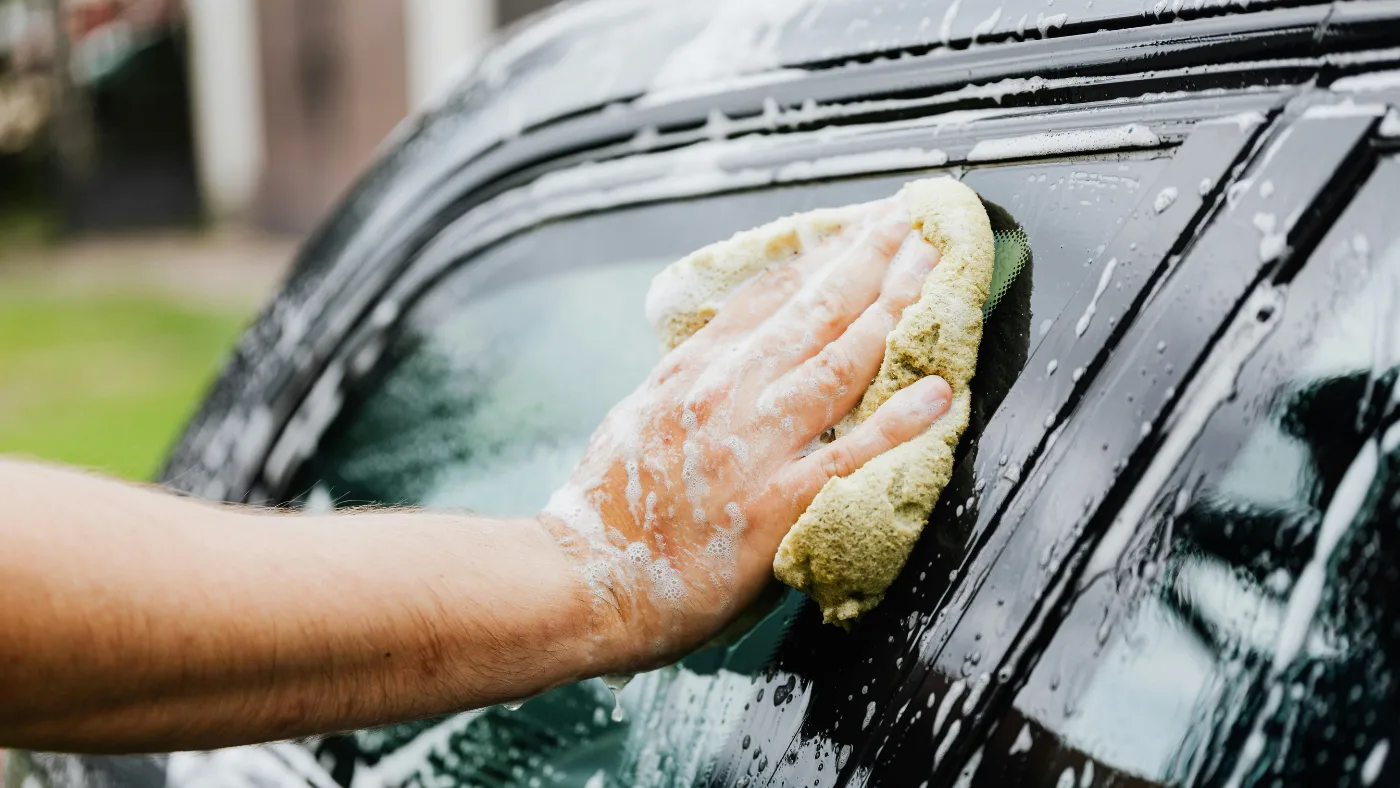
Getting your car detailing prices right means knowing your local market, understanding how complex each job is, and paying attention to what customers expect. Price too low, and you undervalue your skills. Price too high, and potential clients might go elsewhere.
This guide breaks down average car detailing prices across the U.S., the main factors that affect rates, common types of detailing services, and tips to help you set prices that are fair, competitive, and profitable.
Car detailing prices overview: How much to charge in 2026
Car detailing prices vary based on service type, vehicle size, condition, and location, but most jobs fall within a predictable range. Interior details typically run $50–$350, exterior details run $100–$350, and full details range from $150 to $500+, with higher prices for larger vehicles or specialty services like paint correction or ceramic coating (see methodology).
The most important rule: pricing should be based on your actual costs, not just what competitors charge. Labor, materials, overhead, travel time, and service complexity all determine whether a job is profitable.
Detailing prices can change significantly from one vehicle to the next. A quick maintenance clean is not the same as a heavily soiled interior with pet hair or stains. Mobile jobs also add costs like fuel, drive time, and setup, which need to be built into your rates.
To stay consistent and profitable, most detailing businesses use a structured pricing approach:
- Start with baseline costs (labor, overhead, materials)
- Apply a clear pricing model (hourly, vehicle size, or flat-rate packages)
- Adjust for condition, size, and add-ons
- Build in a profit margin
The steps in this guide walk through each of these in detail.
How we sourced car detailing prices
Price ranges in this guide reflect 2026 U.S. averages compiled from multiple third-party sources, including CARFAX and HomeGuide.
Actual rates vary based on:
- Vehicle size and condition (e.g., pet hair, staining, oxidation)
- Service type and level (maintenance vs. deep cleaning or correction)
- Local labor rates and cost of living
- Mobile vs. shop-based service (travel, fuel, setup time)
- Add-ons and specialty services (e.g., ceramic coating, paint correction)
These figures represent market averages, not fixed pricing standards. Use them as a reference point to understand what customers expect to pay, then adjust based on your actual labor, materials, overhead, and target profit margin.
Key takeaways
Here’s what matters most when pricing car detailing jobs profitably:
Calculate your baseline costs: Labor, products, travel, and overhead should shape your pricing before you compare competitors.
Adjust for vehicle condition: Pet hair, stains, oxidation, and larger vehicles all raise labor time.
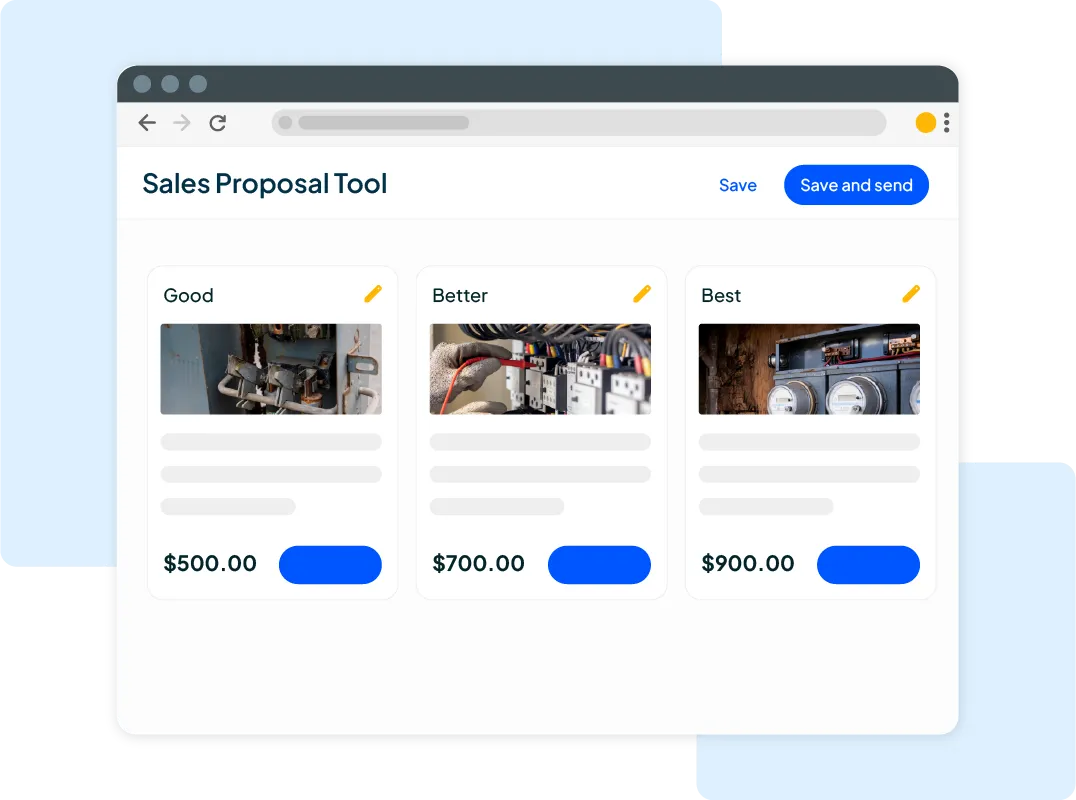
Offer price packages: Good, Better, Best options make pricing easier to understand and can lift your average ticket.
Charge more for mobile detailing: Fuel, drive time, setup, and wear on your vehicle should all be built into the quote.
Table of contents
- Average car detailing prices in 2026
- Car detailing prices by vehicle size
- Mobile car detailing prices
- Factors that affect car detailing prices
- Common car detailing add-ons and upsells
- Car detailing pricing models
- How to set car detailing prices
- Example car detailing price calculation
- How to build car detailing packages
- How to explain car detailing prices to customers
- How to raise your car detailing rates
- How Housecall Pro helps you price car detailing jobs
Average car detailing prices in 2026
Car detailing prices vary based on service type, vehicle size, and the amount of labor involved. A quick maintenance clean shouldn’t be priced the same way as a full detail.
Below is a look at average prices based on service type. Prices reflect estimated cost per standard service visit. Rates vary by vehicle size, condition, region, and add-ons.
| Service Type | Price Range |
|---|---|
| Interior detail | $50–$350 |
| Exterior detail | $100–$350 |
| Full detail (interior and exterior) | $150–$500+ |
These numbers are helpful for context, but they shouldn’t replace your own math. If your real costs are higher, your pricing needs to reflect that.
Car detailing prices by vehicle size
Vehicle size matters because larger vehicles take more time, more chemicals, more towels, and more effort to finish properly. Pricing by size can also make your estimates easier for customers to understand at a glance.
| Vehicle Size | Price Range |
|---|---|
| Small vehicles (coupe/hatchback) | $150–$175 |
| Mid-sized vehicles (sedans/SUVs) | $175–$250 |
| Large SUVs/trucks | $225–$400 |
| Extra-large SUVs/vans | $500–$650+ |
The above prices reflect estimated cost per full detail service visit. Rates vary by region, condition, and add-ons.
Read more: How to start a car detailing business
Mobile car detailing prices
Mobile detailing adds convenience for the customer, but it also adds real costs on your end. Fuel, drive time, setup, breakdown, and wear on your service vehicle all affect what a job actually costs you to deliver. A 2026 Autodetailer.com analysis of 89 mobile detailing operators across New York, Chicago, Dallas, and Los Angeles found average prices of $158 for a basic package, $278 for standard, and $443 for premium, with the jump between tiers driven mostly by interior work like carpet shampoo, steam cleaning, and leather conditioning.
Once you’ve set your package price, you still need to cover the cost of coming to the customer. Most detailers handle that one of three ways:
- A minimum service charge that applies to all mobile jobs
- A per-mile travel fee outside a standard service radius
- Defined service zones with a flat travel add-on for jobs that fall outside them.
There’s no single right answer—the goal is just to make sure the convenience premium you charge actually covers the cost of providing it.
Mobile operations typically also require commercial auto coverage beyond a standard general liability policy. Factor this expense into your travel fee or minimum service charge, rather than accounting for only fuel and time.
Pro tip: Building travel costs and mobile setup fees into a standardized price template—rather than estimating them job by job—is the most reliable way to protect your margins.
Factors that affect car detailing prices
Two vehicles can look similar from the outside and still take very different amounts of time to detail. That’s why your pricing needs to reflect more than the service alone.
- Vehicle size: Larger vehicles usually mean more glass, more carpet, more trim, and more square footage to clean. That naturally raises labor time and product use.
- Vehicle condition: Condition is often one of the biggest pricing variables. A standard interior detail on a clean sedan might take 90 minutes; the same service on a vehicle with heavy pet hair and food odor can easily run 3–4 hours, more than doubling the labor cost.
- Service scope: A basic wash and vacuum is not the same job as a full interior extraction, wax, and odor treatment. The more labor-intensive the service, the more carefully it should be priced.
- Specialty add-ons: Paint correction, ceramic coating, ozone treatment, engine bay cleaning, and headlight restoration can all raise your average ticket. But they only help margins when they are priced clearly and consistently.
- Seasonal demand: Detailing demand typically peaks in spring due to post-winter grime and pre-sale preparation, and again before winter as customers purchase protection treatments.
Common car detailing add-ons and upsells
Add-ons can increase average ticket size without making pricing harder to understand. The key is to present them clearly and price them as upgrades rather than rolling everything into one vague total.
The table below reflects average 2026 price ranges for add-on services; rates vary by market and service complexity
| Add-on | Typical price range |
| Headlight restoration | $50–$150 |
| Ozone odor removal | $70–$150 |
| Clay bar treatment | $100–$150 |
| Paint correction | $300–$2,500+ |
| Ceramic coating | $900–$2,500 |
Car detailing pricing models
Different detailing businesses price work in different ways. The best model depends on how standardized your jobs are and how much variation you see from vehicle to vehicle.
Hourly pricing
Hourly pricing means charging based on the amount of labor time a detailing job takes. This model works best when vehicle condition varies and the scope is harder to predict upfront.
Best for:
- Heavily soiled interiors
- First-time details
- Odor removal
- Specialty jobs where the labor time is unclear at the start
Why it works:
- Helps you charge for the actual time required
- Works well when condition matters more than vehicle size
- Reduces the risk of underpricing unpredictable jobs
Watchouts:
- Customers may want a clearer price range before work starts
- Labor rates should be explained upfront
- Without clear communication, the final bill can feel open-ended
Most detailers who use hourly pricing set a standard labor rate, then give customers an estimated time range before the job begins.
Vehicle-size pricing
Vehicle-size pricing means charging based on the size class of the vehicle, such as small car, midsize SUV, or large truck. This is one of the easiest ways to create a simple and repeatable detailing price structure.
Best for:
- Standard interior details
- Standard exterior details
- Full details on vehicles with predictable condition
- Faster quoting across common vehicle types
Why it works:
- Makes estimates easier and faster to build
- Gives customers a pricing structure that is easy to follow
- Helps standardize pricing across similar jobs
Watchouts:
- Vehicle size alone does not account for condition
- A neglected compact car can take more labor than a clean SUV
- Heavy mud, sand, or construction dust can add labor time that vehicle size alone won’t predict
Most detailers who use this model start with a base price by vehicle size, then add charges for condition, specialty services, or unusually time-intensive work.
Flat-rate package pricing
Flat-rate package pricing means charging one fixed price for a clearly defined detailing service. This model is often used for packaged interior, exterior, or full-detail services.
Best for:
- Interior detail packages
- Exterior detail packages
- Full detail packages
- Good, Better, Best service tiers
Why it works:
- Easy for customers to understand and compare
- Makes quoting faster and more consistent
- Helps detailers bundle services and upsells more clearly
Watchouts:
- Package inclusions need to be clearly defined in writing
- Underpricing can happen if condition varies more than expected
- Add-ons like odor removal, paint correction, or ceramic coating should not be absorbed into the base package
Most detailers who use flat-rate pricing build standard packages first, then layer in separate add-ons for condition issues, upgrades, and specialty services.
Subscription or membership pricing
Subscription or membership pricing means charging a recurring monthly or quarterly rate for scheduled maintenance details instead of pricing each visit separately.
Best for:
- Repeat customers who want ongoing upkeep
- Businesses looking to smooth out seasonal demand
- Detailers who want more predictable recurring revenue
Why it works:
- Locks in repeat business instead of relying on one-time bookings
- Smooths cash flow across seasons
- Encourages customer loyalty through consistent service
Watchouts:
- Vehicle condition can vary from one visit to the next, even on a fixed schedule
- Clearly define what’s included in each visit
- Spell out what happens when a maintenance vehicle shows up heavily soiled
- Set how often visits occur
- Name the conditions that trigger an extra charge
Time-and-materials pricing
Time-and-materials pricing means charging for actual labor hours plus the materials used on the job. This model is usually reserved for detailing work where the full scope is difficult to confirm before work begins.
Best for:
- Severe interior restoration jobs
- Post-spill or biohazard-adjacent cleanup handled within normal service scope
- Paint correction work with uncertain labor time
- Jobs where hidden condition issues are likely
Why it works:
- Helps prevent underpricing when the real condition is not clear upfront
- Gives you more flexibility when labor and material use can change during the job
- Makes sense for unusual or highly variable work
Watchouts:
- Requires clear communication before work begins
- Labor rates and material pricing should be documented in writing
- Without transparency, customers may feel surprised by the final total
Most detailers who use this model set labor rates in advance and explain how materials, extra time, and added work will be billed before the job starts.
Fleet and dealership accounts
Fleet and dealership work follows a different pricing logic than retail detailing. Rates for these accounts run lower per vehicle than retail work, since you’re trading a lower per-vehicle price for steady volume, predictable scheduling, and less time spent selling each job. Confirm current rates in your market before quoting—fleet and dealership pricing varies by region and contract volume more than retail work does.
Keep in mind that fleet clients care more about reliability and consistency than getting the lowest price. They expect a set schedule, consistent results, and simple, predictable billing. When pricing these contracts, start with your true cost per vehicle—including travel and setup—then apply a slightly lower margin to account for volume. Make sure the scope is clearly defined upfront, including service frequency, what’s included, and when additional charges apply.
How to set car detailing prices
A profitable pricing strategy starts with your real costs—not guesswork. Keeping the same basic framework across jobs makes your pricing easier to manage and easier to update over time.
Step 1: Calculate your baseline costs
Start by calculating what it actually costs you to complete a detailing job, not just the time spent cleaning the vehicle. These numbers define your break-even point.
Factor in:
- Labor: Your hourly rate, employee wages, payroll taxes, workers’ comp, and benefits
- Overhead: Insurance, detailing tools, chemicals, towels, pads, water, power, software, marketing, and vehicle expenses.
- Non-billable time: Travel, setup, teardown, washing towels, restocking supplies, customer communication, and cleanup
Use these formulas to calculate your baseline:
Labor cost per job
(Hourly wage × labor burden) × total labor hours
Overhead cost per job
Total monthly overhead ÷ monthly billable hours × (job hours + non-billable hours)
Break-even job cost
Labor cost per job + overhead cost per job + material cost per job
This number is the minimum you must charge before profit.
Step 2: Choose your primary pricing model
Most detailing businesses rely on one main pricing model, then adjust based on the vehicle and the level of work involved.
Common models include:
- Hourly pricing: For unpredictable jobs or heavily soiled vehicles
- Vehicle-size pricing: For standard details across common vehicle types
- Flat-rate package pricing: For clearly defined interior, exterior, or full-detail services
Standardizing your main pricing model makes quotes faster, more consistent, and easier to explain to customers.
Step 3: Adjust for vehicle condition, size, and service complexity
Two vehicles can look similar from the outside and still take very different amounts of time to detail. That is why your base price should not be the final price on every job.
Adjust pricing for factors like:
- Larger vehicles that require more labor and more product
- Pet hair, stains, smoke odor, and heavily soiled interiors
- Paint correction, oxidation, or other exterior issues
- Mobile service that adds travel, setup, and breakdown time
- Specialty requests like ceramic coating, engine bay cleaning, or headlight restoration
These adjustments help you cover extra time and materials without overpricing simpler jobs.
Step 4: Add your profit margin
Detailing prices should do more than cover today’s costs. They need to leave room for profit so you can replace equipment, absorb slower weeks, and keep the business healthy over time.
There’s no universal benchmark for detailing margins, but many businesses aim for a net profit margin in the 25%–35% range once labor, materials, and overhead are fully accounted for. If your margins consistently run thinner than that, it’s often a sign of underpricing or overhead that isn’t fully built into your rates.
Use this formula to add your profit margin to break-even pricing:
Break-even cost ÷ (1 − target margin) = target price
Example:
$120 break-even ÷ (1 − 0.30) = $171 target price
Your costs set the minimum. Profit is what makes the work worth doing.
Step 5: Set minimum charges and add-ons
Even smaller detailing jobs take time to schedule, set up, and complete. Minimum charges help make sure short jobs still make sense financially.
To set a minimum:
- Calculate the average cost of taking on a job
- Include setup, travel, and cleanup time
- Apply the minimum consistently across quotes
Then use add-ons to adjust for extra work without inflating every base service. Always show add-ons as clear line items in quotes and invoices so customers can see what is included and why the price changes.
Step 6: Review and update pricing regularly
Detailing costs change over time, especially chemicals, tools, fuel, labor, and travel expenses. Your pricing should keep pace. Supply costs are hardest to catch when a shipment of detailing chemicals gets delayed or damaged before it reaches the shop, which is why some owners use real-time supply chain visibility to flag temperature swings or delays in bulk orders before they turn into a restocking scramble.
Review pricing regularly and look at:
- Job time: Compare estimated labor to actual labor
- Material usage: Check whether products and supplies are costing more than expected
- Travel and mobile costs: Make sure convenience pricing still covers the real cost of service
- Average ticket size: Confirm your prices still support healthy margins
If your schedule stays full but your margins feel tight, that is usually a sign your pricing needs to be updated.
Get In Touch: 858-842-5746
Let us earn your trust
On average, Pros increase monthly revenue generated through Housecall Pro by more than 35% after their first year
See plan options and feature breakdown on our pricing page.
Example car detailing price calculation
Here’s a simple example of what a profitable detail price can look like.
A mid-sized SUV needs a full interior detail.
- Labor: 3 hours × $25/hour = $75
- Materials: $35
- Overhead allocation: $33
- Subtotal: $143
- Markup: 20% = $28.60
- Final customer price: $171.60
The exact numbers will vary, but the process should stay consistent. The goal is not to copy these numbers exactly. It is to use the same logic every time you price a job.
Read more: How to calculate markup and margin
How to build car detailing packages
Packages make decisions easier for customers and help you sell more profitably. Instead of listing every service line by line, bundle related work into a few clear options customers can compare quickly.
A simple Good, Better, Best structure often works well for detailing businesses because it gives people a way to choose based on need and budget without feeling overwhelmed.
| Package | Price Range | Best for | Example inclusions |
| Basic | $50–$100 | Maintenance cleaning | Exterior wash, quick vacuum |
| Standard | $100–$200 | Routine upkeep | Interior cleaning, wash, wax |
| Premium | $200–$400+ | Deep cleaning or resale prep | Full detail, protection add-ons |
How to explain car detailing prices to customers
Customers are more likely to accept your price when they can see what’s behind it. Break the total into what you did, why it took the time it took, and what’s optional—don’t just hand over a number.
- Explain what’s included and why time varies. A basic wash-and-vacuum takes 45 minutes. A full detail with pet hair removal, stain treatment, and engine bay cleaning can run three hours or more. Tell the customer that up front: “This quote covers exterior wash, interior vacuum, and dash detailing. The extra time is going into the stain treatment on the back seat and pulling pet hair out of the carpet fibers.” That single sentence answers the real question customers have: not how much, but why.
- Break out upgrades as separate line items. If a car needs stain removal, odor treatment, or ceramic coating beyond the base package, price it separately instead of folding it into one number. A $220 total with no breakdown invites “why is this so expensive?” A $150 base plus $70 for pet hair and odor treatment invites “OK, that makes sense.”
- Back the price with before-and-after proof. Housecall Pro’s Customer Service Report found that 68% of customers want photo, video, or checklist proof of completed work. Photograph the stained seat, the trim damage, the pet hair buildup before moving anything or starting the job, then shoot the same spots again when you’re done. Now the $70 upgrade line isn’t just a number on the invoice—it’s a before-and-after the customer can see for themselves.
This kind of transparency pays off in more ways than one: fewer “can you explain this again” calls, and more customers who book an upgrade because they don’t understand what it does.
How to raise your car detailing rates
If your schedule stays full, your costs have gone up, or your margins are shrinking, it may be time to raise prices. The key is to do it intentionally, not reactively.
Start by reviewing your average ticket, labor time by job type, product costs, fuel and travel costs, and close rate. Tools like Housecall Pro’s Job Costing make it easier to track those differences across jobs.
Then, communicate the change clearly. Give customers notice, explain the reason in plain language, and tie the increase back to quality, consistency, and service value.
Car detailing price-increase message template
Give repeat customers advance notice before changing their rates. Keep the explanation brief, clearly state when the new price begins, and focus on the service quality you’re maintaining.
Here’s an example template:
“Hi [Customer name],
Starting [date], the price of your [service or package] will change from [$X] to [$Y]. This adjustment helps us account for increased product, labor, insurance, and operating costs while continuing to provide the same level of care and attention to your vehicle.
Any appointments scheduled before [date] will remain at the current rate. Please reach out if you have questions or would like help choosing the package that best fits your vehicle.
Thank you for continuing to trust [Business name] with your vehicle.”
How Housecall Pro helps you price car detailing jobs
Accurate, consistent pricing is what keeps your margins steady. Rebuilding estimates from scratch for every job leaves more room for underpricing and inconsistent quotes across your team. Housecall Pro’s car detailing software standardizes your prices, speeds up estimates, and keeps every quote tied to your real costs.
A few areas where it makes a practical difference:
- Standardized price books: Setting fixed prices for your core services and add-ons up front means quotes are consistent across every job, every customer, and every team member—without manual math each time.
- Condition-based line items: Charges for pet hair, odor treatment, oversized vehicles, or mobile travel are easier to apply consistently when they’re already built into your quoting system as separate adjustments rather than judgment calls.
- Estimated versus actual job costs: Comparing what you quoted against what a job actually cost in labor, products, and travel is one of the easiest ways to catch underpricing before it starts eating into your margins.
- Online approvals: Customers can review and approve quotes digitally, which cuts down the back-and-forth between estimate and booking.
If you’re managing pricing across multiple service types or a growing team, having one system that connects quoting, job costing, and invoicing tends to make the numbers easier to trust. Housecall Pro offers a free 14-day trial so you can see the difference firsthand.
Success story: How one detailer grew revenue 44% with Housecall Pro
Brandon and Erika Rivera, co-founders of Shine Coat Auto Detailing, increased their monthly revenue from $4,500 to $8,000 per month by streamlining their operations with Housecall Pro. Instead of switching between Google Calendar for scheduling and Square app for payments, they managed everything from customer data to booking and invoicing with Housecall Pro’s all-in-one field service management software.
The shift saved time and gave the duo the confidence to raise prices from $25 to $50 per service. And because Housecall Pro made the customer experience feel smoother, clients stayed loyal.
FAQ
How much does mobile car detailing cost?
Mobile detailing typically runs $158 for a basic package, $278 for a standard package, and $443 for a premium package, based on a 2026 analysis of 89 operators across four major U.S. metros. Add a travel or convenience fee on top, since mobile pricing needs to cover fuel, drive time, and setup that shop-based detailing doesn’t.
What's a typical car detailing price list by service type?
Interior details run $50 to $350, exterior details run $100 to $350, and a full interior-and-exterior detail runs $150 to $500 or more. Prices vary by vehicle size, condition, and add-ons like paint correction or ceramic coating.
How much should a full detail cost for different vehicle types?
A full detail typically costs $150–$175 for small vehicles like coupes and hatchbacks, $175–$250 for mid-sized sedans and SUVs, $225–$400 for large SUVs and trucks, and $500–$650+ for extra-large SUVs and vans.
How much does interior car detailing cost?
A standard interior detail typically costs $50 to $350, depending on vehicle size and condition. A clean sedan with light interior work sits toward the lower end, while a heavily soiled interior with pet hair, stains, or odor can take 3–4 hours instead of the typical 90 minutes and push the price toward the top of the range.
How much should I pay my car detailing employees?
Pay a minimum of $16.96 per hour. This is the median hourly wage for car detailers, according to 2024 data from the Bureau of Labor Statistics—the most recent year available.
Increase wages if the employee takes on specialty work or brings repeat business. A competitive rate will help to attract and retain good workers.
How do I price ceramic coating?
Ceramic coating warrants a separate quote rather than a package add-on because the labor and material cost structure is fundamentally different from standard detailing. Professional ceramic coating typically runs $900 to $2,500 for most vehicles. But the biggest variable isn’t the coating itself—it’s the paint correction required before application. Paint correction alone can add $300 to over $1,500 to the total cost, since swirl marks and scratches must be removed before the coating seals the surface. Because the scope varies this much from vehicle to vehicle, ceramic coating should always be quoted individually after a paint inspection, never bundled into a flat-rate package.
How do I price paint correction?
Paint correction is priced primarily by the number of stages required, which is determined by the condition of the paint rather than vehicle size alone. A one-step enhancement typically runs $300–$600 and removes light swirls and water spots. A two-step full correction runs $600–$1,200 and handles deeper defects. A three-step show-car correction can reach $1,200–$2,500 or more on larger vehicles. Because paint condition drives the quote more than any fixed price list, most detailers assess the paint under inspection lighting before committing to a stage.
How do I handle discounts or promotions for car detailing?
Use discounts and promotions sparingly. Reward loyal customers, run seasonal deals, and give limited-time offers, but don’t undercut your base pricing. Limit discounts to no more than 10%–15%. Deeper discounts tend to erode margins faster than the retention benefit justifies. A loyalty reward like a free add-on protects your base rate better than a percentage cut