Want to win more jobs with less effort?
Grow your business and send quick quotes with our home service software.

Want to see your potential revenue?
See what businesses like yours earn with Housecall Pro in 1 - 2 minutes.
Pricing pest control jobs means doing two things at once: covering the real cost of the work required and keeping pricing simple enough to use every day. Different pests, property types, and service schedules all change the scope of work, but your pricing system still needs to hold together across all of them.
This 2026 pest control pricing guide breaks down current residential and commercial price ranges, explains the most common pricing models, and shows how pest control businesses structure base services, add-ons, and recurring plans. The goal is to help you set prices that reflect real workload, stay consistent across technicians, and support long-term profitability.
Key takeaways
Here’s a quick overview of how pest control businesses price services in 2026:
Most pest control jobs are priced flat-rate or recurring: These models simplify estimates and reduce friction.
Pest type changes scope: Rodents, termites, and bed bugs require more labor and follow-up.
Add-ons prevent underpricing: Exclusion and repeat treatments should be separated from base services.
Minimum charges matter: Even short visits need to cover travel and setup.
Standardized pricing scales better: Price books keep quotes consistent across your team.
Table of contents
- Average pest control prices in 2026
- Pest control prices by pest type
- Residential pest control prices
- Commercial pest control prices
- Popular pest control add-ons and upsells
- Common pest control pricing models
- Factors that affect pest control prices
- How to price pest control jobs
- Example pest control price calculations
- Advanced pest control pricing tips
- How to explain pest control pricing to customers
- How to raise pest control prices without losing customers
- How Housecall Pro helps you price pest control jobs
Average pest control prices in 2026
Pest control pricing varies based on pest behavior, infestation duration, treatment method, and regional operating costs. While many residential services fall within common ranges, commercial and specialty work often requires custom pricing.
For residential properties, one-time pest control services typically range from $100–$300. These visits usually include inspection, treatment, and standard materials for common household pests.
Recurring services are generally priced lower per visit. Monthly or quarterly maintenance plans often fall between $40 and $80 per visit, reflecting reduced setup time and preventive work rather than initial elimination.
Hourly pricing isn’t as common for standard residential jobs, but is still used for wildlife removal, exclusion work, or infestations where the scope can’t be determined upfront. In those cases, rates often range from $75–$150 per hour, per technician.
*These price ranges reflect 2026 national averages based on homeowner reports and service listings from platforms like Angi, HomeAdvisor, and Thumbtack.
Pest control prices by pest type
Pest control pricing varies depending on the type of pest involved. Some pests require simple, localized treatment, while others need extensive labor, follow-up visits, or specialized methods. Because of this, many businesses price by category instead of using one universal flat rate.
The table below shows typical residential price ranges in 2026 for common pests. These are general benchmarks and may increase based on infestation severity, access, or required follow-up.
| Pest type | Typical price range |
|---|---|
| Ants | $100–$250 |
| Mice | $150–$400 |
| Rats | $200–$600 |
| Termites | $500–$3,000+ |
| Bed bugs | $1,000–$4,000+ |
Residential pest control prices
Residential pest control services are most often priced as flat-rate treatments or ongoing maintenance plans, with adjustments based on pest type, infestation severity, and access conditions. This keeps estimates simple while allowing flexibility for jobs that require additional labor or follow-up visits.
Here’s a look at typical residential pest control pricing in 2026:
| Service type | Typical price range |
|---|---|
| One-time pest control service | $100–$300 |
| Monthly maintenance plan | $40–$80 per visit |
| Quarterly service plan | $120–$300 per year |
| Initial visit or inspection | Often higher than follow-up visits |
Commercial pest control prices
Commercial pest control jobs are typically larger in scope and governed by stricter requirements than residential work. Services are usually delivered on a recurring schedule, making per-visit pricing or contract-based agreements more common than one-time flat rates.
Final pricing is influenced by factors such as industry type, regulatory compliance, site access, and inspection frequency.
Here’s what typical commercial pest control pricing looks like in 2026:
| Service type | Typical pricing |
|---|---|
| Per-visit service | $150–$400 |
| Monthly or quarterly contracts | Discounted per visit |
| Regulated environments (food service, healthcare) | Custom pricing |
Because commercial accounts depend on recurring schedules and contract consistency, standardized pricing and automated billing are critical to protecting margins over time. Use Housecall Pro to store pricing, schedule recurring service, and automate invoicing, so contract rates, visit frequency, and billing stay consistent across long-term accounts.
Popular pest control add-ons and upsells
Add-ons and upsells increase average job value without adding extra trips or marketing costs. When you recommend services based on what you find during the inspection—rather than using sales pressure—customers are more likely to understand the need and approve the work.
Common pest control add-ons in 2026 include:
| Add-on service | Typical price range |
|---|---|
| Rodent bait stations | $25–$75 |
| Wasp or hornet nest removal | $50–$150 |
| Entry-point sealing or exclusion | $100–$500+ |
| Flea or tick yard treatments | $75–$200 |
| Mosquito treatments | $50–$150 per visit |
Pro tip: Store prices and add-ons in Housecall Pro’s Price Book to standardize quotes across your team. This prevents missed line items, pricing variation between technicians, and margin erosion as your business grows.
Get In Touch: 858-842-5746
Let us earn your trust
On average, Pros increase monthly revenue generated through Housecall Pro by more than 35% after their first year.
See plan options and feature breakdown on our pricing page.
Common pest control pricing models
Pest control services can be priced in a few different ways, and no single model works for every job. What matters most is picking a primary approach and applying it consistently, with standard adjustments for jobs that require additional time or materials.
Flat-rate pest control pricing
Flat-rate pricing sets a fixed price for a specific pest control service, regardless of how long the visit takes. This approach is widely used for residential pest control because it’s straightforward to apply.
Best for:
- Routine residential treatments
- Common pests such as ants, roaches, and spiders
- Estimates given over the phone or online
Why it works:
- Customers know the price upfront
- Quotes can be delivered quickly
- Similar jobs are priced the same way
Watchouts:
- Severe infestations can exceed the expected scope
- Rodent activity, nesting, or structural access issues often require additional charges
To avoid underpricing, many businesses define strict limits around what’s included in a base service and apply preset surcharges when conditions fall outside that range.
Recurring pest control pricing
Recurring pricing charges customers on a scheduled basis (monthly, bi-monthly, or quarterly) for ongoing pest management.
Best for:
- Ongoing pest prevention
- Customers looking for consistent coverage
Why it works:
- Follow-up visits take less time than initial treatments
- Encourages long-term customer relationships
- Creates more predictable recurring revenue
Watchouts:
- Clearly define what’s included, excluded, and when add-ons apply before pricing
- Undefined service limits can lead to unscheduled callbacks and schedule disruptions
Hourly pest control pricing
Hourly pricing bills customers for the actual time spent on the job.
Best for:
- Wildlife removal
- Extensive sealing or exclusion work
- Jobs where conditions can’t be evaluated in advance
Why it works:
- Accounts for unexpected obstacles or delays
- Protects margins on labor-heavy projects
Watchouts:
- Customers may have difficulty estimating the total cost
- Accurate time tracking and communication are essential
This model is often used for crawl space work, attic access, or properties with multiple structural challenges where the full scope only becomes clear during service.
Factors that affect pest control prices
Even with standardized pricing, certain variables should always adjust your final pest control quote:
- Pest type and behavior: Some pests require longer treatment times, specialized materials, or repeat visits.
- Infestation size and duration: Larger or long-standing infestations increase labor and follow-up work.
- Access challenges: Crawl spaces, attics, multi-story buildings, or limited entry points slow down service.
- Treatment method used: Baiting, fumigation, exclusion, or targeted treatments affect cost and time on site.
- Service frequency: One-time visits are priced differently from ongoing maintenance plans.
- Local labor, licensing, and insurance costs: Regional operating expenses directly impact baseline pricing.
How to price pest control jobs
Setting pest control prices starts with understanding your real costs, not just copying competitors. A strong pricing system accounts for labor, overhead, job complexity, and long-term profitability while staying simple enough for your team to use consistently.
Step #1: Calculate your baseline costs
Start by calculating what it actually costs your business to complete a standard service visit, not just the minutes spent on-site These numbers define your break-even point.
Factor in:
- Labor: Technician wages, payroll taxes, workers’ compensation, and benefits
- Overhead: Vehicles, fuel, insurance, licensing, equipment, chemicals, and bait
- Nonbillable time: Travel, inspections, setup, documentation, and cleanup
Use these formulas to calculate your baseline:
Labor cost per job
(Hourly wage × labor burden) × job hours
Overhead cost per job
Total monthly overhead ÷ monthly billable hours × (job hours + nonbillable hours)
Break-even job cost
Labor cost per job + overhead cost per job
The total break-even number is the minimum you need to charge before profit.
Step #2: Research local pest control prices
Once you know your baseline costs, review typical pest control prices in your service area to understand what customers expect and where your business fits.
This guide includes average national pricing to give you a starting point, but local factors like competition, cost of living, and service mix will influence what works in your area.
You can find benchmarks by:
- Reviewing competitor websites and service menus
- Checking homeowner marketplaces like Angi, Thumbtack, or HomeAdvisor
- Comparing residential vs. commercial pricing in your market
Local research shouldn’t replace cost-based calculations. Set prices based on what your business needs to be profitable, then use market rates only to gauge customer expectations and positioning.
Step #3: Choose your primary pricing model
Most pest control businesses use one main pricing model and make adjustments when a job falls outside the standard scope.
Common models include:
- Flat-rate pricing: Standard residential treatments with defined inclusions
- Recurring pricing: Ongoing maintenance plans billed monthly or quarterly
- Hourly pricing: Jobs with an uncertain scope, like wildlife removal or exclusion
Standardizing one primary model makes estimates faster to create and easier to explain to customers.
Step #4: Set a target profit margin
Next, decide how much profit each job needs to generate.
To set a profit margin:
- Decide on a target margin that supports growth, not just day-to-day operations.
- Add that margin on top of your break even costs to arrive at your target service price.
Many pest control businesses aim for:
- 15%–25% margins on standard residential services
- Higher margins on specialty work, add-ons, or emergency service
- Slightly lower margins per visit on recurring plans, offset by retention and volume
Step #5: Set minimums and premiums
Minimum service charges ensure short visits still cover travel, setup, and administrative costs. To set a minimum service charge:
- Start with the average total cost of a standard visit from your baseline calculations (labor, overhead, and nonbillable time).
- Set your minimum at or above that amount so no job runs at a loss.
- Apply the same minimum consistently to inspections, light treatments, or return visits outside a service plan.
Many pest control businesses also use premiums to account for jobs that disrupt schedules or require immediate response.
Common premiums include:
- Same-day or emergency service
- After-hours or weekend calls
- Peak pest seasons
Define these minimums and premiums in advance, save them in your price book, and apply them automatically so technicians don’t have to make judgment calls in the field.
Step #6: Adjust for infestation severity and access
Not every pest control job takes the same time or effort, even within the same service type. Instead of increasing base rates across the board, use predefined upcharges for additional labor, materials, or risk.
Common adjustment factors include:
- Higher infestation levels
- Nesting or breeding conditions
- Limited or unsafe access
- Multi-unit properties or hard-to-reach zones
To price these adjustments, estimate additional time required, multiply it by your target hourly rate, and convert that into a standardized flat add-on. This keeps pricing consistent and avoids on-the-spot calculations.
Note: Even if you don’t charge customers by the hour, use an internal labor benchmark when setting these surcharges. The baseline labor and overhead costs you calculated in Step 1 give you a reference point.
Step #7: Use add-ons for separate services
Add-ons represent separate services beyond the original treatment, not additional effort to complete it.
Common pest control add-ons include:
- Rodent exclusion or entry-point sealing
- Additional bait stations
- Follow-up or return visits outside the plan
- Mosquito or yard treatments
To price add-ons, calculate how long each service takes, multiply that time by your target hourly rate, then round to a simple, standardized price your team can quote confidently.
List add-ons as clear line items in estimates and invoices so customers can easily see what’s included, what’s optional, and why the total price changes.
Step #8: Use pricing tools to apply rates consistently
Even strong pricing breaks down if it’s applied inconsistently. Without a centralized system, technicians may skip add-ons, forget minimums, or quote different rates for similar jobs.
Using Housecall Pro, you can:
- Build digital price books for flat-rate services and add-ons
- Store recurring plan pricing and schedules
- Generate consistent estimates in the field
- Present clear, itemized pricing to customers
Step #9: Review and update pricing regularly
Pest control costs change over time. Your pricing should reflect that.
- Review pricing annually: Or sooner if labor, fuel, or material costs increase
- Track job time: Compare estimated service time to actual time spent
- Adjust minimums as needed: Even short visits should be profitable
Pro tip: When updating prices, revise your digital price book first so new rates apply automatically to future estimates and recurring contracts. This prevents outdated pricing from lingering in the field.
Example pest control price calculations
Seeing how pest control pricing comes together in real situations makes it easier to build quotes consistently and explain them to customers. Below are a few common scenarios using typical 2026 pest control rates.
Example 1: Small condo with ant activity
Scope: One-bedroom condo, localized ant activity
Pricing model: Flat-rate
- Estimated baseline cost: $115
- Target margin: 25%
- Flat-rate service price: $115 ÷ (1 − 0.25) = $150
Base service: Standard ant treatment = $150
Add-on: None
Total price: $150
Example 2: Single-family home with rodents
Scope: Two-story home, active rodent signs in garage and attic
Pricing model: Flat-rate + add-ons
- Estimated baseline cost: $170
- Target margin: 30%
- Base service price: $170 ÷ (1 − 0.30) = $225
- Add-on: Entry-point sealing and exclusion = $300
Total price: $525
The base treatment price reflects standard rodent control, while exclusion is priced separately as a distinct service. The higher profit margin reflects the extra time, tougher access, and greater chance of follow-up that come with rodent jobs.
Example 3: Small restaurant on a quarterly plan
Scope: 1,800-square-foot restaurant, ongoing pest prevention
Pricing model: Recurring service
- Estimated baseline cost per visit: $150
- Recurring service margin: 15% (lower per visit, higher volume)
- Recurring contract rate: $150 ÷ (1 − 0.15) = $180 per visit
- Service frequency: Quarterly (4 visits per year)
Standard one-time rate: $250 per visit
Recurring service rate: $180 per visit
Per visit: $180
Annual total: $720
Recurring commercial service allows for lower per-visit pricing because inspections and treatments become more efficient over time. The reduced rate still accounts for labor, compliance requirements, and materials while providing predictable revenue.
Example 4: Seasonal mosquito treatment plan
Scope: Medium-size backyard with consistent mosquito activity during warm months
Pricing model: Recurring service
- Typical one-time treatment rate: $140 per visit
- Discounted seasonal service rate: $95 per visit
One-time treatment rate: $140 per visit
Seasonal service rate: $95 per visit
Service frequency: Monthly for 5 months
Per visit: $95
Total price (seasonal): $95 x 5 = $475
Seasonal mosquito services are faster to perform after the initial visit. Offering a lower per-visit rate encourages customers to commit to a full season, while recurring scheduling helps balance workload and revenue during peak months.

Advanced pest control pricing tips
Once your base pricing is set, small strategic adjustments can improve margins without making pricing harder to explain or sell. These tips help you earn more per job while keeping estimates straightforward and customer-friendly.
- Bundle related services: Pair core treatments with logical add-ons like exclusion work, bait station maintenance, or mosquito control to increase average job value without extra trips.
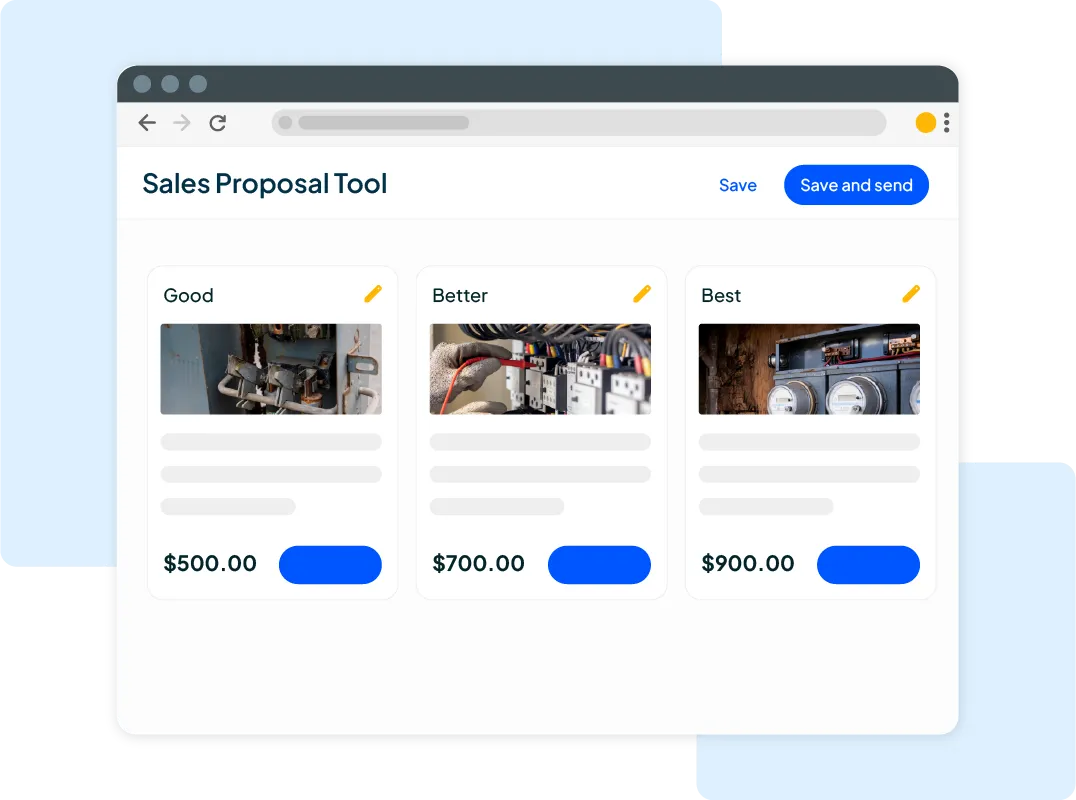
- Offer tiered service options: Present clear levels (Good, Better, Best) to guide customers toward higher-value choices without custom pricing.
- Incentivize ongoing service: Offer modest discounts on monthly or quarterly plans to encourage long-term customers and smooth out seasonal revenue swings.
- Adjust pricing for urgency or demand: Apply higher rates for same-day service, peak pest seasons, after-hours work, or high-demand periods to protect margins and manage scheduling pressure.
- Track effective hourly earnings: Review completed jobs to confirm flat-rate and recurring pricing consistently meet your revenue-per-hour targets.
- Limit low-return work with pricing: Setting minimum charges, defining service boundaries, or offering certain jobs as premium-only helps prevent time-consuming work that doesn’t deliver enough profit.
How to explain pest control pricing to customers
Clear pricing conversations reduce pushback and speed up approvals. When customers understand what they’re paying for and why, they’re more comfortable moving forward.
- Outline what the core service covers: Explain what a standard pest control visit includes—such as inspection, treatment application, materials, and follow-up service—not just time spent on the property.
- Set pricing expectations early: Let customers know pricing is based on pest and service type, with adjustments for infestation level, access challenges, or recurring service needs.
- Separate base services from add-ons: Present pricing in layers so customers can clearly see what’s included in the main service and what’s optional, like exclusion work, extra bait stations, or mosquito treatments.
- Use direct, confident language: Walk through pricing clearly and calmly, focusing on how rates are structured rather than defending the cost.
- Put everything in writing: Use written estimates and invoices with clear line items so customers can easily see how the final price was built.
Pro tip: Sending itemized estimates and invoices through Housecall Pro makes pricing easy to understand, easier to approve, and more consistent across every job.
How to raise pest control prices without losing customers
Raising pest control prices is often necessary as labor, materials, insurance, and fuel costs increase. The key is to make changes in a way that protects margins while preserving customer trust.
- Start with underperforming services: Review jobs that consistently take longer, require extra materials, or generate lower margins, and adjust those prices first instead of raising rates across the board.
- Adjust pricing by scope, not percentages: Customers respond better to price changes tied to pest type, infestation severity, service frequency, or access challenges than to unexplained percentage increases.
- Use small, gradual increases for recurring plans: Modest adjustments over time are usually easier for long-term customers to accept than large, sudden jumps.
- Communicate changes clearly and early: Notify customers in advance, explain what the service includes, and reinforce the value they’re receiving.
- Support changes with written documentation: Updated estimates, service agreements, and invoices help set expectations and reduce confusion.
- Monitor results after changes go live: Track approval rates, customer churn, and average job value to ensure pricing updates are improving profitability without hurting demand.
How Housecall Pro helps you price pest control jobs
Setting pest control prices is only the first step. The right tools make it easier to apply those prices consistently across every job. With Housecall Pro’s pest control software, you can build pricing systems that are clear, repeatable, and easy for your team to use in the field.
- Create digital price books: Set up flat-rate services, recurring plans, and hourly labor with standardized pricing your team can rely on.
- Save common add-ons: Add services like exclusion work, additional bait stations, follow-up visits, or mosquito treatments as predefined line items.
- Generate quotes quickly: Apply the right pricing model on the spot without manual calculations or second-guessing.
- Enable online booking: Let customers request pest control service anytime without phone calls or scheduling back-and-forth.
- Send professional estimates: Use built-in templates to present clear, itemized pricing without missing billable work.
Housecall Pro supports more than pricing alone. From scheduling and dispatching to invoicing, payments, and customer communication, everything runs through one system, so your pricing stays connected to the rest of your workflow.
Start your free Housecall Pro trial to see how consistent pricing helps streamline operations and support long-term growth.
Pest control pricing FAQ
-
How much should pest control cost?
-
Pest control typically costs $100–$300 for most residential services, depending on the type of pest, the size of the infestation, and the treatment required. Specialty pests or follow-up work can increase the final price.
-
Is recurring pest control pricing better than one-time service?
-
Recurring pest control pricing is often better than one-time service because it improves customer retention, spreads labor costs across multiple visits, and creates more predictable monthly or quarterly revenue for the business.
-
Do pest control companies charge minimum service fees?
-
Many pest control companies charge minimum service fees, especially for inspections or light treatments, to cover travel time, setup, and basic labor costs, even on small jobs.
-
How often should pest control pricing be updated?
-
Pest control pricing should be reviewed and updated at least once per year, or sooner if labor, fuel, insurance, or material costs increase significantly.