Want to win more jobs with less effort?
Grow your business and send quick quotes with our home service software.

Want to see your potential revenue?
See what businesses like yours earn with Housecall Pro in 1 - 2 minutes.
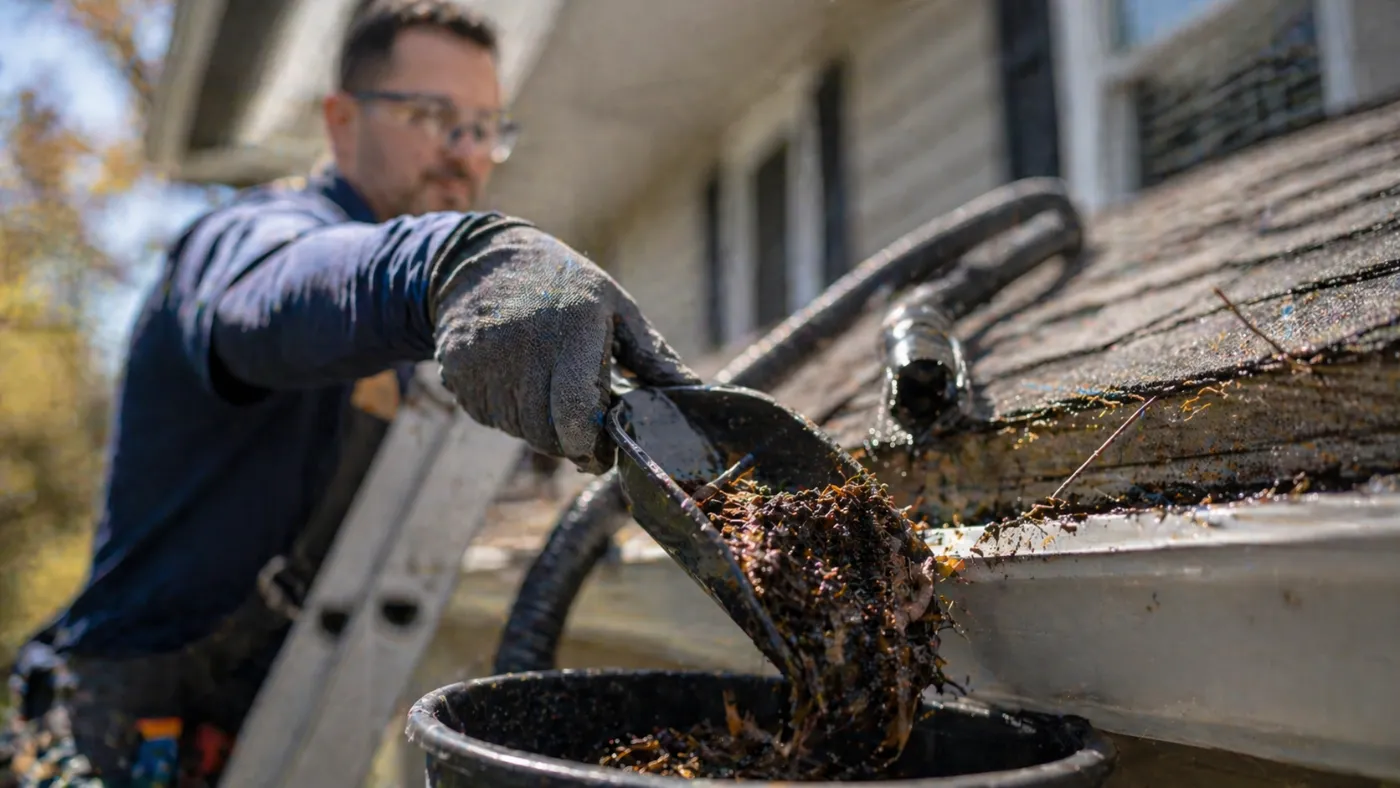
Gutter cleaning is one of the easiest services to underprice. Roof height, pitch, debris type, access, and safety requirements can all change the job complexity fast. Profitable gutter cleaning businesses don’t rely on one-size-fits-all rates. They price based on conditions, risk, and time on site, not averages.
This guide explains how to price gutter cleaning jobs accurately in 2026, including average rates, common pricing models, and a repeatable system that helps you cover costs, protect margins, and stay competitive.
Key takeaways
Here’s a quick overview of how to price gutter cleaning jobs profitably:
Gutter cleaning prices vary by height, debris, and access: Multistory and steep roofs should always cost more.
Flat rates work best for standard jobs: Predictable scope and conditions make fixed pricing reliable.
Labor and safety are the biggest cost drivers: Ladder work and setup time matter more than materials.
Add-ons raise average ticket size: Downspout flushing and exterior bundles boost revenue.
Risk should be priced in: Unsafe or slow jobs should never be priced like standard cleanouts.
Table of contents
- Average gutter cleaning prices in 2026
- Residential gutter cleaning prices
- Commercial gutter cleaning prices
- Common gutter cleaning add-ons and upsells
- Common gutter cleaning pricing models
- Factors that affect gutter cleaning prices
- How to price gutter cleaning jobs (step by step)
- Example gutter cleaning price calculations
- Advanced gutter cleaning pricing tips
- How to explain gutter cleaning pricing to customers
- How Housecall Pro helps you price gutter cleaning jobs
Average gutter cleaning prices in 2026
Gutter cleaning prices vary based on home size, number of stories, debris buildup, and access. Across most markets, professional gutter cleaning jobs typically price out in the low hundreds, with many landing between $125 and $320.*
Single-story homes usually sit at the lower end of the range, while two-story homes and longer gutter runs often push totals past $300. Homes with steep roofs, narrow access points, heavy leaf or pine buildup, or clogged downspouts take longer and carry more risk—and that shows up in the final price.
When pricing is time-based, hourly rates usually fall between $50 and $100 per hour, depending on the market and crew size. Some pros also price by linear foot, usually $0.80–$2 per foot.
*These gutter cleaning price ranges reflect 2026 national averages pulled from real homeowner bookings and service listings on platforms like Angi, HomeAdvisor, and Thumbtack. Use them as benchmarks, not fixed rules.
Residential gutter cleaning prices
Residential gutter cleaning is typically priced per home or per story, then adjusted based on height, debris buildup, and access. Starting with a clear base price speeds up and standardizes estimates, while condition-based adjustments protect you from undercharging on slow, risky, or labor-intensive jobs.
This structure also makes pricing easier for customers to understand. They see a straightforward starting price for a standard cleanout, followed by clear line items for anything that adds time, equipment, or safety considerations, such as multiple stories, steep roofs, or clogged downspouts.
Here’s a look at typical residential gutter cleaning prices in 2026:
| Home type | Typical price range |
| Single-story home | $100–$180 |
| Two-story home | $150–$275 |
| Three-story home | $250–$400+ |
Pro tip: Use Housecall Pro to build base prices and condition-based add-ons into a price book, so estimates stay consistent even when access or debris changes on-site.
Commercial gutter cleaning prices
Commercial gutter cleaning is usually priced differently due to building size, layout, access requirements, and scheduling needs. Instead of pricing “per building,” most commercial jobs are quoted by linear foot or as part of a recurring maintenance agreement.
This model provides better accuracy for large or irregular properties and works especially well for repeat service contracts.
Here’s a look at commercial gutter cleaning prices in 2026:
| Pricing type | Typical price range |
| Per linear foot | $1.25–$3.50 |
| Multibuilding or HOA contracts | Custom quote |
| Recurring commercial service | Discounted per-visit rate |
Common gutter cleaning add-ons and upsells
Gutter cleaning makes hidden problems visible once you’re on-site, which makes it a natural fit for add-ons that solve real issues and extend the life of the system. The key is offering options that address what the customer can see—slow drainage, debris on the roof, or signs of overflow—rather than stacking extras for the sake of it.
Common gutter-related add-ons and typical 2026 pricing include:
| Add-on | Typical price |
| Downspout flushing | $25–$75 per downspout |
| Heavy or compacted debris removal | $50–$150 |
| Roof debris removal or blow-off | $75–$200 |
| Minor gutter repairs or resealing | $50–$150 |
| Gutter guard check or adjustment | $25–$50 |
| Exterior gutter wash or brightening | $1–$3 per linear foot |
To make add-ons work, pricing has to be consistent. Use the same rules on every job so crews know what to charge and customers aren’t surprised. When upsells are framed as maintenance or prevention—not pressure—people are more willing to say yes.
Common gutter cleaning pricing models
Most gutter cleaning businesses rely on one primary pricing model, then layer in adjustments based on access, risk, and condition. Some stick to a single approach for consistency, while others blend models depending on the job. What matters most is choosing a structure that stays accurate when the job stops being “standard.”
Flat-rate pricing (most common)
Flat-rate pricing bases the price on the home’s height or number of stories, then adjusts for anything that increases time or risk. This model works well for residential jobs because it’s predictable and easy to explain.
Best for:
- Standard residential homes with predictable layouts
- Jobs with clearly defined service limits
- Situations where add-ons handle extra time or risk
- Projects where downspouts and repairs are priced separately
For most pros, flat-rate pricing speeds up quoting, reduces back-and-forth with customers, and prevents small jobs from turning into underpaid marathons.
Linear-foot pricing
Linear-foot pricing charges based on the total length of gutter being cleaned. It’s more precise, but it requires measuring or pulling plans, which adds to the quoting time.
Best for:
- Commercial properties
- Large or irregularly shaped homes
- Multibuilding or HOA jobs
Linear-foot pricing is useful when buildings don’t fit neatly into “one-story” or “two-story” categories, but many residential pros avoid it because the extra estimating time can reduce efficiency.
Hourly pricing
Hourly pricing is less common for routine cleanouts, but it still has a place when the scope is unpredictable.
Best for:
- Severely neglected gutters with heavy, compacted debris
- Emergency cleanouts after storms
- Gutter work that blends cleaning, repairs, and troubleshooting
While this model protects you from unknowns, most customers prefer upfront pricing, so many pros use hourly rates as a fallback only.
Across all three models, the real goal is the same: build pricing that holds up when access is tight, debris is heavy, and safety matters more than speed.
Factors that affect gutter cleaning prices
Gutter cleaning pricing isn’t just about home size—it’s shaped by access, safety, and how much time the job actually takes. Even small changes in conditions can increase labor or risk. These factors should be applied consistently to avoid underquoting.
- Number of stories: Taller homes require more ladder setup, carry higher safety risk, and slow down crew movement.
- Roof pitch and access: Steep roofs, tight yards, landscaping obstacles, or limited ladder placement increase time and risk.
- Debris type and buildup: Light leaves clean quickly, while wet debris, pine needles, granules, or neglect require more labor.
- Downspouts: Clogged or multiple downspouts add flushing, testing, and troubleshooting time.
- Disposal requirements: Hauling debris off-site increases labor, vehicle time, and dump fees compared to on-site bagging.
How to price gutter cleaning jobs (step by step)
Good gutter pricing isn’t about matching the cheapest competitor. It’s about knowing your costs and the requirements for every job, then adding profit to ensure you’re driving growth long-term. A simple pricing system keeps quotes consistent and prevents underpricing on harder jobs.
Step #1: Calculate your baseline costs
Start by calculating the full cost of completing a gutter job safely from start to finish—not just the minutes spent clearing debris.
Build in:
- Labor: Wages, payroll taxes, and workers’ comp
- Overhead: Vehicles, fuel, insurance, ladders, tools, safety equipment
- Nonbillable time: Driving, ladder setup, roof access, cleanup, and debris disposal
These numbers define the floor of your pricing. Anything below this means you’re paying to work.
Use these formulas to calculate:
Job labor cost
(Hourly pay × labor burden) × time on site
Job overhead cost
Monthly overhead ÷ billable hours × total job time
Break-even price
Labor cost + overhead cost
Step #2: Choose your primary pricing model
Most gutter businesses choose one core pricing method and adjust when conditions change.
Common options include:
- Per-story or per-home pricing: Simple and fast for residential work
- Per–linear foot pricing: Better for commercial or non-standard buildings
- Hourly pricing: Reserved for unknown or high-variability jobs
Using one primary structure keeps quoting fast and accurate.
Step #3: Adjust for height, access, and buildup
This is where many underpriced jobs happen. Gutter work gets slower—and riskier—based on conditions.
Build predefined adjustments for:
- Home height: More stories mean more setup and slower movement
- Roof layout: Steep pitch, tight access, or landscaping obstacles
- Debris level: Wet, compacted, or long-neglected gutters
- Downspouts: Clogs that require flushing and testing
Estimate the extra time each condition adds, apply your target hourly value, and convert it into flat, repeatable upcharges.
Pro tip: Store upcharges in Housecall Pro so they can be applied quickly without redoing time and cost calculations for every job.
Step #4: Add profit
Breaking even isn’t the goal. Pricing should account for seasonality, equipment wear, and business growth. Most profitable gutter operations aim for 20%–40% profit margins.
Use this simple formula to add profit to your prices:
Cost ÷ (1 − profit target) = final price
Step #5: Use add-ons to account for job variation
Add-ons prevent you from raising base prices for easy jobs while still getting paid for harder ones.
Common add-ons include:
- Downspout flushing
- Heavy debris removal
- Roof debris clearing
- Minor repairs or resealing
Each add-on should be priced based on time, risk, and effort, then applied the same way every time. Consistency protects margins and avoids awkward conversations.
Step #6: Update your pricing as conditions change
Costs shift. Crews get faster. Insurance and fuel go up. Pricing should evolve with the business.
- Revisit rates yearly—or sooner if costs spike
- Compare estimated versus actual job time
- Raise minimums if small jobs aren’t pulling their weight
A solid pricing system turns gutter cleaning from a seasonal scramble into predictable, profitable work.
Get In Touch: 858-842-5746
Let us earn your trust
On average, Pros increase monthly revenue generated through Housecall Pro by more than 35% after their first year.
See plan options and feature breakdown on our pricing page.
Example gutter cleaning price calculations
Walking through real jobs makes pricing easier to understand. Below are a few common gutter cleaning scenarios using typical 2026 rates and adjustments.
Example 1: Single-story ranch home
Scope: Single story, light leaf debris
Pricing model: Flat rate by story
Base price: $140
Add-ons: None
Total price: $140
This is a true “standard” cleanout—easy access, minimal buildup, no special conditions. Flat-rate pricing works well here and keeps the quote quick and predictable.
Example 2: Two-story home with clogged downspouts
Scope: Two stories, moderate debris, two clogged downspouts
Pricing model: Flat rate + add-ons
Base price (two-story home): $220
Add-on: Downspout flushing ($50 × 2) = $100
Total price: $320
Downspouts add testing, flushing, and cleanup time. Pricing them separately ensures the base rate stays competitive while still covering the extra labor.
Example 3: Small commercial building
Scope: 180 linear feet of gutters, quarterly service
Pricing model: Linear-foot pricing
One-time rate: $1.60 per linear foot
Recurring service rate: $1.30 per linear foot
Per visit: 180 × $1.30 = $234
Annual total (4 visits): $936
Recurring cleanings reduce debris buildup and speed up each visit. The lower per-foot rate reflects improved efficiency while still maintaining profit.
Advanced gutter cleaning pricing tips
Once your base pricing is solid, these strategies help increase revenue without turning estimates into a mess:
- Bundle related services: Pair gutter cleaning with roof debris removal, window cleaning, or pressure washing to raise average ticket value.
- Create service tiers: Offer clear options like standard cleanout, heavy debris cleanout, or full exterior maintenance.
- Use maintenance plans: Semi-annual or quarterly plans stabilize seasonal demand and reduce re-quoting.
- Charge for urgency: Same-day, storm-response, or peak-season work should carry premium pricing.
- Audit real job time: Review completed jobs to ensure flat rates still hit your target hourly return.
- Filter low-margin work: Minimum charges and defined service limits help avoid slow, underpriced jobs.
How to explain gutter cleaning pricing to customers
Clear explanations help customers understand why your gutter cleaning services are priced the way they are. When expectations are set early, customers feel more confident booking and less surprised by the final invoice.
- Start with what the standard service includes: Explain that a standard gutter cleanout covers safe ladder setup, full debris removal, basic downspout checks, cleanup, and disposal. Emphasize that pricing reflects the full scope of work, not just the time spent cleaning.
- Explain how the price is determined: Let customers know pricing is based on home height and layout, then adjusted for factors like debris buildup, roof pitch, and access. This helps explain why similar homes may not cost the same.
- Break pricing into a base service and adjustments: Separate the base service from condition-based adjustments such as additional stories, steep roofs, or clogged downspouts so pricing feels structured and transparent.
- Speak with confidence, not defensiveness: Use calm, confident language that focuses on safety, time, and scope rather than justifying or apologizing for the price.
- Document everything clearly: Provide written estimates and invoices with clear line items so customers can see exactly how the total was calculated.
This approach keeps gutter pricing clear, professional, and defensible—while reinforcing that the work involves real time, risk, and expertise, not guesswork.
Pro tip: Use Housecall Pro estimates to show the base service and each adjustment as separate line items, so customers can see exactly how the final price was calculated.
How Housecall Pro helps you price gutter cleaning jobs
How you price gutter cleaning services is up to you, but Housecall Pro helps you stay consistent, accurate, and protected as job conditions change. With our cleaning business software, you can:
- Create structured price books: Build base pricing by home height or service type, with clear rules for what’s included.
- Add common upsells: Easily include charges for multiple stories, heavy debris, steep roofs, or downspout flushing.
- Apply pricing instantly: Generate accurate estimates on-site without doing manual math or second-guessing adjustments.
- Offer online booking: Let customers schedule gutter cleaning services anytime, even during peak seasonal demand.
- Send clear, professional estimates: Use templates and line items so nothing gets missed and pricing stays easy to understand.
Housecall Pro helps you manage more than just pricing. From scheduling and dispatch to payments and customer communication, everything stays organized in one place. Try a free Housecall Pro trial today to see how your gutter cleaning business can run smoother and scale without chaos.
Frequently asked questions
How much should I charge for gutter cleaning?
Most residential gutter cleaning jobs fall between $125 and $320, depending on home height, debris buildup, roof access, and downspout condition.
Is gutter cleaning better priced flat-rate or hourly?
Gutter cleaning is usually better priced as a flat rate for standard cleanouts, especially when you use clear add-ons for multistory homes, heavy debris, or unsafe access. Flat-rate pricing keeps estimates predictable and easier for customers to understand.
Do customers expect downspouts to be included in gutter cleaning?
Some customers expect downspouts to be included, but many gutter cleaning professionals price downspout work separately to avoid undercharging for clogs that require flushing, snaking, or additional testing time.
How often should gutters be cleaned?
Most homes should have their gutters cleaned once or twice per year, depending on tree coverage and debris levels. This makes seasonal or annual maintenance plans an easy, low-pressure upsell.
Is gutter cleaning profitable?
Gutter cleaning is profitable when it’s priced accurately. Strong margins come from efficient routing, safety-based pricing, and add-ons like downspout flushing or minor repairs.