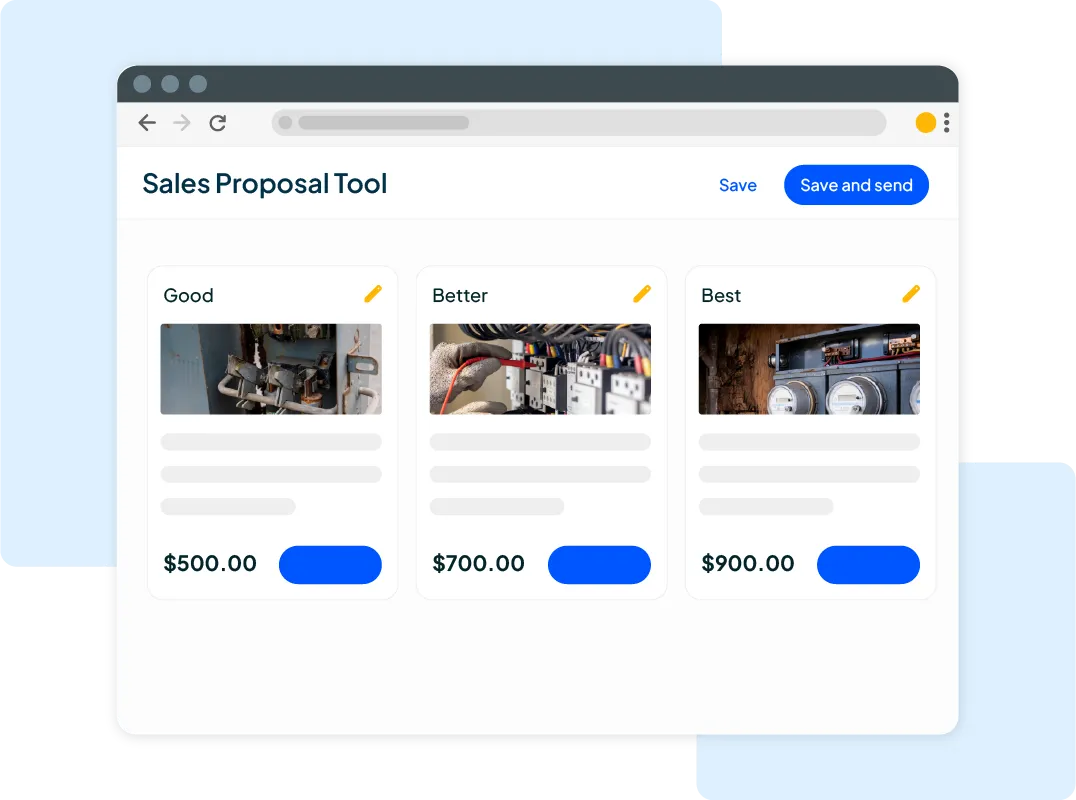
Want to win more jobs with less effort?
Grow your business and send quick quotes with our home service software.

Want to see your potential revenue?
See what businesses like yours earn with Housecall Pro in 1 - 2 minutes.

If you live in an area where water management and sprinkler systems are in high demand, starting an irrigation business is a smart opportunity. But you’ll need more than technical know-how and the right tools: building a profitable company means thinking like a business owner, not just a technician.
If you’re starting from scratch, you’ll need clear service offerings, realistic pricing, strong systems, and quality marketing. This guide provides a roadmap for launching your business, pricing for profit, and building systems that support long-term growth.
Quick answer: How to start, run, and grow an irrigation business
Starting and running an irrigation business means understanding your local demand, offering the right services, pricing your work for profit, and building systems that keep jobs and cash flow moving. To grow, focus on recurring maintenance, consistent marketing, and tracking the numbers that drive smarter decisions.
Here’s the process at a glance:
- Research your market: Look at climate, water regulations, local growth, and competitors to confirm demand.
- Define your services: Start with 2–3 core offerings like installs, repairs, or seasonal maintenance.
- Build a simple plan: Estimate startup costs, set revenue goals, and price your services for profit.
- Set up your business: Register your company, secure licenses, and get the right insurance coverage.
- Get the right tools: Start with essentials and expand your equipment as your workload grows.
- Create systems early: Use clear workflows and software to manage scheduling, jobs, and payments.
- Market consistently: Show up where local customers are searching and use simple strategies to generate leads.
- Focus on service quality: Reliable work and clear communication lead to repeat customers and referrals.
- Track and grow: Monitor key metrics and expand your services, team, and service area over time.
Key takeaways
To build a profitable irrigation company, focus on these core priorities:
Validate demand first: Study your local climate, water regulations, and competitors before investing in equipment.
Price for profit: Base your rates on real labor, material, and overhead costs—not competitor guesses.
Build systems early: Clear workflows and software help you avoid missed jobs and delayed payments.
Create recurring revenue: Use seasonal maintenance plans to stabilize cash flow.
Track your numbers: Monitor revenue, margins, and close rates to guide hiring and growth.
Table of contents
- Step 1: Research your irrigation market and define your services
- Step 2: Create your irrigation business plan
- Step 3: Register and license your irrigation company
- Step 4: Buy the right tools and equipment
- Step 5: Set up scalable irrigation business operations
- Step 6: Market your irrigation business
- Step 7: Deliver great service and build repeat business
- Step 8: Track performance and grow your irrigation business
- Avoid common irrigation business mistakes
- How Housecall Pro helps you run and grow your irrigation business
Step 1: Research your irrigation market and define your services
Before you buy equipment or print business cards, make sure there’s enough demand in your area to support a new irrigation business. Regional factors like weather and local regulations will determine which services are most profitable and how you position your business.
Analyze local irrigation demand
Irrigation needs are shaped by your environment—what works in a dry climate like Arizona won’t be the same as a humid region like Ohio.
Focus your research on these areas:
- Climate patterns: Review 3–5 years of local weather trends to understand seasonal demand patterns. For example, drought-prone areas need water-efficient upgrades, while colder regions prioritize winterization and spring start-ups.
- Water regulations: Check local rules on watering schedules or required systems, like those set by the U.S. Environmental Protection Agency’s (EPA’s) WaterSense program. Document any restrictions that impact services you can offer.
- Housing growth: New developments often mean steady installation work. Search local building permits to identify high-growth neighborhoods.
- Local competition: Search “irrigation companies near me” to find competitors. Note pricing, services, and common customer complaints you can solve.
Decide on your core irrigation services
Mastering a few specific services is better than trying to offer everything at once. Choose 2–3 core services to start and write down exactly what’s included in each offering (scope, materials, time required).
Common irrigation service offerings include:
- New system installation
- Repairs and leak detection
- Seasonal start-up and winterization
- Smart controller upgrades
- Backflow testing (if you’re certified and licensed)
- System audits
If you’re starting solo, consider focusing your services in one of these categories:
- Installation: Higher ticket jobs, more equipment, longer project timelines.
- Services: Repairs and upgrades, fast turnarounds, steady demand.
- Maintenance: Recurring seasonal work with predictable revenue.
Once your services are defined, you can build a pricing strategy and growth plan.
Step 2: Create your irrigation business plan
You don’t need a formal 40-page document, but you do need clear numbers and direction. A simple irrigation business plan will help you price correctly, control costs, and avoid cash flow issues.
How much does it cost to start an irrigation business?
Startup costs depend on your services. It’s cheaper to start a repair-focused business than one focused on full installs. Either way, budget for these typical expenses:
- Truck or work vehicle: $10,000–$40,000 (used vs. newer model)
- Tools and equipment: $5,000–$15,000 (pipe cutters, trenchers, diagnostic tools, controllers, fittings inventory)
- Licensing and permits: $200–$2,000, depending on the state
- Annual insurance: $1,000–$3,000+
- Marketing (website, branding, signage): $1,000–$5,000+
- Working capital: 2–3 months of operating expenses
Build a simple startup budget in a spreadsheet and calculate your total cash needed before launching.
Price your irrigation services for profit
Pricing determines whether your business survives. Avoid copying competitors. Start by understanding your real costs, then layer in profit.
Most irrigation businesses choose between flat-rate and hourly pricing models:
- Flat-rate pricing: A fixed price per job. This is often easier to sell because customers appreciate knowing the total cost upfront.
- Hourly pricing: Labor plus materials. This model works best for complex diagnostics or repair work where the total time required is unpredictable.
Regardless of your model, build your prices to cover:
- Your labor (including your own salary)
- Materials, parts, fuel, and vehicle expenses
- Fixed overhead (like insurance, licensing, software, marketing, and accounting)
- A healthy profit margin (typically 10%–20%)
Calculate your hourly cost by adding monthly expenses + desired salary, then divide by billable hours. If you’re unsure how to build profit into your pricing, our guide to calculating markup and margin walks through the math in depth.
Pro tip: Calculate your break-even point before setting prices. This prevents underpricing just to stay busy. As you grow, use Housecall Pro’s Price Book to standardize pricing and keep estimates consistent.
Set realistic revenue goals
Work backward from your goal.. For example, if you want to earn $150,000 in revenue and your estimated average ticket is $500, you need to complete 300 jobs per year or roughly 6–7 jobs per week. Is that realistic for your market? How many leads do you need to close that many jobs? What close rate will you need?
Set a weekly job target and track it consistently to stay on pace. This shows whether you’re on track or need to adjust marketing or pricing.
Step 3: Register and license your irrigation company
Setting up your business properly protects you financially and builds trust with customers. Proper registration is also required to take on larger jobs and hire employees. Skipping these steps can lead to fines or job delays.
Choose a business structure
Most irrigation pros start with one of these three structures:
- Sole proprietorship: Simple and low-cost to set up, but doesn’t separate your personal and business finances.
- Limited liability company (LLC): A popular choice because it protects your personal finances from business risks.
- Corporation: A more complex setup, typically used by larger businesses with multiple owners.
Most new owners choose an LLC or sole proprietorship to start. Consult a lawyer or tax professional if you’re unsure what the best structure is for you.
Secure the right licenses and permits
Licensing requirements vary by state and city, so contact your local licensing board before you start booking jobs.
Common residential requirements include:
- An irrigation contractor license
- A plumbing license
- Backflow certification
- A general contractor license
- Local business permits
Get insurance coverage
Even one accident or property damage claim can cost thousands. Insurance isn’t optional; it protects your business and shows customers you’re credible.
At a minimum, carry:
- General liability insurance: Covers property damage or injury claims.
- Workers’ compensation: Covers employee injuries; required in most states once you hire anyone.
- Commercial auto insurance: Protects your work vehicle and the expensive tools stored inside.
Step 4: Buy the right tools and equipment
Having the right tools helps you work faster, stay efficient, and deliver consistent results, but overbuying can quickly drain your budget early on. It’s tempting to load up on everything at once, but you’re better off starting with the tools that match your core services and renting larger equipment until your workload justifies the investment.
Core installation and repair tools
The items below will cover most daily service calls. Having them consistently stocked means fewer wasted trips and faster job completion.
- Pipe cutters and PVC tools
- Shovels and trenching tools
- Wire tracers and valve locators
- Multimeter for electrical troubleshooting
- Inventory of common fittings, valves, and sprinkler heads
- Backflow testing kit (if certified)
Pro tip: Build a standardized truck stock list and restock it weekly so you’re not losing time on supply runs.
Larger equipment for installations
Full-system installation work requires more expensive equipment. Most pros rent this equipment at first to keep upfront costs low while building steady cash flow.
If your business model includes installs, you’ll eventually need tools like:
- Walk-behind trencher
- Vibratory plow
- Compaction tools
Track how often you rent equipment—once it becomes a regular expense, it’s time to compare buying versus renting.
Safety equipment
Safety equipment isn’t optional. You’ll need eye and ear protection, gloves, and high-visibility vests for every jobsite. You’ll also need to follow Occupational Safety and Health Administration (OSHA) regulations. Cutting corners here creates legal and financial exposure that no amount of efficiency savings can offset.
Vehicle setup and organization
Your truck is your mobile workspace, and a disorganized one quietly costs you money every day. Use labeled bins and a simple inventory system so you always know what’s on hand. Every extra trip to the supply house for a forgotten fitting costs you fuel, time, and profit.
Pro tip: Organize your truck by job type (repairs vs. installs) and set a daily restock routine at the end of each shift.
Step 5: Set up scalable irrigation business operations
Strong systems make your business easier to run and more profitable. Without them, jobs slip through the cracks, invoices get delayed, and growth feels chaotic. When you document your processes early, you create a repeatable experience for customers and a clear playbook for your team.
Create clear job workflows
Map out how every job moves from lead to payment. A standard workflow should include:
- Lead intake
- Site visit and professional estimate
- Customer approval
- Job scheduling
- Installation or repair work
- Inspection and testing
- Invoicing and payment collection
- Follow-up for reviews or maintenance
Turn this workflow into a checklist and use it for every job so nothing gets missed as you get busier.
Use irrigation business software
As your workload grows, spreadsheets and paper systems slow you down. Tools like Housecall Pro are built for home service pros, helping you manage scheduling, job details, invoices, and customer communication in one place. That means less time chasing paperwork and more time focusing on revenue-generating work.
Get In Touch: 858-842-5746
Let us earn your trust
On average, Pros increase monthly revenue generated through Housecall Pro by more than 35% after their first year.
See plan options and feature breakdown on our pricing page.
Step 6: Market your irrigation business
Even great work won’t fill your schedule on its own. Consistent marketing keeps jobs coming in and helps smooth out seasonal slowdowns. You don’t need complicated campaigns, just steady visibility where local customers are already looking.
Build your online presence
If customers can’t find you online, they’ll hire someone else. Start with these basics:
- A professional website: According to Housecall Pro’s 2025 survey, 96% of homeowners expect a user-friendly, professional website. Include clear service pages and contact info to make it easy for customers to understand what you offer and quickly request service.
- A complete Google Business Profile: Add service areas, hours, photos, and detailed services to show up in local searches and build trust through reviews.
- Visual proof: Share before-and-after photos so customers can see the quality of your work.
Use local marketing and maintenance plans
Offline marketing still works—especially at the neighborhood level. Focus on:
- Yard signs at active jobs (these often drive nearby calls)
- Branded vehicle wraps (turn every drive into advertising)
- Referral incentives (neighbors talk—make it easy for them to recommend you)
- Partnerships with landscapers or builders
To keep revenue steady year-round, offer recurring service agreements that include spring start-ups, fall/winterization, and mid-season inspections. These plans help lock in repeat work and stabilize your cash flow.
Step 7: Deliver great service and build repeat business
Winning the job is just the start. Long-term growth comes from keeping customers, earning referrals, and building a reputation for reliable service.
Customers value reliability, clear communication, a clean workspace, and follow-up after the job. In fact, according to our 2025 survey, 73% of homeowners say they would refer a pro after a great service experience, making customer experience one of your most powerful growth drivers.
Focusing on small details builds trust, and that trust makes it easier to upsell higher-value services like landscape lighting or drainage solutions over time. Consistently delivering a great experience turns one job into repeat work and referrals.
Step 8: Track performance and grow your irrigation business
If you’re not tracking your numbers, you’re guessing. Review your data regularly so you can make informed decisions. At a minimum, track:
- Gross profit margin: Is your pricing covering your costs?
- Average ticket size: Are you maximizing each job?
- Close rate: Are your estimates getting approved?
Block time each week to review these numbers and adjust pricing, upsells, or scheduling as needed.
Expand services, territory, and team
Once your pricing, workflows, and scheduling are consistent, you can think about growth.
How to expand your services:
- Add high-margin add-ons (smart controllers, drainage, lighting)
- Offer bundled packages (inspection + seasonal service)
- Test new services on existing customers before marketing widely
How to expand your service area:
- Start with nearby neighborhoods to avoid long drive times
- Track route density before expanding further
- Only grow into areas where you can stay efficient
How to hire your first tech (or next crew):
- Hire when you’re turning down work or booked out 1–2 weeks
- Make sure your pricing supports competitive wages and maintains your target profit margin
- Document your workflows so new hires can follow the same process
- Start with one tech and scale slowly to maintain quality
Avoid common irrigation business mistakes
Most irrigation businesses don’t fail because of a lack of demand. They struggle because of pricing mistakes, compliance gaps, or weak systems. Avoid these common pitfalls to protect your profit and set your business up for long-term success:
- Underpricing your work: Copying a competitor’s rates is the fastest way to stay busy and broke. Instead, calculate your true cost per hour—including labor, materials, and overhead—and build in a healthy profit margin. It’s much harder to raise prices later than it is to start with profitable pricing from day one.
- Ignoring local regulations: Irrigation work means following plumbing codes, backflow requirements, and water restrictions. Skipping licensing or permits can lead to fines or even prevent you from getting paid. Check state and local requirements before starting any job to protect your business and build credibility.
- Skipping systems and processes: Relying on memory or paper notes might work when you have a few jobs, but it quickly becomes unmanageable as you grow. Without clear workflows, jobs get missed, communication slips, and payments get delayed. Set up simple, repeatable processes early so your business can scale smoothly.
How Housecall Pro helps you run and grow your irrigation business
Running an irrigation business means juggling schedules, estimates, invoices, payments, and customer communication—often while you’re still out in the field. Housecall Pro is built for home service pros who want to stay organized and run their business from one place.
Housecall Pro’s irrigation business software helps you with:
- Job scheduling and dispatching: Use a drag-and-drop calendar to schedule jobs, assign techs, and reduce drive time.
- Estimates and pricing: Create professional estimates onsite and use Price Book to keep your pricing consistent.
- Faster payments: Send invoices that customers can pay online or collect payments on the spot.
- Automated marketing: Reduce no-shows with automated reminders and automatically request reviews after each job.
- Performance tracking: Use reporting dashboards to monitor your revenue, job volume, and average ticket size.
Want to see how Housecall Pro can help you start and run your irrigation business from day one? Start a free 14-day trial today.
Starting an irrigation business FAQ
How much does it cost to start an irrigation business?
Expect to invest between $20,000 and $75,000. This includes your vehicle, basic tools, licensing, and initial marketing, though you can start for less if you focus strictly on service and repairs first.
Is irrigation in high demand?
Yes. Demand is driven by climate patterns, housing growth, and strict water regulations. Homeowners and businesses increasingly need efficient systems and pros who can maintain them.
Is an irrigation business profitable?
Irrigation can be highly profitable with the right service mix. Typical gross margins range from 30%–50% when jobs are priced correctly and your routing is efficient.
How long does it take to start an irrigation business?
Most irrigation businesses can be up and running within 1–3 months. The timeline depends on how quickly you secure your licenses and permits, source equipment, and build your initial marketing presence.
Do I need a license to start an irrigation business?
Yes, in most states. Requirements vary but commonly include an irrigation contractor license, backflow certification, and local business permits. Always check with your state licensing board before booking jobs.
What is the best software for managing an irrigation business?
Field service management software like Housecall Pro is widely used by irrigation contractors to handle scheduling, estimates, invoicing, and customer communication from a single platform.