Want to win more jobs with less effort?
Grow your business and send quick quotes with our home service software.

Want to see your potential revenue?
See what businesses like yours earn with Housecall Pro in 1 - 2 minutes.

Busy seasons don’t last forever. One month your schedule is packed; the next, you’re chasing callbacks, estimates, and follow-up work to stay busy.
That inconsistency is why many home service businesses offer maintenance plans and recurring service agreements. Instead of starting from scratch every season, you already have customers scheduled for inspections, tune-ups, cleanings, and follow-up visits.
In this guide, you’ll learn how home maintenance subscription plans work, how to choose the right pricing and service structure, what to include in your contract, and how to manage recurring memberships as your business grows.
Quick answer: How do home maintenance subscription plans work?
Home service businesses bundle recurring services—inspections, tune-ups, cleanings—into a plan customers pay for monthly or annually. You set the visit schedule, price the plan to cover labor and overhead, and use software to automate reminders and renewals. The result: predictable revenue, fuller schedules, and customers who call you first when something breaks.
Key takeaways
Focus on keeping your plan simple, profitable, and easy to manage:
Start small: Launch with one straightforward plan before adding multiple tiers.
Build around repeat work: Focus on services customers already schedule regularly.
Protect your margins: Set clear limits on what’s included and what costs extra.
Keep expectations clear: Use detailed contracts to define services, exclusions, and renewal terms.
Plan for growth: Automate scheduling, renewals, and payments before manual tracking becomes a problem.
Table of contents
- What is a home maintenance subscription plan?
- Why home service businesses offer subscription plans
- How to set up a home maintenance subscription plan
- Which subscription model is right for your business?
- How should you price a home maintenance subscription plan?
- What should your subscription plan contract include?
- How to introduce a subscription plan to your existing customers
- Common mistakes to avoid with subscription plans
- How to manage home service subscription plans with less manual work
What is a home maintenance subscription plan?
A home maintenance subscription plan is an ongoing service agreement between your business and a customer. Instead of calling only when something breaks, customers pay a recurring monthly or annual fee for:
- Scheduled maintenance
- Inspections
- Tune-ups
- Priority service
You’ll also hear these plans referred to as service agreements, maintenance plans, care clubs, or recurring service plans. The structure varies by trade, but the goal is usually the same: create repeat business while helping customers stay ahead of larger repair problems.
Most home service businesses use one of two subscription models:
Hours-based plans
Hours-based plans give customers a set amount of labor time each month or year. A handyman business, for example, might offer four service hours per quarter for small repairs, seasonal maintenance, or home improvement tasks.
These plans work best for businesses that handle a wide range of services or smaller recurring jobs that change from visit to visit.
Task-based plans
Task-based plans include a defined list of recurring services. An HVAC company might offer seasonal tune-ups, filter replacements, and priority scheduling. Pest control companies might bundle quarterly treatments and inspections into an annual plan.
This approach is often easier to manage and scale because the work, visit frequency, and material costs are more predictable.
Some businesses use a mix of these approaches. For example, a plumbing company could include an annual inspection plus discounted hourly labor for additional service calls throughout the year.
Why home service businesses offer subscription plans
Recurring work makes it easier to plan ahead. Instead of relying entirely on new leads every month, subscription plans help you keep repeat customers on the schedule year-round.
That means more predictable revenue, steadier demand, and more opportunities to build long-term customer relationships.
More predictable revenue
One-time jobs can fluctuate from month to month. Maintenance jobs help bridge the gap they leave by creating recurring income from customers who already trust your business.
“For any industry like ours that has a really busy season and a slower season, Service Plans are a good way to move your customer to a part of the year that you could use more business,” says Brett Conklin, Chief Services Officer of the Chicago-based Chimney Monkey. “And it makes sense for them so they’re not waiting weeks.”
That tracks with homeowner expectations. A 2025 Housecall Pro Survey found that 51% of homeowners expect a membership plan or service agreement from their home service provider—which means offering one isn’t a hard sell, it’s meeting demand that’s already there. That built-in receptiveness makes recurring revenue easier to build and sustain.
Better customer retention
According to our 2025 survey, 68% of homeowners would rehire a Pro after excellent service, and 73% would refer that business to someone else. Maintenance plans help create more opportunities to build those relationships through recurring visits and ongoing customer communication.
Over time, those recurring visits can lead to:
- Larger repair jobs
- Equipment replacements
- Additional service upgrades
Fewer seasonal slowdowns
Demand in home services swings hard by season. According to a WebFX analysis of U.S. home service search trends, searches for “AC repair” peak 266% higher in July than in winter months, while searches for “frozen pipe repair” spike 609% in January.
Recurring maintenance can help create work outside those peak periods. For example:
- HVAC companies schedule preseason tune-ups
- Cleaning businesses maintain recurring appointments year-round
- Pest control companies bundle quarterly visits into annual agreements
- Plumbing companies offer annual inspections and maintenance checks
Easier scheduling and planning
Recurring customers are easier to forecast than one-time service calls. You already know when certain visits are coming up, which helps with routing, staffing, and workload planning.
The challenge is keeping up with renewals, recurring appointments, and follow-ups. As memberships grow, many businesses move to dedicated software to schedule repeat visits, collect recurring payments, track renewals, and send automatic reminders.
Housecall Pro’s Service Plans feature helps businesses manage those recurring tasks from one place.
Get In Touch: 858-842-5746
Let us earn your trust
On average, Pros increase monthly revenue generated through Housecall Pro by more than 35% after their first year.
See plan options and feature breakdown on our pricing page.
How to set up a home maintenance subscription plan
The best subscription plans are simple to manage, easy for customers to understand, and profitable for your business. Start with a small, repeatable offer first. You can always make tweaks and expand later as you learn what customers actually use.
1. Identify the services you’ll include
Start with the services customers already request regularly: preventive maintenance, inspections, seasonal tune-ups, recurring cleanings, and scheduled service visits.
For example:
- HVAC tune-ups
- Quarterly pest control visits
- Recurring house cleanings
- Plumbing inspections
- Electrical safety checks
- Regular lawn care
2. Choose your subscription model
The right structure depends on how your business already operates. Task-based plans work well for repeatable services, while hours-based plans fit businesses that handle a wider mix of smaller jobs.
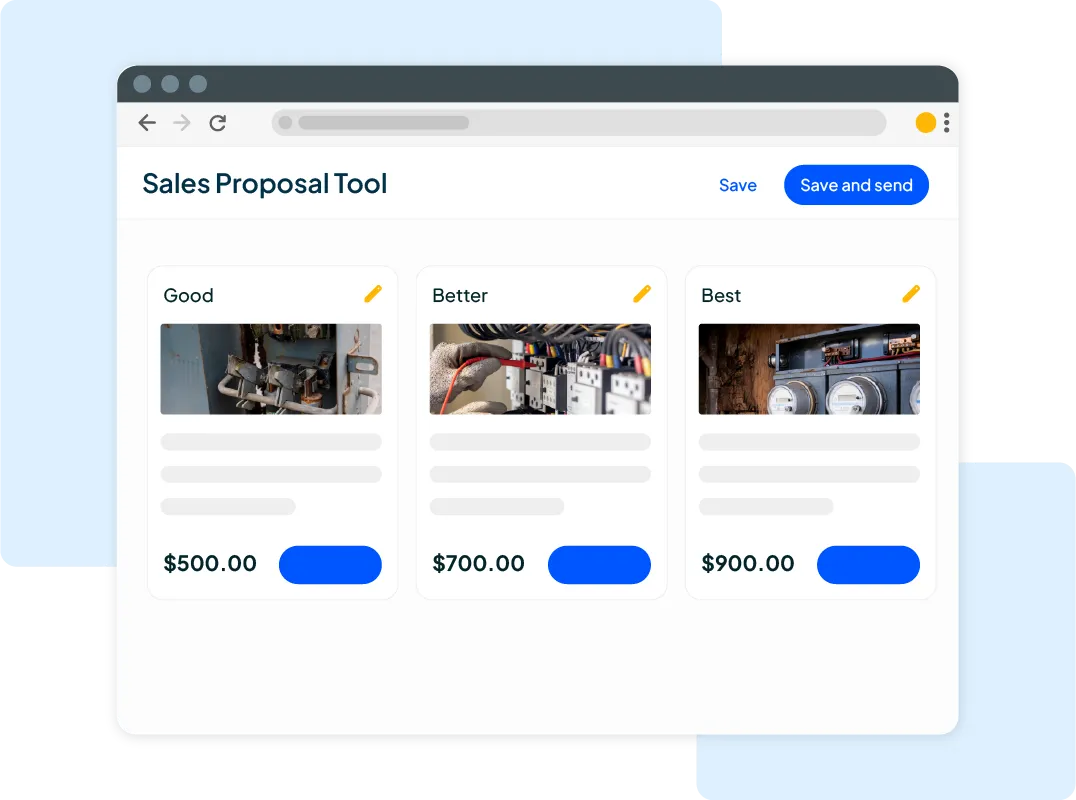
3. Create tiered pricing options
Simple pricing is easier to sell and manage. Most businesses start with three tiers that build on each other. For example, a lawn care company might offer:
| Tier | Example offer |
| Basic | Seasonal fertilization and weed control |
| Standard | Fertilization, weed control, and monthly lawn inspections |
| Premium | Full seasonal treatments, priority scheduling, and irrigation checks |
Table: Example lawn care subscription tiers. Included services will vary by business and market.
4. Set your pricing
Factor in labor, materials, travel time, and visit frequency. The goal is to create a plan that’s both attractive to customers and sustainable for your business.
5. Build your contract
Clearly define what’s included, what’s excluded, how billing works, and whether the plan renews automatically. Straightforward terms help avoid misunderstandings later.
6. Use software to manage renewals and scheduling
Have a process in place before memberships start growing. Building recurring agreements, scheduling recurring visits automatically, tracking renewals, and collecting payments become much easier when you have a tool like Housecall Pro’s Service Plans in place from the beginning.
Free download: Service agreement plan template
Which subscription model is right for your business?
The most suitable subscription model usually depends on how predictable your services are and how much the work changes from customer to customer.
Task-based plans are often easier to manage because the service, timing, and labor are more consistent. Hours-based plans are more flexible but can be harder to price if job requests vary widely.
| Model | Best for | How it works | Main advantage |
| Task-based | HVAC, pest control, cleaning, lawn care | Customers get specific recurring services at set intervals | Easier to standardize and schedule |
| Hours-based | Handyman and multi-trade businesses | Customers get a set number of labor hours | More flexibility for changing service requests |
For example, a lawn care company might offer routine mowing services, scheduled fertilization, and weed control. Since the work repeats seasonally, task-based plans are a good fit to keep things simple.
A handyman business may need more flexibility because every customer uses the service differently. One homeowner may need drywall repairs, while another wants help with seasonal maintenance and small installation projects. In that case, hours-based plans make the most sense.
Many businesses start out with a single plan, then branch out once they understand what customers use most often.
How should you price a home maintenance subscription plan?
Pricing comes down to one question: how much do you need to charge to deliver work consistently without losing money on labor, materials, or time?
Start with your actual costs
Before setting a monthly or annual price, calculate:
- Average labor time per visit
- Material and replacement part costs
- Drive time and fuel expenses
- Administrative time for scheduling and follow-ups
- Emergency or after-hours service expectations
If you’re offering discounted repairs or member pricing, factor in those margins, too.
Decide what’s included
One of the biggest pricing mistakes is including too much too early. Unlimited service calls or large repairs can quickly outweigh the value of the monthly fee.
Many businesses separate recurring maintenance from repair work. For example, an HVAC maintenance plan may include seasonal tune-ups and priority scheduling, while repair parts and emergency service calls cost extra.
Many businesses separate recurring maintenance from repair work. An HVAC plan, for example, might include seasonal tune-ups and priority scheduling while repair parts and emergency calls cost extra. Some businesses offer member-only discounts on repairs instead of adding more maintenance visits—this increases perceived value without significantly increasing labor costs.
Be clear about what’s included. That’ll protect your margins and make expectations easier for customers to understand.
Choose monthly or annual billing
Monthly billing lowers the barrier to entry for customers by breaking it into manageable pieces. Plus, it creates consistent recurring revenue throughout the year.
Annual billing improves cash flow and reduces the risk of missed payments. If you offer this option, you can offer a small discount for customers who pay annually instead of monthly.
Some companies offer both options to give customers more flexibility.
Sample subscription pricing structure
Your pricing structure might look something like this:
| Tier name | Services included | Visit frequency | Sample annual price range |
| Basic | Preventative inspection + priority scheduling | Annual | $150–$300 |
| Standard | Multiple maintenance visits + discounted repairs | Quarterly | $300–$700 |
| Premium | Recurring maintenance, faster response times + added service perks | Monthly or seasonal | $700–$1,500 |
Table: Pricing ranges are estimates for illustrative purposes. Actual pricing varies by trade, service area, labor costs, and visit frequency. A plumbing maintenance plan will look different from a recurring cleaning or lawn care package.
Start with a structure that’s profitable and manageable. Adjust pricing and included services as you learn what customers actually use.
What should your subscription plan contract include?
A clear subscription contract helps set expectations for both your business and your customers. It’s there to keep everyone on the same page and prevent misunderstandings around scheduling, pricing, and what’s actually included in the plan.
Keep the language straightforward. Customers should be able to quickly understand what they’re paying for and what happens if they need additional work outside the agreement.
Your contract should include:
- Service scope: Define exactly which services, inspections, or maintenance visits are included in the plan.
- Visit frequency: Explain how often recurring visits happen and whether appointments roll over if unused.
- Cancellation policy: Outline how customers can cancel and whether minimum contract terms apply.
- Auto-renewal terms: Note whether plans renew automatically and how customers will be notified before renewal.
- Price lock period: Explain how long pricing stays fixed before rates may increase.
- Additional labor or material charges: State whether repairs, replacement parts, or emergency service calls cost extra.
- Exclusions: List services or situations the plan does not cover to avoid disputes later.
- Liability limitations: Define reasonable limits around delays, third-party damage, or conditions outside your control.
- Payment terms: Explain when recurring payments are processed and what happens if a payment fails.
Before rolling out your plan, have a local attorney review your agreement. A few small contract updates early on can prevent bigger problems down the road.
How to introduce a subscription plan to your existing customers

Your best first customers are usually the ones already booking repeat work. They already trust your business and understand the value of regular service.
Start with loyal customers first
You don’t need to pitch the idea to everyone at once. Start with repeat customers who already call your business multiple times a year.
That smaller group makes it easier to test pricing, scheduling, and communication before expanding the plan further.
Bring it up during service visits
Maintenance plans often come up naturally during recurring or seasonal jobs. If a customer schedules the same service every year, that’s usually a good opening.
Your pitch might look like this:
“We already come out for this service every spring and fall. We also offer a maintenance plan that keeps those visits scheduled automatically and includes priority scheduling if something comes up between appointments.”
Some businesses take it further by branding the plan itself. Jay Villegas, who scaled Frontier Air Conditioning from $1M to $6M, offers every customer a membership option called the “Cowboy Kool Club”—a named, recognizable offer that’s part of every visit.
Follow-up after completed jobs
Simple follow-up messages keep the offer low-pressure, and many customers expect them: in our 2025 survey, 43% of homeowners said they appreciate maintenance reminders.
Text example:
“Thanks again for choosing us for your service today! We also offer maintenance plans that include recurring service reminders and priority scheduling. Let us know if you’d like more information!”
Email example:
“Subject line: Thanks again for your service appointment!
Hi [Customer name],
Thanks again for choosing us for your recent service appointment.
We also offer recurring maintenance plans that include scheduled service visits, reminders, and priority scheduling throughout the year.
Let us know if you’d like more information about available plans!
Best regards,
[Business name]”
Customers usually care more about convenience than the word “subscription.” Automatic scheduling, recurring reminders, and priority service are often the biggest selling points.
Common mistakes to avoid with subscription plans
Most subscription plan problems come from unclear pricing, overly complicated offers, or scaling too quickly. The most common mistakes:
- Underpricing the plan: Charging too little cuts into your margins fast when labor, travel time, and materials add up.
- Offering too many tiers: Too many options confuse customers and complicate scheduling.
- Including work outside your expertise: Adding unfamiliar services leads to callbacks and inconsistent quality.
- Leaving exclusions unclear: Customers should know exactly what the plan covers and what costs extra.
- Tracking renewals manually: Spreadsheets and calendar reminders get unmanageable as membership grows.
- Overcomplicating scheduling: Recurring work should make planning easier, not create more calendar problems.
How to manage home service subscription plans with less manual work
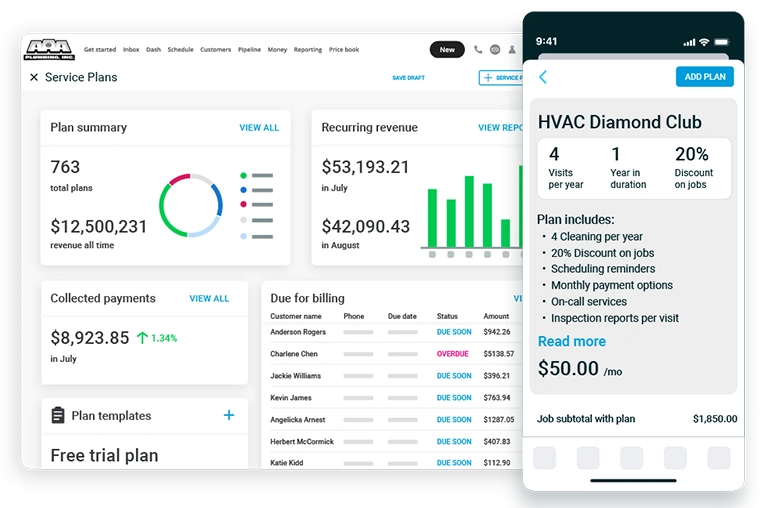
Recurring plans create more admin work as your customer list grows. Tracking those recurring visits, renewals, invoices, and follow-ups manually gets harder once you’re managing dozens of active memberships at once.
Many businesses start with spreadsheets or calendar reminders—and eventually hit a wall. Housecall Pro’s Service Plans feature helps home service businesses automate recurring visits, customer reminders, renewal tracking, and recurring payments so less scheduling work falls back on the office team.
With Service Plans, businesses can:
- Schedule recurring visits automatically
- Process recurring payments
- Track active plans and renewals
- Send appointment reminders
- Store customer plan details in one place
Housecall Pro has helped Pros win 2M+ service plan customers. Start your free 14-day trial of Housecall Pro to see how our field service software can help you manage recurring memberships, renewals, and scheduling.
Home maintenance subscription plans FAQ
How do I price a home maintenance subscription plan?
Price your plan by calculating labor, travel time, materials, and visit frequency for each service included. A basic annual inspection plan might run $150–$300; a quarterly maintenance plan with discounted repairs typically falls in the $300–$700 range; premium plans with monthly visits and faster response times can reach $700–$1,500. Your pricing should leave enough margin to cover recurring service costs without relying on upsells or emergency repairs to stay profitable.
What services should I include in a maintenance plan?
The best services are predictable, repeatable, and already requested by your customers. For HVAC companies, that usually means seasonal tune-ups and filter replacements. For pest control, quarterly treatments and inspections. For cleaning businesses, recurring weekly or biweekly visits. Stick with work you can consistently deliver on schedule.
Should I offer multiple subscription tiers?
You can, but you don’t need to start there. One plan is enough to test pricing, scheduling, and customer communication before adding complexity. If you do add tiers, limit it to two or three—too many options slow down the sales conversation and complicate internal scheduling.
How do I manage subscription renewals and scheduling?
Many businesses start by managing renewals manually, but that becomes harder as memberships grow. An HVAC company with 100 active maintenance plan customers may need to coordinate 200 or more recurring visits each year. Tools like Housecall Pro’s Service Plans help automate subscription renewals and scheduling without adding more admin work.
Can customers cancel a home maintenance subscription plan?
Yes. Cancellation terms vary by agreement—some businesses allow cancellation at any time, while others require a minimum term or charge an early cancellation fee. Define your cancellation policy clearly in the contract so customers understand the terms before they sign.