Construction Financials
Construction Cost Calculator
This construction cost calculator is designed to help you itemize the rate and quantity of each individual element to estimate the total cost of construction project. Download a copy of our free construction cost calculator for contractors and use it on the go!
How to accurately calculate construction costs?
Depending on the type of project, estimating the costs of construction can either be incredibly simple or extremely complex. Regardless, creating an accurate estimate is essential to ensuring that the project is both profitable for the contractor and affordable for the client. A good construction cost estimate will account for every element of a project, including room for contingencies, financing costs, profit margin, variances, and other less obvious or unforeseen expenses. Changes are almost a guarantee in construction, so it’s to everyone’s benefit not to underestimate or overlook any element of a project.
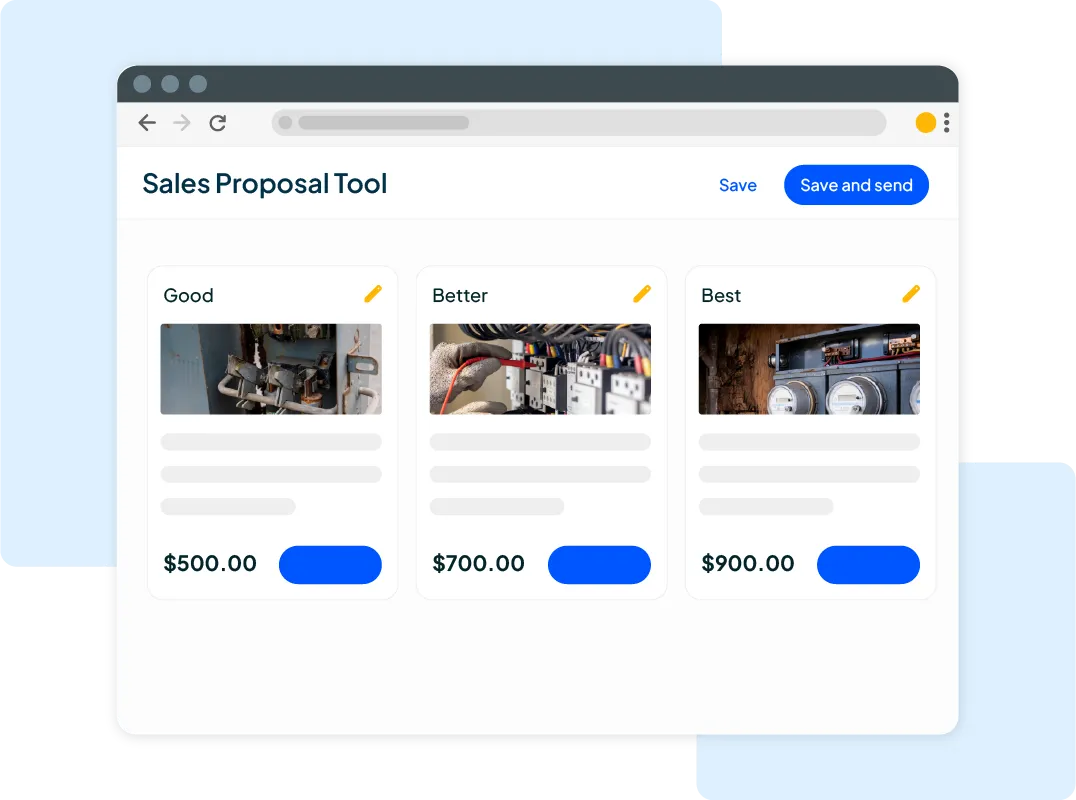
Using construction estimating software or a construction estimate template can save you time and money by streamlining the entire process and making sure you don’t miss anything.
Protip: You can try Housecall Pro’s construction estimating software free for 14 days to see for yourself.
The primary construction cost categories
In order for your estimate to be as thorough and accurate as possible, it’s best to at least consider every potential category when calculating the costs for a project. Each category or element may have additional considerations that could impact the cost so it may not be as simple as associating a single cost to any given cost category.
As you’re calculating construction costs, consider each of the following potential cost categories:
- Site Preparation – Excavation, tear-downs, on-site rentals, disposal, etc.
- Material costs – Hardware, lumber, concrete, sheetrock, trim, flooring, etc.
- Labor costs – Labor burden, downtime, overtime, etc.
- Subcontractor costs – HVAC, plumbers, designers, landscapers, etc.
- Equipment costs – Heavy equipment fees, rentals, gas, power, etc.
- Permits and fees – Inspections, approvals, local permits, etc.
- Client Selections – Appliances, countertops, fixtures, etc.
- Indirect expenses – Administration costs, travel, delivery fees, etc.
- Capital costs – Loan interest, payment processing fee, taxes, etc.
- Profit Margin – Labor markup, material markup, general profit, etc.
- Contingencies – Seasonal challenges, client delays, cost escalations, wastage, etc.
Based on the location and/or type of the construction project, there may be other cost categories you will need to consider, or additional elements within the categories above.
How to calculate material costs in construction?
The first step in calculating your material costs for a project is to gather the quantity and cost per unit for each material you’ll need. This will vary depending on the type of material, quality, and where you purchase it from.
For example, if you’re using concrete, the price per cubic yard can range from $50 to $100 or more based on your location alone. If you’re using lumber, the price per board foot can range from $0.50 to $2.00 or more, depending on the type of wood and whether it is a premium grade or not.
Once you have the cost per unit for each material, simply multiply that number by the quantity of each material needed to complete your project. For example, if you need 10 cubic yards of concrete and the price is $75 per yard, you’d multiply 10 x $75 to arrive at a material cost of $750.
The final step is adding all of your material costs together to arrive at your total cost of materials for a project.
How to calculate labor cost in construction?
It is important to consider all of your additional costs when calculating your actual cost of labor. Failing to factor in the additional costs can have a large negative impact on the profit of your project.
The formula for calculating the construction labor cost for each employee is: (Hourly Wage + Hourly Labor Burden) * Hours Worked/Needed
To learn how to calculate your labor burden to determine your actual hourly labor cost, check out our construction labor cost calculator.
How to calculate close out costs in construction?
There is no one-size-fits-all answer to close out costs in construction as the costs associated with closing out a construction project can vary greatly depending on the specific project. However, some of the most common expenses that may be incurred when closing out a construction project include contractor fees, final material expenditures, clean up and disposal, and warranty work.
How to calculate carrying costs in construction?
Carrying costs can be a significant factor for construction projects, especially for those that are taking longer than expected to complete. Projects that are delayed can also see an increase in their carrying costs as the cost of labor and materials continue to rise.
These costs can include interest on construction loans, labor wages, equipment expenses, and material costs. Depending on which costs you’ll incur during your projects, the calculations will be very different.
How to calculate construction cost per square feet?
Since the cost of construction is often measured and evaluated by its cost per square foot, you may want to determine this number for your construction project.
Once your total construction cost is determined, calculating the cost per square foot is as simple as dividing the cost by the total square footage of the project.
The formula is as follows: Total Cost of Construction / Total Square Feet = Construction Cost Per Square Foot
To help calculate the total square feet of your project, use our construction square footage calculator.
Get the Free Construction Cost Calculator for Your Next Job
Skip the manual math on every project. Download the free calculator to use on-site, in estimates, or share with your crew — get instant project totals, line-item breakdowns, and margin calculations built for contractors who’d rather be running jobs than chasing spreadsheets.
Construction cost calculator: frequently asked questions
-
What is the average cost per square foot to build in 2026?
-
Average construction cost runs $150–$250 per square foot for standard residential builds in the US, with custom homes ranging $300–$500+ per square foot depending on finishes, location, and complexity. Commercial construction varies more widely, from $100/sq ft for basic warehouse builds to $400+/sq ft for specialty buildings. These ranges shift significantly by region — coastal metros and the Northeast trend 30–50% higher than national averages.
-
What percentage should you add for contingency in a construction estimate?
-
Add 5–10% contingency for new construction and 15–20% for remodels or renovation projects. Renovations need a higher contingency because hidden conditions (rotted framing, outdated wiring, asbestos) are discovered mid-project. Custom or design-build jobs with evolving scope typically warrant 10–15%. Commercial projects with detailed specs can sometimes run as low as 3–5%. The contingency is separate from your profit margin — it covers unknowns, not earnings.
-
What is a typical profit margin for a construction project?
-
Typical construction profit margins are 8–15% net profit for general contractors and 15–25% gross margin before overhead. Custom home builders often target 20%+ gross margin. Remodelers tend to run higher than new-construction GCs because of the higher risk and complexity. Lower margins (5–8%) are common on commercial bids where competition is fierce, but contractors consistently working below 8% net rarely stay in business long-term.
-
How do you calculate equipment costs for a construction project?
-
To calculate equipment costs, multiply the hourly or daily rental rate by the time the equipment will be on-site, then add fuel, delivery, and operator costs. For owned equipment, use an internal hourly rate that covers depreciation, maintenance, fuel, and insurance — most contractors track this as a “cost of ownership” figure per machine. Don’t forget mobilization fees, which can run $200–$1,500+ per piece of heavy equipment depending on distance.
-
What is the difference between a construction estimate and a quote?
-
A construction estimate is an approximate cost projection that can change as the project progresses, while a quote is a fixed price the contractor commits to honor. Estimates are typical for cost-plus or time-and-materials contracts; quotes are used for fixed-price (lump sum) contracts. Quotes carry more risk for the contractor, which is why they’re usually priced higher than the equivalent estimate — the markup compensates for absorbing cost overruns.
-
How do you factor permits and inspection fees into construction costs?
-
Permit and inspection fees typically run 0.5–2% of total project cost for residential work and vary widely by jurisdiction. Get permit costs directly from your local building department before finalizing the estimate — they’re public information and often listed on the city/county website. Common permits include building, electrical, plumbing, mechanical, and grading. Don’t forget impact fees (utility hookups, school district assessments) on new construction, which can add thousands to a single-family build.
-
What hidden costs are most often missed in construction estimates?
-
The most commonly missed costs are dumpster/disposal fees, port-a-potty rentals, temporary utilities, jobsite delivery fees, and small tools/consumables (blades, fasteners, caulk, drill bits). On larger projects, contractors also miss builder’s risk insurance, performance bonds, and finance/carrying costs during long build cycles. A line item for “general conditions” set at 5–10% of project cost catches most of these and prevents the slow margin erosion they cause.
Try out some more of our construction calculators!
-

Profit Margin Calculator
Discover what to charge and find your profit margin based on your markup percentage.
-
Concrete Calculator
Calculate the amount of concrete needed in cubic feet, yards, and bags for a concrete slab.
-


Markup Calculator
Discover what to charge and find your markup percentage based on your target profit margin.
-


Labor Cost Calculator
Find the total and hourly labor cost with total labor burden for any project.