Want to win more jobs with less effort?
Grow your business and send quick quotes with our home service software.

Want to see your potential revenue?
See what businesses like yours earn with Housecall Pro in 1 - 2 minutes.

Great customer service used to mean doing solid work and being polite. Those things still matter, but they’re not enough to stand out.
Today’s homeowners judge service businesses on speed, communication, transparency, and follow-through just as much as technical skill. They expect job updates, clear pricing, proof of work, and easy payment without having to ask. When those expectations aren’t met, even good work can feel like bad service.
The good news? Great customer service doesn’t require a ton of extra effort—just repeatable systems your whole team can use. In this guide, we’ll cover what great customer service looks like today and how to deliver it consistently using insights from a 2025 Housecall Pro survey of 1,000+ U.S. homeowners.
2026 customer service statistics
Based on the survey, here's what homeowners say matters most when choosing a pro:
Trustworthy reviews: 72% would pay 10% more for a pro with a better customer service reputation.
Fast response times: 97% say an immediate response influences who they hire, making speed a competitive advantage.
Clear pricing: 97% say transparent pricing matters. Vague estimates or surprise fees can cost you the job.
Visible proof: 68% expect photos, videos, or a checklist of completed work.
Great service: 73% would refer a pro after an excellent service experience.
Table of contents
- What great customer service means for home service pros
- Examples of great customer service
- Customer service skills for home service pros
- How to give great customer service
- Why customer service systems matter more than ever
- Mastering great customer service: next steps
- How Housecall Pro helps you deliver great customer service
- Methodology
What great customer service means for home service pros
Great customer service today goes beyond doing quality work. Homeowners judge the experience from the first call to the final follow-up, and they expect it to run smoothly every time.
At its core, great customer service is built on five principles:
- Reliability: Showing up when you say you will and following through on every promise.
- Transparency: Being clear about pricing, scope, and options so customers know what to expect.
- Responsiveness: Replying quickly to calls, texts, and form submissions.
- Clear communication: Keeping customers informed before, during, and after the job with confirmations, arrival updates, and follow-ups.
- Proof of work: Showing that the job was done right with photos or videos of completed work.
The most successful pros don’t rely on skill alone to deliver this experience. They use systems to make great service consistent. Tools like Housecall Pro help automate booking, send real-time updates, deliver photo and video proof, and follow up after the job so every customer gets the same professional experience, every time.

Download the full Customer Service Report for more insights.
Examples of great customer service
Great customer service isn’t defined by a single moment—it’s built across the entire customer journey. For home service businesses, that journey starts long before a technician arrives and continues well after the job is done.
The examples below show what great customer service looks like at each stage of a job, using real homeowner expectations and data from Housecall Pro’s Customer Service Report to show what to do and why it matters.
Before the job: building trust early
The way you communicate before a job shapes how customers feel about your business. Homeowners want to know what’s happening and who they’re letting into their home. According to our Customer Service Report, early touchpoints make a real difference.
- Make booking fast and visible: Offer online booking with instant confirmation so customers know their request went through. Fast response matters—97% of homeowners say an immediate response affects who they hire, and 37% say the ability to view and confirm appointments online offers the most reassurance before a visit..
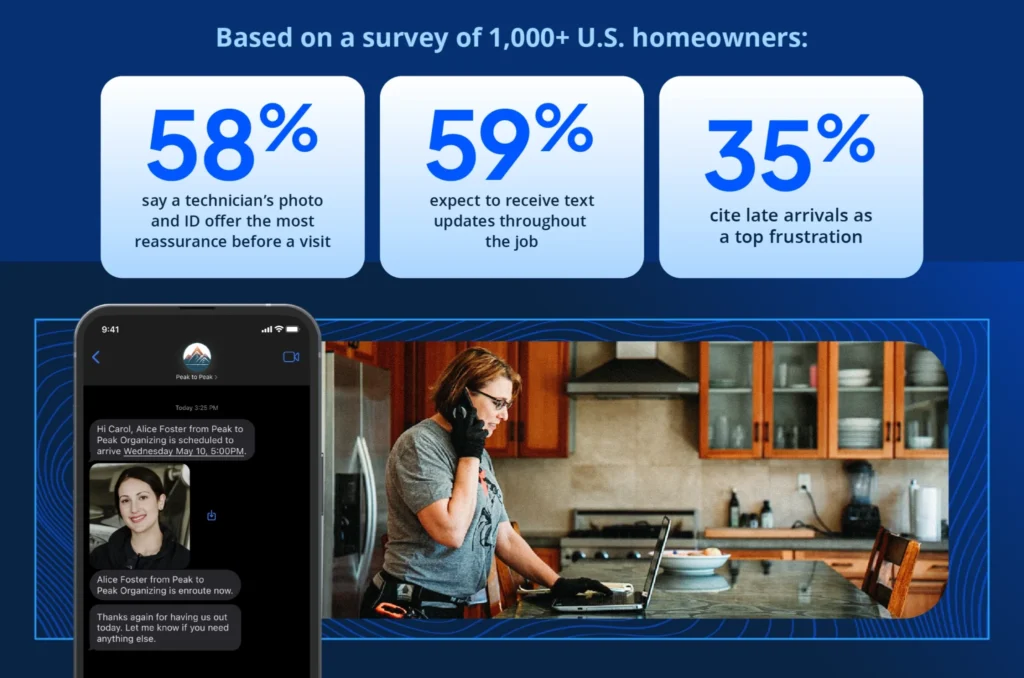
- Show customers who’s coming: Send the technician’s name, photo, and ID ahead of time so customers know exactly who to expect. This simple step goes a long way: 58% of homeowners say it offers the most reassurance before a technician arrives.
- Communicate clearly on arrival time: Don’t leave customers guessing. Send “On My Way” notifications with a specific arrival window and update them if plans change. Nearly 1 in 3 homeowners list late or uncertain arrivals as a top frustration, while 46% say “On My Way” texts offer the most reassurance before a visit.
- Keep customers informed: Use automated updates or real-time tracking to flag delays, confirm timing, and stay proactive. When customers feel informed and respected, they’re more relaxed.
During the job: communicating progress
Once work begins, communication shouldn’t stop. Ongoing updates help customers feel confident that the job is moving forward even when they can’t see the work themselves.
- Set expectations for updates upfront: Let customers know how and when they’ll hear from you during the job. Text updates are the norm—59% of homeowners expect these throughout the job, not just before or after.
- Share progress as the job unfolds: Use quick text messages or in-app updates to flag milestones, delays, or changes in scope. Silence creates frustration, especially when timelines shift. Late arrivals and lack of updates consistently rank among homeowners’ top complaints.
- Use photos and videos to show the work: Document progress with before-and-after photos or short videos, especially for work that happens out of sight. Sixty-eight percent of homeowners expect photos, videos, or a checklist of completed work.
- Explain what you found and what you fixed: Don’t assume customers understand the technical details. Pair visuals with a simple explanation of what was wrong, what you did, and why it mattered. Seeing the work reinforces professionalism and helps homeowners feel confident in the outcome.
- Reassure customers if plans change: If the timeline or scope shifts, communicate early and clearly. Consistent updates signal that the job is under control, even when things don’t go exactly as planned.
After the job: following up and reinforcing trust
Great customer service doesn’t stop when the work is done. For many homeowners, what happens next is what determines whether they leave a review, refer a friend, or book again.
Housecall Pro’s Customer Service Report shows just how much communication after the job affects long-term trust and loyalty.
- Ask for reviews and referrals while the experience is fresh: Follow up shortly after the job to thank the customer and invite both feedback and referrals. Timing matters—73% of homeowners say they’d refer a pro after an excellent service experience, and 40% say they’re more likely to leave a review, so ask when the service is fresh in their mind.
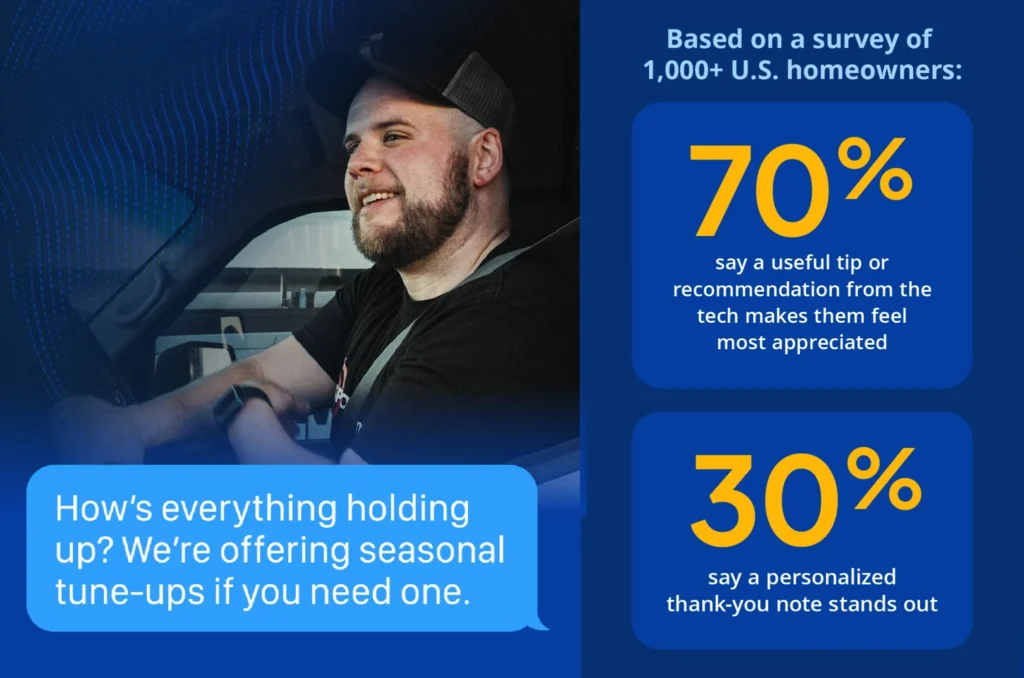
- Make rebooking easy: Include a clear next step, like scheduling future service or saving your business for later. Seventy percent of homeowners said a useful tip or recommendation from their technician makes them feel most appreciated as a customer.
- Share helpful tips or recommendations: Send a quick maintenance tip or service suggestion to reinforce your expertise beyond the repair. Seventy percent of homeowners value useful advice from their technician.
- Use reminders to stay top of mind: Follow up with maintenance reminders or seasonal check-ins that support ongoing care and repeat work. When asked what makes them feel most appreciated as a customer, 43% of homeowners said maintenance reminders.
More resources:
Customer service skills for home service pros
To meet modern homeowner expectations, teams need the right mix of technical ability and customer-facing skills. Based on what homeowners value most, these are the customer service skills every home service business should prioritize—and how to build them into your team.
- Clear communication: Technicians should explain what’s happening, why it matters, and what comes next in plain language.
- Digital literacy: Booking tools, job updates, photos, and digital payments are now part of the service experience. Train new hires on your software from day one, use checklists for digital steps, and pair less tech-savvy staff with mentors.
- Time management and punctuality: Set clear arrival windows, track schedule accuracy, and review late arrivals during team check-ins.
- Problem-solving under pressure: Walk through common “what-if” scenarios in training and empower techs to communicate delays or changes early.
Training and hiring are easier when your business is built around a customer service–oriented culture, not just individual performance.
How to give great customer service
Knowing what great customer service looks like is one thing. Delivering it consistently across every job, technician, and customer is another. The most successful home service businesses follow a clear process that sets expectations early, keeps customers informed, and reinforces trust after the work is done.
Here’s how to offer great customer service at every stage.
- Set clear expectations upfront: Share the technician’s name, photo, arrival window, and job details before the visit so customers know exactly what to expect.
- Automate communication and updates: Use texts and notifications for confirmations, “On My Way” alerts, and status updates to keep customers informed without manual follow-up.
- Provide transparent pricing: Clear estimates, itemized invoices, and no surprise charges help customers feel confident before work begins.
- Document the work: Capture before-and-after photos or short videos to show what was done, especially for work that isn’t visible to the homeowner.
- Follow up after the job: Thank-you messages, digital receipts, and review requests reinforce professionalism and trust.
Each step answers a common homeowner question: Who’s coming? What’s happening? What am I paying for? Was it done right? What happens next? When those questions are answered proactively, customer service feels organized and intentional instead of reactive.
Get In Touch: 858-842-5746
Let us earn your trust
On average, Pros increase monthly revenue generated through Housecall Pro by more than 35% after their first year.
See plan options and feature breakdown on our pricing page.
Why customer service systems matter more than ever
A customer service system is simply a set of standard steps and tools your team uses on every job. That might include how appointments are booked, when updates are sent, how work is documented, and how follow-ups happen. When those steps are built into your workflow, great service becomes consistent, no matter who’s on the job or how busy you are.
Customer service systems help businesses:
- Respond faster: Automated booking and AI-assisted communication reduce missed calls and slow replies, which directly affect hiring decisions.
- Communicate consistently: Standard updates, arrival notifications, and follow-ups prevent the gaps that frustrate homeowners.
- Build trust at scale: Clear pricing, documented work, and visible proof ensure every customer gets the same level of service.
- Turn service into growth: Reliable experiences lead to more referrals, reviews, and repeat jobs without increasing marketing spend.
In short, trust is built through process. Automated booking, messaging, and AI-assisted customer service tools help businesses move faster without sacrificing the personal experiences that homeowners expect.
Mastering great customer service: next steps
When customers know what’s happening, what they’re paying for, and what comes next, trust follows—and so do referrals and repeat jobs.
To put this into practice, start by mapping your customer journey and deciding what should happen every time.
- Booking: Are confirmations sent automatically, and can customers easily schedule or track appointments?
- Communication: Do customers receive proactive updates before and during the job?
- Proof of work: Is photo or video documentation standard on every visit?
- Pricing: Are estimates clear, upfront, and explained before work begins?
- Follow-up: Are thank-you messages, review requests, and reminders sent consistently?
From there, standardize and automate where possible. Use tools to send confirmations, arrival updates, invoices, and follow-ups automatically, and set clear expectations for your team around documentation and communication.
Improving even one of these areas can raise the bar for your customer experience. Improving all of them creates a service standard customers notice and remember.
The goal isn’t perfection—it’s consistency. When great customer service is built into your process, every job reinforces your reputation, strengthens customer relationships, and supports long-term growth.
How Housecall Pro helps you deliver great customer service
Great customer service is easier to deliver when your systems do the heavy lifting. While how you treat customers is up to you, having the right tools in place helps make great service consistent no matter how busy your schedule gets.
Housecall Pro is built to support the full customer journey, so nothing slips through the cracks before, during, or after the job.
With Housecall Pro, service businesses can:
- Respond faster: Online booking and automated call handling help you capture leads quickly and reduce missed opportunities.
- Set clear expectations: Automated confirmations, technician details, and arrival updates keep customers informed from the start.
- Communicate during the job: Built-in messaging and job notes make it easy to share updates, photos, and explanations in real time.
- Show proof of work: Upload before-and-after photos or videos to document completed work and reinforce trust.
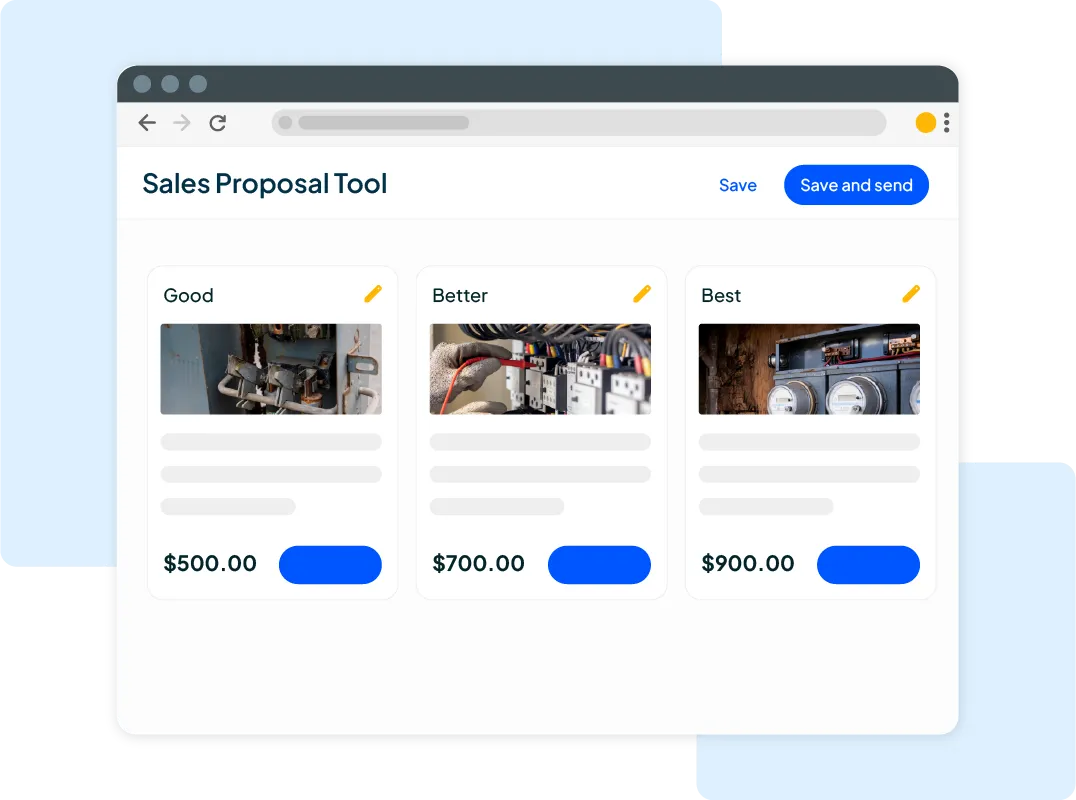
- Price transparently: Send digital estimates, offer good-better-best options, and generate clear invoices without surprises.
- Follow up automatically: Thank-you messages, review requests, and maintenance reminders help turn one-time jobs into repeat customers.
Ready to streamline your operations? Start your free 14-day trial of Housecall Pro today and see the difference for yourself.
Methodology
Our Customer Service Report survey was conducted online on Oct. 23, 2025, with 1,040 U.S. homeowners via SurveyMonkey Audience. All respondents were screened as household decision-makers, and results were demographically balanced to U.S. Census standards.
Customer service FAQ
-
What are the qualities of excellent customer service?
-
The qualities of excellent customer service include clear communication, fast response times, transparent pricing, consistent follow-up, and visible proof of work.
-
How do you say you have great customer service?
-
You can say you have excellent customer service by clearly showing how you respond quickly, communicate proactively, and follow through at every step. For example: “We provide excellent customer service by responding fast, keeping customers informed throughout the job, offering transparent pricing, and following up to make sure everything’s done right.”
-
What does great customer service mean as a home service business?
-
Great customer service means making the entire experience easy and predictable for the customer—from booking and arrival updates to pricing, documentation, and follow-up.
-
How do you give great customer service in a home service business?
-
You give great customer service by setting clear expectations, responding quickly, keeping customers informed during the job, documenting your work, and following up after service is complete.
-
What is a good example of great customer service?
-
A good example of great customer service is sending appointment confirmations and arrival updates, explaining the work clearly, sharing before-and-after photos, and following up with a thank-you message or review request.