Want to win more jobs with less effort?
Grow your business and send quick quotes with our home service software.

Want to see your potential revenue?
See what businesses like yours earn with Housecall Pro in 1 - 2 minutes.
Becoming an electrician and running an electrical business are two very different skill sets. You already know the trade—but once you decide to go out on your own, you’re suddenly responsible for pricing, marketing, budgeting, and finding customers. If you’re unsure where to start or feel overwhelmed by conflicting advice online, that’s a common part of the transition.
Whether you’ve spent years working under someone else or are just mapping out your next step, this guide breaks down the process of starting an electrical business into clear, logical stages—what to do first, what can wait, and how each decision connects.
To help ground this advice in real experience, this guide includes insights from:
- Barret Abramow, co-owner of Grounded Electric.
- Caspar Matthews, director of Electcomm Group Electrical and Data.
Electrician business checklist
Starting an electrical business involves overlapping steps—licensing, finances, pricing, and marketing often move in parallel. This checklist shows the full picture first, then breaks down each step in order.
- Step 1: Complete electrician training and licensing
- Step 2: Determine your electrical business start-up costs
- Step 3: Create an electrical business plan
- Step 4: Register and license your electrician business
- Step 5: Get electrician business insurance and bonding
- Step 6: Set up business bank accounting
- Step 7: Buy electrician tools and equipment
- Step 8: Set electrician prices
- Step 9: Market your electrician business
- Step 10: Grow your electrical business
- How Housecall Pro's electrician software can help
Step 1: Complete electrician training and licensing
Before you can legally operate, you need the right credentials—and the rules vary widely by location. Nearly all states require an electrician’s license for any electrical work, including supervised work done as an apprentice. In some states, licenses are issued at the county or city level.
Because requirements differ so much, this step is about confirming your specific pathway, not assuming one universal process.
Most electricians follow a progression like this:
- Start with education or an apprenticeship: Many electricians begin through a trade school, community college, or formal apprenticeship. Training combines supervised fieldwork with classroom instruction, often covering electrical theory and the National Electrical Code (NEC).
- Earn your journeyman license: After completing your apprenticeship and required field hours (usually around 8,000, depending on your state), you can take the journeyman exam. Journeymen typically work unsupervised under a licensed contractor, master electrician, or government employer.
- Advance to master electrician or contractor status: After about 4–5 years (or the required field hours), you can apply for your state’s master electrician or electrical contractor license. This license allows you to open your own business and train apprentice and journeyman electricians.
Depending on where you live, you may also need to pass a Business & Law exam and complete ongoing continuing education, especially when NEC updates are released. Even if continuing education isn’t mandatory in your state, staying current helps avoid costly compliance issues.
Should you choose an electrical specialization early?
Specializing can shape your pricing, competition, and customer mix, but it’s not required on day one. Many electricians start general, then narrow their focus once they understand local demand.
Common specialization paths include:
- Residential electricians: Focus on electrical systems in homes.
- Commercial electricians: Work with electrical systems in business establishments.
- Industrial electricians: Handle large-scale projects and complex machinery in factories, manufacturing plants, and power plants.
- Linemen (outside electricians): Install and maintain high-voltage transmission and distribution lines for utilities.
- Maintenance electricians: Monitor, inspect, and repair existing electrical systems in commercial or industrial settings.
“I recommend choosing a specialization based on two things: what work excites you and what your market needs,” Abramow says. “I started in residential because it was accessible, but later branched into small commercial jobs when I noticed demand in my area.”
You can also pursue more niche roles, such as:
- Avionics electricians: A high-paying specialization involving aircraft electrical systems.
- Highway electrical systems electricians: Install and maintain electrical equipment on highways, including signage and streetlights.
- Instrumental electricians: Work with electrical instruments in large heating, cooling, and refrigeration units.
- Marine electricians: Install and maintain electrical systems on boats, ships, and yachts.
- Sign electricians: Install, repair, and maintain various types of electrical signs and lighting.
- Solar panel electricians: Specialize in installing, maintaining, and repairing solar panel systems and grids.
Many states require a specific license for specializations such as sign work, solar panel and grid work, and work on specific types of refrigeration units (EPA Section 608 Certification).
Pro tip: Starting with a general license then completing specialized training can help you build up your business while you work toward your niche.
Step 2: Determine your electrical business start-up costs

Before pricing jobs or applying for financing, you need a realistic picture of what it costs to open your doors. Most electrician businesses spend between $25,000 and $85,000 to get started, depending on location, equipment, and whether you operate from home or a dedicated shop.
Your upfront budget should account for both one-time expenses and recurring costs.
Common electrician business start-up costs include:
- Licensing and certifications: $200–$1,500 (varies by state requirements)
- Business registration: $50–$500
- Legal consultations: $150–$500/hour
- Rent and utilities: $600–$3,500 per month (varies by location)
- Basic electrical toolkit: $100–$500
- Advanced electrical machinery: $1,000–$10,000
- Company vehicle: $10,000–$50,000 to lease or purchase, $200–$500 per month for maintenance and fuel
- Insurance: $2,700–$10,000/year (commercial auto, general liability, and workers’ compensation)
- Marketing: $2,500–$20,000/year
- Salaries and wages: $30,000–$100,000/year per employee
- Training programs: $100–$500 per session
- Inventory and materials: $1,000–$10,000
- Software and tech subscriptions: $300–$2,000/year
- Outsourcing costs (such as accounting): $0–$5,000/year
- Contingency fund: $1,000–$5,000
Your business plan should include your initial costs, as well as your monthly and annual expenses. Don’t forget to budget for annual recurring costs like insurance premiums and license renewal fees.
If you’re starting solo, working from home can significantly reduce overhead, since most work happens on-site. You can also reduce administrative costs by using software to handle scheduling, invoicing, and payments. Housecall Pro’s electrician software supports online booking, automated scheduling, and QuickBooks integration, reducing manual admin time.
How do electricians typically finance a new business?
Many electricians need financing or loans to fund their new businesses. Financing can help smooth cash flow and reduce early pressure.
Common options include:
- Government funding: The U.S. Department of Labor offers grants, including the Industry-Driven Skills Training Fund, which helps businesses train workers in essential industry skills. Some states also provide grants—for example, the Texas Workforce Commission offers grants to businesses that take on apprentices.
- Small Business Administration (SBA) loans: The SBA offers several small business grants, though eligibility can be limited. If you don’t qualify for a grant, SBA also provides low-interest loans, such as the popular SBA 7(a) loan, which many electricians can access.
- Business line of credit (banks and credit unions): A revolving, flexible funding option where you borrow only what you need, when you need it—paying interest only on the balance you carry. This was invaluable for Matthews when he started out. “A line of credit was better than a fixed loan [for me] because I didn’t have to add heavy repayments in periods of low productivity. Having $100,000 available without using it gave me the capacity to absorb material price variations. That buffer took a lot of pressure away from my cash flow.”
- Business grants: You may qualify for the FedEx Small Business Grant Contest, which awards $30,000 to winners who use FedEx printing and shipping services Some vendors and equipment suppliers also offer grants or discount programs, so it’s worth asking when sourcing supplies.
- Private lender loans: National Funding for Electricians offers loans for working capital and equipment. You can also apply through your local bank or credit union.
Learn more: Secure the funding you need to get your new electrical contracting business off the ground with business financing from Stripe Capital and Housecall Pro. Get approved as soon as the next business day.
Step 3: Create an electrical business plan

A business plan is your roadmap to starting your electrical business. Most lenders require one as part of the loan application process, but it’s an important step even if you’re funding your company on your own. A strong plan connects your licensing, pricing, services, and growth goals into a clear strategy that helps you make confident decisions and avoid costly missteps as you grow.
What should your electrician business plan include?
A solid electrical business plan covers four things: (1) what you do, (2) who you serve, (3) how you’ll make money, and (4) how you’ll grow. The sections below outline the core components most lenders expect to see—and what future you will rely on when making decisions, adjusting strategy, or planning your next stage of growth.
Company overview and mission
Start with a concise explanation of your purpose and focus. For example:
- Residential: “To provide safe, reliable electrical services for homeowners in [CITY].”
- Specialized: “To deliver controls and instrumentation services for renewable energy facilities.”
Then outline:
- Legal structure and service area
- Management roles and credentials
- Start-up costs and revenue projections
- Short- and long-term financial goals
Market and competitor snapshot
Use Google Maps, Yelp, Angi, and Thumbtack to understand how crowded your market is—and where customers say competitors fall short.
“I literally drove around neighborhoods and checked who had signage on their vans, then looked up their services online,” Abramow says. “Reading reviews also told me what clients felt was lacking—like slow response times or lack of 24/7 service. Those gaps became my opportunities.”
If you’re planning to offer specialty services, do another search for electricians + your specialty jobs, but this time look beyond your initial service area search. If your service area is 100 miles but another specialty provider is located 150 miles away, there’s a good chance they’ll be a competitor.
Next, check what your competitors offer in terms of service and pricing. See who offers flat-fee, per-job pricing, and hourly pricing to get an idea of the pricing your local market can support.
Look out for:
- Alternative energy jobs, like solar panel installations
- Bundled discounts
- EV charging port installation and maintenance
- New customer discounts
- Seasonal specials (holiday lighting, summer tune-ups, etc.)
- Smart home wiring
Service menu and positioning
List the services you’ll offer first—and why. Start with work you feel comfortable completing consistently. You can always add more services later, but when you’re starting a business, positive word-of-mouth is crucial.
Match your initial services to local demand, such as:
- New construction → rough-in and finishing
- Older homes → rewiring and panel upgrades
- Growing EV adoption → charger installation
Business goals and milestones
Turn your targets into measurable checkpoints. Break first-year goals into quarterly milestones (e.g., break even, reach 100 customers). Long-term goals should also be measurable, especially if you plan to seek financing later.
Pro tip: Customize Housecall Pro’s reporting dashboard to track your specific business goals. Monitoring service costs and client data will help you see which services are profitable and which ones need tweaking.
Step 4: Register and license your electrician business
In addition to an electrical contractor or general contractor license, you may need a separate business license from your state’s Department of Licensing and Regulation or Secretary of State. The Small Business Administration (SBA) lists each state’s business licensing issuing agency here.
Which business structure should you choose?
To legally operate your electrical business, you’ll need to decide on a business structure. Here are the most common options:
- Sole proprietorship: The simplest option if you’re starting out on your own. You can file a “doing business as” (DBA) name to operate under something other than your personal name. However, keep in mind that you’ll be personally responsible for any business debts or lawsuits.
- Limited liability company (LLC): This protects your personal assets by legally separating them from your business. For example, if a client sues over an accident or property damage, only the LLC’s assets are at risk—not your personal savings or home.
- Corporation: This structure provides the strongest liability protection but comes with higher costs and more complex paperwork. It can be worthwhile if you’re planning significant growth.
Consulting a business attorney can help you choose based on risk and growth plans.
Register your electrical company name
Your business name should be unique but clearly convey the type of services you offer and the nature of your business. You can check if your proposed business name has already been registered on your state’s Comptroller or Secretary of State’s website.
Learn more: 200+ electrical company names for a powerful brand
Apply for a business license
In general, you’ll need to follow these steps to get a state or local business license:
- Register your business entity with the appropriate state government office.
- Get a free employer identification number (EIN) from the IRS for tax purposes.
- File a DBA with the county clerk’s office if you plan to operate under a name different from your legal name.
Pro tip: Store your business licenses, contractor license, EIN certificate, and all your other business legal documents in Housecall Pro. That way, you can present them on the spot, even from your phone.
Get In Touch: 858-842-5746
Software made for electricians
On average, Pros increase monthly revenue generated through Housecall Pro by more than 35% after their first year.
See plan options and feature breakdown on our pricing page.
Step 5: Get electrician business insurance and bonding
Insurance protects you, your clients, and your livelihood. Most states require proof of coverage before issuing a contractor license.
This is not a place to cut corners. Electrical-related injuries can be severe and poor electrical work can do serious damage. Having plenty of coverage will help you avoid financial losses, protect your business and personal assets, and give your clients more confidence in hiring you.
Typical requirements include:
- General liability insurance
- Workers’ compensation
- Commercial auto insurance (for service vehicles)
- Bonding (if required by contracts or law)
Get multiple quotes and look at each carrier’s deductible to find the best prices.
Step 6: Set up business bank accounting
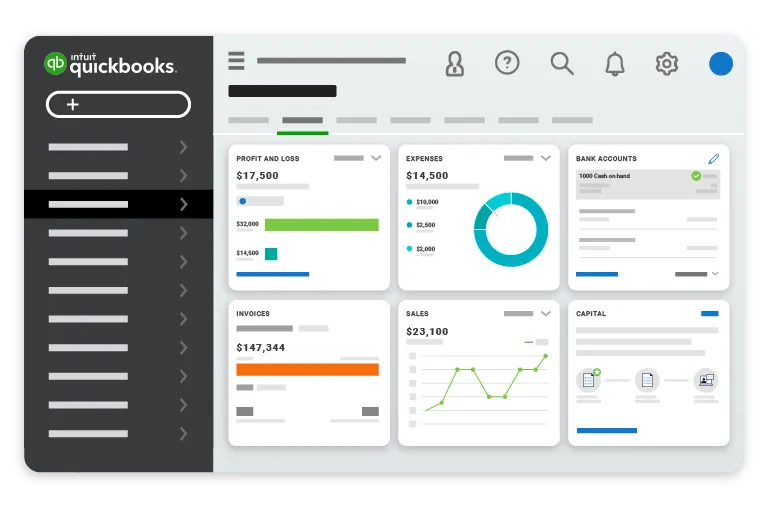
Set up a dedicated business checking account and keep all income and expenses separate from your personal finances. This makes it easier to track cash flow, manage expenses, prepare for taxes, and show lenders or partners that your electrical business is legitimate and well organized.
Using accounting software is helpful to automate basic tracking and reporting. As your business grows, you may consider working with an accountant to help with bookkeeping, tax compliance, and financial planning so you have clear insight into where your money is going and can make smarter decisions.
Step 7: Buy electrician tools and equipment

Having the right electrical tools and equipment is important for efficiency, safety, and professional service. The more tools you have, the wider variety of jobs you can complete.
Typical tools you’ll need to start an electrical business include:
| Category | Low-end/basic set-up | Mid-range/good quality | High-end/professional |
|---|---|---|---|
| Hand tools | $200–$350 (essential hand tools and basic testing gear) | $400–$700 (better brand hand tools, insulated versions, more pieces) | $800–$1,500+ (insulated tools, full combo kits, premium brands) |
| Power tools | $300–$600 (basic drill, saw, cordless driver) | $800–$1,500 (quality cordless set, hammer drill, saws, etc.) | $2,000–$3,500+ (top brands, multiple batteries, heavy-duty tools) |
| Safety equipment | $150–$250 (basic glasses, gloves, boots, hard hat) | $300–$600 (upgraded safety gear, added protection) | $800+ (high spec safety clothing, respirators, specialized gear) |
| Vehicle & transport | $5,000–$10,000 (used van/truck, basic shelving and tool racks) | $15,000–$30,000 (newer work van, racks, built-in storage) | $40,000+ (new vehicle with custom fit-outs and tech) |
Expect to spend about $7,000–$25,000 on start-up costs, without a vehicle. To control costs:
- Buy reliable used or refurbished items
- Budget for maintenance and replacement
- Lease equipment for specialty jobs until there’s enough client demand to buy
You can use Housecall Pro to manage inventory, track maintenance schedules, and assign equipment to technicians.
Step 8: Set electrician prices
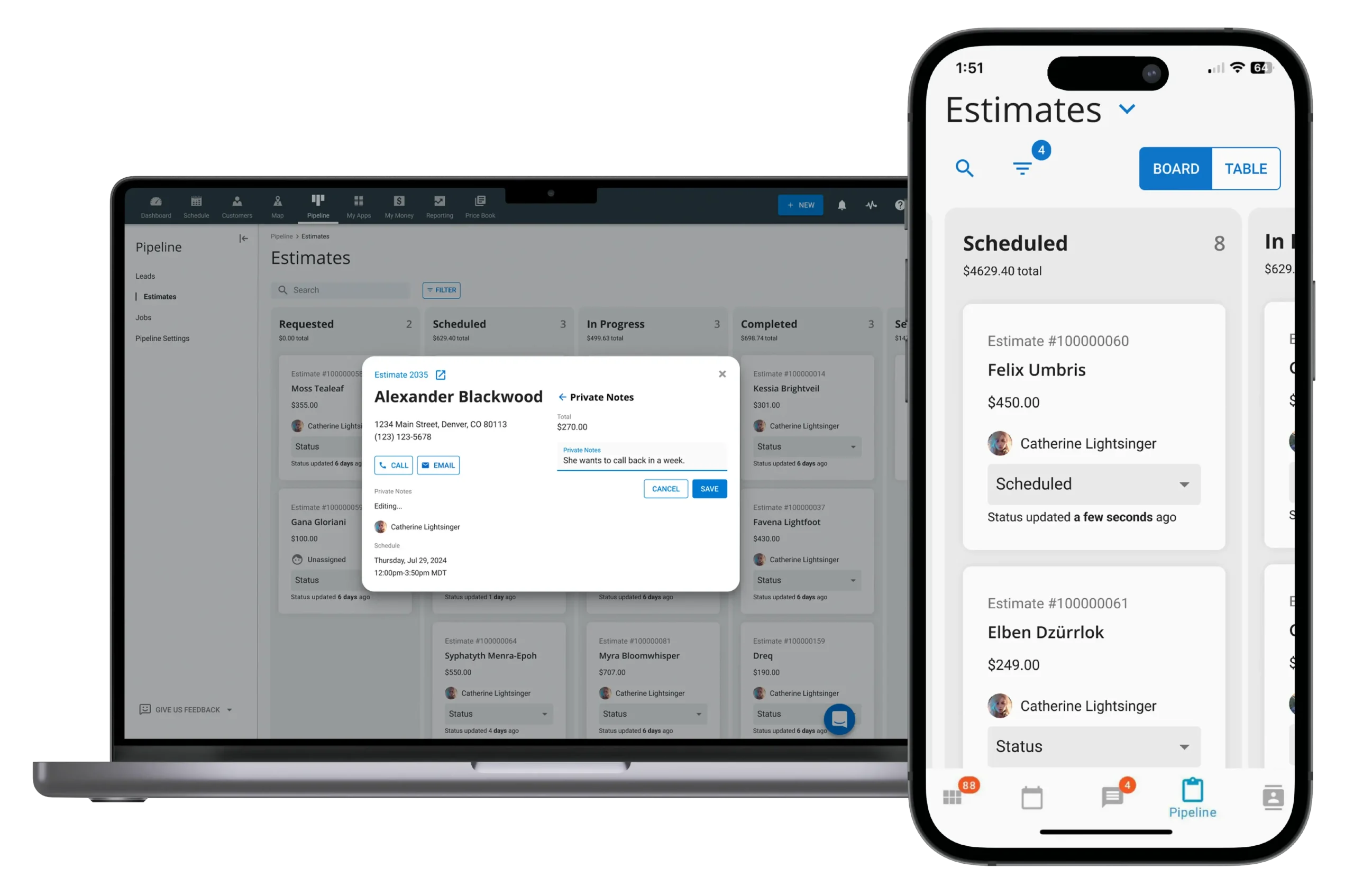
Electricians price work by the hour, by the job, or a combination of both. Choosing the right pricing structure helps you stay competitive while covering your costs and protecting your margins.
Here’s a quick breakdown of the most common approaches:
- Hourly pricing: Charges customers based on time spent on the job. Best for complex or unpredictable projects, like troubleshooting or rewiring older homes with outdated electrical systems.
- Flat-rate pricing: Sets a fixed price for a defined service. This is ideal for repeatable jobs where time and materials are predictable.
- Hybrid pricing: Combines hourly and flat-rate methods. For example, charging a flat fee for the first task, plus hourly charges for additional work.
No matter which model you choose, it’s important to calculate the true cost of each service before quoting customers. A simple pricing formula looks like this:
Service price = labor costs + material costs + overhead costs + profit margin
- Calculate your base costs: Add the total labor hours required (multiplied by your hourly rate), the cost of materials, and a share of your business overhead (insurance, vehicle expenses, office costs, etc.).
- Add your profit margin: Include a percentage (typically 10%–20%) on top of your base price to keep your business profitable.
Use our electrical pricing calculator to help set consistent pricing and avoid costly underpricing.
Step 9: Market your electrician business
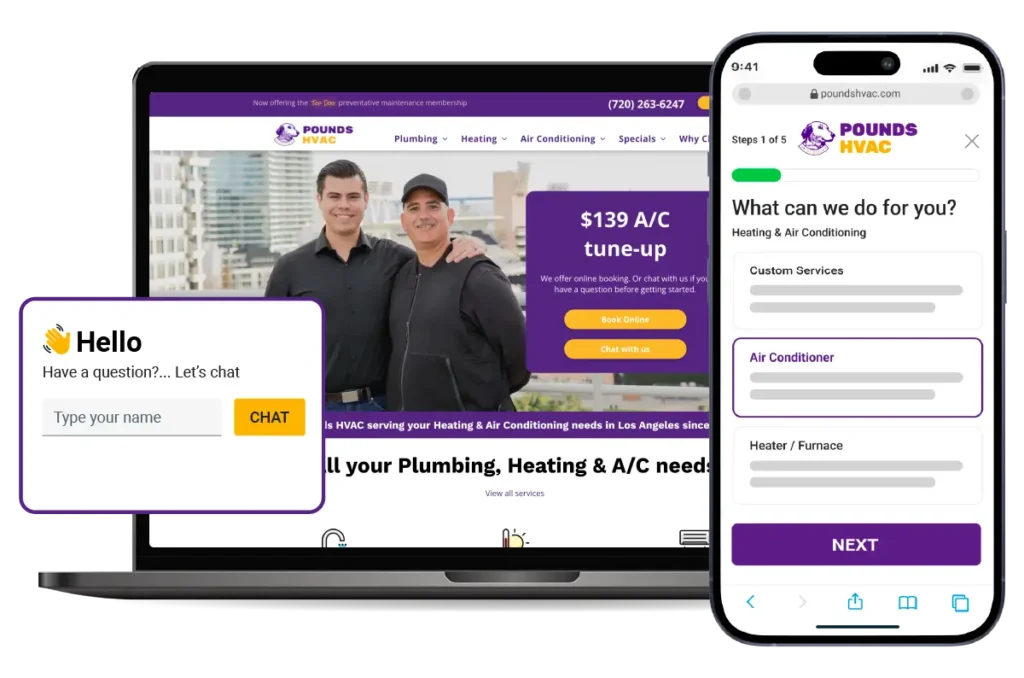
Customers need to know you exist to book your services. Marketing your electrical business helps you build visibility and reach homeowners who need electrical work now—or will in the future.
Your marketing plan should focus on a few core channels rather than trying everything at once. Common options include:
- Google Business Profile to show up in local search results
- A simple website with clear service descriptions and booking options
- Social media platforms like Facebook, LinkedIn, and TikTok to share testimonials and project photos
- Online directories such as Angi, Thumbtack, and Houzz
Housecall Pro integrates with third-party booking sites like Thumbtack and Angi, sending requests for estimates and booked jobs directly to your master calendar.
Design your brand
Your business name, logo, and messaging should be consistent across platforms so customers recognize and remember you. Before finalizing your name, check domain and social media handle availability. In some cases, adjusting your business name slightly to secure matching handles can make your brand easier to find and recall.
Build an online presence
More than 80% of customers do an online search before buying or booking. To make sure potential clients can find your business, build a strong online presence that highlights your services and expertise. At minimum, you should have:
- A Google Business Profile
- A basic website with services and booking options
- Active social media profiles with photos and reviews
- Listings on relevant directories
Regularly update your profiles and website with new projects, photos, and customer reviews to stay visible and relevant. Respond promptly to inquiries and reviews to build trust and encourage repeat business.
Learn more: How to use SEO for your electrical business
Use offline marketing strategies
Traditional marketing can still be effective, especially in local service areas. Here are some key strategies:
- Mailers and flyers: Reach customers who are less active on social media with well-designed mail campaigns or door-to-door flyers.
- Local networking events: Attend events like Chamber of Commerce meetings to connect with both commercial and residential clients and generate referrals.
- Word-of-mouth referrals: Ask for reviews and referrals after completing each job, and train your team to do the same politely and effectively.
Matthews recommends doing letterbox drops with before and after photos after completing projects. “Paying $200 for a thousand flyers repeatedly brought in over $2,000 worth of booked work,” he says, noting this has been more effective for his business than online tactics. “When people see that a local property has been restored or upgraded, it gives them confidence to call.”
Step 10: Grow your electrical business

Once you’re booking consistent work and managing jobs smoothly, you can begin thinking about growing your electrical business. Scaling too quickly can strain cash flow and service quality, so it’s important to expand intentionally.
Common growth options include:
- Bidding on government or commercial contracts.
- Offering maintenance agreements for recurring revenue.
- Expanding into niches like solar or EV charger installation.
Matthews expanded into commercial jobs by driving through industrial areas on weekends to see which sites were visually unfinished or abandoned. “These sites often needed contractors who would take on smaller work the large contractors ignored. I started with smaller jobs to establish traction from the work the bigger contractors ignored.”
Before expanding, review your financials to make sure you have the capacity, staffing, and systems to support growth without compromising service quality. Start with one new service at a time, evaluate its performance, and only scale once it proves profitable.
Free download: Electrical service agreement template
Hire electricians
If you’re regularly turning jobs down, it may be time to hire. Many business owners start by bringing on an apprentice for smaller tasks or a newly licensed journeyman electrician.
Your local IBEW union, trade schools, and community colleges can be strong hiring resources. Create a clear job description outlining responsibilities and expectations, and research average electrician wages in your area before posting on job boards like Indeed or Monster.
Always check references, verify credentials, and ask potential employees to perform a few small practical tasks as part of the hiring process. For roles that require unsupervised work, look for electricians with solid experience who you can trust to maintain your standards and reputation.
Learn more: Payroll from Housecall Pro helps you manage pay, bonuses, PTO, health insurance, and workers’ compensation.
How Housecall Pro’s electrician software can help
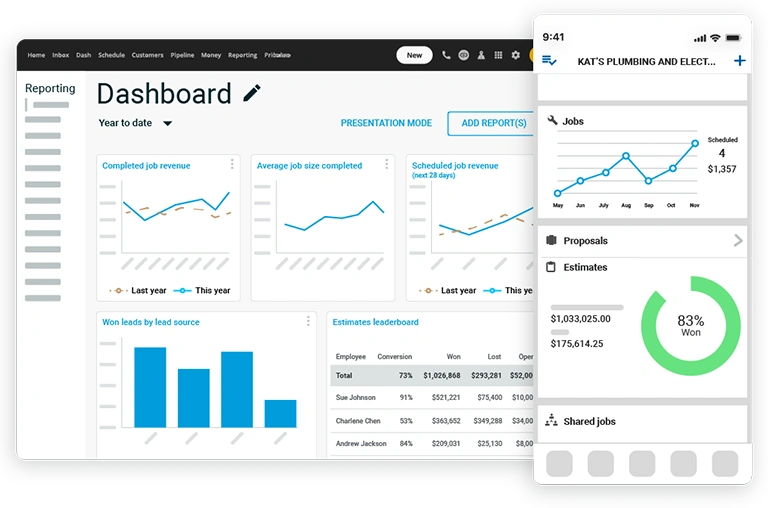
Housecall Pro is designed designed to help electricians manage daily operations and support long-term growth. Our fully customizable electrician software includes features for:
- Scheduling and client management: Book appointments, send reminders, and manage recurring jobs.
- Pricing and invoicing tools: Use price calculators and templates to set rates and quickly generate professional invoices.
- Marketing and client acquisition: Track reviews, automate follow-ups, and manage referral programs.
- Operational efficiency: Create custom quotes, process payments, and complete digital forms.
- Growth support: Manage employees, contractors, and multiple locations as your business scales.
Ready to start your electrical business on the right foot? Try our free 14-day trial to stay organized, secure more jobs, and grow your business from day one.
Starting an electrical business FAQ
-
Is owning an electrician company profitable?
-
Yes, owning an electrician company is profitable. If you manage costs effectively, price your services properly, and deliver consistently high-quality service, you can net over six figures in your first few years.
-
How hard is it to start an electrical business?
-
Starting an electrical business can be challenging but doable with the right preparation. You’ll need the proper licenses, insurance, and training, plus a solid plan for marketing, finances, and customer management. With experience, careful planning, and the right tools, you can launch a business in a matter of months.
-
How much should an electrical contractor charge per hour?
-
Your rates should reflect your geographical location, type of job, and experience level. In general, licensed electrical contractors charge between $50 and $150, with higher rates for emergency or specialty work.
-
Can I own an electrical company without being an electrician?
-
Yes, you can own the business, but you cannot perform electrical work without being a licensed electrician. You’ll need to hire electricians to work for you. You may also need a contractor license to operate, depending on your state’s laws