Want to win more jobs with less effort?
Grow your business and send quick quotes with our home service software.

Want to see your potential revenue?
See what businesses like yours earn with Housecall Pro in 1 - 2 minutes.
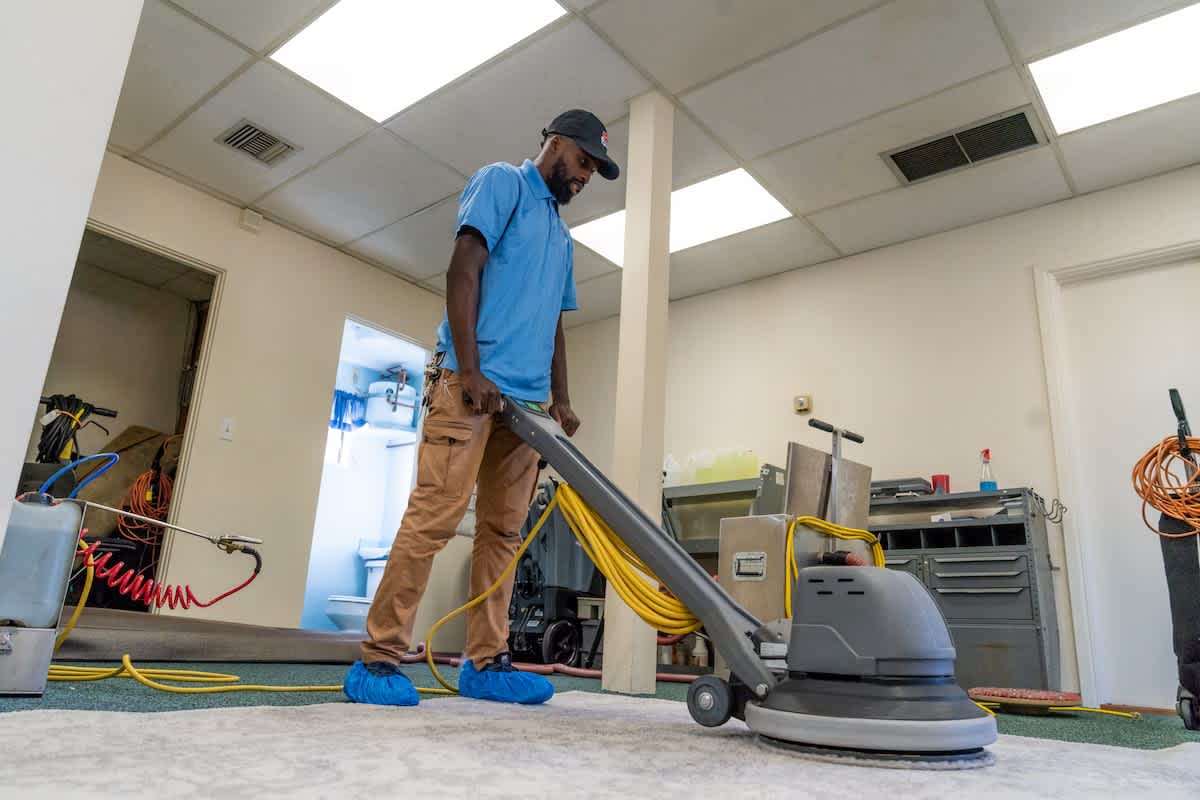
Janitorial cleaning is a steady, growing part of the service economy, with the U.S. market estimated at roughly $108 billion in 2025 and still expanding. Because commercial contracts make up a big share of that demand, janitorial work can be a realistic path to building a reliable, profitable business.
This guide walks you through exactly how to start a janitorial cleaning company, from the steps to get licensed and set up your operations to estimating costs, building a strong client base, and creating a plan for long-term growth. You’ll also learn how Housecall Pro helps you stay organized, manage jobs, and handle communication as your business scales.
Key takeaways
Keep these main points in mind as you launch your janitorial cleaning business:
Start with training: Build a foundation with industry certifications and any required licensing.
Plan before launching: Write a clear business plan outlining services, pricing, and goals instead of guessing as you go.
Protect your business: Invest early in insurance, bonding, and the right equipment from day one to manage risks.
Market consistently: Use online and offline strategies to build visibility and attract clients.
Scale thoughtfully: Add services and staff thoughtfully, track financial health, and grow only when your margins support it.
Janitorial cleaning business startup steps
- Step 1: Complete janitorial training
- Step 2: Create a janitorial cleaning business plan
- Step 3: Set a budget for your janitorial business
- Step 4: Register and license your janitorial cleaning business
- Step 5: Get janitorial cleaning business insurance and bonding
- Step 6: Buy janitorial cleaning tools and equipment
- Step 7: Price your janitorial cleaning services
- Step 8: Market your janitorial cleaning business
- Step 9: Grow your janitorial cleaning business
Step 1: Complete janitorial training
Before starting a janitorial business, you’ll need the right training and credentials. Many pros start with either a trade school program, an apprenticeship under an experienced cleaner, or a mix of both. These paths help you learn proper cleaning methods, chemical handling, equipment use, and safety rules—all skills commercial clients and licensing boards look for.
A strong starting point is the International Janitorial Cleaning Services Association (IJCSA). It offers a wide range of certifications, including:
- Master Certification
- Residential Cleaning Specialist
- Janitorial Custodial Certification
- Specialty Certifications tied to medical cleaning, mold inspection and remediation, biohazards, and more
You can also pursue training through The Association for Cleaning & Facility Solutions (ISSA). Its Cleaning Industry Management Standard (CIMS) is considered a top certification for companies wanting to demonstrate strong operational practices and quality-focused systems.
Most training tracks combine:
- Required instructional hours
- On-the-job experience (apprenticeship or supervised work)
- A written or hands-on exam
- Ongoing continuing education to keep credentials active
Completing these steps helps you qualify for your state or city licensing process and builds the foundation for reliable service from day one.
We’ll cover how to get started below. Download our small business plan template to get set up quickly.
Step 2: Create a janitorial cleaning business plan
A solid business plan will give your janitorial company direction and help you make thoughtful decisions as you move through the next steps. There’s no single right or wrong way to write a business plan, but taking the time to do your research now will pay off later.
In your plan, you’ll want to cover your:
- Service offerings
- Pricing strategy
- Marketing plan
- Operations plan
- Financial projections
Research your market and competitors
Begin by looking at who already serves your area and how expectations have shifted since COVID-19. Many businesses now expect higher sanitation standards, tighter schedules, and consistent communication. Use Google Maps, Yelp, and local business directories to search for “commercial cleaning,” “janitorial services,” or “office cleaning,” then review the following:
- Competitor pricing clues and service packages
- Industries they serve (medical, office, retail, industrial)
- How they present their services online
- Customer reviews that highlight strengths or weak spots
Pay close attention to what clients say they want, like flexible hours, deeper disinfection, or more reliable check-ins. If you can address needs your competitors overlook, it’s easier to stand out.
Create a janitorial services list
Before you outline what you’ll offer, remember that you don’t need to be everything for everybody. Many new janitorial companies want to cover every possible service, but it’s smarter to start with a focused list shaped by what your market actually needs. Look closely at the buildings in your service area—offices, clinics, retail stores, warehouses—and identify the cleaning demands common to each. Your goal is to build a service menu you can deliver consistently and well.
Sharon Cowan, President of Cleaning Business Consulting Group, suggests targeting financial industries like banks and wealth management firms. “Those kinds of businesses typically have higher-end clientele. It’s important to them that their office space is pristine and clean, and they’ll pay a higher price,” she says.
Common commercial janitorial services include:
- Floor care (sweeping, mopping, buffing)
- Restroom sanitation
- Trash removal
- Breakroom cleaning
- Dusting and surface care
- Window and glass cleaning
- High-touch disinfection
Choose services that match your training and equipment budget, then plan to add offerings like carpet extraction, floor waxing, or specialty sanitation once you get clients and identify where demand is strongest.
Set goals for your janitorial cleaning business
Write down short- and long-term goals like revenue targets, number of recurring clients, hours you want to work each week, or when you’d like to hire your first employee. These goals will guide your pricing, operations, and marketing decisions so you’re building toward specific outcomes instead of just “more jobs.”
Pro tip: Housecall Pro can help you track service costs, client data, and recurring contracts so you can compare actual performance to your projections and stay on track as your company grows.
Step 3: Set a budget for your janitorial business
Janitorial startups are generally affordable compared to equipment-heavy trades, but expenses like supplies, licensing, insurance, and transportation can add up faster than expected. Setting a realistic budget now will help you avoid surprise costs and start your business on steady financial footing.
How much does it cost to start a janitorial cleaning company?
The IJCSA estimates average startup costs of about $3,500 for janitorial businesses, but your total may be higher or lower depending on your niche, location, and how much equipment you already own. Specialty work (medical facilities, post-construction cleans, and multisite commercial contracts) typically requires a bigger investment, while small office routes or niche services may cost less to launch.
Common startup costs include:
- Equipment and supplies: $500–$2,000 for basic tools, cleaning solutions, and starter equipment.
- Licensing and permits: $50–$500, depending on city and state requirements.
- Insurance: $511, according to monthly averages from Insureon*
- Marketing and branding: $200–$1,000 for initial branding materials, website setup, and print assets
- Upfront operational expenses: $300–$1,200 for transportation, uniforms, and small tools
Planning carefully with these benchmarks in mind helps you launch with a setup that supports your goals and stays within budget.
*Include general liability insurance, workers’ compensation, janitorial bonds, commercial auto insurance, a business owner’s policy, and commercial umbrella coverage.
How to secure business financing
Though you can start a janitorial business for a few thousand dollars, certain situations may call for added funding. Equipment purchases, hiring employees, insurance, licensing fees, and marketing costs can add up quickly. Financing helps you cover these expenses without draining your personal savings and gives you breathing room while you build your first round of clients.
Here are some of the most common financing options:
- Government funding: Some federal, state, and local programs offer financial support for small businesses, especially those in service industries. These programs may include low-interest loans or targeted support for underserved business owners.
- Small Business Administration (SBA) loans: SBA-backed loans offer longer repayment terms and accessible interest rates, with microloans available for smaller funding needs.
- Business line of credit: This option gives you access to funds on an as-need basis. You only pay interest on what you use, which can help during seasonal dips or times you take on large commercial accounts that require extra supplies.
- Business grants: Some public agencies and private organizations provide grant funding that doesn’t need to be repaid, usually with specific eligibility criteria and an application process. Opportunities vary by state and industry.
Each lender sets its own requirements. Some may ask you to register or license your business before approving funds. If that applies to you, continue to Step 4 and revisit financing once those pieces are in place.
Step 4: Register and license your janitorial cleaning business
Once you’ve defined your services and business plan, it’s time to make your business official. Registration and licensing rules vary by state and city, but getting this step right early helps you open accounts, bid on commercial contracts, and present yourself professionally from day one.
Choose a business structure
Your business structure shapes how you pay taxes, handle liability, and organize daily operations. Here’s a quick breakdown to help you compare your options:
- Sole proprietorship: Simple and low-cost to set up, but there’s no separation between personal and business liability or assets. If something goes wrong, you’re personally responsible for any debts or legal claims.
- Limited Liability Company (LLC): A popular choice for service businesses. An LLC offers more liability protection than a sole proprietorship while keeping tax filing pretty simple.
- Partnership: Designed for two or more owners. Straightforward to form, but liability is shared unless you opt for a limited or protected structure.
- Corporation: Offers strong liability protection and room for growth, but requires more paperwork, formal meetings, and stricter compliance.
Rules and fees vary by state, so review local regulations before you decide. If you’re unsure which structure best fits your goals, talk with a lawyer or accountant who understands small service businesses.
Apply for a business license
Most states and cities require at least a general business license for janitorial services, and some have extra rules for companies handling chemicals or sanitation tasks. Start by checking your local city or county website, your state’s business portal, or your contractor licensing board. You’ll typically need to submit an application, pay a fee, and provide proof of training or certifications if required in your area.
Once approved, you’ll receive documentation you can share with clients or use when bidding on commercial accounts. You can store digital copies of your licenses and insurance documents in tools like Housecall Pro so they’re easy to access when you’re responding to RFPs or meeting new customers.
Get In Touch: 858-842-5746
Let us earn your trust
On average, Pros increase monthly revenue generated through Housecall Pro by more than 35% after their first year.
See plan options and feature breakdown on our pricing page.
Step 5: Get janitorial cleaning business insurance and bonding
Insurance and bonding play a major role in building trust with commercial clients and shielding your business from unexpected costs. Because janitorial work happens inside offices, clinics, schools, and other busy buildings, the risk of accidents, property damage, or employee injury is higher than in many other service industries.
Having the right coverage protects you from financial loss, helps you meet contract requirements, and shows potential customers that you’re a professional. Most janitorial cleaning businesses carry:
- General liability insurance: Helps cover accidental property damage or third‑party injuries that happen while you or your team are working on site. For example, if a cleaning solution spills and damages the flooring.
- Workers’ compensation: Often legally required if you hire employees. Helps cover medical bills and lost wages when someone is hurt on the job.
- Commercial auto insurance: Protects vehicles used to transport supplies and equipment between job sites and typically provides broader coverage than personal auto policies.
- Bonding: Many commercial contracts require janitorial bonds, which reimburse clients for theft or dishonest behavior. Even if the client doesn’t require it, being bonded can make you a more appealing choice.
When you shop for insurance, gather quotes from several providers. Compare coverage limits, deductibles, and exclusions, not just the premium costs. Insurers that specialize in service businesses often offer bundled packages tailored to cleaning companies.
Step 6: Buy janitorial cleaning tools and equipment
Having the right tools and equipment sets the tone for your service quality, your team’s safety, and how efficiently you can complete each job.
Below are common categories of equipment to consider.
Hand tools
- Microfiber cloths and dusters
- Spray bottles and cleaning solutions
- Scrub brushes
- Mops and buckets
- Squeegees
Power tools
- Commercial vacuum
- Carpet extractor
- Floor buffer or burnisher
- Pressure washer (if you offer exterior services)
Safety equipment
- Gloves and eye protection
- Non-slip footwear
- Masks or respirators
- Wet floor signs
- Chemical storage containers
Vehicles
- A reliable van or SUV to transport large equipment and restock supplies
- Shelving or bins to organize gear
Cost-saving tips
Use these tips to help save money while you’re building a starter setup:
- Find trusted suppliers who work with commercial cleaning companies.
- Look for reliable used or refurbished power tools for big-ticket items like buffers and extractors to save on upfront costs.
- Budget for routine maintenance and eventual replacement so equipment failures don’t disrupt key contracts.
Pro tip: Housecall Pro can help you manage your tool inventory, track maintenance schedules, and assign equipment to technicians so nothing gets overlooked during busy weeks.
Step 7: Price your janitorial cleaning services
Pricing is one of the biggest drivers of profitability, and it’s also where many new cleaning businesses slip up. Industry veterans like Davis warn against underpricing just to win contracts: “New owners usually want to be the cheapest, and that doesn’t leave any margin at all. Price for value, not volume.”
The right pricing strategy keeps you competitive while still supporting sustainable profit. As you work through this step, review our guide on pricing commercial cleaning jobs for more detail.
Choose a pricing model
Different pricing models fit different client expectations and job types. Common options are:
- Hourly pricing: Useful for unpredictable jobs or first-time services where you can’t accurately estimate how long the work will take.
- Flat-rate pricing: Works well for recurring commercial contracts with consistent job scopes.
- Hybrid pricing: Combines hourly and flat rates, like flat fees for routine cleaning plus hourly billing for extras like deep cleans or emergency call‑outs.
You can use more than one model across your client base. For example, an hourly rate for one‑off projects and a flat rate for ongoing contracts.
Set your rates
Your pricing should be grounded in real numbers, not guesses. When you base your rates on actual costs, every job is profitable. Here’s how to build a solid pricing strategy:
- Calculate your base costs: Add up your labor (including payroll taxes), supplies, drive time, and overhead. This gives you the minimum you need to charge to break even.
- Add your profit margin: Include a margin that supports growth, equipment replacement, and long-term stability—not just today’s expenses.
- Research competitor pricing: Look at what other janitorial companies charge in your area and consider their service quality, response times, and contract sizes.
- Adjust based on service type: You can typically charge more for specialized work—like disinfecting high-contact areas, floor care, post-construction cleanup, or medical facility sanitation—because it requires more time, training, or equipment.
Step 8: Market your janitorial cleaning business
Marketing is one of the most effective ways to grow your business, but it’s also one of the easiest tasks to overlook when you’re busy with day-to-day jobs. If you skip it, you may slow your momentum before you even get started. A simple, consistent marketing plan helps people recognize your name, builds trust in your community, and gives you an edge in a competitive field.
Design your brand
Your brand is often your first impression, so you want it to look professional and easy to recognize. Start by choosing a business name and making sure the matching domain and social media handles are available. Then pick colors, fonts, and a logo that fit the type of cleaning you do—whether that’s offices, medical facilities, or construction cleanup.
Pro tip: Keep your branding consistent across your uniforms, vehicles, business cards, invoices, and website. When everything looks cohesive, it’s easier for clients to remember you and trust your business.
More resources:
- 750+ Cleaning Company Names (and How to Pick One)
- 70+ Cleaning Company Slogans (and How to Write the Perfect One)
Build an online presence
Once your brand is set, make it easy for people to find and learn about you. Start with a simple, easy-to-navigate website that lists your services, industries you serve, service areas, a basic “how pricing works” overview, and clear ways to request a quote.
Then, set up and optimize your Google Business Profile so you show up in local search and map results when people look for janitorial services. Staying active on social media platforms like LinkedIn and Facebook—sharing updates, before-and-after photos, and occasional promotions—will help you stay visible with business owners and facility managers in your area.
Pro tip: Housecall Pro’s website builder makes it easy to create a professional, booking-ready site. Add your business details and we’ll take care of the setup for you.
Use offline marketing strategies
Local outreach still works well for route-based service businesses. Look for simple ways to get your name in front of nearby businesses, such as:
- Leaving flyers or door hangers in office parks and commercial corridors
- Networking with property managers, real estate agents, and local business groups
- Attending chamber of commerce events or industry meetups
- Encouraging referrals from early clients, friends, and family
These local efforts don’t just build visibility—they build trust. “Most businesses want to do business with reputable companies: companies that have a good reputation and have donated to community charities,” Cowan says. “Those kinds of things are important in coordination with digital marketing and all the online marketing efforts that you do.”
Step 9: Grow your janitorial cleaning business
Once your systems are running smoothly and you have steady clients, you can start growing at a pace that makes sense for you. Growth doesn’t mean taking on every opportunity at once; it’s about expanding in ways that support your long-term goals.
Start by reviewing your finances to make sure your current contracts are profitable and your pricing leaves room for healthy margins. Before you move into new neighborhoods or nearby cities, check that you have the staffing, equipment, and cash flow to keep service consistent.
You can also introduce complementary services—like carpet extraction, floor waxing, post-construction cleanup, or specialty sanitation—when demand and proper training make the investment worthwhile.
Hire janitorial employees
As your workload increases, you’ll eventually reach a point where you can’t handle every task on your own. Hiring employees or trusted contractors helps you take on larger commercial accounts and improve response times. Here are some signs it may be time to hire:
- You’re turning down work
- You have a long waitlist
- You’ve noticed a dip in quality because you’re stretched too thin
Be intentional with your recruiting. Post openings on job boards, local community sites, and industry groups. Ask candidates about their experience, availability, and comfort working in commercial spaces. Always check references and verify any certifications tied to your services. Once they’re on board, provide hands-on training so they understand your cleaning process, safety standards, and customer service expectations.
April Prothero, founder of Going GreenHouse, emphasizes that hiring isn’t a one‑time task but an ongoing discipline. Staying proactive helps you build an “A‑team” and maintain a strong bench when unexpected no‑shows or turnover happen.
How Housecall Pro’s janitorial cleaning software can help
Housecall Pro is an all-in-one software platform built to help service businesses save time, organize daily operations, and grow with less stress. For janitorial companies, it brings together the tools needed to manage clients, schedule recurring jobs, and keep your team aligned as you grow.
Here’s how it supports your janitorial business:
- Scheduling and client management: Book appointments, set up recurring commercial routes, send automated reminders, and keep notes, photos, and documents attached to each account.
- Pricing and invoicing tools: Use built‑in calculators and templates to set rates, create estimates, and send polished invoices that match your contracts.
- Marketing and client acquisition: Track reviews, automate follow‑up messages, and manage referral activity so satisfied clients help bring in steady new business.
- Operational efficiency: Accept payments in the field, complete digital forms, store licenses and insurance, and access everything from a mobile app.
- Growth support: Manage employees, contractors, multiple teams, or multiple locations as your janitorial company expands, with reporting to see which services and routes are most profitable.
Whether you’re launching your first janitorial route or scaling into new neighborhoods, Housecall Pro gives you the structure and tools to grow confidently and stay organized. Try it free for 14 days to start your business on the right foot.