Want to win more jobs with less effort?
Grow your business and send quick quotes with our home service software.

Want to see your potential revenue?
See what businesses like yours earn with Housecall Pro in 1 - 2 minutes.

Pricing HVAC jobs in 2026 takes more than checking what other companies charge. Labor, equipment, refrigerant, fuel, software, insurance, warranty risk, and callbacks all affect your bottom line. If your pricing only accounts for obvious costs, margins can disappear quickly.
Many HVAC pros end up absorbing expenses or cutting into profits just to close jobs. A better approach is using a structured pricing system instead of guesswork. When you factor in real labor costs, overhead, materials, service fees, and a target profit margin, your pricing stays consistent—and profitable—even as costs change.
This guide walks through how to price HVAC services using a reliable formula, when to use flat-rate versus time-and-materials pricing, how to account for service call fees, and how to build a repeatable price book your team can confidently follow.
→ Pricing jobs takes time. Our free HVAC price book template has customizable branding and built-in formulas already set up, so you can spend less time on the admin side.

Rate checker
Stop second-guessing your bids. Check your rates against market averages and get a clear picture of what you should be charging today.
Quick answer: How to price HVAC jobs in 2026
To price HVAC jobs accurately in 2026, calculate your total job cost—including labor with full labor burden, materials and equipment, overhead, service call costs, and any added complexity or risk—then add your target profit margin. A simple formula is: HVAC price = (labor + materials + overhead + service fee) + profit margin. Base your pricing on your actual costs rather than competitor rates so you can protect margins as expenses change.
For most HVAC businesses, flat-rate pricing works well for common repairs and installations, while time-and-materials pricing can be a better fit for diagnostics or complex jobs with uncertain scope. Typical 2026 HVAC prices range from $70–$200 for a service call, $150–$2,500 for repairs, and $5,000–$12,500 for system installations, depending on the equipment, labor required, and job complexity.
How we sourced HVAC pricing data
The pricing ranges in this guide are built from aggregated data across leading home service platforms and contractor cost studies. Sources include Angi, HomeAdvisor, HomeGuide, HVAC.com, and Fixr, using their latest available 2026 pricing data and benchmarks.
These numbers reflect typical residential HVAC pricing across the U.S., but they’re meant to be a baseline. Your actual pricing will vary based on:
- Local labor rates and cost of living
- Equipment type, efficiency, and supplier costs
- Job complexity and installation conditions
- Business overhead and operating expenses
- Service level, warranties, and callback risk
Use these benchmarks to sanity-check your pricing, then adjust based on your real costs and target profit margins to stay consistently profitable.
Key takeaways:
Remember these quick tips whenever you're setting a new HVAC price or quoting a job.
Use a service call fee: A diagnostic or call-out fee covers travel time, system inspection, and baseline overhead that hourly labor alone won’t capture.
Choose the right pricing model: Most HVAC pros use a hybrid of hourly and flat-rate fees to balance accuracy, speed, and customer clarity.
Adjust for job complexity: System age, accessibility, home size, and emergency timing can significantly affect labor time and final HVAC pricing.
Keep pricing consistent: Standardized price books and estimating tools prevent underbidding, protect margins, and keep every technician quoting the same way.
Table of contents
- Average HVAC prices and rates in 2026 (hourly and flat)
- Additional HVAC cost considerations
- HVAC pricing structures
- How to calculate HVAC prices step by step
- HVAC pricing example: furnace or heat pump installation
- Advanced HVAC pricing techniques
- How to explain HVAC price increases to customers
- How software can help you price HVAC jobs
Average HVAC prices and rates in 2026 (hourly and flat)
HVAC prices vary widely depending on the type of work. As of 2026, repairs average $150–$450, while full HVAC replacements land between $5,000 and $12,500 (see methodology). For hourly work, HVAC pros charge an average of $75–$150.
These national averages are a good starting point to see where your rates fall within the broader market, but don’t base your pricing on them alone. “A lot of new HVAC owners look around, see what the competition’s charging, and just try to match that. The problem is that’s the fastest way to undercut yourself,” says Irena Martincevic, an industry analyst at Fixr.com.
Factors like equipment efficiency, job complexity, regional labor costs, and overhead all impact what you should be charging. For example, an HVAC contractor in a high-cost metro may need to charge more than a rural contractor with lower overhead.
HVAC service call cost
Most HVAC pros charge a service call or diagnostic fee to cover travel, fuel, diagnostic tools, dispatch time, and admin work even if the customer doesn’t approve the repair. In 2026, average service call fees range from $70–$200, with higher rates for nights, weekends, emergency response, or long-distance travel.
HVAC repair cost
HVAC repair costs depend on the type of system, parts, and labor involved. Minor jobs like capacitor swaps are quick and inexpensive, while major repairs like compressors can take hours and cost more in parts.
| Service | Average price range |
|---|---|
| Minor repairs, such as capacitor replacement | $150–$600 |
| Major repairs, such as compressor replacement | $900–$2,500 |
Pro tip: Knowing your real labor time helps you avoid undercharging. Track how long these jobs actually take using tools like Housecall Pro’s Time Tracking feature.
HVAC installation and replacement cost
Installation costs vary based on system type, home size, equipment efficiency, and labor rates. Make sure to account for more than the new equipment when setting your pricing. You’ll need to factor in labor, planning, permitting, overhead, warranty exposure, and profit margin too.
| Service | Average price range |
|---|---|
| Mini-split (per zone) | $2,000–$8,000 |
| Furnace install | $3,000–$7,000 |
| Central AC | $3,500–$10,000 |
| Heat pump | $4,500–$12,000 |
*Mini-split prices are per zone; full system cost depends on zone count. All other prices reflect complete single-system residential installs.
Cost to replace or clean ductwork
Ductwork pricing can be tricky because jobs vary depending on home size, layout, access, and the condition of the existing system. Installation is usually priced per linear foot, while cleaning typically covers the whole system.
| Service | Average price range |
|---|---|
| New duct installation | $10 to $25 per linear foot |
| Duct cleaning | $450–$,1000 |
*2026 national average ductwork pricing; installation is per linear foot, while cleaning reflects typical whole-system residential service.
HVAC maintenance plan cost
Maintenance plans create predictable revenue and help build long-term customer relationships. Pricing varies based on how many systems a home has, how often you visit, and what level of service you include.
Most HVAC businesses charge:
- Residential maintenance plans: $150–$500 per year
- Additional systems or IAQ add-ons: Slightly higher annual plan pricing
- Premium tiers: Higher rates for priority scheduling, extended warranties, or repair discounts
HVAC service price list
Here’s a sample price list with average ranges for common HVAC jobs:
| Service | Typical price range |
| Tune-up | $70–$100 |
| Thermostat repair or replacement | $75–$575 |
| Repair or replace flame sensor | $80-$250 |
| Capacitor replacement | $150–$400 |
| Drain line cleaning | $150–$350 |
| Blower motor repair | $150–$700 |
| Refrigerant recharge | $200–$600 |
| AC fan motor replacement | $200–$700 |
| Furnace gas valve replacement cost | $200–$800 |
| Refrigerant leak repair | $200–$1,500 |
| HVAC duct cleaning cost | $300–$700 |
| Blower motor replacement | $300–$900 |
*Prices reflect combined labor and parts for a standard residential call; labor-heavy jobs (duct cleaning, drain line) vary more by region than parts-heavy jobs (capacitor, fan motor).
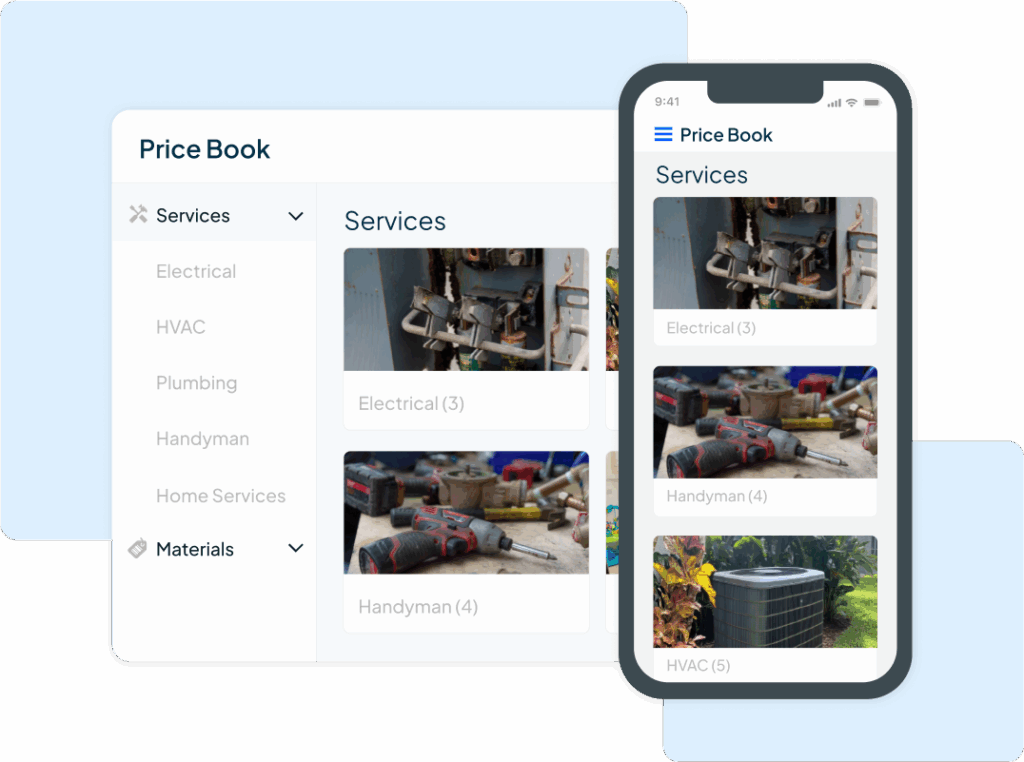
Pro tip: To help technicians quote consistently, consider adding your prices to your a digital price book like the one in Housecall Pro so they’re always working from approved rates.
Additional HVAC cost considerations
Numerous factors can impact how long or complex a job is. Beyond basic labor and material costs, always consider the following when creating estimates:
- Location: High-cost metro areas, remote areas, and regions with severe weather typically command higher rates. For example, A Phoenix contractor might charge $250–$350 for an emergency summer diagnostic call—30%–50% above the national average—given peak-season demand.
- Home size and age: Larger homes and older systems often need more diagnostic time, longer duct runs, or additional components.
- Accessibility: Systems in attics, tight crawl spaces, roofs, or mechanical closets take longer to reach and work on. Add time for setup, safety, and limited maneuverability.
- System complexity: Zoned systems, VRF systems, older equipment, and unusual layouts may require more experienced techs or longer troubleshooting time.
- Warranty and callback risk: Repairs and installs with higher follow-up risk should include enough margin to cover potential return visits.
HVAC pricing structures
There’s no single pricing model that fits every HVAC job. The right approach depends on how easy the work is to estimate the work upfront and whether you’re pricing a standard repair, a new install, or a more involved diagnostic call.
When should HVAC companies charge hourly?
Most HVAC pros use hourly pricing for unpredictable jobs where it’s hard to estimate the total time upfront.
Examples include:
- Diagnostic and troubleshooting calls: When the issue is unclear before inspection
- Minor repairs: Such as replacing capacitors, switches, belts, or small components
- System inspections outside a maintenance plan: When the visit is not covered by an agreement
- Ductwork adjustments or small fixes: When access and scope may change on-site
- After-hours or emergency service: When labor rates usually increase
When does flat-rate HVAC pricing make sense?
Flat-rate pricing makes sense for HVAC repairs, tune-ups, and standard replacements where you know the materials and labor required. Instead of billing by the hour, you charge a set price.
Customers like this model because they know what they’ll pay upfront. “[It] gives them peace-of-mind and makes them more likely to choose you over a company that might be cheaper but leaves them guessing what the final bill will be,” says Sergey Nikolin, president and co-founder of the Washington state-based HVAC company Product Air Heating & Cooling LLC, which has been in business since 2017.
The downside is that if a job takes longer than expected, your profit shrinks, so accurate estimating is crucial. We’ll walk through how to calculate pricing later on.
Why do most HVAC businesses use hybrid pricing?
Most HVAC pros use a hybrid model because it offers the most flexibility, ensuring predictable jobs stay profitable while more unpredictable work is fairly priced.
Here’s how a hybrid pricing system works for most pros:
- Flat rate: Standard repairs, tune-ups, and common replacements
- Hourly or time-and-materials: Troubleshooting, multi-system problems, remodels, or custom ductwork
- Service call fees: Travel, dispatch, inspection, and baseline overhead
- Emergency pricing: Nights, weekends, holidays, and urgent response
Emergency and after-hours pricing
Emergency jobs require higher pricing because they demand faster responses and disrupt your usual schedule. Customers also expect higher rates during nights, weekends, holidays, or extreme weather events.
Typical emergency pricing includes:
- After-hours diagnostic fee: $150–$300
- Emergency labor multiplier: 1.5x–2x the standard labor rate
- Travel or fuel surcharge: Added for long-distance or difficult-to-reach jobs
For example, a weekday repair might normally cost $200 for a service call plus $100 per hour for labor. The same job on a Sunday evening could rise to $250–$300 for the call plus $150–$200 per hour for labor. This helps your business get paid for the urgency, schedule disruption, and overtime work.
How to calculate HVAC prices step by step
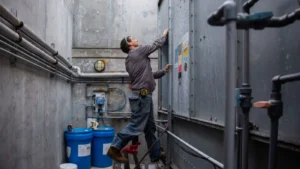
Pricing HVAC jobs starts with understanding your costs. “Anybody can build a price book,” says Anthony Suau of Dade Super Cool AC. “The question is: is the number a good number for your business?” That means accounting for your actual labor, materials, overhead, and profit goals instead of relying on generic industry averages or competitor rates.
Use the step-by-step approach below to calculate HVAC prices that cover your costs and support your business goals.
Pro tip: Calculations can get messy quickly. Housecall Pro offers a free HVAC service price calculator that can help simplify the estimating process.
Step 1: Calculate overhead
Overhead includes the costs of running your HVAC business that are not tied to a single job but still need to be covered by every invoice.
Common overhead costs include:
- Insurance and licensing: Required coverage, renewals, and local compliance costs
- Trucks and fuel: Vehicle payments, gas, maintenance, and repairs
- Software and dispatch tools: Systems that help your team schedule, quote, invoice, and collect payment
- Office staff and admin support: Payroll for non-field work that keeps jobs moving
- Marketing and advertising: Website, ads, print materials, and referral programs
- Shop, warehouse, or storage costs: Rent, utilities, equipment storage, and inventory space
To calculate your hourly overhead:
- Add up your monthly or annual overhead
- Divide by your billable hours
- Add this number to your pricing formula
This helps ensure every job contributes to the real cost of running the business.
Step 2: Add labor and materials
Labor includes more than a technician’s hourly wage. Total costs often include:
- Payroll taxes: Employer-paid taxes tied to technician wages
- Workers’ comp: Required coverage for field employees
- Paid time off: Vacation, sick time, or holiday pay
- Training and onboarding: Time spent getting techs ready for the field
- Employee benefits: Health insurance, retirement contributions, or other benefits if offered
Once labor costs are accounted for, turn to materials and equipment. Equipment markup should cover more than the unit itself. Build in supplier price changes, warranty handling, pickup or delivery time, financing costs, and the risk of callbacks tied to installation quality.
If you rely on rough estimates or outdated supplier costs, your pricing can fall behind fast. Update refrigerant, compressor, and equipment costs whenever supplier pricing changes, not just during your annual review.
Step 3: Build in service call fees
Start by adding up what every visit actually costs you before a single repair begins: travel time, fuel, dispatch, and your baseline overhead. That total is your floor. Your service call fee should never go below it.
From there, structure it in three parts:
- A flat fee for standard daytime calls—typically $70–$200 depending on your market and average drive time
- A multiplier or surcharge for after-hours, emergency, or long-distance calls (most contractors charge 1.5x–2x the standard rate)
- A separate line item on every estimate so customers know what they’re paying for upfront, before any repair work starts
If your service call fee is consistently getting pushed back on or waived to close jobs, that’s usually a framing problem, not a pricing problem. Help them explain it simply—something like “this covers our travel and time to get out to you”— nd most customers will accept it without pushback.
Step 4: Set minimum profit margins
Your profit margin is what remains after covering labor, materials, overhead, and other job-related costs. Setting a minimum acceptable margin helps you avoid busy work that does not meaningfully support your business.
As a general benchmark, most residential HVAC contractors target net margins of 10%–20%, with service and repair calls often running higher than installs because material costs are lower. Target margins will vary by market, service type, and competition. The key is to price with a margin in mind instead of treating profit as whatever’s left over.
Knowing your minimum acceptable margin also makes it easier to decide when a job needs a higher price because of complexity, urgency, or schedule disruption.
Step 5: Standardize your pricing structure
Once you’ve calculated your costs and target margins, turn those numbers into a consistent pricing system your team can use on every job. A standardized price book makes quoting faster, reduces guesswork, and helps technicians and office staff price similar work consistently.
Build each price-book item around the costs you calculated in the previous steps, then create clear pricing rules for common situations. A strong HVAC pricing system should include:
- Standard service call fees: Baseline charges for dispatch, travel, and diagnostics
- Flat-rate pricing: Approved prices for common repairs and replacements
- Time-and-materials pricing: A structure for diagnostics, custom work, or unclear scopes
- Equipment pricing tiers: Options based on efficiency, brand, system type, and warranty level
- Complexity add-ons: Adjustments for difficult access, emergency timing, or unusual system setups
A standardized system becomes even more important as your team grows because it reduces pricing inconsistencies from one technician or job to the next.
Step 6: Review your pricing every year
Labor, refrigerant, equipment, fuel, and operating costs change over time. Review your pricing regularly so rising costs don’t quietly eat into your margins.
Many HVAC businesses update pricing by:
- Raising service call fees: When operating costs, fuel, or dispatch costs increase
- Adjusting repair and install pricing: When labor or supplier costs change
- Revising markup targets: When certain jobs are consistently underpriced
- Increasing emergency rates: When after-hours calls create more schedule strain
- Updating warranty allowances: When callbacks are cutting into job profitability
Regular pricing reviews help you stay profitable without waiting until underpricing becomes a bigger problem.
HVAC pricing example: furnace or heat pump installation
Here’s what that math can look like on a larger HVAC installation job:
- Labor: 20 hours × $60/hour = $1,200
- Materials and equipment: $7,000
- Overhead: $500
- Total cost before margin: $8,700
- Final price with 20% margin: $10,440
This example shows why installs should never be priced from equipment cost alone. Labor, overhead, and target margin materially change the final selling price.
Example HVAC price book
This sample HVAC price book shows how you can structure clear, consistent pricing for diagnostics, repairs, and emergency services. The formulas demonstrate exactly how cost, overhead, and margin combine to create a final flat-rate price.
| Scenario | Inputs | Formula | Final price | Margin %* |
|---|---|---|---|---|
| Standard diagnostic | 1 hr @ $90/hr + $15 overhead + $10 materials + $28 margin | (1 × 90) + 15 + 10 + 28 | $143 | 19.6% |
| AC capacitor replacement | 0.75 hr @ $95/hr + $20 part + $15 overhead + $35 margin | (0.75 × 95) + 20 + 15 + 35 | $141.25 | 24.8% |
| Heat pump service call | 1.25 hr @ $95/hr + $10 materials + $20 overhead + $45 margin | (1.25 × 95) + 10 + 20 + 45 | $193.75 | 23.2% |
| Drain line clearing | 0.5 hr @ $90/hr + $5 materials + $15 overhead + $20 margin | (0.5 × 90) + 5 + 15 + 20 | $85 | 23.5% |
| After-hours emergency diagnostic | 1 hr @ $95/hr × 1.75 + $15 overhead + $60 margin | (1 × 95 × 1.75) + 15 + 60 | $241.25 | 24.9% |
*Margins vary by job type because the harder a job is to predict, the more margin you need to protect yourself if it runs over.
Advanced HVAC pricing techniques
Advanced pricing techniques help HVAC businesses increase revenue, improve close rates, and protect margins without relying on discounts. Once your base pricing is solid, use these strategies to add value and price more effectively.
Offer tiered options
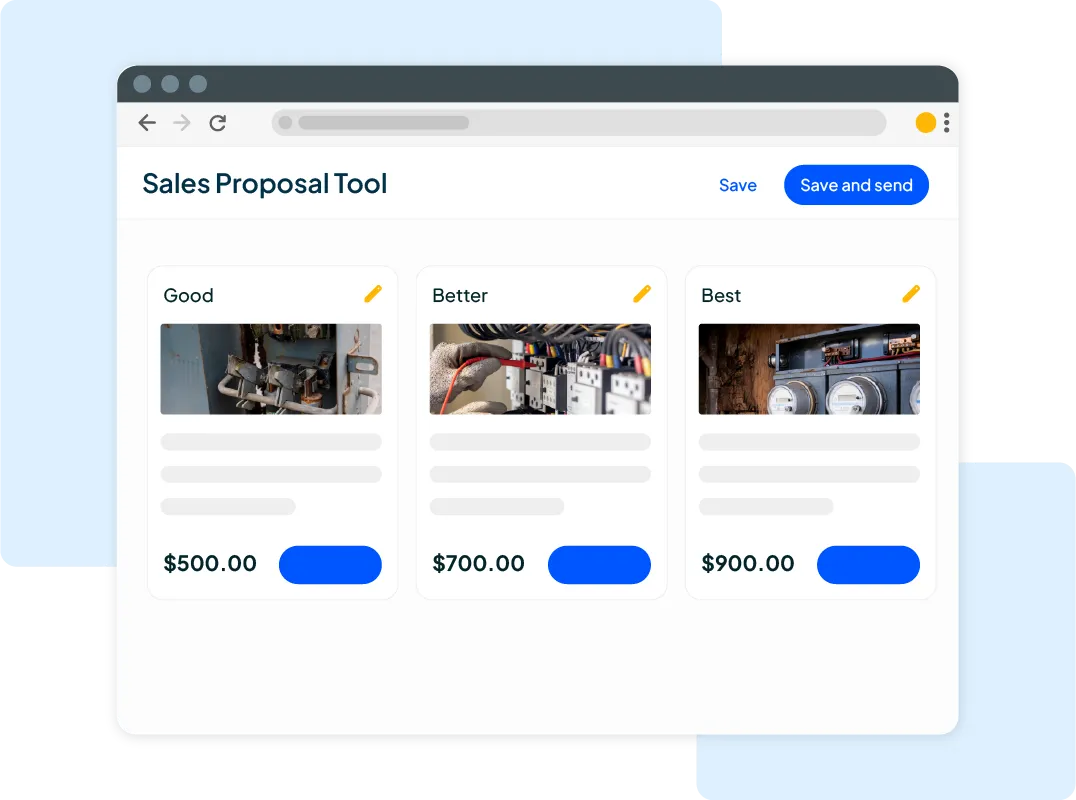
Tiered pricing helps customers compare options and choose what fits their budget. A basic, standard, and premium package can increase transparency while raising your average job value.
Common tiers include:
- Standard-efficiency equipment: Lower upfront cost with basic performance
- Mid-efficiency systems: A balance of comfort, efficiency, and price
- High-efficiency premium systems: Higher upfront cost with stronger efficiency and comfort benefits
- Single-stage, two-stage, or variable-speed options: Clear choices based on comfort level and budget
Bundle services and add-ons
Bundling increases perceived value without lowering your rate.
Common bundles include:
- IAQ products with system installs: Add filters, purifiers, or humidifiers where relevant
- Duct cleaning with furnace replacement: Pair related work when the system is already being serviced
- Filter kits with new systems: Give customers an easy maintenance option
- Extended labor warranties: Add confidence while protecting your margin
- Seasonal tune-ups: Create a path toward recurring service
Sell HVAC membership plans
Membership plans create recurring revenue and help you keep customers longer.
Typical perks include:
- Seasonal tune-ups: Routine visits before heating or cooling season
- Discounted repairs: A reason for members to approve work through your company
- Priority service: Faster scheduling during peak demand
- Reminder-based maintenance: Less manual follow-up for your office team
Discounts work better when they’re tied to a specific customer benefit instead of being offered whenever someone questions the price. “I typically don’t like to give discounts,” says Suau. “Discounts are benefits that I like to give to customers that have service agreements.” This approach protects your standard rates while giving customers another reason to enroll in and renew a maintenance plan.
Pro tip: Membership plans can lose value when renewals and payments slip through the cracks. Housecall Pro’s service agreement software helps automate renewals, billing, and recurring plan management so you can maintain repeat business without the extra admin.
How to explain HVAC price increases to customers
As Danny Reddick, founder and president of the Viriginia-based HVAC company Reddick & Sons, puts it, “your reputation is your business.” Being open about pricing, explaining line items clearly, and avoiding shortcuts reinforces trust and protects your brand over the long term.
When customers know exactly what they’re paying for and why, they’re more likely to approve work, leave positive reviews, and call you again the next time something breaks. Transparent estimates turn pricing from a point of tension into part of the overall customer experience.
Here are simple ways to explain pricing adjustments professionally:
- Give customers advance notice: Providing at least 30 days’ notice (or before the next scheduled maintenance visit) shows respect and reduces pushback.
- Explain the value they’re receiving: Clearly outline what the price change covers (higher-quality parts, extended warranties, updated tools, rising material costs) so customers understand they’re paying for.
- Keep the message simple: Share the new price, the effective date, and what’s included in their service. Short, friendly communication works best.
- Offer loyalty perks when appropriate: Long-term clients appreciate small gestures like priority scheduling, extended labor warranties, or a one-time discount on a maintenance plan.
- Stay confident in your pricing: Customers take cues from your tone, so present adjustments clearly and professionally. Believing in the value you provide helps them accept the change without pushback.
HVAC price increase letter (template)
Hi [Customer Name],
I’m reaching out to let you know about a small update to our HVAC service pricing. Due to rising equipment, refrigerant, and labor costs, your rate for [service] will change from [old price] to [new price] starting on [date].
This adjustment helps us maintain fast response times, certified technicians, and reliable service for your heating and cooling system. Everything currently included in your plan or service package will remain the same.
If you have any questions, I’m here to help. Thank you for trusting us with your home’s comfort.
[Your Name]
[Business Name]
[Phone Number]
[Email or Website]
Learn more: How to write a price increase letter like a pro
How software can help you price HVAC jobs
Housecall Pro is a field service platform designed to help HVAC businesses manage operations, track job profitability, and maintain consistent pricing. With our HVAC software, you can:
- Schedule and dispatch jobs: View real-time technician availability, assign jobs, and reduce gaps between calls.
- Automate invoices and payments: Generate invoices on-site, send them digitally, and collect payment through online or card processing.
- Use flat-rate pricing and built-in price books: Standardize service prices to keep quoting consistent across technicians.
- Track performance metrics and job profitability: Identify which services, equipment, and maintenance plans deliver the strongest margins.
- Manage customer relationships: Store job history, system details, and service notes to support repeat business, membership renewals, and referrals.
- Store certifications and licenses: Keep technician credentials organized for compliance and audit readiness.
Start your free 14-day trial today and see how much smoother your business can run with the right tools.
FAQ
How should HVAC companies price jobs in 2026?
HVAC jobs should be priced by combining labor, materials, overhead, service call fees, and target profit margin. Most companies use a hybrid model with flat-rate pricing for standard jobs and time-and-materials pricing for diagnostics or custom work.
How much should an HVAC service call fee be?
In 2026, most HVAC service call fees range from $70–$200, with higher fees for emergency, weekend, and after-hours visits.
Is flat-rate or hourly pricing better for HVAC?
Flat-rate pricing works best for predictable repairs and installs, while hourly or time-and-materials pricing is better for diagnostics, troubleshooting, and more complex work.
What should an HVAC price book include?
A strong HVAC price book should include service call fees, standard repairs, equipment pricing tiers, IAQ add-ons, and membership-related pricing.
What costs should every HVAC quote include?
Every HVAC quote should include labor, materials, overhead, and a target profit margin. Depending on the job, it may also need service call fees and adjustments for urgency, difficult access, or added complexity.
How often should HVAC companies review pricing?
At minimum, review HVAC pricing once a year. If labor, refrigerant, equipment, or fuel costs change significantly, update your prices sooner.