Want to see your potential revenue?
See what businesses like yours earn with Housecall Pro in 1 - 2 minutes.

Getting HVAC estimates right makes the whole job run smoother. Miss something, and you’ll feel it all the way through the install—including longer hours, tighter margins, and stress that could have been avoided with smarter planning.
This guide breaks down exactly how to estimate HVAC jobs accurately. Whether you’re handling a straightforward system replacement or a complex commercial rooftop job, you’ll learn how to price work consistently, reduce estimating errors, and keep your margins healthy.
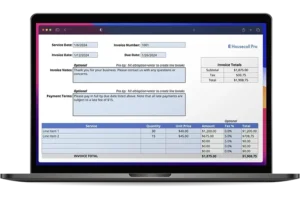
→ Want to create estimates faster and with fewer mistakes? Download our free HVAC estimate template to build accurate, professional quotes in minutes.
Key takeaways
Follow these essentials to keep your HVAC estimates consistent, competitive, and profitable:
Start with accurate load calculations: Correct calculations set the foundation for a reliable estimate.
Use updated material and equipment prices: Costs change quickly, so always reference current supplier data.
Account for labor correctly: Labor often makes up 40%–60% of total job cost, so precise estimates protect your margins.
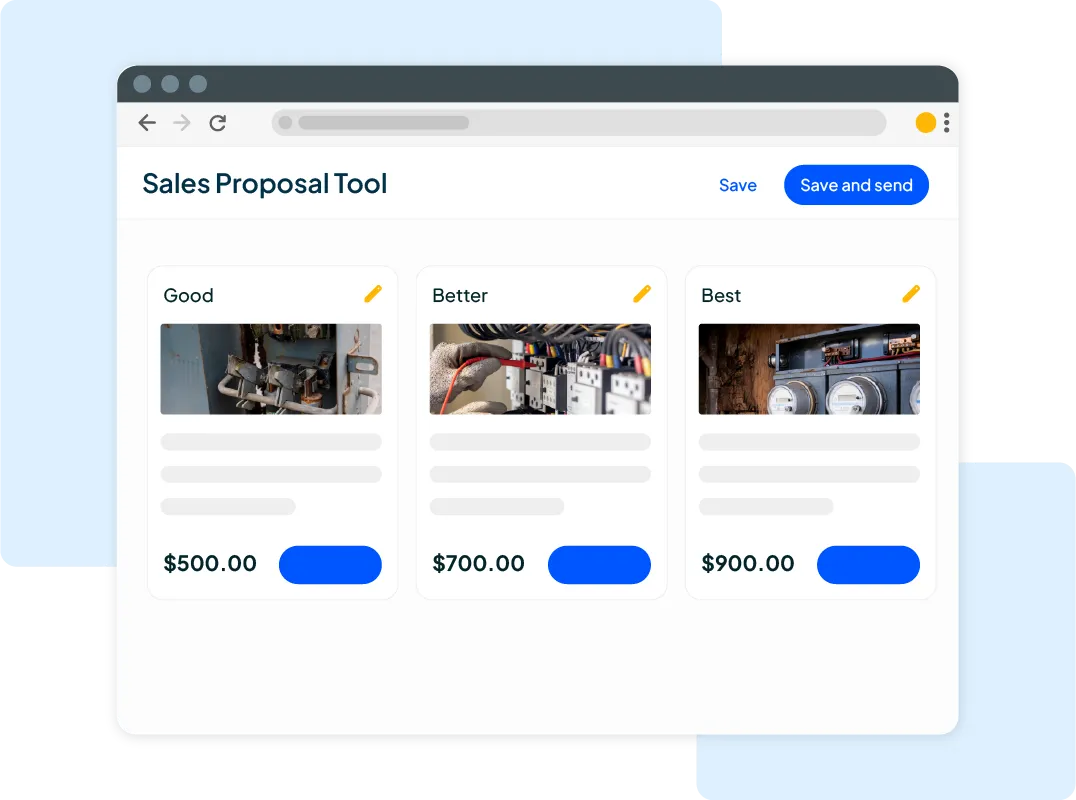
Offer good–better–best options: Clear tiered proposals improve customer approval rates.
Leverage estimating software: Estimating software helps HVAC pros standardize pricing, respond faster to bid requests, and track profitability more consistently.
Jump ahead
What is an HVAC estimate?
An HVAC estimate is the complete cost breakdown for an installation, replacement, or large repair. It includes equipment, materials, ductwork, refrigerant, accessories, labor, overhead, and your profit. The estimate is what the customer sees; the estimating process is the internal workflow that ensures your numbers are accurate.
How to estimate commercial HVAC jobs
Accurate HVAC estimating starts with a clear understanding of the job’s scope, the building’s heating and cooling requirements, and the labor and materials needed. No matter the job type, the goal is always the same: set estimates that cover every cost while protecting your profit margin.
At its core, estimating HVAC work means breaking the entire project into measurable parts—equipment, ductwork, line sets, electrical tie-ins, and labor hours—each with its own cost, productivity rate, and overhead factor. When you follow a consistent estimating process, you can price jobs faster, avoid underbidding, and raise your win rate.
Here’s what accurate HVAC estimating typically includes:
- Labor costs: The time required for equipment installation, ductwork, line set runs, evacuation, charging, and commissioning.
- Material costs: Ducting, fittings, insulation, line sets, drain materials, breakers, pads, and accessories based on your takeoff.
- Equipment costs: Condensers, furnaces, heat pumps, coils, air handlers, minisplits, RTUs, and any required controls.
- Overhead and profit: Insurance, fuel, trucks, tools, marketing, software, and your target profit margin.
Even seasoned HVAC contractors rely on estimating software to stay competitive. Automation tools help calculate totals, generate multi-option proposals, track equipment pricing, and reduce errors—improving both speed and accuracy on every bid.
Danny Reddick, founder and president of Reddick & Sons, recommends not just focusing on big companies when pricing. “Check what other small, independent contractors are charging,” too.
How to estimate residential HVAC jobs
Most of this guide focuses on commercial HVAC estimating, where bids involve plans, specs, labor breakdowns, and longer approval cycles. Residential HVAC estimates are typically much simpler.
In residential work, homeowners usually request a quote directly. You inspect the home, evaluate the existing system, and present a clear, easy-to-understand estimate that includes equipment recommendations and total price. Instead of itemized labor units and bid documents, residential estimates are often presented as flat-rate or system-based pricing so they’re easier for homeowners to understand and approve.
A typical residential HVAC estimate includes:
- Recommended system size and efficiency rating
- Scope of work (installation, removal, permits, duct modifications if needed)
- Total project price, not itemized labor
- Warranty and maintenance coverage
- Timeline and payment terms
Because residential jobs are shorter and more predictable, HVAC contractors often rely on price books and estimate templates instead of custom labor calculations for every job.
→ For more information, check out our guide to pricing HVAC jobs.
Commercial HVAC estimating: Step-by-step process
Accurate HVAC estimates come from following a consistent, repeatable workflow. Follow these steps to build precise, profitable bids every time.
1. Choose and bid on the right HVAC jobs
The first step is knowing which jobs are worth bidding. Focus on projects that match your experience, certifications, crew size, and available equipment.
You can find HVAC projects to bid on through:
- Online bid boards like PlanHub, ConstructConnect, BidClerk, and The Blue Book Network
- Local mechanical contractor associations that post ongoing bid opportunities
- General contractor and builder exchanges
- Public procurement sites listing municipal HVAC replacements and maintenance contracts
- Networking with general contractors, property managers, and related trades (plumbing, electrical, weatherization), which often leads to subcontracting work
Once you identify a potential project, vet it carefully:
- Is the scope within your technical expertise?
- Do you have enough labor, tools, lifts, or crane access to complete the job?
- Are the drawings, specs, and request-for-proposal (RFP) documentation complete and clear?
Avoid bidding on projects far outside your comfort zone until you’ve built the team to handle them. Specialization leads to faster, more accurate bids.
2. Review the project specifications (Division 01 & Division 23)
Before pricing anything, review the project’s specifications carefully. These documents outline installation standards, approved equipment, and testing requirements.
Division 01 (general requirements) usually includes:
- Contractor qualifications and licensing requirements
- Insurance and safety compliance
- Payment schedule and retainage
- Warranty rules and closeout documents
Division 23 (HVAC requirements) typically covers:
- Approved equipment manufacturers
- Minimum efficiency ratings (SEER2, HSPF2, AFUE)
- Duct construction standards (SMACNA)
- Refrigerant type and line set requirements
- Controls and thermostat standards
- Ventilation, combustion air, and insulation guidelines
- Commissioning and testing procedures
Missing details can lead to misbids or expensive rework. Always confirm you meet the technical requirements before investing time in a detailed estimate.
3. Analyze mechanical drawings and plans
Mechanical drawings help you understand how complex HVAC projects will be in practice. Review layouts for access, ceiling heights, routing challenges, and service clearances.
Then, examine the details:
- Compare duct sizes to airflow requirements
- Review equipment schedules (RTUs, AHUs, heat pumps, minisplits)
- Verify line set lengths and routing paths
- Identify structural or space conflicts
- Check gas, electrical, and condensate tie-ins
- Confirm clearances for service access and code compliance
If you find inconsistencies—like duct layouts that won’t fit the space or equipment placements that violate manufacturer clearances—submit a request for information (RFI). Early clarification prevents profit loss later.
4. Perform an accurate HVAC quantity takeoff
An accurate takeoff is the backbone of your estimate. If you’re using HVAC estimating software, digital takeoffs can detect symbols automatically from blueprints. For manual takeoffs, print drawings to scale, highlight each category, and move methodically from sheet to sheet.
A standard manual takeoff workflow looks like this:
- Select a category (e.g., heat pumps).
- Count all units and mark totals on the sheet.
- Transfer totals to your master takeoff log.
- Repeat for ductwork, line sets, controls, drains, electrical, etc.
Double-check everything. Small misses in fittings, line sets, or transitions add up fast.
5. Get updated equipment and supplier pricing
HVAC pricing changes frequently because of fluctuations in copper, aluminum, refrigerant, sheet metal, and electronics. Using outdated supplier sheets can instantly cut into your profit.
To build an accurate HVAC estimate, request updated quotes for:
- Equipment (with model numbers and efficiency ratings)
- Line sets (diameter and length)
- Ductwork fabrication
- Controls, thermostats, and zoning kits
- Copper fittings and valves
- Refrigerant (R-410A, R-32, CO2 units)
- Drainage materials and accessories
Build relationships with multiple suppliers to compare pricing and availability.
6. Calculate labor and overhead
Labor makes up 35%–55% of an HVAC job’s total cost, so it’s important to get it right. Commercial HVAC contractors typically build overhead into their hourly rates, rather than including it as a separate line item. This means you should use fully burdened labor rates that cover:
- Base wages
- Payroll taxes and benefits
- Office staff and management
- Vehicles, fuel, and insurance
- Software, tools, phones, and facilities
- Supervision and project management time
Use this simple formula:
Fully burdened labor rate = (Total annual labor wages + annual overhead) ÷ total billable labor hours
Once you have a fully burdened rate, figure out how long it takes to complete each task in the project. HVAC contractors often use the Air Conditioning Contractors of America (ACCA) Manual D/Manual S guidelines and the Plumbing-Heating-Cooling Contractors Association’s (PHCC) labor unit benchmarks as references for standard labor times.
Start with unit-based benchmarks, then adjust for real-world conditions such as:
- Tight spaces
- Roof access
- Occupied buildings
- Retrofits
Example formula:
Labor hours × fully burdened labor rate = Total labor cost
7. Add profit margin
Next, add your target profit margin. Commercial HVAC work typically runs about 5%–15% net margins. This is lower than residential work (usually anywhere from 10% to 60%) because competitive bidding, heavy labor and material costs, long project timelines, and slower payments leave less room for profit.
Final price formula:
Final Price = Total Job Cost × (1 + Overhead % + Profit Margin %)
Example: Calculating a commercial HVAC job estimate
Let’s walk through an estimating workflow for a 7.5-ton rooftop unit replacement.
Step 1: Direct costs
These are the job-specific costs tied directly to completing the work.
Labor: $8,600 (includes removal, crane coordination, RTU set, electrical reconnect, gas tie-in, testing, and cleanup)
Materials and equipment: $21,400 (RTU, curb adapter, controls, duct transitions, fittings, permits)
Total direct job cost:
$8,600 + $21,400 = $30,000
Remember: Overhead is already recovered through the fully burdened labor rate—no separate overhead markup is needed.
Step 2: Set target profit at the bid level
Commercial HVAC profit is set based on risk, competition, and contract terms, not a fixed margin formula.
For this project, assume:
- Moderate competition
- Short project duration
- Standard payment terms
- Limited scope risk
Target profit: 10% of total job cost
Profit added to bid:
$30,000 × 0.10 = $3,000
Step 3: Final bid price
Final bid price:
$30,000 + $3,000 = $33,000
This bid covers direct labor and materials, recovers overhead through labor rates, and includes a profit level aligned with the project’s risk and competitive environment.
8. Build and format a professional HVAC proposal
Most clients prefer lump-sum HVAC proposals that show one total price for the entire project. This makes budgeting easier but requires precise estimating because you absorb any overages.
Alternative proposal formats include:
- Time and materials (T&M): Best for undefined scopes
- Cost-plus: Client pays actual cost + markup
- Unit pricing: Useful for large or repetitive work (e.g., per minisplit head)
Your HVAC proposal should include:
- Equipment model numbers and efficiency ratings
- Scope of work and inclusions
- Exclusions and clarifications
- Warranty and maintenance details
- Installation timeline
- Permitting requirements
A professional, branded proposal builds trust and increases approval rates.
9. Double-check quantities and totals
Before submitting your bid, review:
- All quantities and equipment counts
- Supplier quotes
- Labor assumptions
- Overhead and markup calculations
- Any assumptions you made during takeoff
If possible, have a second team member review the estimate. Fresh eyes catch costly mistakes.
Keep a bid log tracking:
- Project type
- Bid amount
- Win/loss result
- Profitability
- Lessons learned
Over time, this data helps you see what’s working, tighten up your pricing, and bid smarter on the next job.
10. Submit your HVAC bid
Follow bid instructions exactly—naming conventions, required attachments, online portal submissions, or printed forms. Small errors, like missing signatures or mislabeled PDFs, can disqualify you instantly.
Always confirm receipt and keep a timestamped copy.
11. Review bid results and learn from each project
Once the job is awarded, compare your estimate to the competition so you can see what actually worked. Those insights help you sharpen your pricing and build stronger bids going forward.
Review with the following questions in mind:
- Was your price too high or too low?
- Were your labor assumptions accurate?
- Did you miss scope items that others included?
- Are you consistently winning or losing certain job types?
Winning bids teach you how to replicate success. Losing bids teaches you where to refine your assumptions.
Pro tip: Use Housecall Pro’s CRM tools or a simple spreadsheet to track every opportunity so you know which jobs give you the highest ROI.
Get In Touch: 858-842-5746
Let us earn your trust
On average, Pros increase monthly revenue generated through Housecall Pro by more than 35% after their first year.
See plan options and feature breakdown on our pricing page.
Common HVAC estimating mistakes to avoid
Even experienced HVAC contractors lose money on preventable estimating mistakes. Here’s what to look out for:
- Bidding on jobs outside your expertise or crew capacity
- Ignoring Division 23 specifications or missing key scope exclusions
- Using outdated pricing for equipment, ductwork, or refrigerant
- Underestimating labor hours for ductwork, line sets, or commissioning
- Forgetting overhead, crane rentals, permits, or electrical upgrades
- Relying on a “rule-of-thumb” system sizing instead of load calculations
HVAC estimating mistakes can be costly, but they’re all fixable. The key is discipline: follow a consistent process, rely on updated pricing, and review every lost or tight-margin job. Every time you refine your workflow or fix an assumption, your estimates get sharper, faster, and more profitable.
Use Housecall Pro for HVAC estimates
Housecall Pro’s HVAC estimating tools are built for contractors who need to quote faster, present options clearly, and win more jobs. Our system gives you everything you need from a single platform.
With Housecall Pro’s HVAC business software, you can:
- Create professional commercial estimates and proposals: Build clear, branded proposals that outline the scope of work, exclusions, timelines, and optional add-ons.
- Convert approved bids into scheduled jobs: Turn accepted estimates into jobs instantly, assign crews, schedule equipment delivery, and keep large projects moving without manual handoffs.
- Standardize pricing with labor rates and price books: Store commercial labor rates, equipment pricing, and common line items so every estimate stays consistent across technicians and project types.
- Automate follow-ups on pending bids: Use automated reminders to follow up on outstanding commercial estimates, helping you stay top of mind during longer approval cycles.
- Track job costing and profitability in real time: Monitor labor, materials, and gross profit as work progresses so you can spot overruns early and protect margin on every commercial job.
These features help HVAC Pros save time, increase win rates, and ensure that every estimate you send is clear, professional, and priced to protect your margins.
Start your free Housecall Pro trial to streamline your estimating and bidding workflow today.
HVAC Estimating FAQ
-
Why is an HVAC estimate important?
-
An HVAC estimate determines whether a job will be profitable. A detailed estimate ensures you’re covering equipment, ductwork, materials, labor, overhead, and your target profit margin. It also provides transparency for clients, helping them understand why certain systems or options cost more.
-
How do I find HVAC jobs to bid on?
-
Start by checking construction bid boards, general contractor networks, and local mechanical contractor associations. Platforms like PlanHub, ConstructConnect, BidClerk, and GovernmentBids.com publish both residential and commercial HVAC opportunities. Property managers, homebuilders, and real estate investors are also strong sources of steady work.
Don’t overlook your own network—plumbers, electricians, solar contractors, and remodelers often subcontract HVAC work to trusted partners. -
How do you bid for HVAC work?
-
To bid HVAC work, begin by reviewing the project’s mechanical drawings, equipment schedules, and Division 23 specifications. Next, perform a thorough takeoff: count equipment, ductwork, line sets, controls, drains, and electrical requirements. Submitting your proposal with clear inclusions, exclusions, and multiple system options makes your bid more competitive. Many HVAC contractors use estimating software like Housecall Pro to automate calculations and build professional, accurate proposals faster.
-
How should I price HVAC work?
-
To price HVAC jobs correctly, calculate direct costs (equipment, ductwork, materials, and labor), then add indirect costs (overhead) and your desired profit margin.