Want to see your potential revenue?
See what businesses like yours earn with Housecall Pro in 1 - 2 minutes.

Your handyman business website is often the first impression potential customers see. If your site is easy to navigate, looks professional, and highlights your work, you make it easier for people to choose you over the competition.
This guide covers the key steps to create a handyman website that works hard for your business, from design and search engine optimization (SEO) basics to the features that help you earn trust and drive bookings.
→ Want to save time? Download our free handyman website template or use our website builder to launch a professional, SEO-friendly site fast.
Key takeaways
Follow these tips to build a handyman site that earns trust, attracts leads & drives bookings:
Keep it simple: Use a clean layout and clear calls to action so customers can reach you easily.
Think local: Use city-specific keywords and set up a Google Business Profile for better visibility.
Show your work: Use real photos, testimonials, and reviews to build credibility fast.
Stay mobile-friendly: Make sure your site loads quickly and looks great on any device.
Use smart tools: Try Housecall Pro’s website builder to easily launch and manage your site.
Jump ahead
- What every handyman website should include
- Handyman business website design tips
- Handyman website examples for inspiration
- Should you hire a web designer or build your own site?
- How to optimize your handyman website for SEO
- Common handyman website mistakes to avoid
- Next steps for your handyman business website
What every handyman website should include
Your handyman company isn’t just competing locally—it’s competing against billions of websites for attention and credibility. A strong website needs to do more than exist. It should earn trust, show up in search results, and motivate visitors to book your services. You’ll do this by combining great design, clear information, and easy navigation.
Below are the must-have features that every handyman website should include to help you stand out and turn online traffic into booked jobs.
1. Clear contact info and calls to action (CTAs)
Visitors should know how to reach you the moment they land on your site. Include:
Pro tip: With Housecall Pro’s integrated booking tools, you can automatically schedule appointments and keep your business organized while giving visitors a seamless online experience.
2. Service area pages
If you serve a specific city or neighborhood, make it obvious on your site. Search engines reward websites that clearly describe where they operate, so create service area pages that use city-specific keywords, such as “handyman services in Denver” or “home repairs near Cedar Rapids.”
Each service area page should include:
- Contact info for the area
- Types of jobs you handle
- Proof you know the area (maps, testimonials, photos)
A well-crafted service area page works like a mini homepage for each location, making it easier for the right customers to find and trust you.
3. About page
Your About page gives your handyman business a face and a story. Use it to show your expertise, experience, and the values that drive your work. Include:
- Brief company history and what sets you apart
- Team photos, credentials, licenses, and insurance details
- Personal touches like favorite job stories or project photos
These elements show homeowners that you’re skilled, professional, and dedicated to quality. Keep the tone genuine and approachable; an engaging About page helps customers connect with you and gives them a reason to choose your services over the competition.
4. Reviews and testimonials
Reviews from real customers build instant credibility. Feature positive testimonials on your homepage and service pages, including short quotes, star ratings, or badges from platforms like Google, Yelp, or Angi.
You can boost trust by adding before-and-after photos or short video testimonials. These details help new customers picture the quality of your work and what it’s like to hire you.
Reviews also improve your SEO by adding natural keywords to your site. Make it a routine to ask satisfied clients for feedback and update your testimonials often so your website always reflects your latest successes.
5. Professional visuals
Photos say more than words, and high-quality images make your business look professional and trustworthy. Replace generic stock photos with real images that reflect your business, such as:
- Your team in action
- Branded trucks and tools
- Before-and-after photos
Keep your photos consistent in lighting, tone, and color to maintain a polished look that aligns with your logo and overall branding. If you’re not confident with a camera, consider hiring a local photographer for a few hours. Investing in great photos makes your website stand out and keeps visitors engaged.
6. Compelling copywriting
Strong copy turns interest into engagement by showing visitors why your handyman business is the right choice. Here are some tips to follow:
- Use copy that’s clear, conversational, and centered on the customer’s needs.
- Addresses what matters most to homeowners (reliability, safety, value).
- Explain how you solve problems and why you’re the right choice for the job.
- Work in local keywords naturally, like “handyman services in Denver,” to help your site show up in search.
- Keep paragraphs short, use bullet points, and break up text with clear headings for easier reading, especially on phones.
Speak like a real person—friendly, direct, and confident. Good copy not only builds trust, it moves visitors to call, book, or request a quote.
7. Blog or resource section
A well-written blog or resource section helps establish you as an expert and makes your site easier to find online. Here are some ideas for posts:
- Answers to real questions you hear from homeowners
- Seasonal maintenance tips
- DIY safety advice
Don’t overthink the topics—you don’t need to cover everything. Focus on what homeowners actually ask you about most. Over time, your blog will become a library of helpful resources that keeps your business top of mind. Google also values fresh, helpful content, so regular updates help your website rank higher in search results.
Pro tip: Adding booking links within blog posts can encourage readers to book your services right after they’ve read your advice.
Handyman business website design tips
Great design makes your site easy to use, visually appealing, and optimized for search engines. When these elements work together, your website attracts more visitors and converts them into customers. Here’s how to build a site that stands out and meets today’s digital standards.
Fast load times
A slow website drives visitors away before they see what you offer. Specifically, studies show that most people leave if a page takes longer than three seconds to load. Keep your site quick by compressing images, choosing a reliable host, and removing unnecessary scripts or plug-ins. Faster load times improve the user experience and search engine rankings, giving your handyman business a better chance of reaching potential clients.
Clean, modern layout
A simple, uncluttered site helps visitors find what they need fast. Use plenty of white space, clear headings, and easy-to-read fonts to guide users from your services to your contact form. Avoid distractions and focus on helping customers reach out or book easily. An organized site communicates trust and professionalism, which matter most in service industries where trust is everything.
Consistent branding
Your website should match the look and feel of your business everywhere people see you. Use the same logo, color palette, and tone of voice on every page to build recognition and trust. Consistency reinforces your brand identity, whether someone sees your truck, your business card, or your homepage.
Keep your imagery aligned, too. Photos should reflect your actual work, not generic stock shots. A cohesive design tells visitors that you pay attention to detail, which carries over into how they feel about your craftsmanship.
Mobile responsiveness
More than half of all website traffic comes from smartphones, so many homeowners will find you while scrolling on their phones. A mobile-responsive design automatically adjusts everything for smaller screens, making your site easy to read and navigate on any device.
Make sure buttons are large enough to tap, text is always readable, and images resize without losing quality. All this effort doesn’t just improve usability—mobile-friendly sites also get better rankings on Google, giving your handyman business a better chance of showing up in search results.
Accessibility (readable text, clear navigation)
Accessibility is a requirement under the Americans with Disabilities Act (ADA). Your website should be designed for everyone, including visitors with visual, hearing, or motor challenges. Meet ADA requirements by using high-contrast text, legible font sizes, and alt text for every image. Avoid flashing graphics and make sure your navigation on every page is easy to follow with a keyboard.
Beyond meeting legal standards, prioritizing accessibility shows respect for your entire audience and improves the experience for every visitor.
Handyman website examples for inspiration
The best handyman websites balance professionalism with a personal touch, giving homeowners confidence that they’re hiring a skilled, reliable professional. Below are three examples of handyman websites that get it right. Each uses strong visuals, straightforward navigation, and customer-first design. Use them to inspire ideas for your own site.
Fix Your Home D.C.
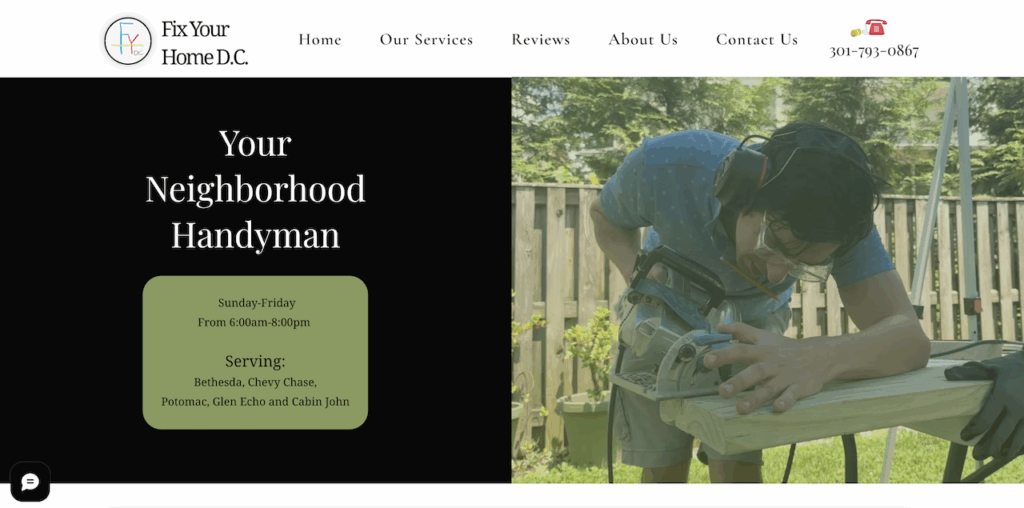
Fix Your Home D.C. is a great example of how a clean, well-organized site can make a lasting impression.
What it does well:
- Clean, easy-to-read design with a real photo of a handyman right on the homepage
- Clear navigation to help visitors find what they need fast
- Phone number at the top to encourage quick calls or inquiries
Triple Moon Handy Services
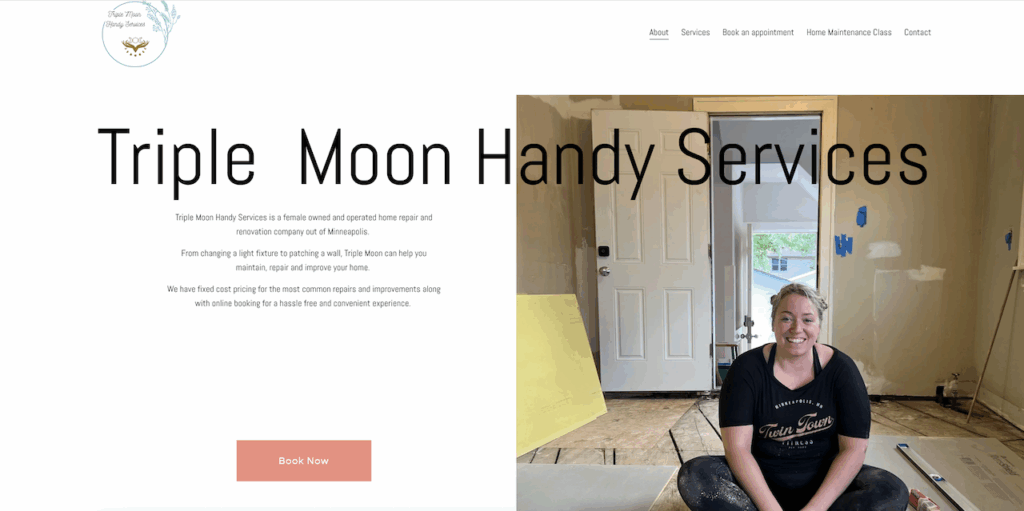
Triple Moon Handy Services in Minneapolis is a great example of how a small business can showcase both its service and expertise in a clean, unified layout.
What it does well:
- The owner photo on the homepage feels authentic and sets a welcoming tone
- There’s a clear menu with quick access to About, Services, booking, and contact info
- The Unique “Take a Home Maintenance Course” tab adds value and positions the business as an expert resource, not just a service provider
Denver Handyman Services

Denver Handyman Services starts with a clear, professional business name that explains exactly what it offers. Its site is polished and gives visitors confidence to reach out.
What it does well:
- High-quality images paired with award callouts that boost credibility
- Clear top-bar info with phone number, hours, and a note that they serve residential clients only
- Simple navigation with Projects, About, Testimonials, and Contact for easy homeowner access
Should you hire a web designer or build your own site?
Whether it’s better to hire a web designer or build your handyman business website yourself depends on your budget, time, and comfort with technology. Both options work well, so the right choice depends on what fits your goals and schedule. Here’s a quick breakdown to help you decide.
DIY
If you’re comfortable with technology and want to keep upfront costs low, DIY website builders with pre-made templates like Wix, Squarespace, or WordPress are a great starting point. These offer easy drag-and-drop tools that let you create a professional handyman site without writing a single line of code.
Pros
- Costs less than hiring a designer
- Quick to launch with ready-made templates
- Can make changes or updates anytime
- Includes built-in features like contact forms and SEO tools
Cons
- Limited by what the template allows
- Learning curve if you’re new to the platform
- DIY sites can look similar to other local businesses
- You handle your own updates, backups, and any troubleshooting
Professional design
If you’d rather leave the technical work to the experts, hiring a professional web design agency or freelance designer is a smart option. A web design agency or a freelancer can deliver a custom site that aligns with your brand and saves you time.
Pros
- Tailored to your brand and audience
- Experts handle setup, mobile optimization, and SEO
- You focus on your handyman business, not building the website
Cons
- Higher upfront investment
- Takes longer to complete (often several weeks or months)
- Most updates require going through your designer
Which is right for you?
Both options have clear benefits. DIY gives you control and speed at a lower price. Professional design offers a unique site and expert support, but costs more and takes longer. Whichever you choose, focus on a clean, trustworthy site that encourages customers to book.
If you’re looking for a simple way to get started, Housecall Pro’s website builder is designed specifically for home service professionals. We handle everything—professional design, SEO optimization, and built-in tools for online booking—so you can stay focused on running your business.
Get In Touch: 858-842-5746
Let us earn your trust
On average, Pros increase monthly revenue generated through Housecall Pro by more than 35% after their first year.
See plan options and feature breakdown on our pricing page.
How to optimize your handyman website for SEO
Once your website is live, make it easy for customers to find it with SEO. These optimizations help your handyman business show up in Google searches for local repair or maintenance services. You don’t need to be an expert to get started. Just focus on the basics below to improve visibility and bring in more leads.
Keyword targeting
Think about what your customers would type into Google when searching for your services. Phrases like “handyman near me,” “home repair in St. Paul,” or “furniture assembly services in Dallas.” Add these naturally to your site’s page titles, service descriptions, and headings so search engines know what you do and where you work.
Pro tip: Use free tools like Google Keyword Planner to find related terms and questions your customers are already searching for.
Local SEO
Most handyman businesses serve specific neighborhoods or cities, so optimizing for local searches is crucial. Here’s how to reach people in your area:
- Create or claim your Google Business Profile and keep your hours, address, and contact info up to date.
- List your service areas on your site and use city-specific keywords (like “handyman services in Denver”).
- Encourage customers to leave Google reviews to boost your credibility and search visibility.
- Keep your NAP (Name, Address, Phone Number) consistent everywhere your business appears online.
Internal linking
Linking your own pages together helps both visitors and search engines. For example, link from a blog post about drywall repair to your drywall service page. This builds a stronger site structure, helps Google understand how your content connects, and keeps readers moving toward conversion.
Schema markup for services
Schema markup is a type of structured data that tells search engines exactly what your website content means. Adding it for your services can make your site eligible for rich results in Google search, like star ratings or service highlights. You don’t need to code it yourself; many website builders and SEO plugins like Yoast for WordPress make it easy to add schema.
Content updates and freshness
Google favors websites that stay active. Regularly update your site with new photos, blog posts, or seasonal promotions to show search engines (and potential customers) that your business is active and engaged.
Common handyman website mistakes to avoid
Even the best-designed sites can miss the mark if you overlook key details. Watch out for these common mistakes:
- Hard-to-find contact info: Visitors shouldn’t have to search for your phone number or booking form. Make your contact details easy to find on every page.
- Outdated photos or cluttered pages: Keep visuals fresh and layouts simple.
- No clear call to action: Every page should encourage visitors to call, text, or book a service.
- Slow load times: Large images or unnecessary plug-ins can drive people away.
- No tracking or analytics: Set up tools like Google Analytics so you know what’s working—and what’s not.
A few small adjustments can lead to big results. With Housecall Pro, you can manage leads, schedule jobs, and turn website visitors into paying customers.
Next steps for your handyman business website
Think of your website as your digital storefront. Most customers decide whether to reach out based on what they see on your site, so apply the best practices from this guide to make yours professional, user-friendly, and visible online.
These steps can help:
- Test all contact forms and phone links.
- Add your website to your Google Business Profile and social pages.
- Keep your site fresh by updating photos, reviews, and seasonal offers.
- Check out Housecall Pro’s handyman software for natural integrations and booking tools.
Ready to take your handyman business to the next level? Housecall Pro’s website tools make it easy to create a polished site that attracts customers and turns clicks into bookings. Get started with 14 days free.