Want to see your potential revenue?
See what businesses like yours earn with Housecall Pro in 1 - 2 minutes.
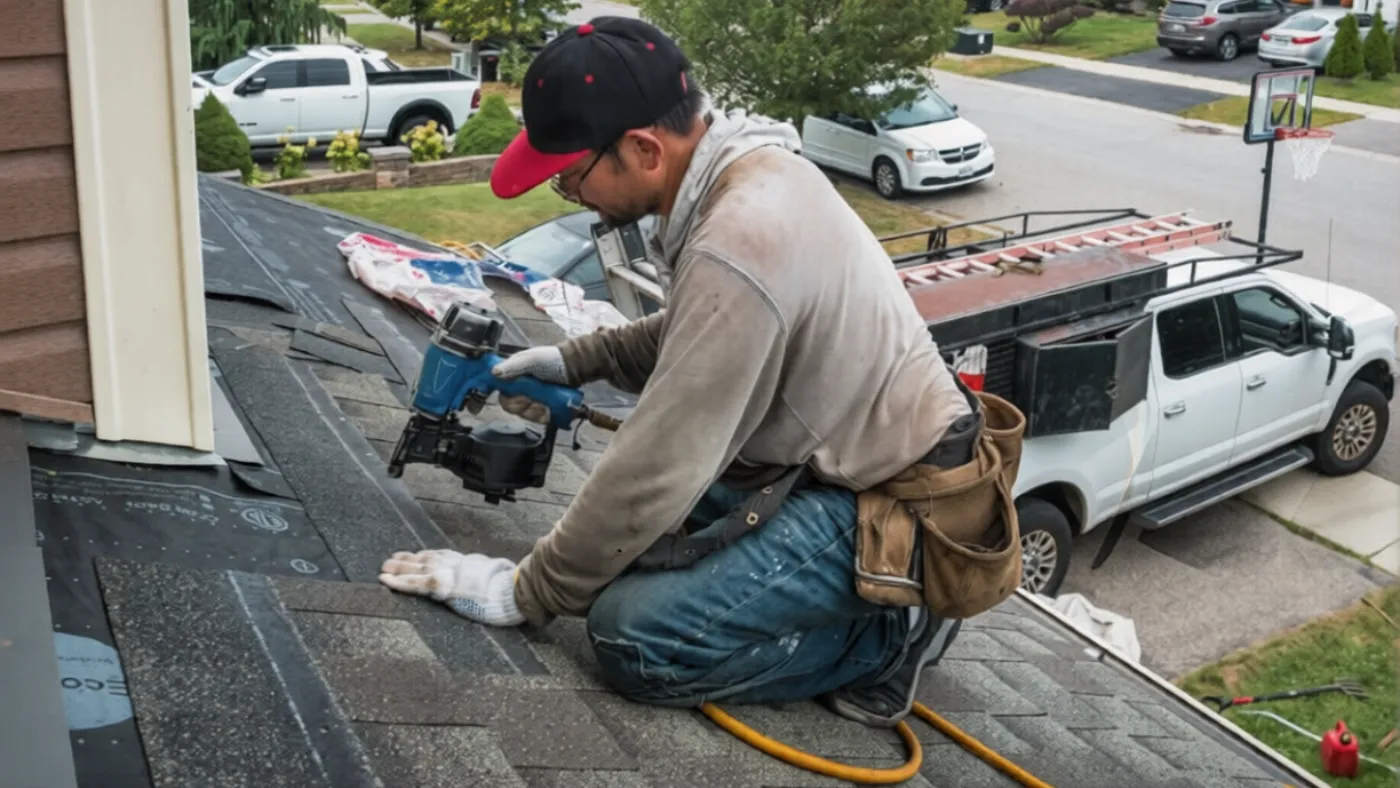
Roofing prices vary based on materials, labor, roof size, pitch, and hidden damage. Once shingles come off, you may uncover rotted decking, ventilation issues, or structural repairs that change the scope fast. If your pricing doesn’t account for those variables upfront, your profit margins take the hit.
This guide breaks down average roofing costs in 2026, common roofing pricing models, and the key factors that raise or lower the final price. You’ll also get a step-by-step framework for pricing roofing jobs, including practical examples you can adjust for your market. The goal isn’t to match the national average—it’s to price roofs in a way that protects your margins, even when surprises happen.
Key takeaways
Here's a quick overview of how roofing pricing typically works:
Most roofing jobs are priced per square: Full replacements usually start with a base rate per 100 square feet, then adjust for pitch, materials, and tear-off.
Roof complexity matters more than size: Steep slopes, height, and access often increase labor time more than square footage alone.
Material choice drives labor costs: Asphalt installs fastest, while metal, tile, and slate require more time and specialized work.
Hidden damage is common: Decking repairs are one of the most frequent reasons roofing jobs exceed initial estimates.
Profitable roofing prices include buffers: Weather delays, safety risk, and warranty callbacks should be priced in, not absorbed later.
Table of contents
- Average roofing prices in 2026
- Roof replacement price by material type
- Roof repair price by scope of work
- Residential roofing prices
- Commercial roofing prices
- Common roofing add-ons and upgrades
- Roofing pricing models
- Factors that affect roofing prices
- How to set roofing prices
- Example roofing price calculations
- How to explain roofing pricing to customers
- How Housecall Pro helps you price roofing jobs
Average roofing prices in 2026
In 2026, most roof repairs are priced between $400 and $1,500, with small fixes starting around $150 and more involved repairs running $4,000 or more. A full roof replacement typically ranges from $6,000–$12,000 for asphalt shingles, $9,000–$18,000 for metal roofs, and $15,000–$30,000+ for tile, slate, or other premium materials.
These are common U.S. price ranges for residential and light commercial work. Use them as a reference point, not targets. Your final pricing should reflect your actual labor, overhead, and local market.
*Price ranges are based on aggregated 2026 industry data from Angi, HomeAdvisor, and Thumbtack.
Roof replacement price by material type
Roof replacement pricing is typically calculated per square foot and varies based on material, installation complexity, and labor requirements. Heavier or specialty materials generally cost more due to longer install times and structural considerations.
| Roofing material | Typical replacement price |
| Asphalt shingle roofing | $4.50–$9 per sq ft |
| Metal roofing | $8–$15 per sq ft |
| Tile or slate roofing | $12–$25+ per sq ft |
| Flat roof systems (TPO, EPDM) | $5–$10 per sq ft |
These ranges reflect material and labor only and may increase based on roof pitch, tear-off requirements, decking repairs, or access challenges.
Roof repair price by scope of work
Roof repair pricing is usually based on the extent of damage rather than square footage. Minor issues can often be resolved quickly, while larger repairs may require structural work or partial replacement.
| Repair type | Typical repair price |
|---|---|
| Minor roof repair | $200–$800 |
| Moderate roof repair | $800–$1,500 |
| Major roof repair | $1,500–$3,000+ |
Minor repairs often include small leaks or flashing fixes, while major repairs may involve widespread damage, structural issues, or multiple problem areas.
Residential roofing prices
Most residential roofing projects are full replacements rather than small repairs. Pricing is usually calculated per square (100 square feet) and then adjusted based on roof pitch, layout, material choice, and overall condition. Home size helps establish a starting range, but complexity is what ultimately moves prices up or down.
The table below shows typical residential roof replacement costs in 2026:
| Home size | Typical roof size | Typical price range |
|---|---|---|
| Small home (under 1,500 sq ft) | 1,200–1,600 sq ft | $6,000–$10,000 |
| Midsize home (1,500–2,500 sq ft) | 1,600–2,400 sq ft | $9,000–$18,000 |
| Large home (2,500+ sq ft) | 2,400+ sq ft | $15,000–$25,000+ |
These ranges assume standard asphalt shingles, moderate roof pitch, and no major structural repairs. Prices increase when roofs are steep, have multiple levels, are hard to access, or require multiple tear-off layers.
Commercial roofing prices
Commercial roofing is typically priced differently from residential work, especially for flat or low-slope systems. Materials, access, safety planning, and compliance all play a larger role. Pricing is usually calculated per square foot and may vary based on building size, roof type, and local code requirements.
The table below outlines typical commercial roofing prices in 2026:
| Commercial roof type | Typical price range (per sq ft) |
| TPO or EPDM flat roof | $5–$10 |
| Modified bitumen roofing | $6–$12 |
| Metal commercial roofing | $7–$14 |
These ranges assume standard installation conditions and exclude major structural repairs. Prices often increase when projects require safety plans, permits, inspections, after-hours work, or phased installs.
Common roofing add-ons and upgrades
Roofing add-ons are how you get paid for work that goes beyond a standard job. Not every roof needs them, so they shouldn’t be built into your base price. Instead, use add-ons to cover extra labor, materials, or risk.
The table below shows common roofing add-ons and their typical prices:
| Roofing add-on | Typical price |
|---|---|
| Tear-off of multiple roofing layers | $1–$3 per sq ft per additional layer |
| Decking repair or replacement | $70–$120 per sheet or $4–$8 per sq ft |
| Ice and water shield upgrades | $1.50–$3.50 per sq ft or $250–$750 per section |
| Ridge vent or ventilation upgrades | $300–$900 per vent or system |
| Chimney, skylight, or flashing replacement | $300–$1,200 per item |
| Gutter replacement or upgrades | $6–$15 per linear foot |
Add-ons like these should always appear as separate line items on estimates. Itemized pricing helps customers understand the difference between the core roof replacement and additional work required to do the job correctly and safely.
Roofing pricing models
Most roofing businesses rely on one primary pricing model and then adjust based on job conditions. Using consistent models makes estimates faster, easier to explain, and more reliable as your business scales.
Roof pricing per square
Per-square pricing means charging a set rate for every 100 square feet of roof surface. This is the most common pricing model for full roof replacements and re-roofing projects.
Best for:
- Standard residential roof replacements
- Homes with predictable roof layouts
- Fast, consistent estimating across similar jobs
Why it works:
- Scales naturally with roof size
- Makes estimates faster and easier to standardize
- Keeps pricing consistent across comparable projects
Watchouts:
- Steep pitches and multistory homes require adjustments
- Tear-off, decking damage, and access issues can’t be absorbed into the base rate
- Material changes (metal, tile, slate) significantly increase labor time
Most roofers solve this by setting a base per-square rate, then layering in adjustments for pitch, height, tear-off, decking, and materials.
Flat-rate roofing pricing
Flat-rate pricing means charging one fixed price for a service or repair, regardless of how long the work takes. This model is usually used for smaller jobs where you know exactly what work needs to be done.
Best for:
- Flashing replacement
- Vent boot repair
- Minor leak fixes
- Other small, clearly defined roofing services
Why it works:
- Easy for customers to understand and approve
- Reduces back-and-forth during quoting
- Speeds up estimating for common repairs
Watchouts:
- What is and isn’t included in the job must be clearly defined in writing
- Additional damage uncovered during the job should trigger add-ons or a revised quote
Time-and-materials pricing
Time-and-materials pricing means charging for actual labor hours plus materials used. This model is typically reserved for roofing jobs where the full scope isn’t clear.
Best for:
- Storm damage repairs
- Emergency roofing work
- Jobs where hidden structural damage is likely
Why it works:
- Prevents underpricing when conditions are uncertain
- Allows work to start quickly without waiting for a revised quote
Watchouts:
- Requires clear communication before work begins
- Labor rates and material pricing should be documented in writing
- Without transparency, customers may feel surprised by the final total
Most roofing contractors who use this model set hourly labor rates in advance and provide detailed breakdowns when invoicing to keep pricing clear and defensible.
Factors that affect roofing prices
Even with a standard pricing model, certain variables should always adjust your final quote. Applying these consistently ensures you’re paid fairly for the labor, risk, and materials each job actually requires.
- Roof pitch and height: Steeper slopes and multistory homes slow installation, increase fall risk, and require additional safety equipment.
- Roof size and layout: Complex rooflines, multiple valleys, dormers, and penetrations add labor time beyond simple square footage.
- Material type and weight: Asphalt installs fastest, while metal, tile, and slate require more time, specialized tools, and additional handling.
- Tear-off requirements: Removing multiple roofing layers increases labor, disposal fees, and time on site.
- Decking condition: Rotten or damaged decking must be repaired before new roofing can be installed, increasing both labor and material costs.
- Access and site conditions: Limited staging areas, landscaping obstacles, or restricted driveway access slow setup and cleanup.
- Weather and seasonality: Extreme heat, cold, or wet conditions can extend timelines and increase labor costs.
- Local regulations and operating costs: Permits, inspections, insurance, labor rates, and regional cost of living should be reflected in market-appropriate pricing.
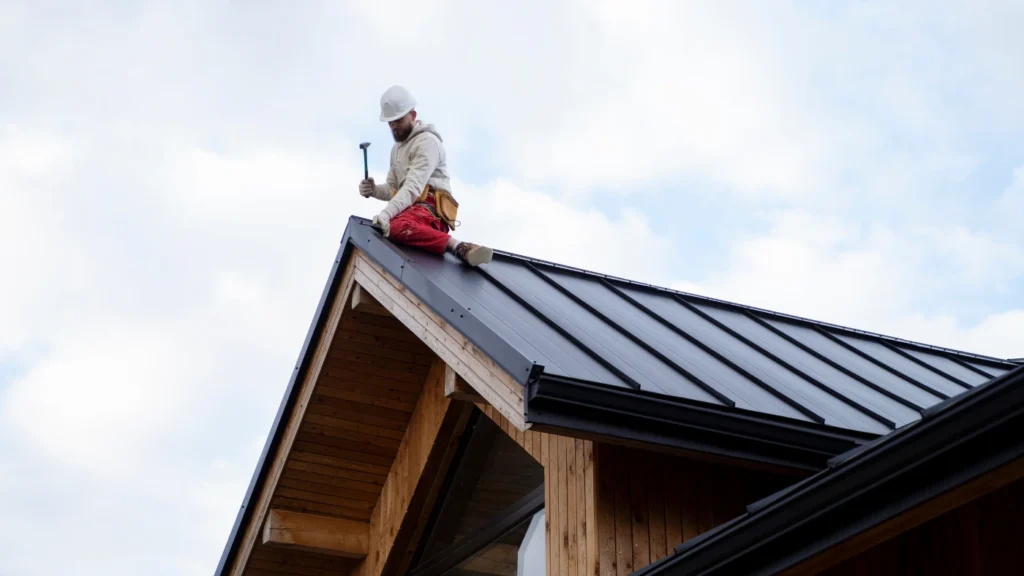
How to set roofing prices
Roofing work carries higher labor risk, material exposure, and uncertainty than many home services, which makes accurate, repeatable pricing essential. Use the framework below to price roofing jobs consistently while protecting your margins.
Step #1: Calculate your baseline costs
Start by calculating what it actually costs you to complete a roofing job safely and professionally, not just the time spent on-site. These numbers define your break-even point.
Factor in:
- Labor: Crew wages, payroll taxes, workers’ comp, and benefits
- Overhead: Insurance, vehicles, fuel, equipment, dumpsters, permits, and office costs
- Nonbillable time: Travel, setup, safety planning, staging, tear-off prep, and cleanup
Use these formulas to calculate your baseline:
Labor cost per job
(Hourly wage × labor burden) × total labor hours
Overhead cost per job
Total monthly overhead ÷ monthly billable hours × (job hours + nonbillable hours)
Break-even job cost
Labor cost per job + overhead cost per job
This number is the minimum you must charge before profit.
Step #2: Research local roofing rates
Local benchmarks help you see what customers expect and where your business fits. This guide includes average national pricing to give you a starting point, but local competition, material costs, and job complexity will ultimately shape what works in your market.
Local research is especially helpful when you’re:
- Explaining why your price is higher than a low-end competitor’s
- Confirming your rates line up with other quality-focused roofers
- Adjusting how you talk about premium materials or more complex installs
Your costs set the minimum you can charge. The market helps you explain the value behind it.
Step #3: Choose your primary pricing model
Most roofing businesses rely on one primary pricing model and adjust based on job conditions.
Common models include:
- Per-square pricing: For most residential and replacement projects
- Flat-rate pricing: For clearly defined repairs
- Time-and-materials pricing: For storm damage or unpredictable scope
Standardizing your main pricing model makes estimates faster, more consistent, and easier to explain to customers.
Step #4: Add a profit margin
Roofing prices should do more than cover today’s costs. They need to absorb weather delays, warranty work, equipment wear, and slower weeks while still leaving a profit.
Most roofing businesses target a 20%–40% profit margin, depending on market conditions and risk.
Use this formula:
Break-even cost ÷ (1 − target margin) = target price
Example:
$10,000 break-even ÷ (1 − 0.30) = $14,285 target price
Step #5: Set minimum charges and base service fees
Even small roofing jobs require travel, safety setup, and admin time. Minimum charges ensure short or simple jobs still make sense financially.
To set a minimum:
- Calculate the average cost of mobilizing a crew
- Include setup, safety planning, and teardown time
- Apply the minimum consistently across all estimates
Emergency calls or rush work often justify higher minimums due to scheduling disruption and added risk.
Step #6: Use add-ons to adjust for job complexity
Add-ons let you charge for extra work only when it’s needed. That way, you cover extra labor, materials, or risk without overpricing simpler jobs.
To price add-ons:
- Estimate how much additional time or material the task requires
- Multiply that amount by your target hourly or per-square rate
- Round to a simple, repeatable number your team can quote confidently
Common roofing add-ons include decking repair, steep-pitch adjustments, tear-off of multiple layers, ventilation upgrades, and flashing replacement. Recommend add-ons based on visible conditions—not pressure—so customers understand why pricing changes.
Always show add-ons as clear line items in estimates and invoices.
Step #7: Use pricing tools and software
A solid pricing system only works if it’s easy to use in the field. Estimating software helps your team quote faster, apply adjustments accurately, and present clean, professional estimates every time. With tools like Housecall Pro, you can standardize pricing, track costs across jobs, and spot margin issues before they turn into lost profit.
Step #8: Review and update pricing regularly
Roofing costs change quickly, especially materials and insurance. Your pricing should keep pace.
- Review pricing at least once per year, Or sooner if material or labor costs rise
- Track job time: Compare estimated versus actual labor to catch underpricing
- Adjust minimums when needed: Small jobs should still cover setup, safety, and travel
Get In Touch: 858-842-5746
Let us earn your trust
On average, Pros increase monthly revenue generated through Housecall Pro by more than 35% after their first year.
See plan options and feature breakdown on our pricing page.
Example roofing price calculations
Seeing how roofing pricing breaks down in real-world scenarios makes it easier to build estimates confidently. Below are common examples using typical 2026 roofing rates and standard pricing models.*
Example 1: Standard asphalt roof replacement
Scope: 2,000 sq ft roof, single story, moderate pitch
Pricing model: Per square
Estimated baseline cost: $4.55 per sq ft × 2,000 sq ft = $9,100
Target margin: 30%
Add-on: None
Total price: $9,100 ÷ (1 − 0.30) = $13,000
This job uses a standard per-square pricing model with no major access or condition-based adjustments,
Example 2: Steep roof with decking repair
Scope: 2,200 sq ft roof, two stories, steep pitch
Pricing model: Per square
Estimated baseline cost: $5.90 per sq ft × 2,200 sq ft = $12,980
Target margin: 30%
Add-on: Decking repair (10 sheets × $200) = $2,000
Total price: ($12,980 ÷ (1 − 0.30)) + $2,000 = $20,540
Steep pitch and structural repairs increase labor time and risk. Pricing decking repair separately ensures the additional work is covered without inflating the base rate for standard roofs.
Example 3: Small commercial flat roof
Estimated baseline cost: $4.90 per sq ft × 3,000 sq ft = $14,700
Target margin: 30%
Add-on: None
Total price: $14,700 ÷ (1 − 0.30) = $21,000
Flat commercial roofs are typically priced per square foot. The rate reflects material costs, installation time, and safety planning while remaining predictable across larger surface areas.
*These examples use simplified, midrange pricing to show how estimates are built. Actual roofing rates vary widely by market, materials, labor costs, and job conditions.
How to explain roofing pricing to customers
Clear, up-front roofing pricing helps you reduce pushback, speed up approvals, and build trust—especially when customers can’t see every detail from the ground. When you explain how roofing prices are built, customers feel informed, confident, and less surprised once work begins.
- Explain what’s included in the base service: Clarify that a standard roofing price covers materials, tear-off, disposal, safety equipment, labor, and installation—not just the finished roof.
- Set expectations early: Let customers know pricing usually starts with square footage, then adjusts based on pitch, height, materials, access, and roof condition.
- Separate the base job from additional work: Present pricing in layers so customers clearly see the difference between the core roof replacement and extras like decking repair, ventilation upgrades, or flashing work.
- Explain labor and risk, not just materials: Roofing involves safety requirements, weather exposure, and unknown conditions under the existing roof, all of which affect labor time and pricing.
- Put pricing in writing: Use written estimates with clear line items so customers understand how the final price was calculated and what may change if hidden conditions are uncovered.
Pro tip: Send itemized, professional roofing estimates through Housecall Pro to make pricing transparent, easy to review, and faster for customers to approve.
How Housecall Pro helps you price roofing jobs
Roofing prices are yours to set, but accuracy is what keeps margins intact from one job to the next. Pitch, materials, tear-off, and hidden damage can all change an estimate quickly, which makes consistency difficult without a structured pricing system.
Housecall Pro helps you standardize how you build roofing prices while still leaving room for job-specific adjustments. Instead of rebuilding estimates from scratch each time, you can price faster, present clearer quotes, and keep your numbers aligned with real job costs as your business grows.
With roofing software, you can:
- Create digital price books: Set standardized pricing by roof type, material, or service.
- Add condition-based adjustments: Apply tear-off, pitch, decking repair, or access add-ons as line items.
- Generate quotes quickly: Automatically create clear quotes without manual math or guesswork.
- Track job costs over time: Compare estimated versus actual costs to refine future pricing.
- Get approvals online: Let customers review and approve roofing quotes digitally.
Start your free Housecall Pro trial to see how consistent pricing helps streamline operations and support long-term growth.
Roofing pricing FAQ
-
How much should I charge for a new roof?
-
How much you should charge for a new roof depends on roof size, material type, pitch, tear-off requirements, and overall job complexity. However, most residential roof replacements typically fall between $8,000 and $20,000.
-
Is roofing priced per square or on a flat rate?
-
Roofing is priced both per square foot and flat rate, depending on the service. Pricing per square works best for full roof replacements because it scales with roof size and complexity. Flat-rate pricing is usually better for clearly defined roofing repairs with a predictable scope.
-
Do roofing companies charge minimums?
-
Yes, many roofing companies charge minimum service fees. Roofing minimums help cover fixed costs like setup time, safety equipment, travel, and basic labor—especially for small repair jobs.
-
How often should roofing prices be updated?
-
Roofing prices should be reviewed and updated at least once per year, or anytime labor costs, material prices, insurance premiums, or disposal fees increase.