Want to win more jobs with less effort?
Grow your business and send quick quotes with our home service software.

Want to see your potential revenue?
See what businesses like yours earn with Housecall Pro in 1 - 2 minutes.

Starting a lawn care business has one of the lowest barriers to entry in the trades. You don’t need a storefront, warehouse, or big crew to get up and running. But “low barrier” doesn’t mean “free.”
Most new owners get into trouble one of two ways: underestimating ongoing costs like fuel and repairs, or overspending on equipment they won’t fully use for months. Either mistake can strain cash flow before the business has a chance to stabilize.
This guide breaks down realistic lawn care startup costs for 2026 so you can budget wisely and grow your business without financial surprises.
Key takeaways
Keep these core tips in mind when planning lawn care start-up costs:
Start lean: Buy basic, reliable equipment first. Add specialized tools only when customer demand guarantees you can pay for them.
Budget for hidden costs: You’re not just paying for initial equipment. Fuel, insurance, and repairs add up fast.
Choose your market: Residential and commercial work require different levels of investment. Commercial properties require heavier equipment and higher insurance limits.
Delay big upgrades: Fancy trucks and massive trailers can wait until your revenue is steady.
Use systems that scale: Software helps control costs and protect profit as you grow.
Table of contents
- How much does it cost to start a lawn care business?
- Lawn care equipment start-up costs
- Vehicle and transportation costs
- Licenses, permits, and insurance costs
- Marketing and customer acquisition costs
- Ongoing lawn care business costs to plan for
- Residential vs. commercial lawn care start-up costs
- How to lower your lawn care start-up costs
- How lawn care software protects your budget
How much does it cost to start a lawn care business?
There’s no single price tag for starting a lawn care business. Costs vary based on your service mix, equipment choices, and what you already own.
You can launch a typical solo operation for roughly $500–$8,000* if you keep things lean and already own some basic tools and equipment. Larger commercial builds can easily climb to $15,000–$50,000+ if you’re buying a truck and premium heavy machinery.
*These estimates assume 2026 pricing and reflect common ranges reported by LawnLove and LawnStarter.
What drives your start-up cost up or down?
A few decisions have the biggest impact on your budget:
- Solo operator vs. small team: Payroll, workers’ comp, and higher insurance limits increase costs quickly.
- Residential vs. commercial jobs: Commercial properties often require heavier equipment and higher coverage.
- New vs. used equipment: Used tools lower upfront costs but may increase repairs.
- What you already own: A truck, mower, or storage space can cut thousands from your total.
The “right” budget matches your workload today—not the business you hope to have five years from now.
Lawn care equipment start-up costs
Equipment is usually the largest upfront expense. The goal is to start simple: buy what you need to complete jobs safely and consistently, then add tools as you grow. Think in terms of must-haves over nice-to-haves.
Essential lawn care equipment
These tools cover basic mowing and maintenance jobs. They’re enough to land your first residential customers:
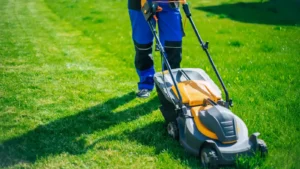
- Lawn mower ($300–$2,500): Push or self-propelled mowers work for small lawns. A riding mower makes sense only if you’re targeting large properties early.
- String trimmer ($100–$300): Needed for edges, fences, and tight area. Gas models run longer, but battery models can work for lighter schedules.
- Leaf blower ($100–$400): Clears clippings and debris fast. Handheld models are fine when you’re starting out.
- Edger ($100–$300): Creates clean lines along sidewalks and driveways. Some trimmers double as edgers, which can save money.
- Basic hand tools ($50–$150): Rakes, shovels, pruning shears, and fuel cans cover most needs.
- Safety gear ($50–$150): Gloves, eye protection, ear protection, and durable footwear.
Optional and add-on equipment
These tools can expand your service list but aren’t required on day one. Many owners rent them until demand is steady:
- Aerators ($1,000–$3,000): Useful for seasonal services.
- Dethatchers ($500–$1,500): Helpful for deeper lawn health services beyond mowing.
- Sprayers ($100–$500): Used for weed control or treatments. Note: These services may require licensing depending on local regulations, so check before buying.
- Trailers ($800–$3,000): Helpful if your current vehicle can’t carry equipment, but not required if you’re working light.
Vehicle and transportation costs
A reliable vehicle is essential—you can’t miss jobs without hurting your reputation. That said, you don’t need a brand-new work truck to get started.
Personal vehicle vs. work truck
Many owners start with a personal car or SUV and upgrade later, especially when equipment is minimal. As your route grows or equipment gets larger, a truck becomes more practical. Used trucks are common and can save you thousands.
Trailer vs. truck bed
A small trailer typically costs less than buying a larger truck and still keeps your gear organized. A truck bed setup is simpler and faster to load, but it may limit how much equipment you can carry.
Fuel and maintenance
Trucks usually use more fuel than cars or SUVs, and hauling equipment increases the cost. When you’re shopping, compare gas mileage carefully. Don’t forget to factor in costs for oil changes, tires, and repairs—especially on used vehicles.
Routing jobs by neighborhood helps keep fuel costs predictable.
Optional branding
You don’t need a fully branded vehicle right away. A removable magnetized sign is a simple, low-cost option you can place on both sides of your vehicle or on the tailgate. Most cost $50 or less per sign, and you can take them off when you’re off the clock.
As your business (and revenue) grows, a wrap may make more sense. According to WrapGuys, pricing starts at around $700 for half wraps and $19,00 for full wraps. Metro Restyling reports higher ranges depending on your design and coverage:
- Complete truck wrap: $3,000–$6,500
- Partial wraps (hood, roof, bed sides, accents): $1,000–$2,500
- Custom or commercial printed wraps: $3,500–$7,500
Local print and wrap shops can give quotes that reflect your market.
Licenses, permits, and insurance costs
Setting up your business legally protects you, your customers, and your income. Requirements vary by state and city, but most lawn care businesses need the following:
- Business registration and licensing: $250–650
- General liability insurance: $35–$70 per month depending on limits, state, and business size
- Commercial auto insurance (if applicable): ~$204 per month (higher for high‑value trucks or poor driving histories)
- Optional certifications or pesticide licenses: Required for chemical treatments or specialized services
Always confirm local requirements before advertising services.
Marketing and customer acquisition costs
Marketing your lawn care company doesn’t have to be expensive. Early on, consistency matters more than scale. Many small businesses set aside 2%–5% of revenue for marketing, but the exact percentage is flexible.
Low-cost marketing ideas
These tactics work well for local service businesses:
- Google Business Profile (free): Helps nearby customers find you in search results and on Google Maps.
- Basic website setup ($100–$500+): A simple site builds trust and supports search results.
- Yard signs and door hangers ($50–$300): Great for targeting specific neighborhoods where you already work.
- Referrals and word of mouth ($0–$100+): A small referral discount can bring in steady leads.
Paid marketing options
These are optional and easy to scale as you grow:
- Local online ads ($100–$300+ per month): Useful for generating faster leads when demand slows.
- Google Local Service Ads ($150–$500+ per month): Appear at the top of local search results and charge per lead, not per click, making costs more predictable.
- Business listings ($0–$50+ per month): Paid placements can help, but free versions often work well early on.
Get In Touch: 858-842-5746
Let us earn your trust
On average, Pros increase monthly revenue generated through Housecall Pro by more than 35% after their first year.
See plan options and feature breakdown on our pricing page.
Ongoing lawn care business costs to plan for
Recurring expenses catch many new owners off guard. Plan for these monthly costs that can increase as your schedule fills up:
- Fuel: Prices change often, and daily driving adds up fast. Route planning helps control this.
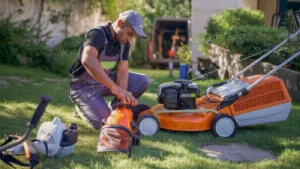
- Equipment maintenance and repairs: Blades need sharpening. Belts, filters, and spark plugs wear out. Set aside money each month.
- Software and admin tools: Scheduling, invoicing, and payments often run $30–$100 per month.
- Phone and internet: Expect $100–$200 per month for reliable service.
- Payroll or subcontractors: Labor is usually the largest ongoing expense once you stop working solo.
Residential vs. commercial lawn care start-up costs
Most lawn care businesses choose to start with residential or commercial work. You can do both, but each comes with different costs and expectations. Here’s how they compare.
| Category | Residential lawn care | Commercial lawn care |
| Equipment needs | Smaller mowers and basic tools | Larger mowers and heavier equipment |
| Insurance requirements | Standard general liability coverage | Higher coverage limits |
| Pricing and contracts | Per-visit or monthly plans | Longer-term contracts with set schedules |
| Skill and time commitment | Flexible schedules and smaller properties | Tighter timelines and larger, more complex properties |
Starting with one focus helps control expenses and workload. Many businesses start residential and add commercial clients once systems and cash flow are stable.
How to lower your lawn care start-up costs
It’s easy for new owners to overspend early, then scramble to cover monthly costs. These steps can help keep your budget in check:
- Focus on core lawn care services like mowing, trimming, and cleanup.
- Buy used equipment from reputable dealers when possible.
- Delay hiring until your schedule is consistently full.
- Rent specialty tools such as aerators and dethatchers.
- Use your existing vehicle.
- Keep marketing local and simple.
How lawn care software protects your budget
It doesn’t matter how low your start-up costs are if payments are slow and jobs are inefficient Housecall Pro helps you keep your margins in check from day one so your hard work actually turns into profit.
Helpful features of our lawn care software include:
- Scheduling and Routing: Group your jobs by neighborhood so you don’t waste gas driving across town.
- Invoicing: Send professional invoices from the driveway and let customers pay instantly via credit card.
- Recurring service plans: Lock in recurring revenue with monthly lawn maintenance contracts, so you always know your income.
- Review management: Collect and respond to customer reviews in one place.
Starting lean is smart. Growing with the right systems makes it easier to stay profitable long term. Ready to start your business the right way? Try a free 14-day trial of Housecall Pro today.
Frequently asked questions
-
How much money do you need to start a lawn care business?
-
Solo lawn care business owners can start around $500 if they already own equipment and a vehicle. Many new owners spend $5,000–$8,000 on tools, licensing, and insurance. Commercial setups cost more.
-
How do you price your lawn care business?
-
Pricing is based on lawn size, time on site, local rates, and expenses. Many businesses charge per visit and offer monthly plans for recurring service. Whatever model you choose, track fuel, labor, and equipment wear so each job covers its true costs and still leaves room for profit.
-
Is lawn care a profitable business to start?
-
Yes, starting a lawn care business can be profitable when you keep overhead low and build efficient routes. Profit depends on your pricing, schedule, and how well you control recurring expenses like fuel, repairs, and insurance. Owners who start lean, focus on repeat customers, and add services gradually tend to see stronger margins over time.