Want to win more jobs with less effort?
Grow your business and send quick quotes with our home service software.

Want to see your potential revenue?
See what businesses like yours earn with Housecall Pro in 1 - 2 minutes.
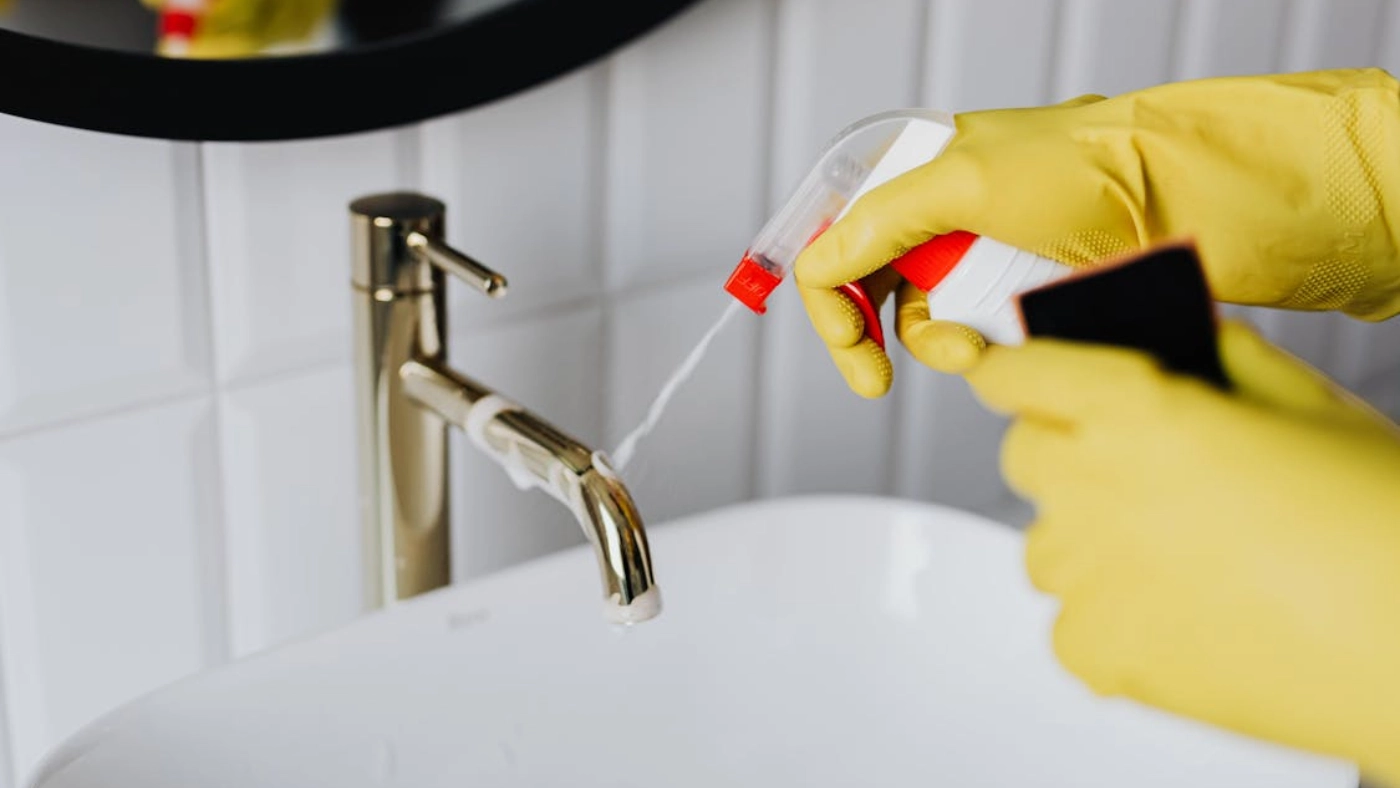
Thinking about starting a house cleaning business? It’s a smart move—startup costs are low, growth potential is high, and there’s plenty of room for new pros. Whether you’ve spent years cleaning professionally or are just looking for a low-overhead way to run your own business, now’s a great time to get started.
Our guide breaks down how to start your own house cleaning business step by step, including budgeting, licensing, marketing, pricing, and tips to streamline your operations using tools like Housecall Pro.
Key takeaways
Here’s a quick overview of what you need to know to start your house cleaning business:
Budget conservatively: You can typically start a house cleaning business with just a few thousand dollars and good marketing.
Create a marketing plan: A clear plan helps you set measurable goals and track progress.
Develop a memorable brand identity: Your brand should show off your skills, build trust, and stick in clients’ minds.
Use social media and in-person networking: Reach local clients and build your reputation by posting consistently and attending local events.
Manage your business efficiently: Use cleaning service software to manage finances, quickly respond to new leads, and handle customer preferences.
House cleaning business startup checklist
Every great business starts with a plan. Use this checklist to make sure you don’t forget any details and keep your launch organized.
- Step 1: Get experience (no house cleaning license needed)
- Step 2: Create a house cleaning business plan
- Step 3: Secure business financing
- Step 4: Get a house cleaning business license
- Step 5: Get house cleaning business insurance and bonding
- Step 6: Buy house cleaning tools and equipment
- Step 7: Price your house cleaning services
- Step 8: Market your house cleaning business
- Step 9: Grow your house cleaning business
Step 1: Get experience (no house cleaning license needed)
Unlike electricians or plumbers, you generally don’t need formal schooling or a specialized license to work as a professional house cleaner. However, experience in a professional environment—like hotel housekeeping or working for an established crew—can help you learn smart cleaning techniques and time management tips before starting your own company.
If you want to run a house cleaning business without working as a cleaner yourself, consider shadowing experienced teams, learning how to manage staff, and taking time to understand scheduling, client communication, and quality control. You can join online cleaning industry communities, attend workshops on staff management, or take short business courses to learn how to hire, train, and motivate a team effectively.
Step 2: Create a house cleaning business plan
Your business plan is your roadmap. It helps you understand what you need to get started, stay compliant with local rules and tax requirements, and map out how you’ll grow. It also helps you pinpoint potential challenges, like strong local competition or a need for extra funding.
If you plan to take out a small business loan—either through the Small Business Administration (SBA) or your local bank—you’ll need a solid business plan as part of your application packet.
We’ve outlined how to approach the plan and what to include below. For an in-depth walkthrough, check out our guide to writing a cleaning business plan.
Research your market and competitors
Understanding what other cleaners in your area offer helps you shape your own services and pricing. Looking at your local competition can also show you which specialty services homeowners are interested in and where you might stand out.
- Use Google Maps: Search terms like “house cleaning near me,” “residential cleaners,” and “maid service” to get a list of local businesses.
- Analyze profiles: Review each business’s Google Business Profile, paying close attention to their ratings, reviews, service descriptions, and photos. This insight helps you find gaps in the market.
- Find your niche: Your research might show underserved needs, such as short-term rental turnovers or eco-friendly cleaning services.
Identify your target customers and service area
Once you understand the local market, define who your ideal clients are and where you’ll serve them. Consider factors like household income, property types, and lifestyle—some customers may prefer eco-friendly services, while others value speed or deep-clean expertise.
When mapping out your service area, start small. “If I could start over again, I would rather be the go-to cleaner for one area than an unknown name everywhere,” says April Prothero, founder of the nontoxic cleaning company Going GreenHouse. Most new cleaning businesses begin with a radius of 5–10 miles around their base to keep travel time and costs manageable.
Make a house cleaning services list
Next, outline exactly what services you’ll offer. This will help you price your work, set expectations with clients, and avoid taking on jobs you’re not prepared to handle. Start with the basics, then decide whether you want to add deep cleans, move-in/move-out services, or any extras that help you stand out.
Here’s an example:
Core cleaning services
- Dusting
- Vacuuming
- Mopping
Deep cleaning services
- Baseboards and trim
- Inside appliances
- Blinds and window tracks
- Cabinet fronts
- Grout scrubbing
- Hard-to-reach areas
Move-in/move-out cleaning
- Full deep clean
- Inside cabinets and drawers
- Inside appliances
- Walls and baseboards
- Light fixtures
Specialty services
- Eco-friendly cleaning
- Laundry and linens
- Organization/decluttering
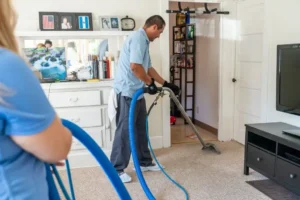
- Carpet/upholstery cleaning (if equipped)
- Window washing
- Post-construction cleaning
It’s just as important to decide what you won’t offer. For example, you might stick to basic and deep cleans at first and wait to add things like laundry, organizing, or specialty add-ons until you’re fully staffed and comfortable with your workflow.
Note on regulation: If you offer deep-cleaning services like mold remediation, check your state’s permitting regulations. States like Texas, New York, and Florida require a specific license for mold removal.
Learn more: 50+ Types of Cleaning Services You Can Offer Clients
Set goals
Setting clear short- and long-term goals makes it easier to run your business and grow at a steady pace. When you know what you’re working toward, you can focus your time, budget, and energy on the steps that actually move your business forward.
Short-term goals are measured in weeks or months and might include things like:
- Secure your first 10 recurring clients
- Run your first paid Google Ads
- Launch a feedback and referral system
- Consistently post one “pro cleaning tip” on social media each day
- Complete your Google Business Profile
Long-term goals build on your short-term accomplishments but focus more on scaling growth. Good long-term goals to set for your first year include:
- Achieve $100,000 in gross revenue
- Add 125 new clients for a total roster of 200 recurring accounts
- Maintain a 95% positive review rating on platforms like Google and Yelp
- Hire, train, and retain three full-time cleaning technicians
As your business evolves, your goals can evolve with it, giving you a roadmap you can adjust rather than starting from scratch.
Pro tip: Housecall Pro’s reporting tools can track revenue, recurring jobs, and client retention automatically, helping you measure progress toward both short-term and long-term goals.
Step 3: Secure business financing
Startup costs for house cleaning companies are low compared to other trades, but you’ll still need enough money to cover essentials: cleaning supplies, marketing, insurance, and perhaps hiring or subcontracting help.
You may be eligible for business startup funding through one of these sources:
- SBA loans: The SBA guarantees a portion of the loan, making it easier for new businesses to qualify through approved lenders.
- Business line of credit: Opening a business account at your local credit union may make you a more attractive candidate for a line of credit than at a large national bank.
- Community development financial institutions (CDFIs): CDFIs are nonprofit lenders that often work with businesses in underserved markets.
Depending on your specific circumstances, you may qualify for grants aimed at specific demographics:
- Minority- and women-owned businesses: Look into resources and grants from the Minority Business Development Agency (MBDA).
- Veteran-owned small businesses: The Veteran Business Outreach Center (VBOC) program through the SBA offers financial support and training for veteran entrepreneurs.
- Green businesses: If you plan to use eco-friendly cleaning practices, look for state-funded grants for sustainability.
Step 4: Get a house cleaning business license
While you don’t need a skilled trades license, you do need to file legal paperwork to operate a compliant business. The process often includes the following requirements (depending on where you live):
- General business license: Often required by your city or county to legally operate. Contact your state’s Secretary of State or city clerk’s office for requirements.
- DBA (Doing Business As): If you operate under a business name like Sparkle Cleaners rather than your legal name, you must register it as a business entity to accept payments.
- Home occupation permit: Check your city’s zoning regulations if you plan to operate and manage your business from your home.
- Employer Identification Number (EIN): A federal tax ID (EIN) is required if you hire employees. You’ll also likely need it to open a business bank account, which is recommended regardless of whether you plan to hire staff.
Choose a business structure
To legally operate, you need to register your house cleaning company as a specific business entity. Your options are:
- Sole proprietorship: Easiest and cheapest to start, but offers no protection for your personal assets. If a homeowner sues you, your personal assets are at risk. All business profits are declared on your personal taxes.
- Limited Liability Company (LLC): Forms a legal wall between you and your business to protect your personal assets. This is a popular choice for small cleaning pros.
- Partnership: Each partner is liable for the other’s financial actions. If you start a business with a partner, be sure to draft a legally sound partnership agreement to define liabilities.
- Corporation: A formal legal structure separate from its owners. Best if you plan to expand significantly or raise outside capital.
Consult a local business lawyer or tax professional to determine which structure is best for your specific situation. They can explain the pros and cons to consider, including your tax liability, plus file all legal paperwork and documentation.
Step 5: Get house cleaning business insurance and bonding
When you’re working in someone else’s home, insurance is crucial to cover any accidents or damage. Nick Disney, a real estate investor who frequently consults with cleaning businesses, says he once worked with a cleaning company that had secured three major property management deals within its first month. However, the owner didn’t get proper insurance and legal protection prior to arriving at an $800,000 property, where cleaners broke a custom marble countertop worth $12,000. Because of this one mishap, the company went bankrupt in 90 days.
Don’t let that be you. Be sure to budget for the following coverage:
- General liability insurance: Covers damage you or your crew causes to someone else’s property. Most house cleaning businesses carry at least $1 million per occurrence and $2 million in aggregate.
- Workers’ compensation: Legally required in most states if you have any employees (besides yourself). Check your state’s requirements here.
- Commercial auto insurance: Required if you have a company car, van, or fleet of vehicles.
- Bonding: A surety bond is a financial guarantee from a company that protects customers against losses resulting from employee theft or dishonesty. Customers usually prefer bonded housekeepers over non-bonded cleaners.
Get quotes from multiple insurance providers, and remember to compare both the annual (or quarterly) premiums and the deductible. Some insurers may also offer discounts if you buy all of your insurance coverage types from them.
Pro tip: Store your licenses, insurance certificates, and bonds digitally in Housecall Pro for easy access when clients request proof of coverage.
Get In Touch: 858-842-5746
Let us earn your trust
On average, Pros increase monthly revenue generated through Housecall Pro by more than 35% after their first year.
See plan options and feature breakdown on our pricing page.
Step 6: Buy house cleaning tools and equipment
The right cleaning equipment helps you work faster and deliver professional results. Some customers may prefer that you use their cleaning supplies, especially those with allergies, but you’ll generally need:
- Cleaning equipment: Broom, dustpan, vacuum (HEPA filter recommended), mop and bucket, high duster, step ladder, tile and grout brushes.
- Cleaning chemicals: All-purpose spray, toilet bowl cleaner, glass cleaner, disinfectant, and enzyme cleaner for pet stains.
- Disposable supplies: Microfiber cloths (color-coded to prevent cross-contamination), gloves, shoe covers, and mop heads.
You can buy chemicals in bulk from a local janitorial store or online, but be sure each bottle is properly labeled according to Occupational Safety and Health Administration (OSHA) regulations. Consider stocking “green” cleaning solutions so you can offer eco-friendly services as an upsell or preference. You may also want protective clothing, equipment, or even knee pads, depending on the services you plan to offer.
Step 7: Price your house cleaning services
When setting your rates, think about what’s fair for both you and your clients. Your prices should cover supplies, travel, overhead while still leaving room for a healthy profit. Focus on delivering high-quality service and setting rates that reflect that, rather than just competing with other cleaners.
“One of the most common mistakes new business owners make is underpricing,” says Brian Davis, CEO of HandyRubbish. “New owners usually want to be the cheapest and that doesn’t leave any margin at all. Price for value, not volume.”
We’ll cover the basics below. Check out our house cleaning price guide for more detailed instructions.
Choose a pricing model
Many cleaning businesses use a mix of pricing models depending on the job size, scope, and type:
- Flat rate: Great for regular clients with predictable jobs. Homeowners love knowing the exact price upfront.
- Hourly rate: Works well for deep cleans, move-outs, or situations where the job’s scope isn’t clear.
- Per room: Useful when clients want specific rooms cleaned; bathrooms and kitchens often cost more than bedrooms or living areas.
- Per‑square‑foot: A set rate per square foot can make quoting large jobs easier.
Set your rates
If you don’t know where to start, follow these steps to help calculate your rates accurately:
- Calculate your base costs: Time how long it takes to complete a service, plus the product cost per job.
- Add overhead: Factor in wages, insurance, marketing, software, and vehicle maintenance.
- Add your profit margin: The average house cleaning business runs about a 15% profit margin. Adding 20% to your base cost gives you room to adjust if necessary.
- Adjust for specialty: Charge a premium for “green” cleaning, deep cleans, or hazardous conditions.
Review your pricing regularly and adjust as needed for inflation, supply costs, travel distances, or changes in demand. Don’t be afraid to raise rates as your experience and reputation grow.
Pro tip: Housecall Pro’s Job Costing tools can help you calculate rates accurately, ensuring your prices reflect your overhead, time, and desired profit.
Step 8: Market your house cleaning business
Marketing your house cleaning company is all about showing you’re reliable and thorough. You’re asking to be invited into people’s private homes, so your brand needs to build trust and emphasize your attention to detail.
Learn more: How to Market Your Cleaning Business: 10 Proven Strategies
Design your brand
Start by choosing a catchy name that feels trustworthy and highlights your cleaning expertise. Once you’ve got a few ideas, check if the domain name and social media handles are available; it’s a good idea to set up a business profile separate from your personal accounts.
Next, think about your brand’s personality. Design a logo, come up with a slogan, and pick a color palette that fits your style. Keeping your branding consistent across your website, social media, invoices, and business cards to help customers remember and recognize your company.
Don’t worry if you’re not creative. You can hire a freelance designer to help with branding.Give them a clear brief that includes your target audience, preferred colors, and any ideas you already have.
More resources for inspiration:
- 750+ Cleaning Company Names (and How to Pick One)
- 70+ Cleaning Company Slogans (and How to Write the Perfect One)
Build an online presence
Most clients will find you online, so make sure you build your presence on these channels:
- Website: Create a professional website where potential clients can view your services and book online. (Get tips and design ideas in our cleaning website guide).
- Third-party platforms: Sites like Thumbtack and Angi are popular among homeowners searching for service providers.
- Google Business Profile: Set up your profile for free. Fill it out completely with photos and service areas. This increases your chances of showing up in “house cleaning near me” searches.
- Social media: Instagram and Facebook are perfect for before-and-after photos, which are incredibly persuasive for cleaning services. You can use TikTok to promote your business with short “Pro Tip” videos, and NextDoor for longer text posts or client testimonials. Use a mix for the best results.
Use offline marketing strategies
Don’t overlook local outreach. Consider these offline strategies:
- Direct mail: Send postcards and flyers to neighborhoods where you already have clients to build route density. Advertise new customer promotions or seasonal services. Make sure each piece of mail has links to your website and social media for easy booking.
- Community engagement: Attend Chamber of Commerce business mixers and other business- and community-oriented events.
- Professional partnerships: Partner with real estate agents, property managers, and home service businesses (like plumbers or general contractors). When people need one home service-based business, they’ll usually need others, too.
- Referrals: Encourage happy clients to refer their friends by offering a discount on their next service. Customers need to be able to trust you in their homes when they’re not there, so positive word-of-mouth from people they know is invaluable.
Pro tip: With Housecall Pro Postcards, you can create, target, and send professional direct‑mail campaigns with just a few clicks.
Learn more: 8 Proven Direct Mail Marketing Strategies to Book More Jobs
Step 9: Grow your house cleaning business
When you start turning away new clients because your schedule is full, it’s time to scale. Follow these steps to expand your operations:
- Hire carefully: Do background checks and speak to references for every new hire.
- Train extensively: Accompany new cleaners on their route for the first week until you’re confident they can complete each job without supervision.
- Clean-alongs: Regularly schedule “clean-alongs” with your team—even veterans—to correct bad habits and catch any small problems before customers do. Frame these positively as a chance for one-on-one coaching and feedback, not as an evaluation.
When your business is thriving, it may also be time to introduce new services to your existing clients or expand into neighboring cities. Always be careful when expanding—don’t overextend yourself. Plan carefully and consult a professional business advisor to ensure you’re growing without major financial risk or legal exposure.
Pro tip: Housecall Pro makes growth easier by helping you manage multiple employees, schedule recurring jobs, and track client preferences across your expanding service area.
How much does it cost to start a house cleaning business?
The cost to start a house cleaning company varies by location and niche, but you can generally expect to spend about $2,000–$8,000.* If you don’t have a vehicle, budget an extra $3,000–$10,000, depending on whether you buy new or used.
Here’s a look at how that investment breaks down:
- Equipment and supplies ($1,000–$3,000): This covers your HEPA vacuum, mops, buckets, and initial stock of chemicals.
- Licensing and permits ($250–$1,000): Includes business registration, DBA fees, and local permits.
- Insurance ($600–$1,500/year): General liability to protect you from damage claims.
- Bonding ($115–$175/year): A surety bond builds trust with new clients.
- Marketing and branding ($1,000–$2,500): Website setup, logo design, and initial ads.
*Estimates are based on typical startup costs reported by small business owners and industry guides. Actual expenses can vary depending on your location, business size, and the services you offer.
How Housecall Pro’s house cleaning service software can help
Running a home cleaning business comes with a lot of moving parts. Housecall Pro is like having a full office assistant in your pocket, helping you to save time, streamline operations, and quickly respond to clients.
With our home cleaning software, you can:
- Schedule appointments: Easily book jobs, send reminders, and manage recurring cleans.
- Manage leads: Get real-time alerts from your website and third-party booking sites so you can respond instantly.
- Set accurate pricing: Use Job Costing tools to calculate rates and stay profitable.
- Send professional invoices: Create and deliver branded digital invoices in just a few clicks.
- Automate marketing: Follow up with clients and request reviews automatically to build your reputation.
- Grow your team efficiently: Track employee schedules and performance as your business expands.
- Streamline operations: Process payments, complete digital forms, and access all your tools on mobile.
Try Housecall Pro free for 14 days and get everything you need to launch your cleaning business with confidence.
FAQ
-
How do I start my own cleaning business from scratch?
-
To start a cleaning business from scratch, identify your target clients and plan the services you’ll offer. Then, register your business, get the necessary licenses and insurance, and invest in essential equipment and cleaning supplies. From there, set your rates, market your services, and begin to grow your client business.
-
How much should I charge for three hours of cleaning?
-
The amount you charge depends on your location and the type of cleaning you provide. Many house cleaners charge between $25 and $75 per hour, which would put a three-hour job in the range of $75 to $225. You can adjust higher for deep cleaning, specialty services, or larger homes.
-
What is the 80/20 rule in house cleaning?
-
The 80/20 rule in house cleaning means focusing on the 20% of tasks that make 80% of the visible impact. In practice, this could mean prioritizing high-traffic areas like kitchens and bathrooms first, rather than spending equal time on every room. It helps you clean more efficiently and ensures the home looks noticeably clean, even if you don’t have time for a full deep clean.
-
What is the 20-minute rule in cleaning?
-
The 20-minute rule is a productivity technique that encourages you to work on a cleaning task for at least 20 minutes before taking a break or switching tasks. It helps you stay focused, avoid procrastination, and make steady progress without feeling overwhelmed.
-
How long does it take to clean a home?
-
It typically takes 2–4 hours to clean a home on your own, depending on the home’s size and condition. Deep cleans or initial visits will take longer.