Want to win more jobs with less effort?
Grow your business and send quick quotes with our home service software.

Want to see your potential revenue?
See what businesses like yours earn with Housecall Pro in 1 - 2 minutes.

Commercial lawn care contracts can provide steadier income than one-off residential jobs, but landing them requires more work. Property managers, HOAs, and commercial owners want a clear scope, reliable service, and a contractor who looks organized and professional before the work even starts. That means finding the right opportunities, bidding in a way that’s easy to trust, and following up like a business that can actually handle repeat work.
This guide breaks down how to find commercial lawn care contracts, write a strong bid, and win more long-term accounts without underpricing your services. You’ll also see where local relationships, online reputation, and year-round service options can help you stand out.
Quick answer: How to get commercial lawn care contracts
The best way to get commercial lawn care contracts is to combine targeted lead sources, strong local credibility, and clearer bidding. Government bid sites, local networking, direct outreach, and property-manager relationships can all help you find opportunities, but winning the contract usually comes down to how well you understand the property, how clearly you define the service, and how confident the buyer feels in your reliability.
Commercial buyers are not just comparing price. Commercial buyers are not just comparing price. They’re also comparing how responsive and professional you are, proof of experience, and whether your business looks ready to handle recurring work long-term.
Key takeaways
Here’s a quick look at what matters most when trying to win commercial lawn care contracts:
Finding the right opportunities matters first: Government bid sites, local networking, direct marketing, and property-manager relationships can all open doors.
A site walkthrough makes bids stronger: It helps you define scope clearly before you price the work.
Clear service breakdowns build trust: Commercial buyers want to know exactly what is included.
Commercial contracts are not only about low price: Reliability, communication, and year-round value matter too.
Local visibility helps you win more work: Reviews, Google Business Profile strength, and local relationships can influence buyer trust.
Table of contents
How to find commercial lawn care contracts
Commercial lawn care contracts usually come from a smaller set of sources than residential work. Instead of broad homeowner marketing, you’re usually trying to reach property managers, facility teams, municipal buyers, HOAs, apartment operators, and local business owners.
The strongest channels usually include:
- Government bid sites: Official sites like SAM.gov and BidNet Direct can surface municipal and public-sector mowing opportunities. Local municipal jobs are often a practical place to start because they can be easier to win than larger state or federal contracts, especially for smaller cities and towns where fewer vendors are actively bidding.
- Local SEO and reputation building: A strong Google Business Profile, consistent business information, and active review collection all help build trust before a buyer ever contacts you.
- Networking where decision-makers are: Chamber listings, facility management groups, and local directories can help you get in front of people who actually control commercial grounds contracts.
- Direct marketing: Lawn signs, flyers, and conversations with nearby business owners can still work, especially when your current jobs already put you in front of the right properties.
- Free assessments or proof-of-work opportunities: Offer a property assessment or use before-and-after examples to help reduce buyer hesitation when you are still building your commercial portfolio.
| Lead source | Best for | What buyers expect |
|---|---|---|
| Municipal bid sites | Public mowing contracts | Insurance, licenses, scope notes |
| Property managers | Multi-property accounts | Portfolio photos and service standards |
| HOAs | Common-area maintenance | Frequency, communication plan, exclusions |
| Local businesses | Smaller recurring accounts | Walkthrough notes and a simple proposal |
| Google Business Profile | Local inbound leads | Reviews, photos, service area, contact info |
Common lead sources for U.S. commercial lawn care contracts, ranked roughly from highest to lowest barrier to entry.
If you’re new to government jobs, start small. Once you have a few under your belt, bigger contracts will be easier to land.
How to write a winning commercial lawn care bid
A stronger bid starts before you ever open a proposal template. Commercial buyers want to know what they’re paying for, how often the work will happen, and why they should trust your company to keep the property looking consistent over time.
Step 1: Start with a site walkthrough
A walkthrough helps you understand the actual needs of the property before you price anything. Some properties need full-service maintenance, while others only need mowing and basic upkeep. Walking the site also helps you spot things that can easily throw off pricing later, like slopes, irrigation obstacles, tight access points, heavy foot traffic, or areas that need more cleanup than the rest of the property.
This is also your chance to confirm expectations with the buyer. Ask how often they want service, whether they need seasonal work beyond mowing, and which parts of the property matter most from a curb-appeal standpoint. A site walkthrough gives you better numbers, but it also helps you write a bid that feels custom to the property instead of generic.
Step 2: Break down your services clearly
Commercial buyers shouldn’t have to guess what your service includes. Scope should be specific enough that both sides know what’s covered, how often it happens, and where extra charges might come into play. The clearer your scope is, the easier it is for the buyer to compare bids and understand the value of your proposal.
Include details like:
- Mowing and edging: Define mowing frequency and edge work around sidewalks, drive lanes, beds, and common areas.
- Weed control: Explain treatment timing, coverage areas, and whether applications are included or billed separately.
- Fertilization: Note whether seasonal applications are included and how they are adjusted for turf needs and local conditions.
- Additional services: List pricing for extras, special requests, seasonal cleanups, or one-off work.
- Exclusions: Clarify what isn’t included so both sides understand when extra charges may apply.
That last point matters. Defining what isn’t included helps reduce disputes later if the client asks for work outside the original agreement.
Step 3: Be transparent with pricing
Commercial pricing should be easy to follow. A simple breakdown by visit, application, or additional service usually works better than overcomplicated language. Buyers want to know what drives the number, not decode a vague total with no explanation behind it.
If you offer long-term contract discounts, bundled seasonal pricing, or add-on services, make that structure clear. Predictable pricing can make your proposal more attractive, especially for buyers managing annual budgets. At the same time, avoid underpricing just to win the work.
“It’s tempting to come in low when you’re new, but it’s not sustainable and hurts everyone,” says Danny Wilcox, marketing manager at Carini Home Services, a San Diego-based HVAC and electrical company that’s been in business since 2006. “Instead, build your prices around your actual costs and the value you deliver.”
A strong bid should show that your price is deliberate. When the pricing feels organized and tied to a clear scope, it’s easier for the buyer to trust it.
Step 4: Showcase your team and expertise
Commercial buyers are often evaluating risk as much as cost. They want to know whether your company will show up consistently, communicate clearly, and maintain the property without creating extra headaches. A short section about your team, experience, and service process can make your bid feel much more credible.
This doesn’t need to be long. A few lines about your experience with similar properties, your service standards, and how you handle communication can go a long way. If you have before-and-after photos, client reviews, or examples of comparable work, those can strengthen the proposal even more. The goal is to make the buyer feel confident that you’re not just available, but reliable and easy to work with.
Step 5: Make it easy to act
A proposal shouldn’t end vaguely. It should tell the buyer exactly what the next step is, how to approve the contract, and what happens after approval. If they have to guess how to move forward, the proposal is doing less work than it should.
A commercial lawn care proposal should include:
- Scope of work: List the services included in the contract.
- Service frequency: Explain whether work happens weekly, biweekly, monthly, seasonally, or as needed.
- Property areas covered: Name the lawns, entrances, walkways, common areas, beds, or parking-lot edges included.
- Exclusions: Clarify what isn’t included in the base price.
- Add-on pricing: Explain how extra services, seasonal work, or special requests are billed.
- Start date and contract term: Include the expected start date and length of the agreement.
- Payment terms: Spell out billing frequency, due dates, deposits, or late fees.
- Approval method: Explain whether approval happens by signature, email confirmation, or online acceptance.
- Point of contact: Name who receives updates, approves extra work, and handles service questions.
Let the buyer know what happens next, such as scheduling the first service visit, confirming the contract start date, or walking the property one more time before kickoff. After sending the proposal, follow up within 2–3 business days, then again about one week later if you haven’t heard back.
Step 6: Set clear contract terms
Most commercial lawn care contracts run for one season or one year, with options to renew. Including a simple auto-renewal clause (with a 30-day cancellation window) protects your schedule while giving the buyer flexibility. If you’re new to commercial work, a shorter initial term—say, 90 days—can reduce buyer hesitation and give you a chance to prove the relationship before locking in longer.
Get In Touch: 858-842-5746
Let us earn your trust
On average, Pros increase monthly revenue generated through Housecall Pro by more than 35% after their first year.
See plan options and feature breakdown on our pricing page.
How to win more commercial lawn care accounts
Winning more accounts comes from getting in front of more properties and being easier to trust once you are there.
A few patterns matter most:
- Target property managers and HOAs: These buyers often manage multiple properties and can turn one win into more opportunities.
- Showcase your work online: Original photos, reviews, and a polished online presence make it easier for commercial buyers to vet you quickly.
- Be available year-round: Buyers often prefer partners who can handle more than mowing season, especially if you can support cleanup, seasonal work, or off-season service needs.
- Network with local businesses: Relationship-based work still matters in commercial services, especially for smaller local contracts.
- Follow up on bids: A clean proposal still gets ignored sometimes. Consistent follow-up is part of winning, not a separate step.
How to adapt your approach by market
Commercial lawn care contracts are highly local, which means the strategies that work in one market may not translate to another.
In markets like Phoenix or Dallas, where commercial development is dense and property management companies oversee large portfolios, landing one regional project manager relationship can mean access to dozens of properties at once. This makes networking and local reputation a higher priority than in other markets.
In smaller or more spread-out areas, route density matters more. For example, if three commercial properties sit within a half-mile of each other, your travel time per job drops significantly—which means you can bid more competitively without cutting margin.
Municipal work follows its own logic—smaller cities and towns often have less competition on public bids, making them a practical entry point if you’re new to commercial contracts.
Use your market to evaluate:
- Property type mix: HOAs, office parks, retail centers, apartments, and municipal sites all buy differently.
- Route density: The tighter your commercial route, the easier it is to price competitively without losing margin.
- Seasonality: In some areas, year-round grounds work matters more than peak mowing season.
- Decision-maker access: Some markets are more relationship-driven, while others lean harder on formal bidding.
- Labor and equipment costs: These change what you can charge and still stay competitive.
How to bid HOA lawn care contracts and apartment complexes
HOAs and apartment properties often care about consistency, curb appeal, and communication as much as basic mowing. That means your bid should show what work you will do and how consistently the property will be maintained over time.
A stronger HOA or apartment bid should usually clarify:
- Service frequency: Define weekly, biweekly, seasonal, or as-needed work.
- Common-area scope: List lawns, entrances, walkways, shared green spaces, and parking-lot edges.
- Edging and presentation standards: Explain how finished areas should look after each visit.
- Cleanup expectations: Clarify clipping cleanup, debris removal, and post-service appearance standards.
- Response time: Set expectations for issue reporting, complaints, or urgent property needs.
- Add-on pricing: Explain how extra work, seasonal cleanups, or special requests are billed.
- Point-of-contact communication: Name who approves work, receives updates, and handles service questions.
These properties often have formal service expectations. Some HOAs require service logs, photo documentation after each visit, or a named contact for complaints written into the contract. Ask whether those requirements exist before you finalize your bid.
How to manage commercial lawn care contracts
Commercial work gets harder to manage when bids, schedules, job notes, and customer communication are scattered across different places. The more properties you juggle, the more important it is to keep everything organized in one place.
That’s exactly what Housecall Pro is built for. Instead of piecing together separate tools for proposals, scheduling, team visibility, and billing, you can manage the entire job cycle in a single system.
With our commercial service software, you get:
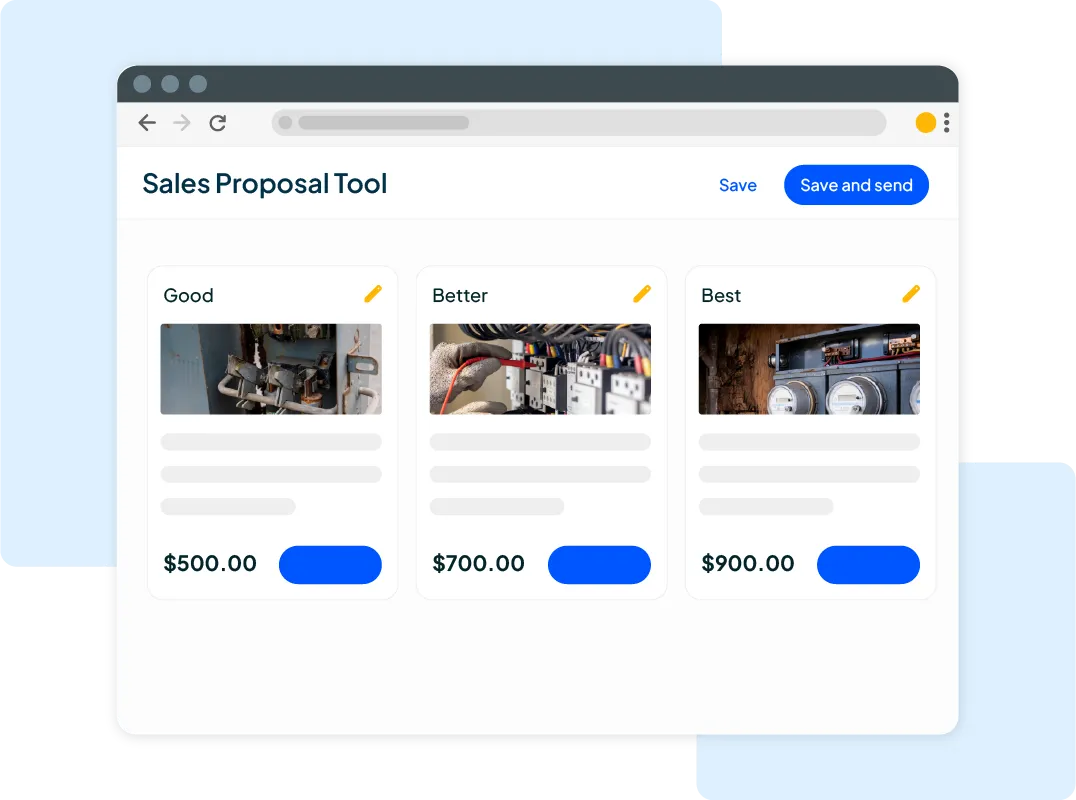
- Proposals that are easier to approve: Build and send estimates that buyers can review and sign without back-and-forth.
- Recurring visits that don’t slip: Keep commercial schedules organized across multiple properties in one calendar.
- Crew visibility across routes: Track field teams by location so route-based work stays on schedule.
- Customer communication tied to the job: No more hunting for which message went where—updates live with the job record.
- Faster billing after the work is done: Invoice from the field and collect payment without a separate follow-up step.
Try Housecall Pro free for 14 days and set your business up to win more commercial lawn care contracts.
Commercial lawn care contracts FAQ
-
Where can lawn care companies find commercial lawn care bids?
-
Commercial lawn care bids can often be found on government bid sites, through local networking groups, and by building relationships with HOAs, apartment operators, and commercial property managers. SAM.gov covers federal opportunities; BidNet Direct and DemandStar aggregate state and municipal bids. Most local municipal jobs are posted directly on city or county procurement pages
-
How do you write a commercial lawn care proposal?
-
A strong commercial lawn care proposal starts with a site walkthrough, clearly defines the scope of services, breaks down pricing in a simple way, highlights your experience, and makes the next step easy for the buyer.
-
How do you price commercial lawn care contracts?
-
Most commercial lawn care companies price by the visit, by square footage, or by the acre. A common starting point for mowing-only contracts is $0.01–$0.03 per square foot per visit, though this varies significantly by region, terrain, and service scope. Full-service contracts that include edging, fertilization, and seasonal cleanup will run higher. Build your price from your actual costs—labor, equipment, fuel, and overhead—then check it against local market rates before submitting.
-
How do you win HOA lawn care contracts?
-
HOA boards often review bids in committee, meaning your proposal gets read by people who weren’t part of the initial conversation. Lead with a one-page summary covering service frequency, scope, and price—it’s easier to present internally and harder to misrepresent. Consistency and clear communication matter as much as price.
-
What helps commercial lawn care companies stand out?
-
Commercial lawn care companies usually stand out by showing reliability before the first visit ever happens. Strong online reviews, clear proposals, original job photos, year-round service options, and consistent follow-up all help build trust.
-
What insurance do you need to bid on commercial lawn care contracts?
-
Most commercial buyers—especially municipalities and property management companies—require proof of general liability insurance (typically $1M per occurrence) and a valid business license before reviewing a bid. Some will also ask for a certificate of insurance naming them as an additional insured. Have these ready before you start outreach, not after you win the job.